Amelie Poulain Montmartre Without the Lines and Off the Beaten Path
Explore Amélie Poulain’s Montmartre film locations without the crowds. A self-guided walking route to the hidden spots, plus tips on when to go.
Montmartre & Sacré-Coeur: The Ultimate Guide for Your Paris Trip
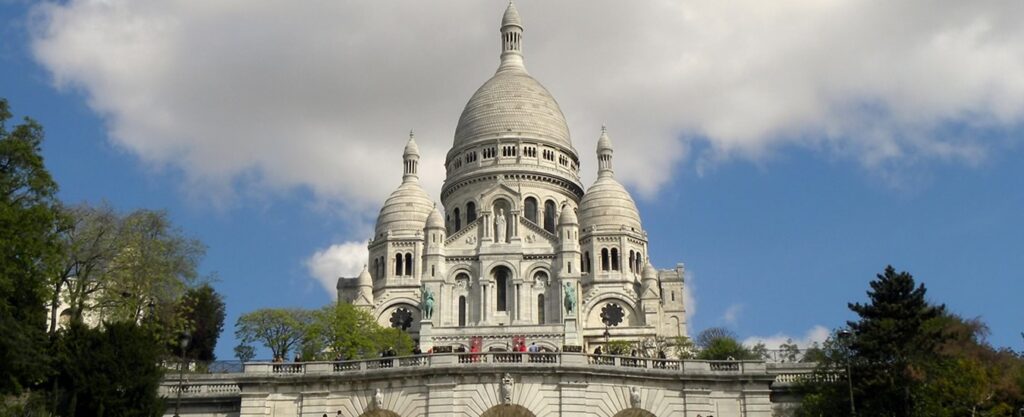
🇧🇷 POR | 🇫🇷 FR | 🇺🇸 EN | 🇪🇸 ES Towering atop the hill of Montmartre, the Sacré-Coeur Basilica — or Basilica of the Sacred Heart — is one of Paris’s most stunning attractions. With its majestic white silhouette dominating the Parisian skyline, this religious monument is not just a pilgrimage site but also an unmissable tourist spot for anyone visiting the City of Light. Combining breathtaking architecture, a fascinating history, and one of the most spectacular views in Paris, Sacré-Coeur offers a complete experience that goes far beyond religious contemplation. In this complete guide, we’ll explore all the essential aspects to make your visit to the Sacré-Coeur Basilica unforgettable: from its rich history and architectural details to practical information on how to get there, what to see, opening hours, and exclusive tips. Get ready to discover why this Montmartre treasure is considered one of Paris’s most iconic postcards and deserves a special spot on your travel itinerary. Tip: Already know the Arc de Triomphe? If not, check it out here Photo by Guillaume Meurice History and Architecture of the Sacré-Coeur Basilica The history of the Sacré-Coeur Basilica is deeply tied to one of the most turbulent periods in French history. Its construction began in 1875 as a symbol of national penance following France’s devastating defeat in the Franco-Prussian War (1870-1871) and the traumatic events of the Paris Commune. The project was conceived as a form of atonement for the sins that, according to some, had led to the French defeat, and also as a symbol of hope and spiritual renewal for the country. Architect Paul Abadie won the competition to design the basilica, presenting a design that blended elements of Romanesque and Byzantine styles, creating what we now know as the Romano-Byzantine style. After Abadie’s death in 1884, six other architects continued his work until its completion. Construction stretched over nearly four decades, with the basilica finally being completed in 1914, although its official consecration only took place in 1919, after the end of World War I. Image by Carina Chen from Pixabay One of the most notable features of Sacré-Coeur is its immaculate white color, which remains over the years despite urban pollution. This phenomenon occurs thanks to the Château-Landon limestone used in its construction, which releases calcite when in contact with rainwater, promoting a natural “self-cleaning” process that keeps the basilica always white. Tip: Make the most of your trip to Paris and visit the Arc de Triomphe; The dimensions of Sacré-Coeur are equally impressive: 83 meters long, 35 meters wide, and a tower rising to 83 meters high. The basilica sits 130 meters above sea level, at the highest point in Paris, placing it approximately 200 meters in altitude relative to the Seine River. This prime location not only gives the basilica an imposing presence on the Parisian landscape but also offers visitors an unparalleled panoramic view of the city. The interior of the basilica is as impressive as its exterior. The highlight is the enormous mosaic adorning the apse vault, depicting Christ with open arms, his heart golden and radiant — one of the largest mosaic artworks in France, covering an area of 475 square meters. The stained glass windows, the grand organ, and the various side chapels complete the atmosphere of contemplation and spirituality that characterizes this sacred space. Photo by Jo Kassis How to Get to the Sacré-Coeur Basilica The Sacré-Coeur Basilica is located in the heart of Paris’s 18th arrondissement, at the top of the Montmartre hill. Getting there can be part of the adventure, as the climb to the top offers progressively more impressive views of the city. Several public transport options make accessing this iconic attraction easy. Metro The Paris metro offers several options to get close to the basilica: Anvers Station (Line 2): From this station, you can choose to walk up the stairs or take the funicular. Abbesses Station (Line 12): One of the deepest and most beautiful stations in Paris, it also provides access to the basilica via stairs or funicular. Jules Joffrin Station (Line 12): From here, you can take the Montmartrobus to Place du Tertre, very close to Sacré-Coeur. Pigalle Station (Lines 2 and 12): Known for its proximity to the Moulin Rouge, it also offers access to the Montmartrobus. Bus Several bus lines serve the Montmartre area: Lines 30, 31, 80, and 85: These lines reach the foot of the hill, from where you’ll need to climb up to the basilica. Montmartrobus: This small bus was specially designed to navigate Montmartre’s narrow streets and takes visitors close to Sacré-Coeur. It’s an excellent option for those who prefer to avoid the stairs. Image by daniele trevisan from Pixabay Montmartre Funicular For those who want to avoid the effort of climbing the stairs, the Montmartre funicular is the ideal solution. This small cable car connects the base of the hill to the top in a journey of just 90 seconds. The funicular is part of the Paris public transport system and can be used with a regular metro ticket or the Paris transport pass. On Foot For the more adventurous and willing, climbing the stairs to Sacré-Coeur is an experience in itself. There are approximately 300 steps from the base of the hill to the basilica, but the route offers progressively more impressive views of the city. Along the way, you’ll also find street artists, small shops, and cafes that enrich the experience. Tip to Avoid Crowds To avoid the large crowds, it’s recommended to visit Sacré-Coeur early in the morning (before 9 am) or late in the afternoon, after 6 pm. The spring months (April to June) and fall (September to October) generally offer an ideal balance of pleasant weather and fewer tourists. What to See at the Sacré-Coeur Basilica A visit to the Sacré-Coeur Basilica is a complete experience that goes far beyond religious contemplation. From its gardens and exterior area to the sacred interior and the dome viewpoint, each part offers a unique perspective of this extraordinary
A Self-Guided Walking Tour of Montmartre: From the Funicular to Sacré-Cœur
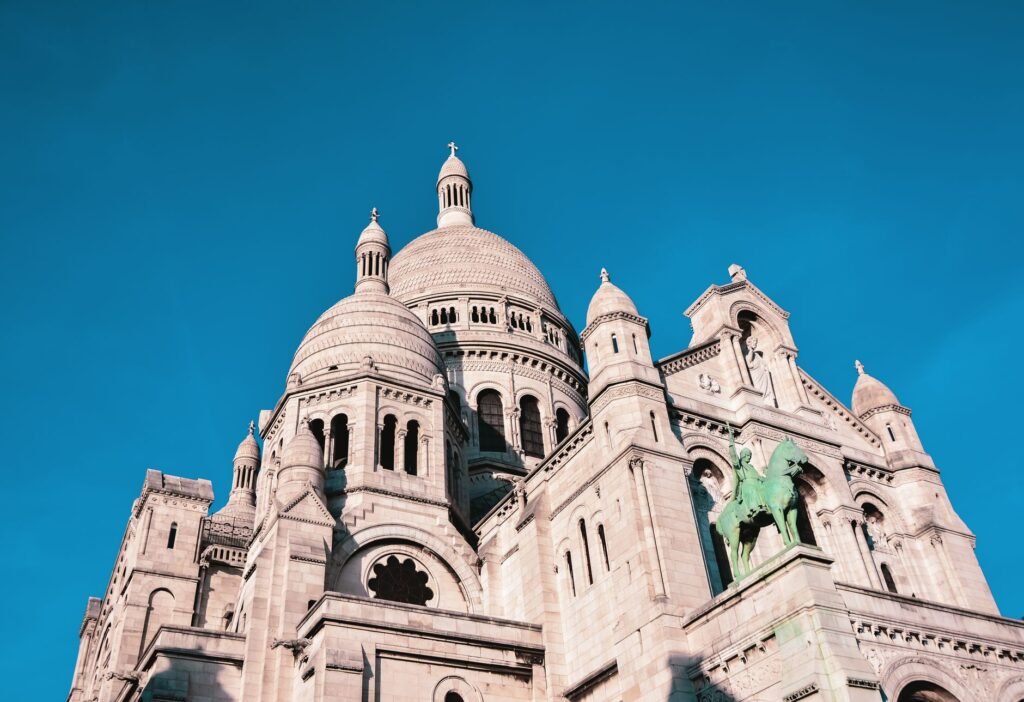
🇧🇷 POR | 🇫🇷 FR | 🇺🇸 EN | 🇪🇸 ES Montmartre is the kind of neighborhood that punishes anyone who tries to rush through it. The narrow streets, staircases, and winding alleyways demand time—and a route with a clear beginning, middle, and end helps you avoid spending the entire afternoon walking in circles around the same block without even realizing it. The white dome of Sacré-Cœur, standing 83 meters tall, dominates the hilltop and serves as a constant reference point throughout the walk. | Photo: Tove Liu / Pexels Where to Start: Abbesses Station The most charming entrance to Montmartre is through the Abbesses metro station, famous for its Art Nouveau iron canopy designed by Hector Guimard in the early 20th century—one of the few remaining intact in Paris. The station is also one of the deepest in the network, so be prepared to climb several flights of stairs or take the internal elevator before you even set foot on the street. Once you exit, head to Square Jehan Rictus, a small garden that houses the “Mur des Je t’aime” (I Love You Wall), a panel of blue tiles featuring the phrase “I love you” written in 311 different languages. Created in 2000 by artists Frédérique Baron and Claire Kito, it has become a must-stop for anyone snapping a romantic photo in the neighborhood. Heading Uphill: Funicular or Staircase From Place des Abbesses to the top of the hill where Sacré-Cœur sits, it’s about a 10-15 minute uphill walk, or you can opt for the Montmartre funicular, which climbs in about 90 seconds and works like regular public transit—meaning it accepts the same ticket you use on the metro, with no extra charge. The on-foot alternative involves around 300 steps, spread across streets and stairways, and has the advantage of passing through charming alleyways that the funicular simply glides over. Those who prefer to walk up will find staircases like this one scattered along the streets leading to the hilltop. | Photo: TBD Traveller / Pexels Sacré-Cœur: The View and the Basilica Once you reach the top, the first natural stop is the staircase in front of the Sacré-Cœur Basilica, where you can see a huge swath of Paris stretching out before you—on clear days, you can spot the Eiffel Tower and the city center down below. Entry to the basilica is free; only the climb to the dome, for those who want an even higher view, requires a separate paid ticket. The building, in a Romano-Byzantine style, is relatively recent by Parisian standards—construction began only in the late 19th century, as a kind of national vow following the Franco-Prussian War, and was completed in 1914, with the official inauguration taking place after World War I, in 1919. Place du Tertre: The Street Artists Just a few steps from the basilica lies Place du Tertre, a small medieval square that has functioned as an open-air studio since the early 20th century. Painters and caricaturists—most with official permits from the city to work there—offer quick portraits, landscapes, and caricatures to passersby. It’s worth browsing without commitment before deciding if you want to commission something: prices and styles vary widely from artist to artist. The square is small and gets crowded quickly from mid-morning onward—anyone wanting photos without a crowd in the background should arrive as close to opening time as possible. Rue Saint-Rustique, Rue Norvins, and Le Consulat Leaving Place du Tertre, it’s worth turning onto Rue Saint-Rustique, one of the neighborhood’s oldest streets, and following it to Rue Norvins. Along the way, you’ll find Le Consulat, a historic café that once hosted names like Picasso, Renoir, and Toulouse-Lautrec back when Montmartre was a haven for struggling artists, before it became a tourist destination. Important note: to better understand the full history of the basilica and the hill before you go, check out our Montmartre and Sacré-Cœur guide, complete with historical context and visiting hour tips. La Maison Rose and the Montmartre Vineyards Heading a bit downhill on Rue de l’Abreuvoir, you’ll come across Maison Rose, a small pink façade that is one of the most photographed images in the neighborhood—it operated as a restaurant for decades and was painted by many of the artists who lived in Montmartre. Across the street, on the other side, is Clos Montmartre, a tiny vineyard within the city that many people don’t even know exists—yes, Paris has a real vineyard, planted in the 1930s to prevent the area from becoming a real estate speculation site. Maison Rose, one of Montmartre’s most photographed façades, sits just steps from the neighborhood’s small vineyard. | Photo: Jose D’Alessandro / Pexels A Bit of History: From Artists’ Village to Tourist Hotspot Until the end of the 19th century, Montmartre was literally a village separate from Paris, only officially annexed to the city in 1860. The cheap land and privileged views attracted windmills, vineyards, and later a generation of painters who couldn’t afford rent in the central neighborhoods. It was on these streets that Picasso, Van Gogh, Toulouse-Lautrec, and Modigliani lived and worked at some point in their careers, often in tiny, unheated shared studios. This bohemian fame attracted cabarets, including the Moulin Rouge, still operating at the foot of the hill, and turned Montmartre into a symbol of artistic and slightly edgy Paris in the early 20th century. Over time, the bohemian gave way to the touristic—today, most of the artists who once lived there on cheap rents can no longer afford to live in the neighborhood, but the village-within-the-city vibe, with its narrow streets and few tall buildings, is still what sets Montmartre apart from the rest of Paris. Where to Grab a Bite During Your Walk The area around Place du Tertre is packed with crêperies and cafés aimed at tourists, with higher prices and inconsistent quality—it’s not the worst choice in the world if you just want to sit and rest your legs, but it’s worth lowering your expectations. For a more honest break, the side streets a bit