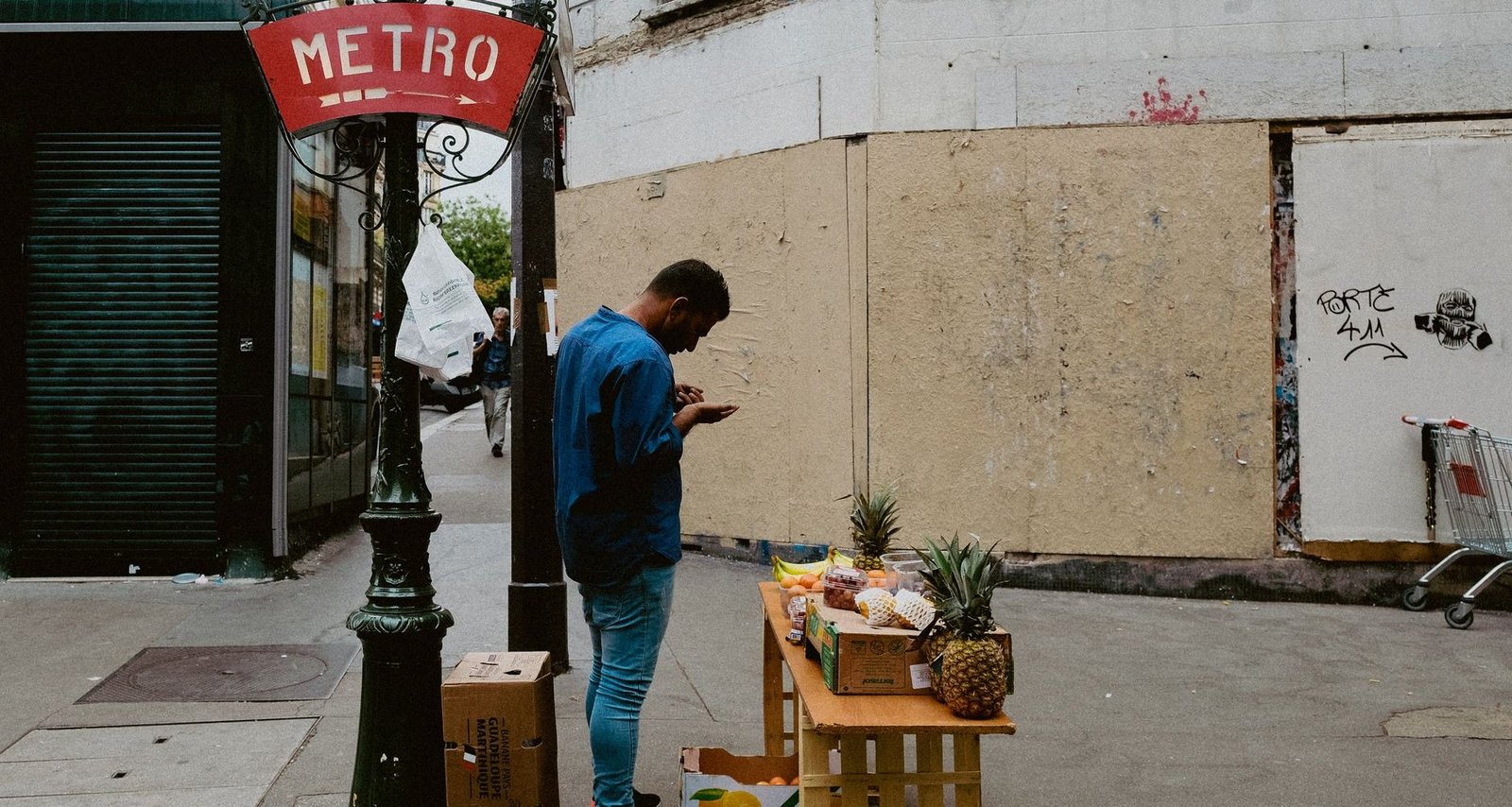
Paris has a street market tradition that says a lot about how Parisians relate to food. While the supermarket has its uses, it’s at the neighborhood market where the butcher knows your name, the cheese stall ages pieces you can’t find anywhere else, and an elderly lady examines every single tomato before making her choice. For visitors to the city, these markets are a window into everyday Parisian life—and they’re often far more interesting than many tourist attractions.
There are over 80 official street markets in Paris, called marchés découverts (open-air) or marchés couverts (covered). Most operate two or three mornings a week, usually until 1:30 PM. Getting there early makes a difference: the best items disappear before noon, and vendors themselves start packing up their stalls 30 to 40 minutes ahead of time.
In this guide, you’ll find the markets that are truly worth the detour—with practical info on hours, how to get there, and what to look for at each one.
Dica: Aproveite também para fazer estes passeios em Paris
Tour pelo exterior da catedral de Notre Dame + Ingresso da cripta . Duração: 2 horas
Disneyland Paris Duração: 3 horas ou mais
Passeio de barco pelo Sena. Duração: 1h
Ingresso do 3º andar da Torre Eiffel. Duração: 2 a 3 horas
Ingresso do Palácio de Versalhes. Duração: 2 a 3 horas
Veja mais passeio em Paris aqui.
The Best Street Markets in Paris
Marché Bastille (Marché Richard-Lenoir)
The market on Boulevard Richard-Lenoir is the largest open-air market in Paris—and one of the most beloved by locals. It stretches for nearly a kilometer along the central boulevard, open Thursdays and Sundays from 7:00 AM to 2:30 PM.
The stalls cover just about everything: seasonal fruits and vegetables, fresh fish and seafood, poultry and meats, cheeses from every region of France, olives, spices, honey, flowers, and clothing. On Sundays, it gets even bigger, with more producers coming directly from their regions—Brittany, Provence, Burgundy, Alsace. Each brings whatever is best that week.
To get there, get off at Bastille station (lines 1, 5, and 8) or Richard-Lenoir (line 5). The market starts just a few steps from the metro exit. The surrounding 11th arrondissement is full of bistros and cafés, so you can easily combine a market morning with a quality breakfast at one of the neighborhood bars.
Marché d’Aligre: The Most Authentic in Paris
The Marché d’Aligre is located at Place d’Aligre in the 12th arrondissement and operates every day except Monday, from 7:30 AM to 1:30 PM. Those in the know say it’s the most Parisian market of them all—and the prices back that up: they’re lower than at almost any other market in the city.
It works on two levels. In the open square, you’ll find stalls with vegetables, fruits, and some inexpensive knick-knacks. Inside the covered building—the Marché Beauvau, built in the 19th century—you’ll find artisanal cheeses, cold cuts, flowers, olives, and gourmet specialties from different regions.
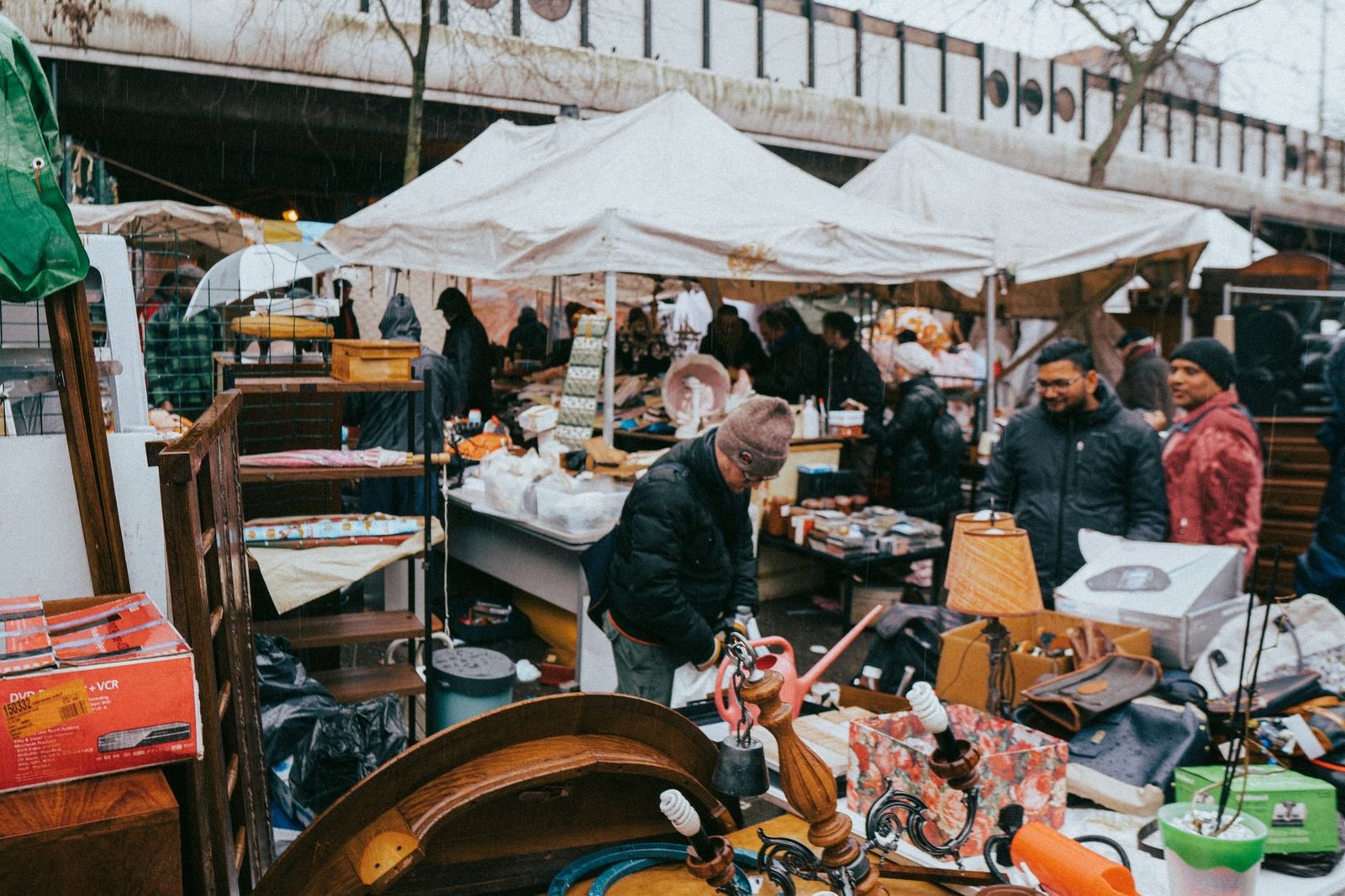
On Saturday and Sunday mornings, there’s also a small flea market around the square: it’s not quite Clignancourt, but you can find clothing and vintage items at good prices if you have the patience to dig. To get there: metro Ledru-Rollin (line 8).
Marché des Enfants Rouges: The Oldest Covered Market in Paris
Tucked away among the streets of the Marais in the 3rd arrondissement, the Marché des Enfants Rouges has been around since 1615—it’s the oldest covered market in Paris still in operation. Today, it’s a food-focused space, not for grocery shopping, with stalls offering different cuisines: Moroccan, Japanese, Italian, Caribbean, and traditional French.
The name comes from the orphanage that was nearby in the 16th century, where the children wore red clothes as a mark of belonging to the king.
It’s open Tuesday through Sunday (Tuesday to Friday from 8:30 AM to 1:00 PM and 4:00 PM to 8:00 PM; Saturday from 8:30 AM to 8:00 PM; Sunday from 8:30 AM to 5:00 PM). At lunchtime, it gets very crowded—the space is small and tables are highly sought after. Go early or after 2:00 PM to avoid the rush.
To get there: metro Filles du Calvaire (line 8) or Saint-Sébastien-Froissart (line 8).
Marché Raspail: The Organic Market of Paris
On Boulevard Raspail, between Rue du Cherche-Midi and Rue de Rennes, the Marché Raspail operates on Tuesdays, Fridays, and Sundays from 7:00 AM to 2:30 PM. On Tuesdays and Fridays, it’s a conventional food market. On Sundays, it transforms into a marché biologique—completely organic.
The Sunday organic market is one of the most well-known in Paris among locals and chefs. Prices are higher than at the popular markets, but the quality is visible: pesticide-free vegetables, artisanal cheeses from producers with names and addresses, naturally leavened breads, raw honey straight from the apiary. For anyone wanting to understand what makes French agriculture different, it’s a great starting point.
To get there: metro Rennes (line 12).
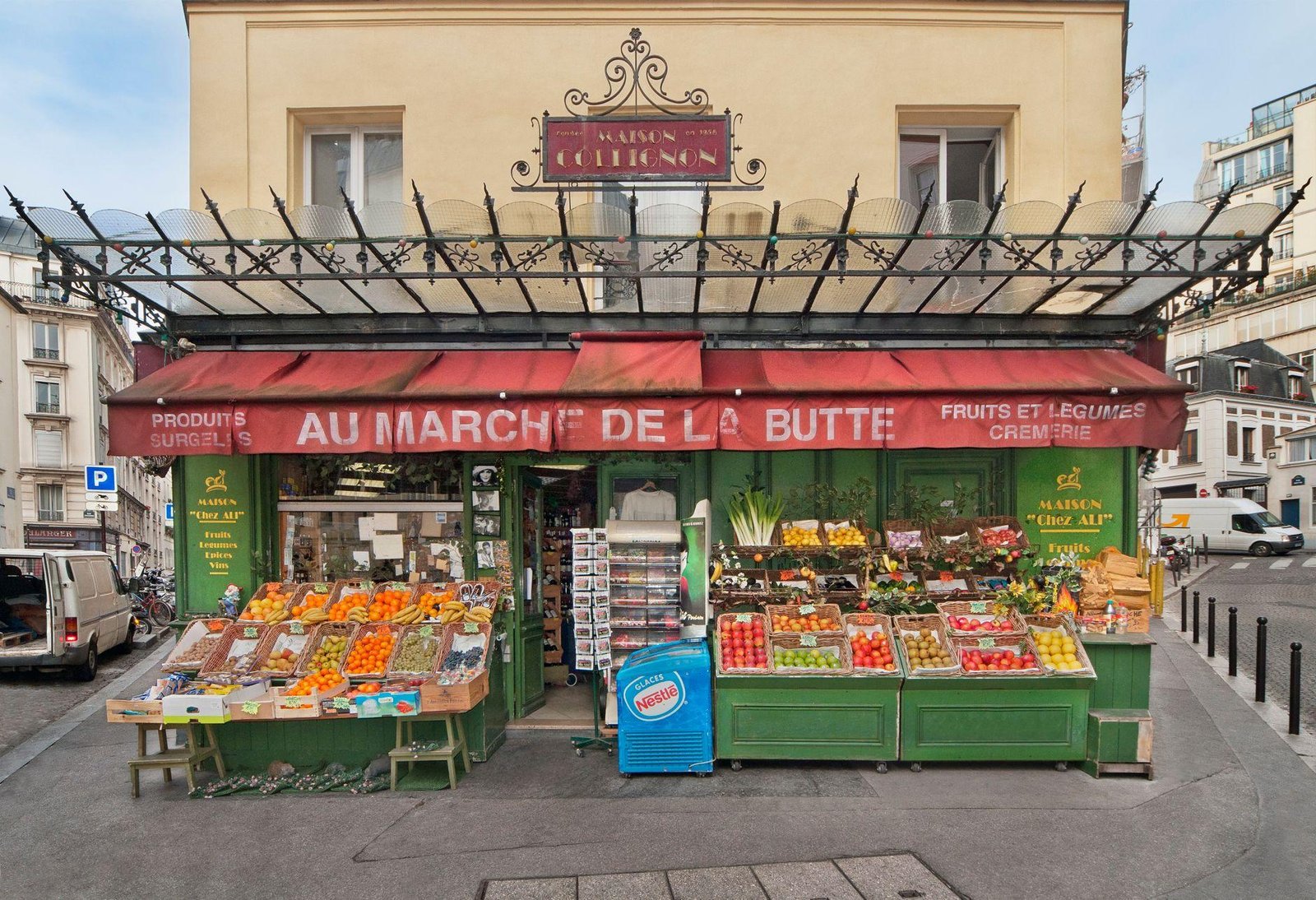
Marché Président Wilson: Premium Quality Near Trocadéro
In the 16th arrondissement, on Avenue du Président Wilson just steps from the Trocadéro, this market operates on Wednesdays and Saturdays from 7:00 AM to 2:30 PM. The neighborhood’s profile is reflected in the stalls: high-quality products, fishermen from Brittany with fresh seafood that arrived that morning, and cheesemongers with selections from affineurs—cheeses aged and handcrafted by specialists.
It’s not the cheapest market in Paris, but the quality is worth it for anyone wanting to experience the best of French produce. The location is convenient: the Trocadéro and the view of the Eiffel Tower are just a few minutes’ walk away. To get there: metro Iéna (line 9) or Alma-Marceau (line 9).
What to Buy and Taste at Parisian Markets
Paris’s street markets are a great opportunity to try things you won’t find in ordinary restaurants or supermarkets. Here’s what’s worth paying attention to:
Cheeses: France has over 1,000 registered varieties of cheese. At the markets, you’ll find everything from the classics—camembert, brie, comté, roquefort—to regional cheeses that rarely leave their place of production. It’s worth asking the cheesemonger to recommend one that’s at its peak: they know what’s aging well that day.
Charcuterie: Mountain-cured ham, rillettes (pork slowly cooked in its own fat), saucisson (dried cured sausage), terrine de campagne. These are products that don’t need immediate refrigeration, so you can buy them in the morning and eat them at a picnic later.
Bread and Viennoiseries: Some stalls sell directly from local bakeries. Croissants that came out of the oven that morning have a completely different texture from ones that have been sitting on a counter for hours.
Seasonal Fruits and Vegetables: Parisian markets follow seasonality strictly. In summer (June to September): strawberries, raspberries, peaches, apricots, and tomatoes of exceptional quality. In autumn: wild mushrooms—cèpes, girolles, trompettes de la mort. In winter and spring: roots, tubers, and vegetables that rarely make it to Brazil.
Flowers: Flower stalls appear at almost every market. A small bouquet costs between €5 and €10—it fits nicely in a cloth bag.
Practical Tips for Visiting the Markets
Get there early. Markets generally run until 1:00 PM or 2:30 PM, but the best products disappear in the first few hours. For the Sunday Marché Bastille, arriving at 9:00 AM already means competing for some items. For the Saturday Marché d’Aligre, before 9:00 AM is ideal.
Bring cash. Many stalls accept cards, but cash is still the fastest way to pay and avoids any confusion. Any tobacco shop or bank has ATMs near the main markets.
Don’t touch the products without asking. At many stalls, especially for fruits and vegetables, the protocol is that the vendor serves you. Point to what you want and say the quantity. Reaching out to grab a fruit can be frowned upon.
Bring a reusable bag. Markets don’t hand out plastic bags. Parisians arrive with their own foldable bags from home—do the same.
The posted hours are opening times. Vendors start packing up their stalls 30 to 45 minutes before closing. If the market closes at 1:30 PM, arrive before 12:45 PM.
Operating days can vary. On French national holidays, many markets don’t open. Always check the official Mairie de Paris website, which lists all markets with updated hours.
How to Fit Markets into Your Itinerary
Visiting a market early in the morning is an efficient way to start your day in Paris without spending a lot. You buy breakfast or lunch ingredients at a price well below restaurant prices—and you still experience something most tourists don’t.
A classic combo: Sunday morning at Marché Bastille, then metro to the Champ de Mars (20 minutes on line 1) for a picnic with your purchases, followed by an afternoon at the Eiffel Tower. Another route for those in eastern Paris: early morning at Marché d’Aligre, then a walk to the Canal Saint-Martin—the two are about a 20-minute walk from each other.
Covered markets like Enfants Rouges can be visited at lunchtime regardless of the weather—they’re a great choice on rainy days, when open-air markets are emptier and grayer than usual.
Frequently Asked Questions About Street Markets in Paris
Are street markets safe for tourists?
Yes. Parisian markets are frequented by families and locals of all ages. In very busy markets like Bastille on Sundays, keep an eye on your bag as you would in any crowd, but there’s no special reason for concern.
Can I visit a market even if I don’t buy anything?
Absolutely. Wandering through the stalls, observing the products, and soaking in the atmosphere is an experience in itself. No one will pressure you.
Which market is closest to the tourist center of Paris?
The Marché des Enfants Rouges is in the Marais, which is quite central. The Marché Bastille is just steps from Bastille station (line 1). The Marché Raspail is near Saint-Germain-des-Prés.
Do the markets have options for vegetarians?
Plenty. Fruits, vegetables, breads, cheeses, honey, olives, spices, and nuts are abundant at any market. The Sunday organic Marché Raspail is particularly generous for those with dietary restrictions.
Do the vendors speak English?
Some do, most don’t. With gestures, numbers, and a little patience, communication works. Knowing how to say “combien ça coûte?” (how much does it cost?) and “je prends ça” (I’ll take this) will cover most interactions.
Which is the cheapest market in Paris?
The Marché d’Aligre is often cited as having the best prices in the city. The Marché Bastille also offers good value for money, especially at the fruit and vegetable stalls.
Walking through a Parisian market on a Saturday morning is one of the most accessible and most authentic experiences Paris has to offer. No expensive restaurant or museum can replicate the mix of smells, voices, and colors you’ll find among the stalls—and entry is free. If your schedule allows, set aside at least one morning for it during your visit.