The Musée d’Orsay holds the world’s largest collection of Impressionist art, spread across a former train station over a hundred years old. For those with only two hours, the mission is simple to define and tough to pull off without a plan: see the names everyone recognizes without getting lost in hallways packed with hundreds of other equally brilliant works.
Dica: Aproveite também para fazer estes passeios em Paris
Tour pelo exterior da catedral de Notre Dame + Ingresso da cripta . Duração: 2 horas
Disneyland Paris Duração: 3 horas ou mais
Passeio de barco pelo Sena. Duração: 1h
Ingresso do 3º andar da Torre Eiffel. Duração: 2 a 3 horas
Ingresso do Palácio de Versalhes. Duração: 2 a 3 horas
Veja mais passeio em Paris aqui.
Before You Walk In: Why the Building Itself Is a Work of Art
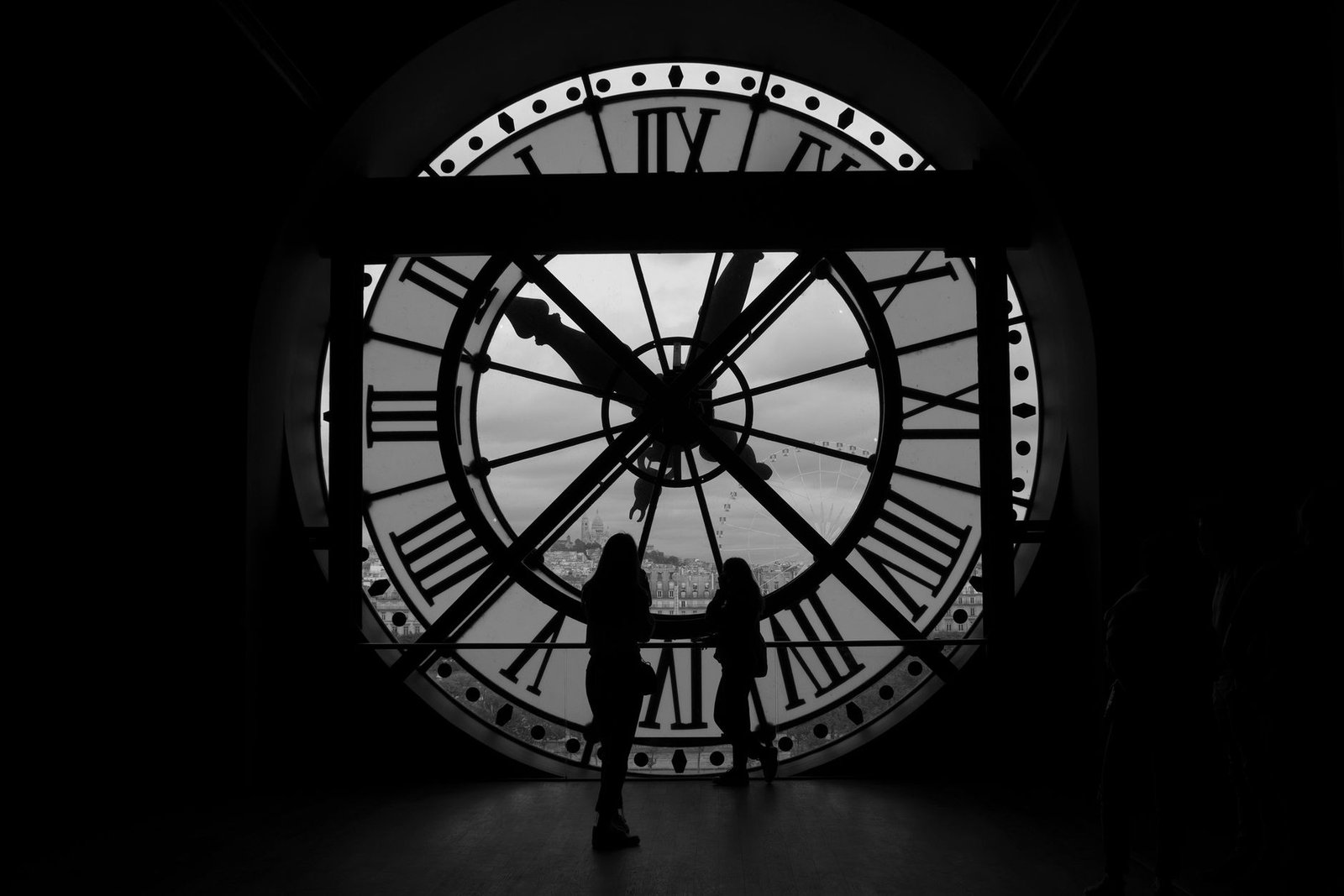
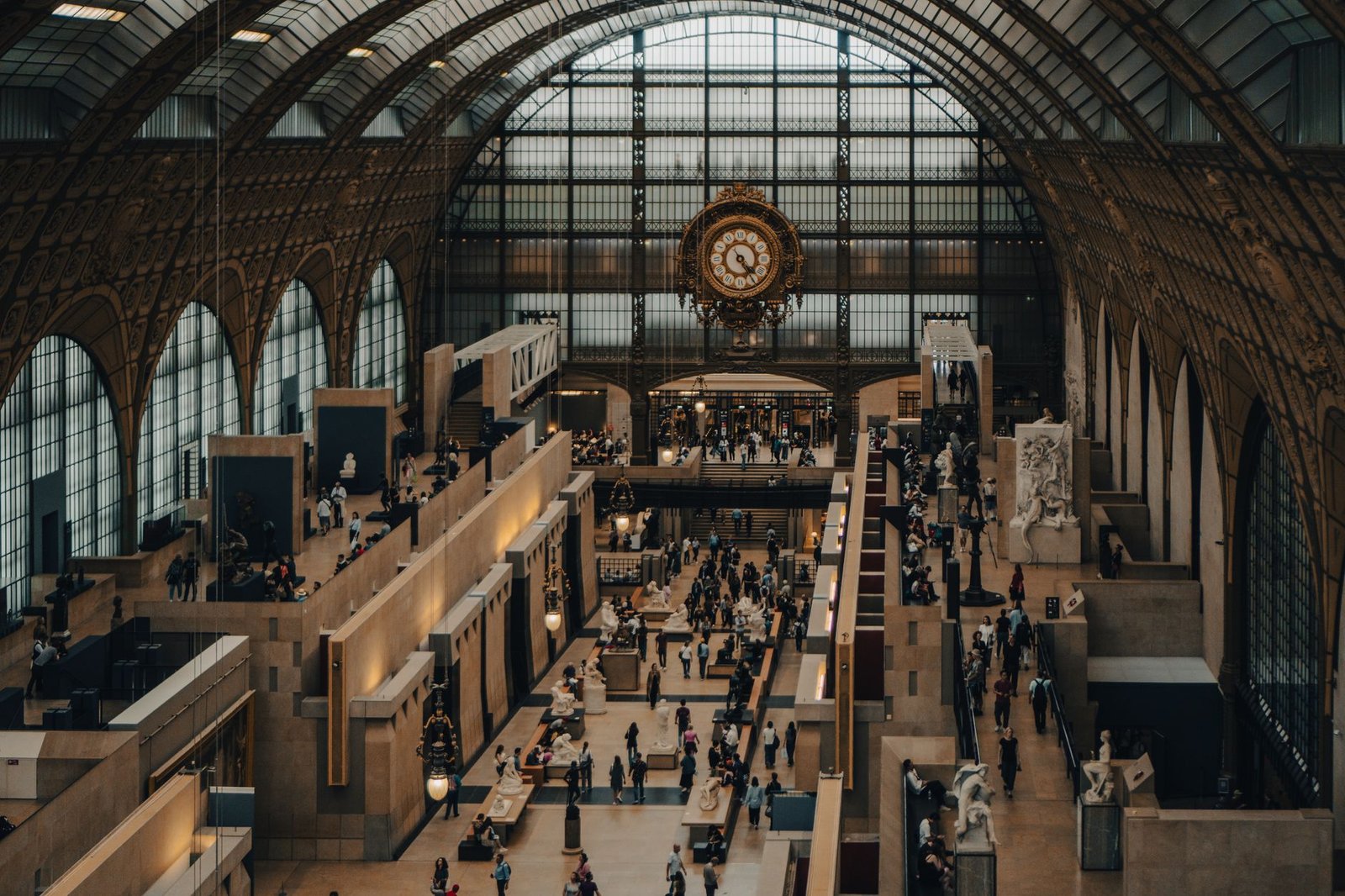
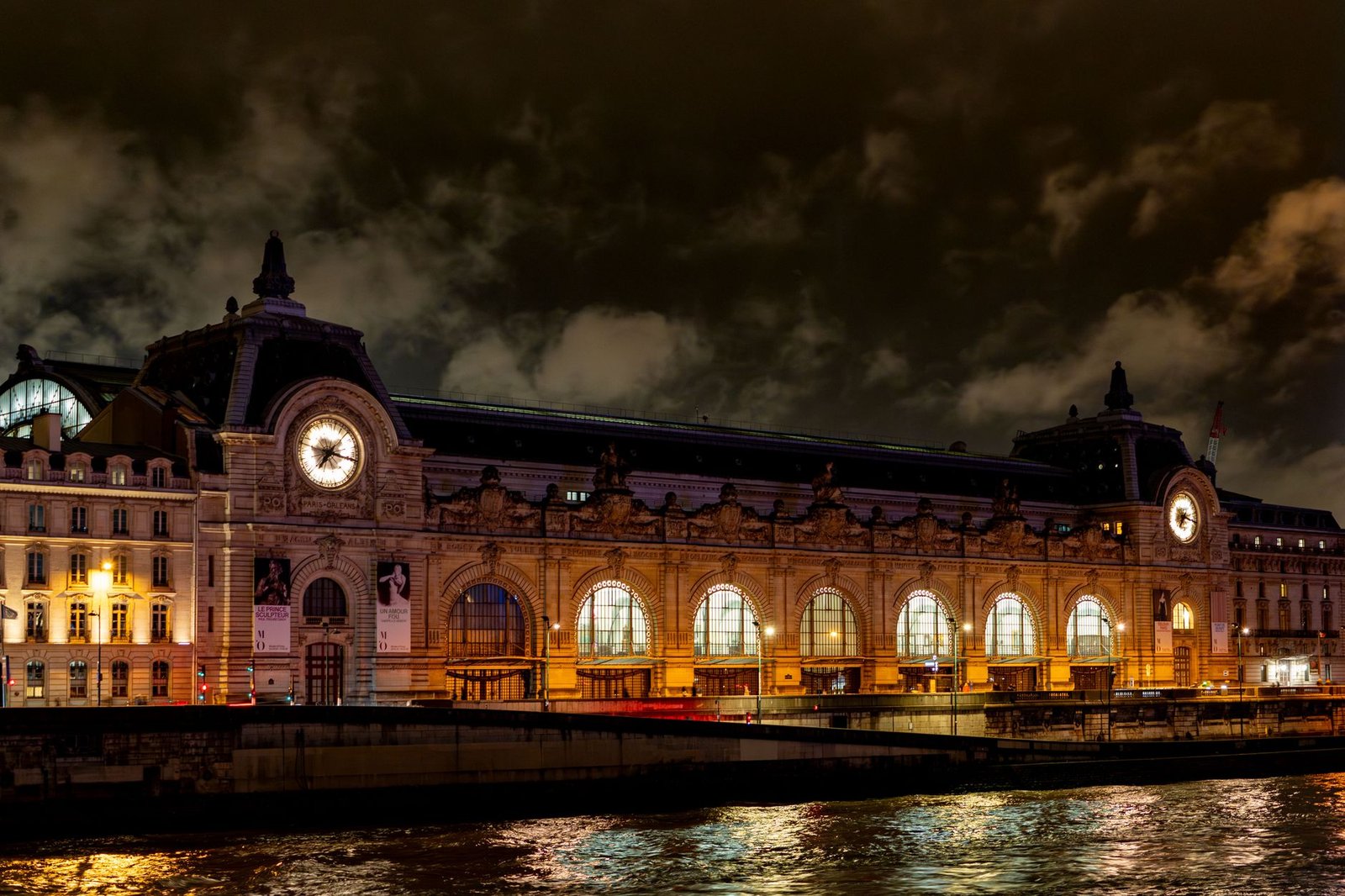
The d’Orsay operated as a train station—the Gare d’Orsay—until the mid-20th century, built for the 1900 Universal Exposition by architect Victor Laloux. The iron and glass structure, with its massive arched ceiling and iconic clock on the façade, was nearly demolished in the 1970s before being transformed into a museum, which opened in 1986. It’s worth looking up at the ceiling a few times during your visit—the building’s architecture holds its own against a good chunk of the collection.
Van Gogh: The Self-Portrait and the Starry Night Over the Rhône
On the museum’s top floor, in the so-called Impressionist Gallery, you’ll find the largest concentration of works by Van Gogh—the museum holds about 24 of his paintings. The standout is the Self-Portrait, which historians point to as one of the last he painted before his death, alongside Starry Night Over the Rhône, a nocturnal painting that predates the more famous “Starry Night” housed in New York.
It’s normal for this room to be more crowded than the others—Van Gogh is usually the name that draws the most first-time visitors to the museum, so set aside some waiting time, especially if your visit falls during peak hours around noon.
Renoir, Monet, and the Peak of Impressionism
Bal du moulin de la Galette by Renoir is another highlight on the same floor—an outdoor dance scene in Montmartre, with light filtering through the trees creating dappled patterns on people’s clothes, a technique that sums up what Impressionism was trying to achieve: capturing light and movement instead of precise details.
As for Monet, the museum holds part of the series of paintings of Rouen Cathedral, done at different times of day, along with landscapes from the artist’s own garden in Giverny—a nice complement for anyone planning to actually visit Giverny on a day trip from Paris.
Manet and the Paintings That Shocked Paris
Two canvases by Édouard Manet—Olympia and Le Déjeuner sur l’herbe—caused a scandal when exhibited for depicting nude women in everyday contexts, outside the mythological standard accepted by academic art of the time. Today they are considered landmarks of the transition between classical French painting and what would become Impressionism, and they remain among the most visited works in the collection.
Degas and the Ballerinas
The pastels and sculptures of ballerinas by Edgar Degas form another major highlight, with scenes of rehearsals and backstage moments that steered clear of idealized portraits of dancers on stage—Degas preferred to capture the fatigue, the effort, and the less glamorous behind-the-scenes of dance routines, in a style that was almost documentary for its time.
Other Names Worth a Quick Stop
Beyond the big names, the same top floor also makes room for Paul Cézanne, considered a bridge between Impressionism and the Cubism that would emerge decades later, with still lifes and landscapes of Provence that he painted obsessively, revisiting the same subjects over and over in search of the right composition. Gustave Caillebotte, less known to the general public, also has important works here—his urban scenes of Paris, with bold perspectives seen from balconies or the tops of bridges, help tell the story of a city modernizing at the same time these artists were painting.
It’s also worth stopping in front of the portrait that American painter James Whistler made of his own mother—one of the most reproduced paintings in American art history, but one that has lived in Paris since the French national museum bought the work early in the 20th century, decades before it became a cultural icon in the United States.
What Gets Left Out of the 2-Hour Itinerary
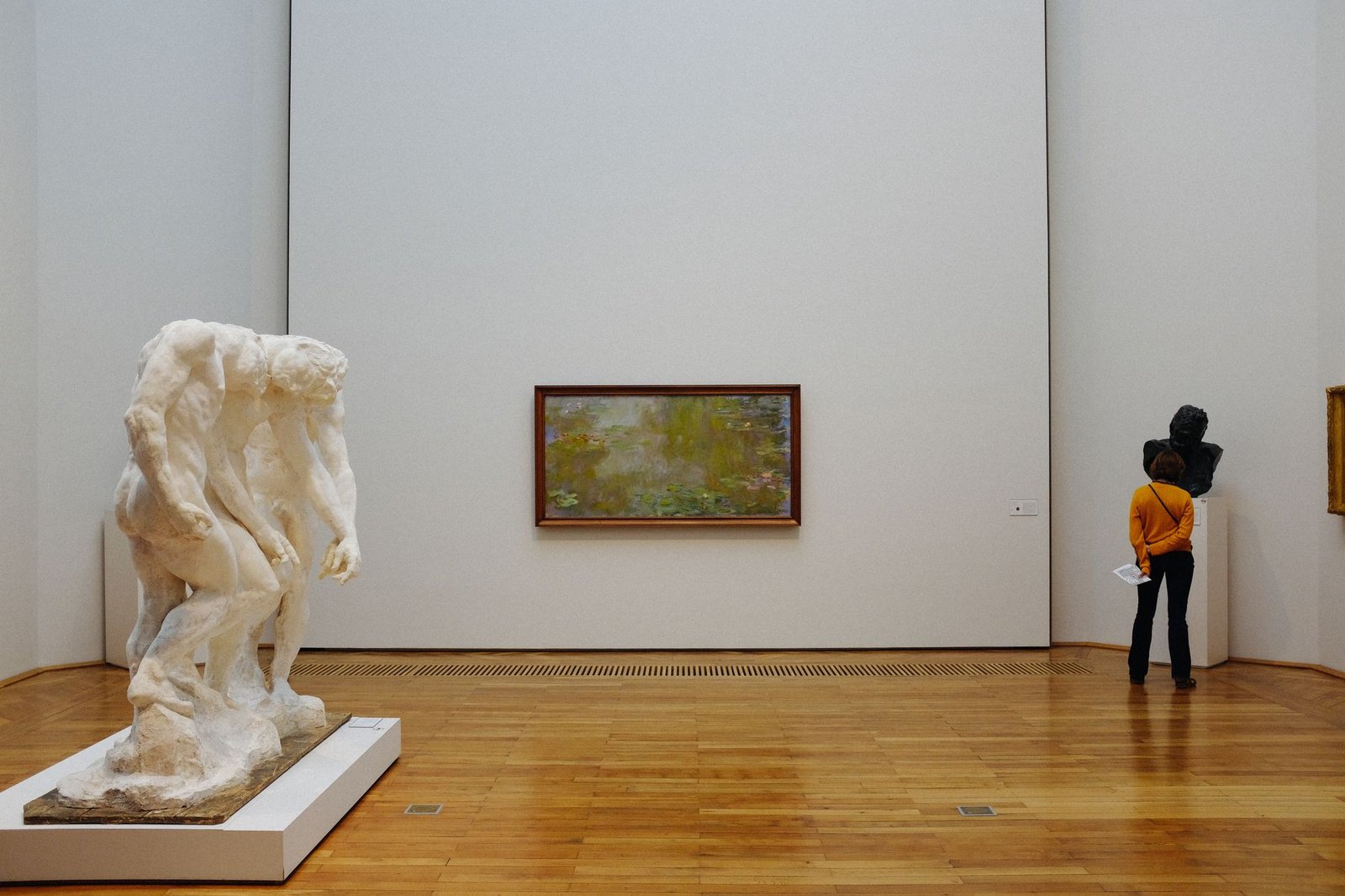
Anyone who decides to come back on a future visit will find much more than Impressionist painting. The museum has a floor dedicated to Art Nouveau furniture and objects, with design pieces showing how the aesthetic of the era migrated from painting to furniture, glassware, and everyday adornments. There’s also a sculpture section on the ground floor—including works by Rodin—spread out along what was once the central platform of the train station.
Temporary exhibitions, which change throughout the year, often take up part of the ground floor space and can include 19th and early 20th-century photography, another strong area of the collection that few first-time visitors even know exists.
How to Organize Your 2-Hour Itinerary
The most efficient approach is to head straight to the top floor (5th floor), where the Impressionist Gallery is concentrated with Van Gogh, Renoir, Monet, and Cézanne, and only then come down through the intermediate floors to see Manet, Degas, and the rest of the 19th-century collection. Doing the reverse—starting from the bottom—tends to leave visitors tired well before reaching the most anticipated part of the collection.
For those who really only have 2 hours, it’s worth accepting that a good chunk of the museum will be left out—sculptures, Art Nouveau furniture, and the late 19th-century architecture section require more time than this essential itinerary allows. The tip is to treat this visit as a “trailer” for the museum, saving the rest for a future trip with more free time.
Hours and When to Go
The museum is open Tuesday through Sunday, from 9:30 AM to 6:00 PM, with extended hours on Thursdays until 9:45 PM—the best day for seeing the works with fewer people around. Monday is the weekly closure. It’s worth noting that between June 10 and October 5, 2026, construction work in the reception area may temporarily limit service for large groups—no major impact for individual visitors, but good to know in advance.
Practical Tips for Making the Most of Your Time
- Buy your timed-entry ticket online in advance—it saves you from the entry line, which could eat up a good chunk of your available time
- Head straight to the 5th floor via the elevator or the staircase closest to the entrance, without stopping at the first ground-floor rooms
- Use the museum map (available at the entrance or on the official app) to pinpoint exactly which rooms hold Van Gogh, Renoir, and Manet before you start walking
- If you have time left at the end, take a quick lap around the central hall under the arched ceiling—it’s fast and worth the extra effort
Frequently Asked Questions
Is 2 hours enough time for the Musée d’Orsay?
For seeing the absolute highlights described here, yes. To explore the full collection, 3 to 4 hours is ideal.
Is there a combined ticket with the Louvre or another museum?
There’s no official single ticket between the two, but the Paris Museum Pass covers entry to both museums separately, within the pass’s validity period.
What’s the best time to avoid the crowds?
Opening time at 9:30 AM and Thursday evenings (after 6:00 PM) tend to have noticeably fewer people than midday.
Can I take photos of the artworks?
Yes, photos without flash are allowed in most of the museum, but it’s worth checking for restriction signs in specific rooms, which can change depending on temporary exhibitions.
Why So Many People Prefer the d’Orsay to the Louvre
Compared to the Louvre, the d’Orsay has a clear advantage for short visits: the collection is more compact and focused on a specific period of art history, making it easier to plan a streamlined itinerary without the feeling of missing important things in parallel hallways. The Louvre, with its monumental scale, usually demands tougher choices and longer itineraries for a similar level of satisfaction.
Add to that the fact that most visitors already arrive at the d’Orsay recognizing the names Van Gogh, Monet, and Renoir right off the bat—unlike other sections of museums of ancient art, where historical context weighs more heavily on appreciating the work. This prior familiarity tends to make the experience more immediately rewarding for anyone visiting Paris for the first time.
Is the museum wheelchair accessible?
Yes, the building has elevators between floors and ramp access at the entrance, a legacy of the adaptation made when the train station was converted into a museum.
Is there an audioguide in Portuguese?
The museum usually offers audioguides in several languages, including Portuguese, available for rent at the entrance or through its own app.
Is it worth hiring a guide or private tour?
For a 2-hour itinerary focused on the highlights, a good map and a bit of advance planning do the trick—a guided tour is more worthwhile for those seeking deeper historical context or who are less familiar with art history.
Do kids usually enjoy the collection?
Large, colorful paintings like those by Van Gogh and Monet tend to catch the attention of even young children, but the 2-hour itinerary is best enjoyed by those who already have some prior interest in art.
Official Links
In the end, two hours well spent at the d’Orsay yield more satisfaction than a whole day wandering aimlessly through a larger museum—the secret is simply knowing where to start before you cross the front door.
It’s also worth pairing your visit with a walk along the banks of the Seine right after leaving the museum—the view of the building’s façade from the outside wraps up the itinerary nicely after all that painting.