Avenue Montaigne: The Ultimate Guide to Paris’s Luxury Maisons
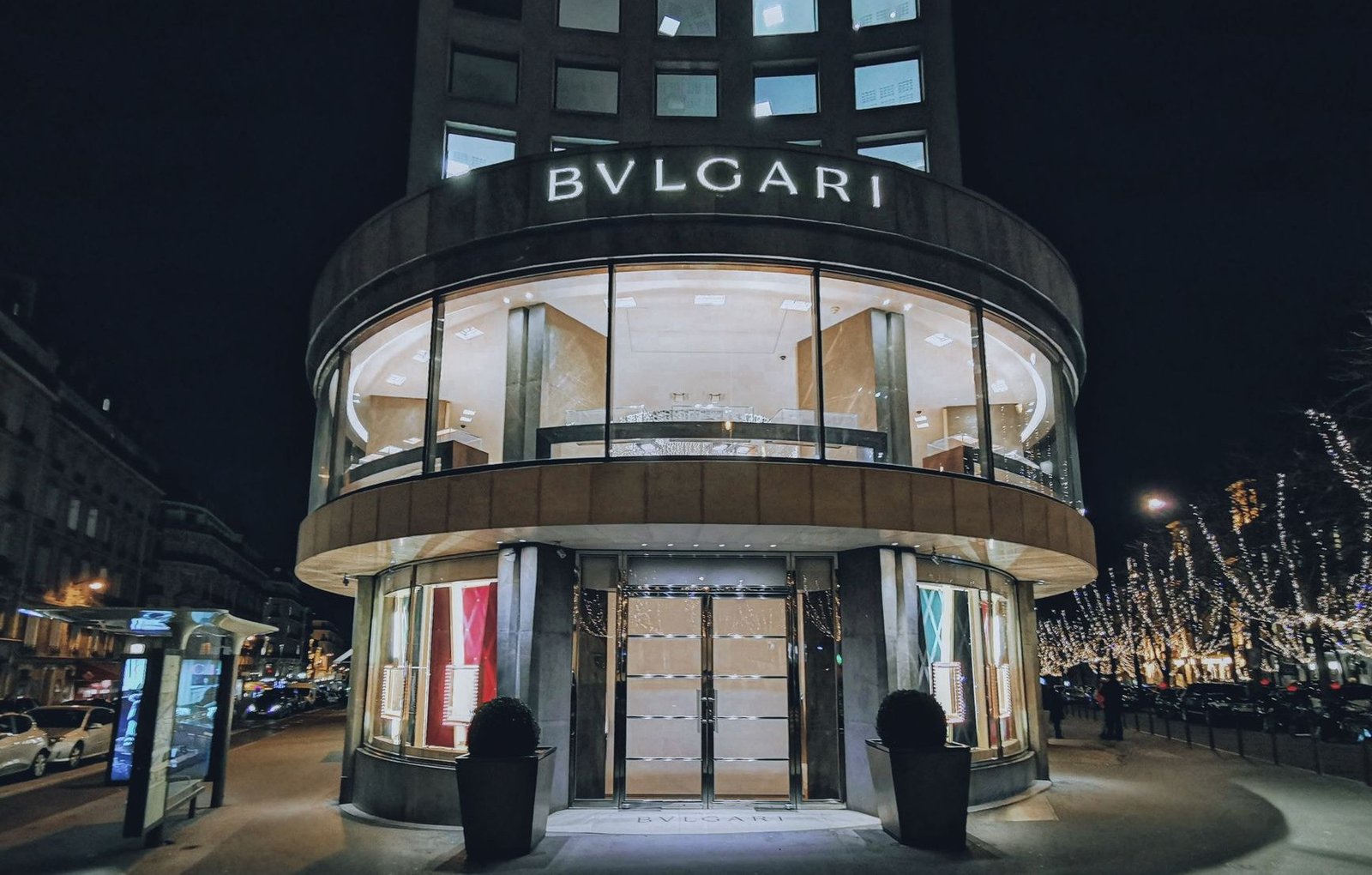
Some streets are worth visiting for the atmosphere alone. Avenue Montaigne is one of them. Tucked in the heart of the 8th arrondissement, just steps from the Champs-Élysées, it gathers the most important French fashion houses in a sequence of elegant facades, glowing window displays, and doors that seem to hold secrets from centuries past. Chanel, Dior, Louis Vuitton, Valentino, Givenchy, Prada—the roster of brands assembled here turns any stroll down the sidewalk into a living museum of international fashion.
What surprises many people: you don’t need to spend a cent to enjoy the avenue. Wandering past the window displays, admiring the art deco facades, sipping a coffee at one of the neighborhood bistros, and letting your eyes rest on that stretch of Paris is already worth the visit. And for those who do intend to shop, there’s the added benefit of tax free, which can mean significant savings when it’s time to settle the bill.
Dica: Aproveite também para fazer estes passeios em Paris
Tour pelo exterior da catedral de Notre Dame + Ingresso da cripta . Duração: 2 horas
Disneyland Paris Duração: 3 horas ou mais
Passeio de barco pelo Sena. Duração: 1h
Ingresso do 3º andar da Torre Eiffel. Duração: 2 a 3 horas
Ingresso do Palácio de Versalhes. Duração: 2 a 3 horas
Veja mais passeio em Paris aqui.
Where is Avenue Montaigne located
Avenue Montaigne begins at Place de l’Alma—known for the Flame of Liberty sculpture and close to the spot where Princess Diana passed away in 1997—and runs in a straight line to the Rond-Point des Champs-Élysées, cutting across the 8th arrondissement from end to end. The entire stretch is less than 800 meters, making it perfect for a relaxed walk without needing much time.
To get there by metro, the most practical option is the Franklin D. Roosevelt station on lines 1 and 9, which sits right in the middle of the avenue. Those arriving on line 9 can also get off at Alma – Marceau, which provides access to the end closest to the Seine. From either stop, it’s a maximum two-minute walk to the first boutiques.
The history of the avenue
Avenue Montaigne wasn’t always the symbol of sophistication it is today. In the 19th century, as Paris underwent Baron Haussmann’s great urban renovation, the street was simply known as “Allée des Veuves”—the Widows’ Alley, a far-from-glamorous nickname that came from the habit of mourning ladies strolling among the trees. The place was popular, but far from the idea of luxury.
The turning point came in the early 20th century, when some of the most renowned haute couture houses began setting up shop here. Christian Dior opened the doors of his atelier on the corner of Montaigne and Rue François 1er in 1947, and that inaugural collection—dubbed the “New Look”—changed the course of Western fashion forever. After Dior, the others followed, one by one, transforming the address into a global benchmark for French luxury.
The maisons you’ll find
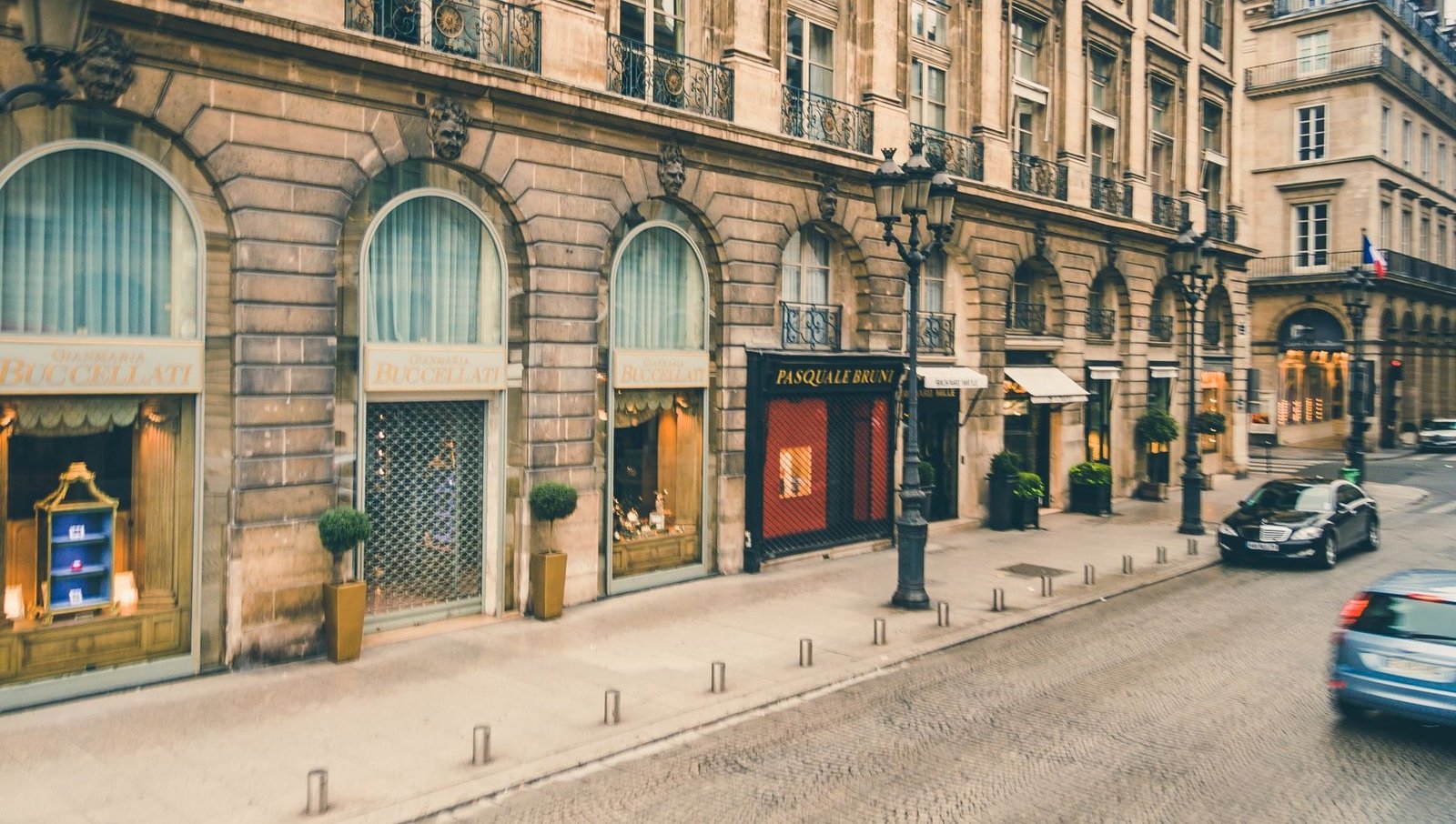
The list of brands on Avenue Montaigne reads like the table of contents of any prestigious fashion magazine. Christian Dior maintains its historic headquarters here, with a three-story flagship store that includes a showroom, café, and a small museum dedicated to the couturier’s legacy. Next door, Chanel presents its collections in an equally grand space. Louis Vuitton, Valentino, Balenciaga, Givenchy, Celine, Loewe, and Prada complete the lineup on the odd-numbered side.
On the even-numbered side, the Hotel Plaza Athénée—with its red facade and iconic awnings—is the favorite address for celebrities in Paris. The hotel itself has boutiques within its internal galleries, and the Bar du Plaza serves cocktails that cost the equivalent of a decent lunch in another neighborhood, but the experience is worth it. Along the avenue, interspersed between the boutiques, you’ll also find perfume shops, jewelry stores, and young fashion ateliers offering a slightly more accessible luxury without losing the address’s sophistication.
Beyond fashion, the avenue is home to the Théâtre des Champs-Élysées, one of France’s most important performance venues. Founded in 1913, the theater hosted the world premiere of Stravinsky’s Rite of Spring—which caused a riot in the audience—and remains active with a program of opera, ballet, and high-level concerts. Attending a show is a unique way to experience the avenue beyond the window displays.
Strolling without shopping: what to do for free
Avenue Montaigne is one of the rare places in the world where glass windows guard objects worth more than many monthly salaries, yet anyone can wander freely without the awkwardness that sometimes accompanies entering designer stores. The service teams are trained to welcome visitors with courtesy, regardless of their intention to buy.
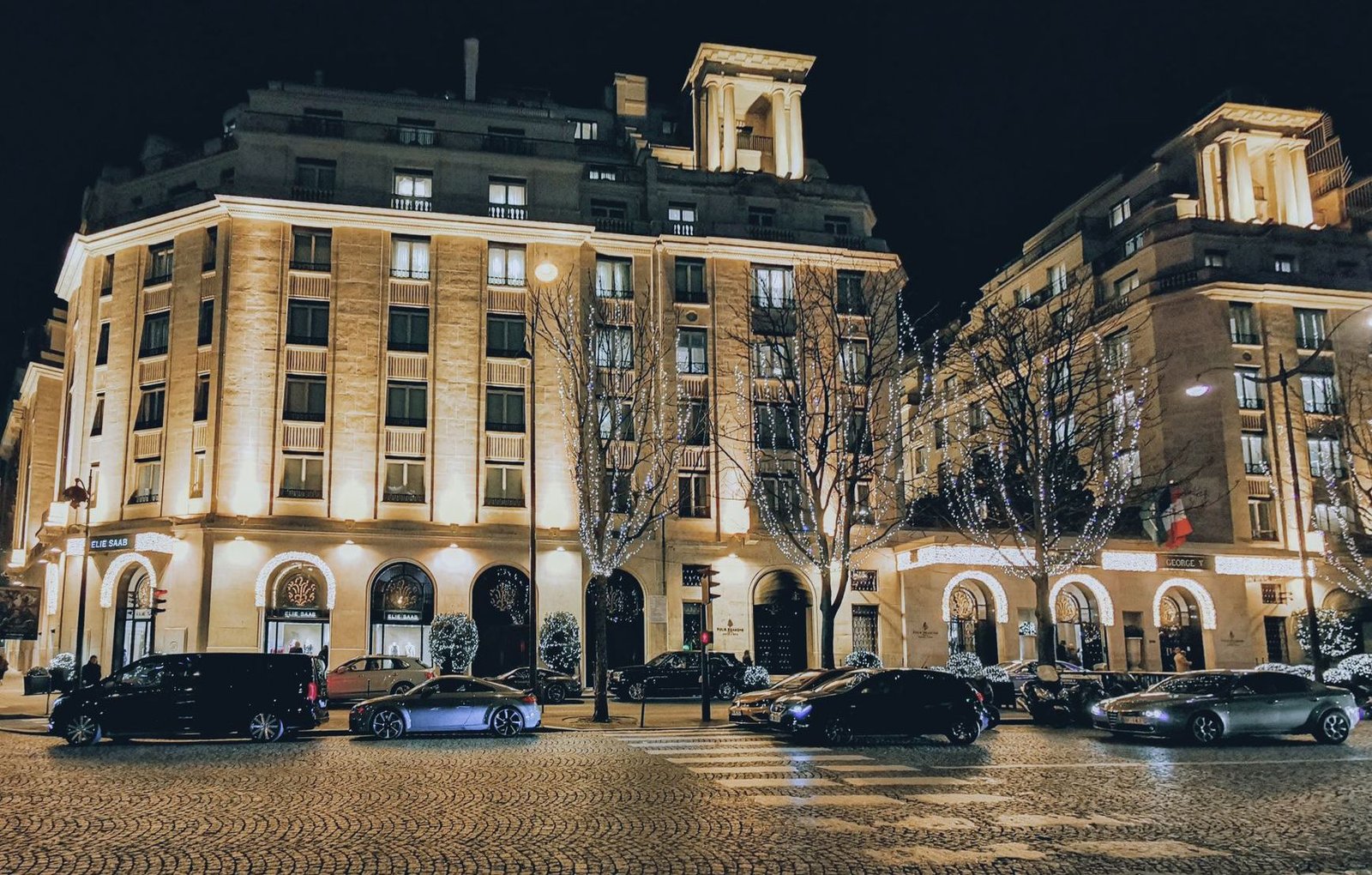
Just looking at the window displays is an experience in itself. The boutiques invest considerable sums in their visual merchandising—there are graphic designers and set designers dedicated exclusively to creating seasonal installations that change with each collection. During the winter months, the Christmas decorations of the brands on Montaigne are photographed by fashion magazines worldwide. In January and July, haute couture weeks turn the avenue into an open-air runway, with buzzing street style on the sidewalks.
For those who want to sit and observe without spending much, there are a few options. Café de l’Avenue, inside the Hotel Plaza Athénée, charges luxury hotel prices, but its terrace facing the sidewalk offers a prime hour of people-watching. A more budget-friendly alternative: the cafés on Rue François 1er, parallel to Montaigne, where prices are half as much and the atmosphere still carries the neighborhood’s charm without the famous address’s markup.
Tax Free for Brazilian tourists
For those hitting the shops, détaxe—or tax free—is a real benefit, and it’s worth understanding how it works. Tourists residing outside the European Union are entitled to a refund of the French VAT (TVA), which is around 20% on clothing, accessories, and perfumes. To activate the benefit, your purchase at a single store must exceed 100.01 euros in one day.
In practice, the process is simple. When you finish your purchase, ask the salesperson for a détaxe form—at any boutique on Avenue Montaigne, this is routine, and the staff does it dozens of times a day. You’ll leave with a sealed copy, which must be presented at the departure airport before checking your luggage. At Charles de Gaulle and Orly airports, there are specific kiosks for this process, as well as electronic self-service terminals that speed things up.
The refund comes via credit card within a few weeks, or immediately in cash at certain airport service points. The savings can be significant: on a 1,500-euro handbag, for example, the return is around 260 euros—enough to cover a nice Parisian dinner.
When to go and what to wear
Avenue Montaigne is open every day of the week, but the best time for a peaceful visit is in the morning, between 10 a.m. and noon. The tourist crowds pick up considerably after lunch, and by late afternoon, pedestrian traffic can make the walk feel a bit rushed. Stores generally open between 10 a.m. and 10:30 a.m. and close around 7 p.m.
As for attire: no boutique requires a dress code to enter, but wearing something reasonably put-together—it doesn’t need to be expensive, just discreet—usually makes the experience smoother, both in terms of how salespeople receive you and your own comfort. White sneakers, jeans, and a blazer are a combination that works well and fits right in with the environment.
Practical tips for your visit
Bring your passport. To activate tax free, the document is mandatory—and some boutiques only start the process with the physical passport in hand; they won’t accept a photo or copy. If you plan to shop, it’s much more convenient to arrive with the document in your bag than to have to go back for it.
Photographing the window displays is allowed and very common. Photographing inside the stores depends on each boutique: some allow it without restrictions, others ask that you not photograph certain pieces or interior areas. Respect the staff’s cues if they give any guidance on this.
The Dior Museum, located at number 30 on the avenue, deserves a separate visit for anyone interested in fashion history. The temporary exhibitions change frequently and have a curatorial quality on par with major museums. Entry costs around 12 euros, and tickets can be purchased online to avoid the line.
Perfumes, jewelry, and luxury beyond fashion
Anyone who thinks Avenue Montaigne is exclusively about clothes will be surprised by the variety of categories within the boutiques themselves. Dior, for example, has an entire floor dedicated solely to niche perfumery and its cosmetics line, including fragrances from the Maison Christian Dior collection that rarely appear in stores outside of Europe. Buying a perfume in this context—with personalized service, your choice of bottle, and the option for customization—is an experience unlike any duty-free shop.
Cartier maintains one of its largest jewelry stores in Paris at the end of the avenue, near the Rond-Point. The store occupies a historic building and presents collections ranging from the most classic and accessible lines to unique high-jewelry pieces reserved for clients by appointment. Even without any intention to buy, asking to see a piece and observing the presentation ritual—the velvet, the lighting, the care of the staff—is worth it as a cultural experience.
For those who want to take home a luxury souvenir at a lower price point, beauty products from brands like Givenchy and Dior—lipsticks, smaller perfumes, creams—qualify for tax free and have significantly lower prices than in Brazil, especially after the VAT refund. A Dior lipstick that might cost R$350 in Brazil goes for around 42 euros at the Parisian store, dropping to about 34 euros after tax free. The difference is real.
Pairing it with the Champs-Élysées
Avenue Montaigne and the Champs-Élysées meet at the Rond-Point, making it natural to combine both outings into a single itinerary. The difference in tone between the two is striking: while Montaigne is quiet, curated, and intimate, the Champs-Élysées are noisy, popular, and full of commerce for every budget. The two avenues complement each other perfectly because of this contrast.
An interesting itinerary: arrive in the morning at Place de l’Alma, walk the entire length of Montaigne to the Rond-Point, have lunch in the surrounding area, and spend the afternoon exploring the Champs-Élysées toward the Arc de Triomphe. The total route covers less than two kilometers and can be comfortably done in half a day, leaving the afternoon free for museums or a climb to the top of the Arc.
Those who want to extend the outing can also head down to the banks of the Seine—a ten-minute walk from Place de l’Alma—and hop on a river cruise at the end of the day. It’s a way to end with a different perspective of the city, with the Eiffel Tower in sight and the sun setting over the historic bridges.