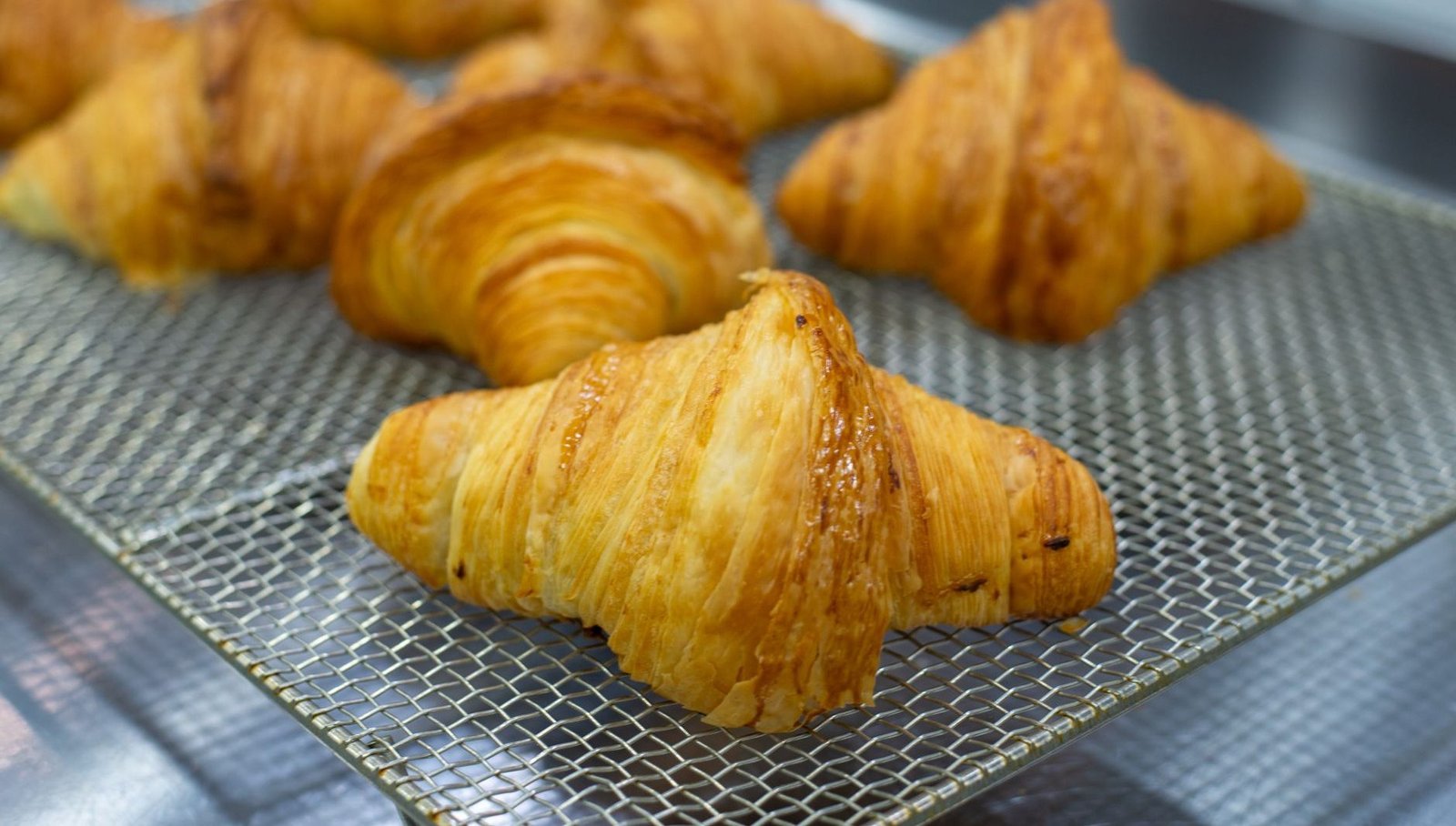
If you’re heading to Paris for the first time, you probably have one item on your list that seems trivial but ends up being one of the most memorable parts of the trip: biting into a real croissant. Not the Brazilian supermarket croissant, not the fast-food chain one—the real deal from a quality French bakery, with flaky layers, good butter, and a slightly elastic interior. The difference is staggering. And in Paris, where every block has at least one boulangerie, choosing wisely makes all the difference.
Dica: Aproveite também para fazer estes passeios em Paris
Tour pelo exterior da catedral de Notre Dame + Ingresso da cripta . Duração: 2 horas
Disneyland Paris Duração: 3 horas ou mais
Passeio de barco pelo Sena. Duração: 1h
Ingresso do 3º andar da Torre Eiffel. Duração: 2 a 3 horas
Ingresso do Palácio de Versalhes. Duração: 2 a 3 horas
Veja mais passeio em Paris aqui.
What Makes a Perfect Croissant: The Experts’ Criteria
Before you start hunting from bakery to bakery, it helps to know what makes a croissant truly great. The judges of the annual “Meilleur Croissant de Paris” (Best Croissant in Paris) competition evaluate five main criteria:
- Visual appeal: crescent or straight shape (the classic “en beurre” is straight and larger), even golden color, no burnt tips
- Exterior texture: a thin crust that breaks slightly at the first touch, producing that unmistakable crunchy sound
- Interior (crumb): airy, slightly moist, with visible layers—not a dense or rubbery dough
- Aroma: good butter, a light acidity from natural fermentation
- Flavor: a balance between sweet and salty, with the taste of butter taking center stage
Croissants from cheaper bakeries often use margarine instead of real butter—and the flavor difference is noticeable even to the least trained palate. The croissant au beurre (“butter croissant”) costs a bit more, but it’s always the right choice.
The Best Croissant in Paris Competition
Since 1994, the Chambre Syndicale de la Boulangerie de Paris (Paris Bakery Union) has organized an annual competition to elect the city’s best boulangerie in different categories, including the croissant au beurre. Bakers from across the city compete with pieces judged blind by experts—other bakers, pastry chefs, and food critics.
The winner takes home a trophy and, more importantly, the right to display a plaque in their shop window for the following year. This plaque acts as a seal of quality that Parisians recognize—and that savvy tourists can use to guide their choices.
The list of recent winners changes each year, but some bakeries reappear frequently, giving you a solid idea of where to find consistent quality.
Award-Winning Bakeries for the Best Croissant in Paris
Here are some boulangeries that have placed in the top spots of the competition in recent years and remain reliable benchmarks of quality:
Maison Landemaine — With several locations in Paris (in the 9th and 18th arrondissements, among others), Maison Landemaine is known for its consistency. Their croissants have a thin crust, a generous crumb, and a buttery aroma that convinces from the first bite. A great pick if you’re in the Montmartre area.
Boulangerie Utopie (20th arrondissement) — A favorite among Parisians looking to avoid the tourist crowds. Croissants with long fermentation and delicate dough. Getting there early is essential—they sell out before noon.
Du Pain et des Idées (10th arrondissement, near Canal Saint-Martin) — Technically more famous for its escargots (rolled bread with various fillings), but the croissant here is equally exemplary. The space itself is beautiful—a historic establishment with painted ceiling panels. Closed on weekends.
Au Levain du Marais (4th arrondissement) — In the heart of Le Marais, one of the city’s flakiest croissants. Convenient if you’re already exploring the historic neighborhood.
Cyril Lignac – Pâtisserie (6th and 7th arrondissements) — Chef Cyril Lignac is one of France’s most media-savvy pastry chefs. His shops have lines, but the croissant and other viennoiseries are worth the wait.
Croissant Beurre vs. Croissant Ordinaire: What’s the Difference
At the counter of Parisian boulangeries, you’ll find two types of croissant with slightly different appearances:
The croissant ordinaire (standard) has a crescent shape—the tips curved inward. It’s usually made with vegetable fat or margarine. Cheaper, less aromatic.
The croissant au beurre (butter croissant) has a straight shape or slightly open ends. It’s larger, heavier, and more expensive. Quality butter (often AOP—Appellation d’Origine Protégée) is the main ingredient, and the flavor difference is clear.
Always ask for the croissant au beurre. It costs an average of €1.40 to €2.00 at good bakeries—a symbolic price for one of the most authentic gastronomic experiences in Paris.
Best Time to Eat a Croissant in Paris
A croissant is an oven-fresh product—and ovens run on a schedule. Parisian bakeries typically bake their first batch between 6 a.m. and 7 a.m., with a second batch around 11 a.m. To guarantee the freshest croissant, arrive before 8:30 a.m. if you can.
After lunch, many bakeries have already sold out of their best croissants of the day. What’s left in the late afternoon tends to be drier or less crispy. If you want the full experience, plan your visit for breakfast—Parisians rarely eat croissants at any other time.
A practical tip: French bakeries often close for one week a month on vacation (they rotate throughout the year so there’s always a bakery open in the neighborhood). If you find a closed door, look for another on the same street—you’ll likely find one.
Where to Eat a Croissant Without Breaking the Bank in Paris
You don’t need to go to an award-winning bakery to eat well. The vast majority of neighborhood boulangeries (especially outside the more touristy arrondissements) serve quality croissants at lower prices—between €1.10 and €1.50 each.
Avoid bakeries directly in front of major tourist attractions like the Louvre or the Eiffel Tower—prices go up and quality doesn’t always follow. Move two blocks away from the main sights, and you’ll find much better options.
Supermarkets like Monoprix and Carrefour City sell packaged croissants, but the experience doesn’t compare to a bakery. Save the supermarket for other travel essentials.
Other Bakeries Worth Highlighting in Paris
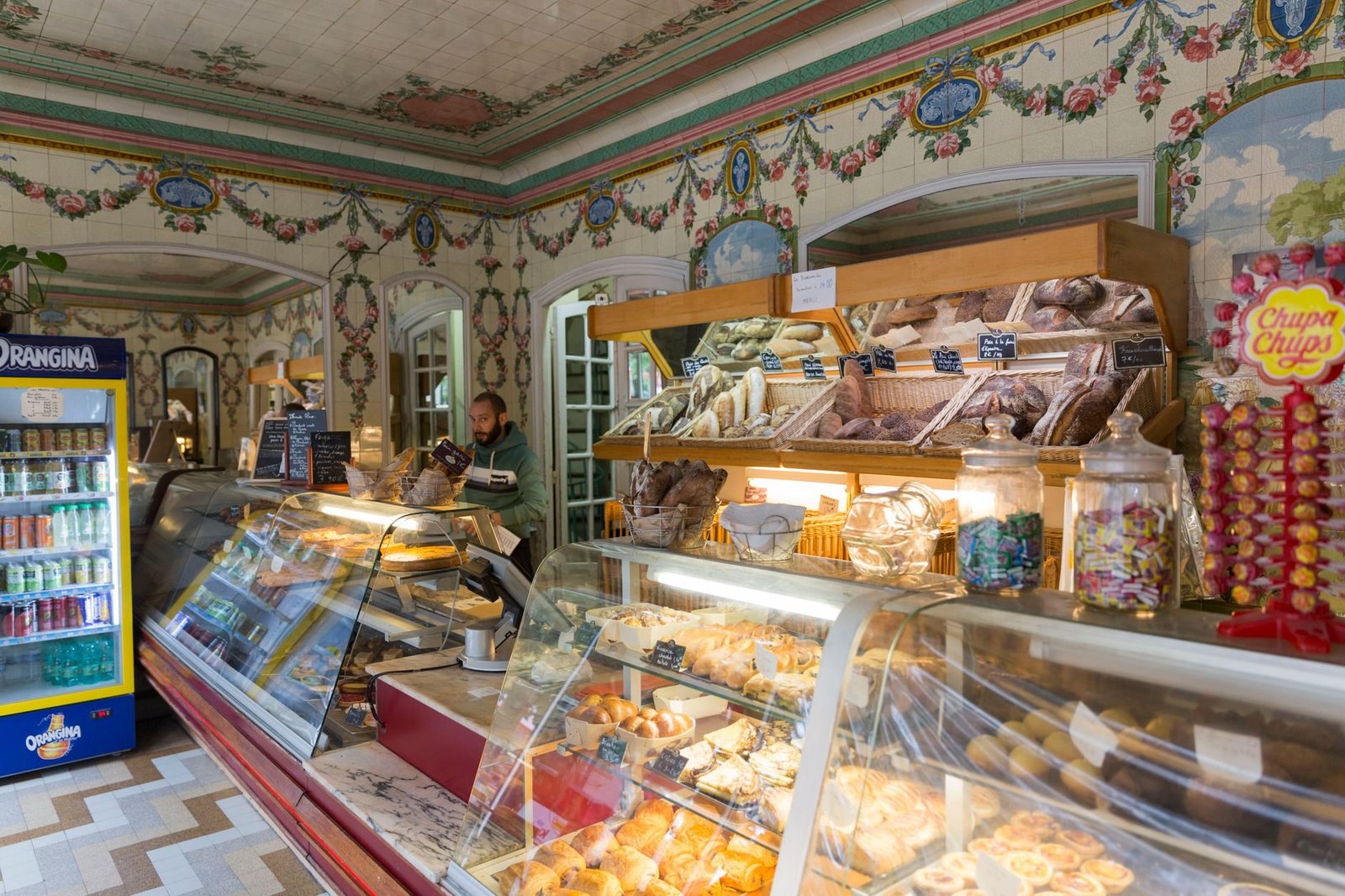
Beyond the award-winning ones already mentioned, Paris hides dozens of neighborhood boulangeries that turn out exceptional croissants without the fame (and the lines) of the more famous ones. A few that frequently appear on local experts’ lists:
Boulangerie Poilâne (6th arrondissement) — Best known for its famous sourdough bread, but the croissants here have devoted followers. The shop on Rue du Cherche-Midi is a must-visit classic for anyone in the Saint-Germain-des-Prés neighborhood.
Ten Belles Bread (10th arrondissement) — The choice of digital nomads and Paris’s specialty coffee scene. The croissant has a contemporary artisan bakery influence and pairs perfectly with a quality pour-over coffee on-site.
Sain Boulangerie (11th arrondissement) — Focuses on alternative flours and long fermentation. The result is a croissant with a more complex flavor than the conventional one, great for anyone wanting something a little different from the classic Parisian style.
The logic is always the same: the further you get from the major tourist spots, the more likely you are to find a bakery that lives off its local regulars—which, in practice, is the biggest guarantee of consistent quality.
Croissant and Coffee: The Perfect Combo in Paris
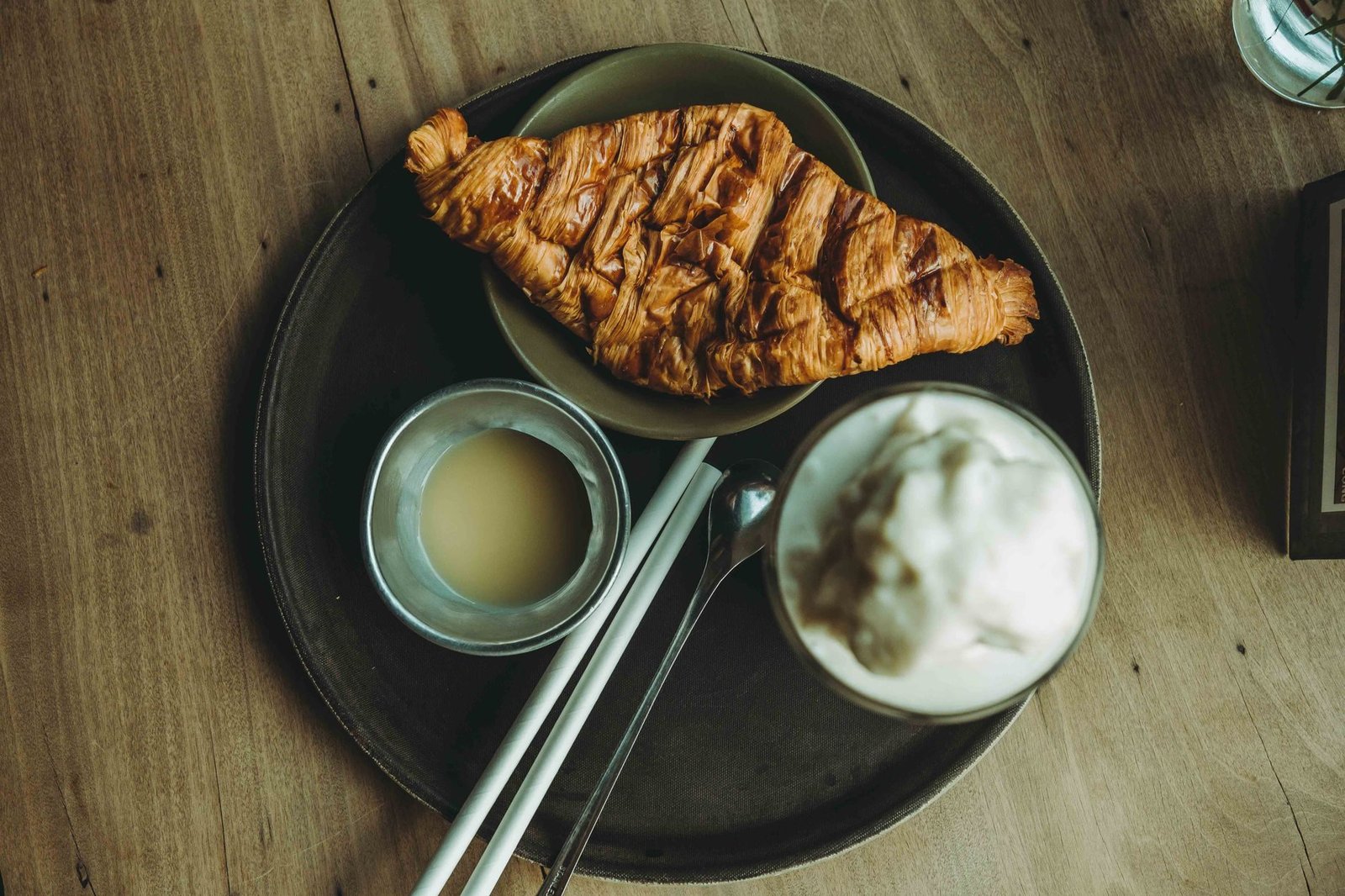
In Paris, a croissant almost always comes with coffee—and the Parisian breakfast has its own rules. Café au lait (or café crème) is the classic breakfast drink; espresso (simply called café) is for any time of day. Cappuccino exists, but it’s not as typical as in Italy.
For the perfect pairing with your croissant, order a café crème—a double espresso with steamed milk, served in a larger cup. The bitterness of the coffee cuts through the butteriness of the croissant in a way that’s close to perfection. Many boulangeries have just one or two seats on the sidewalk, enough for this ten-minute breakfast you’ll remember for a long time.
Croissant vs. Other Viennoiseries: What Else to Try
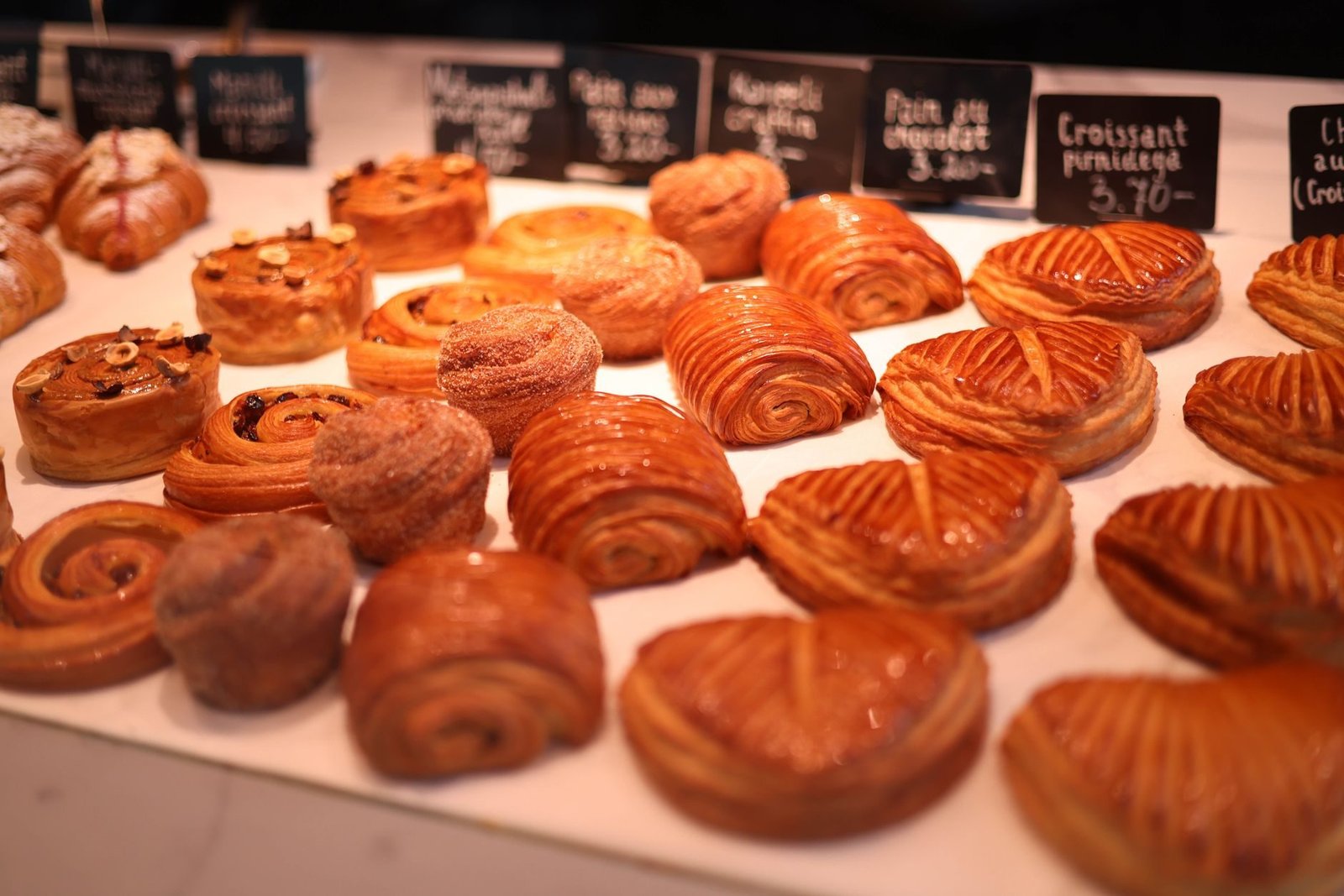
While you’re at the bakery, it’s worth checking out what else is in the display case. The family of viennoiseries (flaky pastry doughs) includes other delights worth your attention:
- Pain au chocolat: croissant dough with two bars of dark chocolate. As classic as the croissant itself
- Kouign-amann: originating from Brittany, it’s a caramelized flaky pastry from the bottom. Crispy and very sweet—perfect for sharing
- Chausson aux pommes: flaky pastry filled with apple compote. More substantial, great for a snack
- Escargot: a sweet rolled dough with pastry cream or dried fruits. The name comes from the spiral shape, not the ingredient
None of these will replace the croissant as the central experience, but trying one or two during your trip gives you a better sense of the richness of French baking.
How to Order a Croissant in French
The French of Parisians can be intimidating, but in bakeries, the vocabulary is simple. Some useful phrases:
- “Un croissant au beurre, s’il vous plaît” — A butter croissant, please
- “Deux croissants, s’il vous plaît” — Two croissants, please
- “C’est combien?” — How much is it?
- “Pour emporter” — To go (take away)
- “Sur place” — To eat here (may cost a bit more)
Most bakeries accept cards these days, but it’s good to have some coins or small bills for individual purchases—some smaller bakeries still prefer cash for low amounts.
Frequently Asked Questions About Croissants in Paris
Can I freeze a croissant to bring back to Brazil?
Croissants don’t travel well—they lose their texture quickly. However, some viennoiseries like pain au chocolat are sold frozen “raw” (unbaked) at some bakeries specifically for baking at home. Check if this option is available at the bakery you visit.
What’s the difference between a croissant and a pain au chocolat?
The dough is practically the same—flaky, with butter. The difference is the shape (rectangular for pain au chocolat) and the filling (two bars of dark chocolate inside). In some regions of France, pain au chocolat is called chocolatine—a hotly debated topic between northern and southern French people.
Is a croissant for breakfast, or can you eat it at other times?
Officially, a croissant is a morning thing—and Parisians rarely eat one in the afternoon. But no one will stop you from grabbing one with a coffee at 3 p.m. if it’s still available at the bakery. French culture is more relaxed about this than it seems.
Is a croissant food tour in Paris worth it?
There are organized tours specifically for bakeries and pastry shops (usually two to three hours, covering four or five stops). They’re a great option for anyone wanting historical context and to compare different styles along the route. Platforms like Airbnb Experiences or GetYourGuide often have options with guides speaking Portuguese.
Where to Buy Croissants for Your Hotel Breakfast
If you’re staying at a hotel that doesn’t include breakfast—or does, but with mediocre croissants—it’s worth getting up early one morning and finding a nearby boulangerie. Most hotels in Paris are less than a 10-minute walk from a quality bakery.
Order two or three croissants au beurre, a baguette, and maybe a pain au chocolat. Take them back to your room or sit on a nearby park bench. It’s one of the simplest and most enjoyable experiences Paris offers—and it costs less than €5 per person.