There are neighborhoods in Paris you visit, and then there are neighborhoods you feel. Saint-Germain-des-Prés is the second kind. While the touristy side of the city pushes you toward the Eiffel Tower and the Louvre, this corner of the Left Bank invites you to sit down, order a coffee, and watch the world go by. And not just any world—the same one that Simone de Beauvoir, Jean-Paul Sartre, Ernest Hemingway, and Albert Camus frequented decades ago.
The neighborhood was once the intellectual epicenter of Europe. Today, it’s a mix of luxury boutiques, cafés steeped in history, and a bohemian atmosphere that has survived the test of time. Whether you’re in Paris for the first time or the tenth, setting aside an afternoon (or an entire morning) for Saint-Germain is always a good call.
Dica: Aproveite também para fazer estes passeios em Paris
Tour pelo exterior da catedral de Notre Dame + Ingresso da cripta . Duração: 2 horas
Disneyland Paris Duração: 3 horas ou mais
Passeio de barco pelo Sena. Duração: 1h
Ingresso do 3º andar da Torre Eiffel. Duração: 2 a 3 horas
Ingresso do Palácio de Versalhes. Duração: 2 a 3 horas
Veja mais passeio em Paris aqui.
A Neighborhood with a Story to Tell
Saint-Germain-des-Prés is located in the 6th arrondissement of Paris, on the Left Bank (Rive Gauche) of the Seine. Its name comes from the Abbey of Saint-Germain-des-Prés, founded in the 6th century, making this one of the oldest continuously inhabited areas in Paris.
During the Middle Ages, the abbey was practically a city within a city—it had its own courts, markets, and walls. Over time, the neighborhood became secularized, and by the 20th century, it had become the territory of the existentialists. After World War II, the local cafés turned into informal headquarters for philosophical debates, literary launches, and late-night jazz sessions. If Paris has an intellectual soul, it lives here.
Today, gentrification has changed the neighborhood’s socioeconomic profile—the independent bookstores of yesteryear have given way to luxury brands like Dior and Chanel. But the atmosphere remains, and the historic cafés continue to operate with pride. Few places in the world manage to maintain this balance between a glorious past and a sophisticated present without losing their authenticity.
The Cafés That Defined a Generation
Talking about Saint-Germain without mentioning the cafés is like talking about Rome without the Trevi Fountain. There are two, in particular, that carry the weight of history on their wicker chairs.
Café de Flore
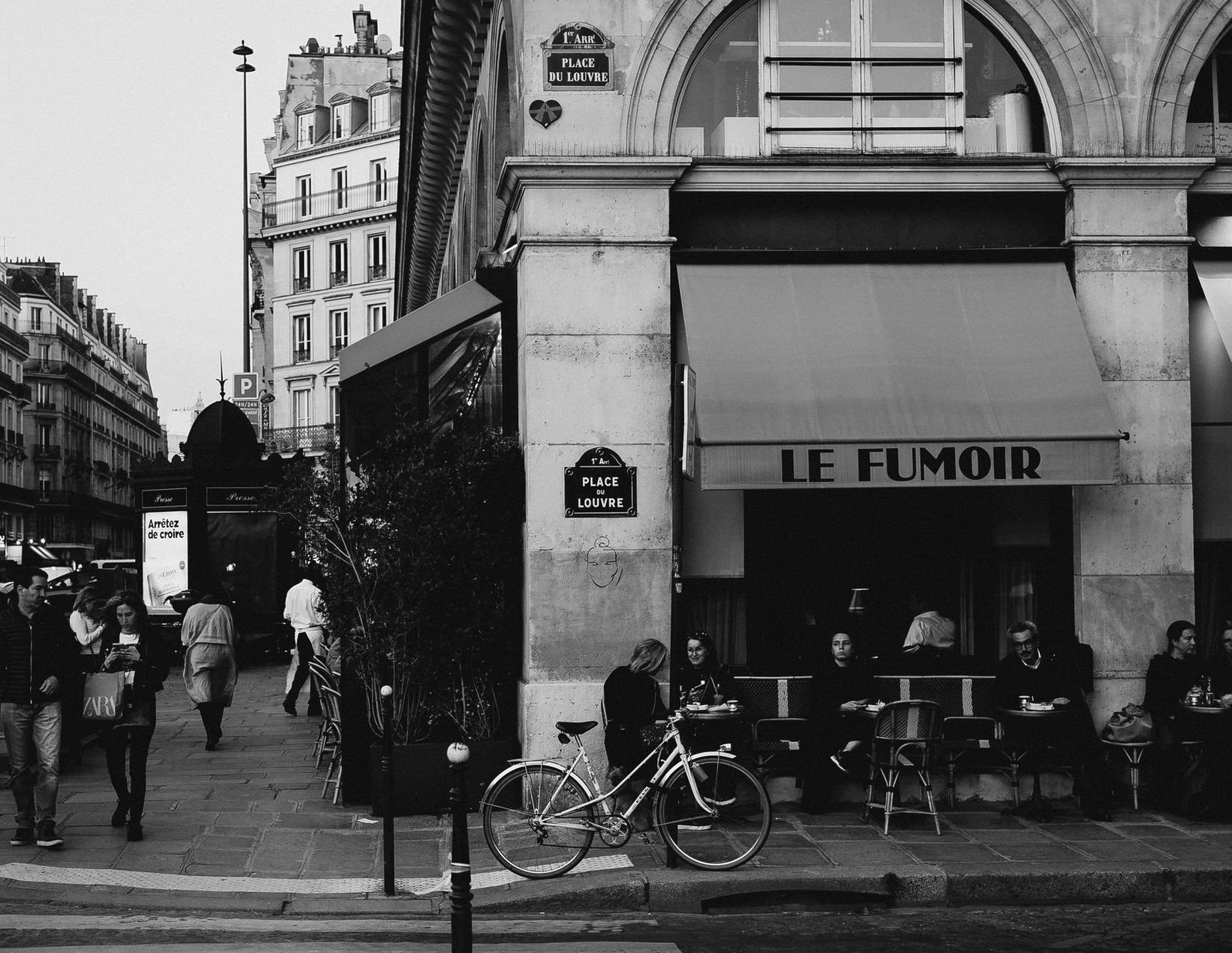
Founded in 1887, Café de Flore (at 172 Boulevard Saint-Germain) is arguably the most famous café in Paris—and maybe the world. It was here that Sartre wrote much of Being and Nothingness and where Simone de Beauvoir spent hours drafting her manuscripts, warmed by the salon’s heat during the Parisian winter.
The interior is charming but simple: mirrors, red leather banquettes, and that constant murmur of conversations that never quite reach your ears. A café au lait costs around 5 to 7 euros—pricey for a coffee, but you’re paying for the experience of sitting where history happened.
The tip is to arrive early, before 10 a.m., to snag a good table. From 11 a.m. onward, especially on weekends, there can be a line. Flore is open daily from 7:30 a.m. to midnight, making it a great option for breakfast before the crowds roll in.
Les Deux Magots
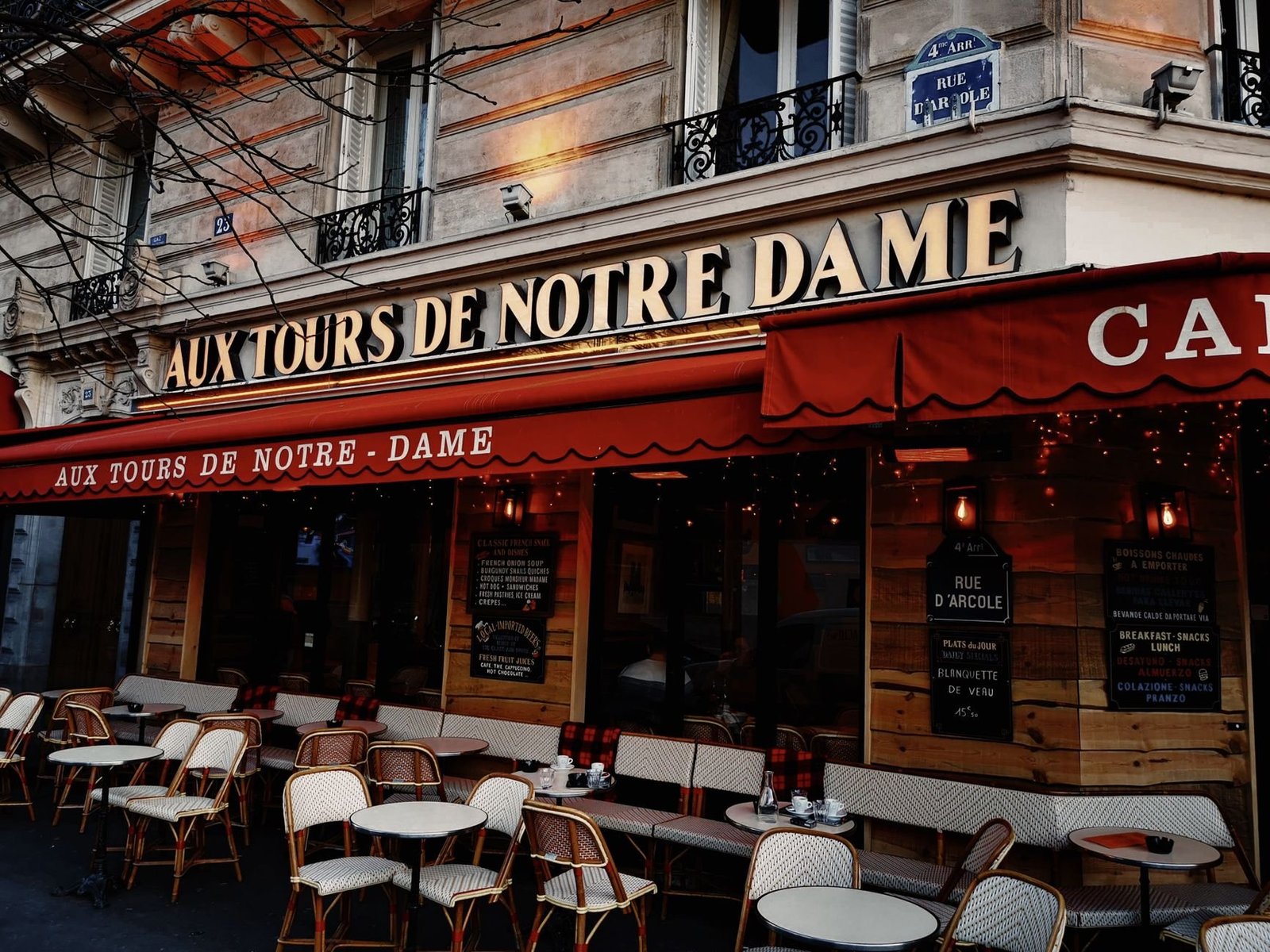
Just a few steps from Flore is Les Deux Magots, at 6 Place Saint-Germain-des-Prés. The café has been around since 1812, when it was a fabric shop—the name comes from two porcelain figurines of Chinese merchants (magots) perched above the bar.
Ernest Hemingway was a regular. Simone de Beauvoir and Picasso also frequented the tables. Since 1933, the café has hosted its own annual literary prize, the Prix des Deux Magots, an alternative to the Goncourt Prize that often spotlights less conventional talents.
The menu features croissants, scrambled eggs, and a double espresso that will keep you wired for the next four hours. Prices are similar to Flore. Between the two, Les Deux Magots has a slightly better view of the Place and the church façade—especially from the outdoor tables.
Shakespeare and Company: A Bookstore Out of Time
Technically, Shakespeare and Company is on the other side of the Seine, in the 5th arrondissement (37 Rue de la Bûcherie), but it’s a ten-minute walk from Saint-Germain and an inseparable part of the neighborhood’s literary circuit.
The original bookstore was founded by American Sylvia Beach in 1919 and was the literary home of James Joyce, Ezra Pound, and Scott Fitzgerald—Beach even published Joyce’s Ulysses when no American publisher would touch it. The current version—opened in 1951 by George Whitman and now run by his daughter Sylvia—inherited the spirit, the name, and much of the cozy chaos of the original.
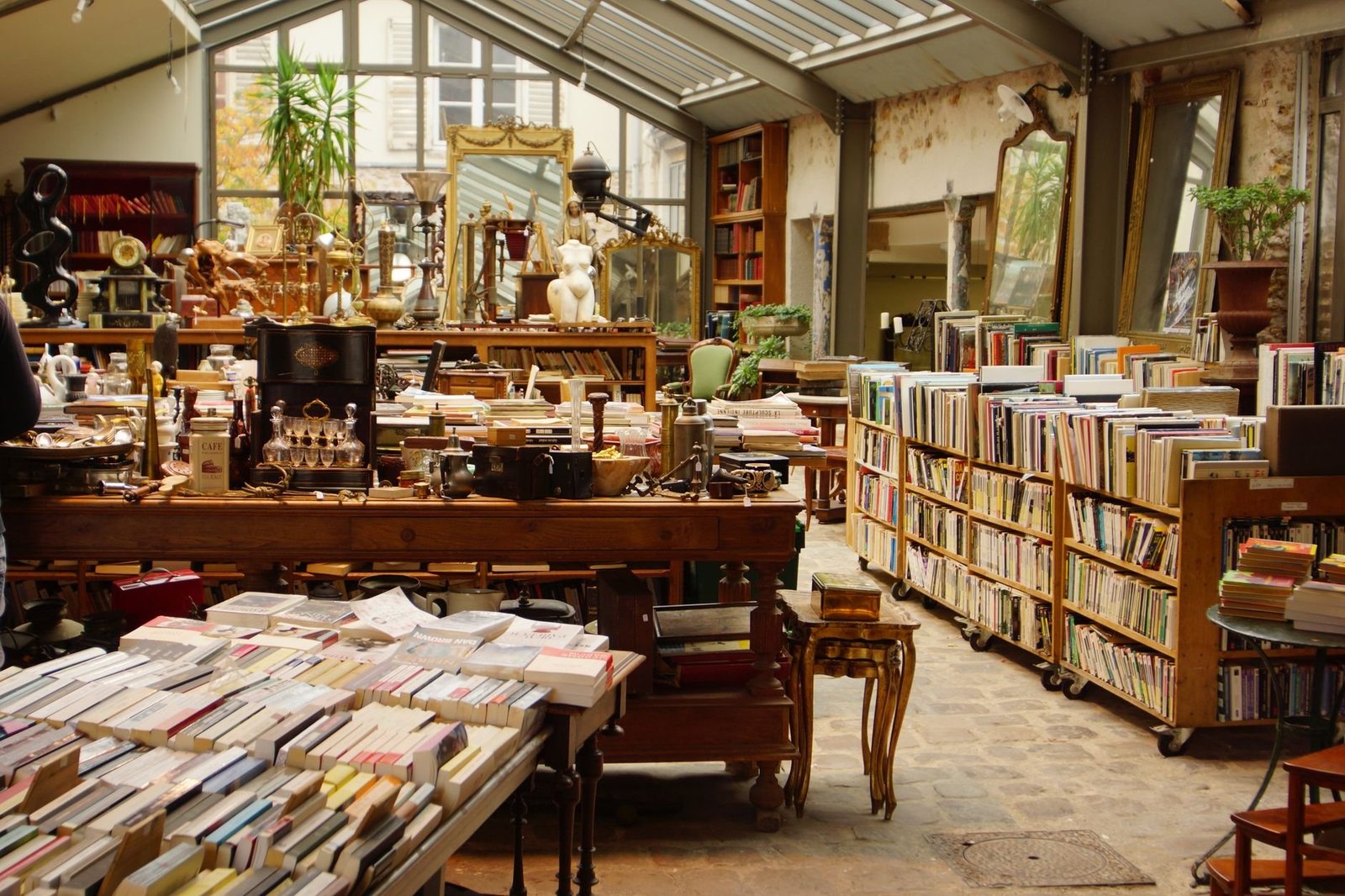
It’s two floors packed with English-language books stacked in seemingly random piles that make perfect sense once you start exploring. The smell of old paper is almost tangible. There’s a famous house policy: traveling writers can sleep among the shelves in exchange for a few hours of work in the bookstore and reading one book a day—these so-called “tumbleweeds” have numbered over 30,000 over the decades.
The café next door—Shakespeare and Company Café—serves some of the best coffee in the neighborhood, with a direct view of Notre-Dame. It’s worth a stop to catch your breath after exploring the collection. Bookstore hours: open daily from 10 a.m. to 10 p.m. Free entry, of course—it’s a bookstore.
The Church of Saint-Germain-des-Prés
The abbey that gave the neighborhood its name is still standing, and the Church of Saint-Germain-des-Prés is the oldest church in Paris still in use. The main tower dates from the 11th century, though parts of the building are from the 9th century—making it about two centuries older than Notre-Dame.
The façade is sober, almost stark compared to the splendor of Notre-Dame or Sainte-Chapelle. But the interior features colorful 19th-century mosaics, green marble columns repurposed from Roman buildings, and an atmosphere of tranquility that contrasts with the bustle of the Place outside.
Visiting is free. You can walk in, sit down, and be silent for a moment—that’s exactly what Parisians do here too. The remains of philosopher René Descartes and Polish King John II Casimir are buried here. Hours: generally open daily from 8:30 a.m. to 7:30 p.m., with possible adjustments for masses and religious events.
A Walking Tour of the Neighborhood
A leisurely stroll through Saint-Germain can be done in two to three hours, depending on your pace. Here’s a suggested route to make the most of the neighborhood:
Start at Place Saint-Germain-des-Prés—admire the church, grab a coffee at Les Deux Magots or Café de Flore, and soak in the atmosphere without rushing. Head east along Boulevard Saint-Germain, passing boutiques and contemporary art galleries. Turn right onto Rue de Seine and explore its galleries (many with free entry and works by established artists on display in the windows).
Reach the Marché Saint-Germain, a covered market renovated in the 1990s where you can grab a drink or buy artisanal cheeses and breads. Loop back via Rue de Buci, a lively street with colorful fruit stands, bakeries, and a very local energy—perfect for picking up picnic supplies. End with a detour to Shakespeare and Company by crossing the bridge, with Notre-Dame as your backdrop.
If time allows, the Luxembourg Gardens are less than a fifteen-minute walk away and offer a perfect contrast—nature and tranquility after the neighborhood’s cultural buzz.
Practical Tips for Visiting Saint-Germain-des-Prés
How to get there: The closest metro station is Saint-Germain-des-Prés (line 4), just steps from the Place and the historic cafés. The Mabillon station (line 10) is also in the heart of the neighborhood and tends to be less crowded. For bikes, there are Vélib’ stations scattered throughout the area.
When to go: Saint-Germain is pleasant any time of year, but spring (April to June) and fall (September to November) offer the most balanced weather for walking. In summer, café tables are packed with tourists; in winter, the atmosphere feels more local and tranquil—which has its own charm.
How much it costs: Visiting the neighborhood itself is free. Cafés charge between 4 and 8 euros for a drink. For a good meal without breaking the bank, look for boulangeries on the side streets, where a quality sandwich costs between 5 and 7 euros. Art galleries are usually free to enter. If you sit down at restaurants on the Boulevard, the average bill goes up significantly.
Useful links: The official Café de Flore website has the menu and updated hours. Shakespeare and Company also has a site with a schedule of literary events. For the neighborhood’s history, the French Wikipedia page has a very thorough entry.
Frequently Asked Questions About Saint-Germain-des-Prés
How much time do I need to visit Saint-Germain-des-Prés?
A relaxed itinerary takes between two and four hours. If you include lunch, a long café stop, and a visit to Shakespeare and Company, plan for a full day—especially if you’re combining it with the Musée d’Orsay, which is a ten-minute walk away.
Are the historic cafés worth the high prices?
It depends on what you’re looking for. A café au lait at Café de Flore costs twice as much as it would at any random boulangerie. But the experience—the history, the architecture, the ambiance—is genuinely unique. At least one visit in Paris is worth every euro.
Can you visit Saint-Germain with kids?
Yes. The square in front of the church has space for kids to run around freely. The neighborhood doesn’t have major children’s attractions, but the relaxed pace of a walk combined with a stop for ice cream on Rue de Buci usually works well, even with the little ones.
How safe is the neighborhood?
Saint-Germain-des-Prés is one of the safest neighborhoods in Paris for tourists. Just be mindful of pickpockets in cafés and on the metro—the standard caution for any central part of Paris. Bags left unattended on chairs are the main risk.
Can you combine Saint-Germain with another attraction on the same day?
Yes, and it’s highly recommended. The neighborhood is close to the Musée d’Orsay (10 minutes on foot), the Luxembourg Gardens (15 minutes on foot), Sainte-Chapelle, and Notre-Dame (cross the bridge, 15 minutes on foot). A great combo is a morning at the d’Orsay and an afternoon in Saint-Germain—finish with dinner in the neighborhood as the pace slows down.
Visiting Saint-Germain-des-Prés doesn’t require a rigid itinerary. Drop a recommended café into your map app, start walking, and see where the streets take you. The neighborhood has that rare power of making you feel like it’s welcoming you back, even on your first visit. And if you want to make the most of the Left Bank, the Musée d’Orsay—one of the world’s most important galleries—is just a short walk away.