
Dica: Aproveite também para fazer estes passeios em Paris
Tour pelo exterior da catedral de Notre Dame + Ingresso da cripta . Duração: 2 horas
Disneyland Paris Duração: 3 horas ou mais
Passeio de barco pelo Sena. Duração: 1h
Ingresso do 3º andar da Torre Eiffel. Duração: 2 a 3 horas
Ingresso do Palácio de Versalhes. Duração: 2 a 3 horas
Veja mais passeio em Paris aqui.
Understanding Charles de Gaulle Airport
Charles de Gaulle (CDG) is Paris’s largest airport and one of the biggest in Europe. Located 15 miles north of Paris, it’s where most international flights arrive. If you’re flying into the French capital, chances are you’ll be passing through here.
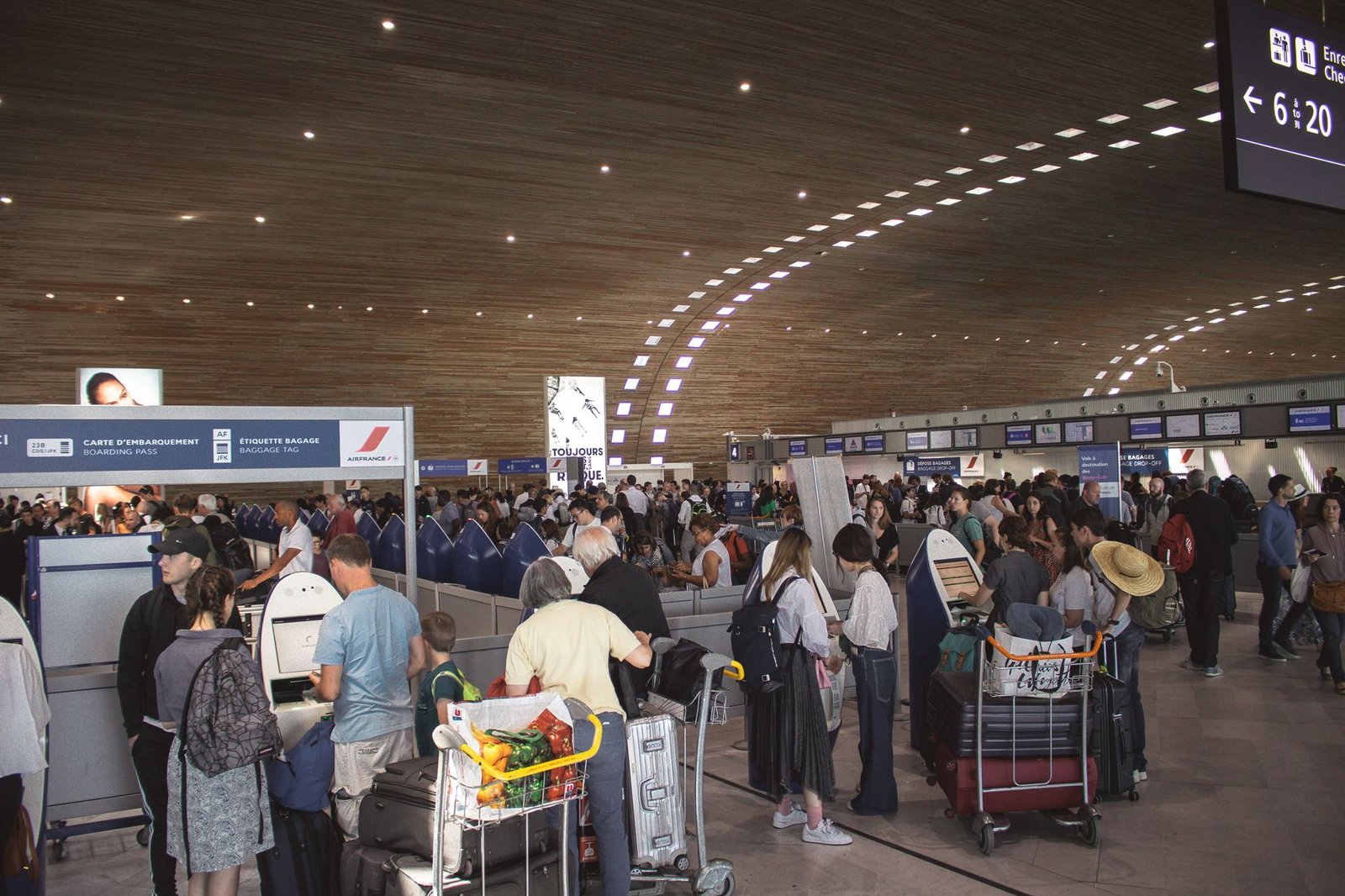
The airport is massive—serving over 72 million passengers a year. It has three main terminals: Terminal 1 (the oldest), Terminal 2 (the largest, with multiple “halls”), and Terminal 3 (smaller, mainly for domestic and European flights). Each terminal has its own transport stations and baggage areas.
When you get off the plane and go through immigration (passport control), you’ll get your passport stamped. Then you grab your bags from the carousel, clear customs (usually quick if you have nothing to declare), and head out to the arrivals area where your transport options into Paris begin.
RER B: The Fastest and Cheapest Train
The most practical option for most travelers is the RER B, a train that connects the airport directly to central Paris. The journey from CDG to the city center (around Île de la Cité, Notre-Dame, etc.) takes about 35-45 minutes, depending on where you get off.
To catch the RER B, leave your arrivals hall and look for “SNCF” or “RER” signs. You’ll follow the signage down to the airport’s underground platforms. No reservation needed—just show up and hop on the next departing train.
The ticket costs €12 if you buy it from a machine or counter (not recommended—lines can be long). A better tip is to buy a carnet of 10 single tickets (called a “carnet t+”) for €17—each ticket works for both the RER B from the airport and any metro ride in Paris for a full week. If you’d rather avoid the machines, buy directly from the SNCF counter (a bit pricier at €13-14, but no lines).
The train runs every 10-15 minutes during the day (less frequent at night). Look for lines heading to “Centre-Ville” (city center). The route is direct, passing through several major Paris stations (Gare du Nord, Châtelet, Île de France), and you get off wherever your hotel is.
Pros: cheap, fast, no planning needed. Cons: can get crowded during peak hours (7-9 AM, 5-7 PM), especially if you have a lot of luggage (stairs to the platform can be a pain with big suitcases).
Bus: Roissybus and the Cheapest Option
If you’d rather skip the train, there’s the Roissybus, a bus that goes directly from the airport to the Opéra Garnier in central Paris (takes 50-90 minutes depending on traffic). The ticket also costs €12, and you buy it at the same SNCF counter or from machines.
The Roissybus is great if you want to avoid the RER station stairs, but it’s too slow for most people arriving tired. It goes through congested streets and can take nearly twice as long as the train during rush hour.
Another bus option is the night bus (N141/N142), which runs at night when the RER is less frequent. It costs €8 and takes about 1-2 hours depending on your destination. If you’re arriving in the early hours, this might be your best bet.
Traditional Taxi
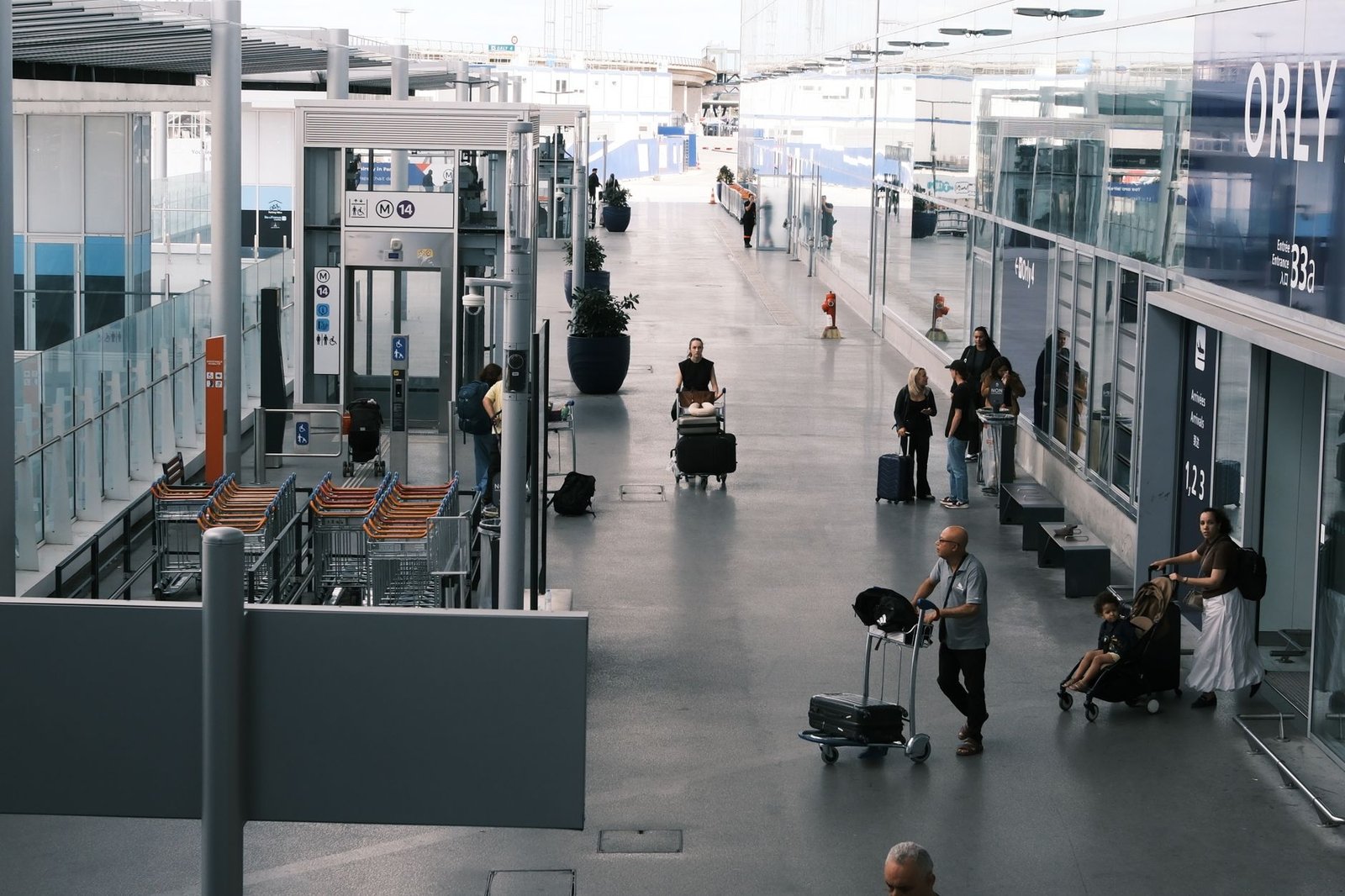
White taxis are waiting right outside the arrivals area. The ride to central Paris costs around €50-65 depending on where you’re going (fixed price for most Paris zones). The journey takes 30 minutes if traffic is good, but can easily stretch to an hour during morning rush hour.
The upside is comfort—you sit down, toss your luggage in the trunk, and get dropped off right at your hotel. The downside: it’s expensive, especially if you’re traveling solo or as a couple. If there are four of you, the cost per person becomes more reasonable.
Tip: don’t let a chatty driver upsell you. Some try to “negotiate a price” claiming the fare is higher (not true—taxis have meters). Stick to the meter or the fixed rate.
Uber and Ride-Sharing (Bolt, Kapten)
Uber works in Paris. Open the app on your phone, set your pickup location (CDG) and destination (your hotel), and call a car. The cost depends on demand—during normal hours it’s around €35-50, but during morning or evening peaks it can spike to €80-100 or more (surge pricing).
Other popular ride-sharing apps in Paris are Bolt (best price) and Kapten (more regulated). They all have similar prices. The process is the same: open the app, confirm your location, and wait for the car to arrive (usually 5-10 minutes).
The advantage is flexibility and comfort. The downside: prices can vary wildly. If you want to save, use it late at night (paradoxically, Uber gets cheaper at night because fewer people are calling cars).
Car Rental
CDG has car rental agencies (Hertz, Avis, Europcar, Budget, etc.). If you’re planning to leave Paris to explore the countryside (Versailles, Giverny, Loire Valley), a car might make sense.
It costs around €50-80 per day depending on the car, plus gas. But here’s the warning: driving in Paris is chaotic. The streets are old, French drivers are ruthless, and parking is impossible (and expensive—€30-50 per day in a garage). Most tourists who rent a car in Paris end up regretting it.
If you’re going to rent a car, it’s better to take the RER into Paris, spend a few days in the city, and then rent the car once you’re outside Paris to explore the countryside. That way you avoid the urban chaos and use the car where it actually makes sense.
Private Transfer (Pre-Booked)
Several companies offer private transfers directly from the airport to your hotel. You book online before your trip, the company picks you up at baggage claim with a sign bearing your name, and you’re driven comfortably to your hotel.
It costs around €60-100 for a car that fits 1-3 people, and the price is fixed (no surge pricing like Uber). The advantage is zero stress—you don’t need a working smartphone, you won’t get lost in translation, and everything is already arranged.
The downside: it’s more expensive than the RER B. It makes sense if you’re traveling with big suitcases, kids, or elderly people with mobility issues. If you’re traveling solo or as a couple and enjoy a bit of adventure, the RER B is better.
Airport Layout and Navigation
CDG is big and confusing for first-timers. When you get off the plane, follow the “Baggage” signs to the baggage carousel. Then, “Douane” (Customs)—you might get pulled for a random inspection, but you’ll usually breeze through if you have nothing suspicious.
After grabbing your bags and clearing customs, you’ll reach the “Arrivals” area. That’s where all transport options are: taxis, buses, RER, car rental companies. Signs are in French and English—look for “Ground Transportation,” “Taxi,” “Train,” or “Bus.”
If you already know which terminal you need to get to next (for a connecting domestic or European flight), there are shuttle buses that run between terminals. The trip between terminals takes 15-30 minutes depending on which ones you’re going between.
Practical Tips for Your Arrival
Get to the baggage area early: the immigration line is the longest part (can take 30-60 minutes during peak times). Patience is key. Have your passport ready.
WiFi: CDG has free WiFi throughout the terminal. Connect to “CDG Free WiFi” with no password needed. Use it to call an Uber, send messages, or anything else that needs internet.
Currency exchange and cash: There are currency exchange booths in the terminal (bad rates), but the best option is to withdraw euros directly from an ATM (official exchange rate). You’ll find ATMs at various points in the terminal.
Shops: CDG has some shops, restaurants, and cafés, but they’re expensive. Grab a light bite here if you’re starving, but save your appetite for Paris—the food is way better in the city (and cheaper).
Information: Each terminal has a tourist information desk with a Paris map, transport tips, and even hotel booking. If you have questions, ask there.
How Long to Get to the Center?
RER B: 35-45 minutes from the terminal to Île de la Cité, 50 minutes to Champs-Élysées. Add waiting time for the train (10-15 minutes), and you’re looking at about 50 minutes to an hour from leaving the plane to being at your hotel in the center.
Taxi/Uber: 30-60 minutes depending on traffic, similar to the RER B if you factor in the whole journey.
Bus: 1 hour to 1.5 hours depending on traffic.
Keep this in mind: if you’re arriving late at night, the RER might have reduced frequency (every 30-60 minutes). If you’re arriving early in the morning (5-8 AM), brace for crowds.
Frequently Asked Questions
What’s the best option if I’m traveling solo? RER B—cheap, fast, safe, and you won’t get lost because everything is well-signed.
What about traveling with family (4 people)? A taxi or Uber split among you ends up similar to the RER B in total cost, but with more comfort. Worth it.
Do I need a visa to enter France? If you’re a Brazilian with a valid passport, you don’t need a visa for tourist visits up to 90 days. Just present your passport at immigration.
Is there an “express hotel” service at the airport itself? Yes, there’s a hotel inside CDG (Yotel Airport Hotel) with rooms by the hour. If you have a long layover, you can sleep there for €30-50 for a few hours.
How long does it take from CDG to Versailles? RER B to Châtelet or Gare du Nord, then catch the RER C toward Versailles Rive Gauche. Total: 1 hour to 1.5 hours.
What if my hotel is on the Rive Gauche (left bank of the Seine)? The RER B goes through there. You get off at Denfert-Rochereau or Saint-Michel depending on your specific hotel. Ask your hotel which station is closest.
Conclusion: Your Arrival in Paris Will Be Smooth
CDG might seem intimidating the first time, but it’s not. Billions of tourists pass through here every year and come out just fine. The golden rule is to choose your transport method before you arrive—ideally the RER B or Uber if you prefer convenience—and follow the signs.
Once you leave the airport and check into your Paris hotel, the nerves fade and the city’s magic begins. You’ve just landed in one of the most beautiful places on earth. Take a deep breath, grab a coffee, and start your Parisian adventure.
À bientôt!