Why the Neighborhood You Choose Completely Changes Your Paris Trip
Paris is divided into 20 arrondissements (neighborhoods numbered in a spiral from the center out), and each one has a very distinct personality. Choosing where to sleep isn’t just about price: it’s about the kind of morning you’ll have, how much you’ll spend on transportation, and even the vibe of the street when you head out for dinner.
First-time visitors often just search for “highly-rated hotels near the Eiffel Tower” and end up in residential areas that are beautiful but isolated from the rest. On the other hand, staying too close to the biggest tourist attractions (like the Champs-Élysées) usually costs more and has less of a neighborhood feel. In this guide, I’ll walk you through the neighborhoods that are most worth it for tourists, with pros, cons, and who each one is best for.
Le Marais (3rd & 4th Arrondissements): Charm, History, and Everything Within Walking Distance
If I had to recommend one “safe bet” neighborhood for almost everyone, it would be the Marais. It’s one of the few areas of Paris that escaped the major urban renovations of the 19th century, so the streets are narrow, lined with old buildings, hidden courtyards, and a mix of boutiques, synagogues, art galleries, and falafel joints.
The big advantage is the location: from here, you can walk to the Centre Pompidou, Place des Vosges, Île Saint-Louis, and even Notre-Dame Cathedral in about 15-20 minutes. The neighborhood stays lively at night, with bars and restaurants open late, especially around Rue des Rosiers and Rue Vieille du Temple.
The downside is the price: because it’s so well-located, apartments and hotels in the Marais tend to be pricier than average, and it gets quite busy on weekends (some stretches turn into an open-air mall on Saturdays). Still, for anyone in town for just a few days who wants to make the most of every hour on foot, it’s hard to beat. We’ve put together a complete guide on what to do in the Marais if you want to dive deeper into the neighborhood.
Latin Quarter (5th Arrondissement): The Paris of Books, the Sorbonne, and Sloping Streets
On the other side of the Seine, the Latin Quarter got its name because, centuries ago, Sorbonne students would debate in Latin on the streets. Today it’s still a university neighborhood, home to famous bookstores (the most well-known is Shakespeare and Company, facing Notre-Dame), indie movie theaters, and an impressive number of crêperies and budget-friendly restaurants.
The location is great for anyone who wants to be just minutes from the Panthéon, the Luxembourg Gardens, and Notre-Dame itself, plus it has easy access to the RER lines that go straight to the airports. It’s also a neighborhood with slightly friendlier prices than the Marais or Saint-Germain, especially on streets away from the main drag.
One thing to note is that part of the neighborhood is uphill (literally—there are stone slopes that can be tiring after a day of walking), and some streets closer to the stations are busy late into the night. For anyone who enjoys a youthful, intellectual, “eternal student” vibe, it’s a perfect fit.
Saint-Germain-des-Prés (6th Arrondissement): Historic Cafés and a Chic Address
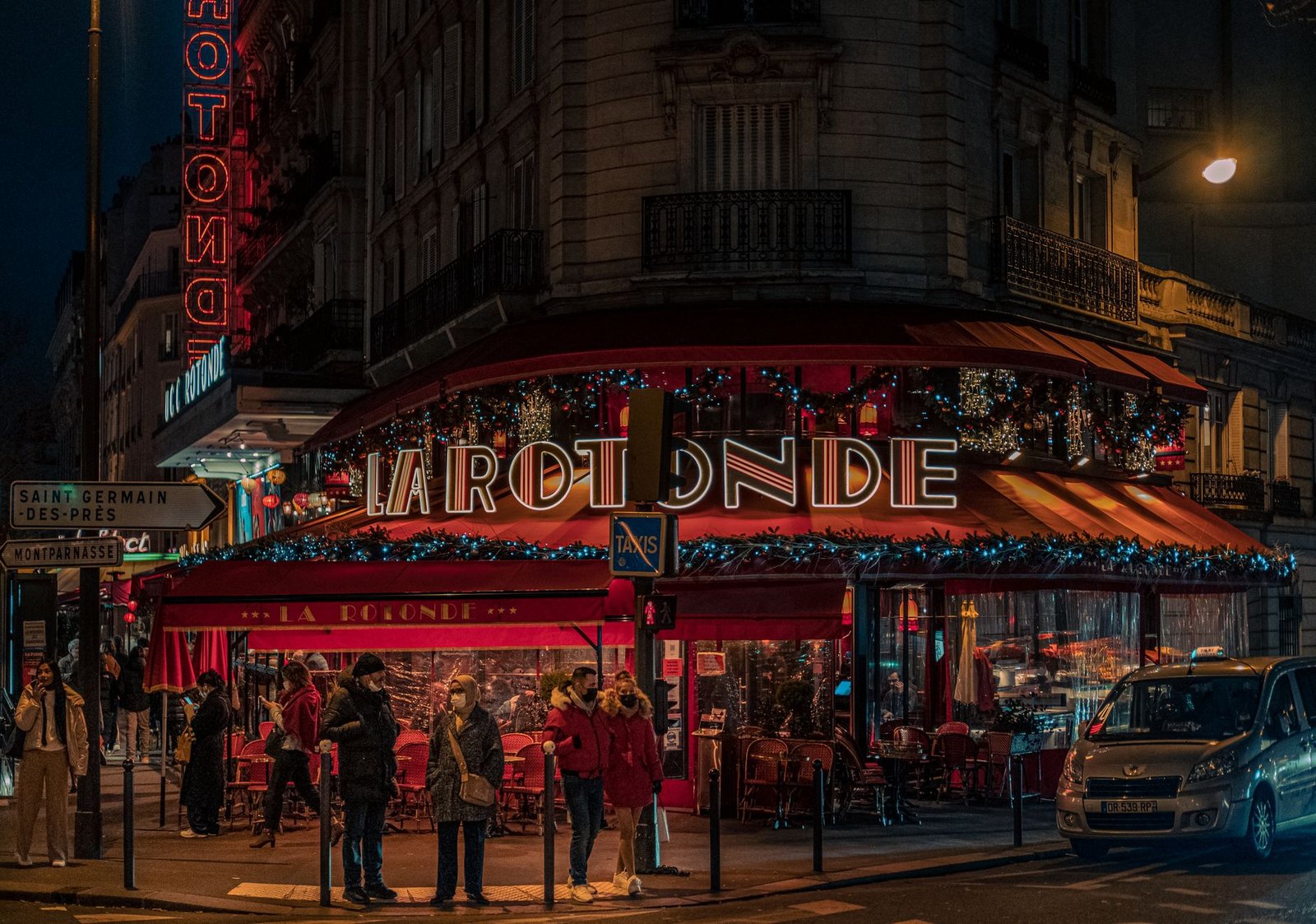
Saint-Germain is the neighborhood that combines literature, fashion, and gastronomy all in one place. This is where Sartre, Simone de Beauvoir, and Hemingway spent hours in cafés like Les Deux Magots and Café de Flore, and these spots are still open today (with prices to match their fame, it’s worth noting).
Dica: Aproveite também para fazer estes passeios em Paris
Tour pelo exterior da catedral de Notre Dame + Ingresso da cripta . Duração: 2 horas
Disneyland Paris Duração: 3 horas ou mais
Passeio de barco pelo Sena. Duração: 1h
Ingresso do 3º andar da Torre Eiffel. Duração: 2 a 3 horas
Ingresso do Palácio de Versalhes. Duração: 2 a 3 horas
Veja mais passeio em Paris aqui.
It’s an elegant neighborhood with tree-lined streets, art galleries, designer stores, and incredible proximity to the Luxembourg Gardens, the Musée d’Orsay, and the Left Bank of the Seine. For anyone who enjoys unhurried walks, a quiet morning coffee, and visiting museums in the afternoon, it’s one of the most pleasant addresses in the city.
The trade-off, of course, is the price—Saint-Germain is among the most expensive neighborhoods in Paris to stay in, whether hotels or apartments. It’s worth it for those who prioritize this more sophisticated vibe and aren’t too worried about saving on this part of the budget.
Montmartre (18th Arrondissement): The Picture-Perfect Paris, Just with Hills (and Stairs)
Montmartre is probably the neighborhood that shows up most in movies and Instagram photos: cobblestone streets, staircases, the Sacré-Cœur Basilica at the top of the hill, and that village-within-a-big-city feel. It also has a reputation as a “bohemian” neighborhood, with artists painting portraits at Place du Tertre and cafés that inspired painters like Renoir and Toulouse-Lautrec.
The big advantage is the unique atmosphere—few places in Paris have this village-like feeling, with a view of the entire city from up high. Accommodation prices also tend to be a bit more affordable than in the historic center, especially away from the more touristy area near the Moulin Rouge.
On the flip side, it’s a neighborhood with a lot of stairs and hills (the funicular elevator isn’t always an option, as it has a line), it’s farther from the main downtown attractions, and at night, some streets near the metro stations require a bit more caution. If you don’t mind a lot of walking and want that “Parisian village” vibe, it’s well worth the experience—and you can complement it with our guide on Montmartre and Sacré-Cœur.
Near the Eiffel Tower: 7th & 15th Arrondissements
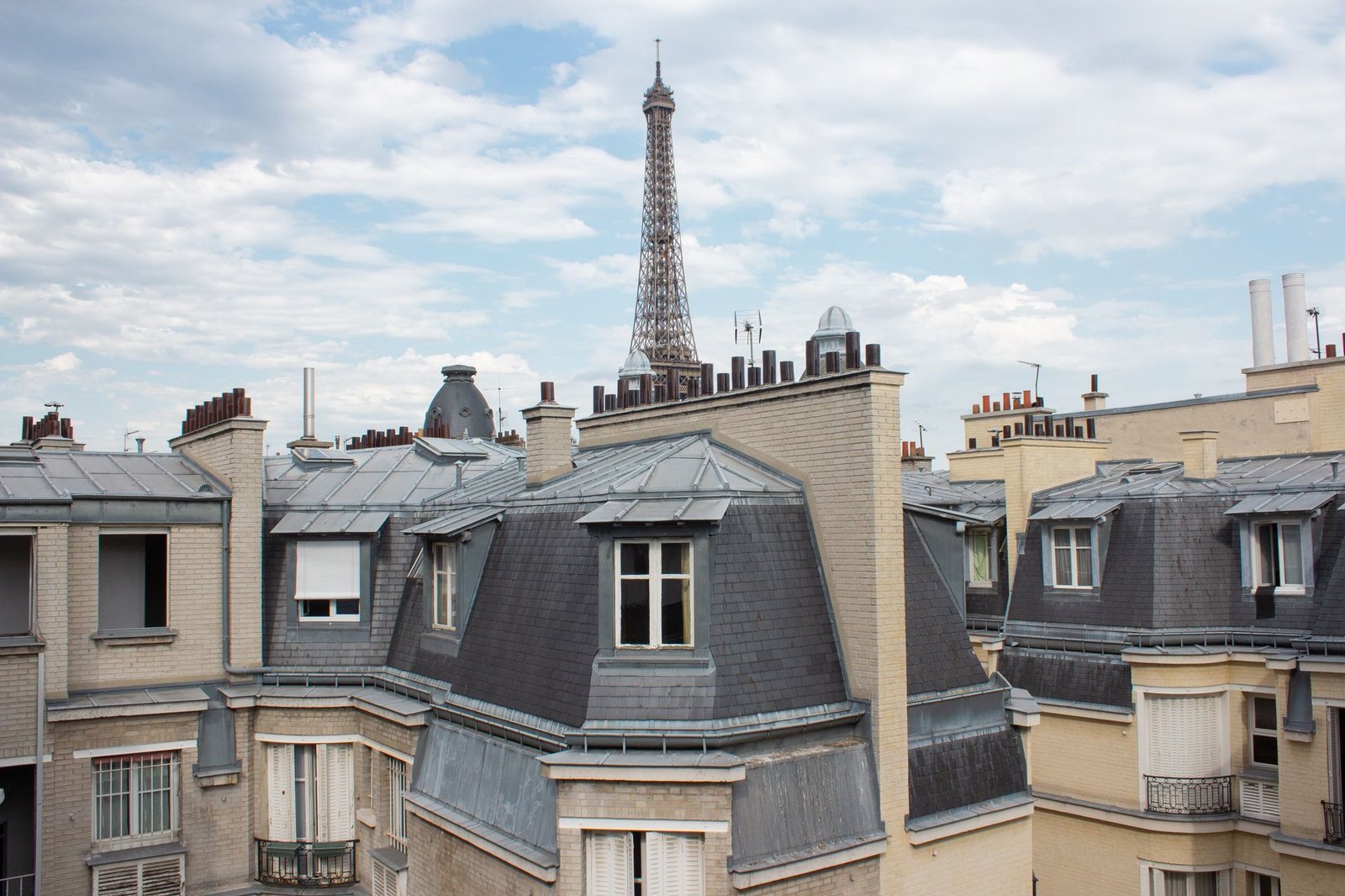
Some people dream of waking up and seeing the Eiffel Tower from their window—and that’s possible, especially in apartments in the 7th and 15th arrondissements. The 7th is more upscale, with elegant residential streets, embassies, and the Champ de Mars right on your doorstep. The 15th is simpler and more residential, with generally more affordable prices and a very quiet neighborhood life (markets, bakeries, local restaurants).
The obvious advantage is the proximity to the Eiffel Tower and sights like Les Invalides and the Musée Rodin. It’s also a safe area with good metro connections, great for families or for anyone visiting Paris for more days who doesn’t want to be stuck in the most touristy zone.
The less favorable side is that, outside the more bustling area, these neighborhoods get a bit “sleepier” at night—don’t expect the same nightlife as the Marais or Saint-Germain. But if your plan includes that classic photo of the tower lit up at night, right from the balcony, it’s worth considering.
Canal Saint-Martin (10th & 11th Arrondissements): The “Local’s Paris” Side
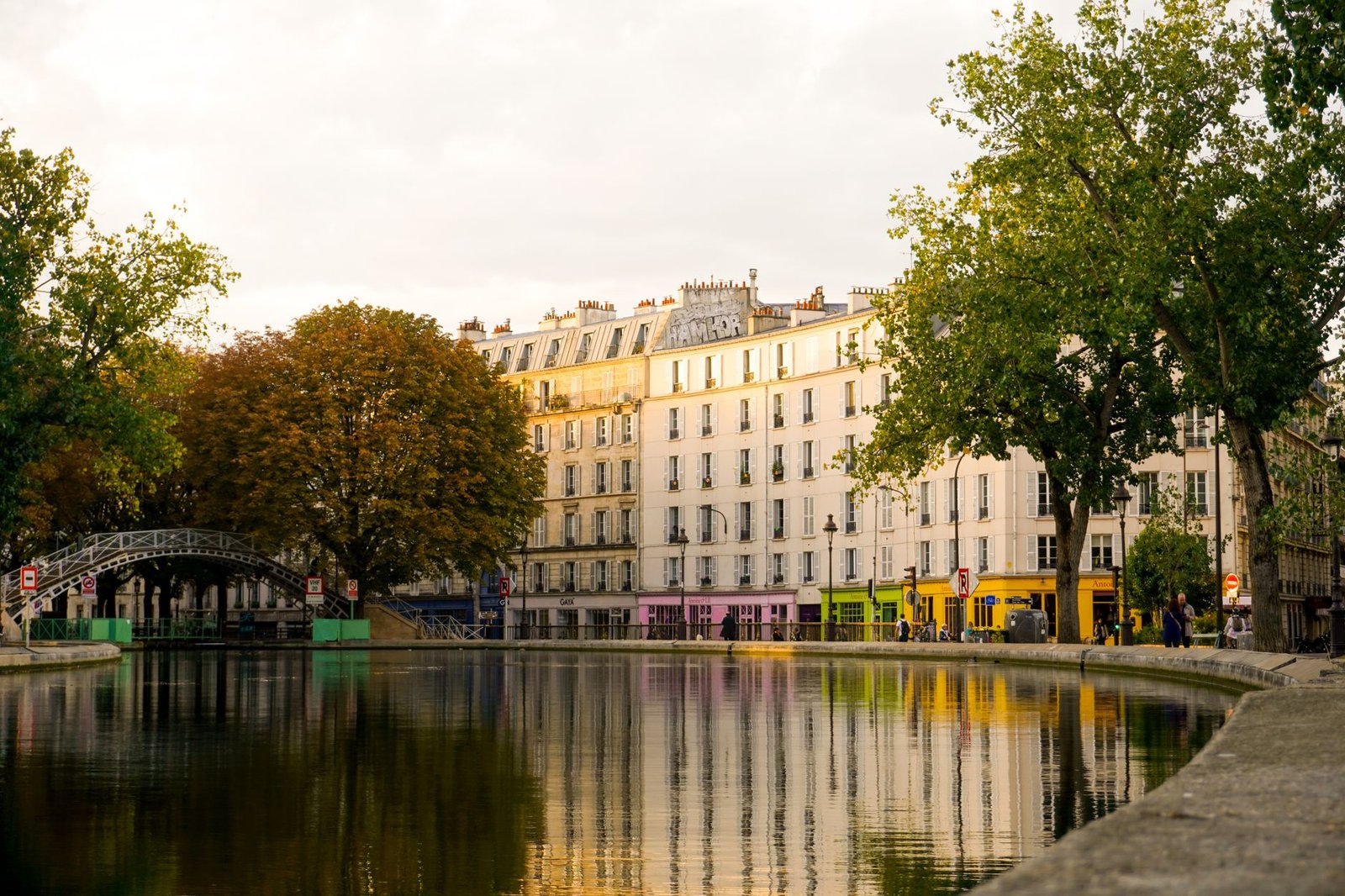
If you’ve visited Paris before and want to see a more everyday side of the city, it’s worth considering the Canal Saint-Martin area. It’s a younger neighborhood, with iron footbridges over the canal, people sitting on the grass with wine in the late afternoon, independent cafés, and vintage clothing stores.
Accommodation prices here are usually lower than in the central neighborhoods, and the area has excellent metro connections to the rest of the city—in just a few minutes you’re at Gare du Nord (connection to London via the Eurostar) or in the historic center.
The catch is that, precisely because it’s a “local’s neighborhood,” the main tourist attractions are all a metro ride away—you can’t just walk to the Louvre, for example. For those who prioritize price, genuine local life, and don’t mind taking the metro frequently, it’s a great option.
Champs-Élysées & 8th Arrondissement: Tourist Convenience, with a Luxury Price Tag
The most famous avenue in Paris and the surrounding area are packed with designer hotels, luxury stores, and direct proximity to the Arc de Triomphe. It’s undoubtedly one of the most central and practical locations for anyone who wants to be near everything without thinking too much.
The issue is the price: this is generally the most expensive area in the city to stay in, and the vibe there is more corporate/touristy than “neighborhood-like”—you won’t find the same narrow-street charm of the Marais or Montmartre. It works well for business trips, a honeymoon with a bigger budget, or for anyone who simply prefers to have everything (metro, shops, restaurants) just steps from the hotel door.
How to Choose the Right Neighborhood for Your Travel Style
With so many great options, it’s worth thinking about what best matches your travel style:
- First trip, few days: Le Marais or Latin Quarter—you can walk to most of the main sights and save time on getting around.
- Families with kids: 7th or 15th arrondissement—quiet, safe neighborhoods with parks (Champ de Mars) and easy metro access for outings.
- Honeymoon or romantic trip: Saint-Germain-des-Prés or Montmartre—a more intimate vibe, charming cafés, and classic photo backdrops.
- Tighter budget: Canal Saint-Martin or the edges of the 11th/20th arrondissement—lower prices with good metro connections to the center.
- Returning for a second or third time: It’s worth exploring less touristy neighborhoods like Canal Saint-Martin or parts of the 11th to experience the city at a different pace.
Practical Tips for Booking Your Stay in Paris
Regardless of the neighborhood, a few precautions make a difference when booking:
Proximity to the metro: Paris is a small city in terms of area, but walking with luggage on cobblestone streets (or climbing several flights of stairs without an elevator, common in old buildings) gets tiring fast. Prefer accommodations no more than 5-8 minutes’ walk from a metro station.
Floors and elevators: Many Parisian buildings are old and don’t have an elevator, or have a tiny one that won’t fit large suitcases. If this is a concern for you, confirm it before booking.
Noise: Rooms facing busy streets or near bars can be quite noisy until late, especially in the livelier neighborhoods (Marais, Canal Saint-Martin, parts of Montmartre). It’s worth reading recent reviews about this.
Time of year: Prices vary a lot between high season (June to August, and December for Christmas) and low season. Booking a few months in advance helps a lot—and if you’re thinking about the total cost of the trip, it’s worth checking out our guide on how much a trip to Paris costs.
For planning with official information, the Paris Office du Tourisme website has updated lists of neighborhoods and events, and the RATP website helps you quickly understand the metro network before choosing where to stay.
Frequently Asked Questions About Where to Stay in Paris
What is the safest neighborhood for tourists in Paris?
Generally speaking, the central and touristy neighborhoods (Marais, Latin Quarter, Saint-Germain, 7th and 15th arrondissements) are considered safe, even at night, as long as you take the basic precautions of any big city: keep an eye on your belongings in crowded places and be extra careful in emptier metro stations late at night.
Is it worth staying near the Eiffel Tower?
It is, especially if you value the view and don’t mind taking the metro to the historic center. The nearby neighborhoods (7th and 15th) are quiet and well-served, but they don’t have the same “lively neighborhood” feel as the Marais or Montmartre.
Is it better to stay in a hotel or an apartment (Airbnb) in Paris?
It depends on your profile. Apartments are usually a better deal for groups or families, as you can cook and split the cost among more people. Hotels are more practical for short stays and offer services like 24-hour reception, which is a big help for trips with large luggage or late arrivals.
How far in advance should I book accommodation?
For trips during high season (European summer and the Christmas period), it’s best to book at least 2 to 3 months in advance, especially if you want a specific neighborhood. Outside of these times, 4 to 6 weeks is usually enough.
Can you see several attractions on foot by staying in a central neighborhood?
Yes. Paris is about 10 km from end to end in the central area, and neighborhoods like the Marais, Latin Quarter, and Saint-Germain are within walking distance (20-40 minutes) of most major sights, with the metro available for the longer stretches.
In the end, there’s no “wrong” neighborhood in Paris—there’s just the neighborhood that matches the kind of trip you want to have. If you’re still in the planning phase, take a look at the other guides on the blog to piece everything together before you book.
After choosing where to stay, it’s also worth planning the food side—check out our guide on what to eat in Paris to discover typical dishes, average prices, and restaurant etiquette tips.