The Trocadéro Gardens aren’t just a park in Paris—they’re a symbol of French elegance and history. With a prime view of the Eiffel Tower, grand sculptures, and imposing fountains, this green space wins over tourists and locals alike every single day.
Nestled in the heart of the 16th arrondissement, the gardens blend architectural beauty, culture, and leisure, creating an unmatched visual and historical experience. In this article, you’ll dive deep into their history, structure, and current role as one of Paris’s most beloved landmarks.
Dica: Aproveite também para fazer estes passeios em Paris
Tour pelo exterior da catedral de Notre Dame + Ingresso da cripta . Duração: 2 horas
Disneyland Paris Duração: 3 horas ou mais
Passeio de barco pelo Sena. Duração: 1h
Ingresso do 3º andar da Torre Eiffel. Duração: 2 a 3 horas
Ingresso do Palácio de Versalhes. Duração: 2 a 3 horas
Veja mais passeio em Paris aqui.
History of the Trocadéro Gardens, 19th-Century Origins
The first Trocadéro Gardens were created for the 1878 World’s Fair, on the site of the former Palais du Trocadéro. Inspired by Oriental and Moorish styles, the palace and its original gardens aimed to showcase French cultural power to the world.
The construction of the gardens and palace marked France’s desire to modernize Paris without abandoning its imperial heritage. The name “Trocadéro” comes from the French victory at the Battle of Trocadéro in 1823, in Spain, giving the site a triumphant aura from the very start.
Renovations for the 1937 Exhibition
During the 1930s, the old palace was demolished and replaced by the Palais de Chaillot, the current architectural landmark of the area. The renovation was led by architects like Léon Azéma and Jacques Carlu and accompanied by the creation of the modern gardens.
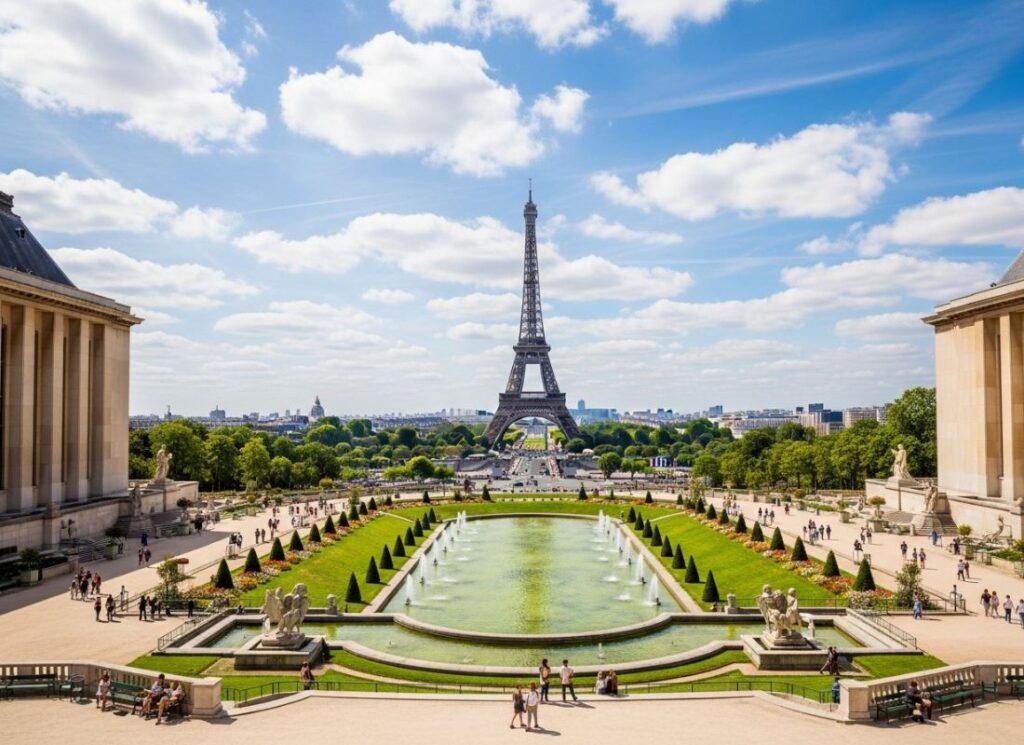
The new version of the Trocadéro Gardens was inaugurated for the 1937 International Exhibition. The landscape design was reimagined with classic lines, monumental fountains, and symbolic sculptures—cementing the space as a Parisian postcard.
Proximity to the Eiffel Tower
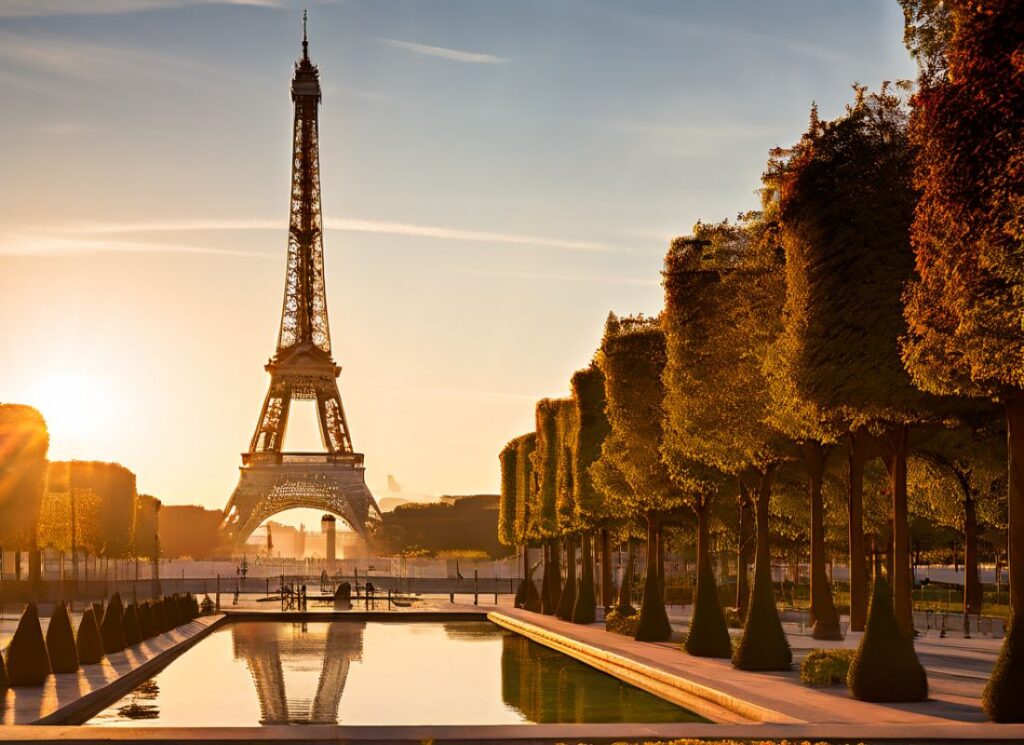
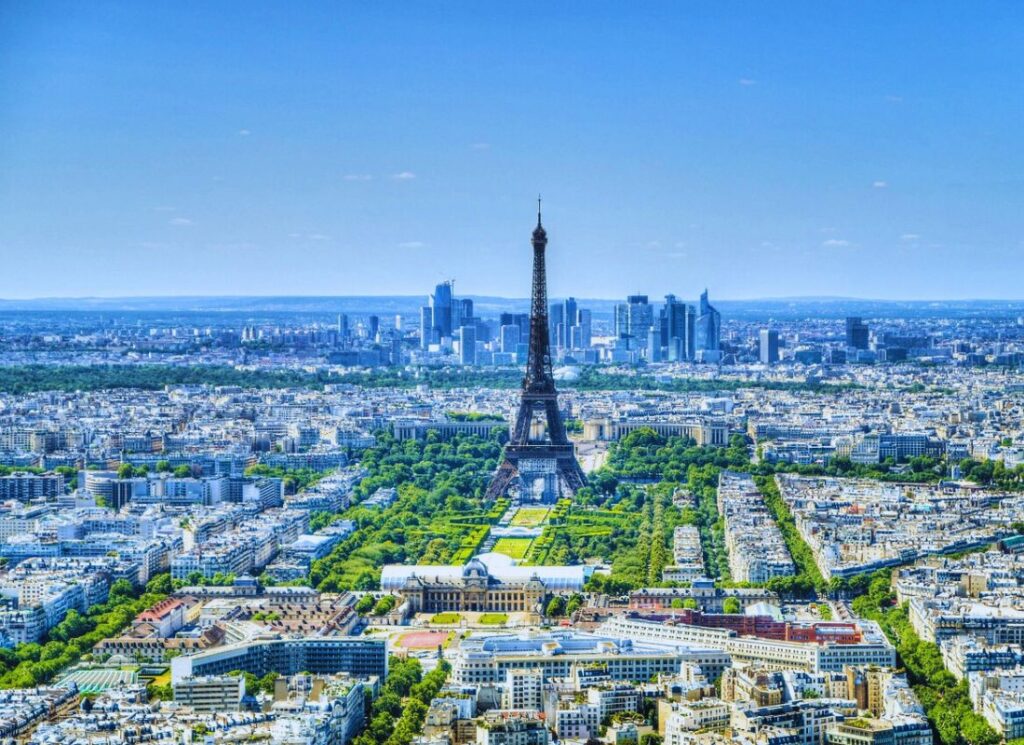
The Trocadéro Gardens are directly aligned with the Eiffel Tower, across the Seine River. This positioning gives visitors one of the most photogenic and romantic views in the city—especially at sunset.
Moreover, the alignment with the Eiffel Tower makes the spot a must-visit for anyone wanting a perfect shot of the “Iron Lady.” This visual synergy between nature, architecture, and monument is what makes Trocadéro a truly unique place in the world.
How to Get to the Gardens?
The easiest way to reach the Trocadéro Gardens is via the Paris metro. The Trocadéro station (lines 6 and 9) drops you just steps away. There are also tourist buses and public bike lanes passing through the area.
For those walking from the Eiffel Tower, simply cross the Pont d’Iéna to access the gardens. The strategic location also offers easy connections to other landmarks, like the Arc de Triomphe and the Champs-Élysées.
Warsaw Fountain and Sculptures
The architectural highlight of the Trocadéro Gardens is the Warsaw Fountain. Made up of a series of cascading basins, 20 water cannons, and nighttime lighting, it transforms the space into a visual spectacle.
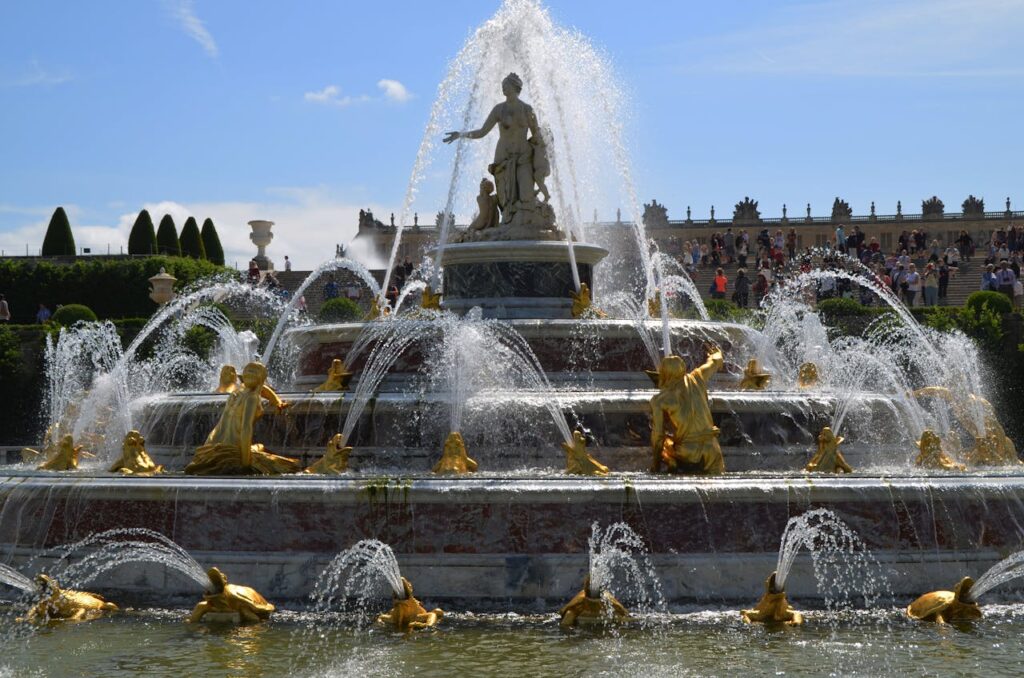
The gilded bronze sculptures scattered throughout the gardens depict mythological, human, and animal figures, adding symbolic layers to the landscape. Artists like Paul Landowski (the same behind Christ the Redeemer) contributed pieces that still captivate visitors.
French Geometric Gardens
The garden style is inspired by the classic French tradition, with geometric flowerbeds, symmetrical paths, and an organization centered on aesthetics and order. Pruned trees, expansive lawns, and well-placed sculptures give the space an air of sophistication.
This attention to landscaping isn’t just decorative—it also follows the principles of French power architecture, which uses control over nature as a demonstration of civilization and refined culture.
Nearby Museums (Museum of Man, etc.)
The area around the gardens is rich in cultural attractions. Inside the Palais de Chaillot, you’ll find the Museum of Man (Musée de l’Homme), the Museum of Architecture and Heritage (Cité de l’Architecture), and the National Theater of Chaillot.
These museums offer a parallel experience to the natural beauty of the gardens, allowing visitors to dive into the history of humanity, architecture, and dramatic arts without leaving the area.
Cultural Performances and Events
Trocadéro frequently hosts public events, outdoor exhibitions, and music and street art performances. It’s common to see dancers, musicians, and artists performing in front of the fountain or on the terraces overlooking the Eiffel Tower.
During the European summer, the spot transforms into a true urban stage, with festivals promoted by the Paris city hall, which leverages the space’s appeal to encourage free cultural events.
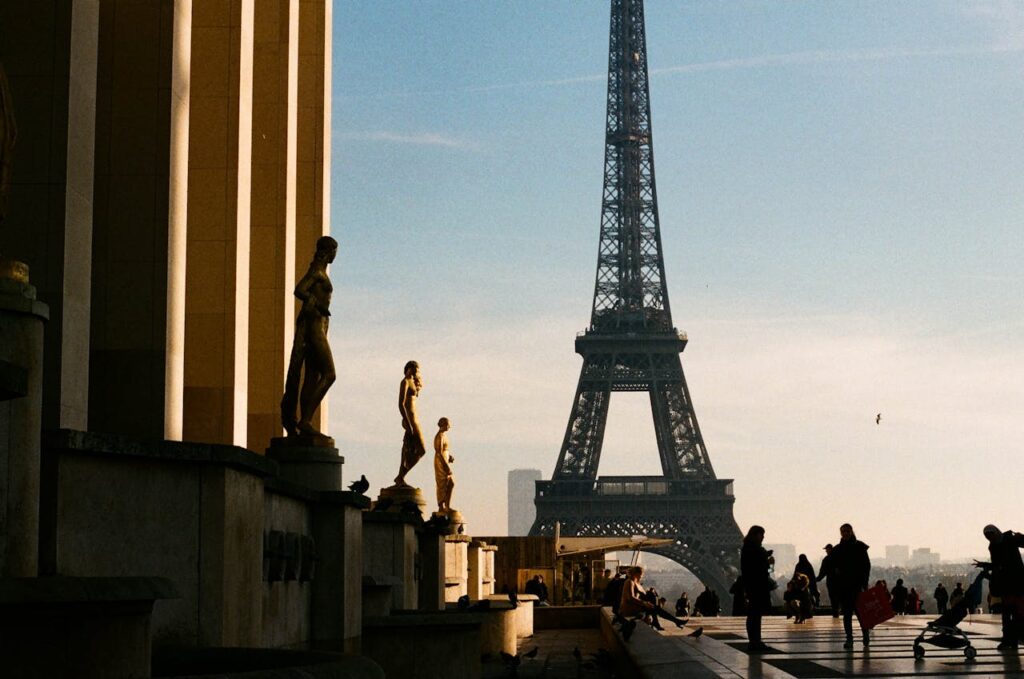
Favorite Photo Spot in Paris
There’s no doubt that the Trocadéro Gardens are one of the most photographed spots in France. Tourists from around the world gather here to capture the iconic image of the Eiffel Tower in the background, with the fountain and gardens in the foreground.
Beyond casual photos, the location also serves as a backdrop for wedding shoots, fashion editorials, and even films. The perfect symmetry and vastness of the space make Trocadéro a true open-air studio.
So Much More Than a Beautiful View
The Trocadéro Gardens are far more than a pretty park with a view of the Eiffel Tower. They are a link between history and the present, between the classic and the modern, between leisure and culture. They represent the soul of Paris in its most visible and visitable form.
As you stroll along its pathways or watch the sunset reflect off the fountain, you’re not just appreciating the beauty of the place—you’re connecting with the tradition, art, and innovation of the French capital.