Have you ever heard of that special corner of Paris where time seems to slow down, the city’s sounds gently fade away, and the soul of the French capital reveals itself among shadows, flowers, and sculptures? The Luxembourg Gardens, or “Jardin du Luxembourg,” is exactly that place. A charming refuge that balances elegance, history, and an almost cinematic peace, right in the heart of the City of Light.

Dica: Aproveite também para fazer estes passeios em Paris
Tour pelo exterior da catedral de Notre Dame + Ingresso da cripta . Duração: 2 horas
Disneyland Paris Duração: 3 horas ou mais
Passeio de barco pelo Sena. Duração: 1h
Ingresso do 3º andar da Torre Eiffel. Duração: 2 a 3 horas
Ingresso do Palácio de Versalhes. Duração: 2 a 3 horas
Veja mais passeio em Paris aqui.
Located in the sophisticated 6th arrondissement, this public park is more than just a green space – it’s a Parisian microcosm where Sorbonne students share benches with artists, retirees play chess under the trees, and enchanted tourists can’t decide whether to look at the sky, the flowers, or the glorious past sculpted into every detail.
Where It All Began: Renaissance Roots on French Soil
The origin of the Luxembourg Gardens dates back to 1612, when Marie de’ Medici, widow of King Henry IV of France and regent for the young Louis XIII, decided to create a new palace for herself with gardens that would remind her of her days in Florence. Inspired by the Palazzo Pitti and the Boboli Gardens, she commissioned the construction of the Luxembourg Palace and an Italian-style garden.

However, as with everything in Paris, time shaped and transformed this space. Gradually, the French style was incorporated into the landscape, resulting in the garden we see today: a harmonious hybrid between French geometric rigor and Italian romantic grace.
A Walk for the Senses: Discovering the Garden’s Charms
Entering the Luxembourg Gardens is an experience in itself. The wrought-iron gates open onto tree-lined avenues flanked by chestnut trees and carefully arranged flowers. Straight ahead, your gaze is drawn to the Luxembourg Palace, now home to the French Senate, which lends the surroundings a solemn and noble aura.
Walking further, one of the park’s greatest treasures emerges: the Medici Fountain. Hidden in the shade of ancient plane trees, it seems to greet visitors with its serene beauty.

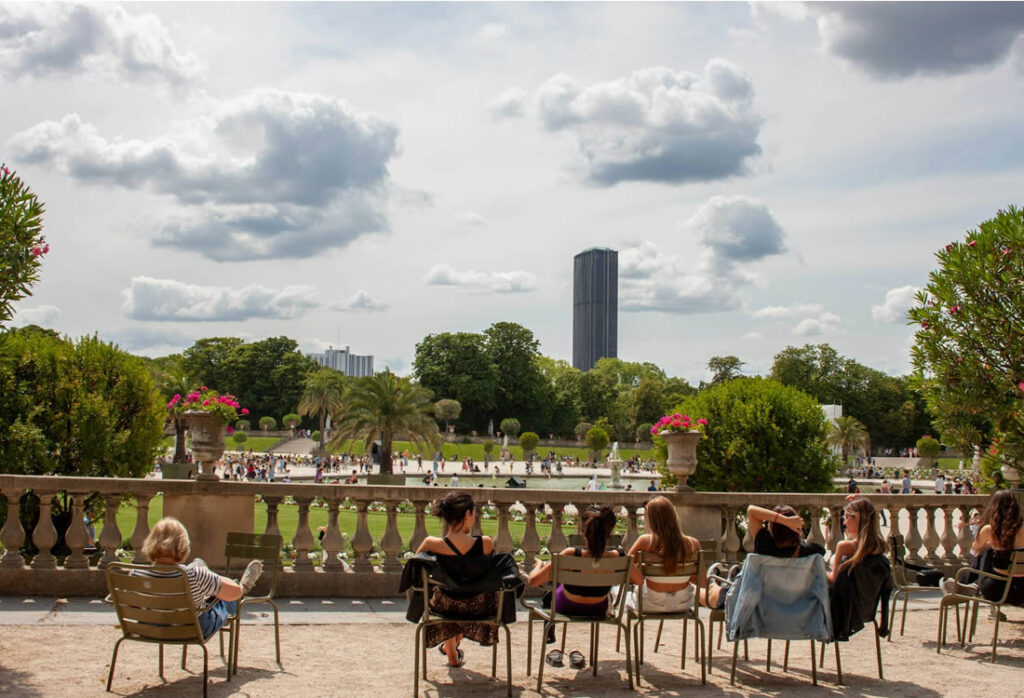
A bit further on, the Grand Bassin invites enchantment: an octagonal pond where children push colorful sailboats, smiling as if they’re in a French film. The scattered green chairs complete the charm of the place.
Culture Around Every Corner
Despite being a park, the Luxembourg Gardens has the soul of a museum. There are over a hundred sculptures scattered throughout the gardens. Among them are representations of French queens and famous artists.
Another highlight is the Musée du Luxembourg, which hosts temporary art and history exhibitions. And for those visiting in the summer, there are free musical performances at the bandstand, as well as children’s plays at the traditional puppet theater.
Activities for Every Style
Those seeking relaxation find peace under the trees. Those who like to move can enjoy the tennis courts, jogging trails, or chess tables. Children have well-equipped playgrounds. Couples find this to be one of the most romantic spots in Paris.
There are also kiosks and cafes perfect for pleasant breaks. A coffee with a view of the Grand Bassin could become the highlight of your day.
Best Time to Visit
Each season offers a different charm. Spring brings colorful flowers, summer livens things up with cultural events, autumn enchants with golden leaves, and winter invites introspection.
The park is open every day. In summer, it’s generally open from 7:30 AM to 9:00 PM. In winter, it closes earlier, around 5:00 PM.
How to Get to the Luxembourg Gardens
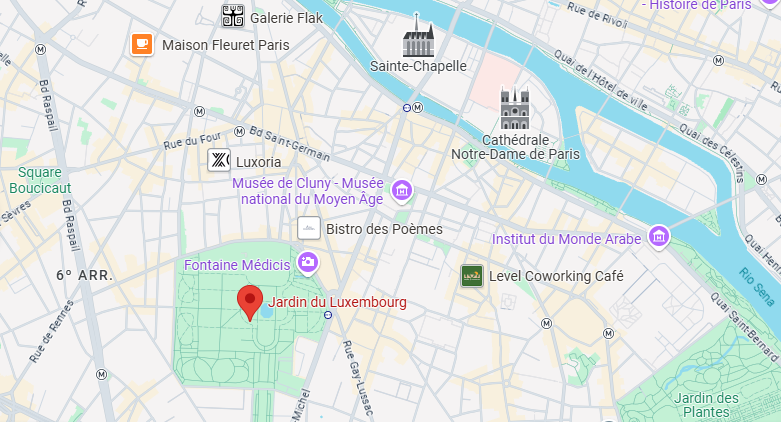
Access is easy. The Luxembourg RER B station is very close. You can also use metro lines 4 and 10 (Odéon and Vavin stations). Walking from the Latin Quarter is an excellent option for those who want to soak in the surroundings.
Extra Tips
Bring a book, sit in one of the green chairs, and allow yourself to do nothing. If you want to go further, bring a baguette, cheese, and wine: voilà, a perfect Parisian picnic.
Keep an eye on the cultural calendar: concerts, exhibitions, and fairs often take place, especially in summer and spring.
The Garden Awaits You
The Luxembourg Gardens is much more than a park: it’s a synthesis of the Parisian soul. Sophisticated without being snobbish, artistic without being inaccessible, historic without losing its lightness. A place where you can simply be. And in a city as intense as Paris, that is one of the most precious luxuries.
Frequently Asked Questions
1. Is the Luxembourg Gardens free?
Yes. Visiting the garden and its tree-lined paths is free. Some temporary exhibitions at the Musée du Luxembourg may charge an entrance fee, but access to the park is always free.
2. What are the opening hours?
Generally, the park opens between 7:30 AM and 8:15 AM and closes between 5:00 PM (winter) and 9:30 PM (summer). It’s always a good idea to check the official Paris website before your visit for specific hours and any changes.
3. Can you have a picnic in the garden?
Yes. There are large lawns perfect for spreading out a blanket. To respect local rules, avoid areas near the sculptures and never leave trash behind.
4. Are there restrooms available inside the park?
Yes, there are public restrooms near the Medici Fountain and the Grand Bassin. They are free and maintained by the city of Paris.
5. Can I bring my pet?
Dogs are allowed but must be kept on a leash and cannot go on the grassy areas. Always pick up after your pet to keep the garden clean.
6. Is there wheelchair access?
Yes. The terrain is mostly flat, with compacted gravel paths. Main entrances have ramps, but there may be slight variations in the surface on some looser gravel sections.
7. What food options are available inside the park?
There are kiosks selling drinks, ice cream, and quick snacks, as well as cafes near the main entrance where you can buy sandwiches and pastries.
8. How do I get there by public transport?
The most practical options are the RER B (Luxembourg station) and the metro lines 4 and 10 (Odéon and Vavin stations). Several bus lines also stop around the park.
9. What is the best time to visit?
Spring and fall offer pleasant weather and colorful scenery without the summer crowds. In winter, the garden is less busy and has a more introspective atmosphere.
10. Are there regular cultural events?
Yes. Outdoor concerts, puppet shows, and small fairs take place, especially in spring and summer. Check the official schedule before you go.
11. Is there a luggage storage or lockers?
There is no luggage storage service inside the park. If you need to leave items, use lockers at nearby train/metro stations or leave them at your hotel.
12. Is the park safe to visit at the end of the day?
Yes, for the most part, the atmosphere remains calm and safe until closing time. Still, avoid very isolated areas at dusk.
13. Is photography and filming allowed?
Photography and filming for personal use are allowed throughout the garden. For professional productions, you may need to request permission from the city of Paris.
14. Is there parking nearby?
Parking on the streets around the 6th arrondissement can be expensive and restricted. Prefer public transport or nearby underground parking garages, like those on Rue de Médicis.
15. Can I bring my own food?
Yes, there are no restrictions on food brought from outside. Just follow local etiquette: keep the space clean, pick up all your trash, and avoid high-traffic areas for large picnics.