Dica: Aproveite também para fazer estes passeios em Paris
Tour pelo exterior da catedral de Notre Dame + Ingresso da cripta . Duração: 2 horas
Disneyland Paris Duração: 3 horas ou mais
Passeio de barco pelo Sena. Duração: 1h
Ingresso do 3º andar da Torre Eiffel. Duração: 2 a 3 horas
Ingresso do Palácio de Versalhes. Duração: 2 a 3 horas
Veja mais passeio em Paris aqui.
If there’s a corner of Paris where the city feels more “student,” more bohemian, and at the same time, more ancient, that place is the Latin Quarter. Squeezed between the Seine and the Panthéon on the Left Bank, the Quartier Latin is where Paris holds centuries of university history, century-old bookshops, medieval streets that escaped Baron Haussmann’s straight lines, and a nightlife that blends jazz, arthouse cinema, and bars packed with students. For anyone visiting the French capital, it’s one of the richest neighborhoods for a leisurely stroll—and this guide shows why it deserves a prime spot on your itinerary.
Where is the Latin Quarter and how to get there
The Latin Quarter mainly occupies Paris’s 5th arrondissement, with a small extension into the 6th, on the Left Bank (Rive Gauche) of the Seine River, right across from the Île de la Cité, where Notre-Dame Cathedral stands. This makes it extremely central: you can walk from Notre-Dame, crossing the Pont au Double or the Petit Pont, in just a few minutes.
By metro, the most useful stations are Saint-Michel Notre-Dame (RER lines B and C, plus metro line 4), Cluny–La Sorbonne (line 10), and Maubert-Mutualité (line 10). Practically the entire area can be explored on foot from any of these stations, making the neighborhood a great hub to start or end a day of sightseeing on the Île de la Cité, at the Luxembourg Gardens, or the Panthéon.
Where does the name “Latin Quarter” come from?
The name “Quartier Latin” has a direct and curious origin: during the Middle Ages, this was the area where Paris’s universities were concentrated, and Latin was the official language of teaching and academic life. Professors, students, and clergy communicated in Latin on the streets, in classrooms, and in churches—hence the nickname the neighborhood still carries today, even though Latin hasn’t been spoken on its streets for centuries.
This academic vocation has never truly disappeared. Since the 12th century, when the University of Paris began to organize itself in this region, the neighborhood has never stopped housing schools, colleges, and libraries. It’s precisely this continuity—nearly 900 years of student life in the same patch of the city—that gives the Latin Quarter a unique atmosphere, unlike any other area in Paris.
The Sorbonne: the intellectual heart of Paris
In the middle of the neighborhood, the Sorbonne is the most obvious symbol of this tradition. Founded in 1257 by theologian Robert de Sorbon as a college for poor theology students, it grew to become synonymous with the University of Paris itself. The current building, with its imposing domed chapel and inner courtyard framed by arcades, mainly dates from the 17th century, with major renovations in the late 19th century.
Today, the Sorbonne is no longer a single university but a complex housing several higher education institutions. Access inside is restricted to those affiliated with the university, but that doesn’t diminish the charm of walking through the Place de la Sorbonne, a small tree-lined square in front of the building, filled with cafés, bookshops, and students sitting on the steps—a scene that has repeated itself for generations.
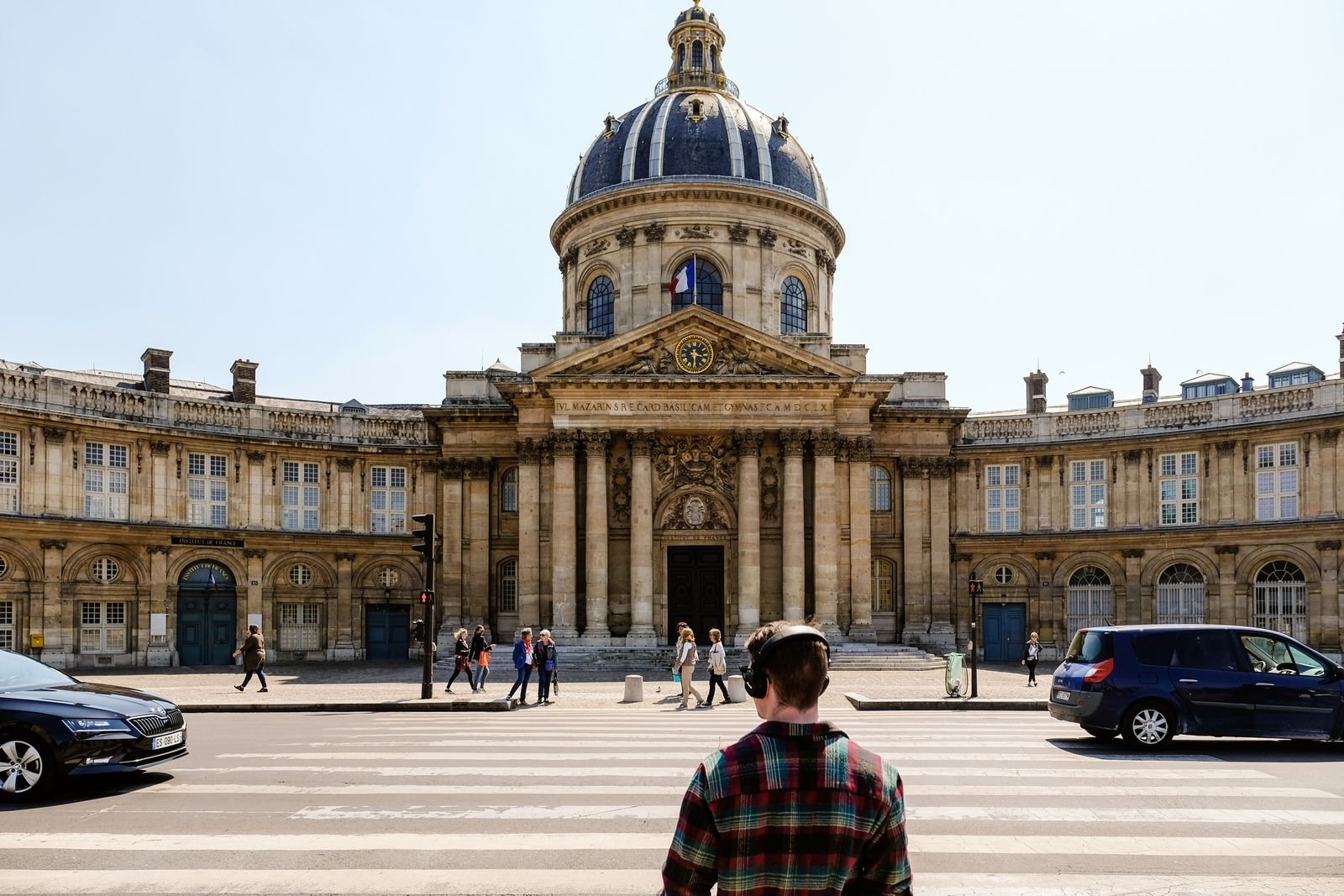
Around the Sorbonne, it’s also worth noticing the Collège de France, a free research and teaching institution founded in the 16th century, and the Rue des Écoles, which gives a good idea of the concentration of academic institutions in the area.
Shakespeare and Company and other historic bookshops
No itinerary through the Latin Quarter is complete without a stop at Shakespeare and Company, one of the most famous bookstores in the world. Located right across from Notre-Dame on Rue de la Bûcherie, the current bookstore was opened in 1951 by George Whitman and became a historic meeting point for American and British writers living in Paris—from Ernest Hemingway to Allen Ginsberg passed through its doors (the first bookstore with this name, from the 1920s, was run by Sylvia Beach and even published the first edition of James Joyce’s “Ulysses”).
Today, Shakespeare and Company is at once a bookstore, an informal library, and almost a small museum: narrow corridors, creaky stairs, books piled to the ceiling, and upstairs, reading nooks with views of the Seine and the cathedral’s façade. There’s also an attached café, perfect for a break.
But Shakespeare and Company isn’t the only bookstore worth visiting. The streets around the Sorbonne and Place Saint-Michel are packed with dozens of smaller bookshops, antiquarian booksellers, and bouquinistes (used book sellers who also set up stalls along the Seine), reinforcing the neighborhood’s literary vocation.
Narrow streets with medieval charm: Rue de la Huchette and Rue Mouffetard
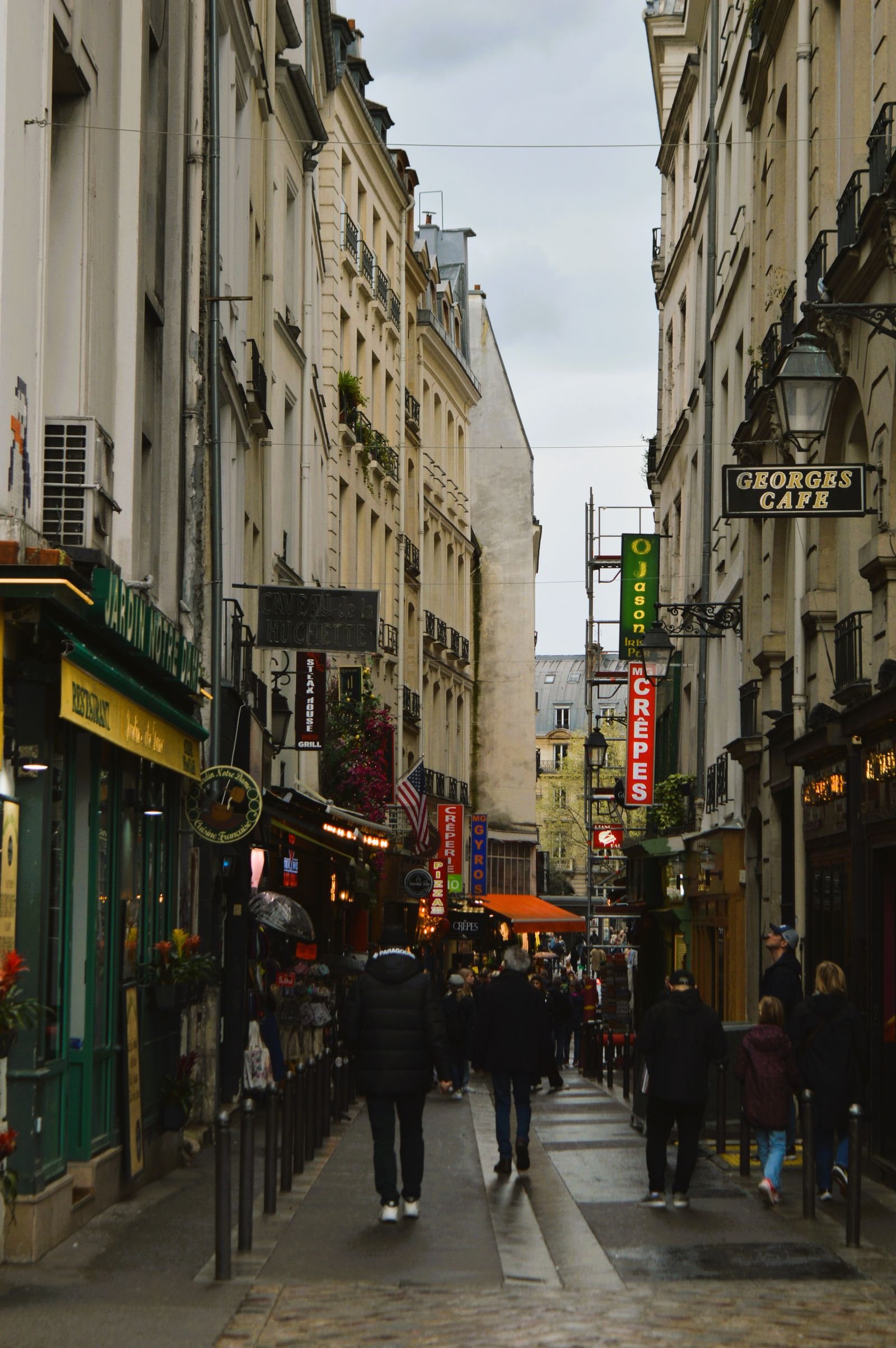
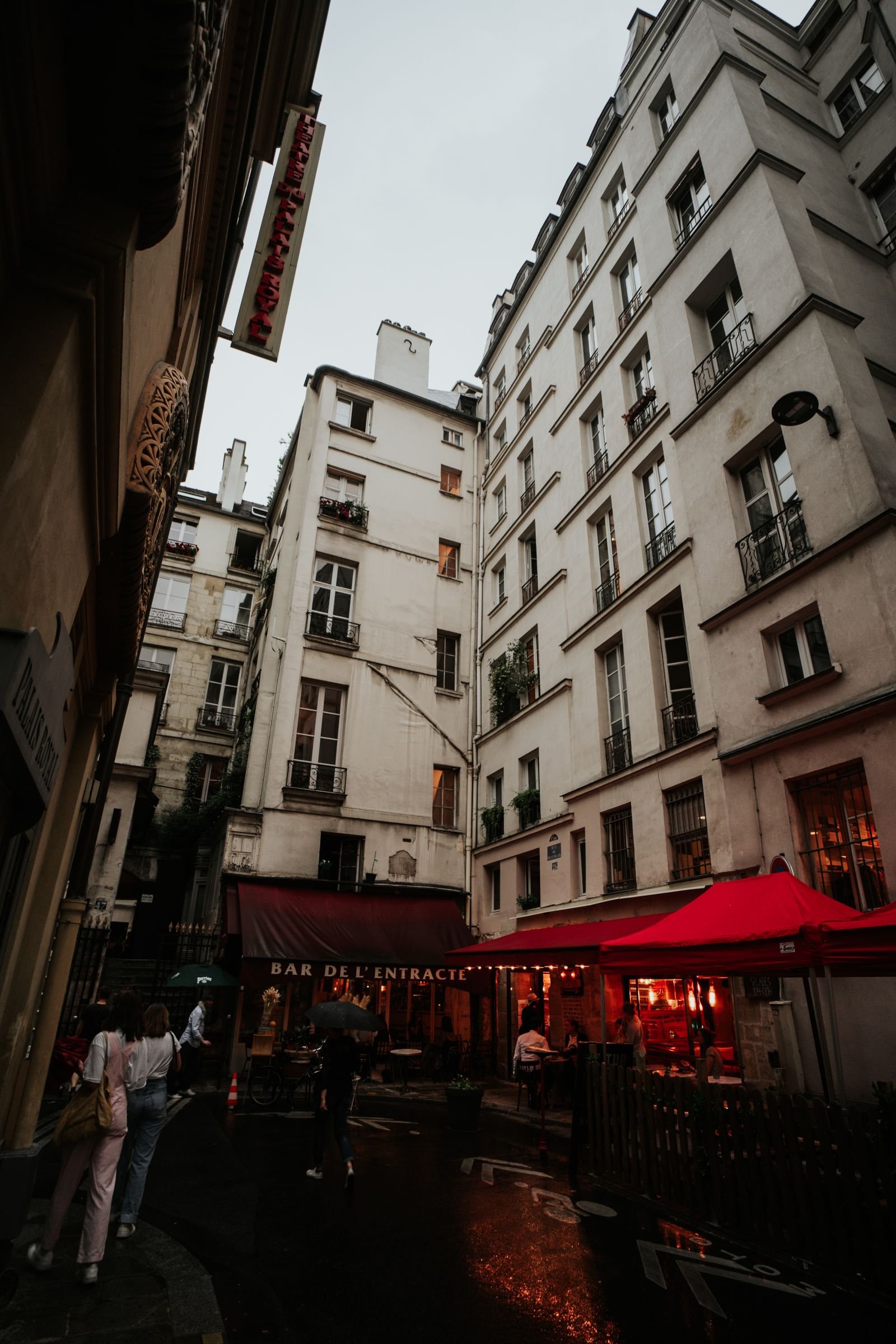
One of the Latin Quarter’s greatest treasures is its layout of narrow, winding streets, which escaped the major urban reforms of the 19th century and preserved the city’s medieval scale. Rue de la Huchette, near Saint-Michel, is perhaps the best-known example: a short, bustling street full of Greek, Lebanese, and crêperie restaurants, with colorful neon signs and a lively atmosphere that stretches late into the night. It’s also home to the Théâtre de la Huchette, which has been staging Ionesco’s plays continuously since the 1950s.
Rue Mouffetard, a bit further south near the Jardin des Plantes, is one of Paris’s oldest streets—its layout dates back to a Roman road. Today, it hosts a lively street market with stalls of cheese, bread, fruit, and flowers, along with bistros and bars frequented by both locals and tourists. Walking down Mouffetard in the morning, when the market is in full swing, is one of the most authentic experiences Paris can offer.
It’s also worth exploring smaller streets like Rue du Chat-qui-Pêche—considered one of the narrowest streets in Paris—and the area around Place Maubert, which preserves the same medieval village vibe within the capital.
The Panthéon of Paris
At the highest point of the neighborhood, the Montagne Sainte-Geneviève, stands the Panthéon of Paris, its imposing dome visible from several points in the city. Originally built as a church dedicated to Saint Genevieve, the patron saint of Paris, the building was transformed after the French Revolution into a mausoleum for the “great men” (and, more recently, great women) of the French nation.
Inside the Panthéon are the tombs of figures like Voltaire, Rousseau, Victor Hugo, Émile Zola, Marie Curie (one of the few women honored), and, more recently, Josephine Baker. Beyond the historical value of the tombs, the interior impresses with its monumental scale and decorated dome, and the basement (crypt) can be visited with a separate ticket from the main hall.
Next to the Panthéon is the Church of Saint-Étienne-du-Mont, with a façade blending Gothic and Renaissance styles, which holds the tomb of Saint Genevieve—another quick stop often overlooked by tourists, but well worth the detour.
Nightlife in the Latin Quarter: jazz, bars, and arthouse cinemas
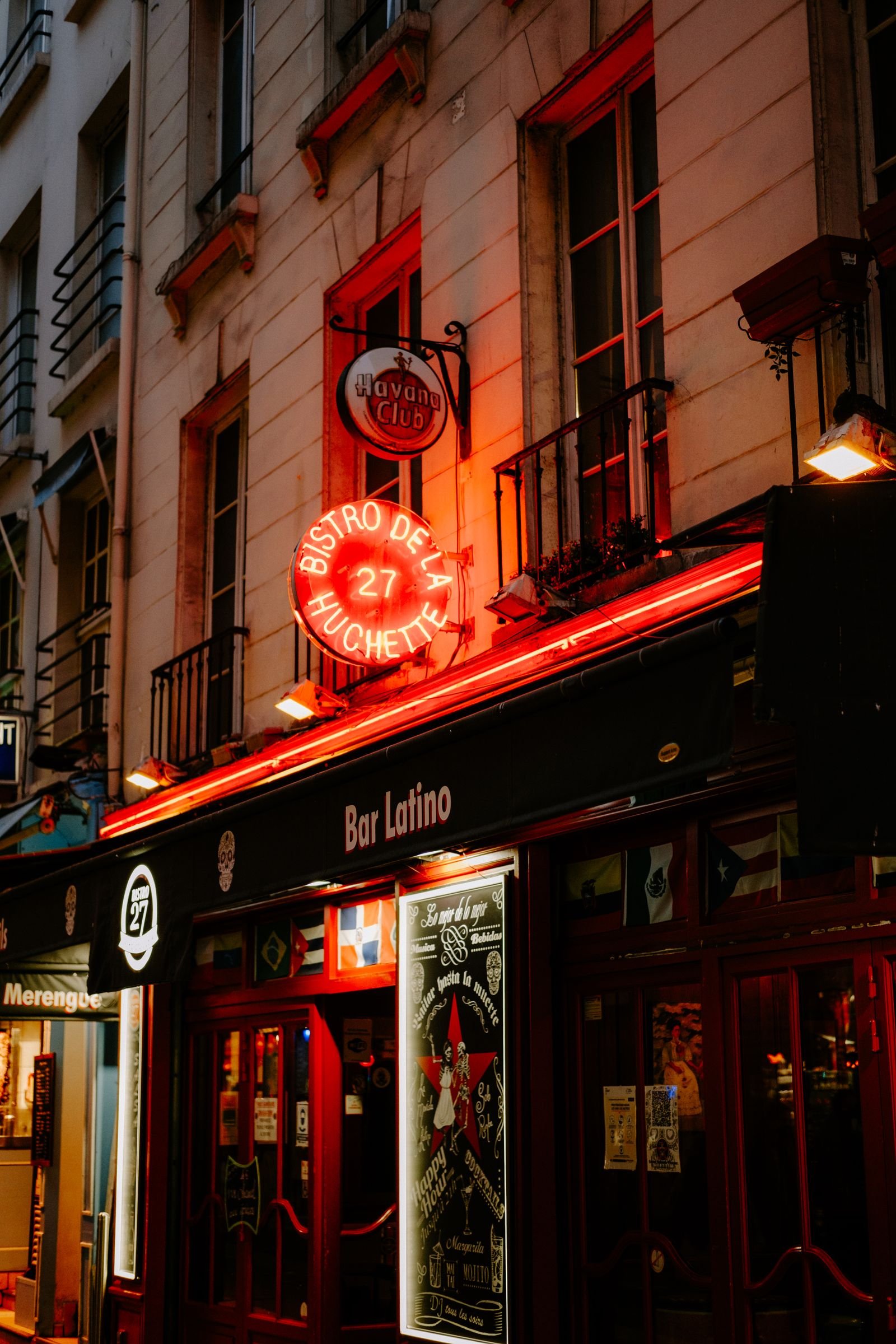
Being a student neighborhood, the Latin Quarter has a vibrant nightlife that is generally more budget-friendly than other central areas of Paris. The area near Rue de la Huchette and Place Saint-Michel is packed with bars, pubs, and jazz clubs that stay open late—some of them, like the historic Caveau de la Huchette, occupy medieval cellars turned into swing and jazz clubs, with dance floors and live shows practically every night.
The neighborhood is also a stronghold for arthouse and repertory cinemas, with small theaters showing classic films in their original language with subtitles, at prices much lower than the touristy multiplexes. For those who enjoy “off-the-beaten-path” culture, it’s worth setting aside an evening to check the program at one of these cinemas—often alongside Parisian students, giving you a taste of the city as it’s lived, not just visited.
Where to eat in the Latin Quarter
The food scene in the Latin Quarter is huge and incredibly varied—perhaps even too much, which requires a bit of caution to avoid tourist traps. Rue de la Huchette and neighboring streets are famous for crêperies (especially those with a Breton twist, offering savory and sweet crêpes) and Greek restaurants with display cases full of spinning spits, mainly catering to the late-night crowd.
For a more “local” experience, it’s worth moving away from the busiest streets and looking for bistros on the streets near the Sorbonne, the Panthéon, or Rue Mouffetard, where prices tend to be fairer and the crowd is mostly local. The Mouffetard market itself is a great option for putting together a picnic with cheeses, breads, and fresh fruit, to enjoy in the Luxembourg Gardens, just a few minutes’ walk away.
Historic cafés also deserve attention: it’s worth stopping for a coffee or hot chocolate in one of the area’s traditional tea rooms, many of which were frequented by intellectuals and writers throughout the 20th century.
Practical tips for visiting the Latin Quarter
The Latin Quarter can be explored any time of year, but a few tips will help you make the most of your visit. Set aside at least half a day (preferably from afternoon into the evening) to wander leisurely through the narrow streets, pop into bookshops, and stop at cafés—it’s a neighborhood that rewards those who allow themselves to “waste time.”
Wear comfortable shoes: the cobblestone streets and uphill climbs near the Panthéon call for a good pair of sneakers. If possible, combine your visit with a morning tour of the Île de la Cité (Notre-Dame and Sainte-Chapelle) and save the Latin Quarter for late afternoon and evening, when the cafés and bars come alive.
Regarding prices, be especially careful on the more touristy streets near Saint-Michel: compare menus before sitting down, particularly at restaurants with staff calling out to passersby at the door. A few blocks away, prices usually drop significantly without any loss in quality.
Finally, if you have free time on a Tuesday through Sunday morning, don’t miss the Rue Mouffetard market early in the day—besides incredible photo opportunities, it’s a chance to taste French products straight from the source, at prices much friendlier than in tourist areas.
Is the Latin Quarter worth including in your itinerary?
Without a doubt. The Latin Quarter is one of those places in Paris that manages to condense, in a relatively small space, nearly a thousand years of history, academic life, literature, gastronomy, and nightlife. It’s a neighborhood for walking slowly, popping into places without a set time, and letting the city reveal itself through its narrow streets, packed bookshops, and always-busy cafés.
Combined with the neighboring Île de la Cité, where Notre-Dame Cathedral stands, the Latin Quarter forms one of the most complete and walkable itineraries in all of Paris—perfect both for those in the city for just a few days and for those who have already visited the most famous sights and want to experience the more authentic, bohemian side of the French capital.