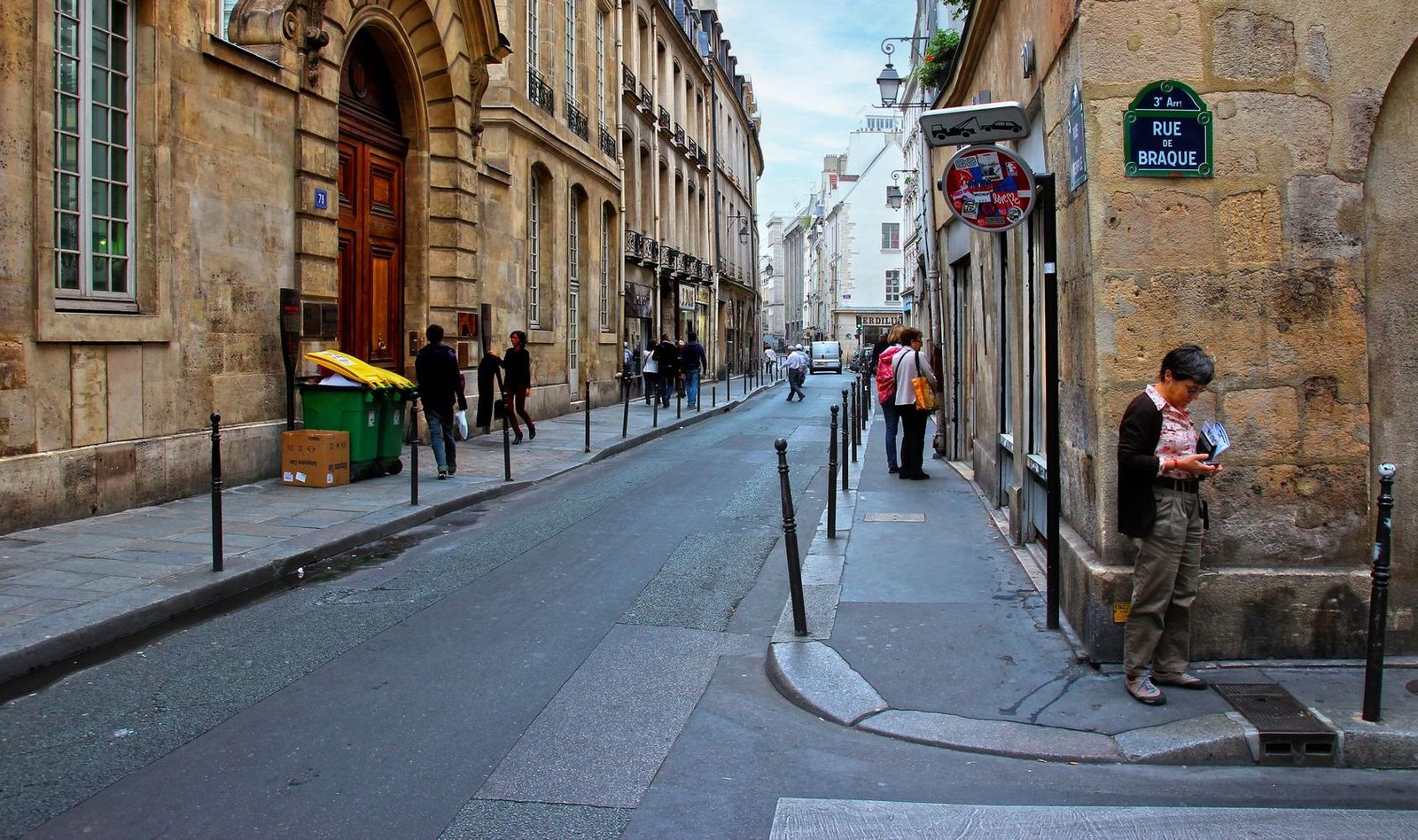
There’s a corner of Paris where you just want to toss the map aside and wander. Le Marais is that place: narrow streets that change their story at every turn, stone buildings that have survived centuries, shop windows that blend thrift stores with art galleries, and the smell of fresh bread wafting from a hidden bakery. If you have a free afternoon in the city and want to feel Paris far from the queues, this is where I’d send you.
In this guide, I’ve gathered what matters to make the most of the neighborhood: a bit of the history that explains why it’s so special, the spots worth your time, where to eat, how to get there, and practical tips to get lost in the best sense of the word. Ready?
Dica: Aproveite também para fazer estes passeios em Paris
Tour pelo exterior da catedral de Notre Dame + Ingresso da cripta . Duração: 2 horas
Disneyland Paris Duração: 3 horas ou mais
Passeio de barco pelo Sena. Duração: 1h
Ingresso do 3º andar da Torre Eiffel. Duração: 2 a 3 horas
Ingresso do Palácio de Versalhes. Duração: 2 a 3 horas
Veja mais passeio em Paris aqui.
Where is Le Marais and why is it so different
Le Marais occupies part of the 3rd and 4th arrondissements, on the Right Bank of the Seine, right in the historic heart of Paris. It’s just a few minutes’ walk from the Notre-Dame Cathedral and the Centre Pompidou, making it a perfect base for exploring the city on foot.
The name literally means “the marsh.” And that’s not just a figure of speech: until the Middle Ages, this area was a swampy region along the river. Monks drained the land, and over time, the place became one of the most coveted addresses for the French nobility. This mix of a marshy past, aristocratic heritage, and constant reinvention is what gives the neighborhood its unique character.
What makes Le Marais special today is precisely the fact that it escaped the grand renovations that tore through Paris in the 19th century. While Baron Haussmann was knocking down entire neighborhoods to open up the wide boulevards we know today, the Marais was left aside. The result: the narrow medieval streets, hidden courtyards, and old facades are still there, practically untouched.
A journey through the neighborhood’s history
To understand the Marais, it helps to know its layers. Each era left a mark that you can still see while walking around.
The aristocratic splendor
In the 16th and 17th centuries, the neighborhood became the fashionable address for the nobility. Wealthy families built the so-called hôtels particuliers, urban mansions with inner courtyards and private gardens. Many of these buildings survived and today house museums, cultural institutions, and even district town halls. When you pass by an imposing, slightly open gate, take a peek: behind it, there’s usually a stunning stone courtyard.
The Jewish heart of Paris
Starting in the 19th century, the Marais became the city’s main Jewish neighborhood, especially around Rue des Rosiers. Despite the painful marks of World War II, the community endured, and the area remains a center of Jewish culture in Paris, with bakeries, kosher restaurants, and traditional shops. This is where you’ll find the famous falafels that have become legendary among tourists.
The modern reinvention
In recent decades, Le Marais has become one of the most vibrant and diverse neighborhoods in the city. It’s also a historic stronghold of the Parisian LGBT community, with lively bars and cafés, and a hub for independent fashion, art, and nightlife. This mix of generations and styles coexisting on the same block is part of the charm.
Place des Vosges: the most beautiful square in Paris
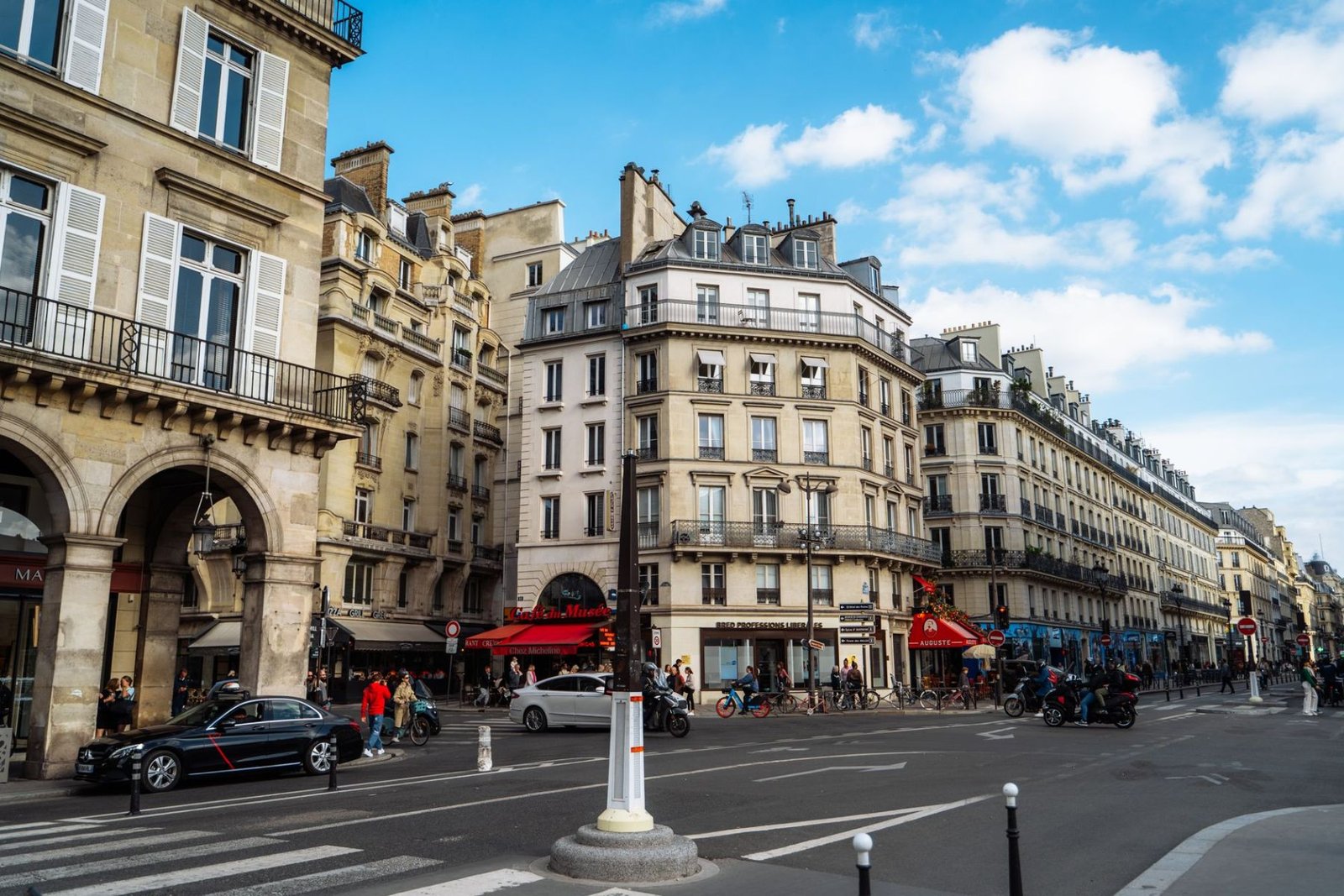
If there’s one place that sums up the Marais, it’s the Place des Vosges. Inaugurated in 1612, it’s the oldest planned square in the city and, for many people (myself included), the most beautiful. There are 36 houses of red brick and light stone, all identical, forming a perfect square around a garden with fountains and pruned trees.
The best part is that it’s not just for looking at. The arcades surrounding the square house art galleries, cafés, and workshops. In the central garden, Parisians picnic, read, date, and soak up the sun on good days. Sit on a bench, watch the comings and goings, and understand why this little corner has charmed people for over four hundred years.
In one corner is the Maison de Victor Hugo, where the author of “Les Misérables” lived for sixteen years. The visit to the house-museum is free and shows how one of France’s greatest writers lived, with furniture, personal items, and a view of the square itself.
What to do in Le Marais
The neighborhood is compact, but it has plenty of content to fill an entire day. Here are the stops I think are most worth your time.
Museums worth the ticket (or not even that)
The Musée Picasso is the highlight. Housed in a sumptuous 17th-century hôtel particulier, it holds one of the largest collections of the artist in the world, with over five thousand works including paintings, sculptures, and drawings. The mansion alone would be worth the visit; with Picasso inside, it becomes a must-do for anyone who loves art.
Right nearby, the Musée Carnavalet tells the story of Paris from beginning to end, and the best part: entry to the permanent collection is free. It’s a great walk to understand how the city got to where it is today, with rooms that reconstruct settings from different eras.
For those who like modern art, the Centre Pompidou is right on the edge of the neighborhood, with its architecture of colorful tubes that divides opinions but never goes unnoticed.
Shopping: from thrift stores to concept stores
The Marais is one of the best places in Paris for those who love to hunt for treasures. The streets are packed with thrift stores (the friperies) full of vintage clothes, independent design shops, bookstores, artisanal perfumeries, and the so-called concept stores, which mix fashion, decor, and art in the same space.
Unlike the big department stores, the fun here is getting lost in the alleys and discovering little shops you won’t find in any guidebook. Set aside time and willingness to wander without rushing, because the best finds are usually on the side streets.
Covered market and streets to stroll
The Marché des Enfants Rouges, opened in 1615, is the oldest covered market in Paris. Today, it functions as a charming food court, with stalls selling French, Moroccan, Japanese, Italian, and more. It’s a sure stop at lunchtime.
Streets like Rue des Francs-Bourgeois and Rue Vieille du Temple are perfect for wandering without a destination, popping in and out of shops, stopping at a café whenever the mood strikes.
Where to eat in Le Marais
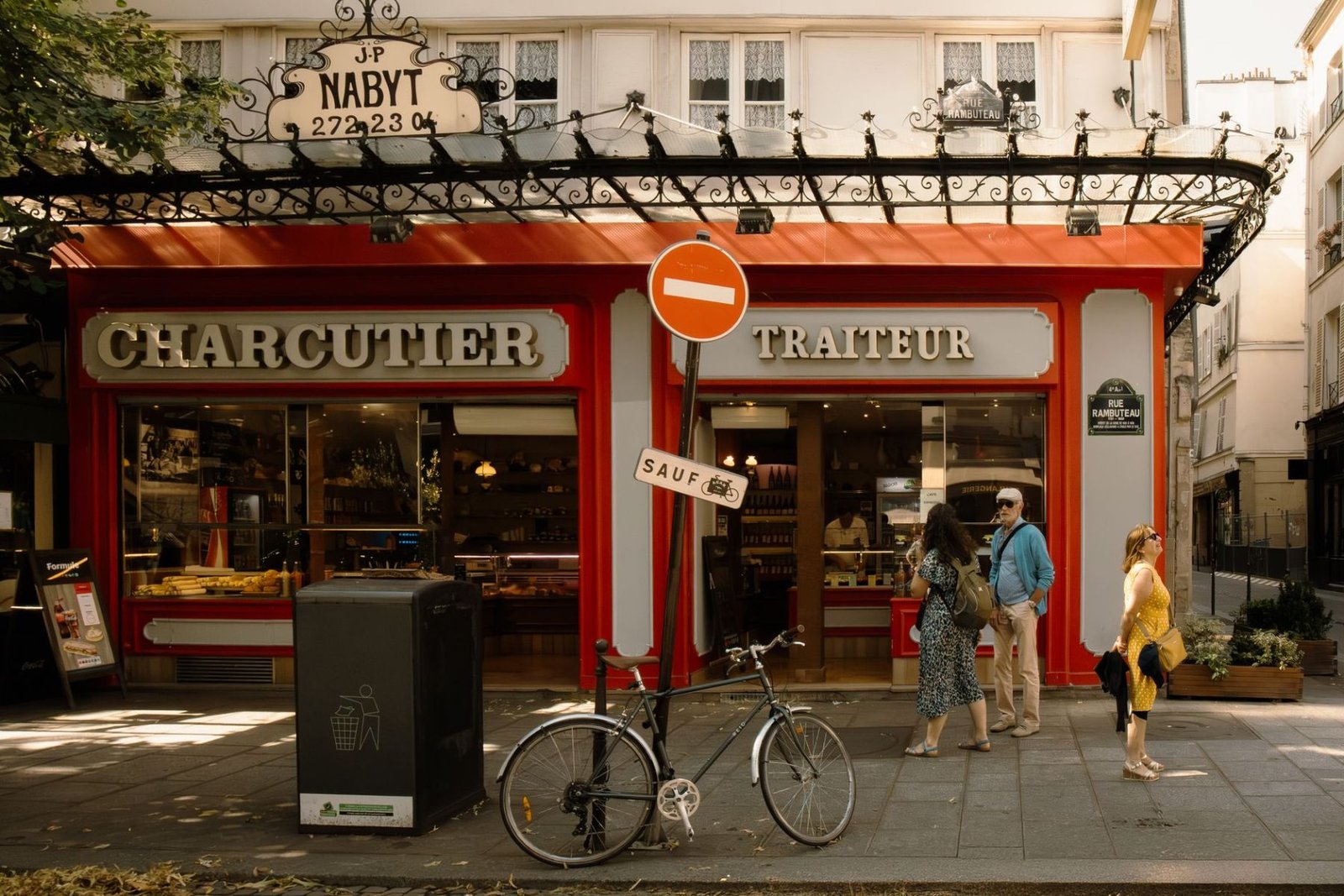
Eating well here is easy. The hard part is choosing.
The star of Rue des Rosiers is the falafel. Lines form in front of the most famous spots, and for a friendly price (around 8 to 10 euros), you get a generous sandwich stuffed with fried chickpeas, salad, eggplant, and sauces. Eat it while walking, as local tradition dictates.
For those who want the classic bistro experience, the neighborhood has traditional spots with dishes like coq au vin, boeuf bourguignon, and quiches. The cafés with sidewalk tables are perfect for a break with a café crème and a croissant in the middle of the afternoon. And if a sweet craving hits, the bakeries and pâtisseries of the Marais are among the best in the city.
One tip: on the more touristy streets, prices go up. Walk one or two blocks inward, and you’ll find more honest and often tastier options, frequented by locals.
Practical tips for visiting Le Marais
How to get there
The metro does the job. The most useful stations are Saint-Paul (line 1), Hôtel de Ville (lines 1 and 11), Rambuteau (line 11), and Chemin Vert (line 8). From any of them, you’ll drop right into the heart of the neighborhood. Line 1, which goes through Saint-Paul and Hôtel de Ville, is the same one that serves the Louvre and the Champs-Élysées, so you can easily string together outings.
How much time to dedicate
An afternoon is enough to get a good taste of the Marais: the Place des Vosges, a stroll through the shopping streets, a falafel, and a coffee. But if you love museums and like to walk at a leisurely pace, set aside a full day. The neighborhood rewards those who aren’t in a hurry.
Best time and hour
The Marais is especially pleasant in the late afternoon, when the light turns golden on the stone facades and the cafés start to fill up. A useful curiosity: because of the strong presence of the Jewish community, many shops in the area are open on Sundays, the day when much of Paris closes its doors. In other words, it’s a great plan for a Sunday, when other areas are quieter.
Safety and pace
It’s a central, lively, and safe neighborhood to explore on foot, day and night. As with any tourist spot in Paris, standard caution with your wallet and phone in crowded streets and on the metro is wise. Other than that, just relax and enjoy.
A simple half-afternoon itinerary
To make it easy, here’s a route that works well and fits into three or four hours. Start at the Saint-Paul station and walk to the Place des Vosges, stopping to appreciate the square and check out the Maison de Victor Hugo. From there, head down Rue des Francs-Bourgeois, shopping and window-gazing until you reach the Musée Carnavalet (free entry).
Then, head down toward Rue des Rosiers to brave the falafel line and soak in the vibe of the Jewish quarter. Finish at any café table, watching the world go by. If you still have energy and time, the Musée Picasso and the Marché des Enfants Rouges are nearby and will cap off the outing perfectly.
Frequently asked questions about Le Marais
Is Le Marais safe for tourists?
Yes. It’s one of the most central and bustling neighborhoods in Paris, pleasant to explore on foot both day and night. The precautions are the same as in any tourist area: keep an eye on your belongings in crowded streets and on the metro.
Is it worth visiting Le Marais in the rain?
It is, and it can even be rewarding. A good part of the attractions are covered: museums, the Marché des Enfants Rouges, shops, and cafés. You can spend hours in the neighborhood without being too exposed, hopping from one cozy interior to another.
How many days do I need to explore the neighborhood?
An afternoon gives you a good sample. To explore at a leisurely pace, including museums and unhurried shopping, set aside a full day. You’ll hardly want to rush out.
Can I visit Le Marais on a Sunday?
Yes, and it’s one of the best choices for that day. Unlike other areas of Paris, many shops in the Marais are open on Sundays, making the neighborhood especially lively just when much of the city slows down.
Is Le Marais expensive?
There’s a bit of everything. There are high-end restaurants and designer stores with steep prices, but also affordable options, like the falafel on Rue des Rosiers and free museums like the Carnavalet. You can enjoy the neighborhood quite a bit without spending much, especially if the plan is to walk and observe.
Is it worth setting aside an afternoon for Le Marais?
Without a doubt. Le Marais is where Paris feels most authentic and less scripted: real history, streets that beg to be walked without a map, good food on every corner, and that vibe of a living city that no postcard can capture. If you’re putting together your itinerary, squeeze in at least one afternoon here, preferably after visiting the nearby Notre-Dame Cathedral, which is just a few minutes’ walk away.
Wear comfortable shoes, leave room in your suitcase for a thrift store find, and come hungry. The Marais will take care of the rest. Happy travels!