Fifty kilometers separate Chantilly from central Paris—less than half an hour by train. Yet the place gets treated like it’s the end of the world. It pops up on lists of “possible day trips” and vanishes from the itinerary before it’s even scheduled.
The blame falls partly on Versailles, which sucks up all the attention from travelers with limited time. But Chantilly has things Versailles doesn’t: a painting collection that rivals any European museum, gardens designed by Le Nôtre blended with a 19th-century English garden, and Baroque stables that host live equestrian demonstrations. Together, these three elements make Chantilly one of the most complete visits within a 100-kilometer radius of Paris.
This guide covers everything you need to know to organize a day there—from leaving Gare du Nord to heading back in the evening.
Dica: Aproveite também para fazer estes passeios em Paris
Tour pelo exterior da catedral de Notre Dame + Ingresso da cripta . Duração: 2 horas
Disneyland Paris Duração: 3 horas ou mais
Passeio de barco pelo Sena. Duração: 1h
Ingresso do 3º andar da Torre Eiffel. Duração: 2 a 3 horas
Ingresso do Palácio de Versalhes. Duração: 2 a 3 horas
Veja mais passeio em Paris aqui.
A Story of Princes, Horses, and Art
The château you visit today was rebuilt in the 19th century, but the grounds have a much longer history. Fortresses and noble residences have occupied this water-surrounded spot since the Middle Ages. Over time, the estate passed from hand to hand, gaining new owners with new ambitions, until it landed with the Condé family—one of the most powerful in the French nobility.
Louis-Henri de Bourbon, Prince of Condé, commissioned the Grandes Écuries in the early 18th century. The official justification was the need to house 240 horses and 500 hunting dogs. The unofficial—and far more interesting—justification is that he sincerely believed he would be reincarnated as a horse and wanted to ensure his future incarnations had a nice address.
The final version of the château that exists today came with the Duke of Aumale, son of King Louis-Philippe I, who rebuilt the Petit Château and the Grand Château in the second half of the 19th century. He spent decades amassing one of the largest private art collections in France. When he died in 1897, he donated everything to the Institut de France with a very specific condition: no artwork could be rearranged, and nothing could be loaned out for exhibitions outside the estate. The result is that the Musée Condé feels frozen in time—and that’s precisely its charm.
The Musée Condé: The Château’s Hidden Gem
Inside the Château de Chantilly is the Musée Condé. It’s the second-largest collection of old master paintings in France, right behind the Louvre. What makes the visit different from a big museum isn’t just the size of the collection—it’s how it’s arranged. A Raphael next to a Poussin. A Delacroix coexisting with medieval miniatures. Everything organized just as the Duke of Aumale left it, without the didactic cataloging that modern museums usually impose.
The Galerie des Peintures features works by Botticelli, Van Dyck, Ingres, and Géricault. But what will make anyone with an interest in art history stop and stare the longest are the illuminated manuscripts. The collection holds facsimiles of the Très Riches Heures du Duc de Berry, one of the most sophisticated examples of medieval European illumination. The original, from the early 15th century, is kept in controlled conditions—it’s so fragile it can’t be displayed. The reproduction you can see is good enough to understand why historians treat this manuscript as a treasure.
Set aside at least an hour and a half for the château. The rooms connect in an almost labyrinthine way, and losing track of time here is easier than you’d think. If art isn’t your priority, breeze through the main galleries in forty minutes and save your energy for the gardens and the stables—but don’t skip it entirely.
The Gardens of Chantilly: French Formality and English Romanticism Together
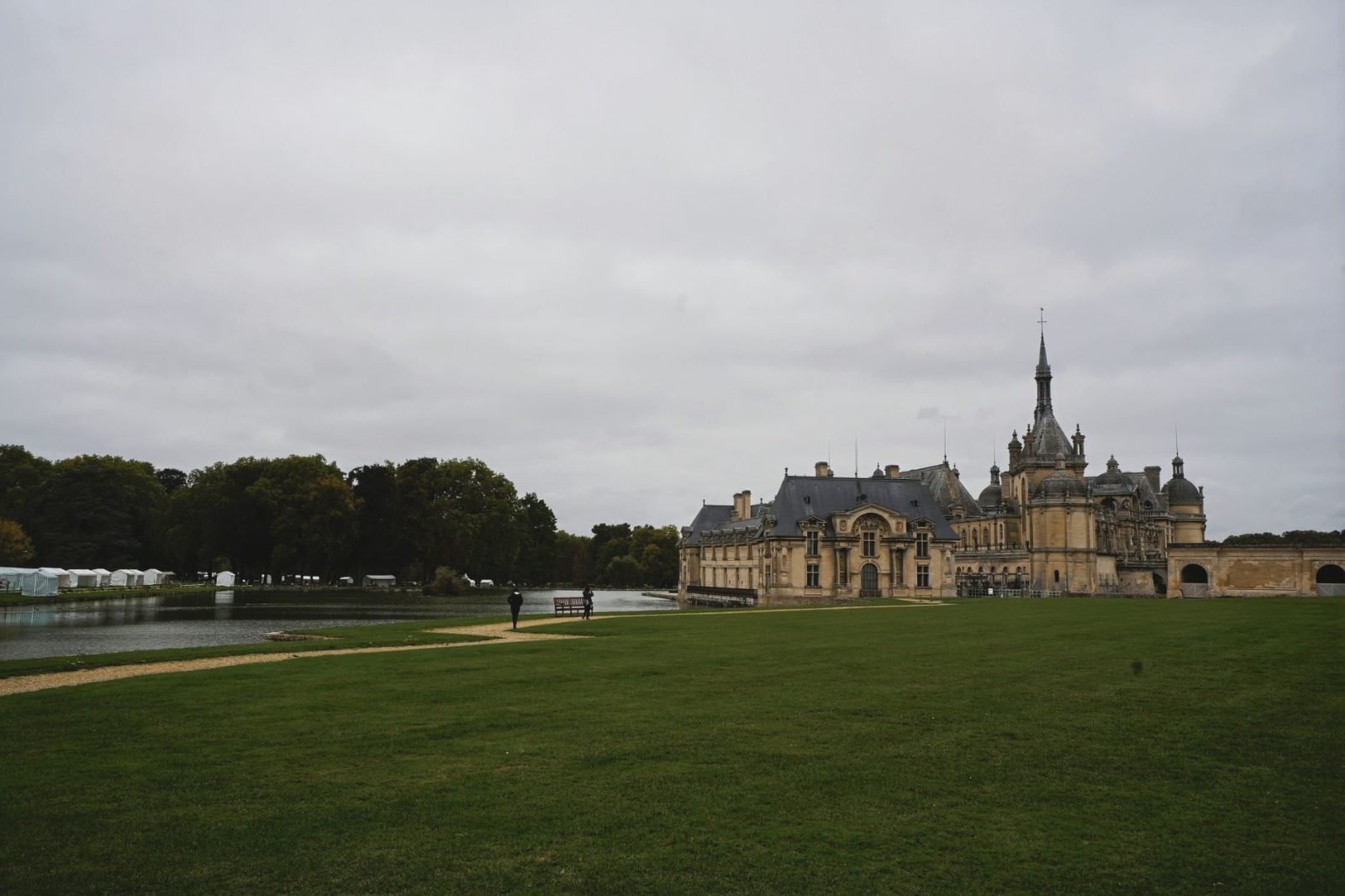
André Le Nôtre worked here before becoming Europe’s most sought-after landscape designer. The straight canals, the symmetrical fountains, the tapis vert that look like rulers of grass—everything follows the same logic of geometric order he later brought to Versailles. But Chantilly has an extra layer that Versailles doesn’t.
Alongside the formal garden, a jardin anglais was created in the 19th century with natural undulations, irregularly placed trees, a small lake, and an island with artificial ruins—built specifically to create an atmosphere of antiquity. Two completely opposite styles on the same grounds. Walking from the jardin à la française to the English garden is almost a shift in mood: you leave imposed order and step into organic romanticism.
There’s also the Hameau, a rustic village the court used to “play peasant”—the same logic as the Hameau de la Reine at Versailles, but on a smaller scale and with a much more manageable flow of visitors.
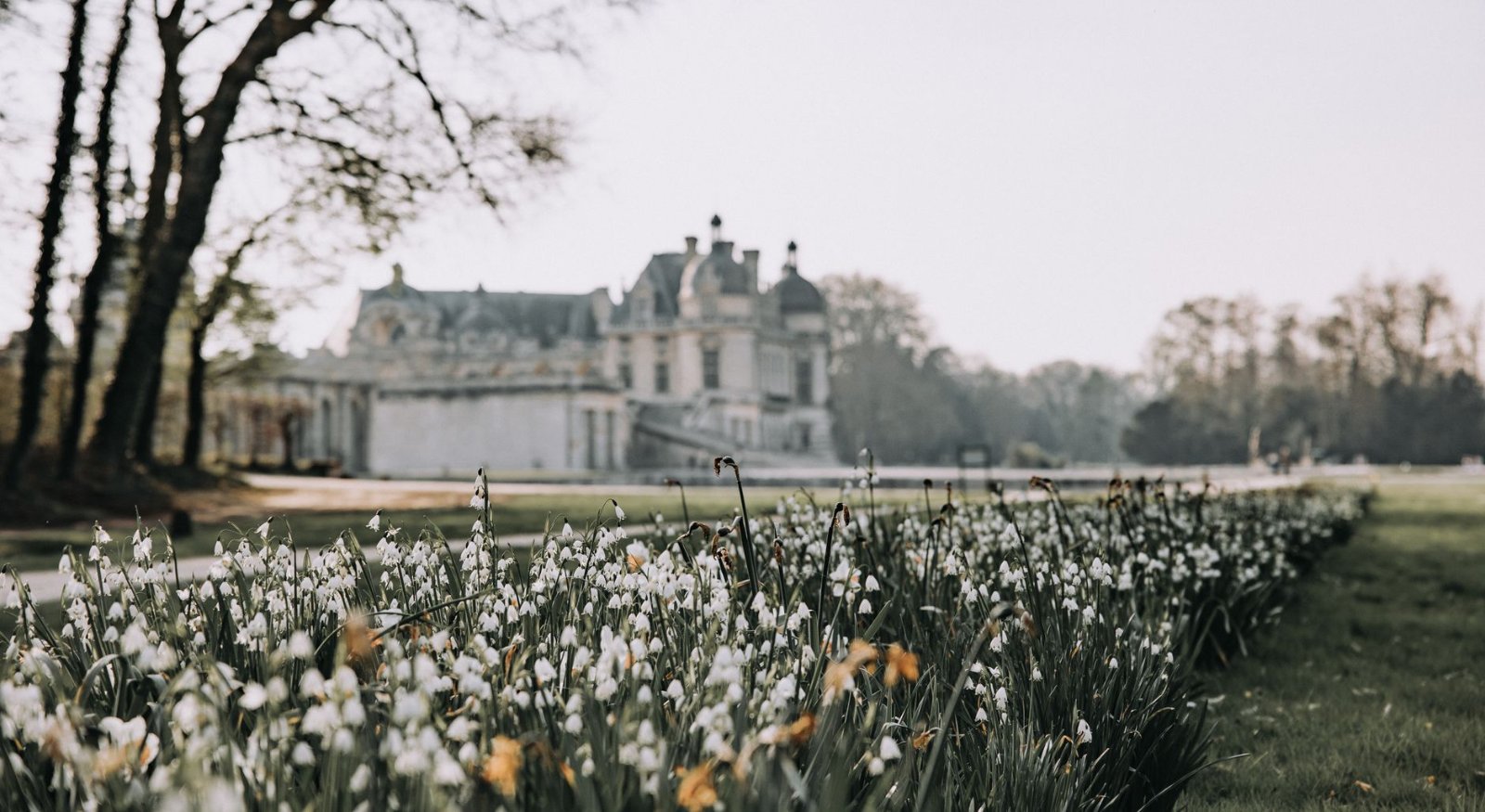
April and May are the ideal months for the gardens. The flowers are at their peak, the light is long, and the temperature won’t wear you out. In summer, the sun exposure in the open areas can be intense; in fall, the trees more than make up for it with their colors.
The Grandes Écuries and the Horse Show
The facade of the Grandes Écuries stops everyone who wasn’t expecting it mid-visit. Built between 1719 and 1735, these stables have a scale and architecture that rival the château itself. Designed to house 240 horses and 500 hunting dogs, they represent the peak of aristocratic extravagance under the Ancien Régime—the kind of thing that, seen today, splits opinions between admiration and absurdity.
Inside is the Musée du Vivant du Cheval, with exhibits on the history of the human-horse relationship and live equestrian demonstrations. The basic estate ticket (château + park) already includes access to the stables and the daily equestrian animations—short performances with riders in a historic setting, at no extra cost.
If you want something more elaborate, you can buy a ticket for the full equestrian show: choreographed routines with music, narration, and a much longer performance time. In 2026, packages start at €30 and include access to the estate. The schedule changes by season—worth checking the official château website before you buy.
How to Get from Paris to Chantilly by Train
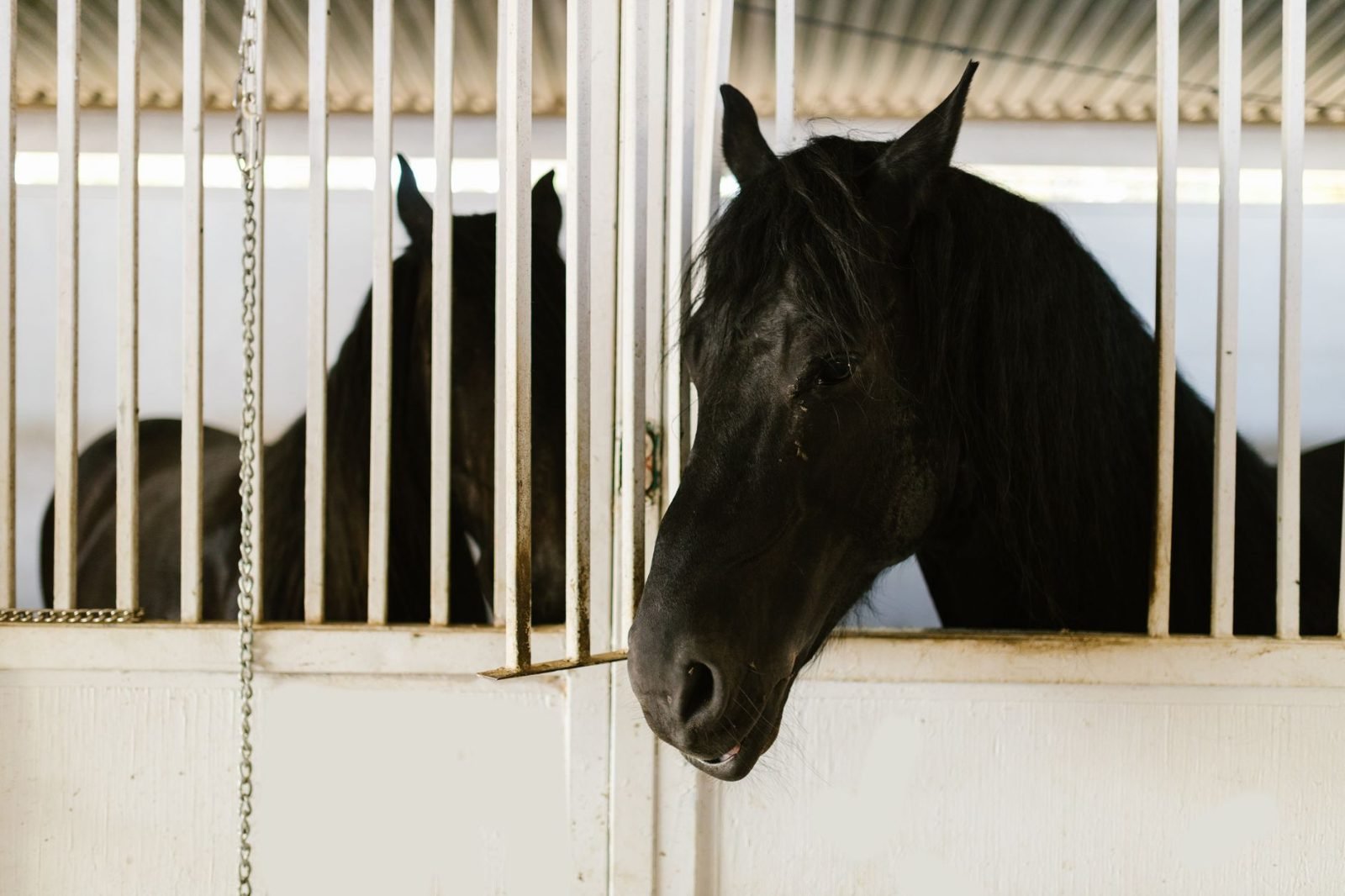
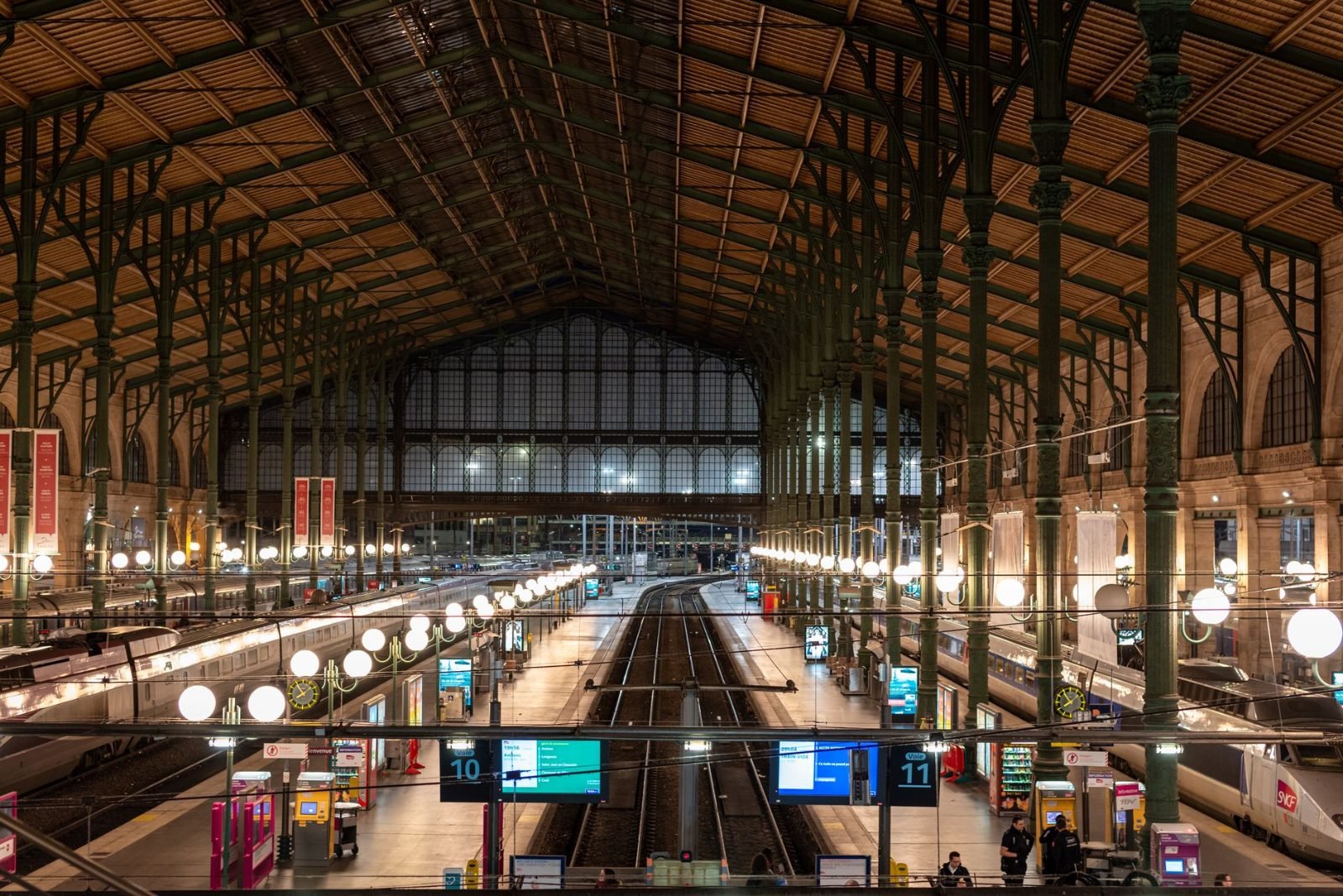
The train is the best option—no debate. The Transilien H line leaves from Gare du Nord and arrives at Chantilly-Gouvieux station in about 25 to 30 minutes. Trains run regularly throughout the day, even on weekends.
A one-way ticket costs around €10 to €12 per person, depending on the time and operator. Buy it directly at the machines in Gare du Nord or through the SNCF app. No need to book in advance—it’s a regular regional line.
From the station to the château, three options:
- On foot: 25 minutes on a flat, well-marked route, much of it alongside a park. Very pleasant.
- DUC bus: free, the Desserte Urbaine Cantilienne connects the station to the town center and the estate.
- Taxi or rideshare: about €8 to €10 and 5 minutes. Good if you’re traveling with a small child or prefer speed.
By car, via the A1, it’s about 45 minutes without traffic. Paid parking is available at the estate. Just be careful about the return on summer Sundays—the A1 back to Paris can get seriously jammed in the late afternoon.
Tickets and Hours (2026)
The estate is open from Wednesday to Monday—closed on Tuesdays. The château and Grandes Écuries are open from 10:30 AM to 5:00 PM; the gardens stay open until 6:00 PM. There are occasional closures for events, so check the calendar on the official website before buying your train tickets.
2026 prices for the full ticket (château + park + Grandes Écuries + equestrian animations):
- Adult: €18
- Child ages 6 to 17: €14.50
- Children up to age 5: free
- Park only (high season, March–October): adult €9 / child €6
- Full equestrian show: package from €30, includes access to the estate
Online purchase available on the official website. On spring and summer weekends, visitor numbers go way up—buying in advance saves you the queue on arrival.
How to Plan Your Day in Chantilly
Full day. That’s the short answer. The right move is to leave Paris early—a train around 8 or 9 AM from Gare du Nord gets you to Chantilly before 10 AM, ahead of the main rush of visitors.
A suggestion that works well:
- Morning: visit the château and the Musée Condé—set aside at least 1.5 to 2 hours for this
- Lunch: La Capitainerie inside the estate, or a picnic in the gardens (allowed and very pleasant)
- Early afternoon: the jardin à la française, English garden, and Hameau
- Late afternoon: Grandes Écuries and equestrian animation—check the times on-site
If you only have half a day, skip the Musée Condé and focus on the park and the Grandes Écuries. It’s still well worth the trip.
Practical Tips Before You Go
Comfortable shoes are non-negotiable. Between the château, the gardens, and the stables, you’ll walk 3 to 5 kilometers without even noticing. This is not the day to break in new shoes.
In summer, bring water and sunscreen. The open parts of the gardens have little shade, and the afternoon sun can be intense.
Before you go, check the events calendar on the official website. The estate hosts major horse races at the adjacent racetrack—the Prix du Jockey Club and the Prix de Diane happen in June and July and really liven up the town. On race days, the atmosphere is different and can be worth the trip on its own. The France Galop website has the full race calendar.
If you want an extra stop, the medieval town of Senlis is less than 6 miles from Chantilly and pairs well with a car or taxi. A compact, well-preserved historic center, and much less known among Brazilian tourists.
Restaurants and Where to Eat in Chantilly
Inside the estate, La Capitainerie is located in the château’s historic former kitchens. The menu features regional dishes and desserts with Chantilly cream—the cream was invented here, or at least the legend says so, and local menus take that heritage seriously. Tourist restaurant prices, but the atmosphere justifies at least a dessert.
On Rue du Connétable, the town’s main street, you’ll find bakeries, bistros, and cafés with more affordable prices. A croissant or a cheese tartine before entering the estate is enough to hold you over until lunch without drama.
A picnic in the gardens is the best bet if you want to save money and still enjoy the space. The town market runs on Wednesdays and Saturdays—buy cold cuts, cheese, and fruit in the morning, take them to the gardens, and have lunch sitting on the grass. Chantilly cream was invented here, but eating well outdoors near a Baroque château is an experience money can’t buy.
Is Chantilly or Versailles Worth It More?
An unavoidable question. The direct answer: it depends on what you want from the trip.
Versailles is bigger, more famous, and carries a different historical weight. But it’s also more crowded, more exhausting, and much harder to truly enjoy in a single day. It’s easy to leave feeling like you ran the whole time and saw very little.
Chantilly has a human scale. You can see the château, the gardens, and the stables at a relaxed pace in a full day—without rushing, without hour-long queues, and without the weight of a constant crowd. The Musée Condé surprises you. The English garden is a gift for anyone who loves to walk. And the horses inside a Baroque palace are hard to forget.
If you have time for both, set aside separate days. If only one fits in your itinerary, think of it this way: art and human scale = Chantilly; monumentality and historical impact = Versailles.
Frequently Asked Questions About the Château de Chantilly
Is the Château de Chantilly closed on any day of the week?
It’s closed on Tuesdays for most of the year. There are also occasional closures for events—always check the official website before buying your train ticket.
How much time do I need to visit Chantilly?
For the château, gardens, and Grandes Écuries at a relaxed pace, plan for 4 to 5 hours. With the full equestrian show, budget the entire day from the start.
Does the basic ticket include the horse show?
The basic ticket (€18 for adults) includes the daily equestrian animations, which are short performances. The full show—with choreography and music—requires a separate ticket starting at €30.
Is there a free bus from the station to the château?
Yes. The DUC bus (Desserte Urbaine Cantilienne) is free and runs between Chantilly-Gouvieux station and the town center. Walking is also a great option—25 minutes on a flat route.
Do young children need a ticket?
Children up to age 5 get in free. Ages 6 to 17 pay €14.50. The estate is very family-friendly—the horses in the stables are usually the highlight for the little ones.
Can I combine Chantilly and Versailles in the same day?
You can, but I don’t recommend it. Each estate deserves at least a solid half-day. Trying to do both in one day will leave you tired and not really getting the most out of either.
Do I need to buy tickets in advance?
On spring and summer weekends, buying online in advance is the smart move to avoid the queue. On weekdays outside peak season, the on-site ticket office usually works fine.
Is It Worth Including Chantilly in Your Paris Itinerary?
Yes. Without hesitation. Chantilly is one of those places you visit expecting just another pretty château and leave with three distinct experiences in your head: an exceptional art collection, gardens that bring together two centuries of aesthetics, and horses inside a Baroque palace. All less than half an hour by train from Gare du Nord.
If it’s not on your itinerary yet, add it. And set aside the whole day—you’ll be glad you did.