After the Eiffel Tower, the biggest “character” of your Paris trip might just be the public transit system. The city boasts one of the densest metro networks in the world, complemented by regional trains (RER), buses, and trams—enough to get you from almost any landmark to another in under 30 minutes, usually without needing a car or taxi.
The catch? For first-timers, this system can feel like a puzzle: which ticket to buy, how zones work, what’s the difference between the metro and RER, and why that “helpful” person at the machine is offering to buy your ticket for you (spoiler: don’t accept). This guide breaks it all down, from buying your first ticket to tips for dodging common scams.
Overview: Metro, RER, Buses, and Trams
Paris’s public transit is mainly run by the RATP and organized by Île-de-France Mobilités, and it’s split into four main systems:
- Métro — 16 lines covering pretty much the entire city within the périphérique (the ring road circling Paris). It’s the go-to for tourists, with stations just a few minutes’ walk from almost any attraction.
- RER (Réseau Express Régional) — regional trains connecting Paris to the greater metropolitan area, including the airports and cities like Versailles. Within Paris, they act like a “fast metro,” making fewer stops.
- Bus — an extensive network, great for seeing the city “from above” while you move, but more affected by traffic and therefore less predictable than the metro.
- Tram — modern tram lines, more useful for getting around the city’s outskirts than for the classic tourist itinerary.

Dica: Aproveite também para fazer estes passeios em Paris
Tour pelo exterior da catedral de Notre Dame + Ingresso da cripta . Duração: 2 horas
Disneyland Paris Duração: 3 horas ou mais
Passeio de barco pelo Sena. Duração: 1h
Ingresso do 3º andar da Torre Eiffel. Duração: 2 a 3 horas
Ingresso do Palácio de Versalhes. Duração: 2 a 3 horas
Veja mais passeio em Paris aqui.
Photo by Artūras Kokorevas | Pexels
Types of Tickets: Which One to Choose
The ticket options have changed quite a bit in recent years, so it’s always a good idea to check current prices on the official Île-de-France Mobilités website or app before your trip, as fares are adjusted periodically. Generally speaking, the most relevant options for tourists are:
Ticket t+ (Single Ticket)
This is the classic ticket for a single trip on the metro, RER (within Paris), bus, or tram, with transfers allowed within a time limit. You can buy it individually or in a carnet (usually a pack of 10, with a discount per ticket compared to buying singles).
Navigo Easy
A reloadable card (with a small one-time fee for the physical card) where you load t+ tickets or day passes. It’s the most practical option if you’ll be using transit several times during your trip, because it saves you from buying paper tickets over and over.
Navigo Semaine / Mensuel
An unlimited weekly pass (Monday to Sunday) or monthly pass (calendar month), valid for all chosen zones. It’s worth it if you’re spending a full week in Paris and plan to use transit multiple times a day—after a certain number of trips, it usually pays off financially.
Paris Visite
A tourist pass valid for 1, 2, 3, or 5 consecutive days, with the bonus of discounts at some attractions in addition to unlimited transit in the chosen zone. If you prioritize simplicity (no worrying about reloading anything), it’s a valid alternative, though usually a bit pricier than the equivalent Navigo pass.
One important note: if your itinerary includes a trip to Versailles, Disneyland Paris, or the airports, check if your chosen pass covers the necessary zones—many “unlimited” passes only cover the central zones (1-2) by default, and those trips are excluded.
How the Metro Works: Zones, Lines, and Hours
The system is organized by numbered lines (1 to 14, plus branches) and identified by colors on the maps. Each line has a direction defined by its terminal stations—on the platforms, signs show the name of the last station in that direction, so you need to know which “side” you’re heading to.
Transfer stations (where two or more lines cross) often have long hallways—at big stations like Châtelet or Montparnasse-Bienvenüe, switching lines can take a few minutes of walking. Factor in this extra time when calculating how long a trip will take.
The metro normally runs from about 5:30 AM to around 1:00 AM (a bit later on Friday and Saturday nights). Outside those hours, the Noctilien night bus network keeps running on major lines.
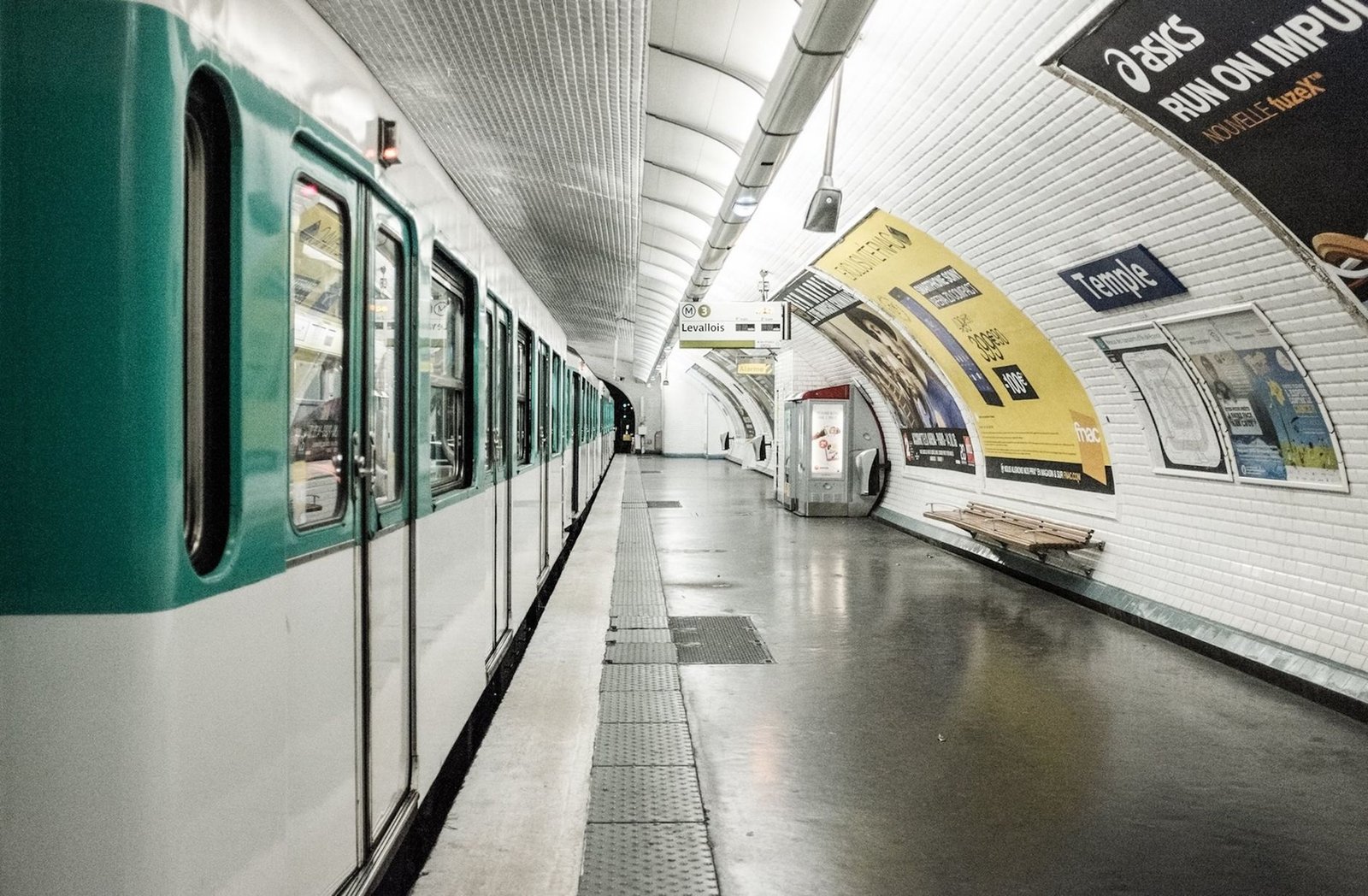
Photo by Christine Blanchet | Pexels
The RER and How to Get to the Airports
The RER is the most direct way to get from central Paris to the two main airports:
- Charles de Gaulle Airport (CDG): The RER B line connects directly to the airport, with stations at the terminals. It’s the most budget-friendly option. If you prioritize speed and don’t mind paying more, there’s also a dedicated express train with fewer stops and more luggage space—it’s worth comparing the total time (including getting to the departure station) before deciding.
- Orly Airport: You can reach it via a combination of RER C or B with an automated shuttle train to the terminals, or by tram/metro lines that have been expanding in the southern part of the city. Always check the most current route on the app, as this area has been undergoing construction and route changes.
A practical tip: during the RER B ride to CDG, especially in emptier cars, you’ll often hear announcements about watching your luggage—keep your backpack or suitcase in sight at all times, particularly during off-peak hours.
Useful Apps for Planning
The official Île-de-France Mobilités app lets you buy and store digital tickets, check real-time schedules, and plan routes considering line disruptions (which aren’t rare, especially on weekends due to maintenance work). Apps like Citymapper are also popular with visitors for combining multiple modes (metro, bus, walking, bike-sharing) into a single suggested route.
It’s worth downloading the transit app and, if possible, setting up your Navigo card digitally before you even board your flight—this saves you from waiting in line at ticket counters right when you arrive, tired from your trip and just wanting to get to your hotel.
How to Avoid the Most Common Transit Scams
The vast majority of metro rides in Paris are smooth, but a few specific scams are common enough to warrant attention:
- “Helpers” at ticket machines: Someone offers to “help” you buy your ticket at the automated machine, then asks for money or swaps your card for one with no balance. Always buy your own tickets, and if someone insists on helping without being asked, politely decline and walk away.
- Tickets sold outside stations: Avoid buying tickets from people approaching tourists on the street or at station entrances—they could be expired, have no balance, or be fakes.
- Distractions at doors and escalators: High-traffic spots like turnstiles and entrances/exits of very touristy stations are where pickpockets often strike, taking advantage of the moment people are focused on getting through the gate.
- Petitions and surveys: Groups asking you to sign a “petition” are usually trying to distract you while an accomplice steals your belongings. You don’t need to be rude—just keep walking.
If you’ve already read our other guide on common scams and mistakes at the Eiffel Tower, you’ll notice many of these schemes repeat near other landmarks—the rule of “stay alert in crowded places” applies to the whole city, not just transit.

Photo by Jakub Zerdzicki | Pexels
Accessibility and Luggage
One thing that often surprises visitors: many of the older metro stations don’t have elevators, just stairs (sometimes very long ones). If you’re traveling with a large suitcase, a stroller, or have mobility issues, plan routes that prioritize newer lines and stations, which usually have better accessibility, or consider a taxi/ride-share for stretches with heavy luggage.
For getting from the airport to your hotel right after arrival, many people prefer a taxi or ride-share for this very reason—it’s worth weighing the extra cost against the hassle of hauling big suitcases up and down stairs, especially at transfer stations.
Practical Day-to-Day Tips
- Avoid peak hours (roughly 8:00-9:30 AM and 5:30-7:30 PM) if you can—cars get very crowded, especially on lines crossing the center.
- Keep your ticket until the end of your trip: At some stations, you need to validate your ticket on the way out too, especially at RER connections.
- Combine walking with the metro: Many nearby attractions (like Notre-Dame and Le Marais, for example) are a short walk from each other—sometimes taking the metro for a very short trip takes longer than walking, once you factor in waiting and stairs.
- Download an offline map: Handy for those moments without signal in the deeper stations.
Frequently Asked Questions About Paris Transit
What’s the difference between the metro and the RER?
The metro mainly covers the city of Paris with stations closer together; the RER is a regional train, with fewer stops within the city, but it extends out to the greater metropolitan area—including the airports and cities like Versailles.
Is it worth buying the Navigo or Paris Visite pass?
It depends on your itinerary. If you’ll be using transit several times a day for a week, the Navigo Semaine is usually more economical. If you prefer simplicity and want extra discounts at attractions, the Paris Visite might be worth it—compare the zones covered and the duration before deciding.
Is the Paris metro safe late at night?
The metro closes around 1:00 AM (a bit later on weekends). Outside those hours, the Noctilien night bus network keeps running. As in any big city, very empty cars at night call for extra attention to your belongings.
Do I need to validate my ticket when exiting the RER?
At many RER stations, yes—keep your ticket until you pass through the exit gate, even if you already validated it at the entrance. Without your ticket at the exit, you could get stuck at the gate.
Can I get from central Paris to the airports using only public transit?
Yes, both CDG and Orly have direct RER/train connections from the center. It’s the most budget-friendly option, but allow some extra time compared to a taxi, especially if you have large luggage or are traveling during peak hours.

Photo by Artūras Kokorevas | Pexels
Is It Worth Taking Public Transit?
For most visitors, yes—and by a long shot. Paris was designed to be explored without a car, and the metro connects practically every point on the classic itinerary in just a few minutes. The secret is to arrive with the right ticket chosen in advance, have a general idea of how the system works, and keep your basic wits about you in crowded places. Once you’ve got that sorted, transit stops being a hurdle and just becomes another (efficient) part of the experience of getting to know the city.