Did you know that the Louvre Museum houses over 35,000 works of art, including the iconic Mona Lisa, and that it would take about 100 days to see them all, spending just 30 seconds on each one? Located in the heart of Paris, the Louvre is the most visited museum in the world, attracting millions of tourists every year. Picture yourself strolling through historic hallways, admiring masterpieces that span centuries, from Egyptian antiquities to Renaissance paintings. In this complete guide, discover how to plan your visit to the Louvre Museum, skip the lines, get to know the main works, and make the most of this unique experience.
Dica: Aproveite também para fazer estes passeios em Paris
Tour pelo exterior da catedral de Notre Dame + Ingresso da cripta . Duração: 2 horas
Disneyland Paris Duração: 3 horas ou mais
Passeio de barco pelo Sena. Duração: 1h
Ingresso do 3º andar da Torre Eiffel. Duração: 2 a 3 horas
Ingresso do Palácio de Versalhes. Duração: 2 a 3 horas
Veja mais passeio em Paris aqui.
History and Architecture of the Louvre Museum
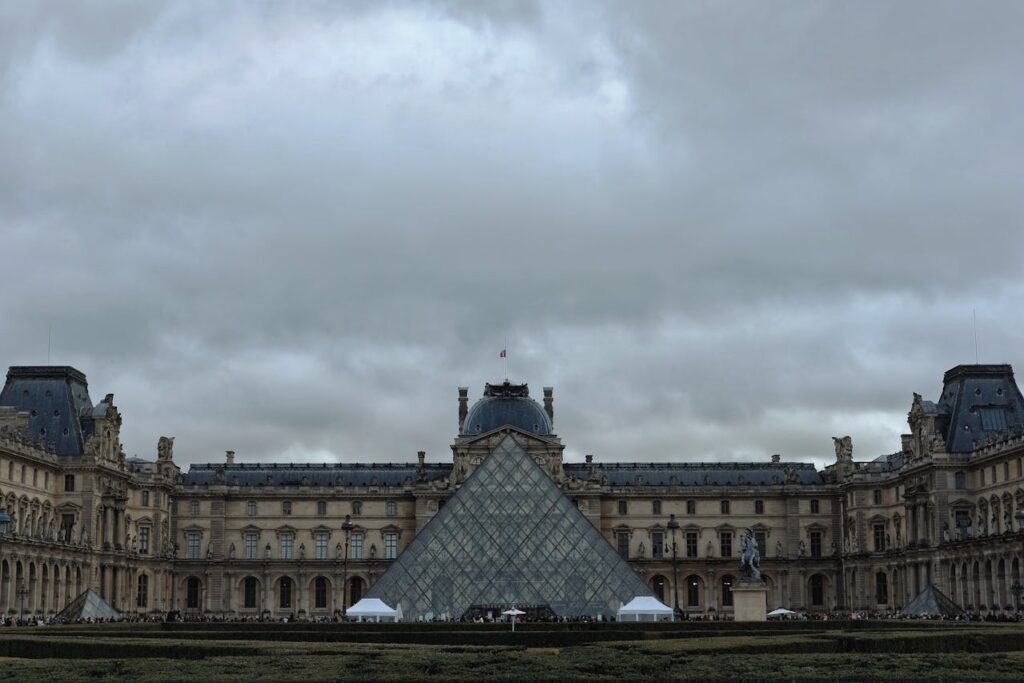
Before becoming the home of the Mona Lisa, the Louvre had a very different life. Founded in the late 12th century as a fortress to protect Paris from the Vikings, the building was transformed into a royal palace in the 16th century. It wasn’t until 1793, after the French Revolution, that it was officially opened as a museum. Over the years, the Louvre was expanded and renovated, eventually becoming the colossal monument we know today.
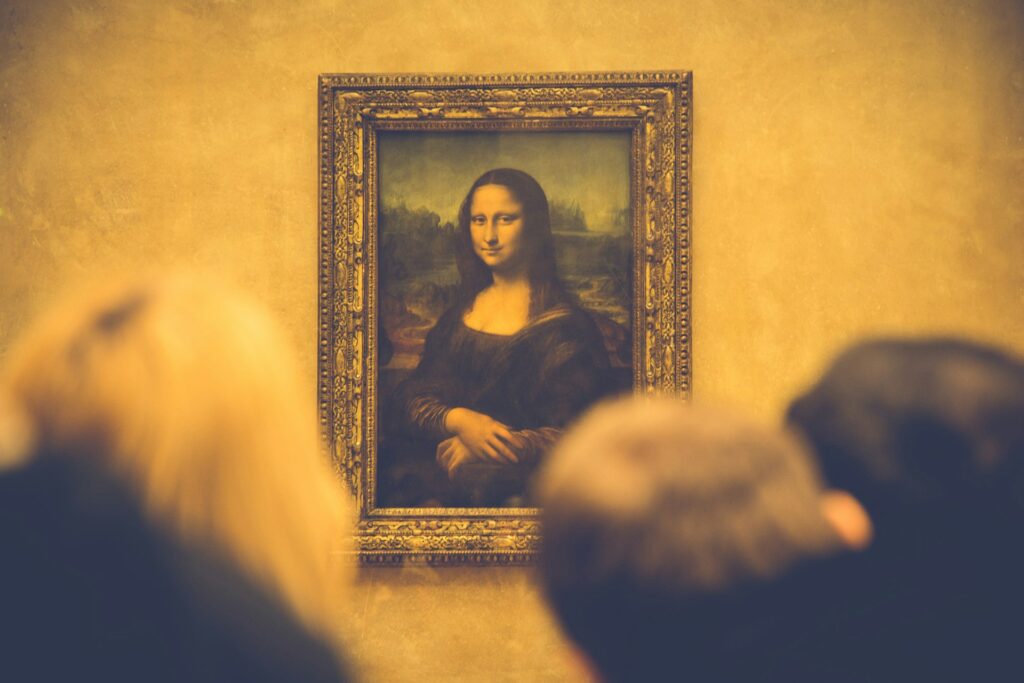
The contrast between the palace’s classical architecture and the modern glass pyramid designed by I. M. Pei is one of the site’s trademarks. The pyramid, inaugurated in 1989, has become a symbol of the museum’s main entrance and has attracted both admiration and controversy since its construction.
The Main Works of the Louvre Museum
Anyone visiting the Louvre wants to see the Mona Lisa up close. With her enigmatic smile, Leonardo da Vinci’s painting draws crowds every day. But there’s so much more to discover. The Venus de Milo, a Greek sculpture of Aphrodite without arms, is another unmissable highlight. The Winged Victory of Samothrace, representing the winged goddess, also impresses with its dynamism and grandeur.
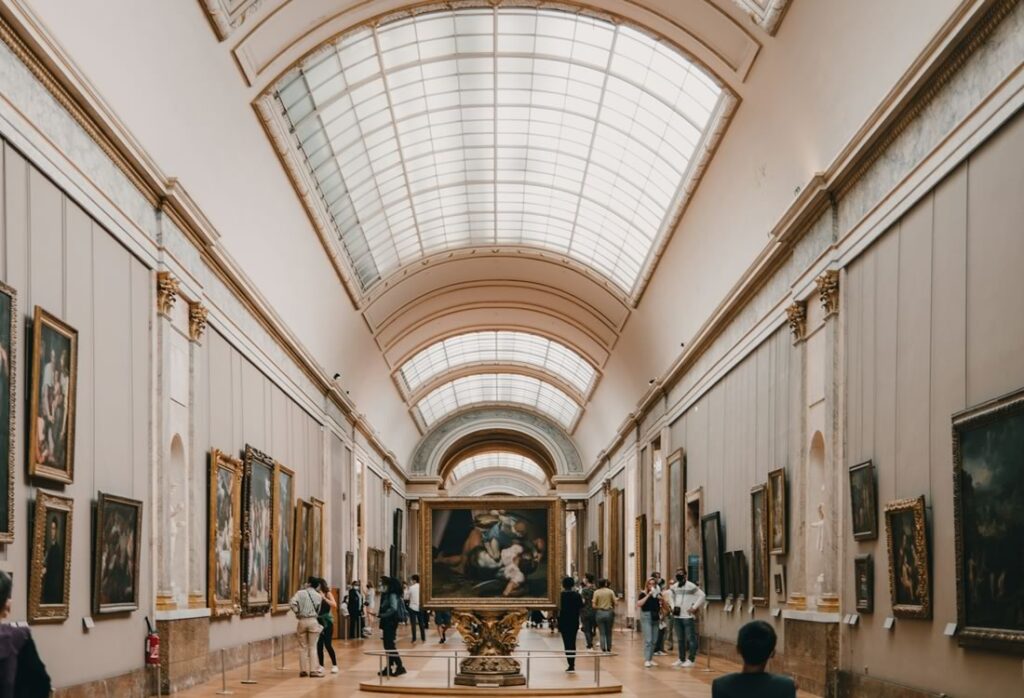
Beyond these, works like “Liberty Leading the People” by Delacroix and “The Wedding Feast at Cana” by Veronese captivate with their grandeur and historical context. Not sure where to start? Free maps on-site help you plan a personalized route, and there are themed tours focusing on specific styles or periods.
Tip: While in Paris, visit the Eiffel Tower – learn more in this post.
How to Plan Your Visit to the Louvre
Many tourists face long lines and feel lost in the vastness of the Louvre, unsure where to start or what to prioritize. Without proper planning, you might end up missing important works, wasting time in queues, and having a frustrating experience. But with the right tips, you can optimize your visit and make the most of every moment in this extraordinary museum.
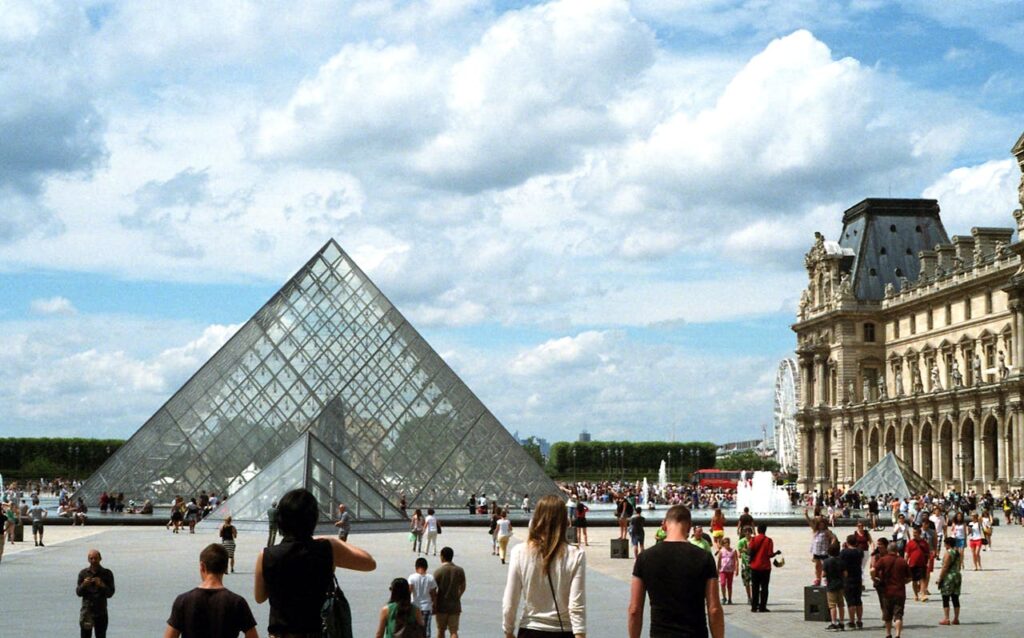
The museum is open Wednesday through Monday, from 9 am to 6 pm, with extended hours until 9:45 pm on Fridays. The museum is closed on Tuesdays. The least crowded times are right when it opens in the morning or during the Friday evening hours. Avoid Saturdays and Sundays if you want a more relaxed experience.
Tickets for the Louvre Museum
The best way to avoid lines is by buying tickets in advance through our partner site. Tickets purchased online guarantee you won’t face huge queues and will be able to access the Louvre before everyone else.
Alternative entrances, such as the Passage Richelieu (exclusive for groups or with an advance ticket) or the Carrousel du Louvre (underground access), can help you avoid crowds at the main entrance.
Can You Bring a Backpack into the Louvre?
Yes, you are allowed to bring a small backpack, but all bags must go through security screening. Large backpacks, suitcases, or larger bags must be left in the free cloakroom. It is prohibited to bring food or drinks, but there are rest areas and cafes inside the museum.
These restrictions aim to protect the artworks and ensure comfort and safety for all visitors.
What Are the Must-See Works at the Louvre Museum?
There’s no single answer to this question, but besides the Mona Lisa, the Venus de Milo, and the Winged Victory of Samothrace, history buffs should visit the Egyptian Antiquities section, featuring original sarcophagi, sculptures, and papyri.
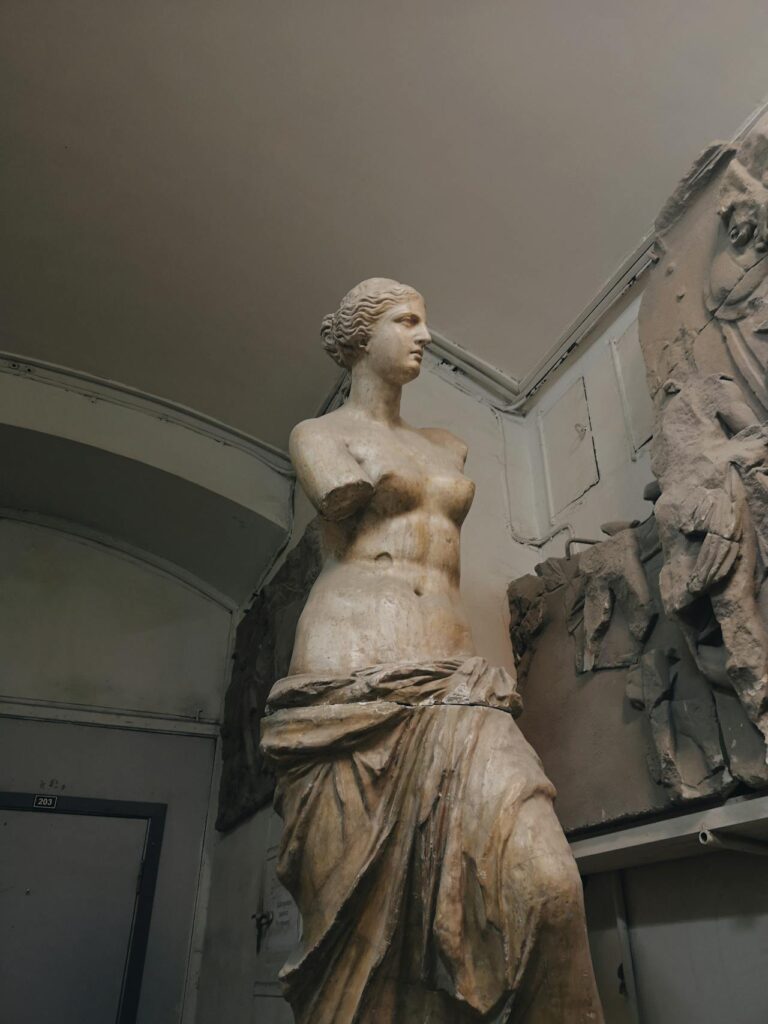
Those who love European painting should explore the wings dedicated to artists like Rembrandt, Caravaggio, and Géricault. For sculpture fans, works by Michelangelo and Canova are also worth your attention.
How Long Does a Visit to the Louvre Take?
The average visit time ranges from 2 to 4 hours, but it’s impossible to see everything in a single day. For a rewarding visit without feeling overwhelmed, plan to focus on one or two sections at a time. If you have more than one day in Paris, it’s worth coming back and exploring the museum in stages.
The Louvre also offers themed maps with 1.5-hour, 3-hour, or 5-hour tours, perfect for those with limited time.
Real Experiences: What Are Travelers Saying?
Many travelers report being moved when seeing the Mona Lisa in person, despite the crowd that always surrounds it. Others comment that visiting the Egyptian galleries or the Napoleon III apartments were the highlights of their experiences.
One traveler from São Paulo shared that she used the Carrousel du Louvre entrance with an online ticket and managed to get in without facing any lines. “It was the best decision of the trip,” she said.
Louvre Fun Facts and Extras
The museum houses not only art but also surprising stories. During World War II, many works were hidden in castles in the French countryside to escape the Nazis. The museum also has secret tunnels connecting its wings.

Additionally, temporary exhibitions bring works from other major museums around the world. It’s worth checking the website to see what will be on display during your visit.
FAQ – Frequently Asked Questions about the Louvre Museum
- What is the best day to visit the Louvre Museum?
Wednesdays and Fridays are the best days, especially during the evening (Friday) when the museum is emptier. - Is it necessary to buy a ticket in advance?
Yes, especially during peak season. It helps you avoid lines and guarantees your desired time slot. - Can you visit the Louvre in 2 hours?
You can, but you’ll only see a small portion. The ideal is to focus on specific works. - Is the Louvre accessible for wheelchair users?
Yes, there are adapted access points, elevators, and wheelchairs available. - Is there a cloakroom at the Louvre?
Yes, it’s free and secure, perfect for storing backpacks or coats.
Conclusion
Visiting the Louvre Museum is a journey through the history of humanity and art. With planning and a few practical tips, your experience can be memorable, smooth, and full of discoveries. If you’re still unsure about your Paris itinerary, start with the Louvre – it might just inspire your entire trip.
Now that you know everything about the world’s most famous museum, why not secure your ticket and plan every detail? Paris is waiting for you, and the Louvre will be the heart of that experience.