The Paris 2024 Olympic Games ended on August 11 — but the venues that hosted them are still alive and kicking, many open to the public and just as fascinating as they were during the Games. For anyone visiting Paris now, exploring these sites is a unique way to experience the city: you walk through the same gardens where beach volleyball was played, under the same steel-and-glass nave that sheltered fencers, along the same banks of the Seine where triathletes dove into the water.
The Paris the Games left behind has changed in some key ways. The Grand Palais reopened to the public after a major renovation. A brand-new Olympic swimming center rose in Saint-Denis. And the Seine River — which many doubted would be clean enough for competition — now has three officially designated swimming spots open in the summer.
This guide shows what’s open, where each venue is located, and how to fit these visits into a Paris itinerary.
Dica: Aproveite também para fazer estes passeios em Paris
Tour pelo exterior da catedral de Notre Dame + Ingresso da cripta . Duração: 2 horas
Disneyland Paris Duração: 3 horas ou mais
Passeio de barco pelo Sena. Duração: 1h
Ingresso do 3º andar da Torre Eiffel. Duração: 2 a 3 horas
Ingresso do Palácio de Versalhes. Duração: 2 a 3 horas
Veja mais passeio em Paris aqui.
The Opening Ceremony: The Seine River Route
The Paris 2024 opening ceremony was the first in Olympic history held outside a stadium. On July 26, 2024, around 10,500 athletes paraded on boats along 6 kilometers of the Seine, departing from Pont d’Austerlitz and arriving at the Trocadéro. Along the way, historic monuments served as stages for artistic performances — the Louvre, Île Saint-Louis, Notre-Dame.
Today, you can walk along this same stretch of the Seine’s banks. The Quai de la Tournelle, Pont Neuf, Pont d’Iéna — all are part of the usual riverside route and free to enter. The visible difference is that the Seine is cleaner: after an investment of over 1 billion euros in sanitation, the city opened three swimming spots in the summer of 2025 — at Parc Rives de Seine (right bank), Bras de Grenelle, and Bercy. For those who want to swim in the same river where triathletes and open-water swimmers competed, just check the Paris City Hall schedule during July and August.
Grand Palais: From Olympic Arena to Museum Open to All
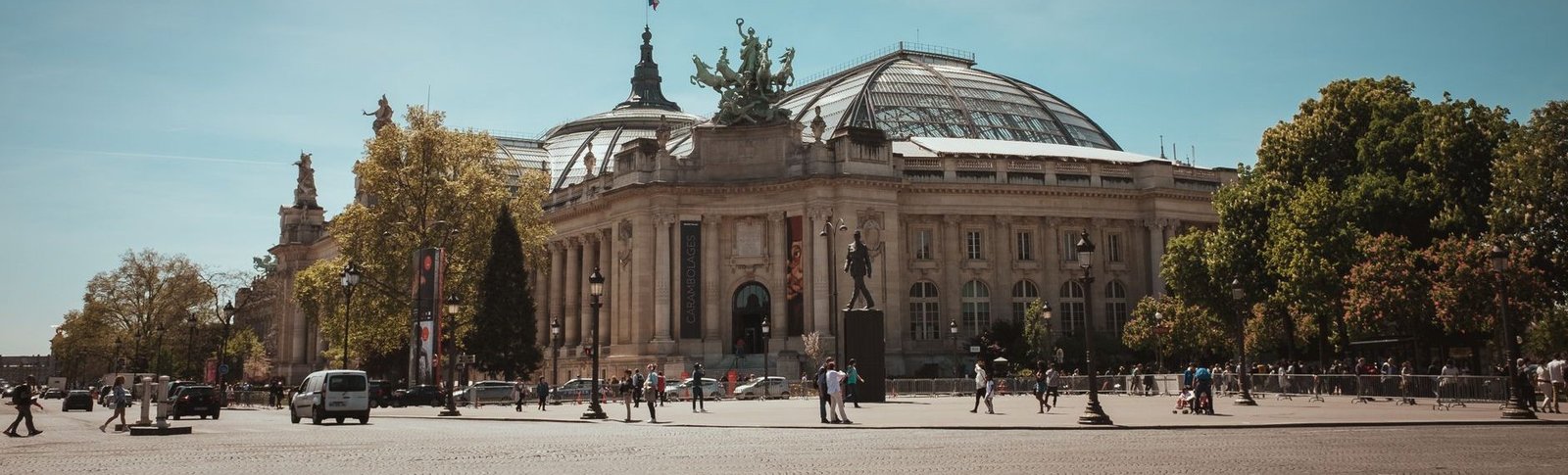
The Grand Palais is arguably the most beautiful Olympic venue in Paris. The building was inaugurated in 1900 for the Universal Exposition and underwent a years-long renovation, finishing just in time to host fencing and taekwondo in 2024. During the Games weeks, images of the competitions showed athletes vying for medals under that enormous steel-and-glass nave, with the original structure preserved — a visual combination no other Olympic space managed to replicate.
Since 2024, the Grand Palais has been open to the public in a different way than before the renovation. Some areas are free to enter: the Rotonde d’Antin, the Salon Seine, and the internal cafés don’t require a ticket. Temporary exhibitions charge a separate entry fee and change throughout the year. The official website grandpalais.fr lists everything with updated dates and prices — tickets for the most popular exhibitions sell out weeks in advance, so buying online before you arrive is the safest bet.
Getting there is easy: metro line 1 or 13, Champs-Élysées – Clemenceau station. The building is less than a 5-minute walk from the Arc de Triomphe and fits perfectly into an itinerary along the Avenue des Champs-Élysées.
The Grand Palais Immersif: Tech and Art Underground
In the basement of the Grand Palais, the Grand Palais Immersif is a space for digital exhibitions and interactive installations created during the renovation. The shows rotate frequently, so it’s worth checking the current lineup on the website. The experience is quite different from a traditional museum: large-scale projections, immersive environments, a blend of art and technology. A great option for those who already know the classic Grand Palais and want to see what it is today.
Trocadéro and Champ de Mars: The Gardens That Became Arenas
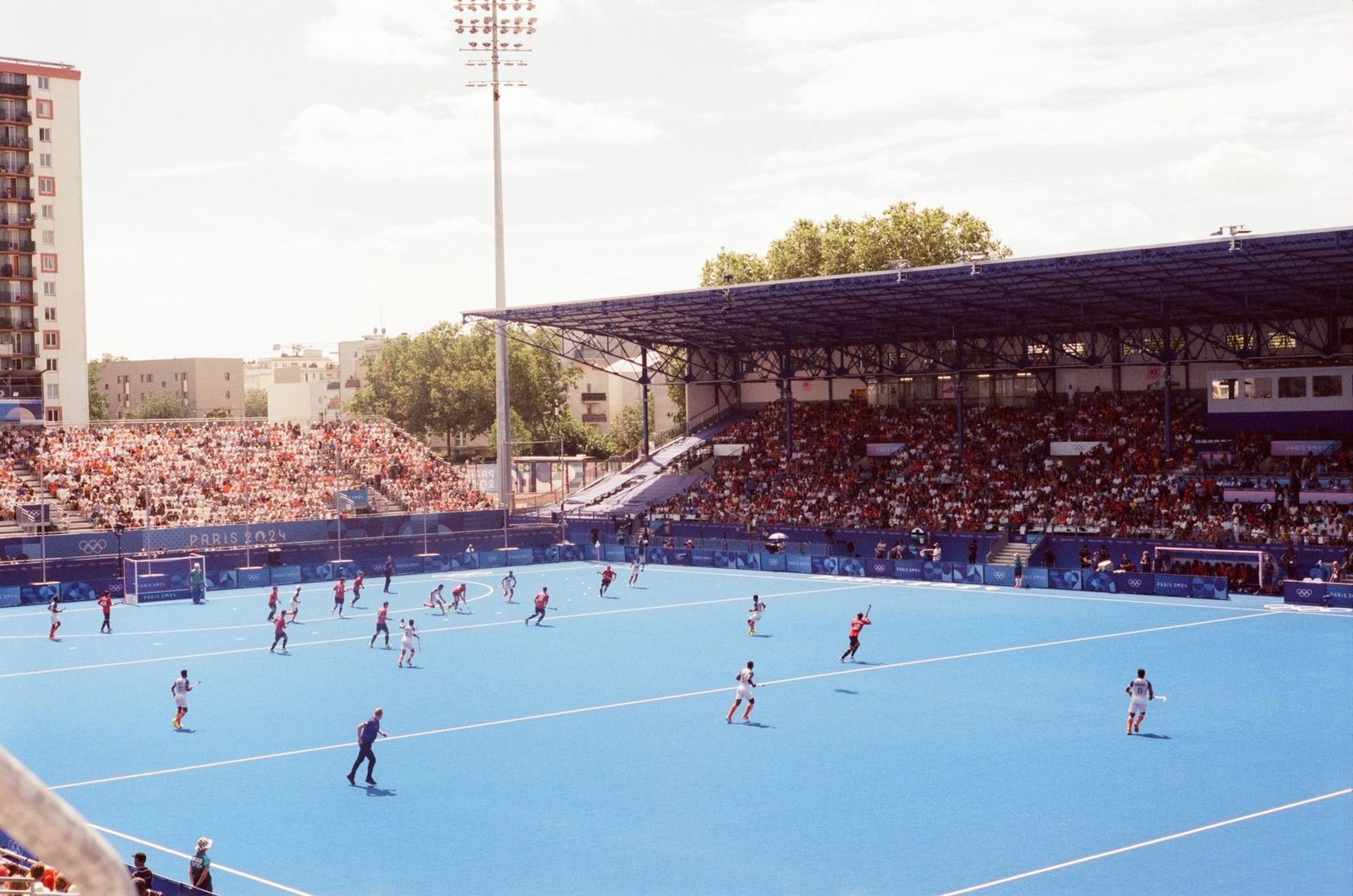
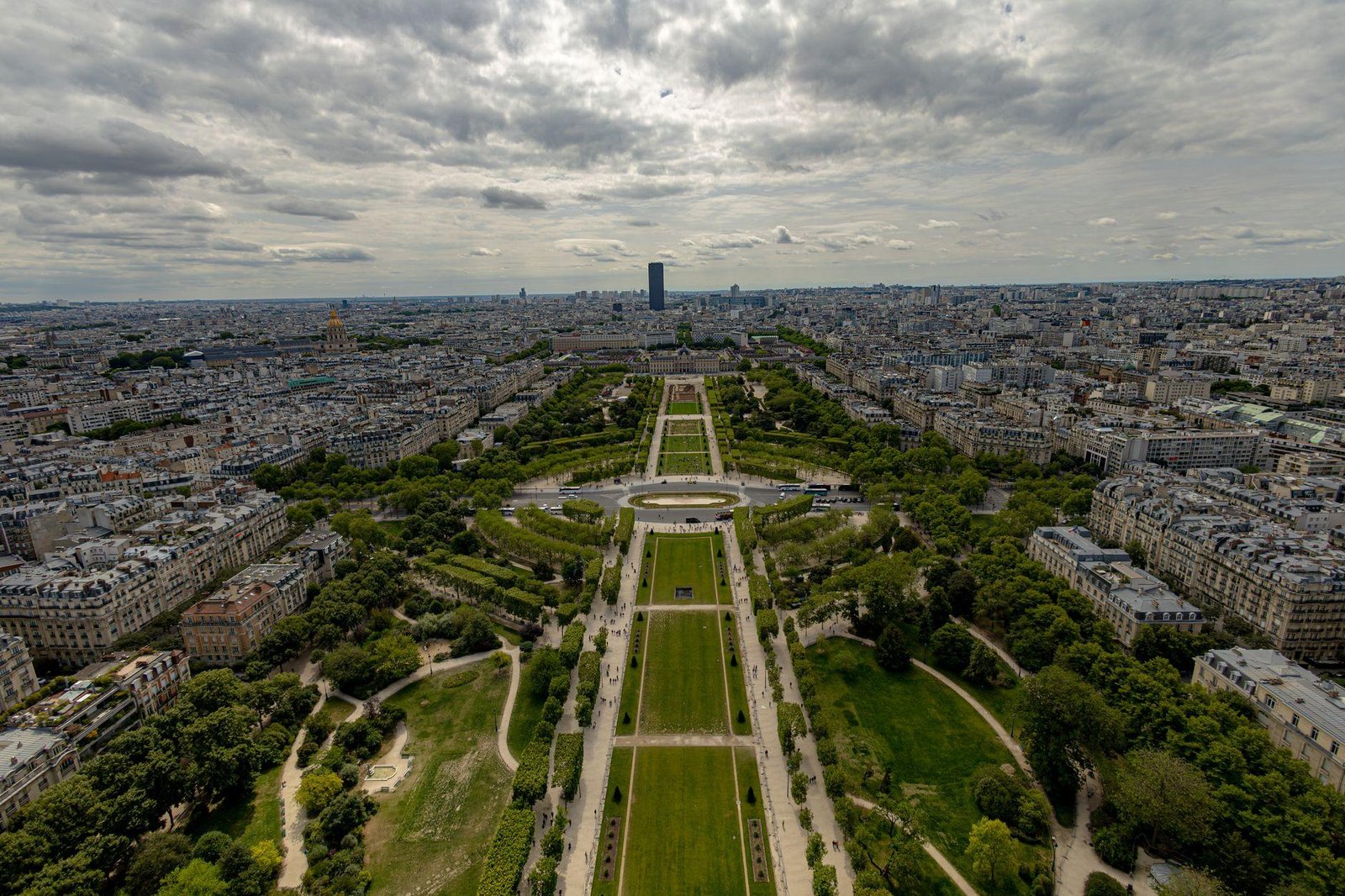
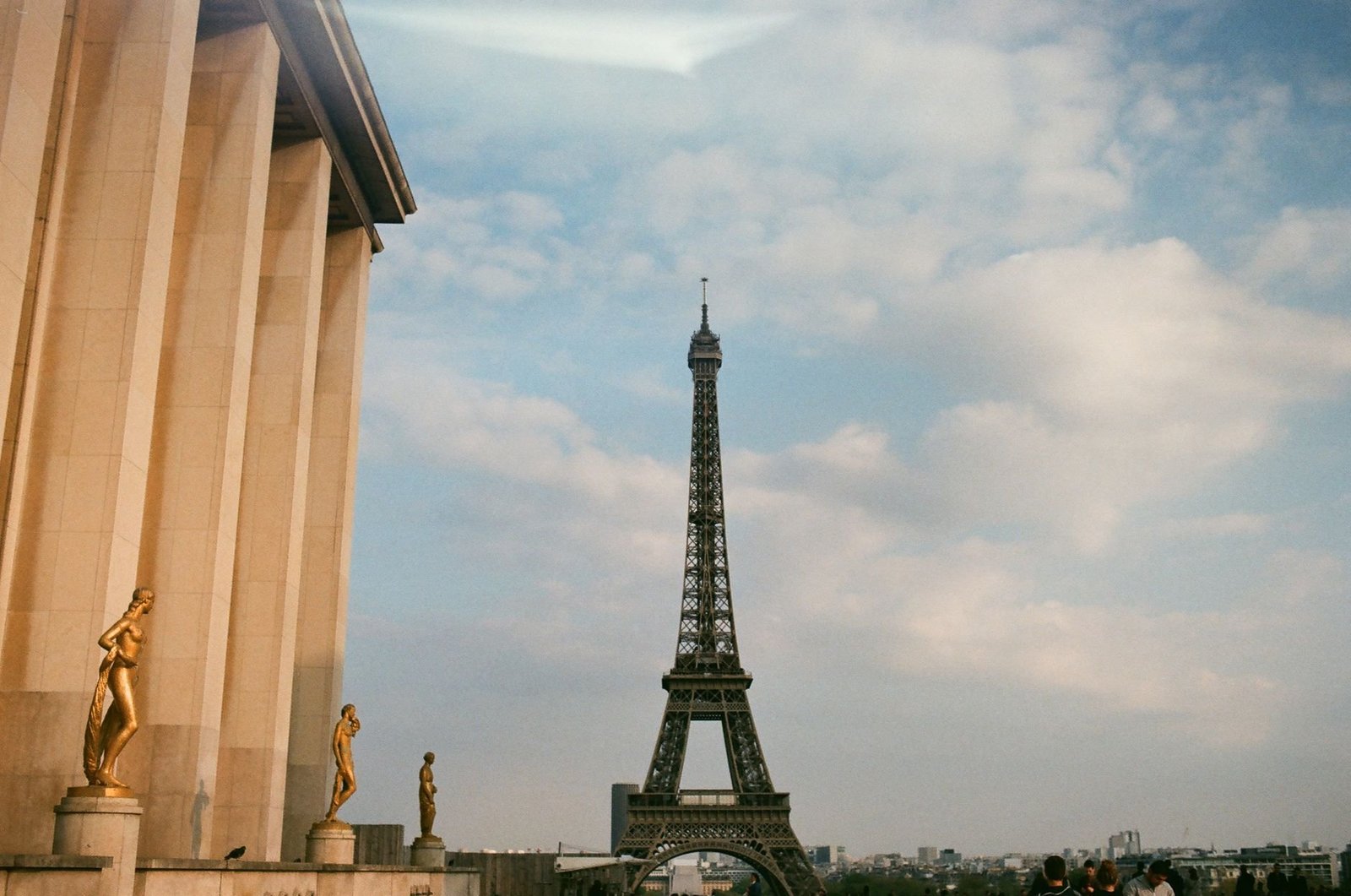
The Trocadéro and Champ de Mars were the most photographed spots of the Games. Any image of an event with the Eiffel Tower in the background came from one of these two places. The Trocadéro gardens hosted the triathlon, the start of the marathon swimming relay, and the time trial cycling events, with the finish ramp set up right in front of the Palais de Chaillot. The Champ de Mars was transformed into a sand stadium for beach volleyball, with a capacity of 12,000 spectators.
Today, these spaces have returned to their routine: grass, tourists, picnics, kids running around. No Olympic structures, no grandstands. But being there and knowing what happened on that ground carries a different weight when you visit in person. The best time for the Trocadéro is early in the morning, before 9 a.m., or late in the afternoon, when the light hits the Eiffel Tower head-on. For the Champ de Mars, an early evening picnic — keeping an eye on the Eiffel Tower light show schedule, which starts on the hour after nightfall — is the classic way to enjoy the space.
Palace of Versailles: Where Equestrian Sports Met the Royal Gardens
The Palace of Versailles hosted equestrian events — dressage, jumping, and eventing — as well as the modern pentathlon during the Games. The competitions took place in the palace gardens, with geometric flowerbeds and reflecting pools in the background. Few Olympic sports have had such a stage: athletes competing with 300 years of architectural history all around them.
Versailles is about 40 minutes from Paris on the RER C, departing from Gare d’Austerlitz, Saint-Michel, or Invalides. Tickets for the palace and gardens are sold separately. On days without the fountain show, the gardens are free. On days with the Grandes Eaux Musicales — when the fountains run to baroque music, usually on Tuesdays, Saturdays, and Sundays from April to November — an additional entry fee is charged. Updated hours and prices are at chateauversailles.fr.
Paris Stadiums: Tours and Events Open to the Public
Not all Olympic venues function as museums, but several offer guided tours or host regular events throughout the year.
Stade de France (Saint-Denis)
The Stade de France hosted the athletics finals and rugby sevens matches. With a capacity of 80,000, it’s the largest stadium in France. Outside of match days, it offers tours of the field, VIP boxes, and stands — the visit lasts about 1.5 hours and costs around €15 to €20. Concerts and international matches happen frequently; it’s worth checking the schedule at stadedefrance.com. You can get there via RER line B, Stade de France – Saint-Denis station.
Parc des Princes (16th arr.)
Parc des Princes is the home stadium of Paris Saint-Germain and hosted the men’s football matches during the Games. Regular tours are available on non-match days, with tickets around €20. Metro line 9 goes to Exelmans station (a 15-minute walk), or line 10 stops at Porte de Saint-Cloud.
Bercy Arena (Accor Arena)
Bercy Arena hosted the artistic gymnastics competitions — that space with the yellow wooden floor and slanted stands that appeared in so many broadcasts. There are no tourist tours, but it’s one of France’s biggest concert venues and hosts events almost every week. If you want to step inside that space for any reason, just check the schedule at accor-arena.com. It’s on metro line 14, Cour Saint-Émilion station.
Olympic Aquatics Centre: Paris’s Newest Pool
The Olympic Aquatics Centre in Saint-Denis is one of the few new buildings Paris erected for the Games — and also the most significant from a sporting legacy perspective. The building has a wavy roof, photovoltaic panels, and rainwater collection. It hosted artistic swimming, water polo, and diving events during the Games and opened to the public as an aquatics center starting in June 2025.
The space has Olympic-sized pools, recreational pools, and facilities for national and international competitions — it will host the European Aquatics Championships from July to August 2026. To get there: metro line 13, Carrefour Pleyel or Saint-Denis – Porte de Paris station. Prices and hours for public swimming are at centreaquatiqueolympique.fr.
Roland Garros: Tennis All Year Round
Roland Garros hosted the tennis tournament at the Games and, throughout the year, remains one of the most famous homes of world tennis — home to the French Open, the only Grand Slam played on clay. Outside the main tournament period (May and June), the complex offers the Musée de Roland Garros and court tours, with tickets around €15. You can even book courts to play. Metro line 10 stops at Molitor station; line 9 has a nearby stop at Michel-Ange – Auteuil.
How to Plan an Itinerary of the Venues
The Paris 2024 venues are spread across the city and its outskirts, so the logic is to group them by region to avoid unnecessary travel.
Day 1 — City Center and Seine Banks: A walk along Quai de la Tournelle and Quai des Tuileries, the stretch covered by the boats in the opening ceremony. Afternoon at the Grand Palais for the current exhibition and the free Salon Seine. End at the Trocadéro and Champ de Mars at sunset.
Day 2 — Northern Paris: Stade de France and the Olympic Aquatics Centre in Saint-Denis, both accessible via metro line 13 and RER B. If there’s an event at Bercy Arena, it fits well on the way back.
Day 3 — Day Trip: Versailles, to see the royal gardens where equestrians and pentathletes competed. For those with more time, Roland Garros on the way back or Parc des Princes if there’s a PSG game.
In all cases, confirm hours and tour availability directly on each venue’s website — some close on holidays and event days.
Frequently Asked Questions About Paris Olympic Venues
Are 2024 Olympic Games tickets still valid for anything?
No. Tickets were only valid during the Games period. To visit the venues today, each location has its own ticketing system or separate paid tours.
Which 2024 Games venues are free to visit?
The Trocadéro, Champ de Mars, and the Seine banks are public spaces with no entry fee. The Grand Palais has free-access areas (Rotonde d’Antin, Salon Seine), but exhibitions charge a separate ticket. The Versailles gardens are free on days without the fountain show.
Can you enter the Stade de France without watching a game?
Yes. The Stade de France offers guided tours of the stadium on non-match days, with a paid ticket. Hours and prices are at stadedefrance.com.
Is swimming allowed in the Seine River after the Games?
Since summer 2025, three spots are officially open for seasonal swimming (July and August): at Parc Rives de Seine, Bercy, and Bras de Grenelle. Outside this window, swimming is not authorized. The Paris City Hall website confirms the annual schedules.
Is it worth visiting the Olympic Aquatics Centre in Saint-Denis?
For those who love swimming or want to see a top-tier sports facility with unique architecture, yes. For those just wanting to check off Olympic venues as part of a tourist itinerary, time might be better spent at the more central sites — Grand Palais, Trocadéro, and Champ de Mars — which combine Olympic history with the best of Paris all around.
The 2024 Games left Paris different in concrete ways: a renovated museum, a cleaner river, new sports facilities open to the public. If you’re heading to the city now, it makes sense to include at least a few of these spots in your itinerary — not as an Olympic pilgrimage, but because they have plenty to offer on their own.