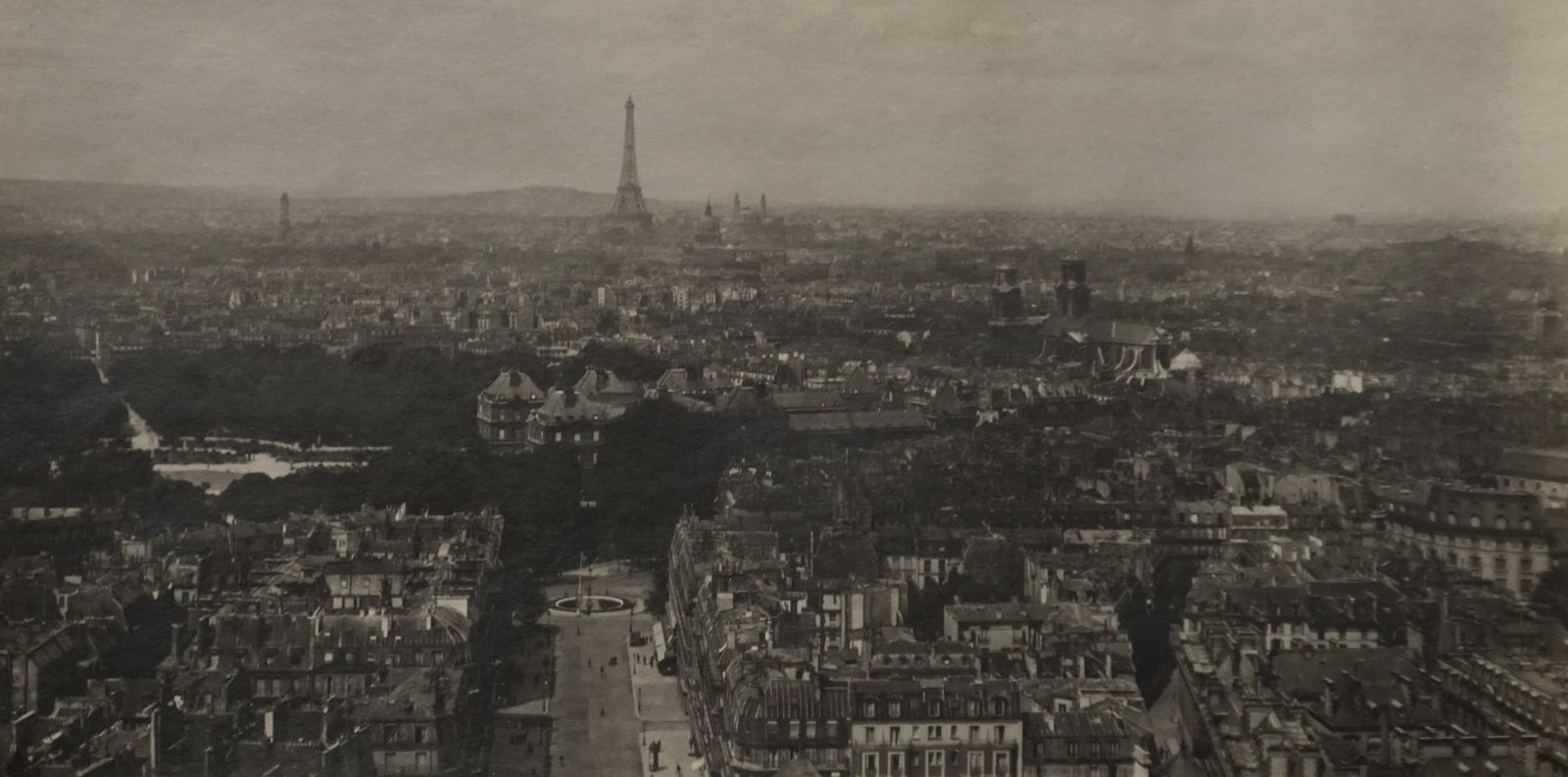
In 1887, as construction began on the Champ de Mars, much of Paris was convinced that iron structure would be a mistake. Three hundred artists, writers, and intellectuals signed a petition calling the tower a “monstrosity,” a “grease stain,” and a “Tower of Babel.” Writer Guy de Maupassant regularly had lunch at the first-floor restaurant—according to him, it was the only place in Paris where you couldn’t see the tower.
What happened over the next 137 years is one of the greatest opinion turnarounds in architectural history. The Eiffel Tower became the most visited monument in the world, the most recognizable symbol of Paris, and perhaps of all of Europe. This is the story of how that happened.
Dica: Aproveite também para fazer estes passeios em Paris
Tour pelo exterior da catedral de Notre Dame + Ingresso da cripta . Duração: 2 horas
Disneyland Paris Duração: 3 horas ou mais
Passeio de barco pelo Sena. Duração: 1h
Ingresso do 3º andar da Torre Eiffel. Duração: 2 a 3 horas
Ingresso do Palácio de Versalhes. Duração: 2 a 3 horas
Veja mais passeio em Paris aqui.
The Project: A Tower That Was Never Meant to Be Permanent
It all started with the 1889 World’s Fair, organized to celebrate the centennial of the French Revolution. The French government launched a competition to build an “iron tower 300 meters high” that would serve as the fair’s entrance arch. There were 107 project submissions. The winner came from an engineering firm already famous for building metal bridges and viaducts: the company of Alexandre Gustave Eiffel.
The technical design was the work of two company engineers, Maurice Koechlin and Émile Nouguier, with collaboration from architect Stephen Sauvestre, who handled the aesthetic side—the decorative arches at the base, the balconies on the floors, the more elegant look that transformed a purely functional structure into something people would eventually learn to love.
Key detail: the tower was planned as temporary. The original contract stipulated it would be demolished 20 years after the Fair, in 1909. What saved it was the radio antenna installed at the top in 1898, which made it strategically useful for military communications. When decision time came, technical utility outweighed aesthetics—and the tower stayed.
The Construction: 26 Months and 18,000 Iron Pieces
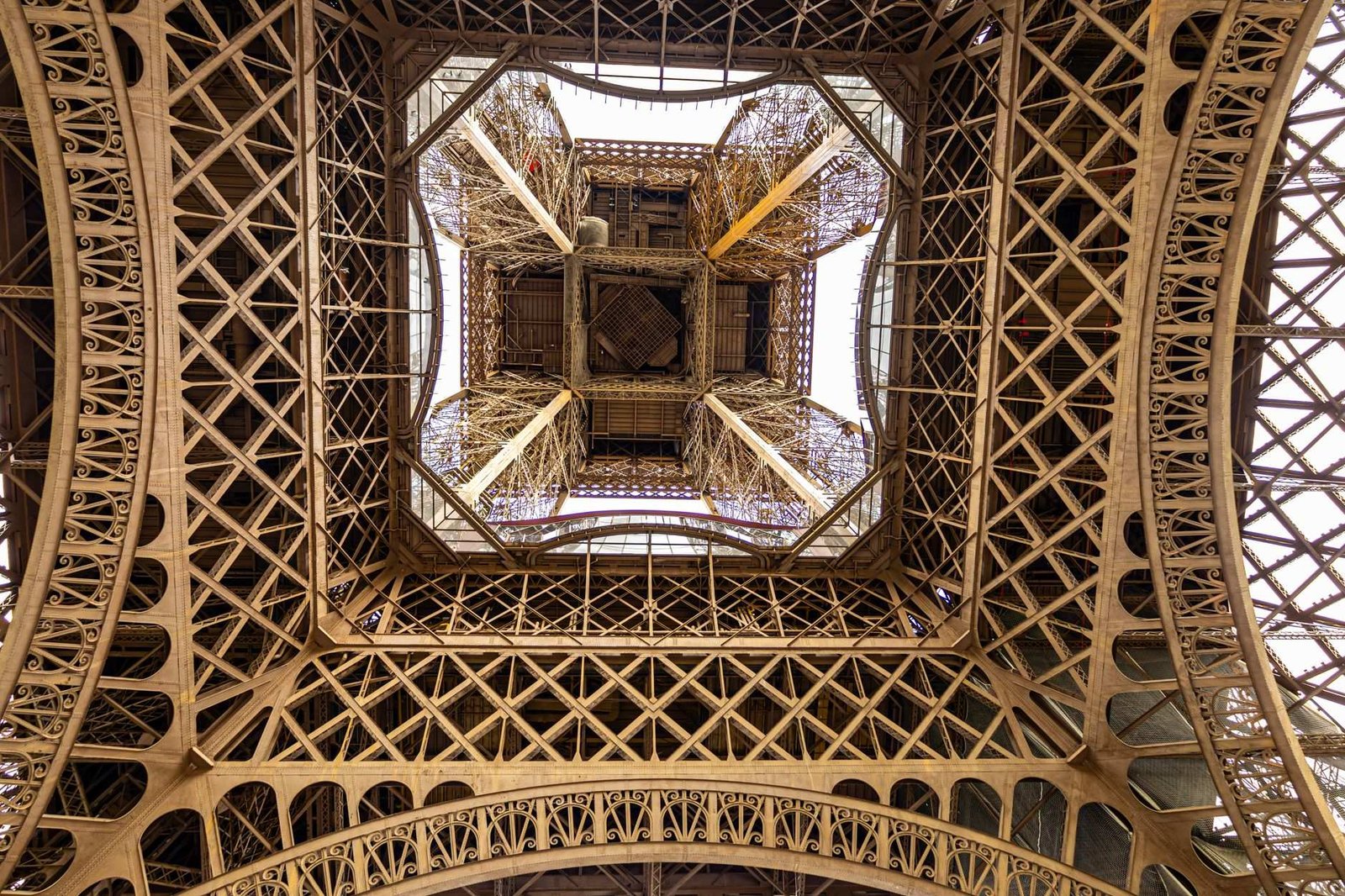
Construction began in January 1887 and was completed in March 1889—two years, two months, and five days. For the era, that was extraordinary speed. The secret lay in industrial precision: all 18,038 pieces of puddled iron were manufactured at Eiffel’s factory in Levallois-Perret, on the outskirts of Paris, with millimeter tolerance, before being transported and assembled on the Champ de Mars.
At the construction site, about 300 workers assembled the pieces like a giant three-dimensional puzzle. Every bolt—and there were 2.5 million of them—was calculated for a specific spot. The logistics were so well-planned that only two workers died during the entire construction, in an industry where fatal accidents were common at the time.
Eiffel’s precision wasn’t just about technical pride. The tower’s four legs needed to meet at exactly the same point at the top, with a margin of error of millimeters, even starting from distant points on the ground. To align the legs, Eiffel used adjustable hydraulic jacks—an engineering solution that impressed even the toughest critics.
The Controversy: Artists vs. Iron
The petition of the three hundred, published in February 1887 in the newspaper Le Temps, is one of the most curious documents in Paris’s cultural history. Signed by names like Charles Gounod, Charles Garnier (architect of the Paris Opera), and Alexandre Dumas fils, it called for the tower to be stopped before it was erected. The signatories called the structure a “column of bolted iron,” an “ugly skeleton,” and a “factory chimney.”
Gustave Eiffel responded point by point. Against the aesthetic criticisms, he argued that the curves calculated to withstand the wind had a beauty of their own—the shapes dictated by physics are no less elegant than those invented by architects. “The tower will have its own beauty,” he said. “The forces of nature use smooth curves, not straight lines.”
When the tower opened in May 1889, the controversy didn’t end immediately—but something shifted. Visitors climbed up, saw Paris from above for the first time, and came back converted. In six months of the fair, nearly two million people bought tickets. Public opinion began to turn.
Gustave Eiffel: The Engineer Behind the Tower
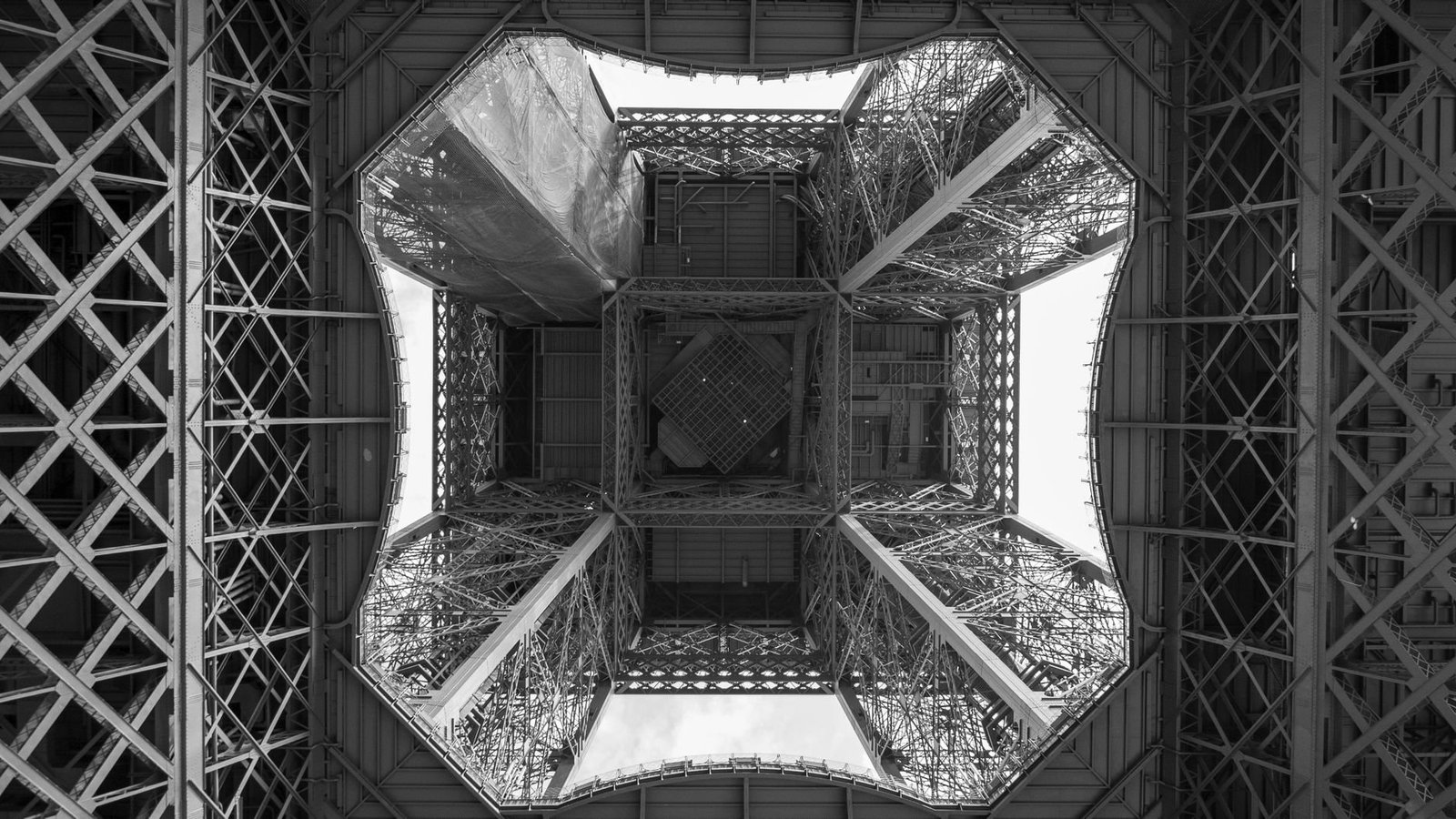
Alexandre Gustave Eiffel was born in 1832 in Dijon and trained as a chemical engineer, but he quickly turned to civil and structural engineering. Before the tower that bears his name, he had already built bridges across Europe and was known for the Maria Pia Bridge over the Douro River in Portugal (1877) and the Garabit Viaduct in southern France (1884)—at the time, the tallest arch bridge in the world.
But the most curious project of Eiffel’s career before the tower was the internal framework of the Statue of Liberty. Eiffel was hired by Auguste Bartholdi to solve the problem of how to keep a 46-meter copper sculpture standing: he created a central iron framework with a system of springs that allows the statue to flex in the wind without cracking. It’s the same structural principle he would later apply to the tower.
After the 1889 Fair, Eiffel got caught up in the Panama scandal—the company building the Panama Canal went bankrupt due to corruption, and Eiffel was prosecuted for fraud, though he was acquitted on appeal. He abandoned engineering and spent his final years studying aerodynamics and meteorology in the laboratory he set up at the top of his own tower. He died in 1923 at the age of 91.
The Tower Through the 20th Century
During World War I, the tower’s radio antenna was used to intercept German communications—including the message that led to the arrest of Mata Hari, the Dutch spy. During World War II, when the Germans occupied Paris in 1940, the tower’s elevator “mysteriously broke down,” and Nazi officers who wanted to go up had to make the trip on foot via the stairs. The French tricolor never stopped flying at the top—or, on days when the Germans hoisted the Nazi flag, it was replaced by another French one the same day.
After the war, the tower entered a period of consolidation as a national symbol. In 1955, the television antenna was added, raising the total height to the current 330 meters. In 1964, it was declared a historical monument. In 1985, the current lighting system was installed—and the light show with 20,000 flashing bulbs that millions of people watch tonight was inaugurated on January 1, 2000, to celebrate the turn of the millennium.
Numbers That Define a Unique Masterpiece
Some facts about the tower help you grasp the scale of what Eiffel built. The structure weighs 7,300 tons of iron, but the pressure it exerts on the ground is less than that of a person sitting in a chair—distributed across the four massive legs, the force dissipates. With summer heat, the iron expands and the tower grows up to 15 centimeters. In the winter cold, it shrinks back down.
The tower is completely repainted every seven years, using approximately 60 tons of paint. The current color—a golden-brown shade called “Eiffel Tower Brown”—was adopted in 1968. Previous paint jobs have included yellow, red, and even Venetian bronze. Each repainting is done by hand by about 25 specialized painters who work suspended over the iron.
The Tower Today: The Most Visited Monument in the World
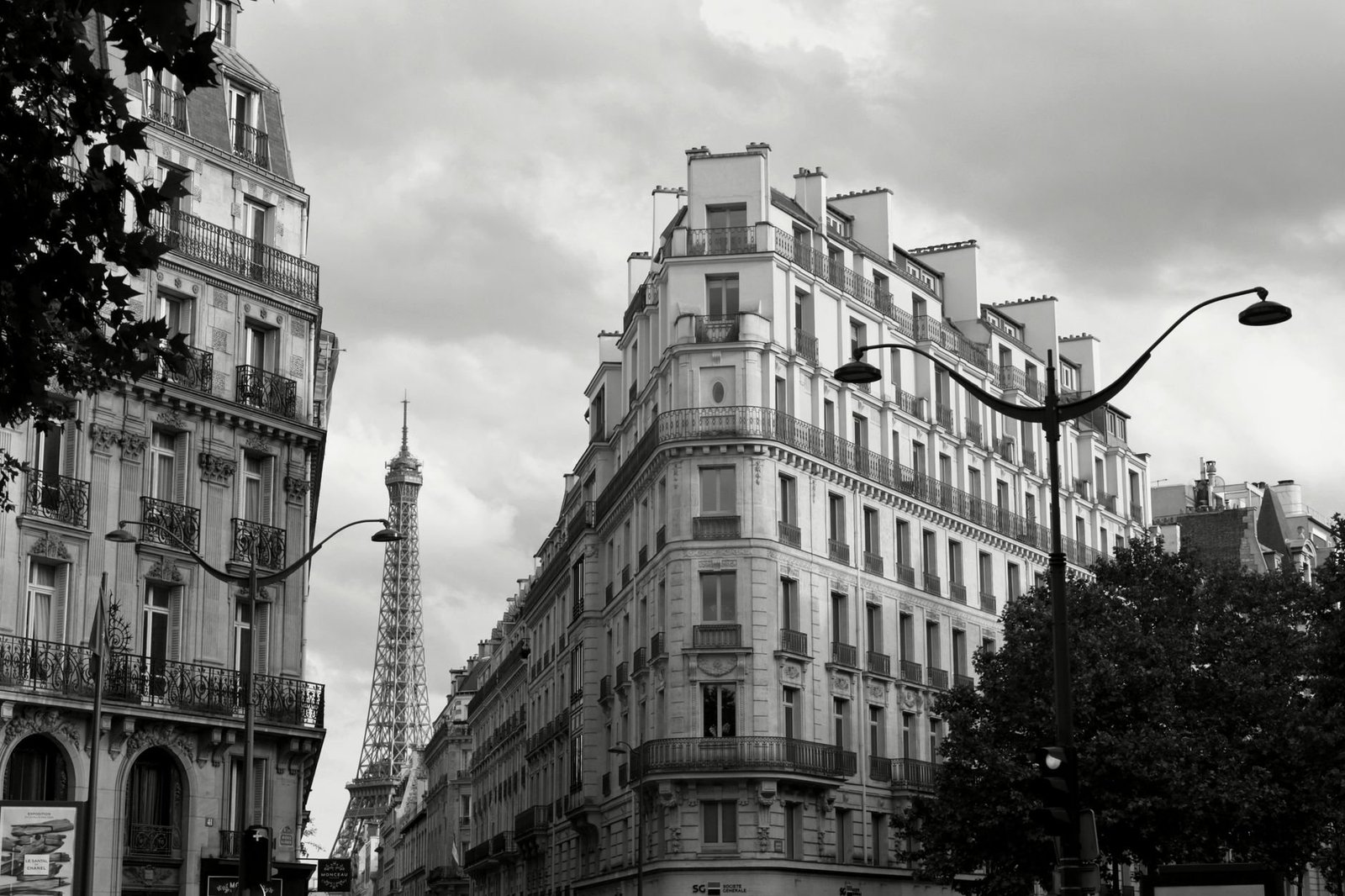
With about 7 million visitors per year (pre-pandemic), the Eiffel Tower is the most visited paid monument in the world. The total number of people who have climbed the tower since 1889 has already surpassed 300 million. For comparison, the entire population of Earth in 1889 was 1.6 billion—less than six times the number of people who have visited the tower.
The historical irony is complete: the structure that Parisian intellectuals called an aesthetic aberration became the symbol of Paris, of France, and of everything those words evoke—elegance, art, love, civilization. Guy de Maupassant, who ate at the tower’s restaurant to avoid seeing it, died in 1893 without witnessing the complete turnaround in opinion. But Gustave Eiffel, who lived until 1923, had time to see the tower go from scandal to icon.
The Tower at the 2024 Olympic Games
When Paris hosted the Olympic Games in July and August 2024, the Eiffel Tower played a central role in the ceremonies. The opening ceremony was held along the Seine River, with the tower as the backdrop for the parade of nations—a scene broadcast to over a billion people around the world. The structure also received the golden Olympic rings installed on the first floor, visible from a great distance across the Champ de Mars.
The Games reaffirmed something history had already proven: the Eiffel Tower has a unique ability to reinvent itself as a symbol. In 1889, it was a symbol of industrial progress. In the 20th century, it became a symbol of romance and French culture. In 2024, it was the main stage for the biggest sporting event on the planet. The structure Eiffel designed to last 20 years turned 135 as the most versatile monument a city has ever built.
Frequently Asked Questions About the History of the Eiffel Tower
Why was the Eiffel Tower built?
It was built as the entrance arch for the 1889 World’s Fair, which celebrated the centennial of the French Revolution. It was originally temporary—meant to be demolished 20 years later, but it survived thanks to its usefulness as a radio antenna.
How long did the construction of the Eiffel Tower take?
26 months—from January 1887 to March 1889. Construction was completed three weeks ahead of schedule.
How many times has the Eiffel Tower been painted?
The tower has been painted 19 times since 1889. Repainting happens every 7 years, using about 60 tons of paint in three gradual shades (darker at the bottom, lighter at the top, to look uniform from the ground).
Does the Eiffel Tower really grow in the summer?
Yes. The iron expands with heat, causing the tower to grow up to 15 cm on the hottest summer days. In winter, it returns to its normal size.
Was there a secret apartment in the Eiffel Tower?
Yes. Eiffel built a personal apartment at the top of the tower on the third floor, with a living room, bedroom, and laboratory. He hosted illustrious guests there—including Thomas Edison, who gave Eiffel a dedicated phonograph. The apartment still exists and can be seen on a visit to the third floor.