Dica: Aproveite também para fazer estes passeios em Paris
Tour pelo exterior da catedral de Notre Dame + Ingresso da cripta . Duração: 2 horas
Disneyland Paris Duração: 3 horas ou mais
Passeio de barco pelo Sena. Duração: 1h
Ingresso do 3º andar da Torre Eiffel. Duração: 2 a 3 horas
Ingresso do Palácio de Versalhes. Duração: 2 a 3 horas
Veja mais passeio em Paris aqui.
The Montparnasse Tower: Paris’s Most Controversial Skyscraper
If the Eiffel Tower is Paris’s most recognizable symbol, the Montparnasse Tower is its opposite—the building Parisians love to hate. At 209 meters tall with its rectangular glass form, it completely clashes with the classical architecture that defines the city. And that’s precisely why it’s worth a visit.
This guide covers everything you need to know about the Montparnasse Tower: how to get there, tickets, what to expect from the observation deck, and why it’s a smart (and far less crowded) alternative to the Eiffel Tower. Spoiler: the view from here, which includes the Eiffel Tower itself, is something special.
A Bit of History: Why Paris (Still) Tolerates This Skyscraper
Built between 1969 and 1973, the Montparnasse Tower was an ambitious project that sparked controversy from the start. Conservative Parisians argued that such a tall, modern building would ruin the city’s aesthetic harmony. And honestly, they had a point—when you look at Paris from above, Montparnasse clearly stands out like an alien among historic toits (rooftops) and mansard roofs.
But here’s the curiously French twist: instead of tearing down or hiding the building, Paris embraced it. Now, for many travelers, the Montparnasse Tower is exactly the anomaly that makes it fascinating. And oddly enough, it’s become a symbol of when Paris embraced modernity in the 70s.
The Observation Deck: What You’ll See Up There
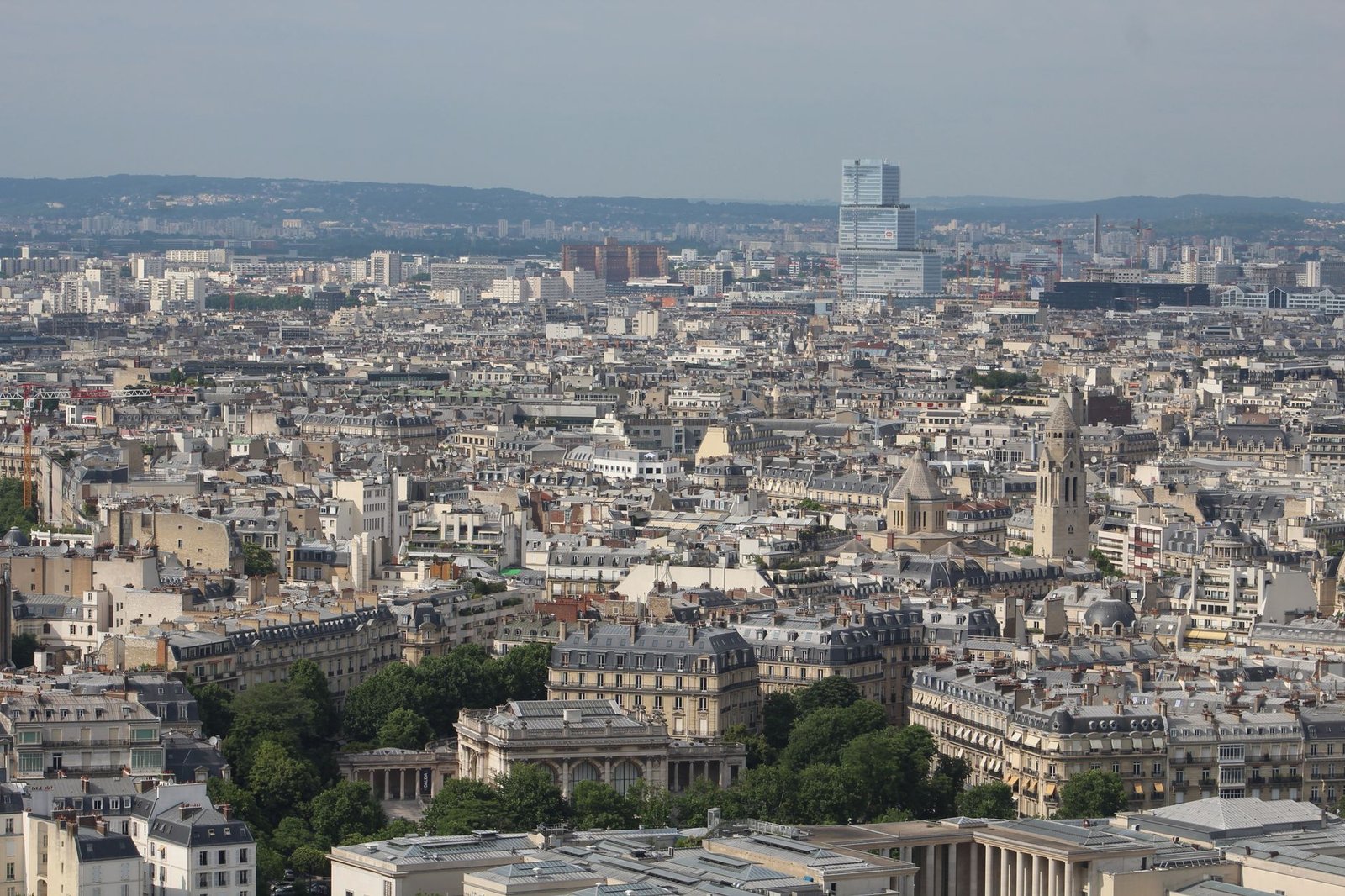
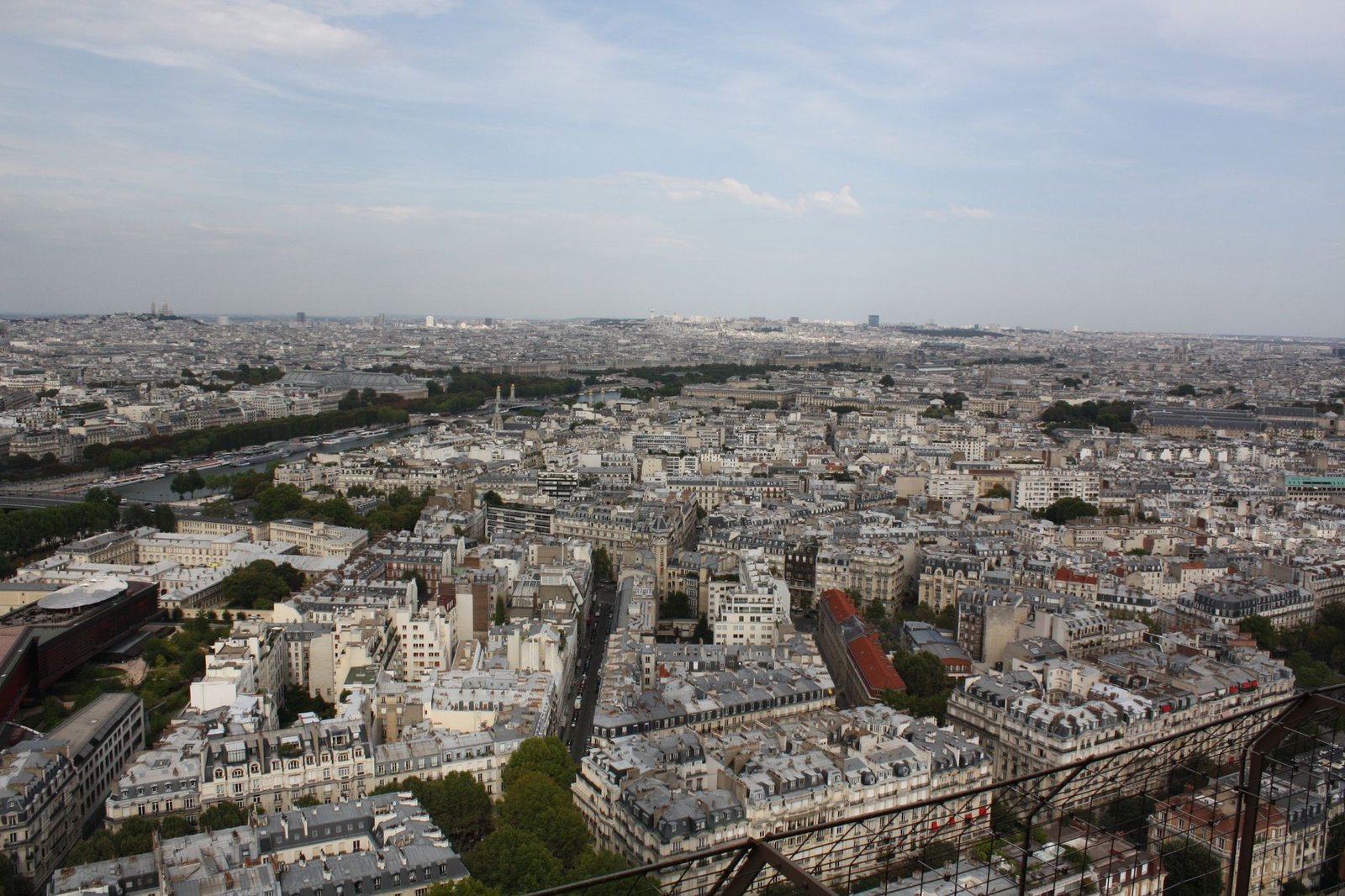
Public access is on the 56th floor (elevator ride in 38 seconds), and there’s also an outdoor area at the top (59th floor) where you can enjoy 360-degree views in the open air. Unlike the Eiffel Tower, here you feel like you’re truly on top of a metropolis—surrounded by other buildings, streets, real urban life.
On clear days, you’ll see the Eiffel Tower perfectly from the Montparnasse observation deck. This perspective is the big draw: you’re not looking at the Eiffel Tower up close (like at Trocadéro), but from a distance, framed within the context of all Paris. It’s a completely different photo from the classic shot.
The observation deck features informational panels pointing out the city’s main landmarks—you can spot Notre-Dame, Sacré-Cœur, the Louvre, and the Arc de Triomphe. On clear nights, the city lights stretch all the way to the horizon.
Tickets and Hours: How to Visit
Price (2026): roughly 18-20 euros for adults, 12-14 euros for children (ages 6-11), kids under 6 are free. Group discounts are available, and some tourist passes include entry (check your Paris Museum Pass).
Hours: generally 9:00 AM to 11:00 PM (extended hours in summer, may close earlier in winter). Last entry is typically 30-45 minutes before closing.
Location: 33 Avenue du Maine, 75015 Paris. Easy metro access: lines 4, 6, 12, 13 (Montparnasse-Bienvenüe station).
Avoiding lines: unlike the Eiffel Tower, Montparnasse rarely has long queues—a clear advantage. Even during peak hours (12 PM-4 PM), the experience is far less chaotic. Going in the late afternoon (5 PM-8 PM) is ideal: you’ll catch the transition from day to night, watching the city gradually light up.
Why Visit: Comparing Paris’s Viewpoints
Montparnasse Tower vs. Eiffel Tower: The Eiffel Tower is iconic, no doubt. But it’s always packed, requires hours of waiting (even if you pay more to skip the line), and you’re too close to the iron structure to get perspective. Montparnasse offers a holistic view of the entire city, including the Eiffel Tower itself. If you’re short on time, Montparnasse is more efficient.
Montparnasse Tower vs. Trocadéro: Trocadéro is free and offers the best front-on view of the Eiffel Tower—it’s where every tourist snaps their photo. But it’s an open, crowded area with no shelter from wind or weather. Montparnasse is covered, climate-controlled, with restrooms and a café, and the view is different (less close-up, more from above). They complement each other well.
Montparnasse Tower vs. Centre Pompidou: The Pompidou’s rooftop offers a free view (as long as you visit the museum), but it’s a small area on top of a shorter building. Montparnasse is a dedicated, much larger observation space with more detail and depth. If you want to spend 30+ minutes soaking in the view, Montparnasse wins.
Montparnasse Tower vs. Sacré-Cœur (Montmartre): Sacré-Cœur offers a view of historic Paris, especially romantic at dusk. But it’s physically located at a higher point in the city, so the angle is different. Both are worth it on longer trips.
Practical Tips for Your Visit
Best time to go: late afternoon, between 5 PM and 7 PM. You’ll catch the golden sunset light, it won’t be crowded, and then you’ll see the city lights flicker on—the visual effect is stunning.
Visit duration: 45 minutes to 1 hour is plenty. You go up (5 min), enjoy the view (30-40 min), take photos, and head down. There’s not much else to do up there.
Photography: The windows can cause reflections in photos. If possible, go when the outdoor light is stronger than the indoor light—late afternoon helps. Bring a charged phone or camera—the views are worth every shot.
Café and restrooms: there’s a café on the observation deck with museum-style prices (coffee: 4-5 euros, sandwich: 8-12 euros). The restrooms are usually clean. If you want to save money, eat before you go up.
Accessibility: elevators work well, and the structure is wheelchair accessible. Perfect if you have limited mobility and want to see a view of Paris.
A Bit About the Neighborhood: Montparnasse Beyond the Tower
Montparnasse is more than just the tower. The neighborhood is historic—it was a haven for artists in the 1920s and 30s (Hemingway, Picasso, and Modigliani used to hang out in cafés around here). Remnants of that era still remain: the Café de la Rotonde and Café du Dôme are landmarks that tell stories.
There’s also Le Cimetière du Montparnasse (Montparnasse Cemetery), smaller than Père Lachaise but equally atmospheric, with the graves of French intellectuals. If you’re into history, it’s worth exploring the neighborhood beyond the tower.
Streets like Rue Campagne-Première and Rue Grande-Chaumière are charming, with small shops, art galleries, and restaurants. It’s a genuinely “Parisian” neighborhood—less touristy than areas near the Eiffel Tower or Notre-Dame.
How Much It Costs: A Realistic Budget
Ticket: 18-20 euros.
Transportation: 2 euros for a single metro ticket if coming from another part of the city.
Café on the deck: 4-5 euros (optional).
Total approximate: 25-30 euros per person.
Compared to the Eiffel Tower (30-35 euros just for the ticket, not to mention a meal), Montparnasse offers better value—you save time in line, spend less, and have an equally memorable experience.
The Observation Deck as a Sensory Experience: More Than a Photo
Visiting a viewpoint in Paris is about more than just snapping a pretty picture (though that’s pretty cool too). It’s an exercise in perspective—literally and philosophically. When you’re 200 meters up looking at a city with 2,000 years of history, something happens: you grasp the scale of time and space in a different way.
The Montparnasse Tower offers this experience in a more “immersive” way than other tourist spots. Because it’s not an isolated attraction like the Eiffel Tower—it’s part of the urban landscape. You see the metro moving through the streets, cars passing by, people in squares. Paris life keeps going while you’re up there—there’s no feeling of being in a “tourist bubble.”
If you’re a traveler who likes to understand cities (not just photograph them), Montparnasse deserves your time. Go up slowly, notice the details—how the architecture changes as you look at different neighborhoods, how the green of the parks contrasts with the gray of the streets, how the golden late-afternoon light transforms everything.
Transportation Tips and How to Get There
By metro: Montparnasse-Bienvenüe station (lines 4, 6, 12, 13). The signed exit leads directly to the base of the tower—impossible to get lost.
By RER: Montparnasse station (lines B, C, D, E)—also very close, same area.
By bus: several lines run along Avenue du Maine (in front of the tower). If you have a transit pass, you can get there at no extra cost.
On foot: if you’re in nearby neighborhoods (Latin Quarter, Saint-Germain), it’s walkable—15-20 minutes max. The area is very safe and pleasant for walking.
FAQ: Frequently Asked Questions
Q: Is Montparnasse worth it if I’m also visiting the Eiffel Tower?
R: Yes, especially if your trip is 3+ days. They offer completely different perspectives. If you only have 1-2 days, prioritize the Eiffel Tower since it’s more iconic. But if you have time, Montparnasse complements it perfectly.
Q: Which view is better: Montparnasse or Trocadéro?
R: Different, not better or worse. Trocadéro is for seeing the Eiffel Tower up close and romantically. Montparnasse is for seeing ALL of Paris from a high point. If forced to choose: do both, at different times of day.
Q: Can I go up the Montparnasse Tower if I’m afraid of heights?
R: Yes, and more easily than the Eiffel Tower. The observation deck’s windows are tall and thick—it’s not as “open” as the Eiffel Tower, so psychologically it’s less intimidating. Many people with phobias manage to go up here.
Q: Are there long lines at Montparnasse?
R: Rarely. Even during peak tourism, lines are minimal (15-20 minutes max). That’s one of its biggest appeals—you go up quickly without stress.
Q: Can I bring a backpack or suitcase when visiting?
R: Yes, small backpacks are allowed. Large suitcases may have restrictions. There’s no storage, so you can’t leave your luggage there. If you have a big suitcase, it’s best to visit before dropping it off at your hotel.
Q: Is it safe to visit Montparnasse alone?
R: Absolutely. It’s a museum/tourist attraction with security. The Montparnasse neighborhood is also safe during the day and night—well-policed.
Q: Is the view good at night? Is it worth going after dark?
R: Yes, the night view is spectacular—all of Paris lit up is a visual treat. If you can go during the last 1-2 hours of operation, bring your camera and enjoy the transition from dusk to night. It’s incredibly photogenic.
Q: Are there any special events at Montparnasse?
R: Not on a regular basis. Occasionally there are temporary exhibitions in the building (in other parts of the structure, beyond the observation deck) or events in the neighborhood. But the observation deck itself is always the same—no specific shows. The “special event” is the changing light throughout the day—more interesting than any cultural programming.
Q: Can I combine Montparnasse with other attractions on the same day?
R: Absolutely. Thanks to its central location, you can walk to several neighborhoods: the Latin Quarter (10 min), Saint-Germain (15 min), Île de la Cité (20 min). After the observation deck, explore the Montparnasse neighborhood—historic cafés, the cemetery, small streets—and build a complete itinerary for this whole area of Paris.
Conclusion: Why Montparnasse Deserves Your Visit
The Montparnasse Tower is underestimated by many travelers—they seem to think an “ugly” skyscraper doesn’t deserve attention in Paris. But the truth is, this incongruity is part of its charm. The view from here is genuinely impressive, the experience is far less chaotic than the Eiffel Tower, and you’ll walk away learning not just about Paris, but about how cities evolve and embrace contradictions.
If your trip to Paris includes visiting viewpoints (something most travelers want to do), Montparnasse is practically a must. Not to spend too much time—45 minutes is enough. But to complete the visual puzzle of what Paris really looks like from above.