Montmartre is the kind of neighborhood that punishes anyone who tries to rush through it. The narrow streets, staircases, and winding alleyways demand time—and a route with a clear beginning, middle, and end helps you avoid spending the entire afternoon walking in circles around the same block without even realizing it.
Dica: Aproveite também para fazer estes passeios em Paris
Tour pelo exterior da catedral de Notre Dame + Ingresso da cripta . Duração: 2 horas
Disneyland Paris Duração: 3 horas ou mais
Passeio de barco pelo Sena. Duração: 1h
Ingresso do 3º andar da Torre Eiffel. Duração: 2 a 3 horas
Ingresso do Palácio de Versalhes. Duração: 2 a 3 horas
Veja mais passeio em Paris aqui.
Where to Start: Abbesses Station
The most charming entrance to Montmartre is through the Abbesses metro station, famous for its Art Nouveau iron canopy designed by Hector Guimard in the early 20th century—one of the few remaining intact in Paris. The station is also one of the deepest in the network, so be prepared to climb several flights of stairs or take the internal elevator before you even set foot on the street.
Once you exit, head to Square Jehan Rictus, a small garden that houses the “Mur des Je t’aime” (I Love You Wall), a panel of blue tiles featuring the phrase “I love you” written in 311 different languages. Created in 2000 by artists Frédérique Baron and Claire Kito, it has become a must-stop for anyone snapping a romantic photo in the neighborhood.
Heading Uphill: Funicular or Staircase
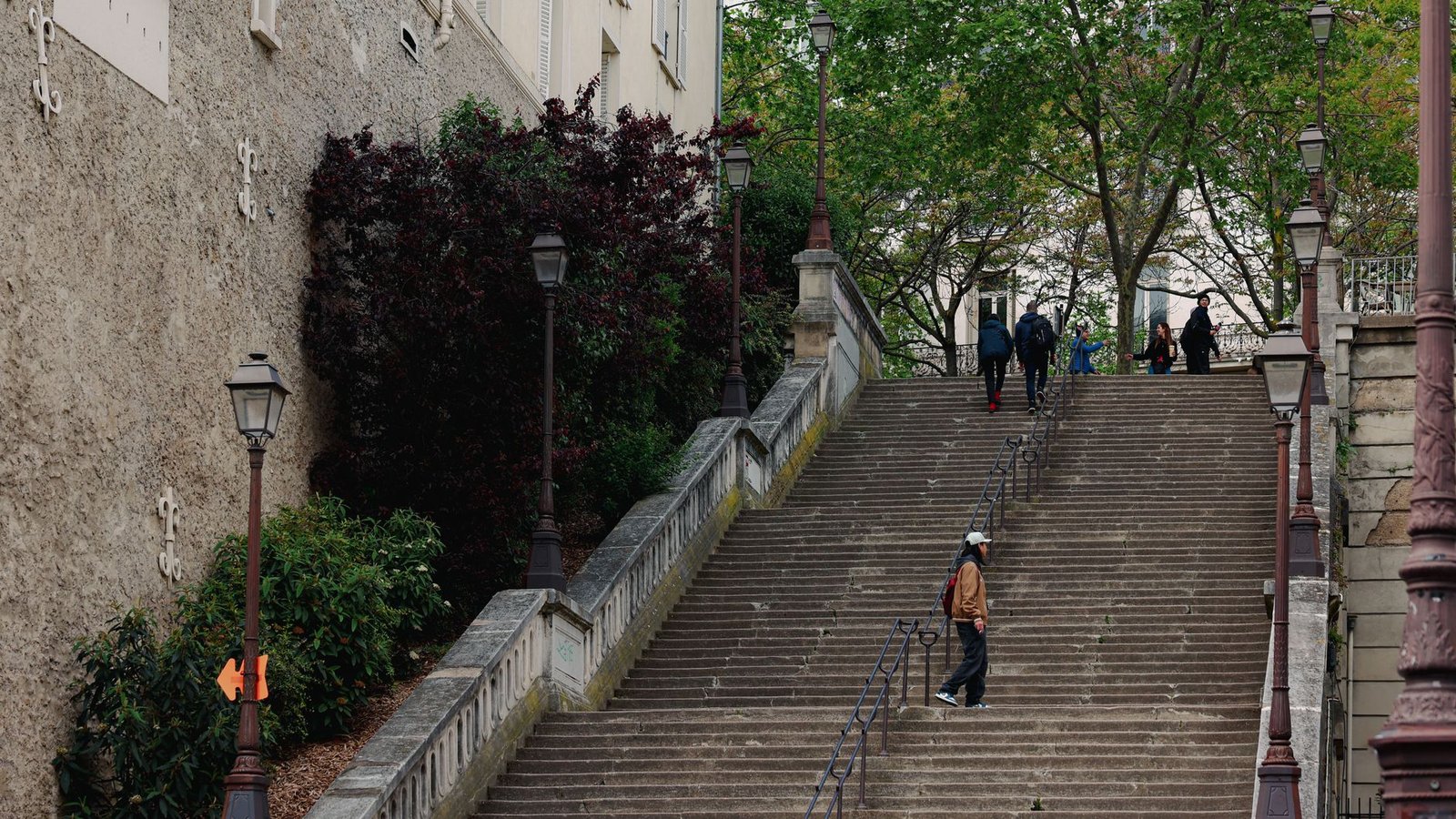
From Place des Abbesses to the top of the hill where Sacré-Cœur sits, it’s about a 10-15 minute uphill walk, or you can opt for the Montmartre funicular, which climbs in about 90 seconds and works like regular public transit—meaning it accepts the same ticket you use on the metro, with no extra charge. The on-foot alternative involves around 300 steps, spread across streets and stairways, and has the advantage of passing through charming alleyways that the funicular simply glides over.
Sacré-Cœur: The View and the Basilica
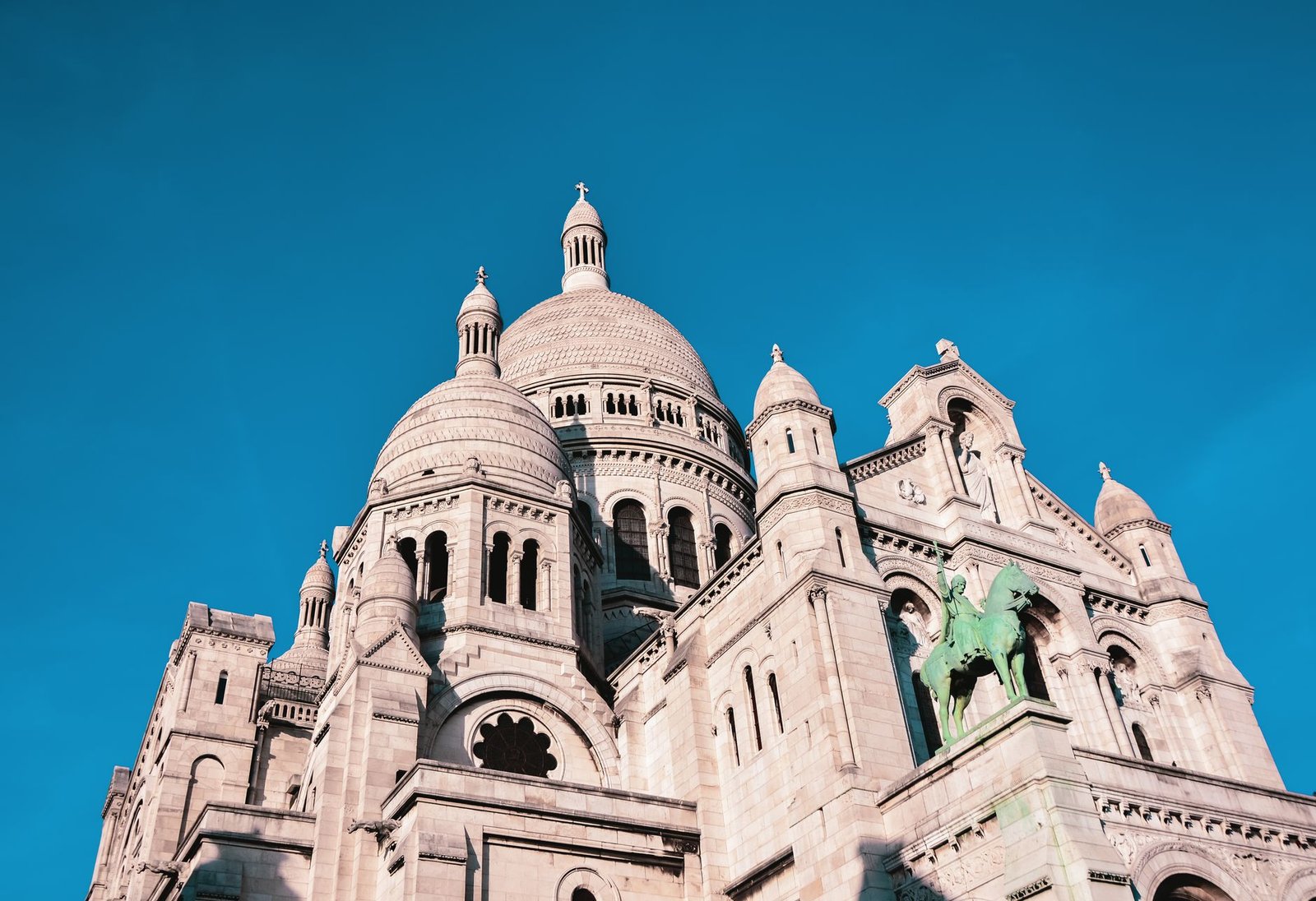
Once you reach the top, the first natural stop is the staircase in front of the Sacré-Cœur Basilica, where you can see a huge swath of Paris stretching out before you—on clear days, you can spot the Eiffel Tower and the city center down below. Entry to the basilica is free; only the climb to the dome, for those who want an even higher view, requires a separate paid ticket.
The building, in a Romano-Byzantine style, is relatively recent by Parisian standards—construction began only in the late 19th century, as a kind of national vow following the Franco-Prussian War, and was completed in 1914, with the official inauguration taking place after World War I, in 1919.
Place du Tertre: The Street Artists
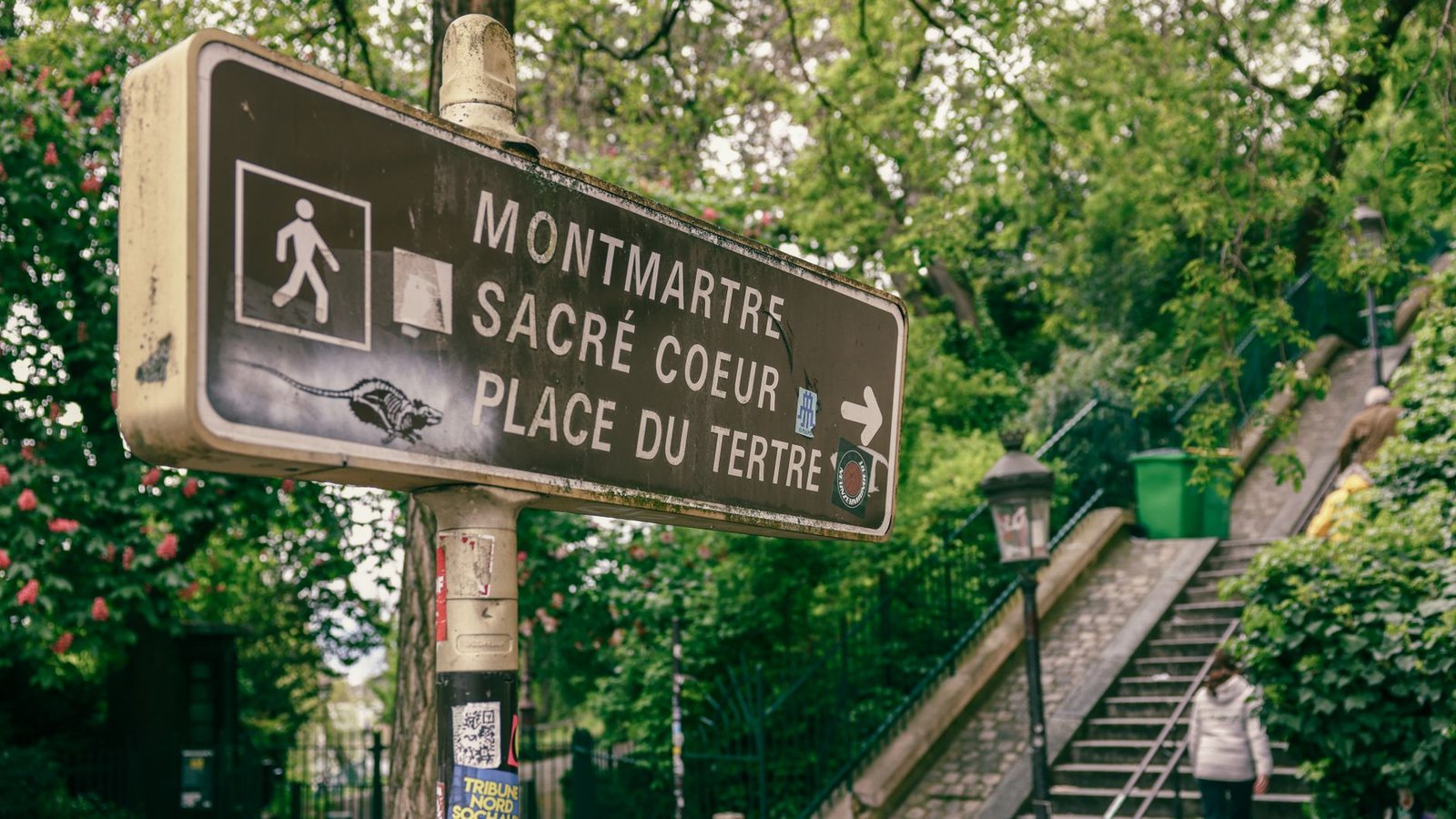
Just a few steps from the basilica lies Place du Tertre, a small medieval square that has functioned as an open-air studio since the early 20th century. Painters and caricaturists—most with official permits from the city to work there—offer quick portraits, landscapes, and caricatures to passersby. It’s worth browsing without commitment before deciding if you want to commission something: prices and styles vary widely from artist to artist.
The square is small and gets crowded quickly from mid-morning onward—anyone wanting photos without a crowd in the background should arrive as close to opening time as possible.
Rue Saint-Rustique, Rue Norvins, and Le Consulat
Leaving Place du Tertre, it’s worth turning onto Rue Saint-Rustique, one of the neighborhood’s oldest streets, and following it to Rue Norvins. Along the way, you’ll find Le Consulat, a historic café that once hosted names like Picasso, Renoir, and Toulouse-Lautrec back when Montmartre was a haven for struggling artists, before it became a tourist destination.
La Maison Rose and the Montmartre Vineyards
Heading a bit downhill on Rue de l’Abreuvoir, you’ll come across Maison Rose, a small pink façade that is one of the most photographed images in the neighborhood—it operated as a restaurant for decades and was painted by many of the artists who lived in Montmartre. Across the street, on the other side, is Clos Montmartre, a tiny vineyard within the city that many people don’t even know exists—yes, Paris has a real vineyard, planted in the 1930s to prevent the area from becoming a real estate speculation site.
A Bit of History: From Artists’ Village to Tourist Hotspot
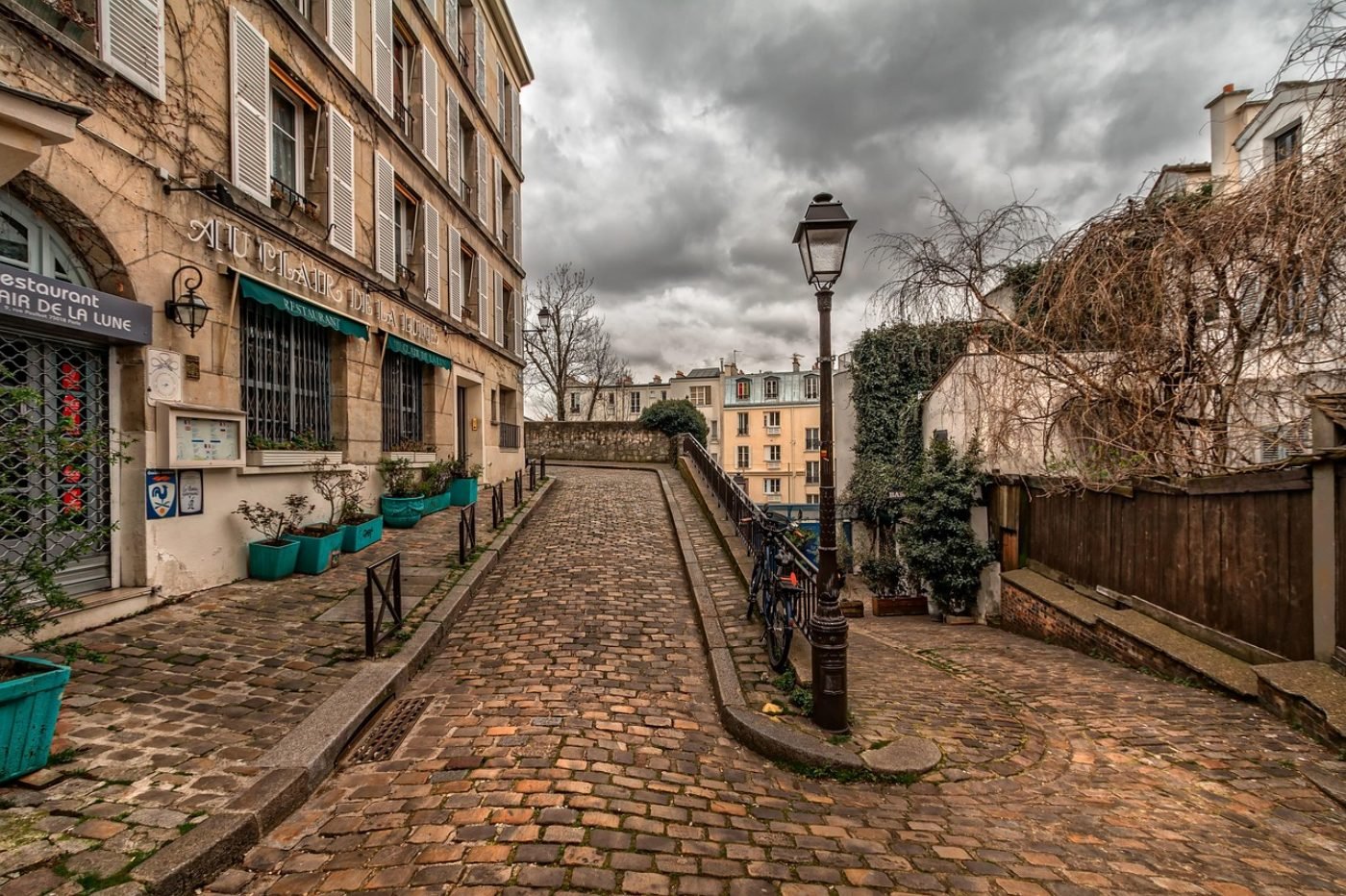
Until the end of the 19th century, Montmartre was literally a village separate from Paris, only officially annexed to the city in 1860. The cheap land and privileged views attracted windmills, vineyards, and later a generation of painters who couldn’t afford rent in the central neighborhoods. It was on these streets that Picasso, Van Gogh, Toulouse-Lautrec, and Modigliani lived and worked at some point in their careers, often in tiny, unheated shared studios.
This bohemian fame attracted cabarets, including the Moulin Rouge, still operating at the foot of the hill, and turned Montmartre into a symbol of artistic and slightly edgy Paris in the early 20th century. Over time, the bohemian gave way to the touristic—today, most of the artists who once lived there on cheap rents can no longer afford to live in the neighborhood, but the village-within-the-city vibe, with its narrow streets and few tall buildings, is still what sets Montmartre apart from the rest of Paris.
Where to Grab a Bite During Your Walk
The area around Place du Tertre is packed with crêperies and cafés aimed at tourists, with higher prices and inconsistent quality—it’s not the worst choice in the world if you just want to sit and rest your legs, but it’s worth lowering your expectations. For a more honest break, the side streets a bit further from the main square, like Rue des Trois Frères and Rue Lepic, have bakeries and bistros frequented by actual locals.
Rue Lepic itself hosts a small street market on weekends, with stalls selling cheese, fruit, and flowers—an interesting counterpoint to the more touristy atmosphere at the top of the hill. If your walk falls around lunchtime, it’s worth heading down to this street before moving on to the busier part of the route.
Wrapping Up the Route: Moulin de la Galette and the Way Back
Following the route toward Boulevard de Clichy, you can pass by the old Moulin de la Galette, one of the surviving windmills from the time when Montmartre had dozens of them, immortalized by Renoir in one of the most famous Impressionist paintings. Today it operates as a restaurant, and the mill structure is still visible from the outside.
From there, you can head down to the Lamarck-Caulaincourt metro station or return to Abbesses, completing the loop. The full route, including stops, usually takes between 2.5 and 3.5 hours, depending on how much time you set aside for photos and soaking in the view from the top.
For Those Who Want to Extend the Route: Neighborhood Museums
If you have extra time, you can fit in two small cultural stops that fit the vibe of the walk perfectly. The Musée de Montmartre, housed in one of the oldest buildings on the hill, tells the artistic history of the neighborhood with period works and objects, plus a garden that recreates the scene painted by Renoir. The Espace Dalí, near Place du Tertre, gathers sculptures and engravings by the Spanish artist in a small, quick-to-visit space—a great option for surrealism fans who don’t want to dedicate an entire morning to a museum.
Neither stop is essential if you’re just after the general vibe of the neighborhood, but they help explain why so many major names in modern art passed through here—and give you an extra reason to come back on a future trip if time is tight on your first visit.
Practical Tips for Your Walk
- Go in the morning, preferably on a weekday—on weekends and in the early afternoon, the area gets noticeably more crowded
- Wear comfortable shoes: the neighborhood is all uphill, with uneven cobblestones on many streets
- Be wary of “gift” bracelets offered by strangers near the Sacré-Cœur staircase—it’s a common scam that usually ends with a forced payment
- Bring cash if you want to buy a portrait at Place du Tertre, since not every artist accepts cards
Frequently Asked Questions
Does the funicular charge an extra fare?
No. It operates as part of the Paris public transit network and accepts the same ticket used on the metro and buses.
Is it worth climbing to the dome of Sacré-Cœur?
For those who love viewpoints, yes—the view from up there is even more expansive than from the external staircase, but it requires some stamina, as there’s no elevator for the public.
How much time should I set aside for the full route?
Between 2.5 and 3.5 hours is enough to hit all the stops described here at a relaxed pace, not counting time for a meal.
Is it safe to walk around Montmartre at night?
The main streets tend to stay busy until late, but more isolated alleyways deserve extra caution after dark, as in any large tourist neighborhood.
Is there a combo ticket for the neighborhood’s museums?
There’s no official pass—Musée de Montmartre and Espace Dalí sell separate tickets, each with its own price.
Can I visit Montmartre and the Moulin Rouge on the same day?
Yes, since the cabaret is at the foot of the hill, just a few minutes’ walk from the end of the route—but keep in mind that the Moulin Rouge show happens at night, so it works best as an add-on after your daytime walk.
Is there any part of the route I can skip if I’m short on time?
Yes—the museums (Musée de Montmartre and Espace Dalí) are the first to cut if time is tight. The essential core is Abbesses, the climb to Sacré-Cœur, Place du Tertre, and Maison Rose.
Official Links
In the end, what makes Montmartre worth the visit isn’t just Sacré-Cœur—it’s the sum of small details along the way, from the tiled wall to the hidden vineyard, that turn a simple uphill climb into a walk full of stories to tell later.