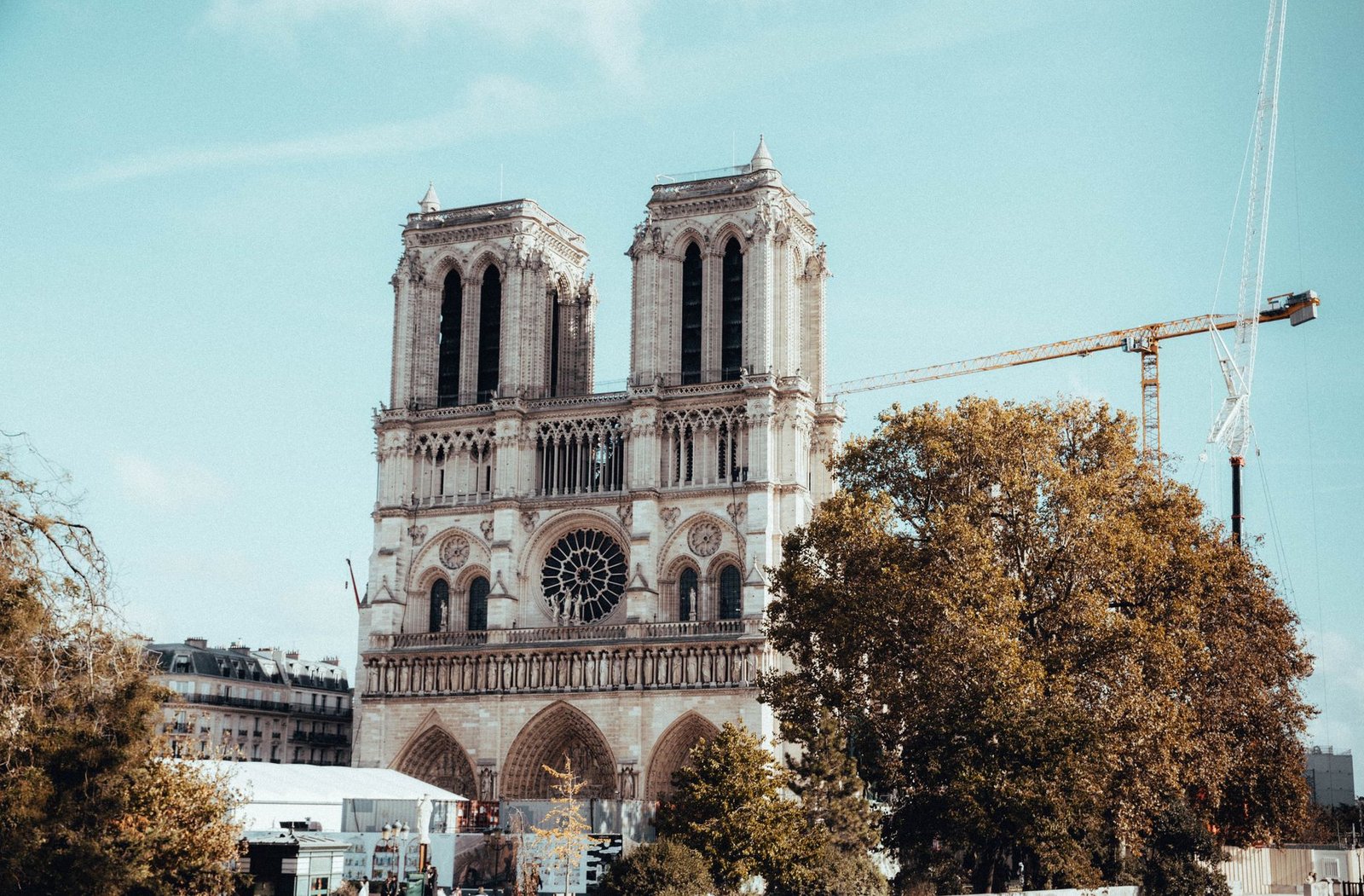
Five and a half years after the fire that destroyed much of the roof and toppled the spire in April 2019, Notre-Dame Cathedral reopened its doors in December 2024. Visiting today, you’ll find a building that looks the same from the outside, but inside, there are differences that jump out at anyone who had been there before the fire.
Dica: Aproveite também para fazer estes passeios em Paris
Tour pelo exterior da catedral de Notre Dame + Ingresso da cripta . Duração: 2 horas
Disneyland Paris Duração: 3 horas ou mais
Passeio de barco pelo Sena. Duração: 1h
Ingresso do 3º andar da Torre Eiffel. Duração: 2 a 3 horas
Ingresso do Palácio de Versalhes. Duração: 2 a 3 horas
Veja mais passeio em Paris aqui.
The December 2024 Reopening
The reopening ceremony took place in December 2024, after a restoration project that mobilized hundreds of specialized artisans, carpenters, stained-glass artists, and stonemasons. The total cost of the reconstruction exceeded initial estimates, funded largely by donations from over 150 countries following the global outcry over the fire.
Today, the cathedral is open to the public every day, but access has changed—and it’s worth knowing about these practical changes, as well as what was rebuilt, before you go.
The Roof: 2,000 Oak Trees and 13th-Century Techniques
The roof structure of the nave and main chapel—historically known as “the forest” because of the sheer amount of wood used—was completely rebuilt using medieval techniques. About 2,000 oak trees from sustainably managed French forests were cut and hand-carved with tools reproduced from 13th-century models.
The result is a framework of beams fitted together without a single nail or screw, just as medieval carpenters would have done it. From the outside, the effect is invisible—no one sees the roof from inside during a standard visit—but it was one of the most expensive and time-consuming parts of the entire project.
The Spire: 96 Meters Rebuilt Exactly as Before
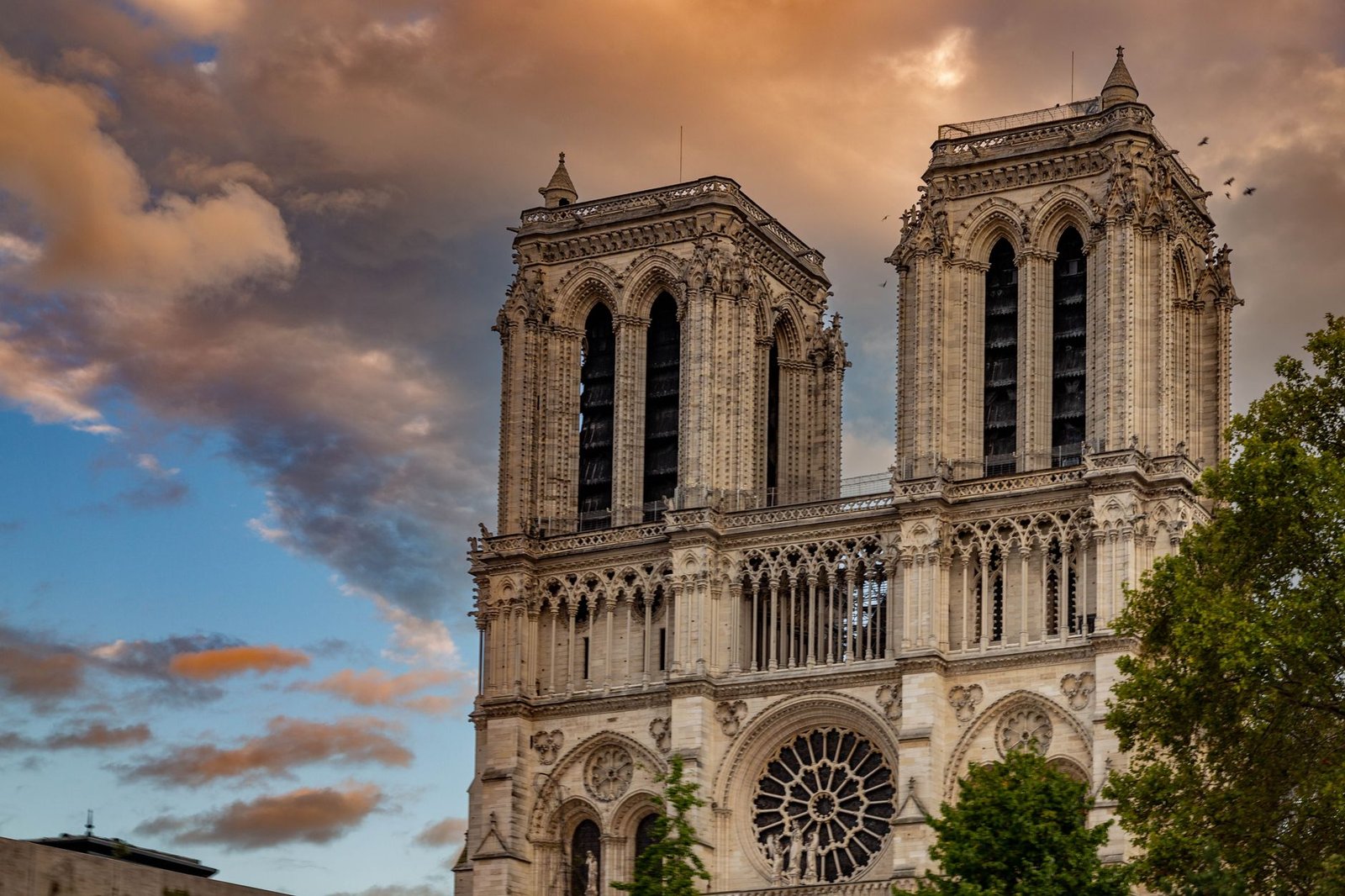
The spire that collapsed in pieces during the fire, live in front of the entire world, was recreated at the same height (96 meters) and with the same design as the 1857 version by architect Eugène Viollet-le-Duc. There was no modern redesign or winning alternative proposal—despite an international ideas competition held shortly after the fire, with proposals that included glass roofs and even a hanging garden. In the end, a faithful reconstruction of the original prevailed.
Inside: Lighter Stone, Clean Stained Glass, and New Furniture
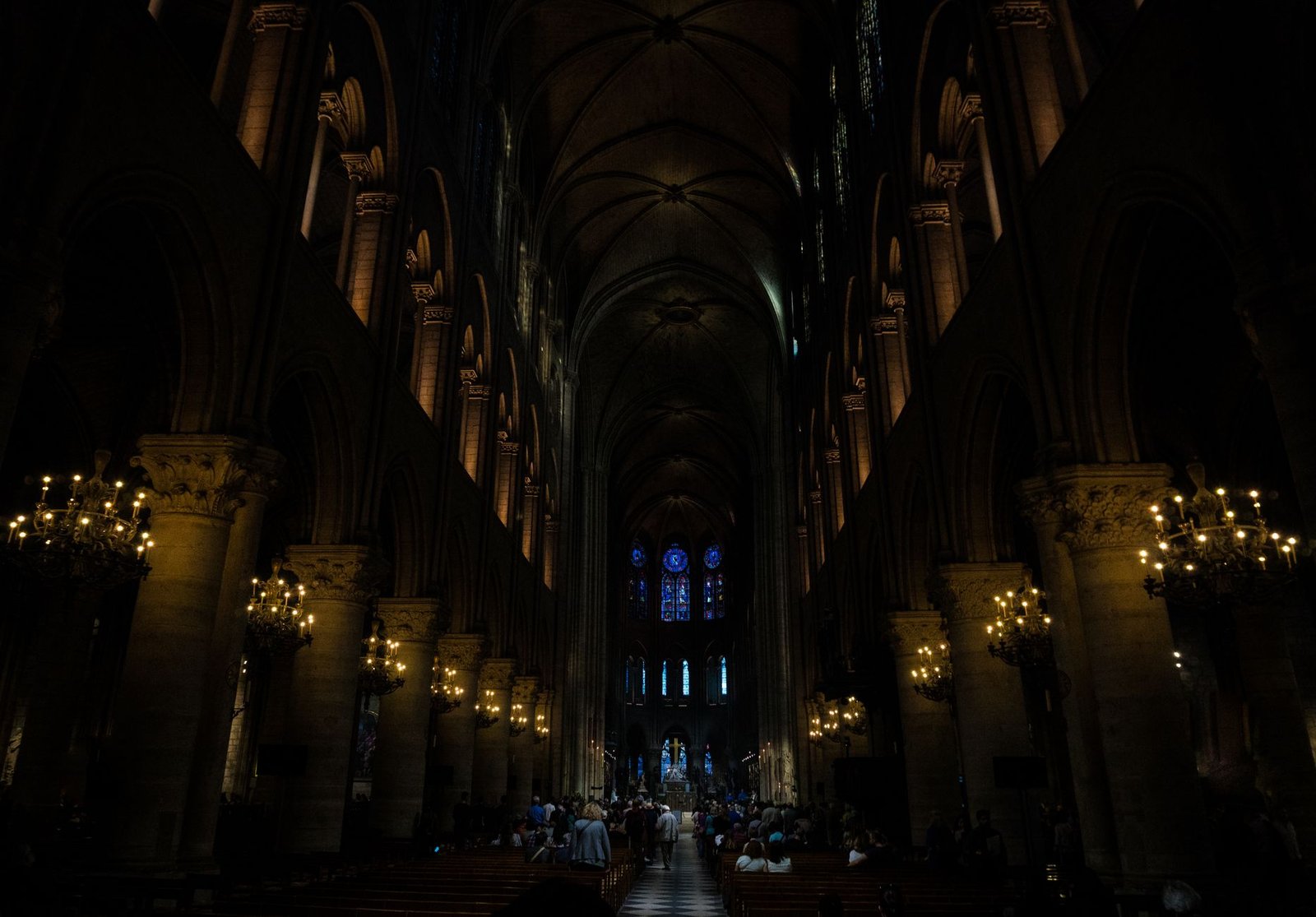
The change that most impresses anyone who visited Notre-Dame before 2019 is inside the nave. Centuries of candle soot, pollution, and smoke had darkened the limestone columns and arches. The deep cleaning during the restoration revealed stone much lighter than any recent visitor had ever seen—the interior now looks, according to those who worked on the project, closer to what it was in the Middle Ages than the “dark” Notre-Dame that lingered in the memory of generations of tourists.
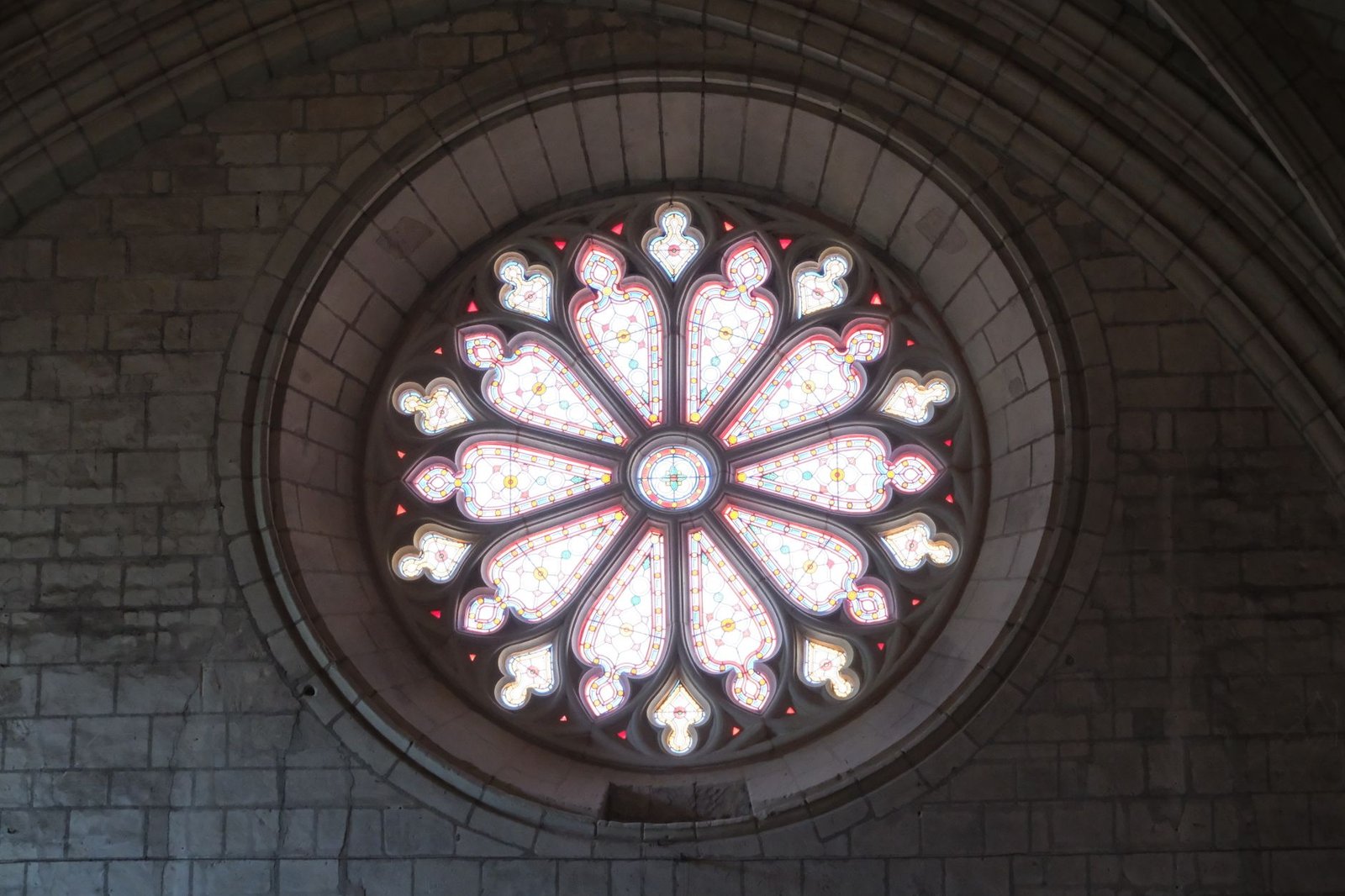
The stained-glass windows were also cleaned and restored, recovering colors that had been veiled by decades of accumulated grime. The main altar received contemporary liturgical pieces—including a new set designed by French artist Guillaume Bardet—a choice that divided opinions between those who wanted something more traditional and those who defended the inclusion of modern art within a historic monument.
The 2019 Fire, in a Nutshell
On the night of April 15, 2019, a fire started in the roof structure of Notre-Dame and spread quickly through the “forest” of wood that had supported the covering for over 800 years. The images of the spire falling, broadcast live around the world, turned that night into one of the most striking moments in Paris’s recent history—and sparked an immediate wave of international solidarity.
Despite the near-total destruction of the roof and spire, the cathedral’s stone structure held, as did the two towers of the main facade, the large rose windows, and most of the relics kept in the Treasury—many of which were rushed out by firefighters during the fire itself, including the relic of the Crown of Thorns, one of the most valuable pieces housed in the cathedral.
Who Did the Work and How It Was Funded
The reconstruction brought together hundreds of specialized professionals—carpenters trained specifically in medieval techniques, stonemasons, stained-glass artists, painting restorers, and organ builders, among others. Many of these crafts had practically disappeared in France before the fire, and the Notre-Dame project ended up serving as a rare hub for hands-on training in these traditional techniques, with young artisans learning alongside experienced masters over the five years of work.
Funding came mostly from private donations, raised within weeks of the fire from over 150 countries—from major French corporate groups to individual donations from ordinary people worldwide. This influx of resources, combined with the tight deadline publicly set by the French government, was one of the reasons the project moved at a pace considered fast for a restoration of this scale and complexity.
What the Visit Looks Like Today: Reservations, Towers, and Treasury
Entry to the cathedral remains free, but now requires a mandatory time-slot reservation, made online. Slots are released with little notice and disappear quickly during peak season—so it’s best to book as soon as you have your travel dates confirmed, rather than leaving it until the day before.
Hours are Monday through Friday from 7:45 AM to 7:00 PM, with extended hours on Thursdays until 10:00 PM. On weekends, it opens at 8:15 AM and closes at 7:30 PM. Last entry is always 30 minutes before closing.
The towers, which house the Emmanuel bell and offer views of Paris from above, are once again open to visitors with a separate ticket from the cathedral entrance—consider this climb a separate activity, as it has its own line and visitor quota per time slot. The Treasury, with relics and historic liturgical pieces, is also accessible within the visit circuit.
The Surroundings: What Else to See on the Île de la Cité
Notre-Dame sits on the Île de la Cité, the historic island in the Seine where Paris was born as a city. A few minutes’ walk away are Sainte-Chapelle, with stained glass even denser and more colorful than Notre-Dame’s, and the Conciergerie, a former prison that held Marie Antoinette before her execution during the French Revolution. If you set aside a half-day for the area, you can easily fit in all three visits without rushing.
The square in front of the cathedral, the Parvis Notre-Dame, also underwent revitalization work and tends to be crowded during peak hours—arrive early for photos without the crowds, especially in the first hour of the morning.
What’s Really Changed Compared to Before the Fire
To sum up what a returning visitor will notice: the exterior facade is practically identical, the spire is back in the same shape, but the interior is visibly lighter and brighter than it was. The smell of old candle wax and the characteristic dimness of Gothic cathedrals “darkened by time” have given way to a more illuminated space—which, for some visitors, takes away a bit of the medieval atmosphere, and for others, finally reveals the church as it should have always been seen.
Practical Tips for Your Visit
- Book your entry time slot in advance, especially if your trip falls during peak season (European summer or Christmas/New Year’s Eve)
- Get a separate ticket for the tower climb if you want to see Paris from above and get up close to the Emmanuel bell
- Go in the early morning or just before closing to find fewer people inside the nave
- Take advantage of Thursdays, when the cathedral stays open later, for a more relaxed visit
Frequently Asked Questions
Do I have to pay to enter Notre-Dame?
No, entry to the main nave remains free. Only the tower climb requires a separate paid ticket.
Is it mandatory to reserve a time slot?
Yes, since the reopening, the online reservation system is the recommended (and, in practice, necessary) way to enter without facing a long line.
Is the reconstruction 100% complete?
The building is fully open to the public, but complementary work on the exterior and surroundings (like the square and gardens) is still ongoing.
Is it worth visiting again if I went before the fire?
Yes, mainly to notice the contrast of the lighter stone inside—it’s a visibly different experience from those who knew the cathedral before 2019.
Can I attend a mass at Notre-Dame?
Yes, the religious schedule returned to normal after the reopening, with regular masses—those attending a ceremony enter through a different access point than the tourist circuit, without needing a prior visit reservation.
What happened to the animals and statues on the roof, like the gargoyles?
The gargoyles and other external stone sculptures survived the fire without major structural damage, as they are located on the outer part of the roof and towers, not in the wooden structure that burned.
Official Links
Did the collection of artworks and tapestries kept in Notre-Dame survive?
Most of it did. Many pieces were rescued in a salvage operation on the very night of the fire, and others were already out of the building due to conservation work that was happening even before the 2019 incident—which, ironically, helped save part of the collection.
In the end, what you see today at Notre-Dame is a rare case of restoration that brought back not just the structure, but much of the original brilliance of a monument that most visitors only knew darkened by time.
If your trip is still in the planning stages, it’s worth booking your visit time slot well in advance and combining Notre-Dame with the rest of the Île de la Cité on the same day—that way, you make the most of your trip and still have free time to stroll along the banks of the Seine afterward.