You want an afternoon in Paris that mixes real history, centuries-old craftsmanship, and a bar scene that isn’t designed for tourists buying souvenirs. Bastille and Faubourg Saint-Antoine deliver all of that on a self-guided walking route that takes just a few hours—no guide needed.
Bastille and Faubourg Saint-Antoine, in Paris’s 11th and 12th arrondissements, form a walking route that combines the site of the French Revolution with a neighborhood known for woodworking since the 15th century, now filled with bars, design studios, and the Marché d’Aligre. The walk starts at the Place de la Bastille and follows the Rue du Faubourg Saint-Antoine to the Place de la Nation, revealing hidden courtyards that most Paris tourists never see.
How to get to Bastille
The Place de la Bastille has its own metro station—Bastille, served by lines 1, 5, and 8—which makes the starting point of this route easy to reach from anywhere in Paris. If you’re coming from the historic center (Notre-Dame, Marais), it’s about a 15-20 minute easy walk along the Boulevard Henri IV.
Dica: Aproveite também para fazer estes passeios em Paris
Tour pelo exterior da catedral de Notre Dame + Ingresso da cripta . Duração: 2 horas
Disneyland Paris Duração: 3 horas ou mais
Passeio de barco pelo Sena. Duração: 1h
Ingresso do 3º andar da Torre Eiffel. Duração: 2 a 3 horas
Ingresso do Palácio de Versalhes. Duração: 2 a 3 horas
Veja mais passeio em Paris aqui.
From the square, the route follows the Rue du Faubourg Saint-Antoine toward the Place de la Nation, on a straight path of about 2 km—30 to 40 minutes of walking without stops, plus however much time you want to spend ducking into the courtyards and shops along the way.
If you’d rather not walk the entire route, you can get off at Ledru-Rollin or Faidherbe-Chaligny, both on line 8, to shorten the walk to the middle of the Faubourg—handy on hot or rainy days, or if your group includes young kids.
Best time to go and how long to allow
This route works any time of year, but September brings a special bonus: the Paris Design Week 2026, scheduled for September 10-19, has Bastille as one of the four theme neighborhoods for the edition, with specific design routes and exhibitions in the Faubourg’s former workshops. Outside that period, aim for Tuesday through Saturday mornings, when the Marché d’Aligre is in full swing.
Allow 2 to 3 hours for the full walk—the square, the stroll down the Faubourg with stops in the courtyards, plus extra time if you plan to explore the Marché d’Aligre or the Viaduc des Arts.
What to see: history and design in Faubourg Saint-Antoine
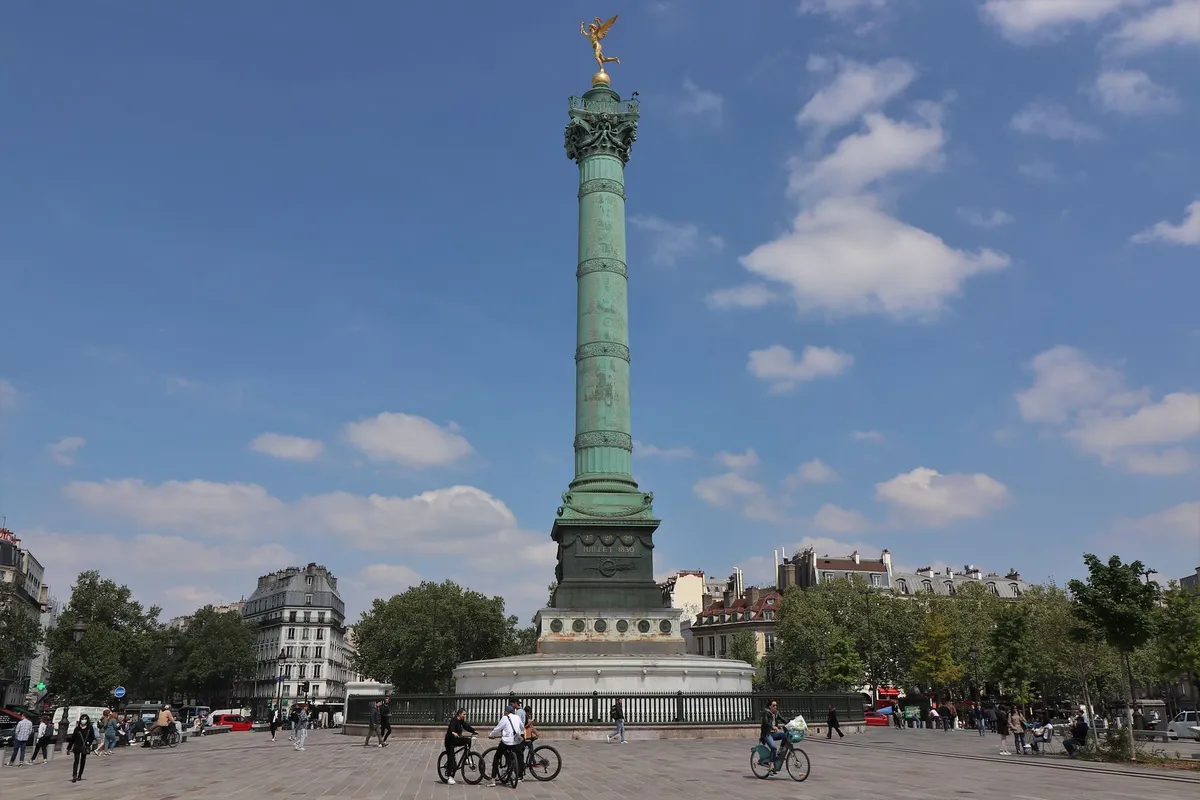
The Place de la Bastille sits on the site of the Bastille Prison, demolished shortly after its storming on July 14, 1789—the spark that ignited the French Revolution. Today, no trace of the original prison remains; the July Column at the center of the square actually commemorates the 1830 uprisings, not 1789—a detail that trips up many visitors.
From there, the Rue du Faubourg Saint-Antoine tells a different story: since the 12th century, and especially after a 15th-century royal decree that exempted the area’s artisans from taxes, the neighborhood became the center of woodworking and furniture-making in Paris. That manual trade bred a strong sense of political injustice among workers—part of why the area became a hotbed of revolutionary agitation. It’s no coincidence that many of the tensest episodes of the French Revolution began right among the artisans and manual laborers of this neighborhood, who were already living under harsh working conditions and tax rules that favored the few.
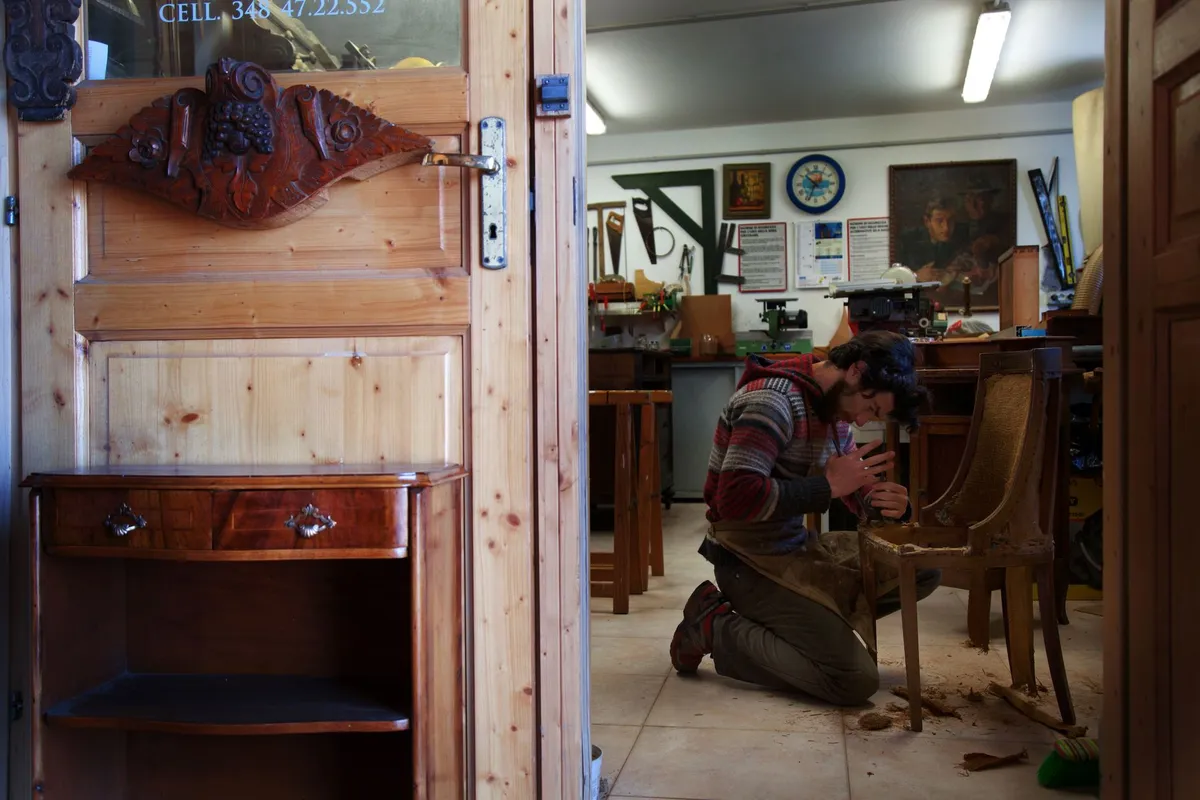
What makes the walk interesting today is the newest layer: many of the old woodworking workshops have become architecture and graphic design agencies, but without completely erasing the neighborhood’s working-class past—you can still spot active workshops, vintage woodworking signs, and traces of working-class life alongside the creative studios and specialty coffee shops that have moved in over the past few years. The official Paris tourism website highlights exactly this mix as one of Bastille’s draws in the city’s design programming.
Along the main street, it’s worth stepping into the courtyards (cours) and passageways hidden behind the facades—many preserve their original cobblestones and artisan workshops you can’t see from the outside. It’s the kind of detail only noticed by those who walk slowly and peek through the half-open gates.
What to pair with this route
Two stops complement the walk nicely: the Marché d’Aligre, a covered and street market just minutes from Bastille, great for seeing everyday Parisian commerce; and the Viaduc des Arts, a 19th-century railway viaduct whose arches now house artisan workshops—glass, ceramics, furniture restoration—open to the public.
If you enjoy Parisian neighborhoods with a story of urban transformation, round out the day with the Canal Saint-Martin, a short walk or quick metro ride away, or head to the Île Saint-Louis to end the day by the Seine. For those who want to understand the urban planning logic behind Paris’s more central neighborhoods, the guide on Haussmann and the boulevards of Paris helps explain why areas like Bastille kept such a different layout from the rest of the city.
Where to eat and drink
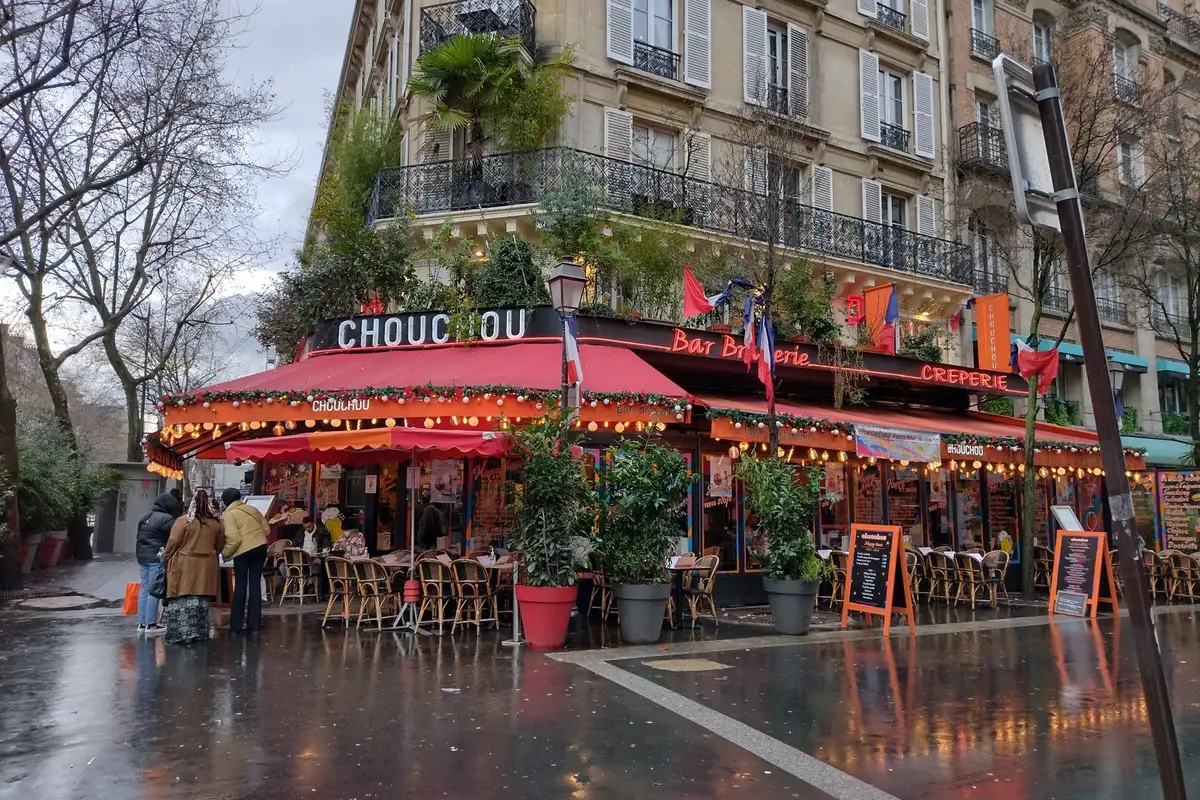
The Bastille area is known for its nightlife: the square and surrounding streets are packed with dozens of bars and restaurants, with options ranging from traditional bistros to more modern cocktail bars, driven by the young crowd that took over the neighborhood’s former industrial spaces.
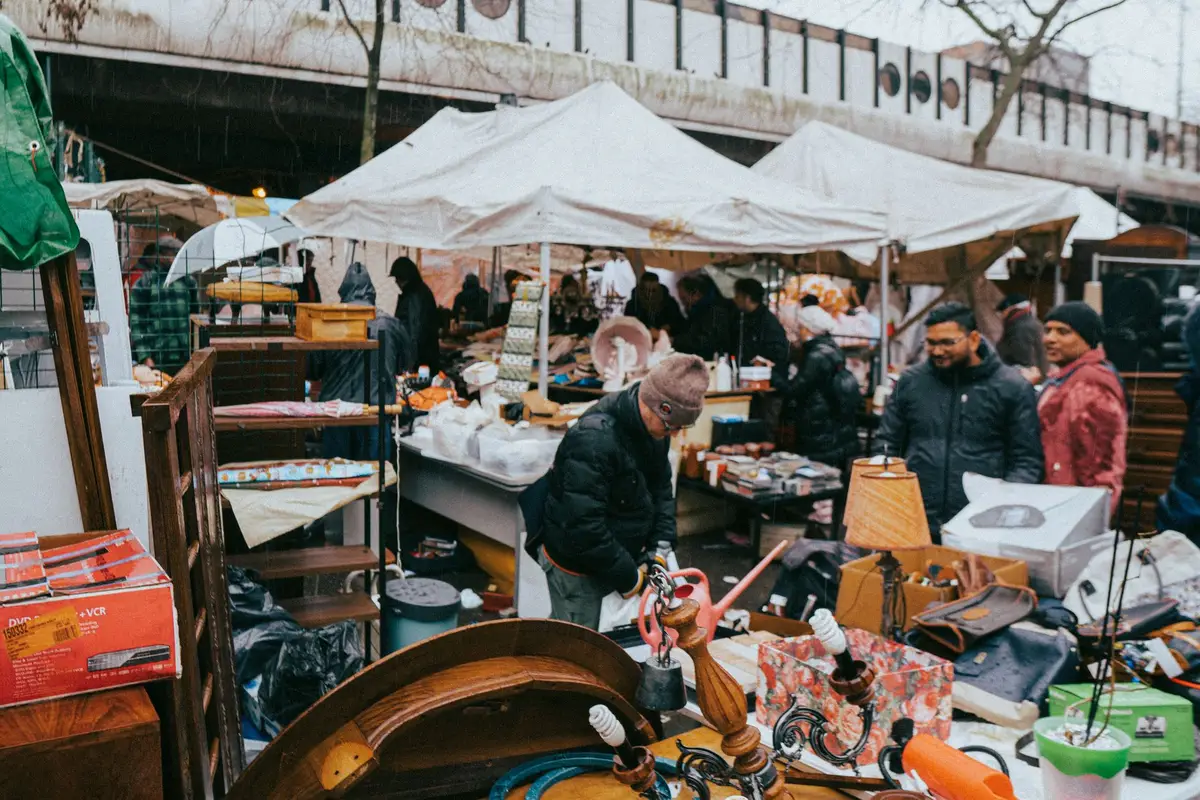
At the Marché d’Aligre, beyond the stalls of fruit, vegetables, and fresh produce, there’s a covered market with cheeses, meats, and wines—a great spot to put together a picnic or simply soak up the rhythm of shopping in a working-class Parisian neighborhood, without the inflated prices of more touristy areas. It’s also one of Paris’s most affordable markets, frequented mostly by residents of the 12th arrondissement, which keeps prices closer to local reality than to central-area rates.
Where to Stay Near the Bastille
The 11th arrondissement, where most of this itinerary takes place, is known for more affordable lodging than central neighborhoods like the Marais or the 7th arrondissement near the Eiffel Tower, with good metro connections and an active nightlife — a plus for those prioritizing budget and buzz, and a point of caution for those seeking quiet at night. Staying here usually means spending less time commuting to other stops on Paris’s historic itinerary, since the area is relatively central to the Marais, the historic center, and the Right Bank of the Seine.
Practical Tips
Wear comfortable shoes: the route between the Bastille and Place de la Nation is long and mostly flat, but the inner courtyards often have uneven paving, with original cobblestones preserved. Set aside time to step into these side courtyards along the Rue du Faubourg Saint-Antoine — many are open to the public during the day but close at night. The July Column at Place de la Bastille isn’t from the Revolution of 1789: it honors the uprisings of 1830, a common mistake among visitors. If you’re interested in the Marché d’Aligre, go in the morning — foot traffic drops off significantly after noon. For Brazilian travelers, it’s worth remembering that France is part of the Schengen Area: confirm your documentation and travel insurance through official consular channels before your trip, especially if your itinerary includes several European countries in one stay.
Frequently Asked Questions
What’s left of the Bastille at Place de la Bastille?
Nothing of the prison’s original structure remains at Place de la Bastille — it was completely demolished after its storming in 1789. The July Column that stands today in the center of the square honors the uprisings of 1830, not the French Revolution.
What is the Faubourg Saint-Antoine?
The Faubourg Saint-Antoine is the neighborhood stretching from Place de la Bastille to Place de la Nation, historically the center of cabinetmaking and furniture manufacturing in Paris since the 15th century, now home to design studios, bars, and the Marché d’Aligre.
How long does the walking tour of the Bastille and Faubourg Saint-Antoine take?
The walking tour of the Bastille and Faubourg Saint-Antoine takes 2 to 3 hours, including stops at the historic courtyards, the Marché d’Aligre, and the Viaduc des Arts. The direct walk between the Bastille and Place de la Nation takes 30 to 40 minutes.
Is the Bastille a good neighborhood to stay in Paris?
The Bastille is a good neighborhood for those seeking more affordable lodging than central areas, with an active nightlife and good metro connections. It’s less recommended for those who prioritize quiet at night.
From the Bastille, you can also climb up to the old railway viaduct and walk along the Promenade Plantée and the Coulée Verte René-Dumont.
Conclusion
The Bastille and Faubourg Saint-Antoine deliver a side of Paris that few tourist itineraries cover: real history without a reconstructed monument, craftsmanship that has survived centuries, and a bar scene that belongs to the people who live there. Keep exploring Paris’s historic neighborhoods right here at torreeiffel.com.br.