Choosing the right France itinerary starts with how much time you have: seven days are enough for Paris and a day trip. Ten days open up the Loire Valley or Provence. Fifteen days let you combine Paris, châteaux, a wine region, and the Mediterranean coast without turning it into a marathon. The right choice depends on how much vacation time you have and whether you prefer exploring fewer places at a relaxed pace or mixing up the scenery.
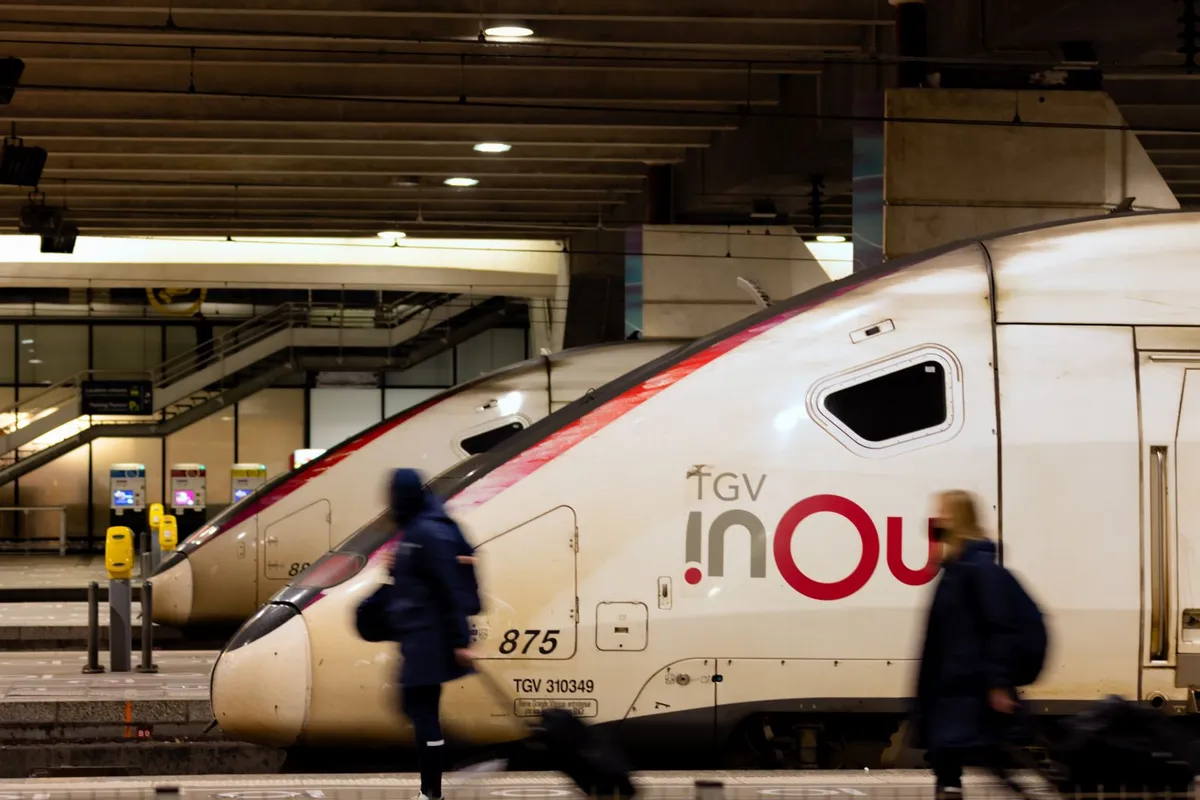
For a first trip to France, the 7-day itinerary focuses on Paris and a day trip by train; the 10-day one adds the Loire Valley or Provence; the 15-day plan combines Paris, châteaux, a wine region, and the southern coast, always traveling by TGV between bases.
Getting there and planning ahead
Most flights from Brazil arrive at Charles de Gaulle Airport (CDG) in Paris, with connections in Lisbon, Madrid, or the airline’s home country capitals. From CDG to central Paris, the RER B takes about 50 minutes and costs around €11.80 (Jan 2026). If your plan includes other French cities, it’s worth booking your TGV legs through SNCF Connect 2 to 3 months in advance — the earlier you buy, the lower the price.
Dica: Aproveite também para fazer estes passeios em Paris
Tour pelo exterior da catedral de Notre Dame + Ingresso da cripta . Duração: 2 horas
Disneyland Paris Duração: 3 horas ou mais
Passeio de barco pelo Sena. Duração: 1h
Ingresso do 3º andar da Torre Eiffel. Duração: 2 a 3 horas
Ingresso do Palácio de Versalhes. Duração: 2 a 3 horas
Veja mais passeio em Paris aqui.
Book your hotels for the first and last nights before locking in your train legs — this prevents buying a ticket for a time that doesn’t match your check-in. Documentation: for Brazilians entering as tourists, a passport valid for at least 3 months beyond your departure date is still the baseline requirement; keep an eye on the ETIAS timeline, which the European Union plans to make mandatory throughout 2026 for visa-exempt travelers, according to the official ETIAS portal.
Best time to go and how long to choose
May, June, September, and October offer the best balance of mild weather and lower prices than the summer peak; if your goal is to save more, November, January, and February have the lowest rates of the year, with 3- and 4-star hotels up to 40% to 60% cheaper than in July.
If you only have 7 full days of vacation, lock in Paris as your fixed base, with at most one day trip by train — hop between too many cities in that timeframe and fatigue will eat up what should be sightseeing time. With 10 days, a second base fits, like Amboise (Loire Valley) or Aix-en-Provence, with 3 to 4 nights outside Paris. With 15 days, you can reserve 4 to 5 nights in Paris, 3 in the Loire or Bordeaux, and 3 to 4 on the Mediterranean coast (Nice or Marseille), always with a travel day between stops.
The three itineraries side by side
The table below summarizes how to distribute your nights and train legs for each duration, so you can compare directly before booking.
| Duration | Bases | Train legs | Pace |
|---|---|---|---|
| 7 days | Paris (6 nights) + day trip (Versailles or Giverny) | 0 to 1 long leg | Relaxed, ideal for a first trip |
| 10 days | Paris (6) + Amboise or Aix-en-Provence (3-4) | 1 long leg (TGV, 1h30-3h) | Moderate, with one base change |
| 15 days | Paris (5) + Loire or Bordeaux (3) + Nice or Marseille (4) | 2 to 3 TGV legs | More intense, but still no rush |
What to combine in each itinerary
On the 7-day itinerary, set aside 3 full days for the Eiffel Tower, the Louvre, and Montmartre, 1 day for Versailles (a 40-minute train from Gare Montparnasse or RER C), and 2 free days for neighborhoods like Le Marais and a Seine river cruise. If you have an extra free day, you can even stretch to Mont Saint-Michel from Paris, doable as a long day trip within the 10- or 15-day itinerary.
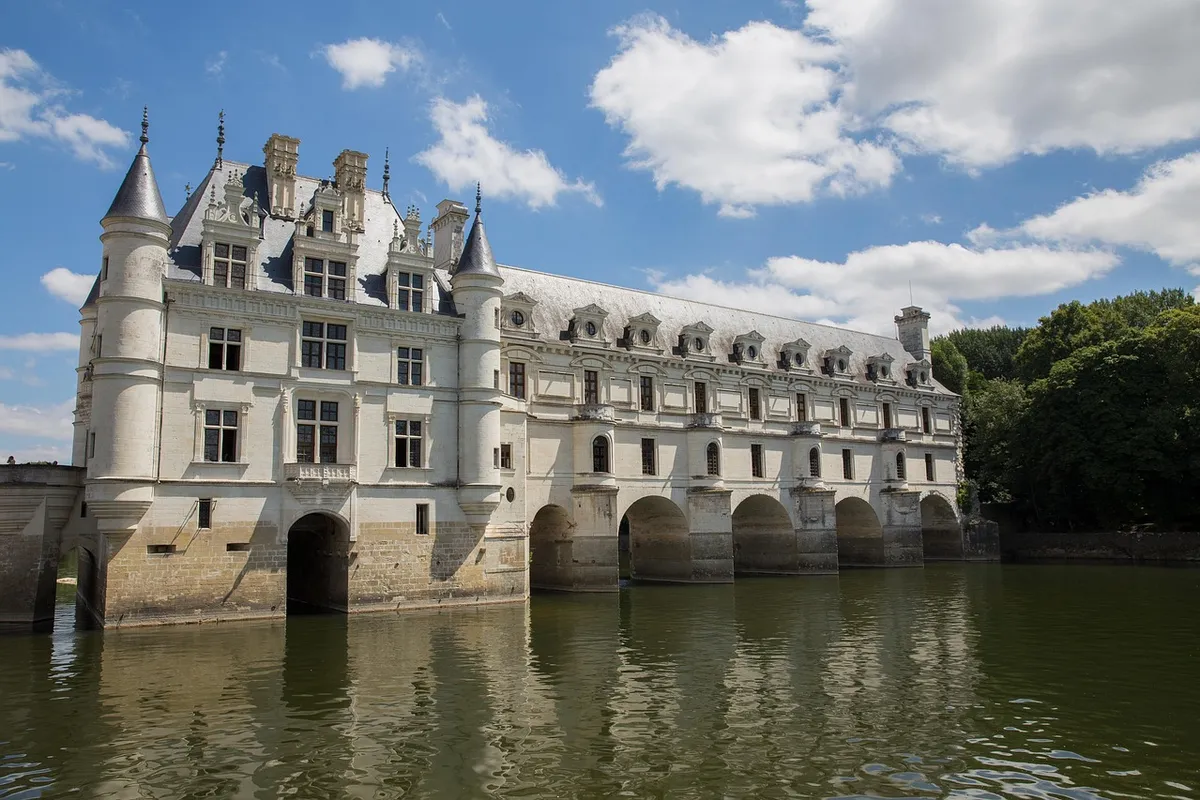
For the 10-day itinerary, add a base in the Loire Valley to your Paris block: from there, Chambord and Chenonceau are just 20–30 minutes away by rental car or on a tour leaving from Amboise — worth brushing up on toll and parking rules before driving in France. If you’d rather do Provence, use Aix-en-Provence as your base for Marseille (35 minutes by train) and the calanques. Traveling with kids? Check out our guide to France with families to see why the Loire usually beats Provence when you’ve got little ones in tow.
For the 15-day route, after your Paris + Loire block (or Bordeaux, if you want to mix wine and castles), hop on the TGV to Nice or Marseille to wrap up the trip with beaches, Provençal markets, and a scenic coastal train ride to Monaco or Cannes.
Where to eat along the way
In Paris, set aside at least one night for a classic bistro in Le Marais or the Latin Quarter, with mains running €18–€28 (Jan 2026); for everyday meals, boulangeries sell full sandwiches for €6–€9. In the Loire Valley, restaurants in Amboise and Tours serve rillettes and regional wine at prices well below Paris. In Provence, street markets in Aix-en-Provence and Nice — the one at Cours Saleya, for instance — bring together cheeses, olive oil, and socca starting at €4 a portion. If you want to dig deeper into the capital’s food scene before leaving Paris, check out our guide to Rue Mouffetard in the Latin Quarter.
Where to stay at each stop
In Paris, book a spot near an RER or métro station with direct access to Gare de Lyon or Gare Montparnasse — that way you won’t be hauling your suitcase across town on train day. In the Loire Valley, Amboise and Tours have more mid-range hotel options than the smaller château towns. Down south, Nice is a smart pick because it’s perfectly connected by train to the whole Riviera, while Aix-en-Provence works better as a calm base for anyone who’s already explored the coast.

Practical tips before you lock in your itinerary
A common mistake when planning a first France trip is underestimating travel time within the cities themselves: in Paris, crossing from one neighborhood to another during rush hour can take 40 minutes on the métro, so avoid scheduling two far-apart sights in the same morning block. Another frequent slip-up is buying a TGV ticket without checking whether it’s non-refundable — cheaper fares (Prem’s or Ouigo class) usually come with no exchange option, which is a problem if your earlier outing runs late.
It’s also worth thinking about your luggage pace: travelers with a big suitcase who switch cities every 2–3 days feel more worn out than those who stay put at one base and do day trips with a small backpack. If your goal is to cut down on physical fatigue, go with the 10-day route with just one base change rather than squeezing the 15-day version into 2-night stops.
Buy your TGV tickets as soon as your dates are set: a leg like Paris–Nice can start at €25 when booked three months out and climb past €150 the week of travel. Also check the seat reservation rules on the official Eurail website if you’re using a pass instead of point-to-point tickets. Leave at least 1 hour between a train arrival and the next departure when the connection involves big luggage, and book Eiffel Tower and Versailles tickets in advance — both sell out on high-demand days.

If your itinerary includes more than one city, also check out our guide to day trips by TGV from Paris and the full breakdown of how much a trip to Paris costs to fine-tune your budget for each leg.
Frequently asked questions
What’s the minimum number of days to see France for the first time?
Seven days is enough to get to know Paris well and squeeze in a day trip by train, like Versailles or Giverny, without rushing. It’s the recommended minimum for a first trip that isn’t just the capital.
Is it worth renting a car instead of taking the train?
For Paris and the main bases (Loire, Provence, the southern coast), the TGV is usually faster and free of parking headaches. A car only pays off within the Loire Valley, where you can hop from château to château in a single day.
Should I book accommodation before or after buying train tickets?
Lock in your Paris arrival and departure dates first, then buy your TGV legs, and only then book hotels in the intermediate cities — that way you won’t end up with a ticket that clashes with check-in times.
Can I do the 15-day itinerary without repacking at every hotel?
Yes, as long as each base has 3 nights or more. Switching cities every day is the most common mistake when planning a first France trip.
Conclusion
There’s no single right length — there’s the right length for the time you have. With 7 days, stay in Paris and do a day trip; with 10, add the Loire or Provence; with 15, finish on the southern coast. On any of the three, book your trains ahead and leave at least a little buffer between arrivals and departures. For more practical guides on planning your way through France, keep exploring Torre Eiffel.
If your flight lands at Beauvais, also check out our guide to getting from Beauvais Airport to Paris so you don’t cramp the first day of your itinerary.