Taking the train through France for the first time can seem tricky at first glance, with different brands (TGV, TER, Intercités, Ouigo) and the dilemma of buying individual tickets versus a rail pass. In practice, for beginners, the logic is simple: book in advance, reserve a seat when it’s a TGV, and leave generous buffer time between connections.
For your first train trip in France, compare the price of individual tickets on SNCF Connect with the Eurail France Pass before deciding; book high-speed trains (TGV) 2 to 3 months in advance, and leave at least 1 hour between connections so you don’t miss your next train.
France by Train: First Steps at the Station
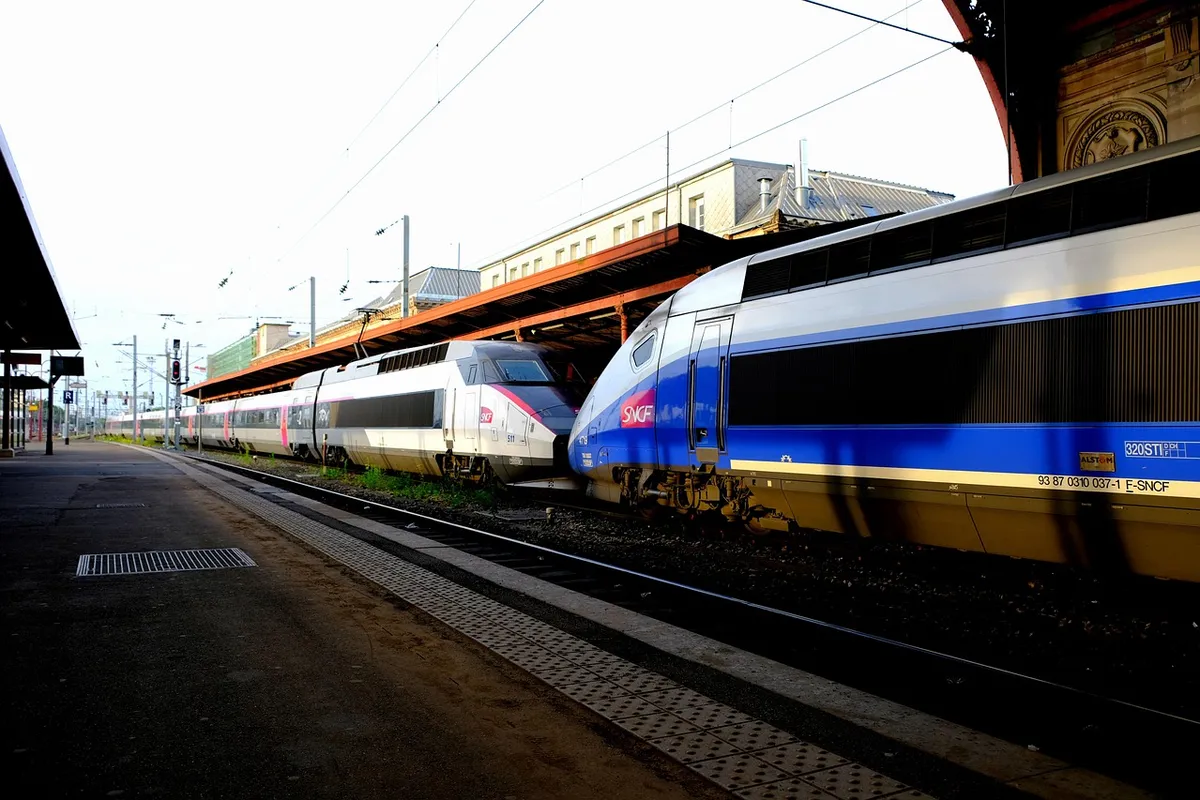
SNCF operates four main brands: TGV INOUI (high-speed, mandatory seat reservation), Ouigo (budget, also high-speed, with less flexibility), Intercités (medium-distance routes), and TER (regional trains, usually no reservation needed). For those arriving in Paris by plane, SNCF Connect is the official channel to buy any of these tickets, with real-time prices and schedules.
Dica: Aproveite também para fazer estes passeios em Paris
Tour pelo exterior da catedral de Notre Dame + Ingresso da cripta . Duração: 2 horas
Disneyland Paris Duração: 3 horas ou mais
Passeio de barco pelo Sena. Duração: 1h
Ingresso do 3º andar da Torre Eiffel. Duração: 2 a 3 horas
Ingresso do Palácio de Versalhes. Duração: 2 a 3 horas
Veja mais passeio em Paris aqui.
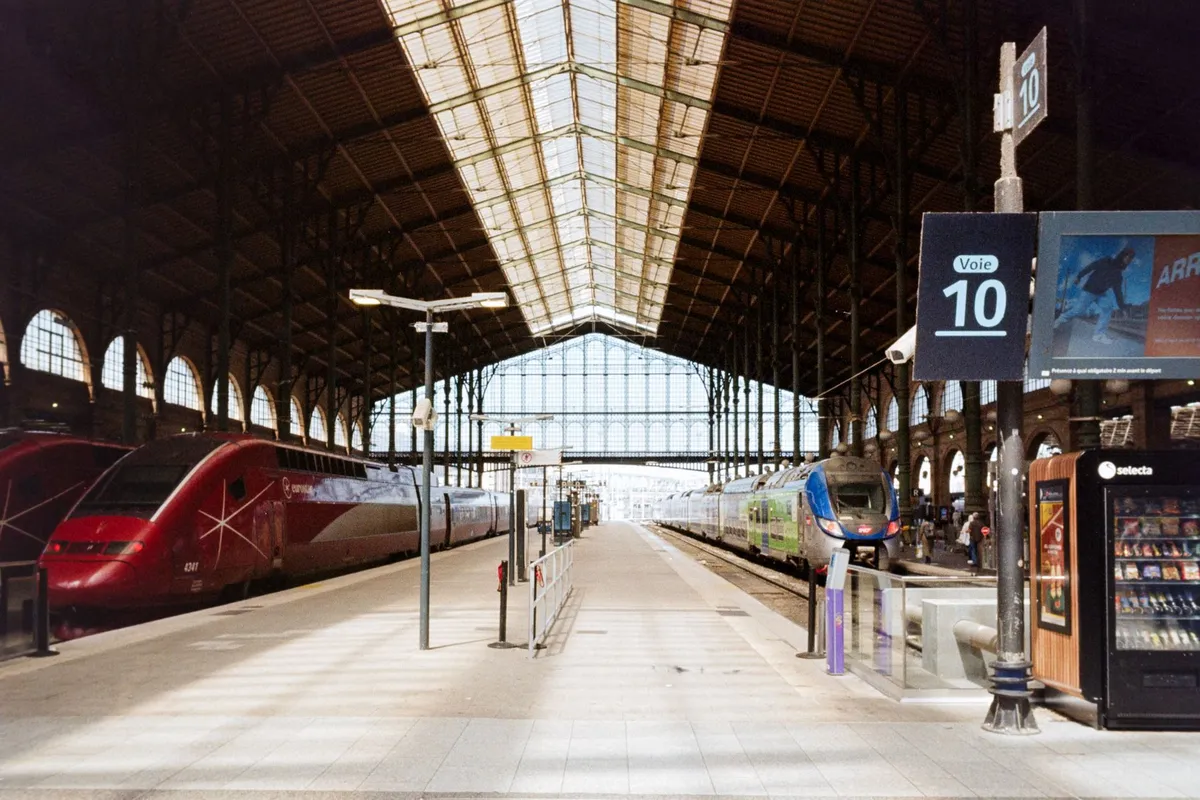
Before leaving home, confirm which Parisian station your train departs from — Paris has six main stations (Gare du Nord, Gare de Lyon, Gare Montparnasse, Gare de l’Est, Gare Saint-Lazare, and Gare d’Austerlitz), each serving different regions of the country, and they aren’t all connected by a direct, fast metro line.
When to Book: The Earlier, The Better
TGV and Intercités tickets go on sale 3 to 4 months in advance, and the price rises as the date approaches. A route like Paris-Nice can cost as little as €25 when booked three months ahead, and exceed €150 the week of travel (prices as of Jan/2026) — same ticket, same train. For TER, the price variation is much smaller, as these are regional trains with more fixed fares.
Pass or Single Ticket: How to Choose
Since 2025, Eurail has offered the Eurail France Pass, aimed at those planning many train routes within the country over a short period. The math that decides between a pass and single tickets is simple: add up the price of individual routes booked in advance (usually cheaper than the “full” pass price) and compare it with the cost of the pass for the same number of travel days.
A common pitfall for pass holders: international TGV trains offer a limited number of seats reserved for Eurail Pass holders, and once those seats sell out, you have to buy a full-fare ticket — which cancels out the pass’s advantage. For routes only within France with few stops (3 to 5 cities over 2 weeks, for example), single tickets bought in advance usually work out cheaper than the pass.
How to Book Without Falling into a Trap
Seat reservation is mandatory for the TGV, but it’s usually already included in the ticket price — it’s not an extra cost. For regional trains (TER) and most Intercités, seat reservation is generally not required, giving you more flexibility to board at a different time than planned if needed.
Watch out for “non-refundable” fares — the cheapest TGV options and Ouigo tickets usually don’t allow schedule changes. If there’s any chance a previous activity might run late (a museum, a boat tour, a guided visit), it’s worth paying a bit more for a flexible fare, especially on the day of a longer leg.
What to Bring to Eat on the Train
Long-distance TGVs have a bar car with sandwiches, snacks, and drinks starting at €4-6 (Jan/2026), but the selection is limited and prices are higher than outside the station. For those who already know which cities they’ll visit, the guide to where to eat in the Latin Quarter helps plan the meal before boarding. The most common practice is to grab something at a boulangerie before boarding — a full sandwich costs €6 to €9 (Jan/2026) — and bring your own water, since the bottle sold on board usually costs twice the market price.
Another common question from first-time train travelers in Europe is about luggage: unlike flying, there’s no weighing or strict size limit on most French trains, but physical space is tighter — luggage racks are at the ends of the cars or above the seats, without the same volume as an airplane overhead bin. Very large suitcases may require you to carry and position the item yourself, as there’s no check-in service like on flights.
It’s also worth understanding the difference between buying directly on the SNCF Connect website and using a third-party aggregator like Trainline. Prices are usually the same, but the official site avoids extra service fees some aggregators charge and centralizes all communication about schedule or platform changes in one place — which makes things much easier for those dealing with the French language for the first time.
Connections: How to Avoid Missing Your Next Train
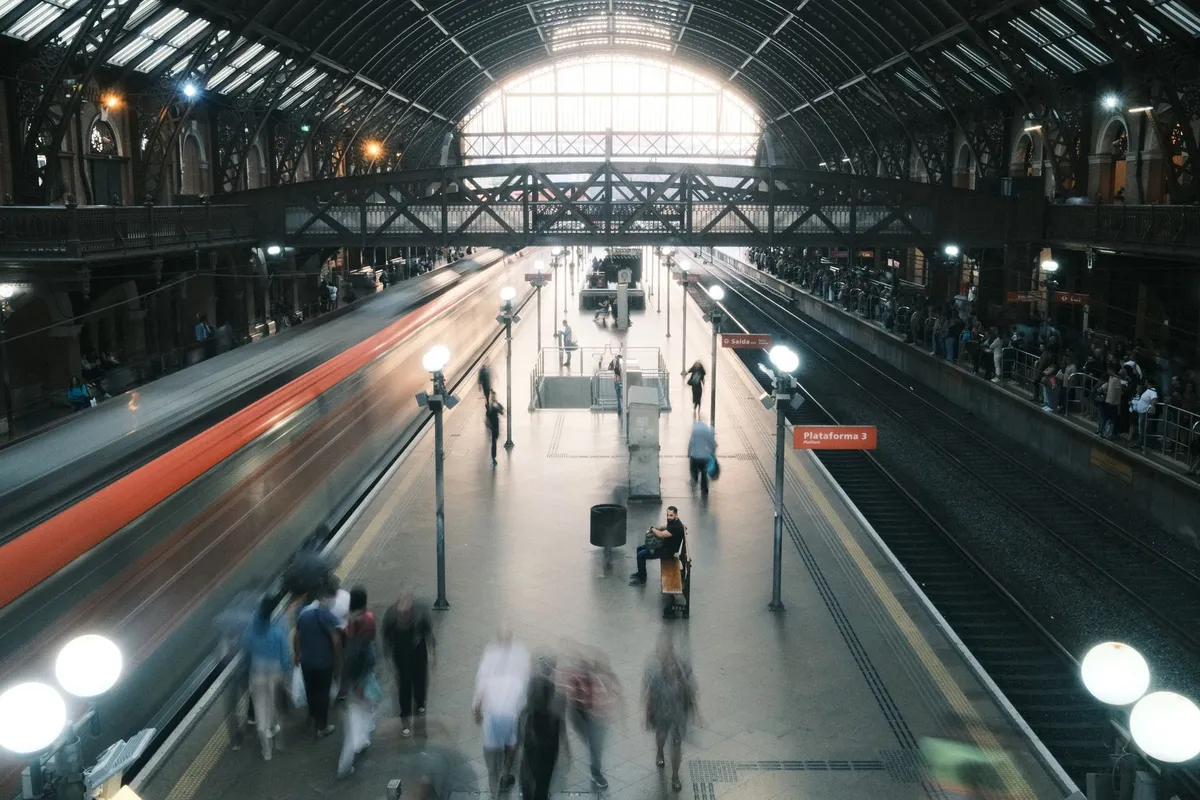
The most repeated practical rule from seasoned train travelers in France: avoid connections with less than 40 minutes between them, and for international trips or with large luggage, prefer at least 1 hour of buffer. At big stations like Gare de Lyon or Gare du Nord, the boarding platform only appears on the board near departure time, and walking from one end of the station to the other with suitcases can take 10 to 15 minutes.
If your connection is affected by a delay on the first train, SNCF usually announces on board what the next possible connection options are, and in many cases you can request a refund directly to the card used for the purchase. Keep your booking reference (locator) until the end of your trip — it’s required for any refund or exchange request.
Practical Tips from Someone Who’s Messed This Up
If your itinerary includes the Eiffel Tower, go ahead and book your skip-the-line ticket along with your train. Double-check the car and seat number printed on your ticket before boarding: on long trains, your car can be up to 200 meters from the platform entrance, and hopping on the wrong car means walking through a moving train to get to the right one. Download the SNCF Connect app ahead of time and turn on platform change notifications—they arrive minutes before the official boarding time, giving you extra time to react.
Avoid scheduling two train legs on the same day with less than 2 hours total between one arrival and the next departure—even if the connection is technically possible, any 15-20 minute delay turns into a race against the clock. To round out your trip planning, also check out the 7, 10, or 15-day France itinerary and the day trips by TGV from Paris, which break down specific routes with real train times.
Also check the full booking rules on the official Eurail website before deciding between a pass and point-to-point tickets, and the official ETIAS portal to confirm the entry documentation required in 2026.
Frequently Asked Questions
Do I need to reserve a seat on every train in France?
No. Reservations are only required for high-speed trains like the TGV, and they’re usually already included in the ticket price. Regional trains (TER) and most Intercités don’t require seat reservations.
Is the Eurail France Pass worth it?
It depends on how many legs you’re traveling. If you’re taking lots of trains in a short period, the pass can pay off; for itineraries with just a few cities (3 to 5 over two weeks), point-to-point tickets bought in advance usually work out cheaper.
How much time should I leave between two train connections?
At least 40 minutes for simple connections, and 1 hour or more for international trips or if you’re traveling with large luggage. At big stations, walking from one platform to another can take 10 to 15 minutes.
What happens if I miss my connection because the first train is delayed?
SNCF usually announces the next possible connections on board, and in many cases you can request a refund directly to the card used for the purchase, as long as you have your reservation number handy.
Conclusion
Traveling by train in France stops being complicated once you get the basic logic: book early, reserve when it’s a TGV, and never cut your connection too close. Compare the pass and point-to-point tickets before deciding, and leave plenty of buffer between trains—it’s the difference between a smooth trip and a last-minute sprint down the platform. Keep exploring Torre Eiffel to plan the rest of your journey.