Renting a car in France seems simple until the first toll gantry appears with no booth at all, or until you look for a spot on a Paris street at 2 p.m. on a Tuesday and find out you pay by the hour.
Driving in France costs, on average, €9.50 for every 100 km of highway tolls, gas around €1.90 to €2 per liter, and street parking in Paris between €4 and €6 per hour, plus traffic rules that don’t exist in Brazil, like priority for vehicles coming from the right and a total ban on radar detectors — they decide whether the road trip is worth it or becomes a headache.
Documents for driving in France as a Brazilian
To drive in France, Brazilians need a valid national driver’s license (CNH) accompanied by a certified translation into French, or an International Driving Permit (IDP), plus a passport — this applies to stays of up to 185 days (Eurodicas, 2026). The IDP solves the problem without relying on a translator and is accepted at any rental agency in the country.
Dica: Aproveite também para fazer estes passeios em Paris
Tour pelo exterior da catedral de Notre Dame + Ingresso da cripta . Duração: 2 horas
Disneyland Paris Duração: 3 horas ou mais
Passeio de barco pelo Sena. Duração: 1h
Ingresso do 3º andar da Torre Eiffel. Duração: 2 a 3 horas
Ingresso do Palácio de Versalhes. Duração: 2 a 3 horas
Veja mais passeio em Paris aqui.
Anyone entering France just for tourism doesn’t need a visa: Brazilians are exempt for stays of up to 90 days in any 180-day period within the Schengen area. Starting as expected in late 2026, ETIAS will also be required — an electronic travel authorization you must get before boarding. It’s not a traditional visa, but a mandatory online registration before your trip (Eurodicas, 2026). It’s worth confirming the exact enforcement date closer to your trip, because the ETIAS timeline has been delayed before.
At the rental counter, the minimum age is usually between 18 and 21 depending on the car category, but anyone under 25 or 26 pays a “young driver” surcharge at most companies. It’s also common to require a permanent license (not a provisional one) held for at least one year and an international credit card in the main driver’s name for the deposit (Rentcars, 2026).
How tolls (péage) work on the autoroutes
French autoroutes — the divided highways identified by the letter “A” — almost all charge tolls, with an average cost of about €0.13 per kilometer, which works out to around €9.50 for every 100 km driven in a passenger car (L’Argus, Jan 2026). A full trip from Paris to Lyon, for example, costs about €41.28 in tolls alone in 2026, with an annual adjustment of 0.86% applied in February.
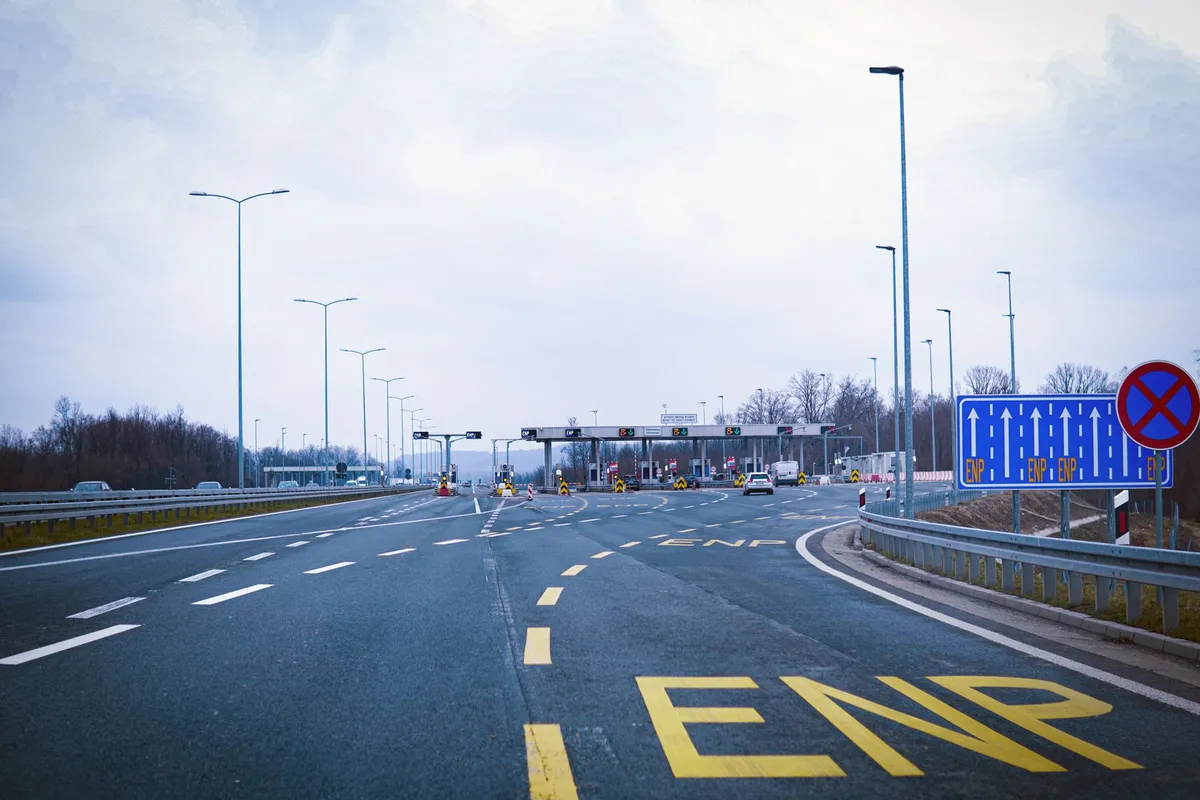
In practice, French tolls work in two ways: on some highways you grab a ticket at the entrance and pay the amount proportional to the km driven at the exit; on others, usually shorter or near big cities, the price is fixed and charged right at the booth. Nearly all of them accept international credit cards without issue, so you don’t need to carry cash — but it’s worth keeping your card handy in the cup holder, because the line moves fast and stopping to dig for your wallet annoys the drivers behind you.
An alternative that cuts down on stopping time is the electronic toll badge (télépéage), rented by the day or week at kiosks and rental agencies: it lets you breeze through the free-flow lanes without stopping. It pays off on long trips with multiple tolls; for a single short stretch, manual card payment works fine with no extra cost.
How much fuel costs in France
In July 2026, a liter of SP95-E10 gasoline in France costs between €1.90 and €1.95, SP98 runs between €2.00 and €2.02, and diesel (gazole) ranges from €1.90 to €2.01 — with a price hike recorded in the first half of the month (Mon Carburant, Jul 2026). That means a 50-liter tank of gas sets you back around €95 to €100, depending on the brand and the region.
Supermarket stations (Leclerc, Carrefour, Intermarché) usually charge 5 to 10 cents less per liter than highway stations with their own brand like Total or BP — the difference makes it worth filling up in town before hitting the autoroute, where prices climb for the convenience. Many supermarket stations run 24-hour automatic pumps that only accept chip-and-PIN cards, so have an international card set up for that before your trip.
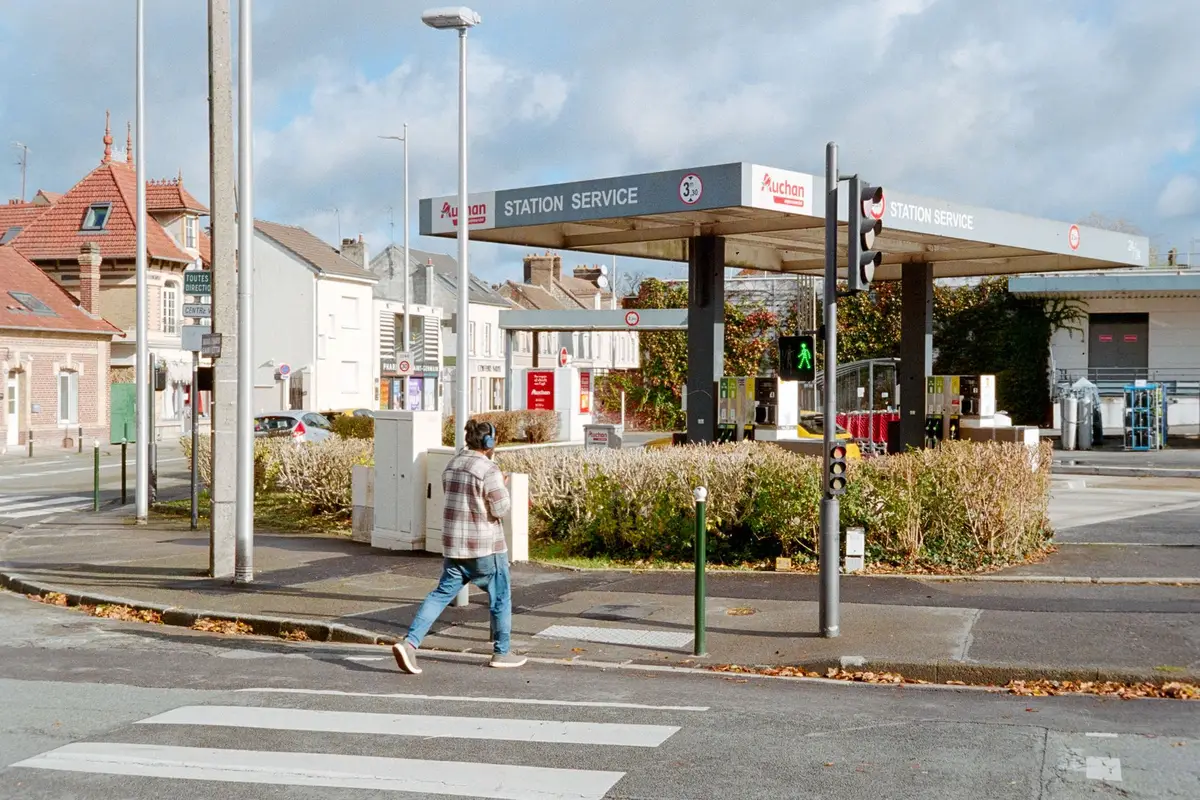
Rental cars in France usually come as diesel or mild hybrids; check the fuel type on the contract before you leave the counter, because putting diesel in a gas engine (or the other way around) ruins the motor and isn’t covered by the rental company’s basic insurance.
Parking in Paris and French cities
In Paris, street parking is paid from 9 a.m. to 8 p.m., Monday through Saturday, and free on Sundays, holidays, and overnight between 8 p.m. and 9 a.m. The city is split into two pricing zones: €6 per hour in Zone 1 (center) and €4 per hour in Zone 2, with an even higher rate for heavy SUVs, which pay €18 for just the first hour in Zone 1 (L’Itinéraire, 2026).
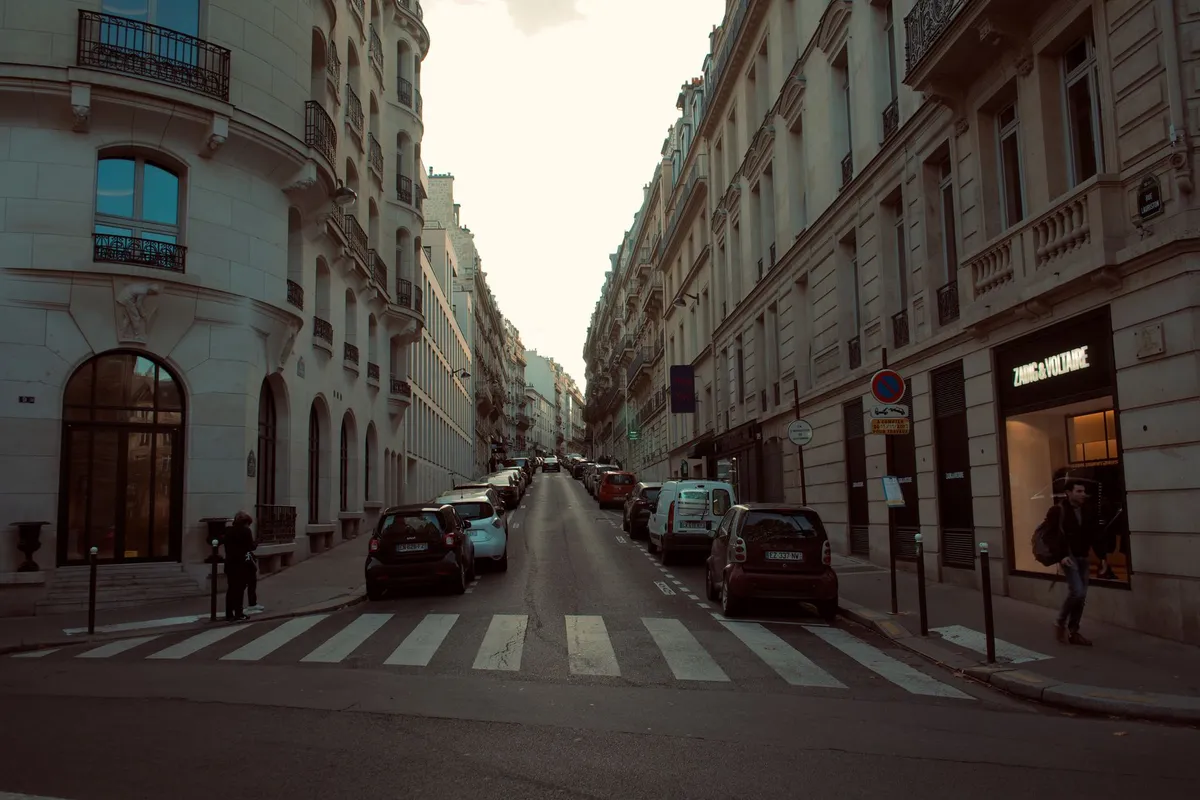
Payment is made at a meter or through the city’s official app — physical coins are no longer accepted in most zones. Without the app set up, look for the zone number painted on the sidewalk before leaving the car; a parking ticket costs far more than an hour of parking.
Covered lots run by operators like Saemes or Indigo cost between €25 and €35 per day in the city center and €18 to €25 on the outskirts — pricier than the street, but with no ticket risk and a guaranteed spot, which pays off near busy landmarks like the Louvre Museum or the Champs-Élysées area.
Traffic rules that surprise Brazilians
Speed limits in France are 50 km/h in cities (dropping to 30 km/h in “zones 30,” increasingly common in historic centers), 80 km/h on two-lane roads without a physical divider, and 130 km/h on the autoroute — reduced to 110 km/h in rain and 50 km/h in very low visibility (Ornikar, 2026). The blood alcohol limit is 0.5 g/L, but it drops to 0.2 g/L — practically zero tolerance — for drivers who’ve held their license for less than three years.
The rule that catches tourists off guard the most is priorité à droite: at intersections without signage to the contrary, vehicles coming from the right have the right of way, even if you’re on what looks like a main road. This is common at small roundabouts and rural crossroads — slow down whenever there’s no clear “voie prioritaire” sign.
Radar detectors or warning apps are illegal in France: possession, transport, and use carry fines of up to €1,500 (€3,000 for repeat offenses), a six-point loss on your license, and confiscation of the device (Legipermis, 2026). Only GPS units with approved “attention zones” are allowed, which give a generic heads-up about risky stretches without pinpointing a specific radar — most standard navigation apps already come set up this way.
Every car must carry an approved reflective vest (gilet, CE/E27R standard) and a warning triangle; missing either one can result in a fine of up to €375 (Compar Auto, 2026). Rental companies usually leave both items in the trunk, but it’s worth double-checking when you pick up the car.
ZFE and the Crit’Air Sticker: When You Need It
France has around 25 Low Emission Zones (ZFE) in operation in 2026, including Paris, Lyon, Marseille, Toulouse, and Lille, with plans to expand to about 40 cities throughout the year (Ohm Énergie, 2026). To drive inside these zones, you’re required to have the Crit’Air sticker on your windshield, which costs €3.85 and can be ordered online before your trip.
Driving in a ZFE without the sticker triggers a fine of €68 for passenger cars and up to €135 for larger vehicles (Tout Sur Mes Finances, 2026). Recent rental cars usually already fall into the most permissive classification, but ask the rental company to confirm the vehicle’s Crit’Air class and get the sticker as soon as you know the license plate — the online process takes a few days to arrive by mail, so it’s worth ordering in advance.
Renting the Car: Age, Insurance, and What to Check
Beyond the minimum age and young-driver surcharge already mentioned, check three things at the rental counter before signing: the collision damage waiver (CDW) deductible and whether it can be reduced with a supplemental policy bought separately, which is often cheaper than the rental company’s own; the fuel level at pickup and return, since many charge hefty fees for bringing the tank back incomplete; and whether the car already comes with the Crit’Air sticker and the mandatory items (vest and triangle) in the trunk.
It’s also worth photographing the car inside and out at pickup, including wheels and bumpers, to avoid being charged for damage that was already there. Rural roads in France tend to be narrow with no shoulder, so prefer compact categories over large SUVs if your route passes through villages or the Loire Valley castle region.
When It’s Worth Driving in France (and When It Isn’t)
Driving clearly pays off for exploring Normandy, the Loire Valley, Provence, or Brittany, where public transport between small villages is scarce and a car gives you the freedom to stop at local markets and off-the-beaten-path viewpoints. It’s not worth it inside Paris: the urban toll built into parking prices, heavy traffic, and the excellent metro and RER network make a car an expensive hassle in the city — if you want to understand train alternatives between regions, check out the guide to getting around France by train.
For those building an itinerary from scratch, it’s worth first reviewing how many days make sense to reserve for the country — the first-timer’s France itinerary helps you decide whether the car fits just one specific leg or the whole trip.
Frequently Asked Questions
Do I need an international driver’s permit to drive in France?
It’s not legally required for short stays, but the International Driving Permit (IDP) avoids the need for a sworn translation of your Brazilian license and is accepted without question at any rental agency in the country.
How much does it cost on average to drive in France per day?
Adding up tolls, fuel, and one night of parking in a mid-sized city, a day of driving in France runs between €40 and €70 for those covering about 150 to 200 km, not counting the daily rental rate.
Can you drive in France without speaking French?
Yes, you can: traffic signs follow the European standard with universal symbols, and navigation apps like Waze or Google Maps work in English. Only at older gas stations without automatic pumps might it help to know how to ask for “le plein, s’il vous plaît” (fill the tank, please).
Is it better to rent a car or take the train in France?
For routes between major cities like Paris, Lyon, and Marseille, the train is usually faster and without the cost of tolls and parking. A car pays off for rural regions with limited rail coverage, like parts of Normandy and the Provençal countryside.
Conclusion
Driving in France works well when your route leaves the big cities and hits the regional roads, but it requires having a credit card on hand for tolls and fuel, a Crit’Air sticker sorted before driving in any major city, and extra attention to priority-to-the-right at unmarked intersections. For more practical guides on France, torreeiffel.com.br has other content that helps you round out your itinerary with fewer surprises on the road.