The Promenade Plantée, officially known today as the Coulée Verte René-Dumont, transforms a former railway line into 4.5 kilometers of gardens, viaducts, tunnels, and walkways in Paris’s 12th arrondissement. The most famous stretch begins near the Bastille, atop the Viaduc des Arts, and continues to the Jardin de Reuilly.
For a first visit, walk from the Bastille to the Jardin de Reuilly in about 1h30. Those wanting to cover the full 4.5 kilometers should set aside two to three hours and check the access points and working elevators beforehand.
Why visit the Promenade Plantée
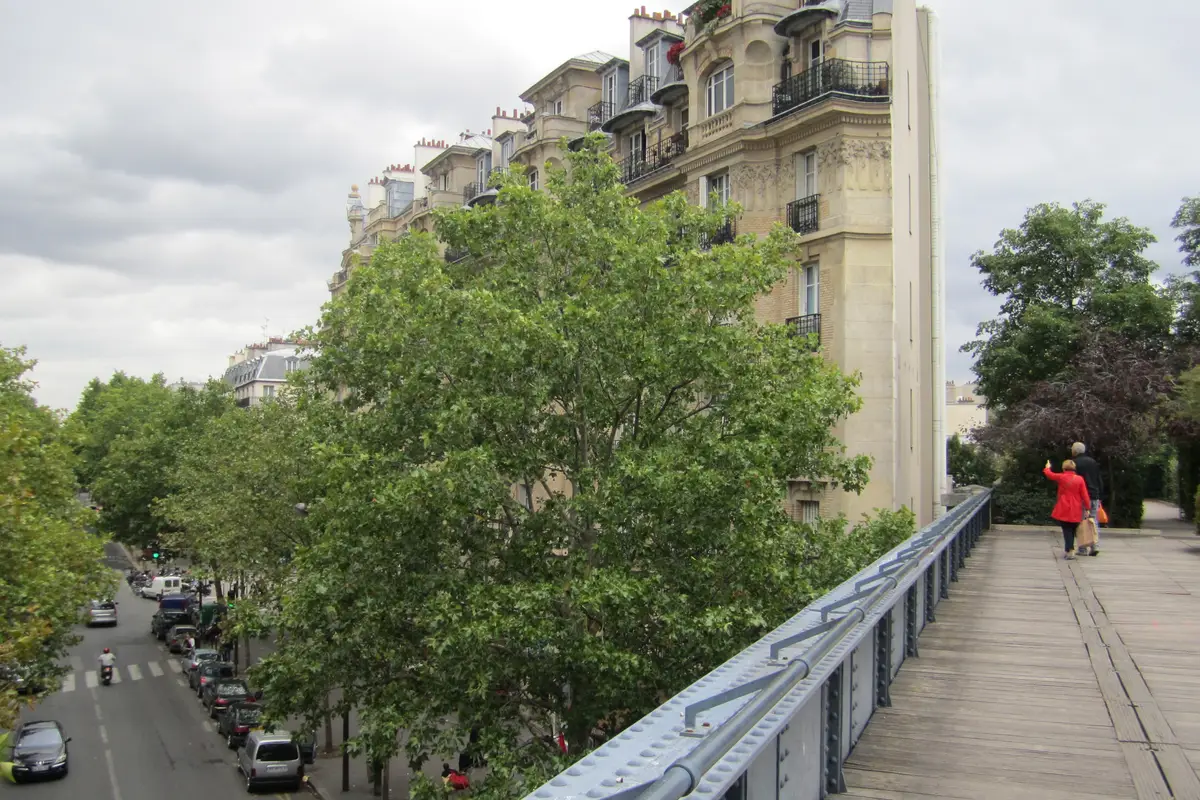
The Promenade Plantée offers a rare perspective of Paris: you walk at the height of the treetops and the upper floors of buildings, while traffic passes below. The route doesn’t repeat the same scene. The elevated viaduct gives way to the Jardin de Reuilly, the Allée Vivaldi, railway trenches, and vegetated tunnels.
Dica: Aproveite também para fazer estes passeios em Paris
Tour pelo exterior da catedral de Notre Dame + Ingresso da cripta . Duração: 2 horas
Disneyland Paris Duração: 3 horas ou mais
Passeio de barco pelo Sena. Duração: 1h
Ingresso do 3º andar da Torre Eiffel. Duração: 2 a 3 horas
Ingresso do Palácio de Versalhes. Duração: 2 a 3 horas
Veja mais passeio em Paris aqui.
The walk fits nicely into an alternative itinerary for the east side of the city. It pairs well with the guide to Paris for a second trip, but it also works for first-timers who need a break between indoor attractions.
What the Coulée Verte René-Dumont route is like
The route starts near the rue de Lyon, behind the Opéra Bastille. A staircase leads up to the deck of the Viaduc des Arts. In this first segment, narrow flower beds, rose bushes, and small reflecting pools share space with views of facades you’d hardly notice from the sidewalk.
From the Bastille to the Jardin de Reuilly
This is the simplest and most photogenic stretch. The elevated walkway crosses avenues and reaches the passerelle André-Léo, which spans the Jardin de Reuilly. Shortly after, the walk descends to the Allée Vivaldi, with shops and easy access to the Daumesnil metro station.
From the Jardin de Reuilly to the Porte de Montempoivre
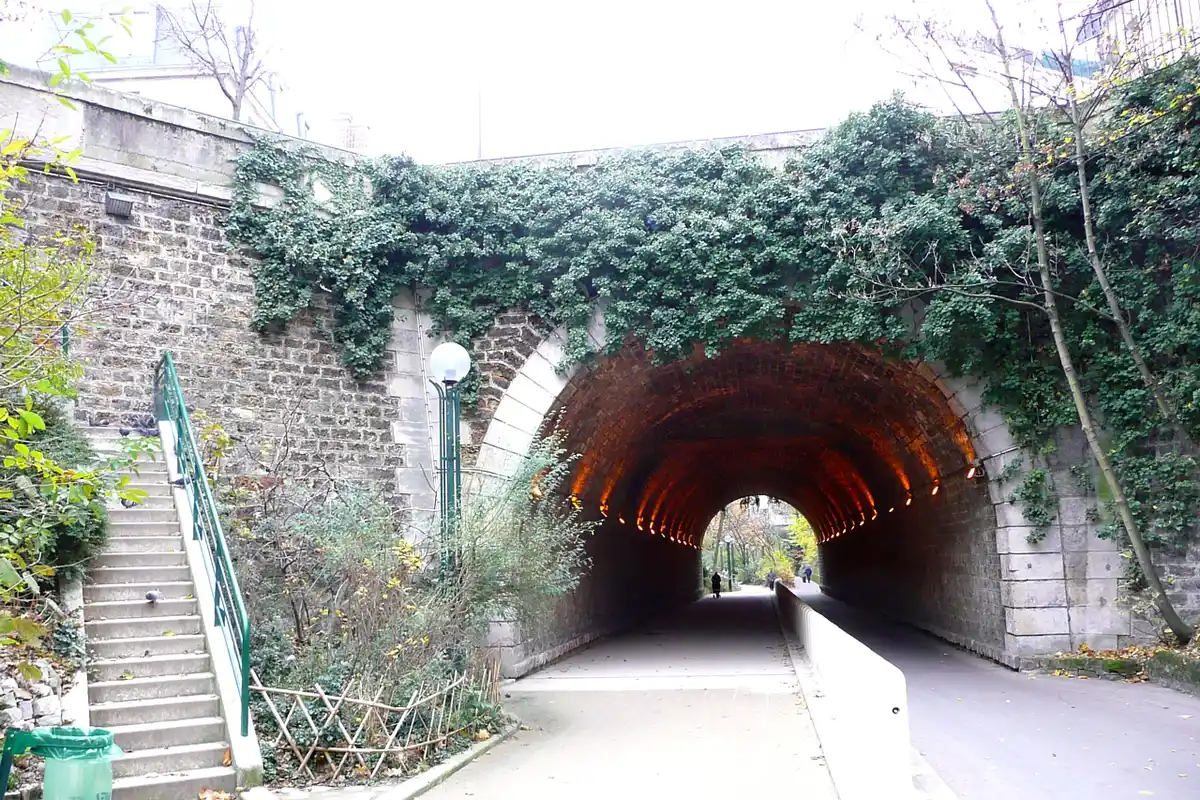
The landscape becomes more railway-like, with cuts in the terrain, tunnels, and spontaneous vegetation. Signage requires a bit more attention at the forks. If you’re short on time, end at the Jardin de Reuilly; you’ll have seen the elevated part without turning the stroll into a trek.
Hours and admission in 2026
Entry to the Coulée Verte René-Dumont is free. Hours change with the season and can vary between weekdays and weekends. For the period from May to August 2026, the Ville de Paris lists the usual hours as opening at 8 am on weekdays and 9 am on weekends, with closing at 9:30 pm.
Between July 16 and September 6, 2026, the city has announced exceptional late-night openings, from 7 am to 11:59 pm. Weather alerts and maintenance can cause closures with little notice; check the city’s notice board on the day of your visit.
The old railway became a garden
The promenade occupies part of the former Vincennes line, opened in 1859 to connect the Bastille area to the eastern suburbs. Service was discontinued in 1969. The transformation began in the late 1980s, with a design by Philippe Mathieux and Jacques Vergely.
The 71 arches beneath the viaduct were restored to house the workshops and shops of the Viaduc des Arts. This solution preserved the infrastructure and created two simultaneous routes: artisans at the Avenue Daumesnil level and a garden up above.
How to get to the Promenade Plantée
To start on the elevated section, use Bastille, served by lines 1, 5, and 8, or Gare de Lyon, on lines 1 and 14 and RER trains. Look for the entrance near number 34 on the rue de Lyon, but check the elevator’s status. Another practical entrance is on the rue Jacques-Hillairet.
You can combine the walk with a free tour of Paris at another time, keeping the promenade as a moment without a set schedule.
Accessibility and things to watch out for
The Ville de Paris classifies the area as accessible for people with reduced mobility, but not all entrances are equal. In July 2026, the elevator on rue Hector Malot was in service, while the elevators at 34 rue de Lyon and near Leroy Merlin appeared to be out of service. If you rely on an elevator, check the official update right before your visit.
What to see nearby
At the start, explore the Bastille and the Faubourg Saint-Antoine. Midway, the Marché d’Aligre adds a market and food options. Further south, Bercy Village combines old wine warehouses, shops, and access to the Parc de Bercy.
Is the Promenade Plantée worth it?
Yes, for anyone who enjoys walking, urban gardens, and repurposed architecture. The Bastille–Reuilly stretch offers the best balance of time and variety. The full route is better when the walk itself is the priority, not just a break between attractions.
Frequently asked questions
What’s the difference between the Promenade Plantée and the Coulée Verte?
Promenade Plantée is the name the walk became known by. Coulée Verte René-Dumont is the current official name for the 4.5-kilometer linear park in the 12th arrondissement.
How long does it take to walk the whole thing?
The full Coulée Verte René-Dumont takes two to three hours at a leisurely pace. The elevated stretch between the Bastille and the Jardin de Reuilly can be done in about 1h30.
Is admission free?
The Promenade Plantée has free admission. Since the gates follow seasonal hours and can close due to weather, check the schedule on the day of your walk.
Can you ride a bike?
Pedestrians have priority on the Promenade Plantée, and several sections are narrow or have stair-only access. For cycling, stick to the parallel bike lanes at street level.
Conclusion
Walk the elevated viaduct first and decide at Jardin de Reuilly whether you want to keep going. That simple choice preserves the best of the route without wearing you out. The Torre Eiffel guide rounds up other itineraries to stretch your day through Bastille, Bercy, and eastern Paris.