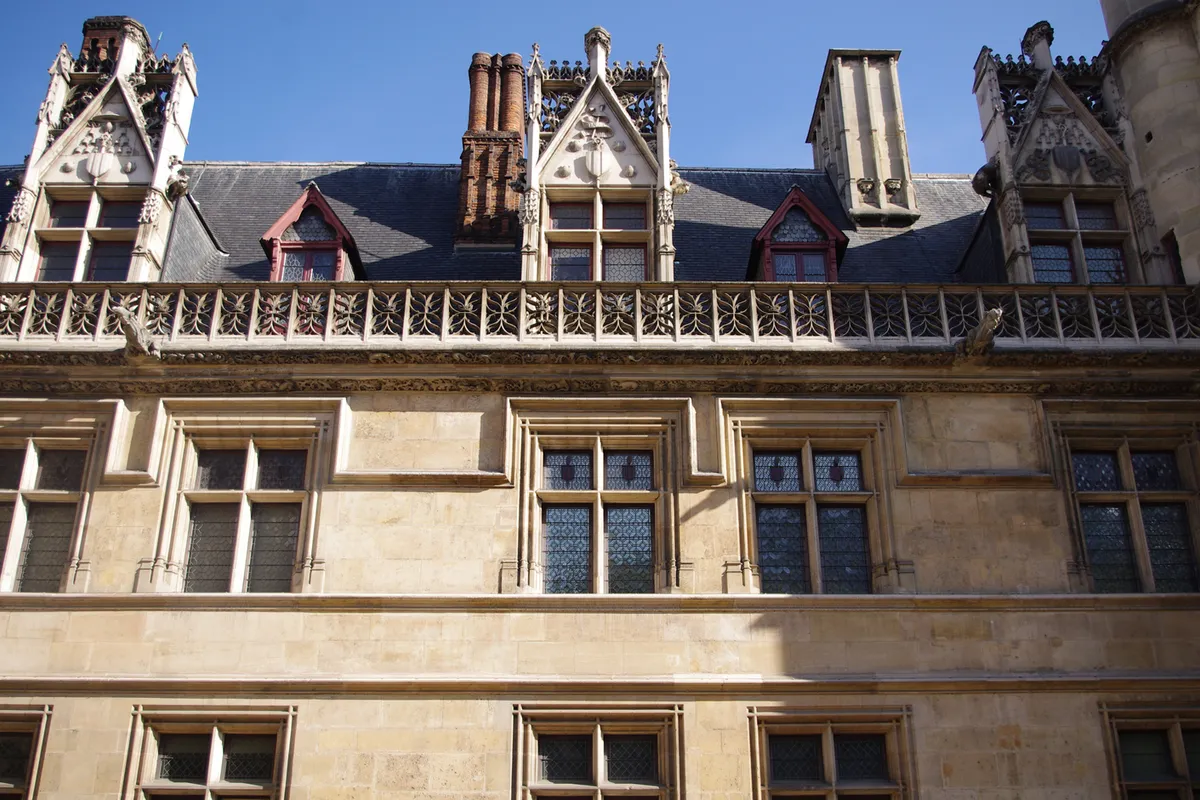
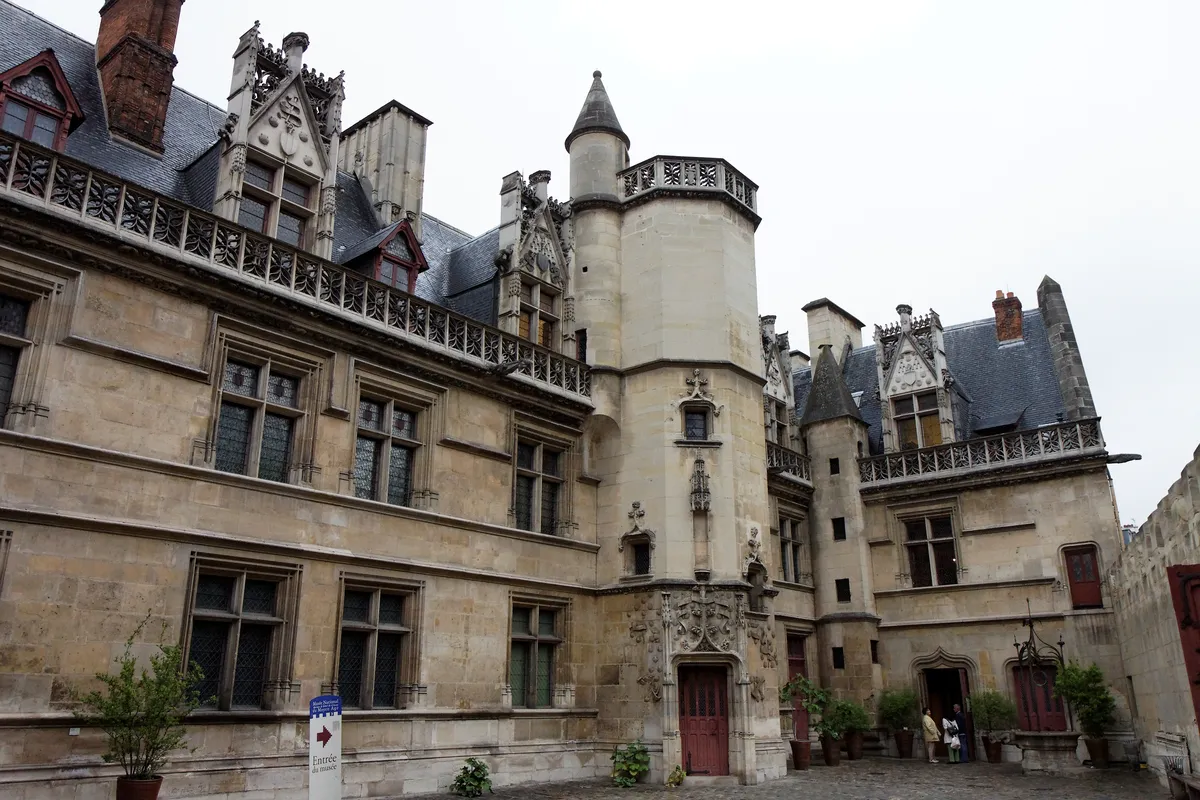
The Musée de Cluny – musée national du Moyen Âge is the museum to understand medieval Paris without relying only on churches and facades. Housed in the Hôtel de Cluny, near the Quartier Latin, it brings together tapestries, sculptures, stained glass, and objects that give a human scale to a thousand-year period.
The Musée de Cluny is in the 5th arrondissement, open Wednesday through Monday, and costs €12 for a full-price ticket as of July 2026. The visit usually takes about two hours and pairs well with Notre-Dame, the Sorbonne, or a stroll through the Quartier Latin.
The collection is the main draw, but the building changes everything: Gallo-Roman baths, a medieval residence, and a contemporary extension are all part of the same route. Arrive without rushing and let the sequence of rooms guide your visit.
Why the Musée de Cluny is different from other Paris museums
The Musée de Cluny is worth the visit because it shows the Middle Ages through objects, architecture, and everyday uses, not as a succession of dates. The rooms help connect stained glass, wood, ivory, metal, and tapestry to the way people lived, prayed, and moved around the city.
Dica: Aproveite também para fazer estes passeios em Paris
Tour pelo exterior da catedral de Notre Dame + Ingresso da cripta . Duração: 2 horas
Disneyland Paris Duração: 3 horas ou mais
Passeio de barco pelo Sena. Duração: 1h
Ingresso do 3º andar da Torre Eiffel. Duração: 2 a 3 horas
Ingresso do Palácio de Versalhes. Duração: 2 a 3 horas
Veja mais passeio em Paris aqui.
It’s a particularly good choice after visiting Notre-Dame or the Sainte-Chapelle, when the imagery, sculptures, and religious language start to make more sense. Travelers with older kids will also find a museum that’s more concrete than it seems at first glance.
Don’t mistake Cluny for a quick stop in the Quartier Latin. The address occupies a complex historic site, and the collection demands some attention to the labels. Two hours are a good starting point; three hours fit if you want to use the audioguide and study the tapestries carefully.
Tickets, prices, and hours at the Musée de Cluny
The Musée de Cluny lists a full-price ticket of €12 as of July 2026. Visitors under 26 who are residents of the European Union get in free, and there are other free admissions and discounts offered by the national museum; bring documentation that proves your eligibility before counting on the benefit.
The usual hours are 9:30 am to 6:15 pm, Wednesday through Monday, closed on Tuesdays. Last entry and any changes depend on the exhibition calendar and holidays. Check the practical information on the official Musée de Cluny website close to your travel date.
Buying in advance is a good idea during school holidays and on weekends. On quiet days, entry control is usually fast, but don’t leave your arrival for late afternoon: a significant part of the visit requires time to read and compare the pieces.
What to see at the Musée de Cluny without getting lost in the collection
Start with the Roman baths and the architecture of the Hôtel de Cluny. This first reading organizes the rest of the museum: Paris already had an ancient layer before the medieval residence, and the building shows how different periods pile up in the same block.
In the galleries, pick a thread to follow. It could be the color of the stained glass, the depiction of animals, religious objects, or life in the cities. This simple choice keeps the visit from turning into a hallway of display cases and brings together pieces made for very different purposes.
The Musée Carnavalet is a natural next step if you want to move on to the history of Paris in other centuries. Cluny covers the medieval world; Carnavalet takes the narrative into the city’s own urban transformation.
The Lady and the Unicorn is the work that deserves the most time
The series of six tapestries known as The Lady and the Unicorn is the most famous set at the Musée de Cluny. The scenes combine figures, animals, flowers, and symbols on a monumental scale; get close to notice the details, then step back to take in the whole composition.
There’s no simple consensus that exhausts the meaning of the tapestries, and that’s exactly why the room explanations matter. Set aside a few extra minutes for this core, instead of treating it as just another photo stop on the itinerary.
Afterward, compare the medieval language with a collection from another period: the Picasso Museum in Paris creates a strong contrast in technique, medium, and worldview, even if the two addresses don’t fit well in the same afternoon.
How to get to the Musée de Cluny
The Musée de Cluny is at 28 rue du Sommerard, 75005 Paris, near place Paul-Painlevé. Cluny–La Sorbonne, on line 10, is the most direct station; Saint-Michel and Odéon help those coming from the RER or other metro lines.
The museum is central for anyone on foot in the Quartier Latin, but the nearby streets have traffic and uneven sidewalks. If accessibility is a priority, check the institution’s information before you head out. Planning your arrival saves energy for the collection, which is what’s worth preserving for the visit.
What to pair near the Musée de Cluny
Notre-Dame, the Sorbonne, the Luxembourg Gardens, and the bookshops of the Quartier Latin form a coherent day around Cluny. The best combination depends on your pace: churches and a museum in the same stretch work; crossing the city for a second big museum usually tires more than it pays off.
To understand Paris from other periods, use the one-day Paris itinerary as a reference for getting around and pick just one or two cultural stops. The Musée de Cluny rewards those who avoid overloading the schedule.
Frequently asked questions
How much does the Musée de Cluny cost?
The Musée de Cluny lists a full-price ticket of €12 as of July 2026. Visitors under 26 who are residents of the European Union get in free, along with other groups covered by the museum’s updated rules.
Is the Musée de Cluny open on Tuesdays?
The Musée de Cluny is closed on Tuesdays. The usual hours are Wednesday through Monday, from 9:30 am to 6:15 pm, but holidays and events can change operations; confirm before you go.
How long does a visit to the Musée de Cluny take?
A visit to the Musée de Cluny takes about two hours for the main route. Set aside up to three hours if you want to study the Lady and the Unicorn series, use the audioguide, and explore the architecture of the complex.
Conclusion
The Musée de Cluny turns the Middle Ages into a tangible visit, made of materials, images, and spaces that still survive in central Paris. On Torre Eiffel, keep browsing the museum and neighborhood guides to plan the rest of your day without rushing.