Belleville in Paris is a hill that brings together open views, immigrant streets, urban art, and dining spots without the touristy gloss of the city center. The neighborhood spans parts of the 19th and 20th arrondissements and is a great choice for those who want to walk, eat, and discover a more diverse side of Paris.
To explore Belleville in Paris, get off at the Belleville or Jourdain metro station and set aside at least three hours. The simplest route takes you along Rue de Belleville, through Parc de Belleville, and up to the Willy Ronis belvedere; the highlight is free and offers some of the widest views of the city.
Why visit Belleville in Paris
Belleville is a neighborhood on a grand scale with a plural identity. The name usually refers to more than just the administrative district: the former commune was annexed to Paris in 1860 and today sprawls across the northern half of the 20th and the southern half of the 19th arrondissement.
Dica: Aproveite também para fazer estes passeios em Paris
Tour pelo exterior da catedral de Notre Dame + Ingresso da cripta . Duração: 2 horas
Disneyland Paris Duração: 3 horas ou mais
Passeio de barco pelo Sena. Duração: 1h
Ingresso do 3º andar da Torre Eiffel. Duração: 2 a 3 horas
Ingresso do Palácio de Versalhes. Duração: 2 a 3 horas
Veja mais passeio em Paris aqui.
The hill explains much of the appeal. Rue de Belleville marks an administrative boundary—even numbers on the 19th side, odd numbers on the 20th—but the walk doesn’t follow that divide. You feel the neighborhood in its grocery stores, studios, facades, and uphill climbs.
Paris’s official tourism site highlights the communities shaped by successive waves of migration, the bars, the artists’ studios, and the park. Belleville rewards curiosity, not a rushed checklist of sights to tick off a map.
What to see and do
Parc de Belleville is the essential stop. From the Willy Ronis belvedere, at 108 meters above sea level, the view stretches to the Eiffel Tower, Les Invalides, Notre-Dame, and Montparnasse on clear days. Take your time: the charm is in recognizing the city without the crowds of a paid viewpoint.
There are 140 grapevines in the park, a nod to the hill’s winemaking past. Afterwards, wander down Rue Piat, Rue de Tourtille, and Rue Dénoyez, where the murals keep changing, making each visit a different walk. The Paris je t’aime page has details on the route along the heights.
To see the full circuit of murals beyond Belleville, including Butte-aux-Cailles and Ménilmontant, check out this guide to street art in Paris.
If you want to add another green space to the same day, the Parc des Buttes-Chaumont is in the 19th arrondissement and offers viewpoints, winding paths, and lawns.
Those who prefer some context can use a guided tour of Paris as a complement; still, leave free time to explore the side streets on your own.
Where to eat
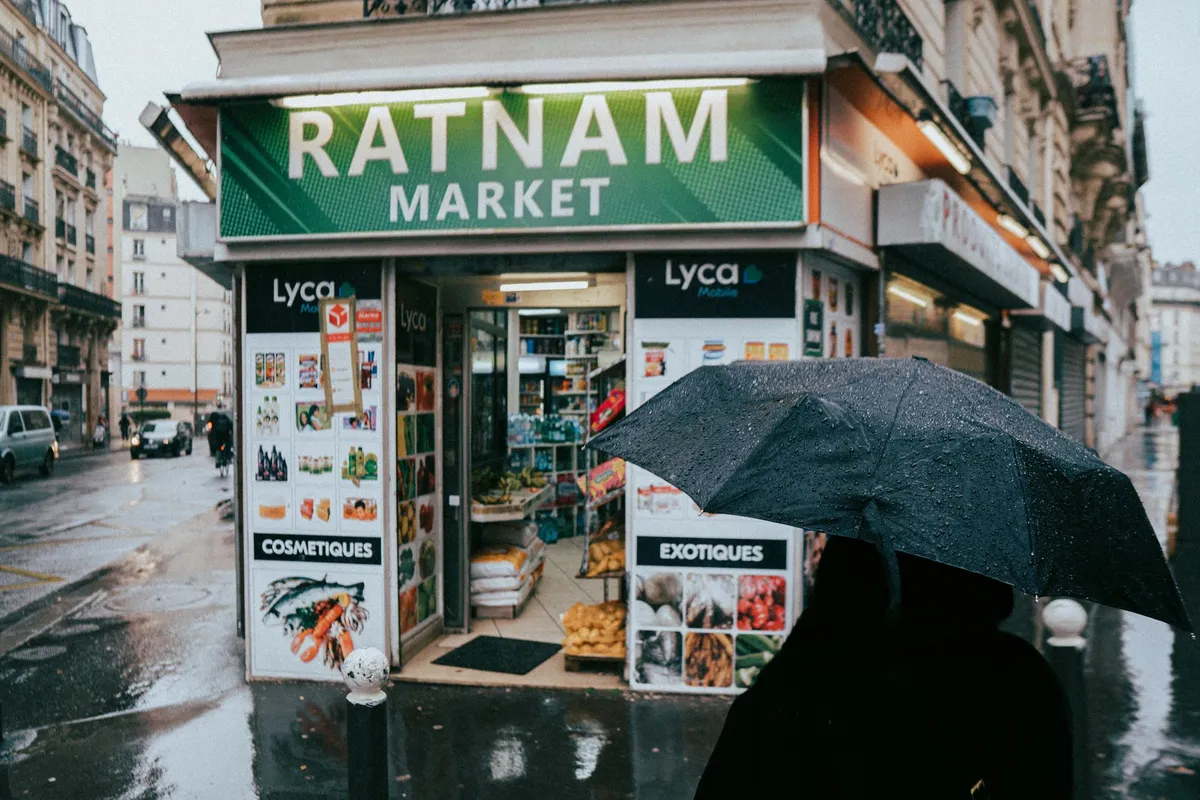
Rue de Belleville and the nearby streets are great for eating without turning the meal into a rigid plan. You’ll find Chinese, North African, French, and many other cuisines. Choose based on the crowd, the clear menu, and the aromas from the kitchen, not just the look of the facade.
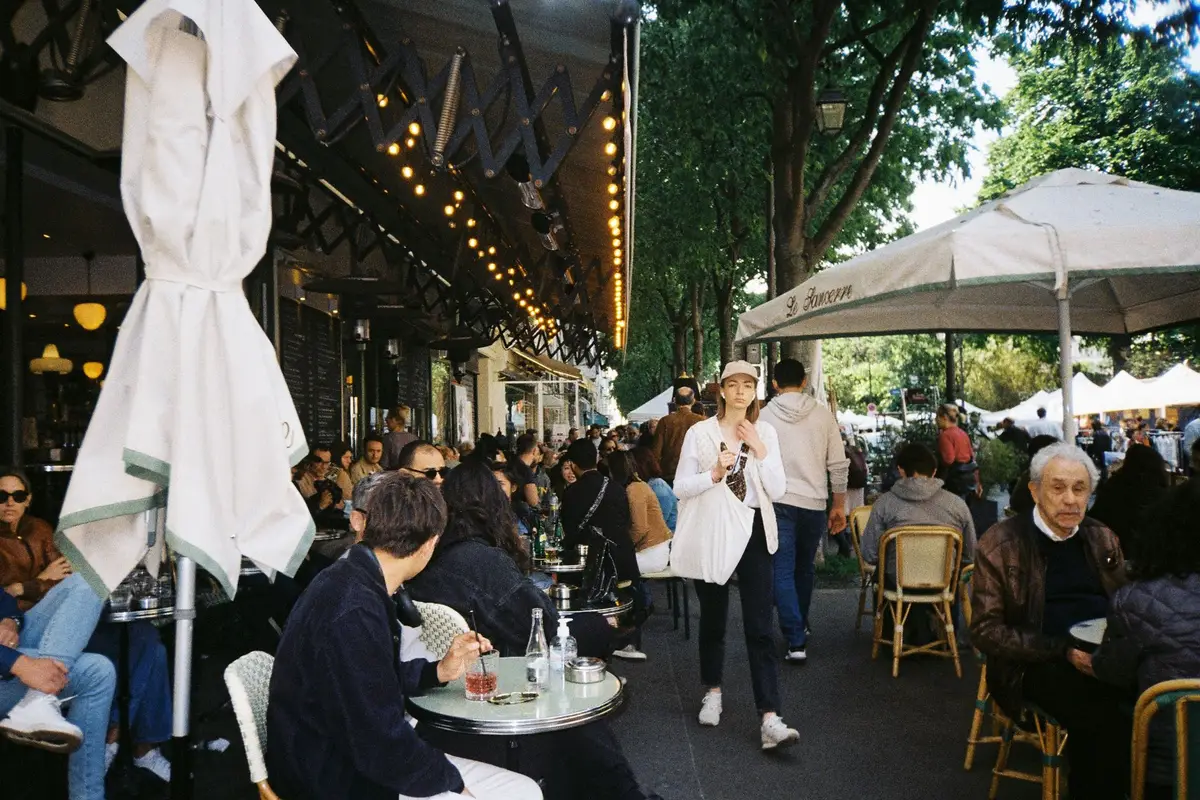
The neighborhood works especially well for a casual lunch or dinner. Instead of hunting for a single “best” table, walk a few blocks and compare. That also helps you avoid the packed spots near the Belleville metro station.
For a day focused on cafés and markets elsewhere in the city, save the guide to Rue Mouffetard. Belleville delivers cultural variety; Mouffetard offers a more concentrated itinerary in the Latin Quarter.
How to get there
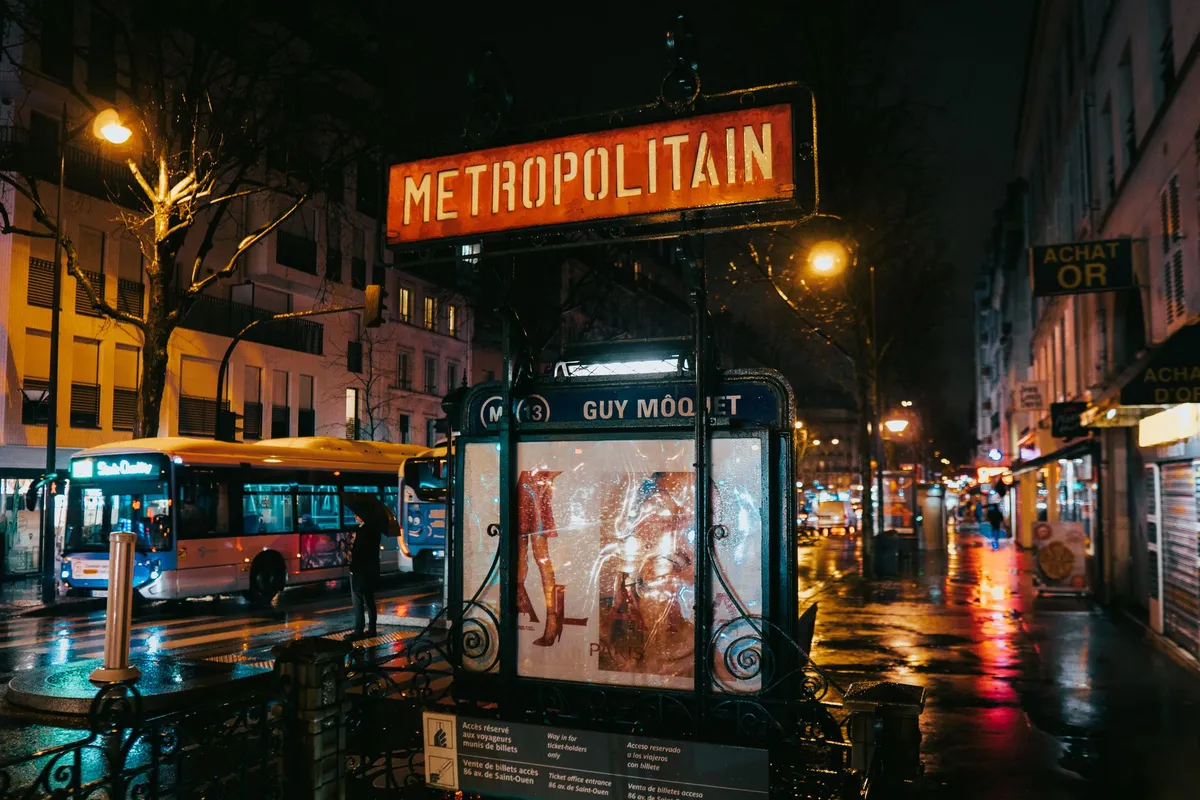
Belleville metro station is served by lines 2 and 11 and is the most practical entry point to the neighborhood. Jourdain, Pyrénées, and Couronnes also work, depending on where you want to start. If the park and viewpoint are your goal, getting off at Jourdain cuts down one of the uphill climbs.
The classic route can end in Ménilmontant or Couronnes. That way, you cross the neighborhood instead of backtracking the same way. The topography demands more energy than in neighborhoods along the Seine, so comfortable shoes make a big difference.
Don’t rely only on map distance: a short street can hide stairs or a steep slope. Plan for breaks and keep the metro as an easy escape when the day is already full.
Best time to visit
Arrive before noon if Parc de Belleville and the view are your priority. Morning light tends to favor panoramic photos; in the late afternoon, the city takes on a different hue, but the spot can be busier.
For street art and shopping, the afternoon is ideal. For bars and music, Belleville picks up at night, especially on weekends. Don’t mistake activity for automatic safety: keep the same precautions you’d use in any large urban area.
The murals are temporary. What appeared in a guide a few months ago may already be gone, and that’s part of the neighborhood’s character.
What to combine
Belleville pairs naturally with Ménilmontant and the Père-Lachaise cemetery. If you enjoy green spaces and water, set aside another afternoon for the Canal Saint-Martin, which is a reasonable metro ride away.
For a more formal side of Paris, with gardens and orderly architecture, the Palais-Royal offers a striking contrast. Doing both in one day is possible, but it cuts into the time you could spend wandering Belleville without a map.
The cultural calendar can also make for a special visit. The open studios event, for example, usually happens in May; check dates and times on the event’s website before structuring your itinerary.
Practical tips
Bring a water bottle and choose a route that starts and ends at a metro station. On a hill, the best route is the one that saves the downhill stretches for when your legs are already tired.
At Parc de Belleville, respect the lawns, the residents, and those using the viewpoint to work or sketch. The view is free because the park is public; treat it as a neighborhood space, not a private backdrop.
It’s worth saving two addresses: your entry station and your exit station. That frees you to explore without worrying about turning down the wrong street—which in Belleville is often exactly where you’ll find a mural, a staircase, or an interesting grocery store.
If rain is in the forecast, Belleville is still worth a visit, but the viewpoint drops down the priority list and the downhill streets get slicker. Swap the park for cafés, grocery shops, and streets lined with storefronts; then hop on the metro to head back. The neighborhood makes this easy to pull off because its stations sit close to areas with a life of their own.
Frequently Asked Questions
Where is Belleville in Paris?
Belleville spans parts of the 19th and 20th arrondissements of Paris. The Belleville metro station, on lines 2 and 11, is the simplest starting point for your walk.
What is the best view in Belleville?
The Willy Ronis belvedere in Parc de Belleville offers the best view of the neighborhood. On clear days, the panorama reaches the Eiffel Tower, Les Invalides, Notre-Dame, and Montparnasse.
How much time should I set aside for Belleville?
Set aside at least three hours for Belleville. That gives you time to stroll along rue de Belleville, visit the park, hunt for street art, and grab a meal in the neighborhood.
Is Belleville good for street art?
Yes. Belleville is one of Paris’s best-known areas for street art, especially along rue Dénoyez, rue de Tourtille, and the surrounding streets. The pieces change frequently.
If you want to keep exploring eastern Paris, follow the Canal Saint-Martin walking route, winding past footbridges and locks.
Conclusion
Belleville doesn’t fit into a single photo from a viewpoint or a list of restaurants. Walk, climb, descend, and pick a table: that’s the simplest way to find a Paris that keeps changing. Come back at a different time of day to catch a new layer of the neighborhood.