The Eiffel Tower is located in Paris’s 7th arrondissement, on the banks of the Seine River in the Champ de Mars. It’s a central location—but not quite as central as the Louvre or Notre-Dame. If you’re staying in a hotel in the historic center, expect a 20 to 40-minute commute, depending on your mode of transport. This guide covers all your options: metro, RER, bus, taxi, and walking.
Dica: Aproveite também para fazer estes passeios em Paris
Tour pelo exterior da catedral de Notre Dame + Ingresso da cripta . Duração: 2 horas
Disneyland Paris Duração: 3 horas ou mais
Passeio de barco pelo Sena. Duração: 1h
Ingresso do 3º andar da Torre Eiffel. Duração: 2 a 3 horas
Ingresso do Palácio de Versalhes. Duração: 2 a 3 horas
Veja mais passeio em Paris aqui.
By Metro: The Most Practical Option
The metro is the fastest and cheapest way to get to the Eiffel Tower. Three nearby stations are served by different lines:
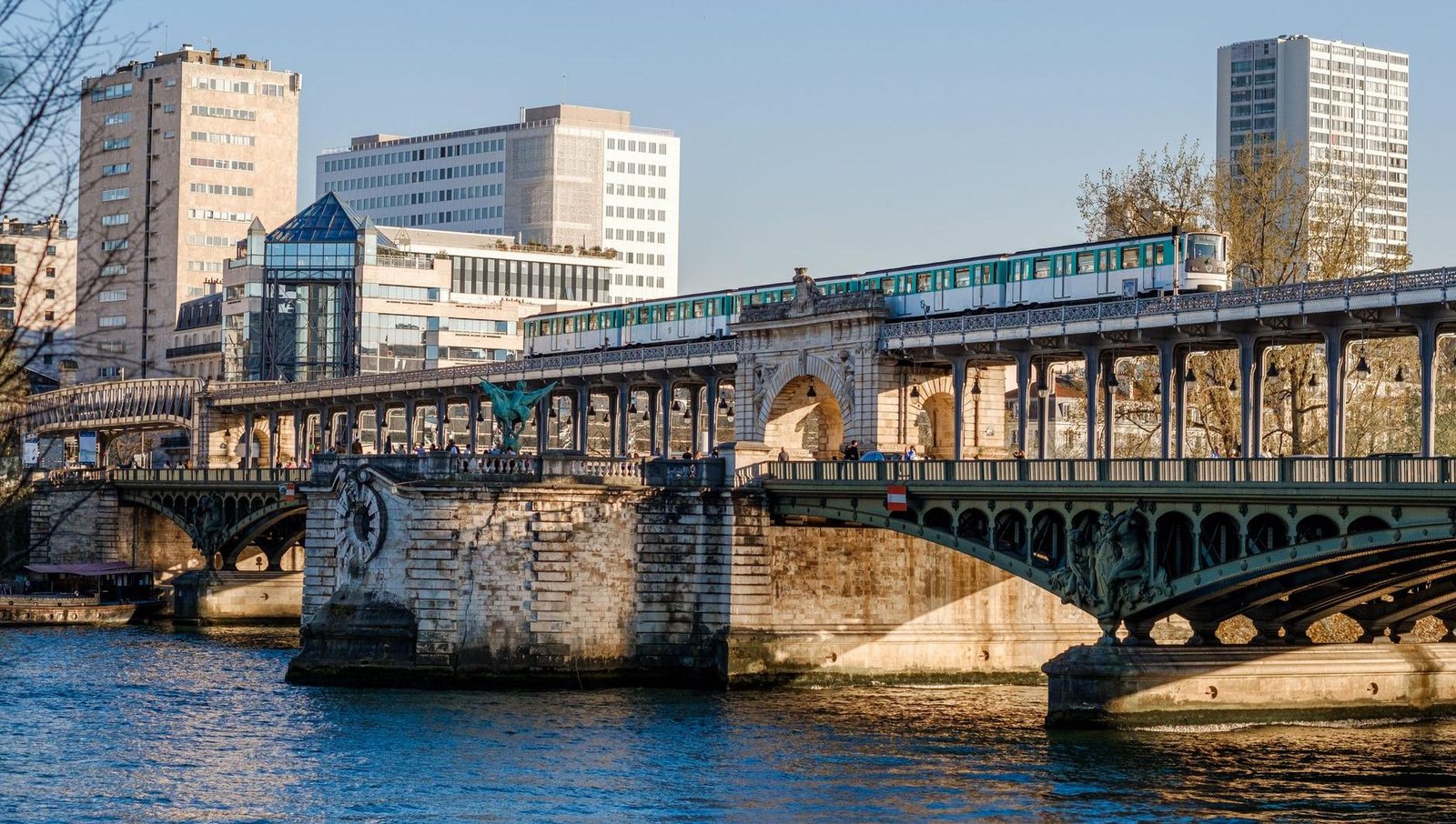
Bir-Hakeim (Line 6): The most popular station for tourists heading straight to the tower. The exit is about a 10-minute walk from the Eiffel Tower, crossing the Pont de Bir-Hakeim—one of Paris’s most photogenic bridges, with two levels (metro above, pedestrians below). Line 6 passes through several central stations: Montparnasse, Nation, Charles de Gaulle–Étoile. If you’re coming from one of these areas, the trip takes between 10 and 20 minutes.
Trocadéro (Lines 6 and 9): A great option if you want to start from the Trocadéro side—where the classic view of the Eiffel Tower is captured. From the metro exit to the tower is about a 10-minute walk, descending the Trocadéro esplanade with the tower right in front of you. Line 9 connects to areas like Opéra and République.
Champ de Mars – Tour Eiffel (RER C): This is an RER (regional train) station, not the metro. It’s located on the south side of the tower, in the Champ de Mars. If you’re coming from Orly Airport via RER C, this station is the closest stop to the tower. The exit is less than a 5-minute walk from the tower’s south entrance.
By Metro: Which Route to Take Depending on Your Hotel
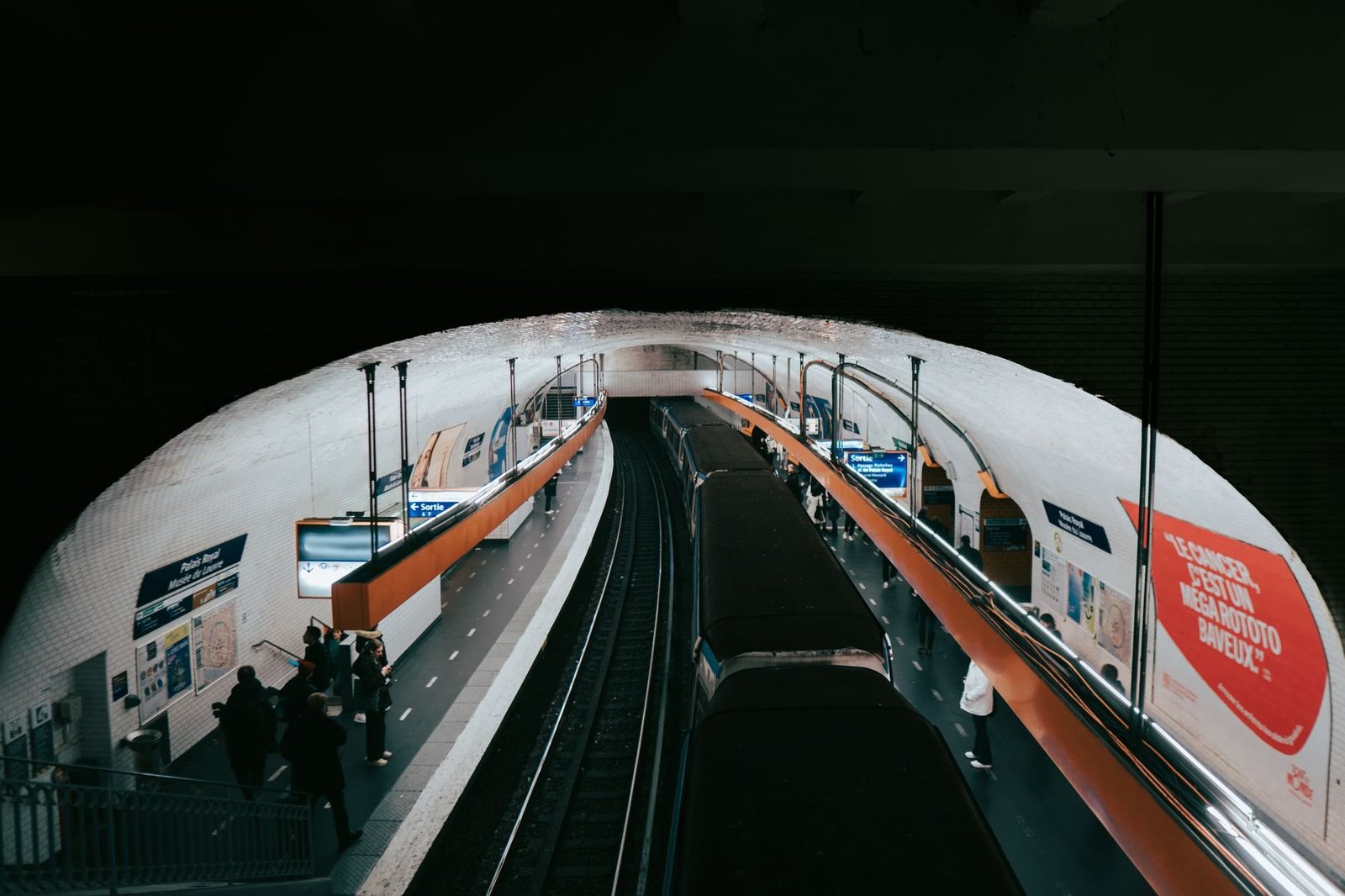
Depending on where you’re staying, your line changes:
From the Louvre, Châtelet, and the 1st arrondissement: Take Line 1 to Champs-Élysées Clemenceau, then Line 13 to Varenne or Line 6 towards Nation to Bir-Hakeim. Alternatively, take RER C (from Gare d’Austerlitz or Saint-Michel stations) to Champ de Mars.
From Montmartre (18th arrondissement): Line 2 to Charles de Gaulle–Étoile, then Line 6 to Bir-Hakeim. Total time: 30-40 minutes.
From Le Marais (3rd/4th arrondissements): Line 1 to Champs-Élysées Clemenceau, then Line 6 to Bir-Hakeim.
From Saint-Germain-des-Prés (6th arrondissement): Walking or taking the bus is simpler—it’s only 2.5 km along the Seine.
By Bus: Slower, But You See Paris Along the Way
Buses 82 and 30 stop near the Eiffel Tower. The journey is slower than the metro (Paris traffic is intense), but you get to see the streets of Paris along the way—a different experience from being underground. Use the same t+ ticket as the metro.
Line 82 starts at Luxembourg (near the Luxembourg Gardens and Saint-Germain) and ends at the Eiffel Tower—one of the most tourist-friendly bus lines in Paris. Line 30 connects Montmartre to the tower area, passing through several central points.
On Foot: The Most Pleasant Option If You’re Nearby
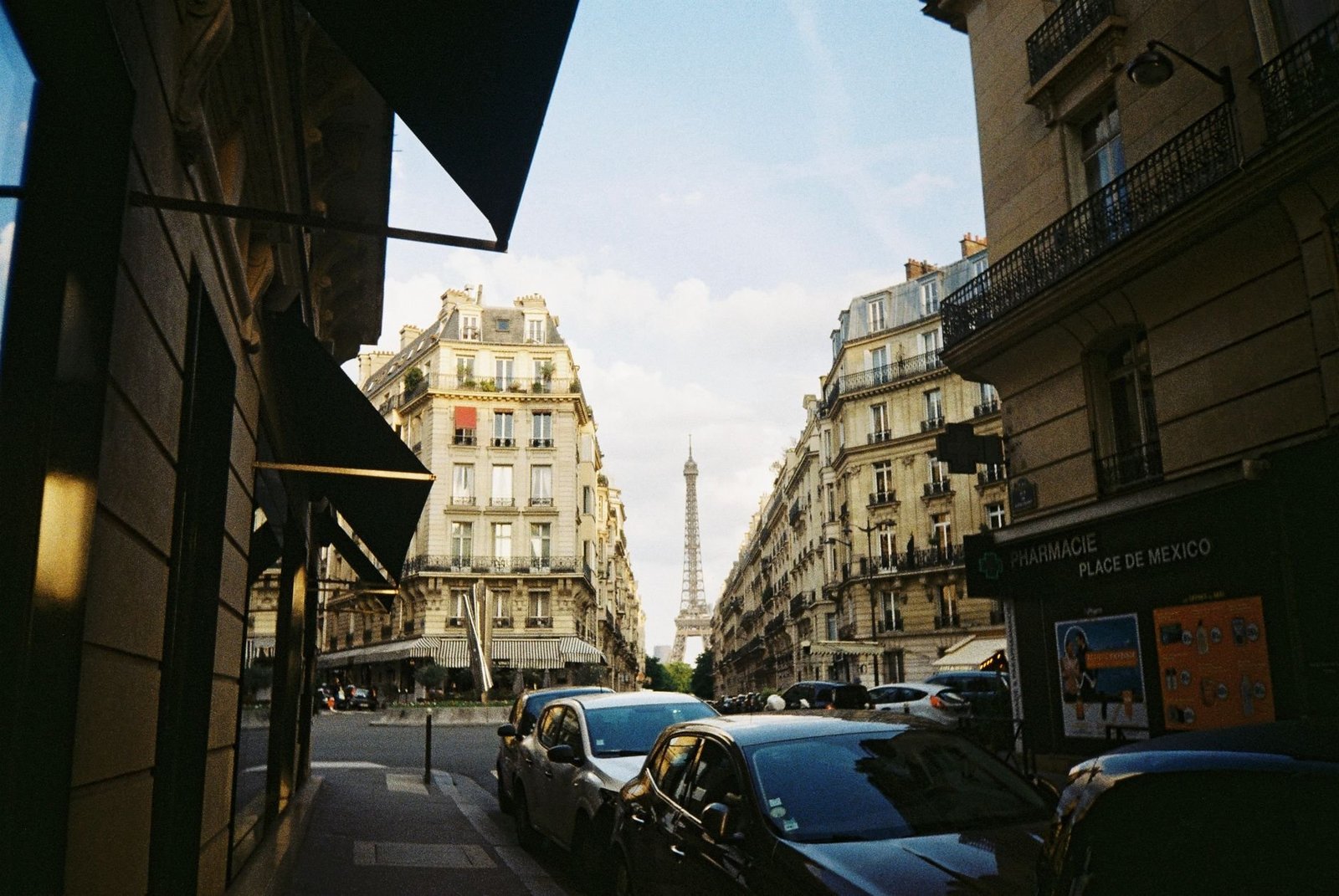
If you’re staying in neighborhoods like Saint-Germain-des-Prés, Invalides, Montparnasse, or anywhere within 2-3 km of the tower, walking is an option worth considering. The most beautiful route starts at the Musée d’Orsay, crosses the Pont de la Concorde, and goes up the Quai d’Orsay along the Seine to the Champ de Mars—about 25 to 35 minutes of walking, passing some of Paris’s most beautiful riverbanks.
From Trocadéro, the walk is less than 10 minutes down the esplanade—and you have a front-facing view of the tower the entire way. Many people consider this entrance, via Trocadéro, to be the most beautiful.
By Taxi or Uber
This works well if you have luggage, are traveling with small children, or have limited mobility. Travel time varies greatly with traffic—it could be 15 minutes or 40, depending on the time of day. Uber, Bolt, and traditional taxis (G7, Taxis Bleus) are all options; Uber is usually cheaper during normal hours, but taxis have dedicated queues at the airport.
Ask to be dropped off on Avenue Gustave Eiffel (main entrance, north side/Trocadéro) or Avenue de Suffren (south entrance, Champ de Mars side). The surrounding streets have heavy traffic during peak hours, so factor in extra time.
By Bike or Electric Scooter
Paris has one of the best cycling infrastructures in Europe, and the Eiffel Tower is reachable by bike along the entire length of the Seine’s banks. Vélib’ (the city’s bike-sharing system) has stations scattered throughout the city and works with a credit card or app. There are also several electric scooter companies (Lime, Bird, Tier) with stations near the tower.
For those staying in Saint-Germain, Invalides, or anywhere along the Seine, biking is probably the fastest and most enjoyable way to get to the tower—15 minutes pedaling along the river’s bike paths, no metro lines, and scenery the whole time.
Which Entrance to Use When You Arrive
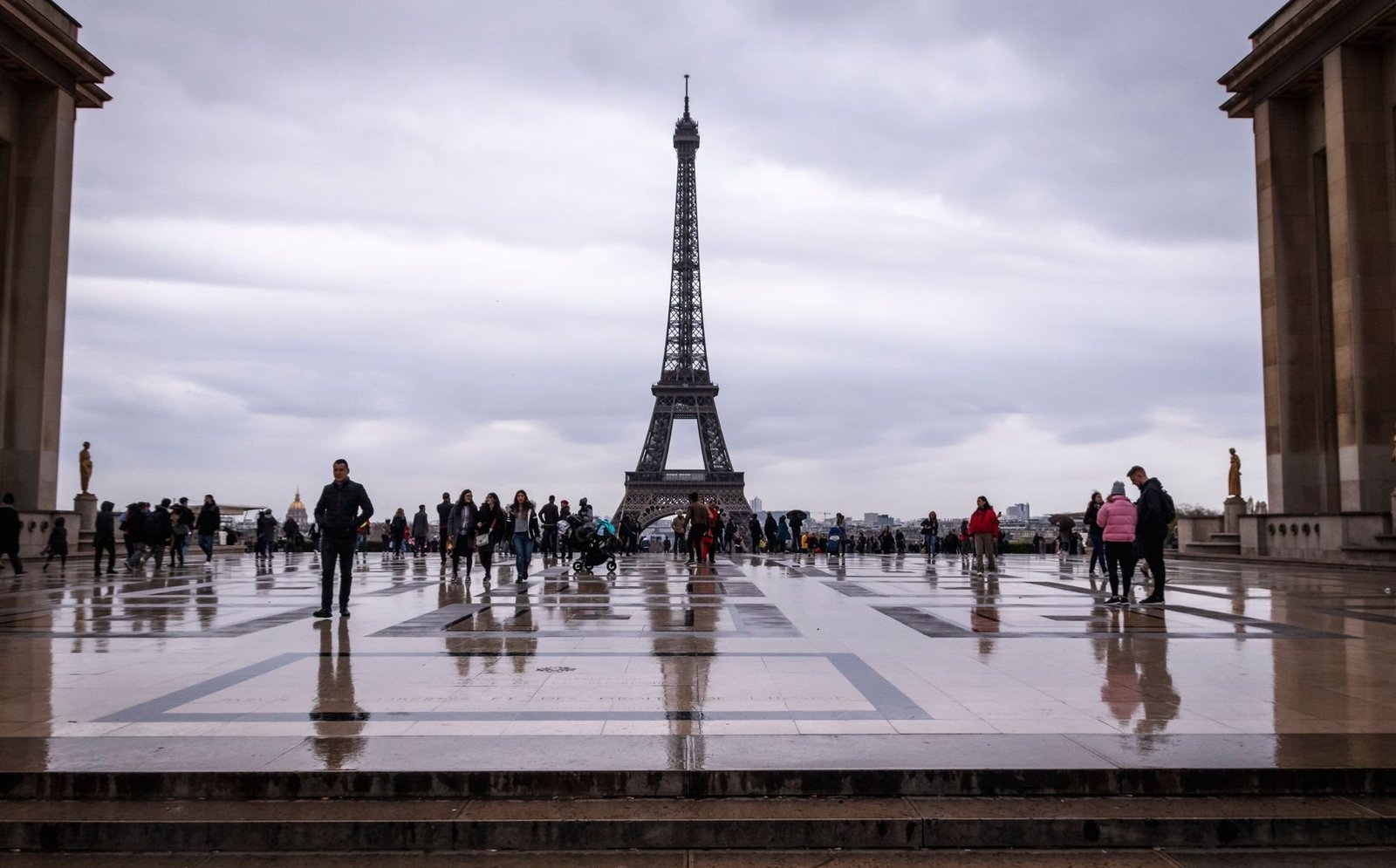
The Eiffel Tower has four pillars, but the main entrances are two: the north (Trocadéro side, closest to the Trocadéro metro station) and the south (Champ de Mars side, closest to the Champ de Mars RER C station). There are also east and west entrances.
Upon arrival, follow the signs for your reservation—the QR code is linked to a specific entrance. If you bought a stair ticket, go to the stair entrance; an elevator ticket, go to the elevator line. Mixing up the lines is a common mistake that wastes time.
How Much Time to Budget for Getting to the Tower
A frequent planning mistake is underestimating travel time and arriving late for your reserved entry window. The Eiffel Tower cancels reservations that arrive more than 15 minutes after the scheduled time—if you miss your slot, you may need to buy another ticket or wait in the no-reservation line.
The rule of thumb: calculate the travel time you think you need and add 20 minutes of buffer. Metro delays, exiting the wrong station, confusion finding the entrance—all of this happens, especially on your first visit. If you have extra time, you can enjoy a walk through the Champ de Mars or Trocadéro before entering.
For those staying far from the tower (Montmartre, Bastille, République), consider waking up a bit earlier if you have a first-slot reservation. Paris morning traffic can be unpredictable, and the metro runs less frequently in the early hours.
Accessibility: Getting to the Eiffel Tower with Reduced Mobility
The Eiffel Tower has elevators accessible for wheelchairs and reduced mobility since a renovation in the 2000s. The accessible entrances are at the east and west pillars. The Paris metro has limited accessibility—many stations still lack elevators, and escalators only cover part of the platforms.
For visitors with reduced mobility, a taxi or Uber is the most comfortable arrival option. Ask to be dropped off on Avenue Joseph Bouvard (east access) or Avenue de la Bourdonnais (south access), which have wide sidewalks and easy access to the accessible entrances. Bus line 82 and RER C have accessible cars, but confirm conditions on the day—infrastructure varies.
When buying your ticket online, there is a specific option for visitors with special needs—access may be possible without a reservation at some entrances, upon presentation of documentation. Check the details on the official website before you go.
Tips for Those Arriving by Cruise or Tour Bus
Visitors arriving in Paris by Seine cruise have a special situation: the cruise terminals are located at different points along the river, and some are relatively close to the Eiffel Tower. From the Grenelle Terminal (15th arrondissement), the tower is less than 1.5 km away on foot, along the Seine’s banks.
For groups on tour buses, the most common drop-off point is the parking lot on Avenue Joseph Bouvard or Avenue de Suffren, both south of the tower. Drivers know these spots well; confirm the meeting point before entering the tower, as the exit may be different from the entrance depending on the day’s flow.
If you’re on an organized tour, the guide usually handles the tickets. But it’s always good to confirm: some tours take groups to the entrance and leave the ticket purchase up to the visitor—an unpleasant surprise for those who found this out after an hour on the bus.
Landmarks to Help You Not Get Lost
For first-timers arriving at the Champ de Mars or Trocadéro, two landmarks simplify orientation:
The Champ de Mars is the large lawn south of the tower—if you’re on the lawn with the tower in front of you, you’re on the right side. The south entrances are on the avenues bordering the field. Trocadéro is on the north side, across the Seine—if you’ve crossed a bridge and see the tower in front of you with a reflecting pool and two curved pavilions behind you, you’re at Trocadéro. The north entrances are under the tower’s legs, descending the esplanade towards the Seine.
The most common confusion is trying to enter through the wrong leg. Each leg has a number (north, south, east, west) and your reservation indicates which one to use. Look for the signage when you arrive—there are tower staff members stationed around to help with directions.
Frequently Asked Questions About Getting to the Eiffel Tower
Which metro should I take to get to the Eiffel Tower?
The closest station is Bir-Hakeim (Line 6), about a 10-minute walk from the tower. Trocadéro (Lines 6 and 9) is another good option, with the bonus of having the classic tower view during your walk.
How long does it take from central Paris to the Eiffel Tower by metro?
From central areas like Châtelet, Opéra, or Le Marais: 20 to 30 minutes by metro, plus a 10-minute walk from the station. Total: 30-40 minutes.
Can I walk to the Eiffel Tower from the Louvre?
Yes, but it’s approximately 4.5 km—about 50 to 60 minutes on foot. The route along the Seine is the most pleasant. For those with time and energy, it’s a beautiful walk.
Does the RER C stop at the Eiffel Tower?
Yes. The Champ de Mars – Tour Eiffel station (RER C) is on the south side of the tower, less than a 5-minute walk away. Especially useful for those coming from Orly Airport via RER C.
Is there parking near the Eiffel Tower?
There are parking lots at Trocadéro and Champ de Mars, but they are expensive and can be full during peak season. For visiting the tower by car, plan B: park-and-ride at peripheral metro stations and complete the journey by public transport.