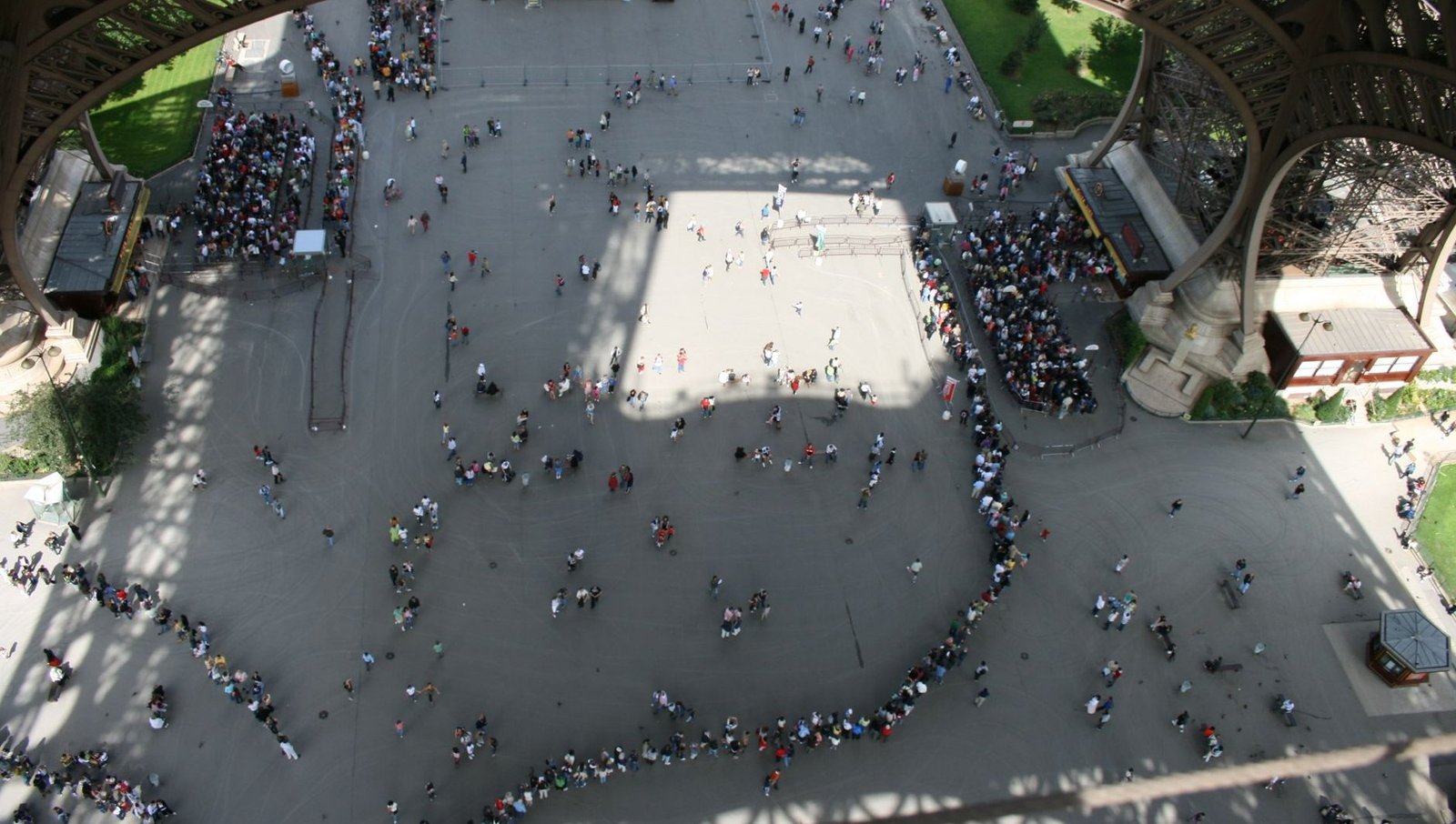
The Eiffel Tower welcomes around 7 million visitors each year. Divide that by 365 days, and you get nearly 20,000 people per day. In July, that number can exceed 25,000. That’s a lot of people concentrated at a single monument—and the inevitable consequence is a line. Sometimes, a two-hour line.
The good news is that this line isn’t your destiny. With a bit of planning—most actions cost nothing and take less than 10 minutes—you can enter the tower without waiting or with very little wait. This guide shows you exactly how to do it.
Dica: Aproveite também para fazer estes passeios em Paris
Tour pelo exterior da catedral de Notre Dame + Ingresso da cripta . Duração: 2 horas
Disneyland Paris Duração: 3 horas ou mais
Passeio de barco pelo Sena. Duração: 1h
Ingresso do 3º andar da Torre Eiffel. Duração: 2 a 3 horas
Ingresso do Palácio de Versalhes. Duração: 2 a 3 horas
Veja mais passeio em Paris aqui.
Why the Lines Are So Long
There are three lines at the Eiffel Tower, and confusing them is the most common mistake for those who show up without a plan. The first is to buy a ticket at the box office. The second is to go through the security check at the entrance. The third is for the elevator to the second floor or the summit.
Those who arrive without a reservation face all three. Those who book online skip the first—but still have to go through the other two. The security check has been in place since 2015 (after the Paris attacks) and is unavoidable; during peak season, it can take 20 to 40 minutes. The elevator to the summit has an additional line inside the tower. Understanding this prevents frustration: even with a reservation, expect at least 30-45 minutes of total waiting time.
Rule Number 1: Book Online in Advance

It sounds obvious, but it’s surprising how many people arrive at the Eiffel Tower without a reservation, especially tourists planning their trip last minute. The official Eiffel Tower ticket website (tickets.toureiffel.paris) sells timed-entry tickets—you choose the day and time slot for your visit.
During peak season (June to September), the most sought-after time slots sell out weeks in advance. Book at least 2 weeks ahead; if possible, 3 to 4 weeks. For special dates—Bastille Day (July 14), French holidays, long weekends—book even further in advance.
When you book, you’ll receive a QR code by email. Show it directly at the access control point; no need to print it. Also, bring a photo ID—they occasionally ask to check it.
Choose the Right Time: When the Line Is Shortest

Even with a reservation, the time you choose makes a difference—especially for the security check line and the elevators inside the tower. Here are the patterns local guides know:
Opening time (9:30 am): the first available time slot is the least crowded of the day. The number of visitors starts low and gradually increases. If you can snag a reservation for 9:30 am or 10 am, you’ll likely breeze through security in under 15 minutes.
Peak hours (11 am to 4 pm): the busiest period. Tourists arrive after breakfast at the hotel, bus groups disembark, and the crowds from Trocadéro spill over into the tower lines. Avoid this window if you can.
Late afternoon (5 pm to 8 pm): the crowd starts to thin out, but this time has the extra advantage of catching the sunset and, in summer, the 9 pm light show. In summer, the tower is open until almost midnight, so going at 6 pm or 7 pm is perfectly doable.
At night: after 8 pm, the volume drops significantly. The experience of seeing Paris lit up from above is unique, and the lines are the shortest of the day. The light show—20,000 lights twinkling for 5 minutes every hour on the hour—is visible from inside the tower and the surrounding areas.
Take the Stairs Instead of the Elevator: Skip the Line on Your Own Two Feet
Few people know this, but the line for the stairs is almost always much shorter than the line for the elevator. It’s 674 steps to the second floor—the equivalent of a building about 20 stories high. If you’re in decent shape, you can make it in 20 to 30 minutes.
The advantage goes beyond avoiding the line. Taking the stairs, you climb up inside the tower’s iron structure, seeing the latticework and rivets up close, with Paris gradually appearing through the gaps between the beams. It’s a perspective the elevator doesn’t offer. The stair ticket is also cheaper than the elevator ticket.
The only limitation: the stairs only go up to the second floor. To reach the summit (third floor, 276m), you need to take the elevator from the second floor—and this internal line can have an additional wait of 20 to 30 minutes on busy days.
Avoid Peak Days and Months
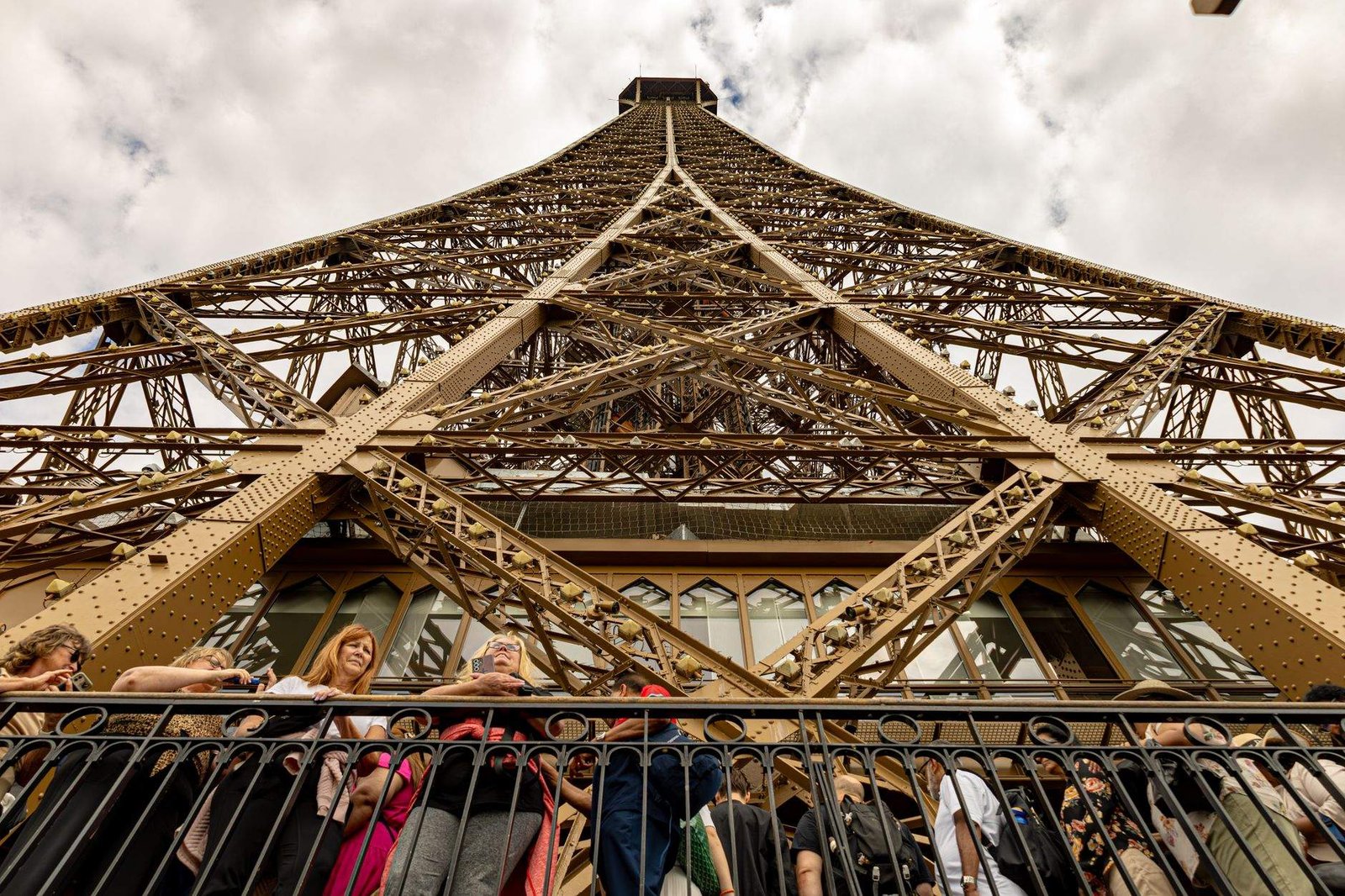
July and August are the busiest months of the year—European and American school holidays, warm weather, Paris packed. If you have flexibility with your dates, May, June (before the French school holidays), and September have fewer people and equally good weather. October and November are also calm, but the days are shorter and the weather can be rainy.
Days of the week make a difference: Tuesdays and Wednesdays are less crowded than weekends. French holidays concentrate Parisians and tourists at the same time—avoid July 14, August 15, and November 1 if you want fewer lines.
What If Tickets Are Sold Out?
This is a possible scenario, especially during peak season. Here are a few alternatives:
Waitlist or cancellations: check the official website frequently—cancellations happen, and freed-up time slots go back on sale. Try especially in the mornings of the days leading up to your desired date.
Tours with included tickets: operators like GetYourGuide and Viator sell guided tour packages with tower access. These groups have reserved quotas that don’t always appear in individual sales. The price is higher, but it works when direct tickets are sold out.
Visit only the exterior: if there’s no way to go up, the Champ de Mars and Trocadéro offer complete views of the tower for free and without a line. At night, the light show can be seen from any point around it—and it’s free.
The No-Wait Checklist
To put it all into practical action: book your ticket at least 2 weeks in advance on the official website; choose the opening time (9:30 am) or late afternoon (5 pm-8 pm); consider taking the stairs to the second floor to avoid the elevator line; avoid July, August, and weekends if you have flexibility; and bring your QR code on your phone with a charged battery.
Do City Passes Cover Eiffel Tower Tickets?
No. The Paris Museum Pass, Paris City Pass, and other tourist passes that cover many Parisian museums do NOT include a ticket to go up the Eiffel Tower. The tower is managed by an independent company (SETE) and maintains its own separate ticket sales policy. This catches many people by surprise—if you bought a pass expecting free entry to the tower, you’ll need to buy a regular ticket.
What these passes do cover are national museums like the Louvre, the Musée d’Orsay, the Centre Pompidou, and Versailles. For the Eiffel Tower, the way is always the official website or an accredited operator.
Guided Tour or Independent Visit?
For those who have trouble buying a ticket on the official website (language barriers, foreign credit card issues, or simply not wanting to deal with the process), a guided tour with an included ticket is a valid option. Operators like GetYourGuide, Viator, and Civitatis sell packages that include access and a guide in English or Spanish.
The cost is higher (usually double the price of a direct ticket), but the package includes reserved quotas that are sometimes available even when individual tickets are sold out on the official site. For groups, the simplified logistics can make up for the price difference.
For most individual visitors who are comfortable booking online, an independent visit is more economical and flexible. You choose your exact time, don’t have to follow a group’s pace, and can spend as much time as you want on each floor.
What to Do If You Arrived Without a Reservation and the Line Is Huge
It happens to everyone at some point during a trip. If you’ve arrived and the no-reservation line is absurd, here are three reasonable paths:
Try to buy online right there: access the official website on your phone and see if there are still time slots available for the same day or the next. Sometimes a late afternoon slot is available when the morning ones are gone.
Enjoy the surroundings now and come back later: the Champ de Mars, Trocadéro, and Pont de Bir-Hakeim are experiences in their own right, with no lines and no cost. Enjoy these spots, go back to your hotel, and try to book for the next morning—the earliest time slots are usually less competitive than midday ones.
Enter the free area only: the ground-level area under the tower’s legs is accessible without a ticket. You won’t go up, but you can stand inside the structure, see the engineering from below, and take unique photos. It’s the perspective that most distant photos don’t show.
Frequently Asked Questions About Eiffel Tower Lines
How long is the line without a reservation during peak season?
Between 1.5 and 3 hours, depending on the day and time. In July and August, on weekend afternoons, it can exceed 3 hours.
With an online reservation, is there still a line?
Yes, but much shorter. The security check at the entrance can take 15 to 40 minutes, depending on the crowd. Inside the tower, the elevator line to the summit can have an additional wait.
How many weeks in advance should I book?
For peak season (June-September): at least 3 weeks. For other times: 1 week is usually enough, but the sooner the better.
Is taking the stairs a good alternative to avoid the line?
Yes, especially if you’re in good physical shape. The stair line is always shorter than the elevator line. The stair ticket is also cheaper.
What to do if all tickets are sold out?
Try checking the official website daily to snag cancellations. Alternatively, book a tour with an included ticket via GetYourGuide or Viator—these operators have quotas that are sometimes available when individual tickets are not.