Paris is home to two of the world’s greatest art museums—and most visitors can’t decide which one to pick. The Louvre is the biggest and most famous, with a collection spanning Ancient Egypt to the Renaissance. The Musée d’Orsay is smaller, more focused, and for many visitors, more satisfying. They offer completely different experiences, and understanding what each one brings to the table is the key to making the right call—or tackling both in a single day.
This guide compares the two museums across every relevant angle: collections, size, price, location, visit time, and visitor profile. By the end, you’ll know exactly which one fits your travel style—and if you decide to do both, there’s a practical itinerary to pull it off in one day.
Dica: Aproveite também para fazer estes passeios em Paris
Tour pelo exterior da catedral de Notre Dame + Ingresso da cripta . Duração: 2 horas
Disneyland Paris Duração: 3 horas ou mais
Passeio de barco pelo Sena. Duração: 1h
Ingresso do 3º andar da Torre Eiffel. Duração: 2 a 3 horas
Ingresso do Palácio de Versalhes. Duração: 2 a 3 horas
Veja mais passeio em Paris aqui.
The Collection: Antiquity vs. Impressionism
This is the fundamental difference between the two museums, and it’s where any decision should start.
The Louvre: From Prehistory to the 17th Century
The Louvre covers an immense span of time: from prehistoric art and the ancient civilizations of the Middle East (Babylon, Assyria, Persia) to early 17th-century European paintings. In practical terms, that means Greek and Roman sculptures (Venus de Milo, Winged Victory of Samothrace), Egyptian mummies and sarcophagi, Italian Renaissance paintings (Leonardo da Vinci, Raphael, Titian, Caravaggio), and works from the French and Dutch Baroque periods.
The Louvre’s collection of medieval and Renaissance paintings is simply unmatched anywhere in the world. If you’re into art history before the 19th century, the Louvre is irreplaceable. The Mona Lisa is here—but so are hundreds of other works that, in any other museum, would be the centerpiece of the exhibition.
The Musée d’Orsay: The 19th Century in Focus
The d’Orsay covers the specific period from 1848 to 1914—the era of Impressionism, Realism, and Art Nouveau. Its collection is the largest gathering of Impressionist and Post-Impressionist works in the world, featuring pieces by Monet, Renoir, Degas, Manet, Cézanne, Van Gogh, Gauguin, Seurat, and Toulouse-Lautrec, among many others. If for most people “art” means these vibrant paintings with everyday scenes and revolutionary light techniques, the d’Orsay is your spot.
The d’Orsay’s Van Gogh collection includes masterpieces like The Bedroom in Arles, Starry Night Over the Rhône, and dozens of other works from his Parisian and Provençal periods. Monet’s collection features some of his most famous series. And Rodin’s sculptures—he worked throughout much of this period—are also part of the collection, with key pieces that complement the paintings.
Size and Visit Time
Size is perhaps the most practical difference between the two museums when planning your visit.
The Louvre has 73,000 square meters of galleries open to the public and over 35,000 works on permanent display. It’s literally the largest museum in the world. A visit just to see the highlights takes 2 to 3 hours; to see the entire museum attentively, you’d need a week. For most tourists, 2 to 4 hours is the sweet spot—enough to cover the most important works without hitting “museum fatigue.”
The Musée d’Orsay has 45,000 square meters, but with a more curated and thematic collection. The more manageable size and clear chronological layout (you start in the 19th century and progress into the early 20th) make the visit smoother and less disorienting than the Louvre. To see the d’Orsay’s highlights, 1.5 to 2 hours is enough. To explore the entire collection at a relaxed pace, 3 hours is perfect.
In short: the d’Orsay is easier to “complete” and leaves less of that “I barely saw anything” feeling. The Louvre is so vast that most visitors leave knowing they missed a lot—which is inevitable, and the right approach is to make peace with that before you walk in.
Prices and Free Admission
Louvre: €32 per adult for visitors from outside the European Union (price updated as of January 2026). Children and young people up to 17 enter for free. Free entry on the first Saturday of each month, from 6 PM to 9:45 PM.
Musée d’Orsay: €16 per adult (standard price in 2026). Young people up to 25 who are EU residents enter for free. Free entry on the first Sunday of each month. The d’Orsay also accepts the Paris Museum Pass.
Cost-wise, the d’Orsay is significantly cheaper—half the price of the Louvre. For a couple, that’s a €32 difference in favor of the d’Orsay per visit. The Paris Museum Pass covers both museums and starts paying off when you plan to visit 3 or more attractions in the first few days of your trip.
Location and Access
Both museums sit along the Seine River, less than 2 km apart—making them naturally complementary for a one-day itinerary.
The Louvre is on the Right Bank of the Seine, in the 1st arrondissement, accessible via the Palais Royal-Musée du Louvre metro station (lines 1 and 7). The Glass Pyramid, the main entrance, sits in the center of the Cour Napoléon. The location is central and easily reachable from anywhere in Paris.
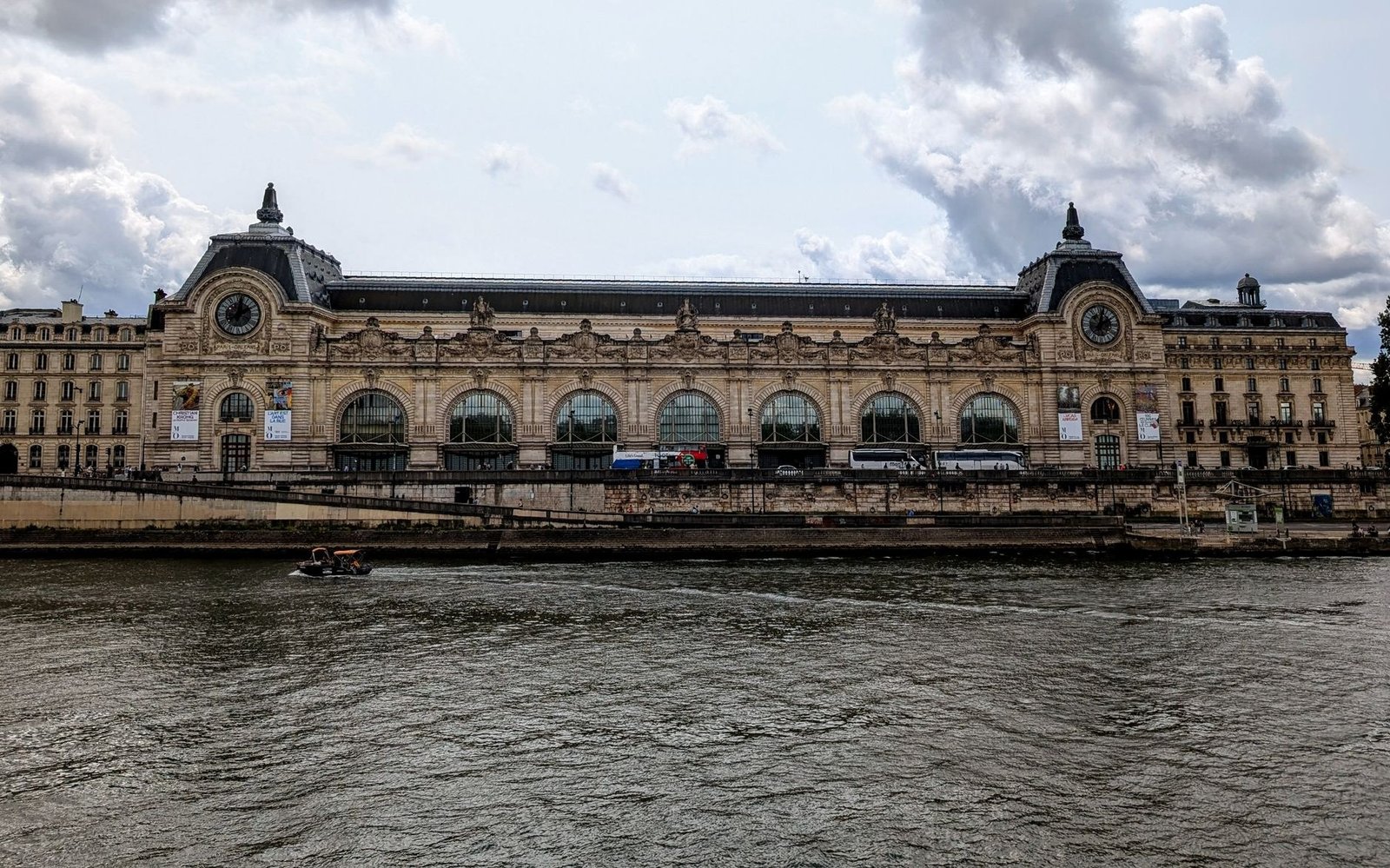
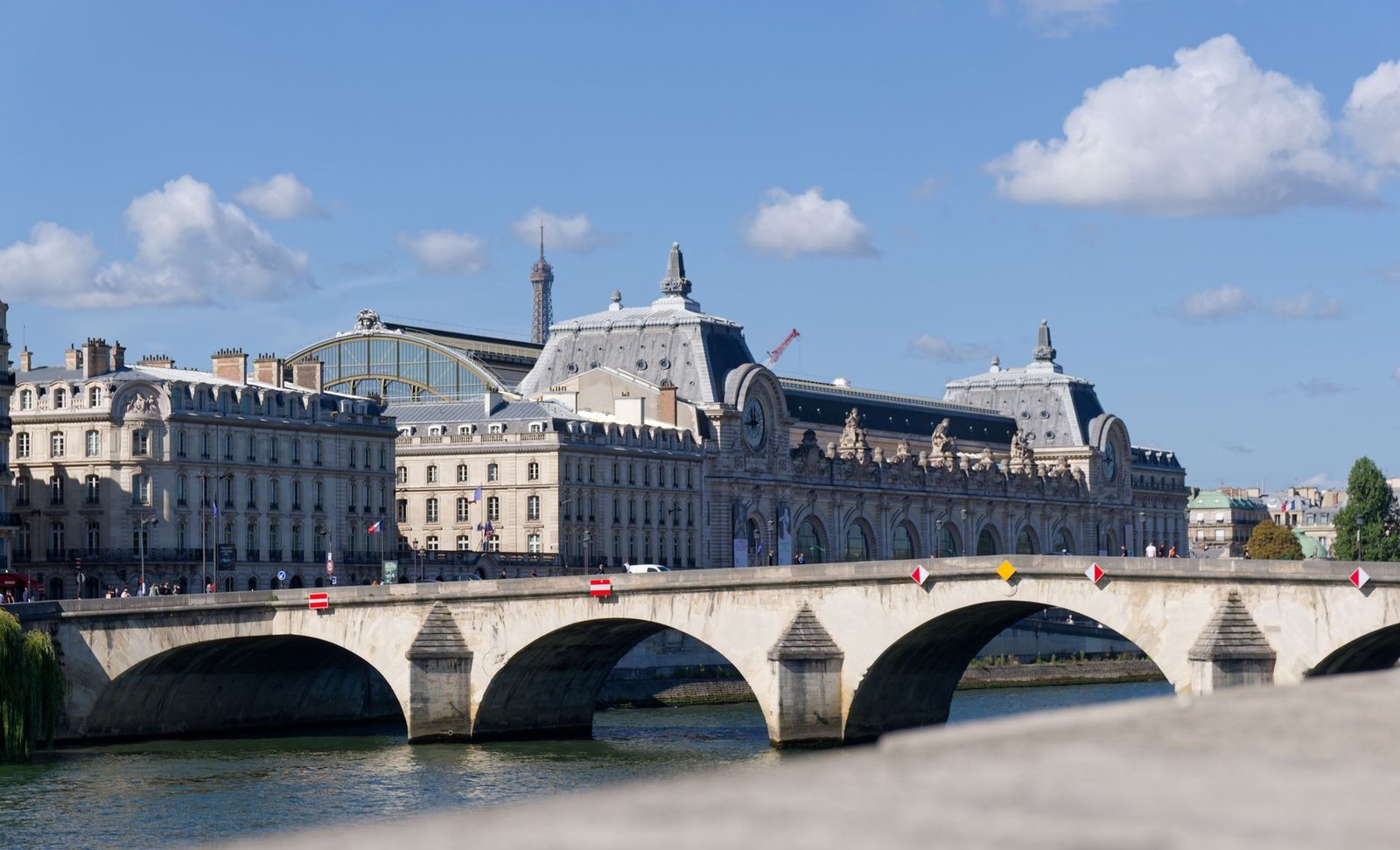
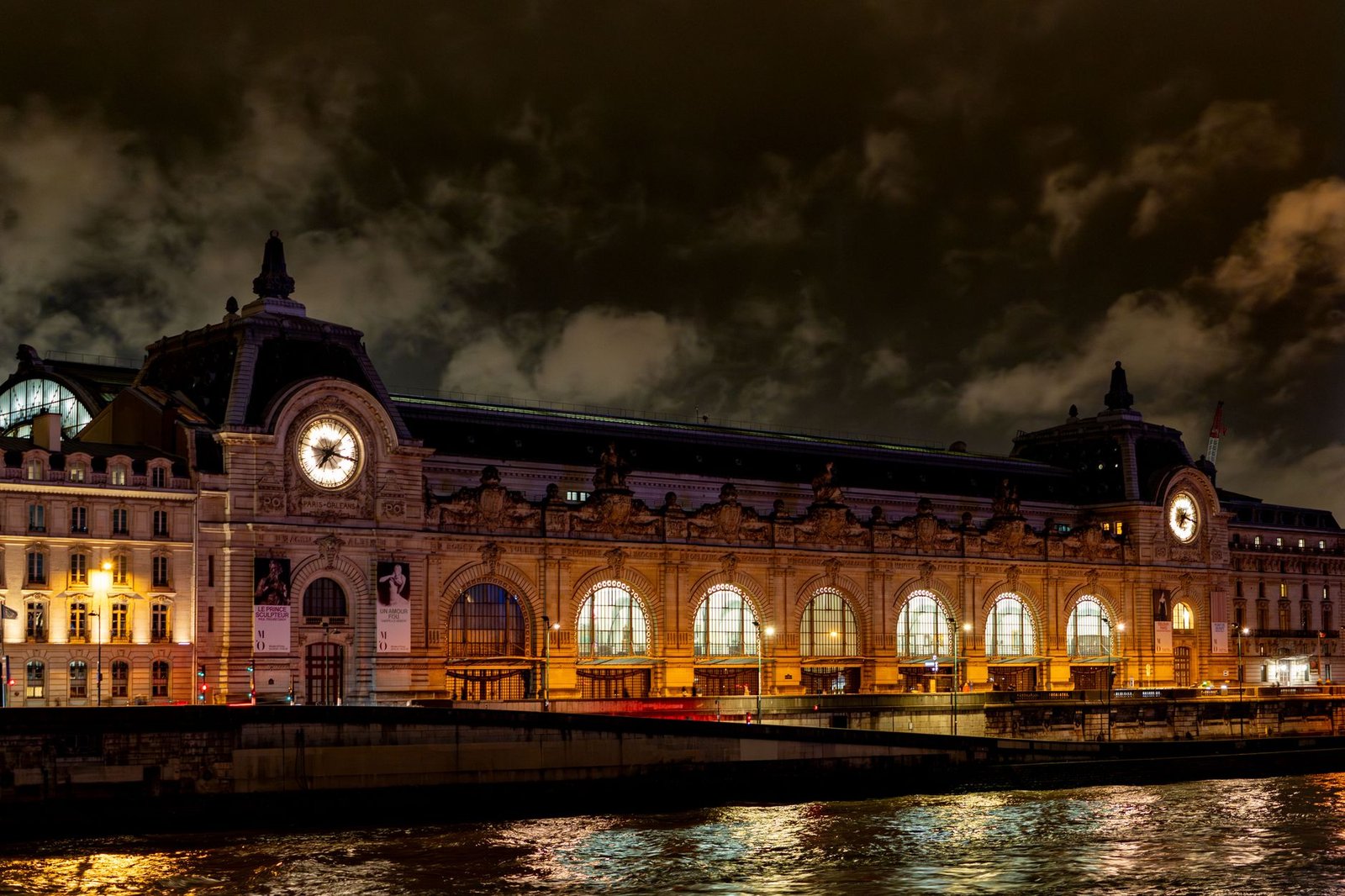
The Musée d’Orsay is on the Left Bank of the Seine, in the 7th arrondissement, across from the Tuileries. Access is via the RER C (Musée d’Orsay) or Solférino metro (line 12). The building itself is an attraction: it’s the former Gare d’Orsay, a late 19th-century train station turned into a museum in 1986. The central nave with its glass ceiling and grand stone facades are spectacular.
Visitor Profile: Which One Are You?
More than any technical comparison, the choice between the Louvre and the d’Orsay comes down to what you want from the experience.
Choose the Louvre if: you want to see the world’s most famous works (Mona Lisa, Venus de Milo, Winged Victory), you’re interested in ancient, medieval, and Renaissance art, it’s your first time in Paris and you want to check off the classic must-sees, you’re traveling with kids who love Ancient Egypt and medieval armor, or you have more than 3 hours to spare and a focus on pre-19th-century art.
Choose the Musée d’Orsay if: you prefer Impressionism and want to see Monet, Van Gogh, and Degas in person, you have less time and want a more curated, less exhausting experience, you’ve already visited the Louvre on previous trips, you prefer a museum where you can see the entire collection without feeling lost, or you’re looking for a calmer experience with fewer crowds than the Louvre.
Do both if: you have a full day dedicated to museums, you love art in general and want to compare the two styles, or this might be your only trip to Paris for years and you don’t want to choose.
How to Do Both in One Day
Doing the Louvre and the d’Orsay in the same day is totally doable—and it’s one of the best ways to spend a long day in Paris. Here’s the ideal itinerary:
Louvre + d’Orsay One-Day Itinerary
9 AM — Louvre (enter at opening time): Arrive at the Richelieu entrance or the Pyramid right at 9 AM. Start with the Winged Victory of Samothrace, head to the Venus de Milo, pass through the Grande Galerie, and finish in Room 711 (Mona Lisa). If you want to add the Code of Hammurabi, budget another 20 minutes. Total: 2 hours of focused visiting.
11 AM — Quick break: Exit the Louvre and walk through the Tuileries Garden (Jardin des Tuileries) toward the Seine. The garden sits between the two museums and is perfect for a 20-minute break. Grab a snack here—pack something in your bag to save time and money.
11:30 AM — Cross the Pont Royal: Walk to the Pont Royal, cross the Seine, and you’ll be right in front of the d’Orsay. The walk takes about 15 minutes from the Tuileries Garden.
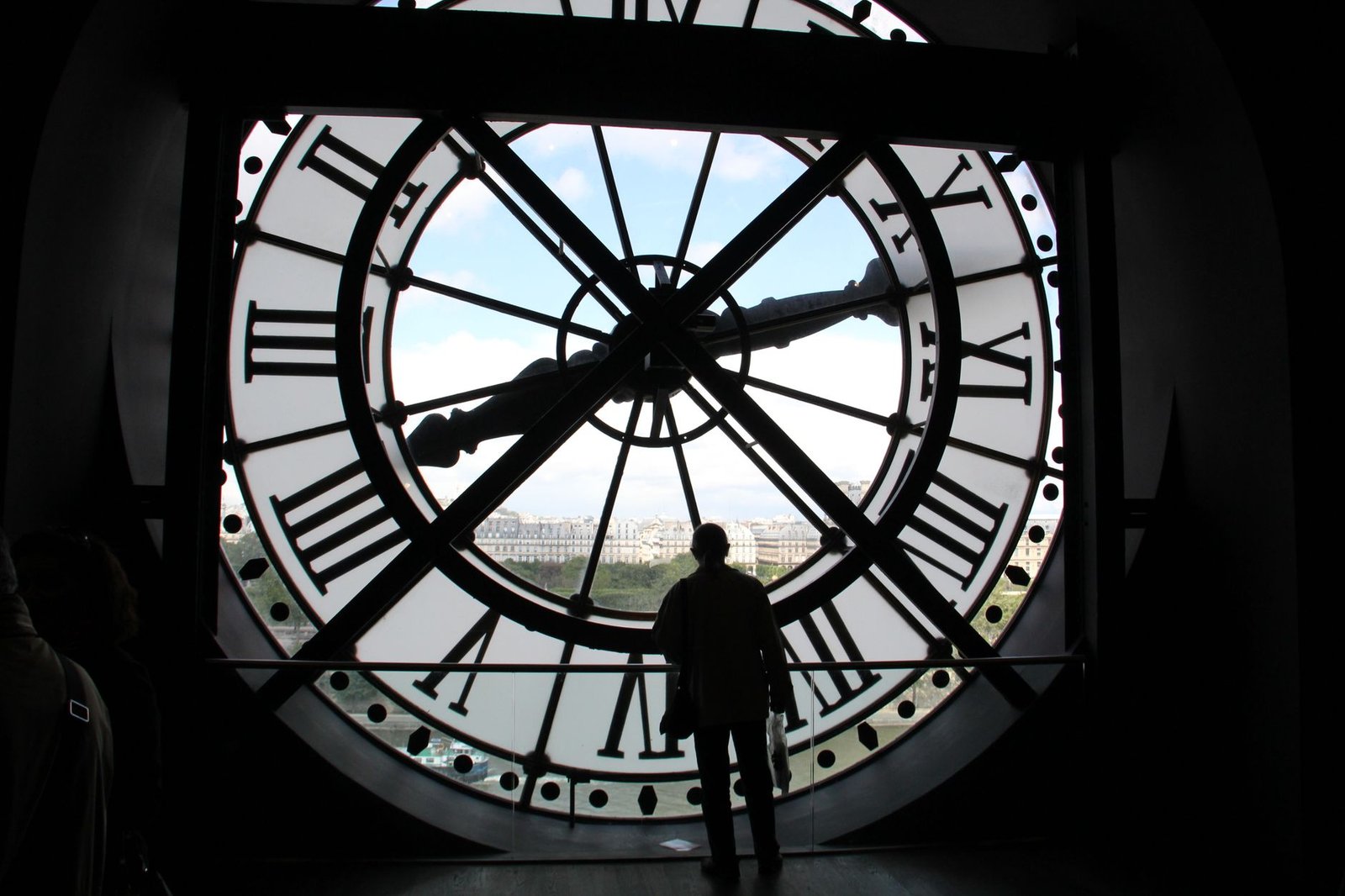
12 PM — Musée d’Orsay: Enter the d’Orsay and follow the chronological route from the second floor (where the Impressionists are) to the fifth floor (Post-Impressionism). Monet, Renoir, and Degas’s works are on the fifth floor, with views of the Seine through the windows. Van Gogh’s collection is on the same floor. Head down to the ground floor to see the sculptures and the grand clock. Total: 2 to 2.5 hours of visiting.
2:30 PM — Exit: Two of the world’s best museums in under 6 hours. Free afternoon for Saint-Germain-des-Prés (a 10-minute walk from the d’Orsay), the Eiffel Tower (visible from the d’Orsay and a 20-minute walk away), or a coffee at a Left Bank bistro.
Tips for the Double Day
Buy tickets for both museums online before your trip, with timed slots—Louvre at 9 AM and d’Orsay at 12 PM. Don’t try to do both without pre-purchased tickets in high season; the lines alone can eat up hours. The Paris Museum Pass is especially worthwhile for this double itinerary: with one pass, you enter both museums without needing a specific time slot for the d’Orsay.
An alternative for those who prefer the reverse order: start at the d’Orsay at 9 AM (the museum opens at 9:30 AM Tuesday through Sunday), enjoy the Impressionists in the quiet of the morning, and head to the Louvre in the early afternoon. This order might be better if you want to experience the d’Orsay’s works with morning energy—the Impressionist collection especially responds well to daylight.
Quick Comparison: Louvre vs. d’Orsay
To make the decision easier, here are the key points side by side: the Louvre covers art from Ancient Egypt to the 17th century, while the d’Orsay focuses on the 1848–1914 period. The Louvre spans 73,000m² and requires 2 to 4 hours; the d’Orsay spans 45,000m² and can be thoroughly seen in 2 to 3 hours. Louvre tickets cost €32 for non-EU visitors; d’Orsay tickets cost €16. The Louvre welcomes about 9 million visitors a year and is consistently more crowded; the d’Orsay welcomes about 3 million and is noticeably less packed. The Louvre offers free entry on the first Saturday of the month at 6 PM; the d’Orsay offers free entry on the first Sunday of the month. Both sit along the Seine, less than 2 km apart.
Which Is the Best Museum in Paris?
The honest answer is that it entirely depends on what you want from the experience—and that the question itself might be the least useful one you can ask when planning your visit.
The Louvre is the biggest, the most famous, and the most comprehensive. It’s where the planet’s most recognized works live. But it’s also the most intimidating, the most expensive, and the most crowded. For first-time visitors to Paris who want to see the Mona Lisa and the Venus de Milo, the Louvre is a must.
The d’Orsay is smaller, easier, cheaper, and for many seasoned travelers, more enjoyable as a visiting experience. If you’ve already been to the Louvre or if Impressionism is the style that moves you most, the d’Orsay might be the best museum choice of your entire Paris trip.
The smartest option, if time and budget allow, is to do both in one day following the itinerary above. The experience of seeing the Mona Lisa in the morning and a Van Gogh in the afternoon, all in a single day in Paris, is a privilege that sticks in your memory for a long time. Enjoy your visit!