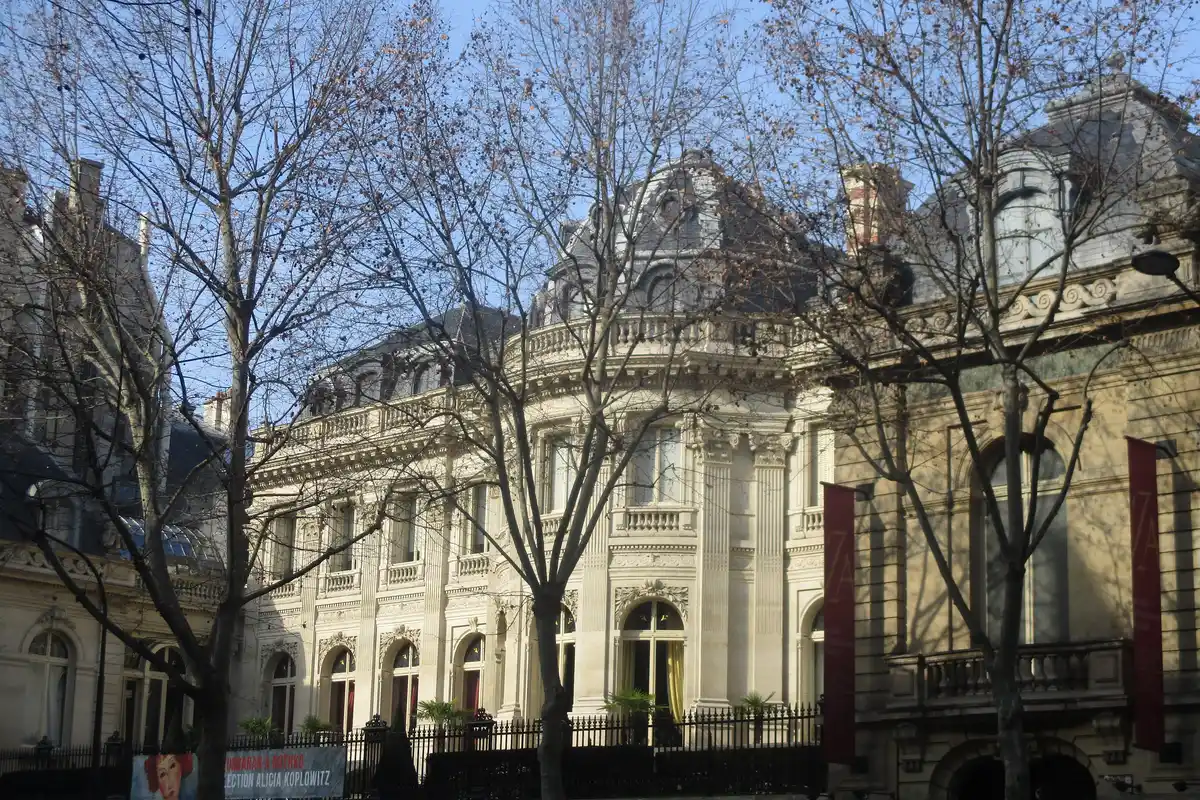
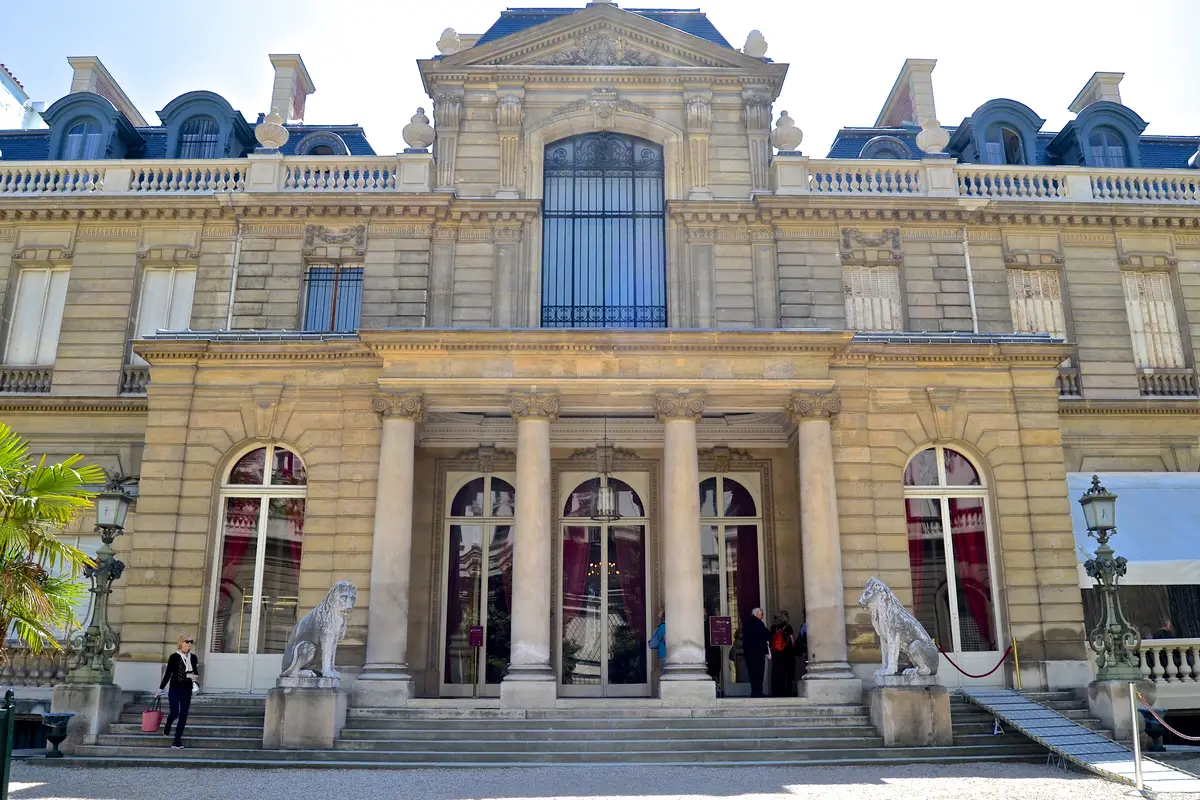
The Musée Jacquemart-André occupies a 19th-century hôtel particulier in Paris’s 8th arrondissement and houses the collection of Édouard André and Nélie Jacquemart. It’s a visit for those who want to see Italian painting, furniture, and historic interiors on a domestic scale, far from the circuit of giant museums.
The Musée Jacquemart-André is on Boulevard Haussmann, open every day, with a full-price ticket of €19 as of July 2026. Buy your ticket online when there’s a temporary exhibition: the museum works with timed entry slots, and the line can get long in the middle of the afternoon.
The difference is in the setting. You’re not walking through a building designed as a museum from the start, but the former home of a couple of collectors. The rooms, the staircase, and the winter garden explain the visit just as much as the paintings do.
Why the Musée Jacquemart-André is worth a morning in Paris
The Musée Jacquemart-André is worth a visit if you prefer to take your time observing a collection in decorated rooms, without the marathon of a large national museum. The address brings together a preserved residence and works gathered on travels, especially Italian art, Flemish, and French painting.
Dica: Aproveite também para fazer estes passeios em Paris
Tour pelo exterior da catedral de Notre Dame + Ingresso da cripta . Duração: 2 horas
Disneyland Paris Duração: 3 horas ou mais
Passeio de barco pelo Sena. Duração: 1h
Ingresso do 3º andar da Torre Eiffel. Duração: 2 a 3 horas
Ingresso do Palácio de Versalhes. Duração: 2 a 3 horas
Veja mais passeio em Paris aqui.
The pace is different: two hours are enough to see the main rooms without rushing, but a temporary exhibition can extend your stay. The museum works very well on a day when you’re staying near Saint-Augustin, Madeleine, or the Champs-Élysées.
Don’t expect a sequence of neutral rooms. The collection appears among boiseries, rugs, chandeliers, and furniture. This combination makes the visit clearer for those just starting to explore European art, because the collection keeps the context of a high-society home.
Tickets, prices, and hours at the Musée Jacquemart-André
The Musée Jacquemart-André lists a full-price ticket of €19 as of July 2026, with €15.50 for students, ages 19–25, and other eligible visitors. Children aged 7 to 18 pay €10; those under 7 enter free under the conditions set by the institution.
From Monday to Thursday, the museum is open from 10 a.m. to 6 p.m.; Friday usually extends to 10 p.m., and Saturday and Sunday until 7 p.m. Last entry is 30 minutes before closing. Since hours and exhibitions change, check the practical information on the official Musée Jacquemart-André website close to your trip.
Buying tickets online is especially useful during temporary shows: you can choose a 15-minute entry window, while your time inside the museum remains free. Arriving at opening time or late Friday afternoon is usually more comfortable than betting on a walk-in entry.
What to see at the Musée Jacquemart-André
Start with the reception rooms and the winter garden, where the architecture already shows the ambition of the residence. Then, move on to the Italian and Flemish collections without skipping the monumental staircase: it was designed as part of the house’s presentation, not just as a passageway.
The Italian collection is the highlight for many, with works by masters like Botticelli, Bellini, and Uccello. Don’t try to recognize everything in a quick pass: pick a few pieces and use the labels to connect period, technique, and provenance. It’s a better strategy than turning every room into a list of names.
If you already have another museum on your itinerary, compare the intimacy of this address with the Musée Marmottan Monet, which is more focused on Impressionist painting. They’re complementary visits, but they fit better on separate days.
The history explains why the museum feels like a home
Édouard André had the residence built on Boulevard Haussmann in the second half of the 19th century. After marrying artist Nélie Jacquemart, the couple turned their travels and art purchases into an extensive collection, with special attention to the Italian Renaissance.
The museum opened to the public in 1913, according to the wish left in Nélie’s will. This private origin is what gives the visit its coherence: the interiors aren’t a later decoration for the paintings. They’re part of the couple’s collecting project.
How to get to the Musée Jacquemart-André
The address is 158 Boulevard Haussmann, 75008 Paris. The Saint-Augustin, Miromesnil, and Saint-Philippe du Roule stations, served by lines 9 and 13 nearby, handle access well; Charles-de-Gaulle–Étoile also appears as an RER A option for those coming from another zone.
There’s an elevator to the floors and access indicated for wheelchair users. Strollers aren’t allowed in the rooms, but can be left in the cloakroom; suitcases aren’t accepted. These details matter more than they seem if you’re coming straight from a hotel or a station.
What to combine near the museum
Boulevard Haussmann lets you link the visit to the department stores, the Saint-Augustin church, or a walk toward the Champs-Élysées. For an outdoor break, Parc Monceau is a short walk away and pairs well with an itinerary without long transfers.
If your focus is contemporary art, save the Fondation Louis Vuitton for another day: it’s in the Bois de Boulogne and requires different logistics. Separating the two avoids spending more time on the metro than in front of the artworks.
Frequently asked questions
How much does the Musée Jacquemart-André cost?
The Musée Jacquemart-André lists a full-price ticket of €19 as of July 2026. There are reduced rates, a €10 youth price, and free entry for children under 7 and other audiences defined by the institution.
How much time should I set aside for the Musée Jacquemart-André?
Set aside about two hours for the Musée Jacquemart-André. With a temporary exhibition, a café stop, or a longer look at the rooms, three hours allow for a relaxed visit.
Which metro is near the Musée Jacquemart-André?
The Musée Jacquemart-André is near the Saint-Augustin, Miromesnil, and Saint-Philippe du Roule stations. Lines 9 and 13 are the most practical references for getting to Boulevard Haussmann.
Conclusion
The Musée Jacquemart-André is a great choice when you want to trade monumental scale for a collection seen at the pace of a Parisian residence. At Torre Eiffel, continue your itinerary with our guides to museums, parks, and neighborhoods in Paris.