The Musée Carnavalet in Paris is the museum to understand the city beyond the postcards: it traces Parisian history from Prehistory to the present day across two hôtels particuliers in the heart of the Marais. The permanent collection is free, and the visit pairs perfectly with a day spent wandering the 3rd and 4th arrondissements.
To visit the Musée Carnavalet, go in the morning, pick three or four historical periods that interest you, and set aside at least two hours. The collection is vast; trying to follow every room in order can wear you out before you reach the strongest sections.
Why the Musée Carnavalet is essential for understanding Paris
The Musée Carnavalet tells the story of Paris through paintings, signs, household objects, furniture, models, and reconstructed rooms. It doesn’t require you to be a French Revolution expert: the value lies in seeing how the city changed and how its inhabitants lived through those periods.
Dica: Aproveite também para fazer estes passeios em Paris
Tour pelo exterior da catedral de Notre Dame + Ingresso da cripta . Duração: 2 horas
Disneyland Paris Duração: 3 horas ou mais
Passeio de barco pelo Sena. Duração: 1h
Ingresso do 3º andar da Torre Eiffel. Duração: 2 a 3 horas
Ingresso do Palácio de Versalhes. Duração: 2 a 3 horas
Veja mais passeio em Paris aqui.
The museum occupies the Hôtel Carnavalet and the Hôtel Le Peletier de Saint-Fargeau, and that architecture is part of the experience itself. In the Marais, it works as a content-rich pause between streets, shops, and cafés, without the heavy logistics of the city’s most visited museums.
Free entry, hours, and temporary exhibitions
The permanent collections at the Musée Carnavalet are free and require no reservation; the museum is open Tuesday through Sunday, from 10 am to 6 pm, with last entry at 5:15 pm. Temporary exhibitions are ticketed and a timed slot is recommended. Check the official Musée Carnavalet website for any changes.
The museum is closed on Mondays, as well as on January 1st, May 1st, and December 25th. Only handbags are allowed; suitcases and large bags won’t get in. That detail matters if you plan to head straight from your accommodation to the museum before a train or flight.
What to see at the Musée Carnavalet without getting lost
The best way to visit the Musée Carnavalet is to treat the collection as a timeline with shortcuts you choose yourself. Pay attention to pre-revolutionary Paris, the French Revolution, the period rooms, and the pieces that show the city from the 19th century onward.
French Revolution and memories of Paris
The revolutionary section is one of the strongest because it brings together documents, portraits, objects, and the urban dimension of the period. When you see an object linked to the Revolution, try to connect it to a place in the city you’ll visit later: the history stops being stuck behind glass.
Reconstructed rooms and everyday life
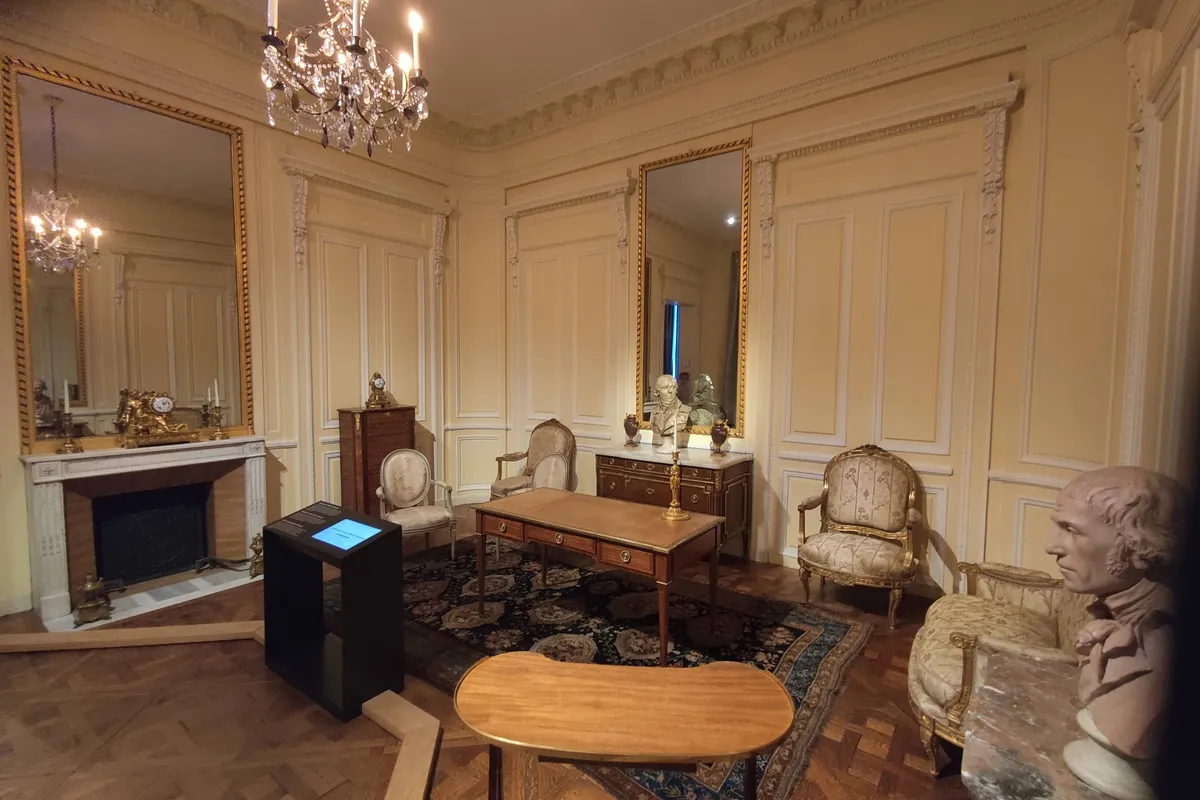
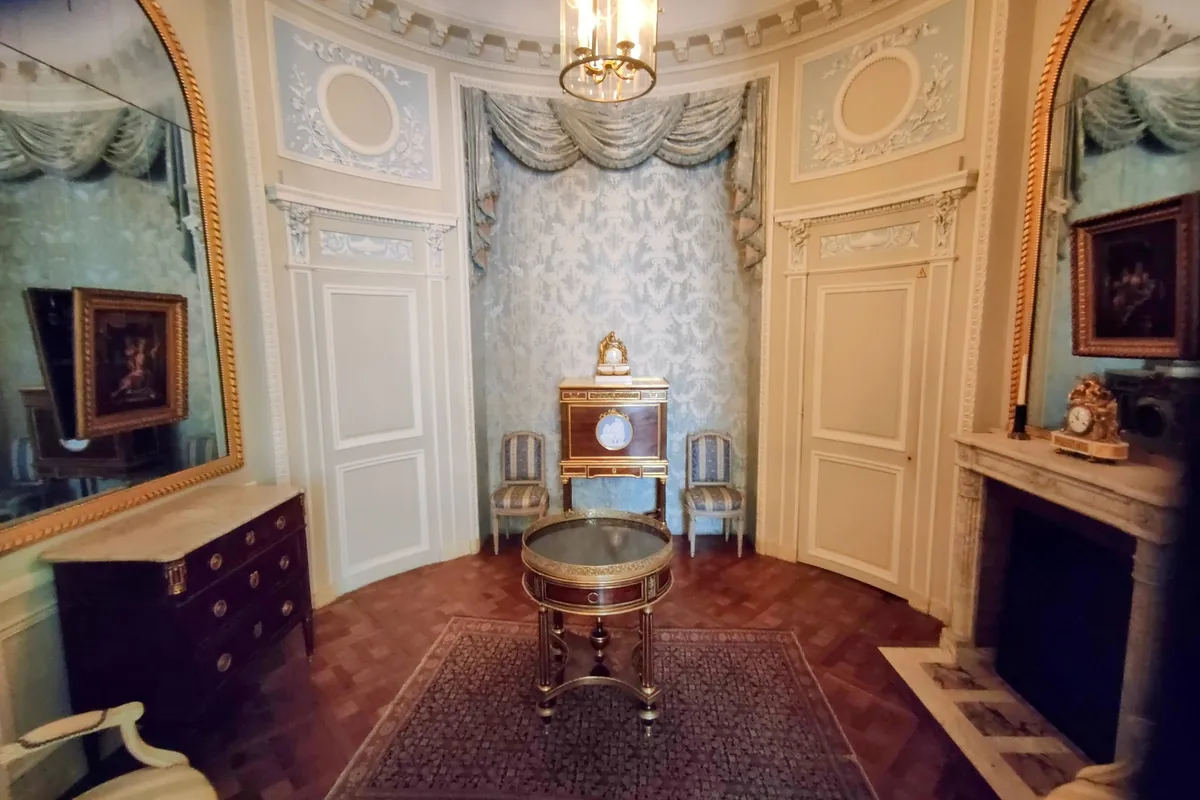
The reconstructed salons and interiors help shift the scale of the visit. Instead of just looking at a chair, a portrait, or a sign, you understand how these objects made up a home, a shop, or an urban landscape from another era.
How to get to the Musée Carnavalet and pair it with the Marais
The Musée Carnavalet is at 23 rue de Sévigné, in the 3rd arrondissement. Saint-Paul (line 1), Chemin Vert (line 8), Pont-Marie (line 7), and Bréguet-Sabin (line 5) serve the area; the Paris transport pass guide helps you plan the day without paying for unnecessary tickets.
The most logical pairing is with the Le Marais Paris guide: walk the neighborhood before or after the museum and keep your radius short. If modern art is your thing, the Musée Picasso Paris visit also fits in the same area, but consider one museum per outing.
Practical tips for making the most of your visit
Arrive at opening time if you want to photograph the rooms with more peace and quiet, and save the temporary exhibition for after the permanent route. There are self-service lockers, but the museum doesn’t accept suitcases; flash-free photography is allowed for private use.
To connect the visit to the city’s history itinerary, also read the guide on the French Revolution in Paris. It gives you addresses and events that make the Carnavalet collection even more tangible.
Frequently asked questions
Is the Musée Carnavalet free?
The permanent collections at the Musée Carnavalet are free and can be visited without a reservation. Temporary exhibitions may be ticketed and often recommend or require a timed slot, so it’s worth checking before your visit.
Where is the Musée Carnavalet located?
The Musée Carnavalet is at 23 rue de Sévigné, in the Marais, 3rd arrondissement of Paris. Saint-Paul, Chemin Vert, Pont-Marie, and Bréguet-Sabin are useful metro stations for reaching the museum.
How long does a visit to the Musée Carnavalet take?
Set aside at least two hours for the Musée Carnavalet. The museum has a broad collection on the history of Paris, and picking out periods or rooms in advance helps keep the visit interesting and well-paced.
Conclusion
The Musée Carnavalet provides context for what you see on the streets of Paris. Use it as the anchor of a day in the Marais and continue your itinerary with the Torre Eiffel guides.
To step back into medieval Paris before the Marais, check out the Musée de Cluny guide.