The Louvre is the most visited museum in the world — and also the one with Paris’s most dreaded lines. In peak season, visitors who show up without a ticket can wait more than two hours just to get past the ticket desk. The good news is that you can avoid almost all of that wait with two simple decisions: buy your ticket in advance (€32 for visitors from outside the European Economic Area, the rate in effect since Jan 14, 2026; official source, checked on Nov 3, 2026) and book a date and entry time slot, which is mandatory even if you already have a ticket in hand. In this practical guide you’ll see what it costs, how to really skip the line, how much time to set aside, and a route through the works you can’t miss — from the Mona Lisa to the Venus de Milo.
Louvre tickets: prices and where to buy
The standard adult ticket costs €32 for anyone who is neither a citizen nor a resident of the European Economic Area (official source, checked on Nov 3, 2026; confirm on the official website before you go). It gives access to the permanent collections and the temporary exhibitions, plus entry to the Eugène-Delacroix Museum within 48 hours. The official audio guide costs about €6 extra. Children and teens under 18 get in free, as do 18-to-25-year-olds who are residents of the European Union — visitors from outside the EU in that age range pay the regular price.
Partner · Tiqets
Tickets for the Louvre Museum
Compare ticket options for the Louvre Museum: each one shows the visit date, what’s included, and the cancellation policy before you pay.
See tickets on Tiqets ›
Dica: Aproveite também para fazer estes passeios em Paris
Tour pelo exterior da catedral de Notre Dame + Ingresso da cripta . Duração: 2 horas
Disneyland Paris Duração: 3 horas ou mais
Passeio de barco pelo Sena. Duração: 1h
Ingresso do 3º andar da Torre Eiffel. Duração: 2 a 3 horas
Ingresso do Palácio de Versalhes. Duração: 2 a 3 horas
Veja mais passeio em Paris aqui.
You can buy directly on the Louvre’s official website, where you pay only the ticket price, or through platforms such as Civitatis and GetYourGuide, which charge a bit more but offer customer support, instant confirmation, and flexible cancellation. In practice, for travelers who want to get in without a headache, a guided visit is usually the best value — it already includes the ticket and keeps you from getting lost in the museum’s 72,000 m² (about 775,000 sq ft).
Buy your Louvre ticket and skip the line
Guided tour + Louvre Museum ticket. Duration: about 2 hours
See all tours, tickets, and excursions in Paris
The links above are from partners (Civitatis). When you book through them, you support the blog at no extra cost to you.
Booking a time slot: the detail that trips up many visitors
Here is the most common mistake first-time visitors make: having a ticket is not enough. The museum requires you to book a date and an entry time, even if you buy online and even if you’re entitled to free admission. Without that booking, you can show up with the ticket on your phone and still not get in. So when you buy, check that your reservation has a set time — and arrive about 15 minutes before your chosen slot. Tickets can be booked up to two months in advance on the official website, and in the summer months slots sell out fast.
How to avoid the Louvre lines
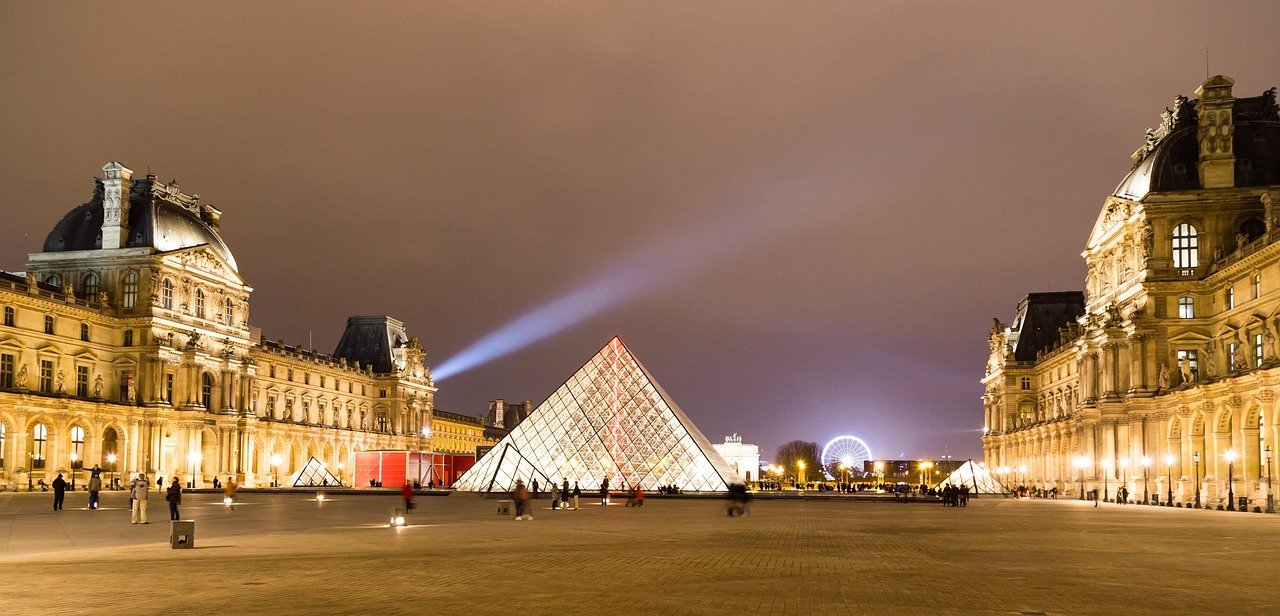
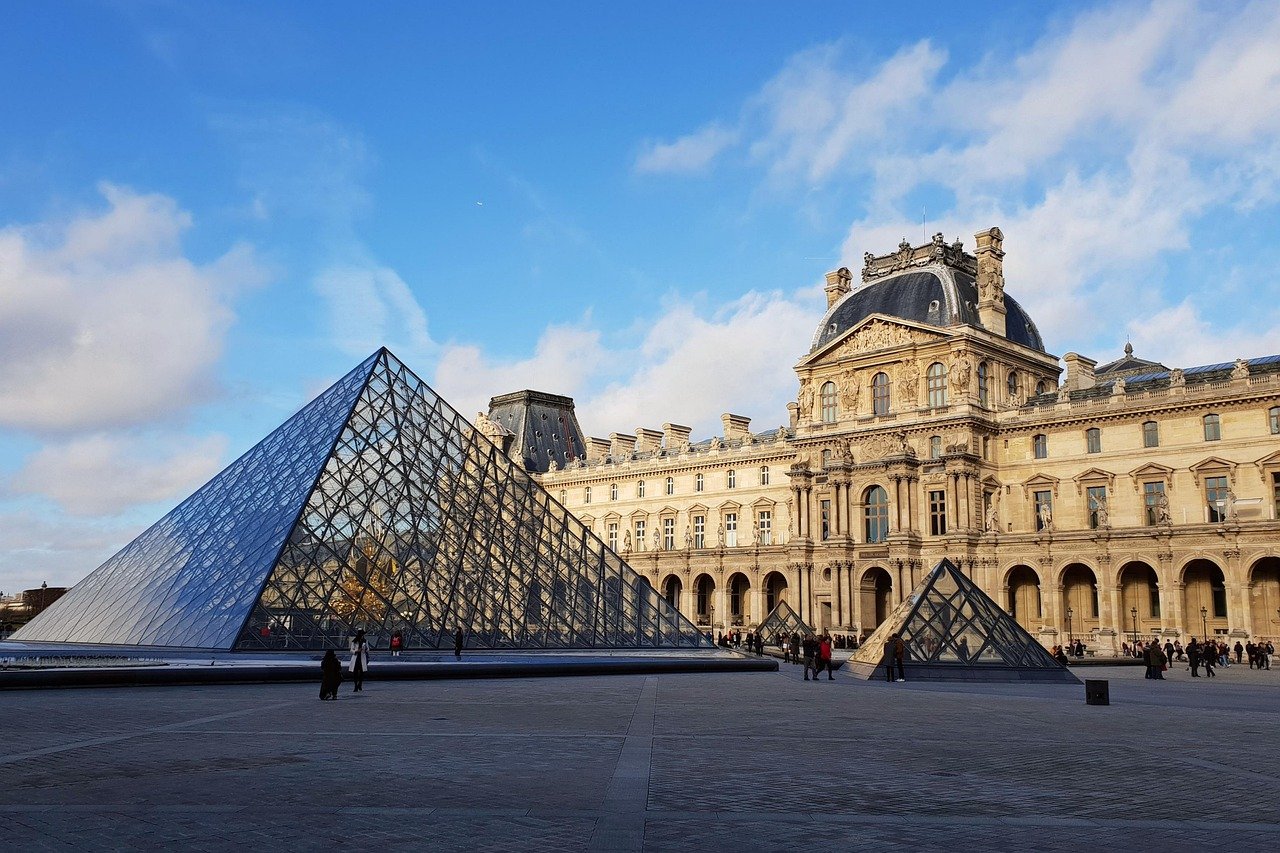
“Can you visit the Louvre without standing in line?” You can, and the secret has three parts. The first one we’ve already covered: buy in advance with a set time. The second is choosing the right entrance. The famous Pyramid (Cour Napoléon) is the prettiest for photos, but it’s usually the most crowded. If you already have a ticket, you can use alternative, quieter entrances, such as the Carrousel du Louvre (through the underground shopping mall, accessible from the Rue de Rivoli) and the Passage Richelieu. The Porte des Lions entrance is usually closed — check availability on the day.
The third part is timing. The absolute peak is between noon and 2 p.m., and Saturdays and Mondays are the worst days (since the museum is closed on Tuesdays, those who would have gone that day end up crowding Monday). Try to arrive right at opening, at 9 a.m., or after 3 p.m. And make the most of the best secret: on Wednesdays and Fridays the Louvre stays open until 9:45 p.m., and the evenings are much emptier and more atmospheric.
What to see at the Louvre: the essential works
The Louvre has more than 35,000 works on display — seeing everything is impossible. If you spent 30 seconds on each piece, it would take you more than 100 days. So the game is to be selective. The five works almost everyone wants to see:
Mona Lisa (La Joconde)
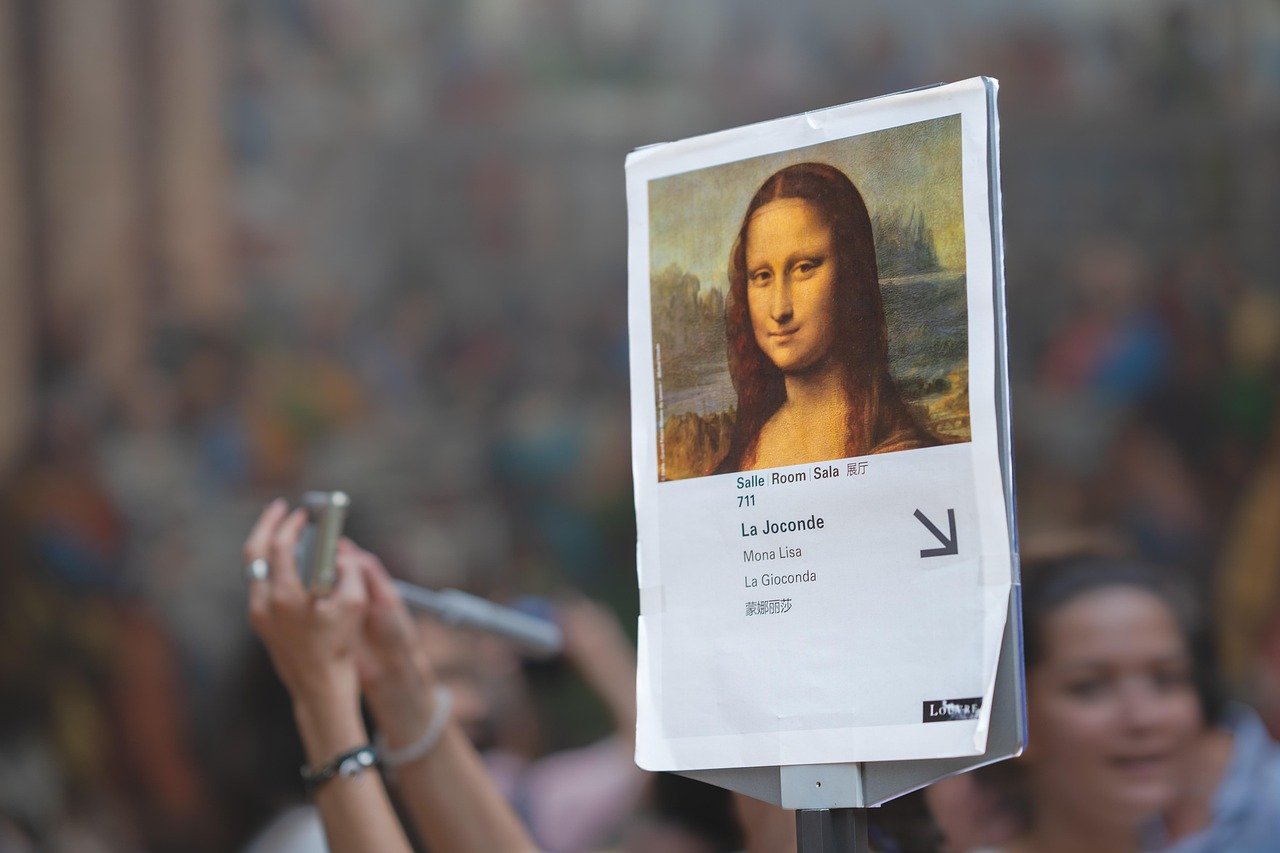
Leonardo da Vinci’s portrait is in the Denon Wing, room 711, protected by bulletproof glass. Be ready for the crowd — it’s the busiest room in the museum. The tip is to go right at opening or at the end of the evening to take photos with fewer people in front of you.
Venus de Milo
The Greek sculpture of the goddess Aphrodite, without her arms, is in the Sully Wing, among the Greek antiquities. It’s one of the most reproduced images in classical art.
Winged Victory of Samothrace
The imposing Greek Nike at the top of the Daru staircase greets visitors climbing up to the Denon Wing — one of the most scenic entrances in the museum.
Liberty Leading the People
Delacroix’s painting, a symbol of the Revolution of 1830, is among the great French paintings in the Denon Wing.
The Seated Scribe and Napoleon III’s apartments
To get off the beaten path, it’s worth seeing the Seated Scribe from Ancient Egypt and the lavish Napoleon III apartments in the Richelieu Wing, almost always emptier.
How much time to allow and a quick route
To see the highlights without rushing, allow 2 to 3 hours. If you’re passionate about art and want to explore at a relaxed pace, set aside half a day. An efficient route starts in the Denon Wing (Mona Lisa, Winged Victory of Samothrace, the great paintings), continues to the Sully Wing (Venus de Milo and the antiquities), and ends in the Richelieu Wing (sculptures and the imperial apartments). Pick up the free map at the entrance or download the official Louvre app so you don’t get lost — the museum is gigantic and the signage doesn’t always help.
How to get to the Louvre
The Louvre is in the heart of Paris, in the 1st arrondissement, on the banks of the Seine. By metro, the most convenient station is Palais Royal – Musée du Louvre (lines 1 and 7), with direct access to the Carrousel. The stations Louvre-Rivoli (line 1), Tuileries (line 1), and Pyramides (line 14) are also nearby. Coming from the city center or the Eiffel Tower area, line 1 connects the main tourist sights and leaves you practically at the door. If you’ll be getting around the city a lot, it’s worth understanding the ticket and pass options before you set out — we explain everything in our guide to the Paris transport pass.
What to combine on the same day
The Louvre is surrounded by attractions that can fill a whole day. Right outside, the Tuileries Garden leads to the Place de la Concorde on a pleasant walk. Across the Seine, the Musée d’Orsay (about 700 meters away) is the perfect pairing for art lovers: from the classics to Impressionism in one go. And since the museum sits right by the river, ending the day with a Seine river cruise at sunset is a hard combination to beat.
Practical tips: is it worth it?
Wear comfortable shoes — you’ll walk far more than you expect. Large suitcases and backpacks aren’t allowed in, but there are free lockers in the Napoleon Hall. Photos are allowed (no flash), including of the Mona Lisa. Bring water and take breaks: the café under the pyramid is pricey, but the view makes it worth it for a quick rest. The most common mistake to avoid is trying to see “everything” — you leave exhausted and without having enjoyed anything. Pick around ten works, take them in slowly, and leave the rest for a future trip. Is it worth it? Absolutely, even if you’re not an art fan: it’s a walk through thousands of years of history in a few hours, in one of the most beautiful buildings in Paris.
Frequently asked questions
How much does a Louvre Museum ticket cost?
The standard adult ticket costs €32 for anyone who is neither a citizen nor a resident of the European Economic Area (official source, checked on Nov 3, 2026). The official audio guide costs about €6 extra. Confirm the current prices on the official website before your visit.
Is the Louvre open every day?
No. The museum is closed on Tuesdays and also on January 1, May 1, and December 25. On other days it’s open from 9 a.m. to 6 p.m., with extended hours until 9:45 p.m. on Wednesdays and Fridays.
Do I need to book a time slot even if I buy a ticket?
Yes. Booking a date and entry time is mandatory, including for those entitled to free admission. Without a booked time, you may not be able to get in even with a ticket.
How much time do I need to visit the Louvre?
To see the main highlights comfortably, allow 2 to 3 hours. If you want to explore in depth, set aside half a day.
Where is the Mona Lisa in the Louvre?
The Mona Lisa is in the Denon Wing, room 711. It’s the busiest room in the museum — go right at opening or at the end of the evening to see it with fewer people around.
Conclusion
Visiting the Louvre without stress is a matter of planning: an advance ticket, a set time slot, the right entrance, and about ten hand-picked works. With that, you trade two hours in line for two hours in front of some of humanity’s greatest masterpieces. Plan with care and go with an open heart — the Louvre has a way of staying in your memory long after the trip is over. Safe travels and enjoy your visit!
After the museum, add the Palais-Royal in Paris to your itinerary: it’s just a few minutes away and combines gardens, the Buren Columns, and cafés under the arcades.