More than 10 million people walk the halls of the world’s largest museum every year, but only 1 in 10 visitors truly gets to appreciate the 35,000 works of art on display at the Louvre Museum. The palace that houses the famous Mona Lisa and Venus de Milo is much more than just a tourist spot in Paris – it’s a journey through 8,000 years of human history. If you’re planning your trip to the French capital, this guide will transform your visit to the Louvre into an unforgettable experience, free from the frustration of endless lines or the feeling of having missed important masterpieces.
The Magic of the Louvre: More Than Just a Museum
“I never imagined I’d be so moved I’d cry in front of a painting,” said Mariana Alves, a Brazilian architect who visited the Louvre for the first time in 2024. Like Mariana, thousands of Brazilians arrive at the museum every year with high expectations, but many leave feeling overwhelmed by the sheer grandeur of the place. The problem? The vastness of the Louvre, with its 72,735 square meters of exhibition space, makes it practically impossible to see everything in a single visit.
Dica: Aproveite também para fazer estes passeios em Paris
Tour pelo exterior da catedral de Notre Dame + Ingresso da cripta . Duração: 2 horas
Disneyland Paris Duração: 3 horas ou mais
Passeio de barco pelo Sena. Duração: 1h
Ingresso do 3º andar da Torre Eiffel. Duração: 2 a 3 horas
Ingresso do Palácio de Versalhes. Duração: 2 a 3 horas
Veja mais passeio em Paris aqui.
This frustration is amplified when you spend hours in lines or get lost among the 380,000 objects in the collection without a clear plan. The consequences go beyond physical tiredness – many tourists report feeling they “wasted” their only chance to properly experience the French cultural treasure.
Tip: While in Paris, visit the Eiffel Tower, learn more in this post.
But there is a solution: with the right planning, you can turn what could be a tiring experience into one of the highlights of your trip to Paris. This guide was created especially for Brazilian tourists who want to make the most of their visit, avoiding common pitfalls and discovering hidden gems that most visitors miss.
History of the Louvre: From Medieval Fortress to World Treasure
Few visitors know that, before becoming the most visited museum on the planet, the Louvre was a medieval fortress built in the 12th century to protect Paris from invaders. In fact, you can still visit the remains of the original foundations in the museum’s basement – a part most tourists don’t even know exists!
The transformation of the palace into a museum began during the French Revolution, when the monarchy was overthrown and the revolutionary government decided to share the royal collections with the people. In 1793, its doors opened for the first time as the “Central Museum of the Arts.” Initially, it displayed only 537 paintings – a paltry number compared to the current collection.

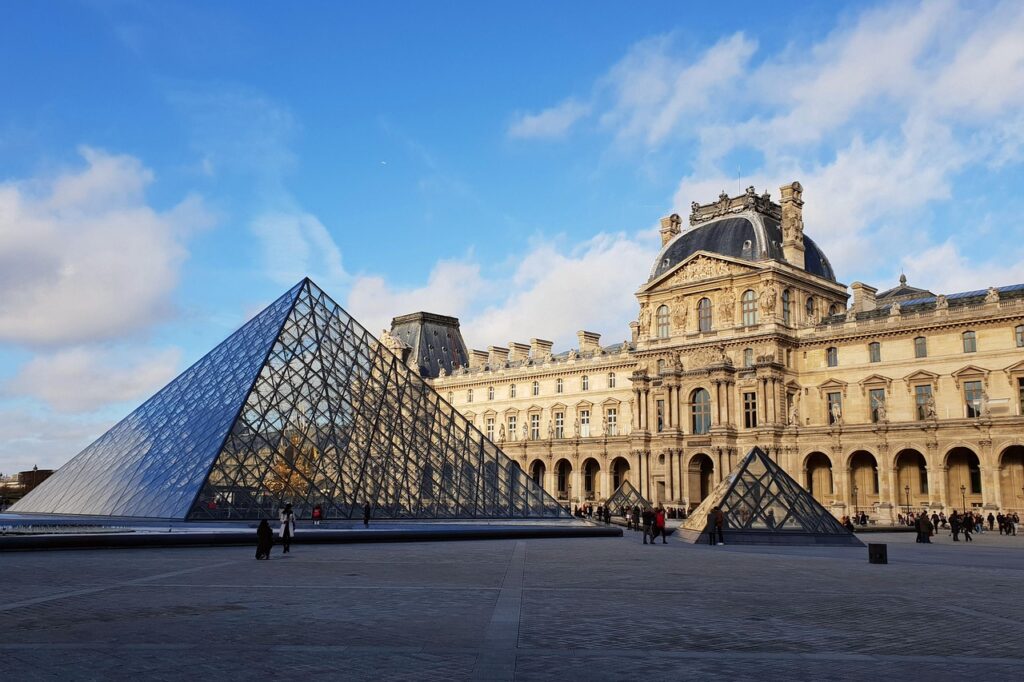
Over the following centuries, the Louvre continued to grow. Napoleon Bonaparte significantly enriched the collection with treasures brought back from his military campaigns, including the famous Rosetta Stone (which later went to the British Museum). The last major expansion took place in 1989, when architect I.M. Pei designed the iconic glass pyramid that now serves as the main entrance.
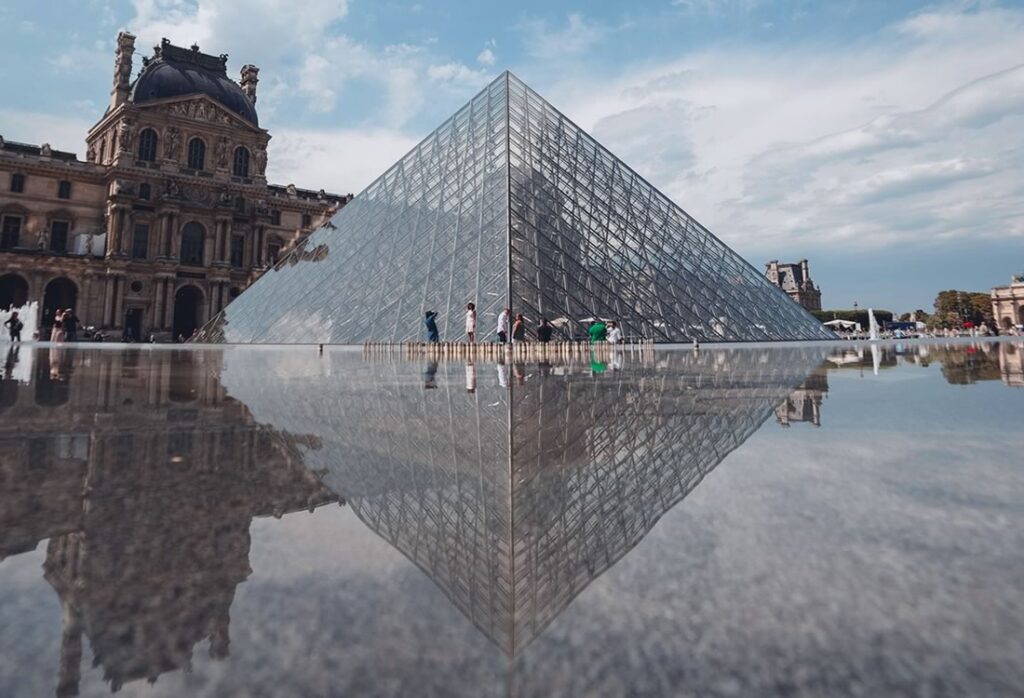
Did you know the glass pyramid was extremely controversial when it was unveiled? Conservative Parisians considered the project an affront to the palace’s classical architecture. Today, however, it is one of the most photographed symbols of Paris and an architectural masterpiece in its own right, composed of 673 glass panels.
How to Get to the Louvre Museum: Location and Access
The Louvre is strategically located in the 1st arrondissement of Paris, on the banks of the Seine River. For Brazilians unfamiliar with the Parisian transport system, there are several hassle-free ways to reach the museum.
The most practical way is using the Paris Metro. Two stations serve the museum directly: “Palais-Royal–Musée du Louvre” (lines 1 and 7) and “Louvre-Rivoli” (line 1). If you’re staying near any metro line, this is undoubtedly the fastest and most economical option. A single ticket costs approximately €2.10 in 2025.
For those who prefer a more scenic approach, walking can be an excellent option, especially if you’re staying in central areas like Le Marais, Saint-Germain, or Opéra. Walking along the banks of the Seine to the museum offers stunning views and helps you understand how the Louvre integrates into the Parisian urban landscape.
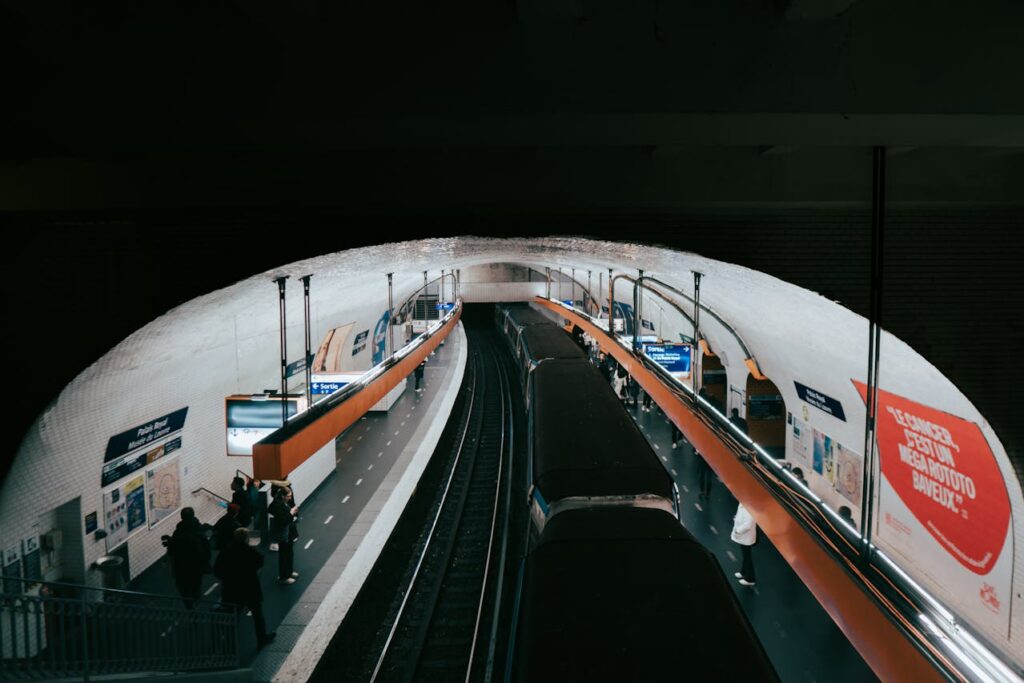
If it’s raining or you prefer to save your energy for exploring the galleries, buses are also a good alternative. Lines 21, 24, 27, 39, 48, 68, 69, 72, 81, and 95 stop near the museum. For those using the popular hop-on-hop-off tourist buses, all major companies include stops at the Louvre.
And have you ever wondered which entrance to the museum is the least crowded? While most visitors enter through the famous glass pyramid, there are other entrances that can save you a lot of time. The Porte des Lions entrance, for example, usually has significantly shorter lines, especially in the afternoon.
When to Visit the Louvre: Best Season and Times
“I spent two hours in line under a scorching sun only to find out I could have gotten in in less than 15 minutes if I had come at a different time,” laments Paulo Henrique, a Brazilian engineer who visited the Louvre during the European summer of 2024. How can you avoid this scenario?
The Louvre is open every day of the week except Tuesdays, when it is closed for maintenance. Opening hours are from 9:00 AM to 6:00 PM, with extended hours until 9:45 PM on Wednesdays and Fridays. This information is crucial: the extended evening hours are significantly less crowded!
The months of May, June, September, and October offer the best balance of pleasant weather and lower tourist concentration. During July and August, the peak tourist season, the museum can become extremely congested, especially in the rooms housing famous works like the Mona Lisa.
For those who want to avoid crowds at all costs, the first hour of the morning (9:00 AM – 10:00 AM) or late afternoon (after 3:00 PM) are ideal on any day of the week. Surprisingly, Sunday – when many Parisian museums offer free entry on the first Sunday of each month – is not a good choice for the Louvre, as it attracts huge crowds.
An interesting fact: statistics show that Wednesday and Thursday are the least busy days at the museum. If your schedule allows, prioritize these days for your visit. And here’s a tip few guides mention: on Wednesday evenings, many Parisians take advantage of the extended hours, but most tour groups have already left the museum, creating a calmer, more authentic atmosphere for exploring the galleries.
Tickets for the Louvre Museum: Save Time and Money
The standard ticket for the Louvre costs €17 in 2025 (approximately R$102 at the current exchange rate). At first glance, it might seem expensive, but considering the magnitude of the collection and the experience offered, it’s an investment worth every cent. But pay attention: there are several ways to pay less or even get in for free!
To avoid lines at the ticket office, buy your ticket online from the website. This isn’t just a recommendation; it’s almost a necessity during peak season. The museum has adopted a timed-entry reservation system, meaning you need to choose a specific time slot for your entry. This helps control visitor flow and reduces waiting time.
Did you know that people under 18, EU residents under 26, art teachers, and people with disabilities are entitled to free entry? Brazilians don’t automatically fall into these categories, but if you have European citizenship, be sure to bring your European passport!
Another budget-friendly option is to visit the museum on the first Friday of the month, between September and March, when entry is free for all visitors from 6:00 PM to 9:45 PM. However, be prepared for longer lines and more crowded spaces on these special days.
For travelers planning to visit multiple museums and attractions in Paris, it’s worth considering the Paris Museum Pass. Starting at €60 for two days, it offers unlimited access to over 50 museums and monuments in the city, including the Louvre, and usually allows access through priority lines.
Planning Your Visit: How Much Time to Spend at the Louvre?
“If I had known it would be impossible to see everything in just two hours, I would have organized my Paris itinerary better,” confesses Ana Clara, a Brazilian student who visited the Louvre during a backpacking trip across Europe. This is a common mistake: underestimating the size and complexity of the museum.
It would take approximately nine months to observe every work in the Louvre for just 30 seconds, considering an eight-hour visiting day. Obviously, no tourist has that kind of time! For a satisfying visit, we recommend setting aside at least half a day (4 hours) exclusively for the museum.
If you’re short on time, prioritizing is essential. The Louvre is divided into eight main departments: Egyptian Antiquities, Near Eastern Antiquities, Greek/Etruscan/Roman Antiquities, Islamic Art, Sculptures, Decorative Arts, Paintings, and Prints and Drawings. Each of these departments could be a museum in its own right!
A balanced 4-hour itinerary would include the Grande Galerie (where the Mona Lisa is located), the Denon wing (with the Venus de Milo and the Winged Victory of Samothrace), and one section of your personal choice, be it the Egyptian collection, the Italian Renaissance paintings, or the Napoleon III apartments.
For those with more time available, the ideal is to split the visit over two different days. This allows for a more leisurely appreciation of the works and significantly reduces museum fatigue – that feeling of overload that affects many visitors after a few hours of exposure to so many masterpieces.
Must-See Works at the Louvre: Beyond the Mona Lisa
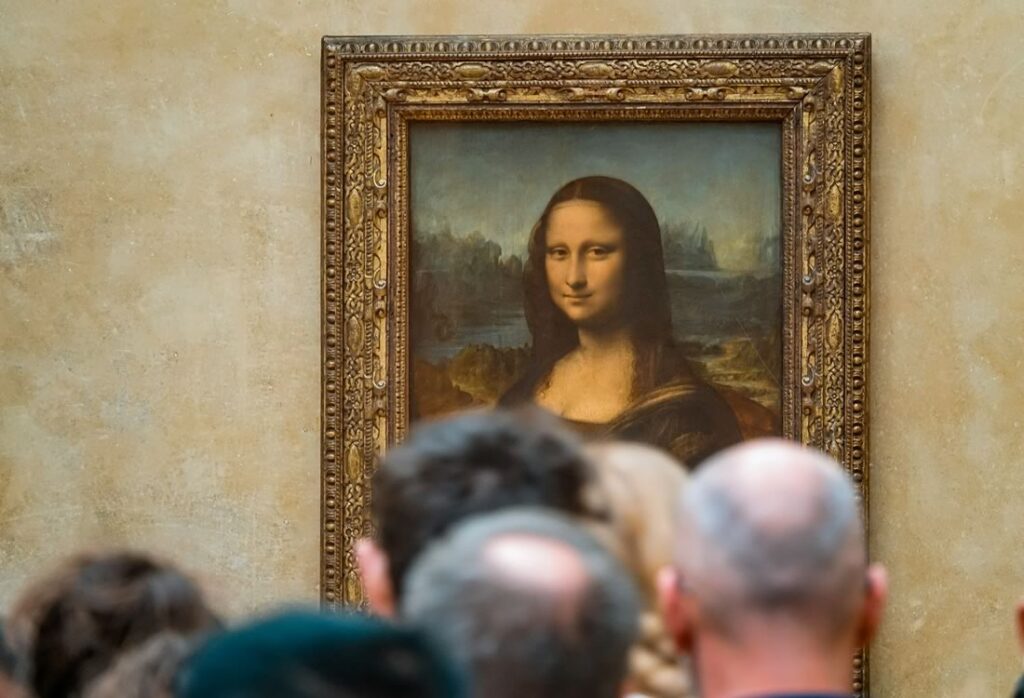
When asked what they want to see at the Louvre, 97% of tourists mention the Mona Lisa. The small portrait painted by Leonardo da Vinci is, without a doubt, the star of the museum. However, seeing it can be a frustrating experience: protected by bulletproof glass, the work is usually surrounded by dozens of visitors trying to take photos.
For a more satisfying experience with the Mona Lisa, visit it right when the museum opens or at the end of the day. And while admiring the enigmatic smile of the portrayed lady, take the opportunity to observe other fascinating details, such as the sfumato technique on the edges of the face and the background landscape that some historians believe represents the Tuscany region.
But the Louvre goes far beyond this single painting! The Venus de Milo, a Greek sculpture from the 2nd century BC, is another unmissable icon. Discovered in 1820 on the island of Milos (hence its name), the statue is admired for the elegance of its proportions, even without the arms that were lost over the centuries.
The Winged Victory of Samothrace, an impressive marble sculpture representing the Greek goddess Nike (Victory), is often cited by curators and art historians as the most impactful work in the museum. Positioned at the top of a monumental staircase, the headless and armless winged figure still conveys a powerful sense of movement and triumph.
Among the paintings, be sure to admire “Liberty Leading the People” by Eugène Delacroix, a symbol of the French Republic depicting the Revolution of 1830; “The Raft of the Medusa” by Théodore Géricault, a dramatic work inspired by a real shipwreck; and “The Wedding Feast at Cana” by Paolo Veronese, a gigantic canvas that often goes unnoticed in the same room as the Mona Lisa.
For enthusiasts of ancient history, the Code of Hammurabi (one of the oldest sets of written laws) and the Great Sphinx of Tanis are invaluable treasures from the Mesopotamian and Egyptian collections, respectively.
Practical Tips for Enjoying Your Visit to the Louvre
Have you ever heard of “Stendhal Syndrome”? It’s a psychosomatic condition that causes dizziness, palpitations, and even fainting when a person is exposed to a large amount of extraordinary art in a short period. Although rare in its extreme form, a milder version – museum fatigue – affects many Louvre visitors.
To avoid this burnout, plan strategic breaks during your visit. The museum has several cafes and rest areas. Café Mollien, located on the first floor of the Denon wing, offers a spectacular view of the Tuileries Garden and is an excellent place to recharge your batteries.
Another crucial tip: wear comfortable shoes! The marble floors of the Louvre are hard, and you’ll likely walk several kilometers during your visit. Many Brazilians underestimate this aspect and end up with sore feet before even reaching the main works.
If you don’t speak French, don’t worry. The Louvre offers audio guides in Brazilian Portuguese (rental for €5) that provide detailed information about hundreds of masterpieces. Alternatively, you can download the museum’s official app, which includes free themed tours and interactive maps.
For a more enriching experience, consider hiring a specialized art guide who speaks Portuguese. Although it’s a more expensive service (approximately €150-200 for a 2-3 hour tour for small groups), the depth of information and the ability to answer specific questions completely transforms the experience.
A little-known detail: the Louvre allows photography of almost all works, as long as it’s without flash. However, this is prohibited in some temporary exhibitions. Check the signage in the rooms or ask the staff if in doubt.
The Louvre at Night: A Magical, Less Crowded Experience
“Seeing the galleries lit up at night, with fewer people and an almost mystical atmosphere, was the highlight of my trip,” reports Eduardo Mendes, a Brazilian photographer who visited the Louvre on a Wednesday evening. This is one of the most underrated experiences the museum offers.
On Wednesdays and Fridays, the Louvre remains open until 9:45 PM, allowing for a nighttime visit that completely transforms the perception of the space. With different lighting and fewer visitors, you can appreciate the works with more tranquility and intimacy.
An additional advantage: during these extended hours, many tour groups have already left the museum, resulting in less congestion in the most popular galleries. The Mona Lisa, which is surrounded by crowds during the day, becomes more accessible in the evening.
The outdoor areas also take on a special charm at night. The illuminated glass pyramid against the Parisian night sky creates a cinematic image that will be etched in your memory. And for amateur or professional photographers, the possibilities are endless with the interplay of light and shadow on the historic facades.
If your schedule allows, don’t hesitate to choose this alternative. Besides the unique experience, you’ll save precious time that could be wasted in lines during the day, maximizing your time in Paris to explore other attractions.
Themed Itineraries: Personalizing Your Louvre Experience
Have you ever stopped to think about which aspect of art or history sparks your interest most? The Louvre offers possibilities for every taste, and following a themed itinerary can take your visit from good to extraordinary.
For history buffs, the Egyptian Antiquities circuit takes you on a journey of over 5,000 years, from small amulets to mummies and decorated sarcophagi. The section boasts over 50,000 pieces, making it one of the largest Egyptian collections outside of Cairo.
If you’re a fan of Renaissance paintings, besides the Mona Lisa, be sure to visit “The Virgin of the Rocks” also by Leonardo da Vinci, “La Belle Jardinière” by Raphael, and “The Wedding Feast at Cana” by Veronese. The Grande Galerie, where these works are displayed, is a visually impressive experience in itself, with its vaulted ceiling and majestic proportions.
For those interested in French history, the Napoleon III Apartments offer a glimpse into the opulence of palace life during the Second French Empire. The richly decorated salons with tapestries, chandeliers, and gilded furniture transport visitors back to the 19th century.
A lesser-known but fascinating itinerary is that of the French Crown Jewels, located in the Galerie d’Apollon. Here, stunning pieces that once belonged to kings and queens are on display, including the famous 140-carat “Regent” diamond.
For families with children, the museum has developed specific itineraries based on historical or mythological characters that appear in various works. These routes turn the visit into a kind of educational treasure hunt that keeps the little ones engaged.
Beyond the Galleries: Gardens and Surroundings of the Louvre
When your visit to the Louvre galleries ends, don’t rush off to the next item on your Parisian itinerary. The museum’s surroundings deserve special attention and offer equally enriching complementary experiences.
The Tuileries Garden, adjacent to the museum, is one of the most beautiful examples of a formal French garden. Designed in the 17th century by landscape architect André Le Nôtre (the same who designed the gardens of Versailles), the space is perfect for resting after hours of walking through the galleries. In the summer, Parisians love to sit on the metal chairs scattered around the ornamental ponds to enjoy the sun.
The Place du Carrousel, between the museum and the garden, houses the Arc de Triomphe du Carrousel, a smaller and older version of the famous Arc de Triomphe de l’Étoile. Built by Napoleon Bonaparte to celebrate his military victories, the monument is crowned by a quadriga (a statue with four horses) that is a replica of the original Venetian one.
For a privileged view of the pyramid and the palace facade, cross the Pont des Arts, known worldwide as the “love lock bridge,” although the locks have now been removed to preserve the structure. From the middle of the bridge, you’ll get a perfect photographic perspective of the museum complex.
If you still have energy, the Les Halles neighborhood is just a few minutes’ walk north of the Louvre. There you’ll find the Centre Pompidou (museum of modern and contemporary art) and a vibrant commercial area with restaurants, cafes, and shops.
Gastronomic Experiences Near the Louvre
After hours exploring the world’s largest museum, your body will certainly be asking for a gastronomic break. Fortunately, the surroundings of the Louvre offer options for every taste and budget.

Inside the museum itself, Café Marly, with its elegant veranda overlooking the pyramid, is a prime spot for a light lunch or afternoon coffee. Prices are high, but the incomparable view makes up for the extra investment. For something more substantial without leaving the complex, the Angelina restaurant is famous for its hot chocolate, considered the best in Paris, and for traditional French pastries like the Mont Blanc.
For an authentic experience without spending a fortune, venture into the adjacent streets, especially Rue Saint-Honoré. Le Fumoir, just a five-minute walk from the pyramid, is an elegant bistro frequented by Parisians and offers seasonal dishes with international influence in a cozy atmosphere.
If you’re on a tight budget, the Rue de Rivoli area houses several “French-style fast food” options, like the Paul chain, where you can enjoy sandwiches on fresh baguettes, croissants, and other traditional bakery products at reasonable prices.
A golden tip for saving money: buy a picnic from local markets or delicatessens and enjoy the Tuileries Garden for an outdoor meal. This is a common practice among Parisians and will give you a refreshing break before continuing your cultural adventures.
Conclusion: Turn Your Visit to the Louvre into an Unforgettable Memory
Throughout this guide, we’ve revealed the strategies that will transform your visit to the Louvre Museum from potentially exhausting and confusing to deeply meaningful and organized. As we’ve seen, the secret isn’t trying to see everything – something humanly impossible – but in creating a personalized and balanced experience.
Remember the key recommendations: buy tickets online in advance, visit at strategic times like Wednesdays and Thursdays or during extended evening hours, focus on the works that truly spark your personal interest, and don’t underestimate the need for breaks to absorb the cultural richness the museum offers.
The Louvre is not just a museum – it’s an essential chapter in the history of human civilization that continues to be written daily by every visitor who walks its halls. The question is no longer “How can I see everything at the Louvre?” but rather: “How can I create my own narrative in this palace of artistic treasures?”
Now that you’re armed with insider knowledge about the world’s largest museum, you’re ready to join the millions of people who have had their lives transformed by this transcendent experience. And when you stand before the Mona Lisa, the Venus de Milo, or the monumental Winged Victory of Samothrace, remember: you’re not just observing history – you’re becoming part of it.
Ready to transform your trip to Paris? Start planning your visit to the Louvre today, and don’t forget to share your experiences and tips with other Brazilian travelers when you return. Bon voyage!