Just a short walk through Paris, and you’ll stumble upon Napoleon Bonaparte. He’s there in the bronze column at Place Vendôme, in the giant arch at the top of the Champs-Élysées, on the wide avenue cutting through the city’s heart near the Louvre, and even in the law that still governs marriages, inheritances, and contracts in France today. Napoleon ruled France for just over a decade as emperor, but he left a mark on Paris that no other French ruler—before or since—has managed to match in such a short time.
Decades after Napoleon, another name would forever shape Paris for similar reasons: the ambition to remodel the city. See how Baron Haussmann did it in our guide to Haussmann’s renovation.
This article is a tour through Napoleonic Paris: how a Corsican general became emperor, why he wanted to rebuild part of the city in the image of ancient Rome, and what remains of it all for visitors today.
From General to Emperor: A Rise Too Fast to Be Normal
Napoleon Bonaparte wasn’t born in Paris—he came from Corsica, an island that had only become French shortly before his birth in 1769. Still, it was in Paris that he built the military career that took him to the top: he distinguished himself in the wars of the French Revolution, led victorious campaigns in Italy and Egypt, and in 1799 staged a coup d’état known as the 18th of Brumaire, ending the revolutionary period and putting him in charge of the country as First Consul.
Five years later, not content with being just the head of government, he decided to crown himself emperor. And he chose Paris—more specifically, Notre-Dame—to make this gesture as symbolic as possible.
The Coronation That Broke with Tradition
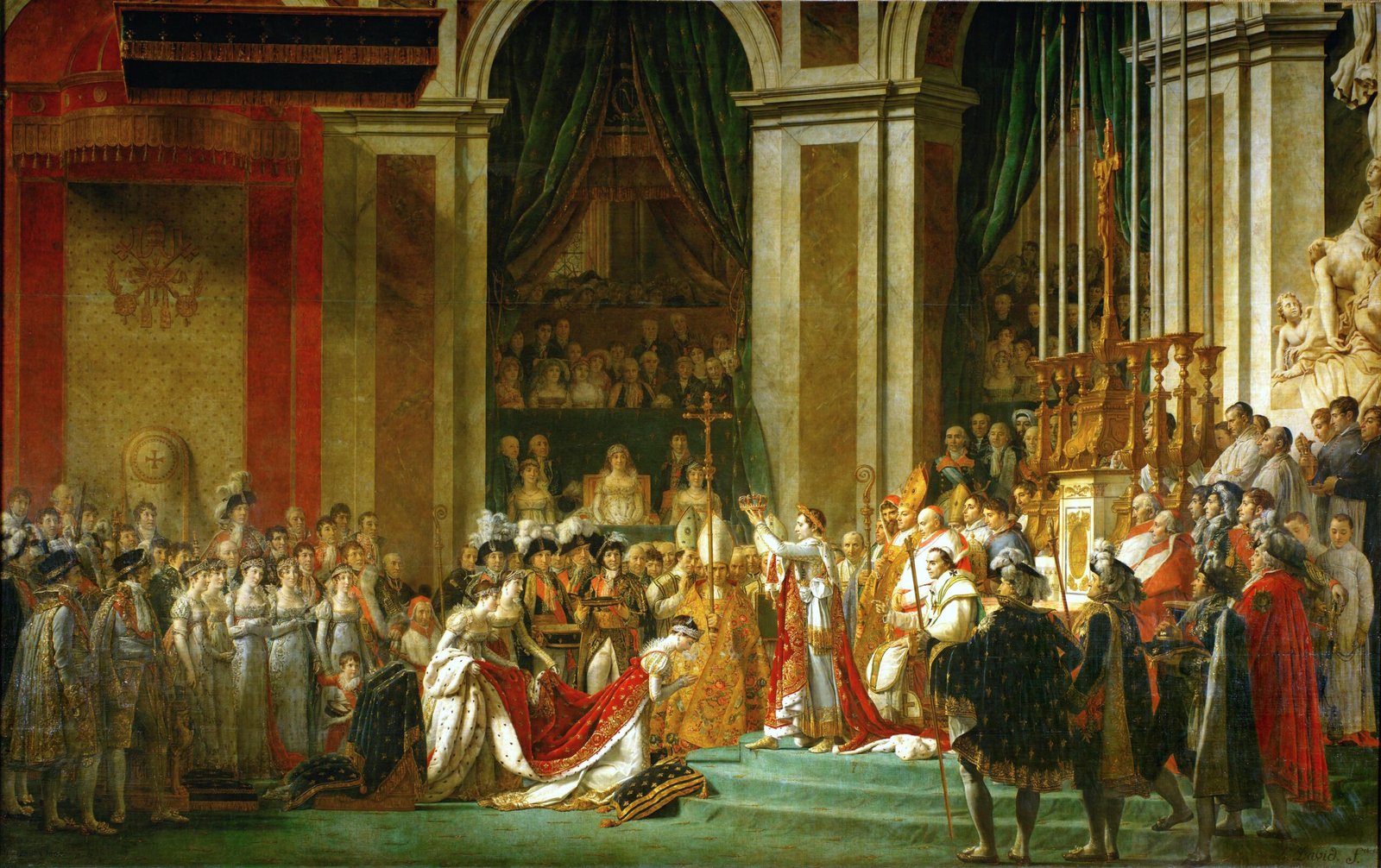
On December 2, 1804, Napoleon was consecrated emperor at Notre-Dame Cathedral, breaking a centuries-old custom: all French kings before him had been crowned at Reims Cathedral. By choosing Notre-Dame, in the heart of Paris, Napoleon reinforced that his power came from the capital and from himself—not from a religious tradition rooted in another city.
The most remembered detail of the ceremony, captured in the famous painting by Jacques-Louis David, is the moment Napoleon took the crown himself, rather than accepting it from Pope Pius VII, who was present at the ceremony but reduced to a spectator. The gesture was clear: he owed his authority to no one, not even the Church.
Dica: Aproveite também para fazer estes passeios em Paris
Tour pelo exterior da catedral de Notre Dame + Ingresso da cripta . Duração: 2 horas
Disneyland Paris Duração: 3 horas ou mais
Passeio de barco pelo Sena. Duração: 1h
Ingresso do 3º andar da Torre Eiffel. Duração: 2 a 3 horas
Ingresso do Palácio de Versalhes. Duração: 2 a 3 horas
Veja mais passeio em Paris aqui.
Austerlitz and the Birth of the Arc de Triomphe
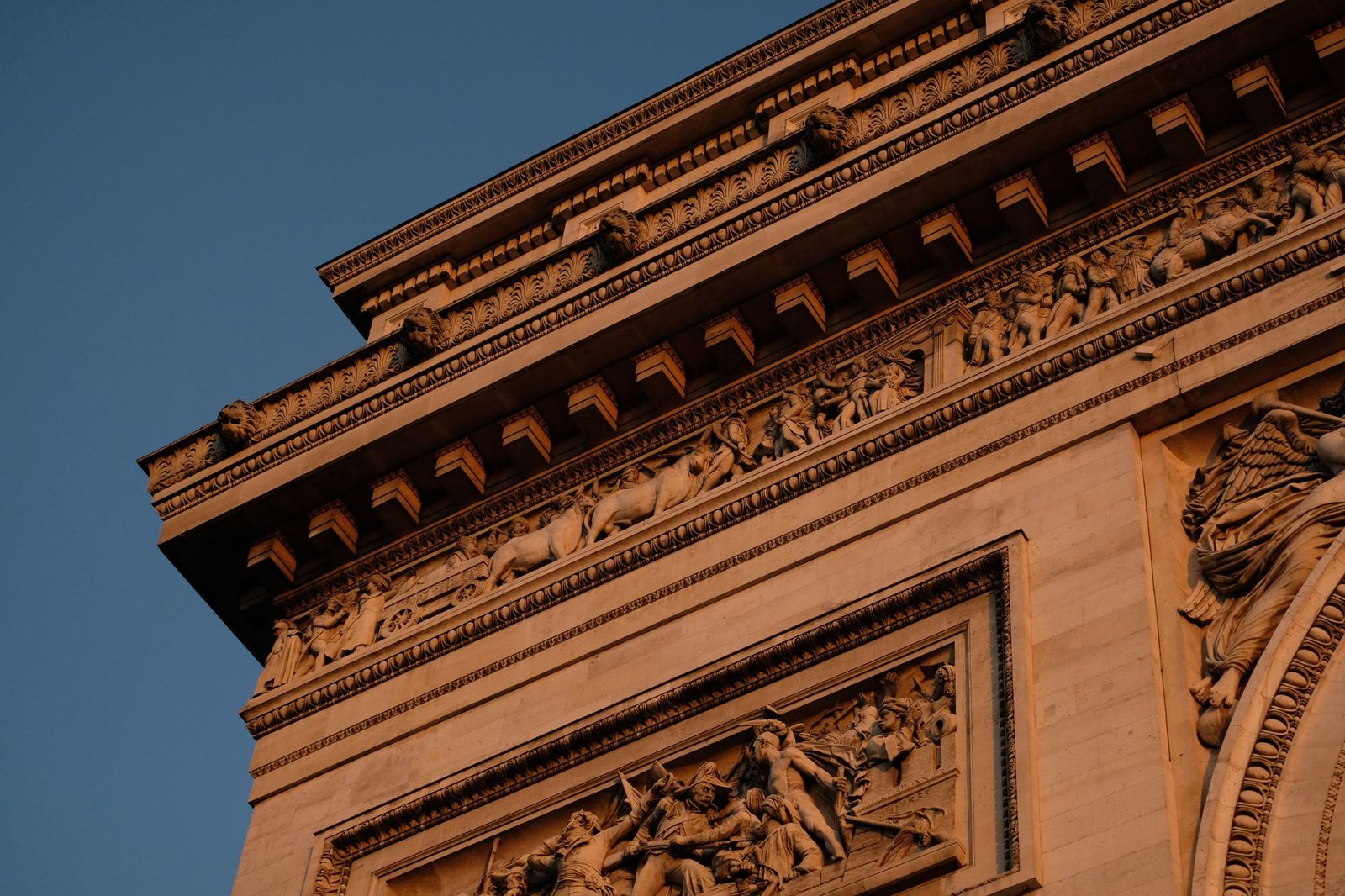
Less than a year after the coronation, on December 2, 1805, Napoleon won one of his most famous battles: Austerlitz, against Austrian and Russian forces. Before the fight, he reportedly promised his soldiers that if they won, they would “return home under triumphal arches”—a direct reference to Roman generals, whom Napoleon admired and tried to emulate symbolically.
In 1806, he commissioned architect Jean-François-Thérèse Chalgrin to build a monumental arch inspired by the Arch of Titus in Rome, to stand at the top of the Champs-Élysées. The problem is that monuments of this scale aren’t built quickly: construction dragged on for thirty years, and Napoleon died without ever seeing the Arc de Triomphe finished. It was only officially inaugurated on July 29, 1836, under a different regime, with the names of 558 generals and 128 battles engraved on its inner walls.
The Vendôme Column: The Monument That Still Stands (Almost as It Always Was)
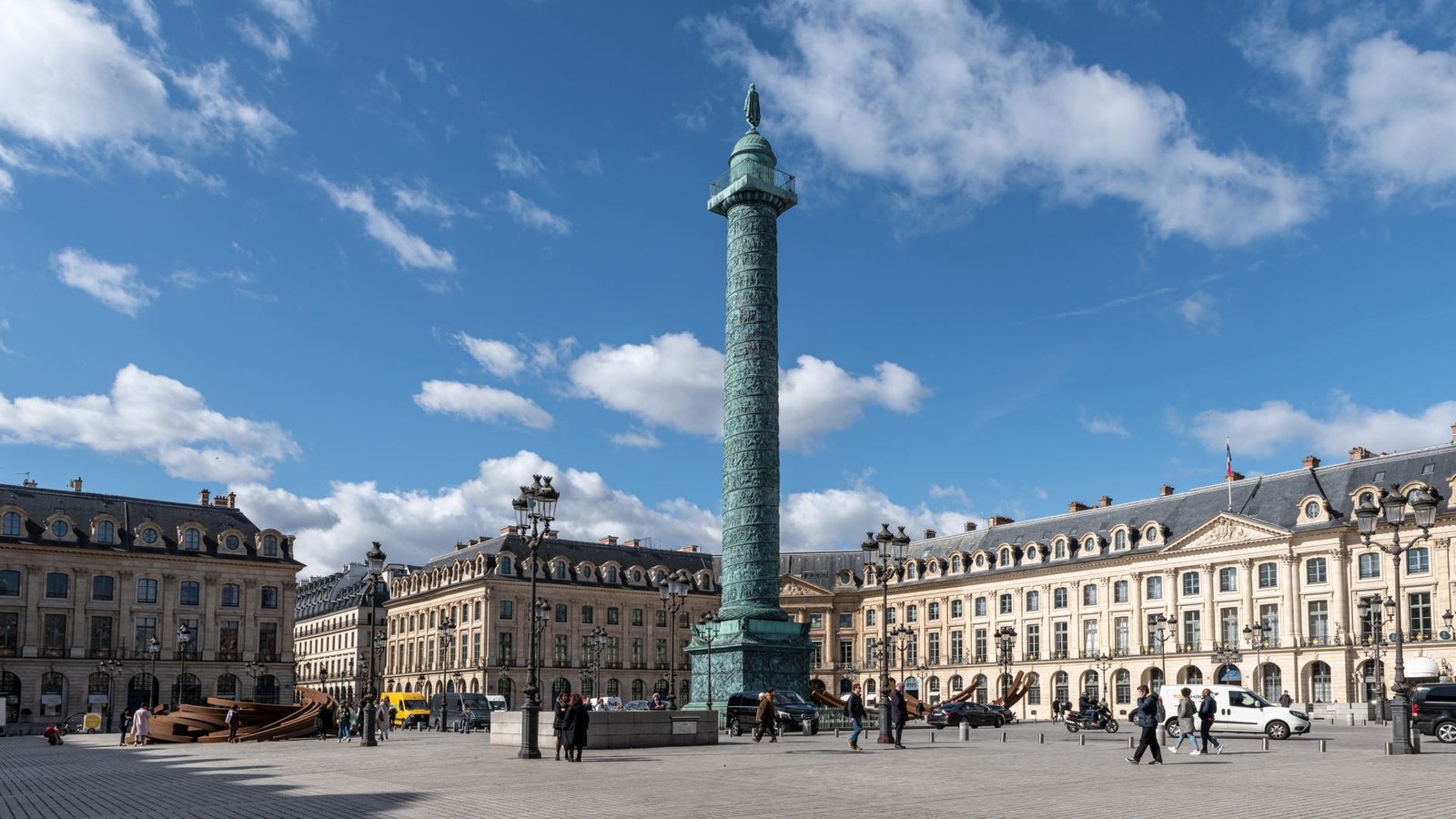
Another direct symbol of the victory at Austerlitz is the Vendôme Column, erected in 1806 in the square of the same name, now one of the most elegant (and expensive) spots in Paris, surrounded by luxury jewelry stores. The column was modeled after Trajan’s Column in Rome, and its surface is covered in bronze reliefs—made, according to tradition, from the melted-down metal of cannons captured from enemy armies.
The column was toppled once, during the Paris Commune in 1871, because it was seen as a symbol of imperial militarism, but it was rebuilt shortly after. Today it still stands, with a statue of Napoleon on top, still dominating the square it helped make famous.
Rue de Rivoli: The Avenue That Changed the Way You Walk Through Paris
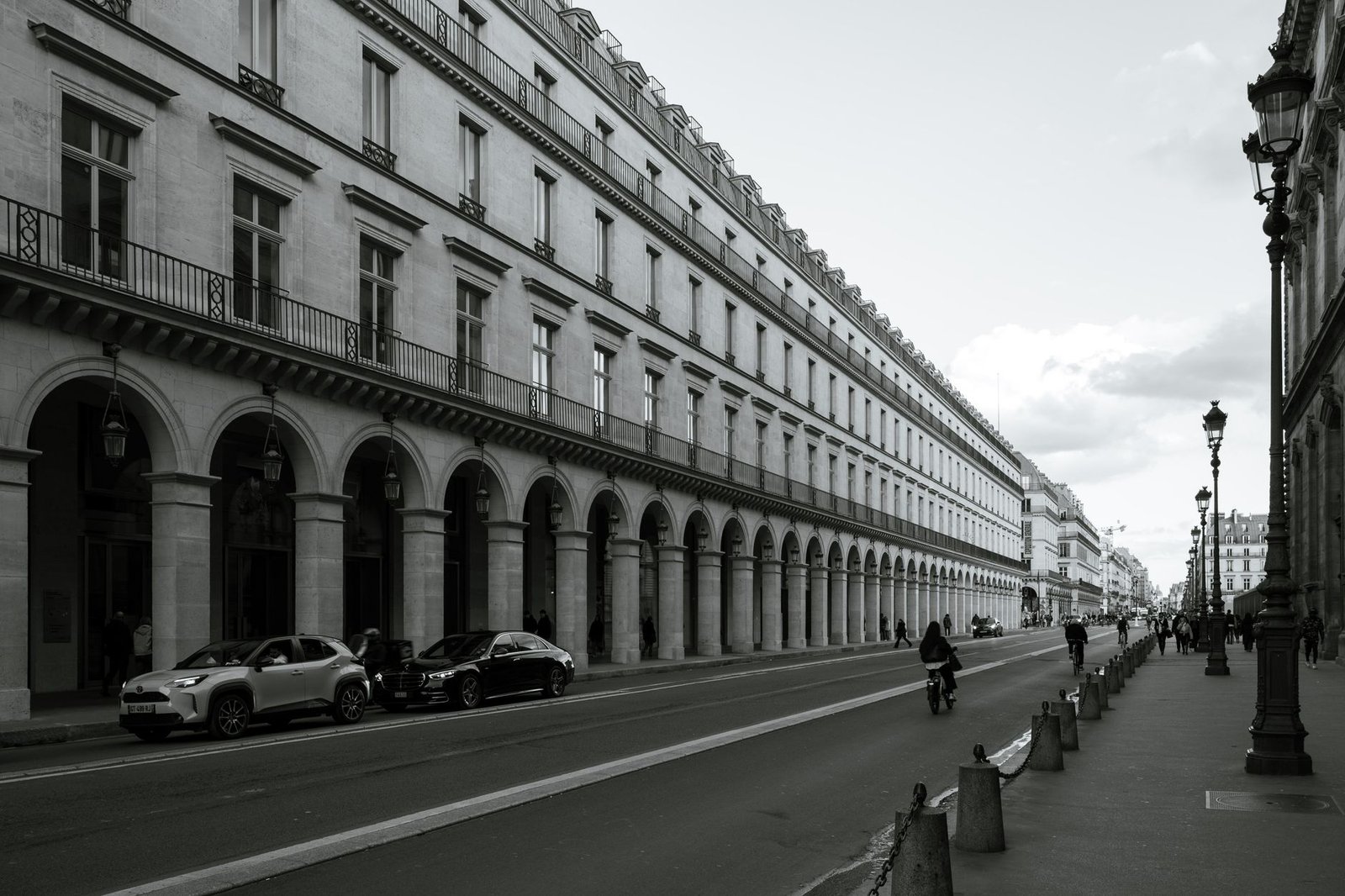
Before Haussmann reshaped much of Paris in the 19th century—a process that belongs to another chapter of the city’s history, under Napoleon III—it was Napoleon Bonaparte who took the first big step in that direction. He ordered the opening of the Rue de Rivoli, connecting the area near the Louvre to a wider, more organized axis, with covered arcades along the facades—a model, at the time, completely different from the narrow, winding medieval streets that still dominated much of the city.
The Rivoli was the first street in Paris deliberately designed to be wide, straight, and aesthetically uniform, paving the conceptual way for what would decades later become the “Haussmannian” style of Parisian boulevard. Today, walking along the Rivoli is walking through one of the city’s first experiments in modern urban planning.
Bridges Parisians Cross Every Day Without Knowing Their Origin
Napoleon also left his mark on the Seine. He commissioned the Pont d’Iéna (near the Eiffel Tower, though the tower wouldn’t be built for decades), the Pont d’Austerlitz, and the Pont des Arts—the latter now one of the most photographed spots in the city, famous for its views and for having once been (for a problematic time) covered in “eternal love” padlocks that had to be removed due to the excess weight on the structure.
Beyond the bridges, he installed dozens of public fountains across the city—part of a broader effort to improve sanitation and water supply for a Paris that was growing too fast for its medieval infrastructure.
Temples to Himself: La Madeleine and the Bourse
Napoleon’s obsession with architecture in the image of imperial Rome also appears at the Église de la Madeleine, today a fully functioning church near the Place de la Concorde, but originally planned by him as a temple dedicated to the glory of his own army—only after the fall of the empire was the building, with its Greek-column facade that looks more like a classical temple than a typical Christian church, repurposed for Catholic worship.
He also pushed forward work on the Bourse (the old Paris stock exchange) and expanded part of the Louvre complex, always with the same logic: use stone and columns to make it clear, on every corner, that Paris was now the capital of an empire that saw itself as the direct heir to Rome.
The Code Napoléon: The Law That Outlived the Empire
If the monuments are Napoleon’s most visible mark on Paris, his most lasting work probably doesn’t even show up in tourist photos: the Civil Code of 1804, known to this day as the Code Napoléon. He didn’t write the code personally—that was left to a commission of four great jurists—but he presided over most of the drafting sessions and used his political weight to ensure its approval.
The Code consolidated principles like civil equality before the law (with important limitations, especially for women, by the standards of the time) and helped definitively end remnants of the French feudal system. Its influence was so great that it spread across much of Europe and Latin America, including Brazil, where it echoes in the very tradition of Brazilian civil law. It is, without exaggeration, the piece of Napoleon’s legacy that still governs the daily lives of millions of people, two hundred years later.
Fall, Exile, and a Return He Didn’t Live to See
Napoleon’s empire didn’t last forever. Defeated definitively at the Battle of Waterloo in 1815, he was exiled by the British to the remote island of Saint Helena in the middle of the South Atlantic, where he died on May 5, 1821—far from Paris, from France, and from any of the monuments he had ordered built.
But Napoleon’s story in Paris doesn’t end with his death. In 1840, nearly twenty years later, King Louis-Philippe decided to repatriate his remains as a political gesture of national reconciliation. The coffin was brought from the island aboard the ship Belle Poule, under the command of the Prince of Joinville, and received in Paris with a state ceremony on December 15, 1840—the event is still remembered today as “le retour des cendres” (the return of the ashes).
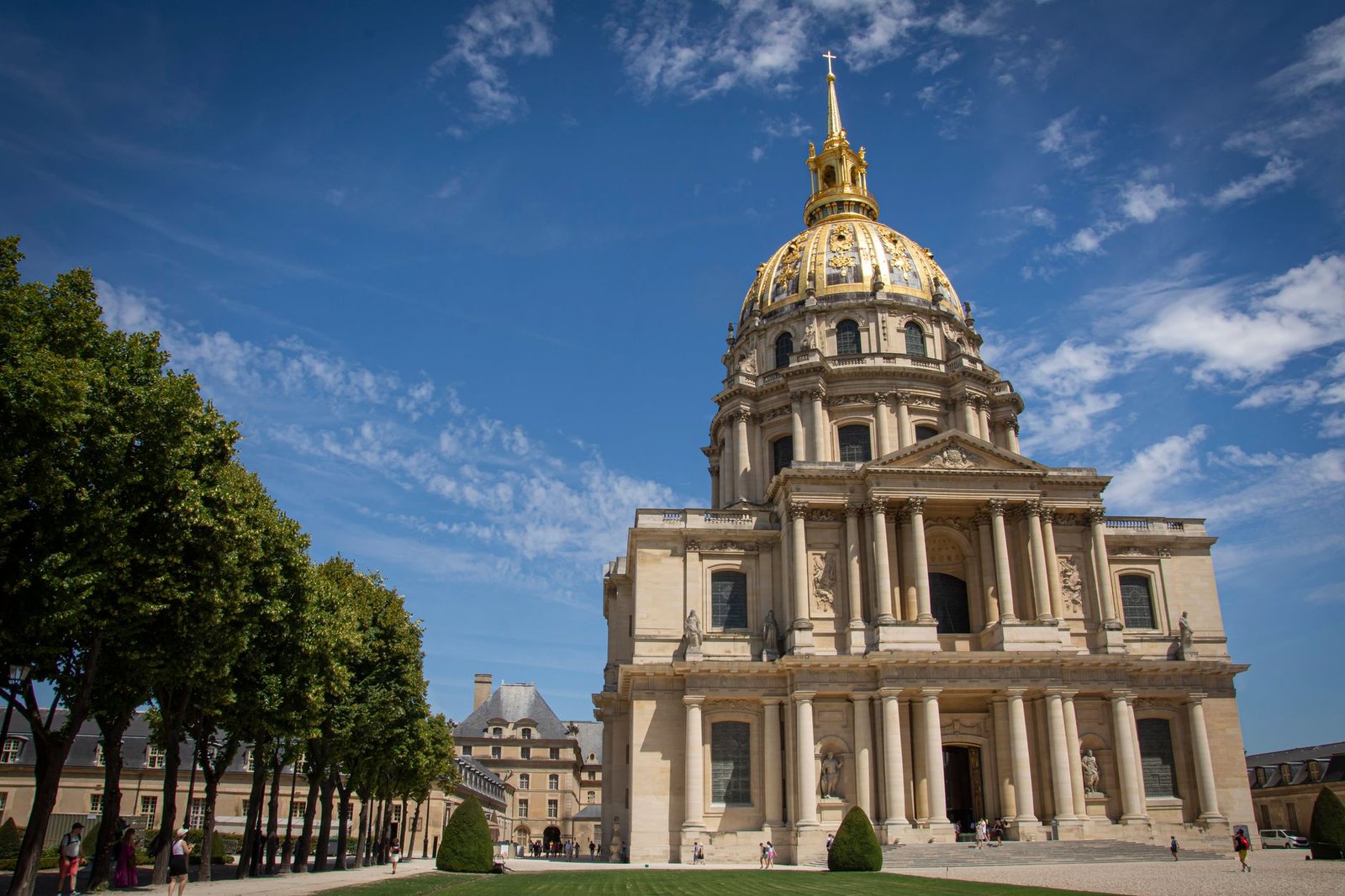
The final tomb, under the golden dome of the Hôtel des Invalides, took another two decades to complete, only being inaugurated on April 2, 1861, under the reign of Napoleon III (the emperor’s nephew). Around the sarcophagus, twelve statues sculpted by Pradier represent the emperor’s main military campaigns—a monument as grand as everything he himself had built in his lifetime.
What You Can Still See in Paris Today
- Napoleon’s Tomb at the Hôtel des Invalides: under the golden dome, inside the complex that also houses the Musée de l’Armée—one of the most imposing sites in Napoleonic Paris.
- Arc de Triomphe: commissioned by Napoleon but only completed after his death; you can go up to the top for one of the best panoramic views of the city.
- Vendôme Column: in the middle of the square of the same name, surrounded by jewelry stores and luxury hotels.
- Rue de Rivoli: still one of Paris’s main shopping streets, with the original arcades preserved along much of the route.
- Pont des Arts and Pont d’Iéna: bridges from the Napoleonic period, now tourist attractions in their own right.
A practical tip: the Invalides + Arc de Triomphe + Vendôme Column combo can be done in a single day of walking (or with short metro rides between them), essentially following a timeline of the emperor’s rise and fall.
Frequently Asked Questions About Napoleon in Paris
Where was Napoleon crowned emperor?
At Notre-Dame Cathedral in Paris, on December 2, 1804—breaking the centuries-old tradition of crowning French kings in Reims.
Did Napoleon see the Arc de Triomphe finished?
No. He commissioned the monument in 1806, but construction lasted thirty years and was only completed in 1836, fifteen years after Napoleon’s death in 1821.
Where is Napoleon’s tomb?
At the Hôtel des Invalides in Paris, under the golden dome. His remains were only brought from the island of Saint Helena, where he died, in 1840, and the final tomb was only completed in 1861.
What is the Code Napoléon?
It’s the French Civil Code of 1804, organized during Napoleon’s government. It consolidated principles of civil equality before the law and influenced the legal systems of many countries, including Brazil.
Are Napoleon and Napoleon III the same person?
No. Napoleon I (Bonaparte) was the emperor crowned in 1804 and defeated at Waterloo in 1815. Napoleon III was his nephew, who ruled decades later (1852-1870) and was responsible, along with Baron Haussmann, for the great urban renovation of Paris in the 19th century.
Looking at Paris through Napoleon’s eyes is understanding a city he wanted to transform into a new Rome—and that, for the most part, he succeeded in doing, even without living to see it all finished. Arches, columns, bridges, and a law that spanned two centuries: few rulers have left such a concrete mark on a city in such a short time in power.
Napoleon only came to power because the French Revolution, years earlier, had already toppled the monarchy and paved the way—see where that actually happened in Paris in our guide to the French Revolution.
To dive deeper, it’s also worth checking out the Wikipedia page on Napoleon Bonaparte and the official site of the Musée de l’Armée, which manages the tomb at Les Invalides.