The Palais Garnier is one of the most impressive buildings in Europe—and probably the most photographed opera house in the world. Inaugurated in 1875, it sits in Paris’s 9th arrondissement, less than 500 meters from the Opéra metro station (lines 3, 7, and 8). The self-guided tour costs €14 per person (free for children under 12) and takes between 1.5 and 2 hours. What most people don’t know is that you can explore the interior without attending a single performance—and the ceiling painted by Marc Chagall in the Grande Salle will have your neck craned upward for way too long.
Dica: Aproveite também para fazer estes passeios em Paris
Tour pelo exterior da catedral de Notre Dame + Ingresso da cripta . Duração: 2 horas
Disneyland Paris Duração: 3 horas ou mais
Passeio de barco pelo Sena. Duração: 1h
Ingresso do 3º andar da Torre Eiffel. Duração: 2 a 3 horas
Ingresso do Palácio de Versalhes. Duração: 2 a 3 horas
Veja mais passeio em Paris aqui.
How to get to the Opéra Garnier from central Paris
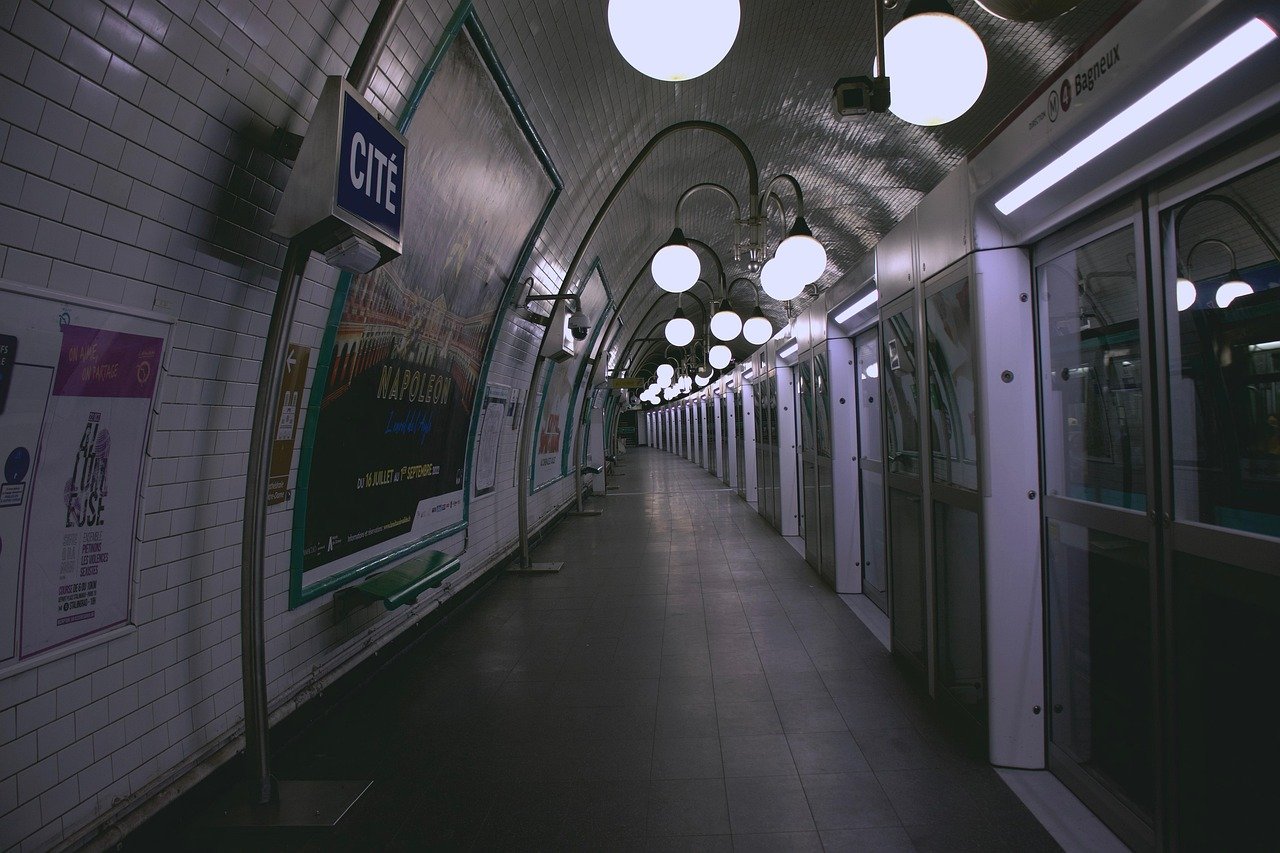
The most direct way is the metro. The Opéra station is less than a two-minute walk from the Palais Garnier’s main entrance—you ride up the escalators and the theater looms impressively right in front of you, filling a good chunk of your field of vision. This station is served by lines 3, 7, and 8. If you’re on line 1 (which passes by the Louvre and the Champs-Élysées), get off at Concorde or Tuileries and take line 8 to Opéra—it’s just two stops.
There’s also access via the RER A, stopping at Auber station, which is less than 100 meters from the opera house—handy if you’re coming from Charles de Gaulle airport or Versailles. By bus, several lines pass through the Place de l’Opéra; check the options on the RATP app before you head out.
On foot from other landmarks: from the Louvre Museum, it’s about a 15-minute walk along the Rue de Rivoli and then up the Avenue de l’Opéra—a route that passes designer storefronts and gives you a taste of the Parisian grands boulevards. From Place Vendôme, it’s less than 10 minutes.
Address: Place de l’Opéra, 75009 Paris.
Hours, prices, and how much time to set aside
The Palais Garnier is open for visits daily from 10 AM to 3:30 PM (last entry), with extended hours until 4:30 PM during August. On days with rehearsals or performances, tourist access may be restricted to certain areas—it’s worth checking the official Opéra de Paris website before buying your ticket.
The self-guided visit ticket costs €14 for adults (June 2026). Children under 12 get in free. There’s a discount for young people aged 12 to 25 who are EU citizens—check the official website for details. You can buy your ticket on-site, but during peak season (April to September), the line can get long. The smart move is to book online in advance.
Set aside between 1.5 and 2 hours to explore properly. If you’re into architecture or art history, you can easily spend 2.5 hours without noticing the time fly—the Bibliothèque de l’Opéra, the Grand Foyer, and the Rotonde du Glacier alone deserve a lingering look. If you’re just hitting the main highlights, 1.5 hours is enough.
The best time slot is right at opening, 10 AM: natural light streams through the Grand Salle’s windows with less interference, visitor traffic is still low, and you can photograph the staircases without crowds in the frame. Avoid the window between 11 AM and 1 PM, when tourist groups are at their peak.
What to see inside the Palais Garnier
The Grand Staircase
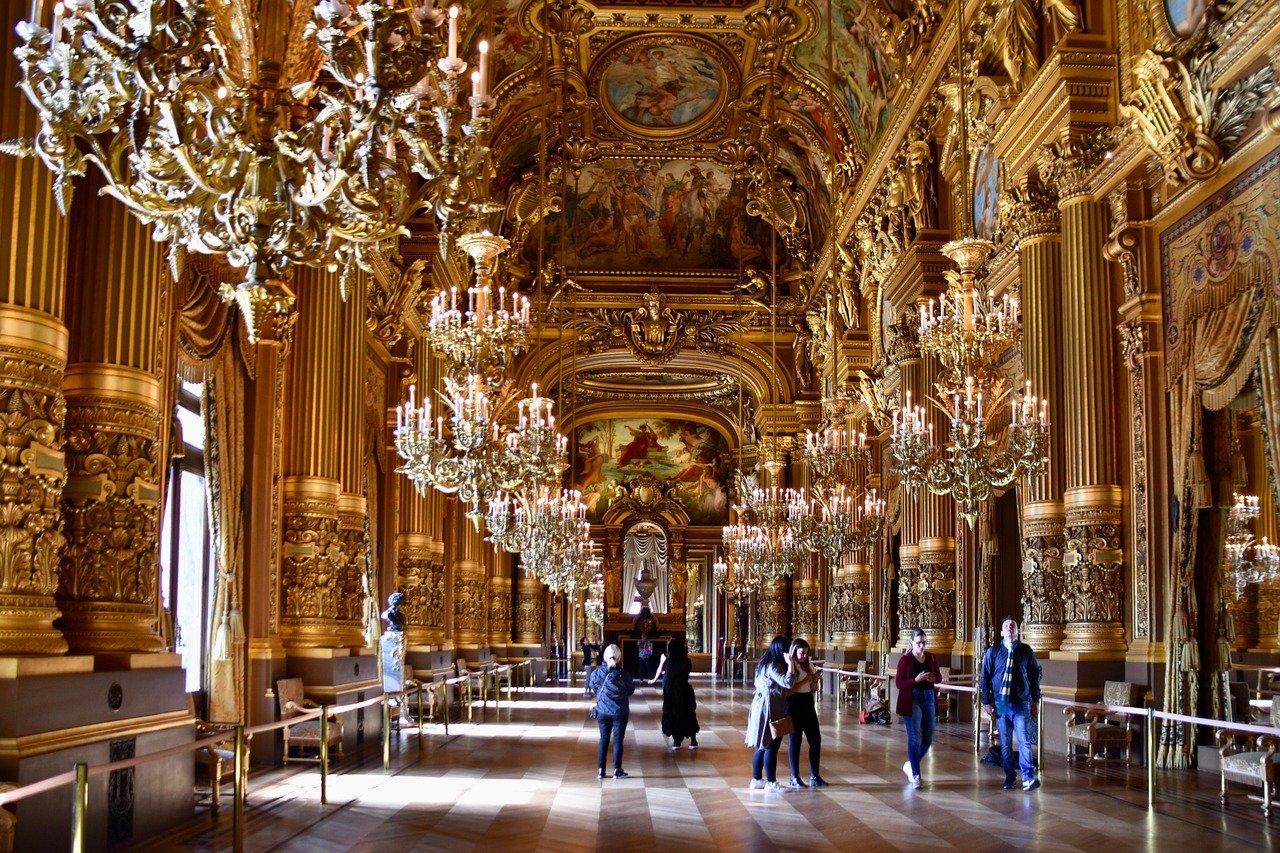
You walk in through the lobby, get your ticket, and immediately come face to face with the Grand Escalier—the Grand Staircase of white, green, and red marble that Charles Garnier designed to be, in his own words, “a theater within the theater.” People arrive, stop, pull out their camera, put it away, pull it out again. It’s the kind of space you know you’ll photograph badly because the scale just doesn’t fit on a phone screen. Gilded bronze chandeliers hang suspended over the two ramps that rise symmetrically to the upper floors. Climb slowly—each landing reveals a different angle of the mosaics on the dome ceiling above the stairs.
The Grand Foyer
On the second floor, the Grand Foyer stretches 54 meters long and was inspired by the Hall of Mirrors at Versailles—but with a warmer palette, in gold and earthy tones. The ceiling paintings depict allegorical scenes of music and dance. The windows look out over the Place de l’Opéra below: glance outside and you’ll see the Avenue de l’Opéra in perfect perspective, with the Louvre on the distant horizon on clear days.
The Grande Salle and the Chagall ceiling
This is the moment that surprises visitors the most. You step into the Grande Salle—the performance hall with 1,979 seats—and your eyes automatically go up. The ceiling was painted by Marc Chagall in 1964, at the invitation of Culture Minister André Malraux. It features 14 colorful scenes representing works by composers like Mozart, Wagner, Berlioz, and Stravinsky, in a dreamlike, vibrant style that deliberately contrasts with the 19th-century gilded ornamentation around it. Some love it (the majority), some find it anachronistic—but nobody walks away indifferent. The massive crystal chandelier at the center is nearly 8 meters in diameter and weighs about 6 tons.
The Bibliothèque-Musée de l’Opéra
Often skipped by those in a hurry, the theater’s library holds original scores, costumes, set models, and paintings related to the history of opera and ballet in Paris. Entry is included in your visit ticket. If you’re interested in theater history or 19th-century costume design, this section can easily eat up 30 minutes of your visit.
The Underground Lake—the secret you can’t see
Yes, there’s a lake beneath the Palais Garnier. It’s not open to the general public, but it’s worth knowing: during construction, Garnier hit a water table and, instead of draining it, created a water cistern that serves as ballast for the building and today houses a colony of trout. It was this image that inspired Gaston Leroux when he wrote The Phantom of the Opera in 1910. The real lake sits about 6 meters below the stage—mentioned on themed guided tours that occasionally pop up on the official website.
What to pair on the same day
The Palais Garnier sits in a strategic spot that makes it easy to combine with other sights. Place Vendôme, with its Napoleonic column and luxury jewelers, is less than a 10-minute walk away—worth the detour, even just to see the square. The Louvre Museum is about a 15-minute walk or one metro stop away: if you’ve got the energy, it’s a great pairing for the day, but plan at least 2 extra hours for the Louvre.
Another great option is to walk over to Rue de la Paix and then along Rue du Faubourg Saint-Honoré—the historic heart of Parisian designer boutiques—toward the Napoleon-related monuments in Paris, which include the Vendôme Column and the Arc de Triomphe. It’s an urban route that weaves together history, architecture, and Parisian elegance in under 5 km of walking.
If you want something more cultural, the Musée Grévin—Paris’s wax museum—is a 5-minute walk from the Palais Garnier, in the Grands Boulevards. It’s a great addition for those traveling with kids.
Where to eat nearby
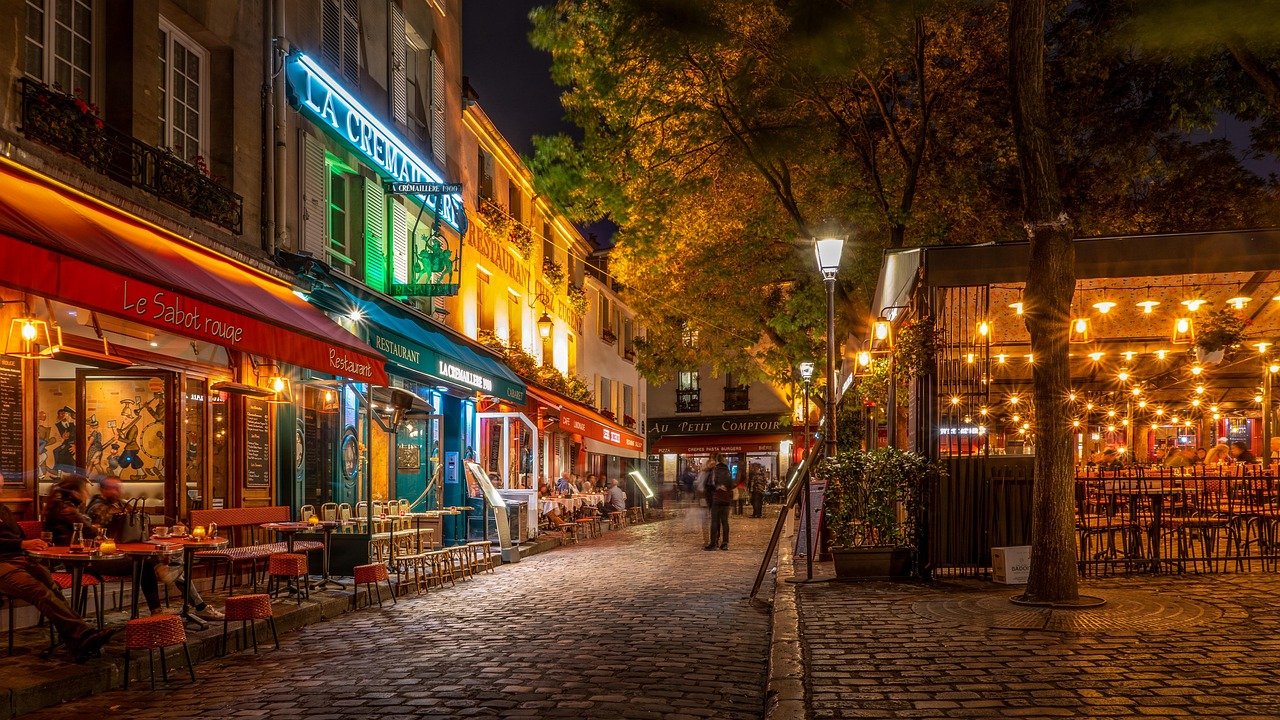
The Opera district has options for every budget. For a quick break with good coffee and a croissant, the bistros on Rue Auber and Rue Scribe (right behind the theater) are practical and reasonably priced for the area. For something more elaborate, the Café de la Paix, opened in 1862 and located in the Intercontinental hotel right next to the opera house, is a historic choice — the setting is grand and the prices match (expect to pay €20 to €35 for a main course). For a more affordable meal, the Grands Boulevards, two blocks away, have several brasseries with daily menus between €15 and €20. Avoid the restaurants right on the Place de l’Opéra: the location inflates the prices and the value for money rarely pays off.
Practical tips and who it’s worth it for
Buy your ticket online at least a few days in advance during high season — the physical box office can have lines of up to 40 minutes. The official Opéra de Paris website lets you book a specific entry time.
Check the calendar before you go: on days with dress rehearsals or performances, some areas are closed to visitors (mainly the Grande Salle). The website lists in advance which spaces will be available on each date.
Bring a camera with a good wide-angle lens if you’re a photographer: the rooms are too vast for a phone to capture the true scale. But even with a phone, you’ll walk away with gorgeous shots — the lighting is beautifully done.
Audioguide: it’s available in several languages, including English. The content adds a lot of historical context to the rooms and is worth the rental if you want to understand what you’re looking at beyond the visual spectacle.
Who is it worth it for? Honestly, for just about any type of traveler. Architecture buffs and art history lovers will adore every detail. Those who travel for visual experiences will leave with incredible photos. Traveling with kids? They’ll be blown away by a space this grand, no matter their age. The most common mistake is skipping the Palais Garnier because you think “it’s just a theater I’ll never use” — the tourist visit requires zero prior connection to opera or ballet.
Mistake to avoid: showing up without checking the day’s opening hours. On dates with major performances, tourist access can close earlier than usual.
Frequently asked questions about the Palais Garnier
Do I need to watch an opera to visit the Palais Garnier?
No. The theater offers a self-guided tourist visit during the day, separate from the evening performances. You pay €14 and explore the salons, the Grand Staircase, the Grand Foyer, and the Grande Salle on your own. No ticket to any performance is required.
Which metro station is closest to the Palais Garnier?
The nearest station is Opéra, served by lines 3, 7, and 8. The station exit is less than a two-minute walk from the theater’s main entrance. You can also take the RER A and get off at Auber station, less than 100 meters from the theater.
How long does a visit to the Palais Garnier take?
Between 1.5 and 2 hours for most visitors. If you want to take your time in each room and use the audioguide, plan for 2.5 hours. There’s no time limit once you’re inside.
Can I take photos inside the Palais Garnier?
Yes, photography for personal use is allowed in almost all areas of the tourist visit. Tripods generally aren’t permitted without prior authorization. Flash may be restricted in some rooms — stick to the automatic night mode instead.
Is the Palais Garnier open every day?
The tourist visit runs daily from 10:00 AM to 3:30 PM (last entry at that time). In August, hours extend to 4:30 PM. The theater closes on some French national holidays — check the calendar on the official website before your visit.
Conclusion
The Palais Garnier is one of those visits that surprises even people with zero interest in opera. You walk in expecting to see “a pretty theater” and walk out feeling like you’ve traveled through a century and a half of European art history in just two floors. Arrive at 10 AM, take your time climbing the Grand Staircase, stare at Chagall’s ceiling long enough to recognize at least one of the scenes — then reward yourself with a coffee on Rue Auber. Paris has more famous attractions, but few are as complete as this one.