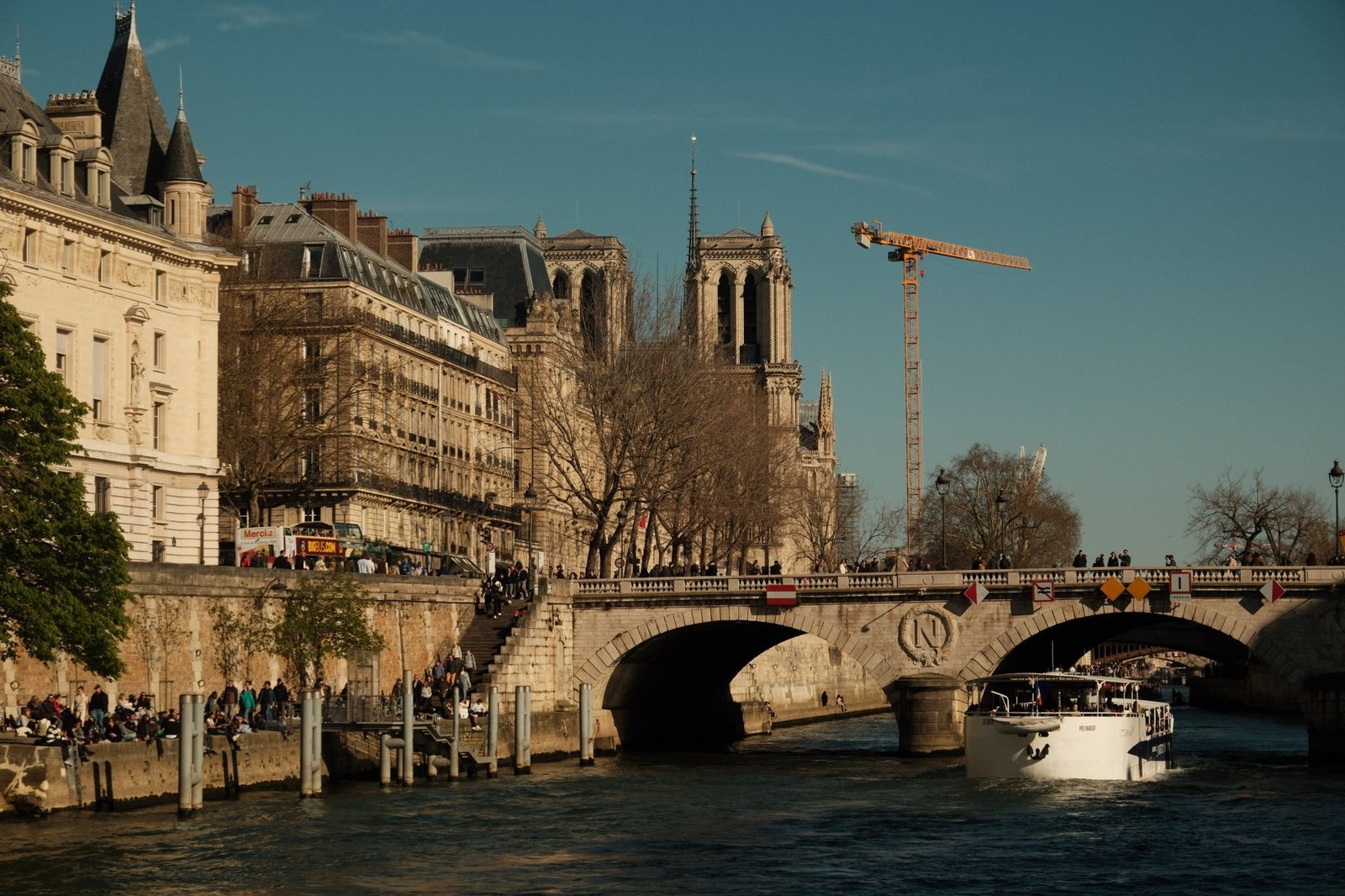
Every big city has a starting point, a place where it all began before turning into the metropolis we know today. In Paris, that spot is a narrow island in the middle of the Seine River, less than a kilometer long, where tourists now snap photos of Notre-Dame without realizing they’re standing on the very ground where the city was born, over two thousand years ago.
Centuries after Lutetia, Paris would undergo another radical transformation—this one meticulously planned by Baron Haussmann. Check out how it changed the city’s face in our guide to Haussmann’s renovation.
This island is called the Île de la Cité. Understanding its history helps explain why Paris has the shape it does, why certain buildings survived wars and revolutions, and why walking around here is, without exaggeration, walking through the city’s oldest skeleton.
Dica: Aproveite também para fazer estes passeios em Paris
Tour pelo exterior da catedral de Notre Dame + Ingresso da cripta . Duração: 2 horas
Disneyland Paris Duração: 3 horas ou mais
Passeio de barco pelo Sena. Duração: 1h
Ingresso do 3º andar da Torre Eiffel. Duração: 2 a 3 horas
Ingresso do Palácio de Versalhes. Duração: 2 a 3 horas
Veja mais passeio em Paris aqui.
From a Gallic Village to a Roman City
Before it was Paris, the place was called Lutetia. Around the 3rd century BC, a Celtic people known as the Parisii settled in the region, drawn by the river. The Île de la Cité served as a natural, protected harbor—easy to defend, easy to supply, surrounded by water on both sides.
When Julius Caesar conquered Gaul in 52 BC, Lutetia was incorporated into the Roman Empire. The Romans expanded the settlement to the left bank of the Seine, where the Latin Quarter now stands, building a forum, baths, and grid-organized streets—part of that layout still influences the design of some streets in the neighborhood. It was only later, as other peoples advanced into Gallic territory, that the name Lutetia was gradually replaced by “Paris,” a direct reference to the Parisii themselves.
Why This Island, Exactly?
The choice wasn’t random. An island in the middle of a river offers advantages any military strategist would recognize immediately: water on both sides acts as a natural moat, bridges can be destroyed in case of attack, and controlling the river crossing automatically means controlling the trade that passes through it.
And that’s exactly what happened. The Île de la Cité concentrated political and religious power for centuries precisely because whoever controlled it controlled the crossing of the Seine—and, by extension, a large chunk of trade between northern and southern Gaul.
Clovis and the Dawn of Medieval Paris
In 496, the Frankish king Clovis I converted to Christianity and, shortly after, made Paris the capital of his kingdom. This is the milestone that usually divides the “Roman” phase from the “medieval” phase of the city. From then on, the Île de la Cité was no longer just a fortified trading post; it became the center of the religious and civil power that would shape the Paris we know today.
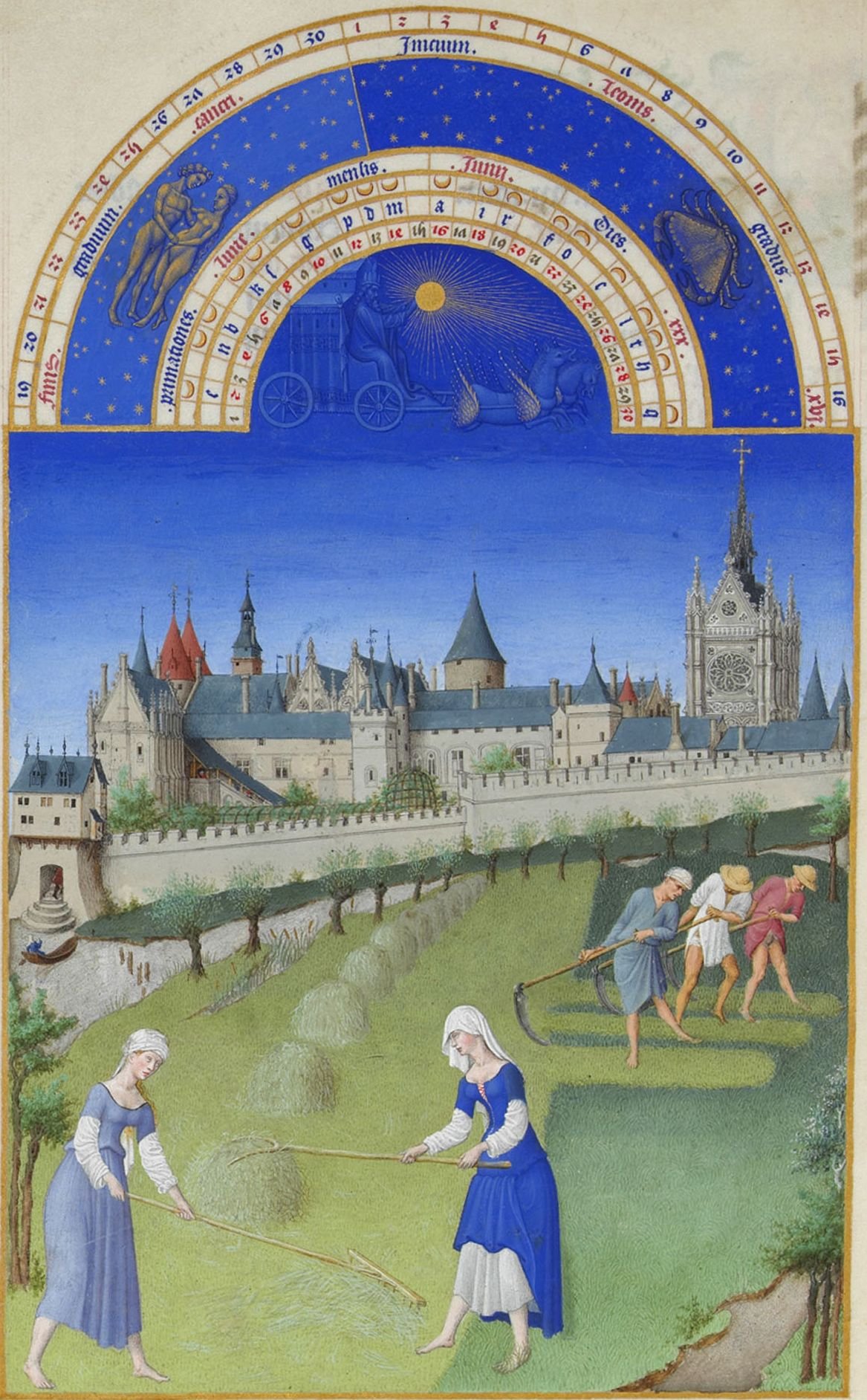
Over the following centuries, the island accumulated three structures that, on their own, sum up a large part of the city’s medieval history: Notre-Dame Cathedral, the Sainte-Chapelle, and the complex we now call the Conciergerie.
Notre-Dame: The Cathedral That Grew with the City
Construction of Notre-Dame began in 1163, under Bishop Maurice de Sully, at a time when Paris was growing fast and needed a cathedral worthy of a kingdom’s expanding capital. The work took nearly two hundred years to complete—the main facade was only finished around 1225, and details continued to be added until the 14th century.
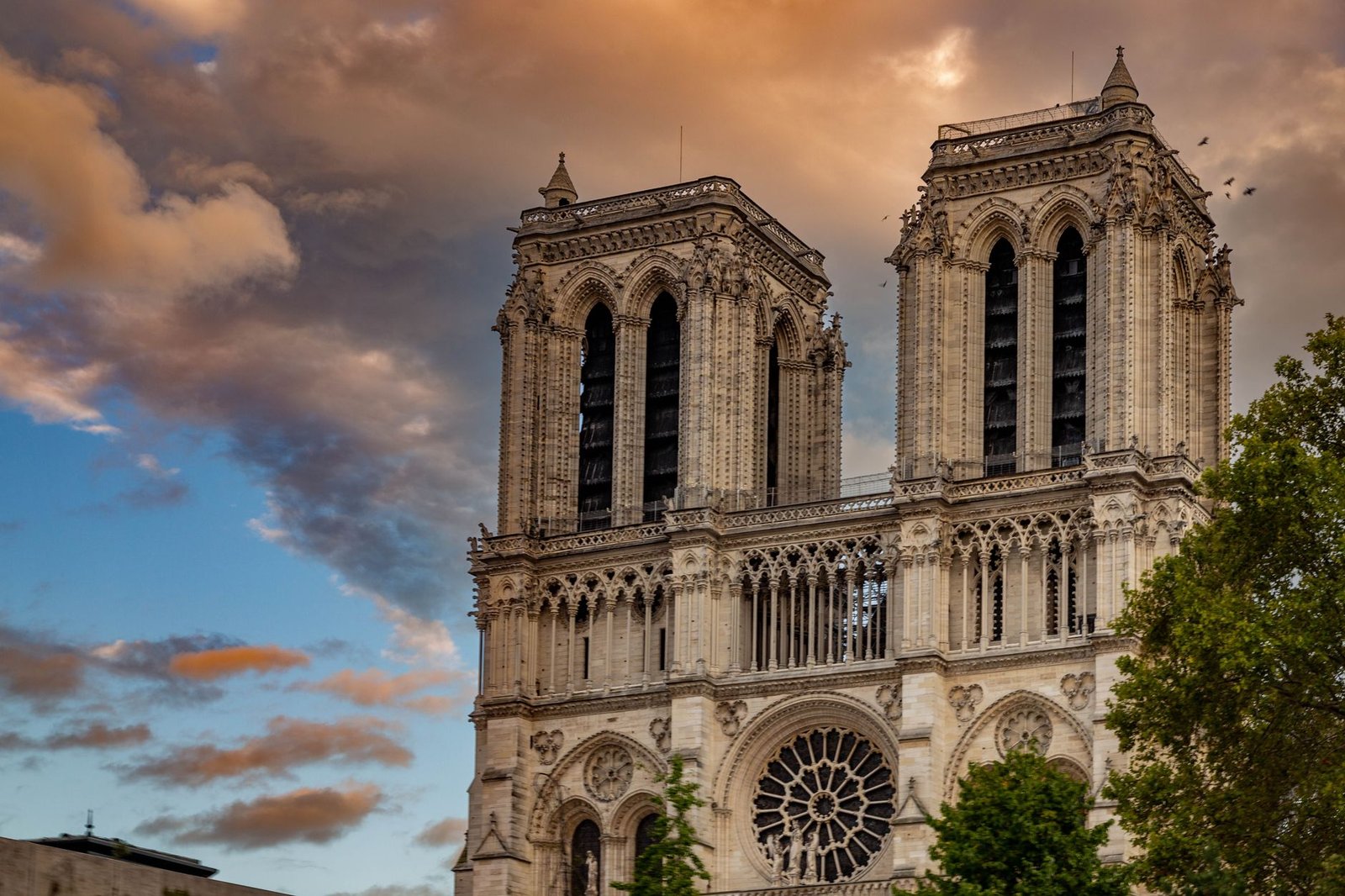
This long construction time wasn’t unusual: Gothic cathedrals were projects that spanned generations of stonemasons, architects, and bishops. What makes Notre-Dame special within Paris’s history is that it has literally witnessed every major event in the city since then—coronations, the baptism of kings, the French Revolution (when it was ransacked and its statues beheaded), the 19th-century restoration led by Viollet-le-Duc, and, more recently, the 2019 fire and its reopening.
Sainte-Chapelle: The Most Expensive Reliquary of the Middle Ages
Much more discreet on the outside, the Sainte-Chapelle holds one of the most curious stories on the Île de la Cité. It was built between 1242 and 1248, by order of King Louis IX (later canonized as Saint Louis), with a single purpose: to house relics of Christ’s Passion that the king himself had purchased.
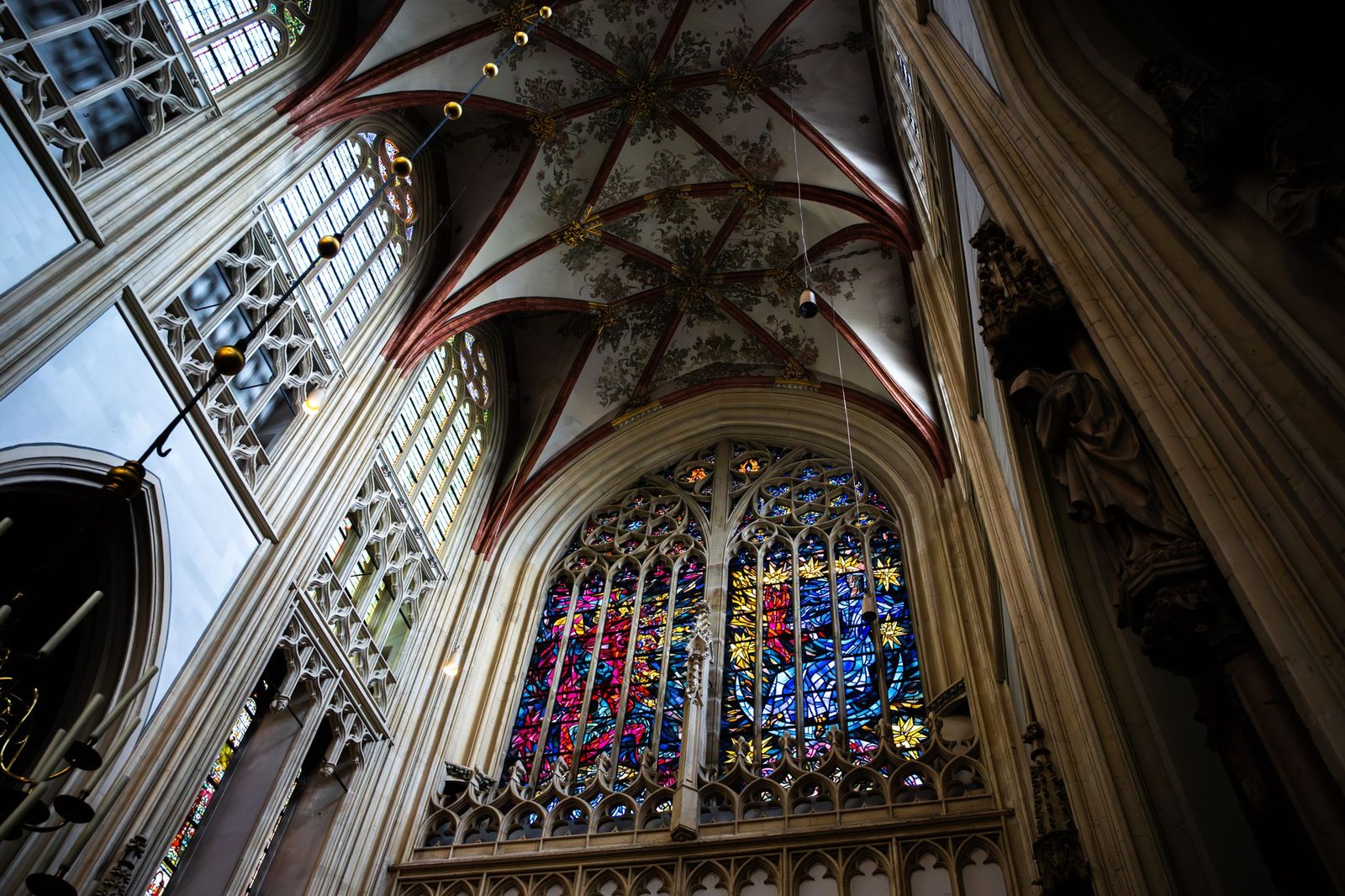
And here’s the detail few guides mention: Louis IX paid 135,000 livres for the Crown of Thorns and a fragment of the True Cross—nearly three times more than the cost of building the entire chapel, which came to around 45,000 livres. In practice, he spent more money buying the sacred objects than erecting the building that would house them. Today, what remains surprises anyone who walks in: the stained-glass windows cover practically the entire upper part of the upper chapel, creating a colored light effect that few places in Paris can match.
Conciergerie: From Royal Palace to the Revolution’s Most Feared Prison
Before becoming a prison, the Conciergerie was part of the Palais de Justice and was originally a royal residence. Its function changed over the centuries, and from the 14th century onward, it operated as a prison—a role it kept until the early 20th century.
The darkest chapter of the Conciergerie unfolded during the French Revolution. Between 1793 and 1794, the place was overcrowded, housing over four thousand prisoners awaiting trial (and, often, execution). Marie Antoinette spent her final days in a small cell inside the Conciergerie before being taken to the guillotine in 1793. For the complete Revolution itinerary in Paris—including the Bastille and Place de la Concorde—check out our guide to the French Revolution in Paris. The cell still exists and can be visited—it’s one of the most popular spots in the complex.
Bridges Full of Houses and the Birth of the Latin Quarter
Today, Paris’s bridges are just structures for crossing the river. In the Middle Ages, they were much more than that—some functioned almost like suspended streets, lined with houses and shops on both sides, with residents living literally above the water.
The Pont Notre-Dame, for example, once had about sixty houses built on its structure. The accumulated weight of decades of construction was one of the factors that led to a partial collapse in 1499—a reminder that medieval engineering had its limits, even when well-intentioned. Another famous bridge of the time, the Pont au Change, got its name in the 12th century after King Louis VII ordered goldsmiths and money changers to set up shop there, turning the crossing into a small open-air financial center.
Meanwhile, on the other side of the river, the left bank of the Île de la Cité was beginning to transform into another kind of hub: one of knowledge. The University of Paris was born around 1170, bringing together masters and students who read, debated, and taught in Latin on the streets—which gave rise to the name “Latin Quarter,” a name the neighborhood still carries today. Decades later, in 1253, theologian Robert de Sorbon founded a college so poor students could study theology for free; King Louis IX officially confirmed the foundation in 1257. That college gave its name to the Sorbonne, which centuries later would become synonymous with the university itself.
In other words: while the Île de la Cité concentrated religious and political power, the left bank, just a few steps away, began shaping the intellectual vocation that Paris carries to this day.
What You Can Still See on the Île de la Cité Today
The good news for anyone visiting Paris is that this medieval layer hasn’t disappeared beneath the modern city—it’s right there, interspersed with cafés, bookshops, and the constant flow of tourists crossing the bridges every day.
- Notre-Dame: reopened after the post-fire restoration, with free access to the interior (advance time-slot reservation recommended during peak periods).
- Sainte-Chapelle: paid entry, worth booking in advance—the line can be long during peak hours, especially in the European summer.
- Conciergerie: can be visited separately or with a combined ticket with the Sainte-Chapelle, since they’re just a few meters apart.
- Marché aux Fleurs: the flower market that has occupied part of the island’s central square since the 19th century, a lighter breather amidst all that heavy history.
A practical tip: arrive early, especially if you want to see the Sainte-Chapelle without an hour-long line. The first hours of the morning, right at opening time, are usually much quieter than mid-afternoon.
Frequently Asked Questions About the Île de la Cité and Medieval Paris
What is the ancient name of Paris?
Lutetia (in Latin, Lutetia). The name comes from the Gallic people Parisii, who occupied the region before the Romans arrived. Over time, “Lutetia” was replaced by “Paris,” a direct reference to this people.
Why is the Île de la Cité considered the birthplace of Paris?
Because it was there that the first permanent settlement emerged, back in the Gallic era, and because the island concentrated the city’s political and religious power throughout the Middle Ages, before Paris expanded to both banks of the Seine.
Are Notre-Dame, Sainte-Chapelle, and the Conciergerie close to each other?
Yes. All three are located on the Île de la Cité itself, just a few minutes’ walk from each other—it’s perfectly possible to visit all three in one day, without rushing.
Do you have to pay to visit the Île de la Cité?
Walking around the island and seeing the facade of Notre-Dame is free. Paid tickets are required to enter the Sainte-Chapelle and the Conciergerie—Notre-Dame, even inside, remains free to enter, although it’s advisable to reserve a time slot in advance.
Why is the Latin Quarter called that?
Because, from the 12th century onward, masters and students from the newly founded University of Paris roamed the neighborhood conversing and giving classes in Latin, the official language of European education at the time. The name stuck and remains to this day, even though no one speaks Latin on the streets anymore.
Do the houses on Paris’s bridges still exist?
No. The structures on bridges like the Pont Notre-Dame were removed over the following centuries, mainly for safety and hygiene reasons—the partial collapse of 1499 was one of the events that highlighted the risks of this model. Today, the bridges of the Île de la Cité are all free of buildings, just the structure for crossing.
Knowing this part of history helps you see Paris in a different light. It’s not just a beautiful city to photograph—it’s a city that carries, in stone and stained glass, over two thousand years of decisions, disputes, and reconstructions. And it all started on an island you can walk across in less than fifteen minutes.
To learn more about the city’s history, it’s worth checking out the Wikipedia page on the history of Paris and the official Sainte-Chapelle website for up-to-date information on hours and tickets.