Paris’s covered passages hold a side of the city that fits into a single morning: antique shop windows, mosaics underfoot, and skylights that make the rain feel irrelevant. The best route links the Palais-Royal to the Grands Boulevards without any zigzagging, turning a simple commute through the 2nd arrondissement into a proper outing.
To explore the covered passages of Paris at a relaxed pace, start at the Galerie Vivienne, cross the Bourse district, and finish at the Passages des Panoramas, Jouffroy, and Verdeau. It’s about 1.5 miles of walking, with plenty of pauses to admire the floors, the signs, and the shops; set aside two to three hours.
A walking route through Paris’s covered passages
The most straightforward route starts near the Palais-Royal and heads north: Galerie Vivienne, Galerie Colbert, Passage des Panoramas, Passage Jouffroy, and Passage Verdeau. This sequence saves you from backtracking and leaves the busiest part for the end, when you’ve already started to notice the details that make these galleries different from an ordinary street.
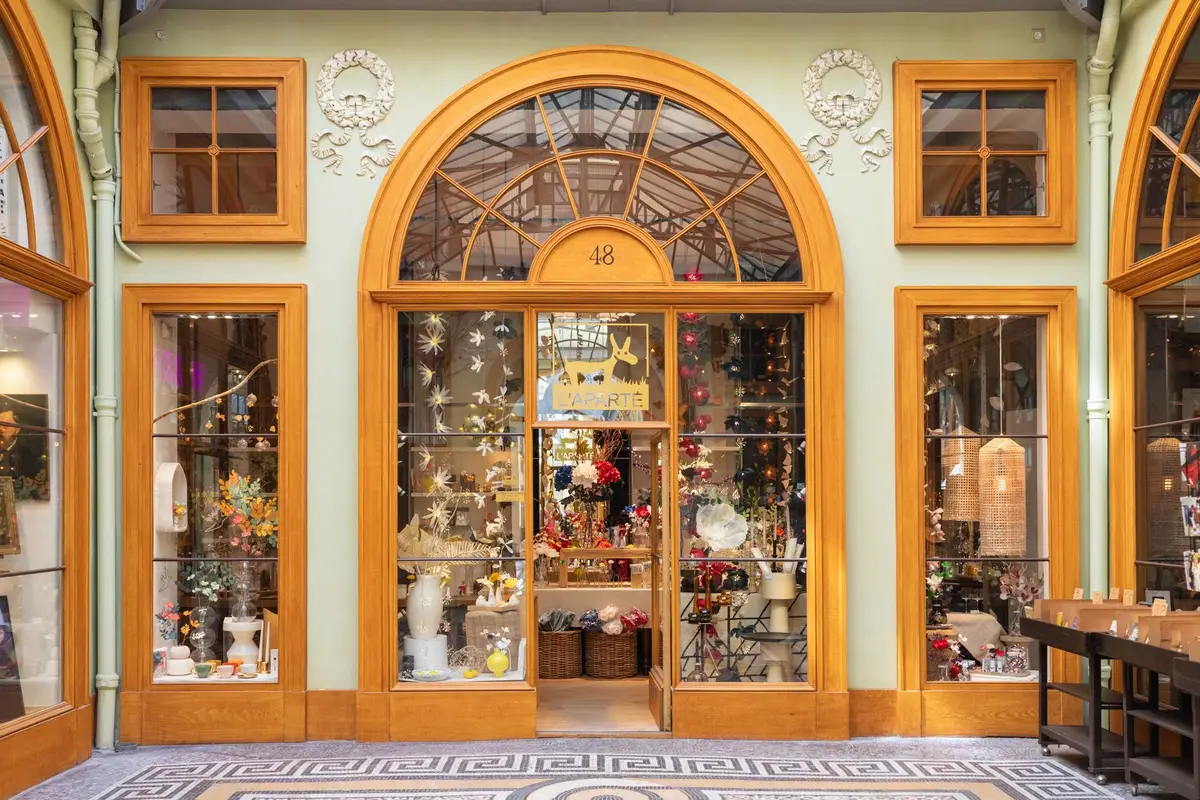
Dica: Aproveite também para fazer estes passeios em Paris
Tour pelo exterior da catedral de Notre Dame + Ingresso da cripta . Duração: 2 horas
Disneyland Paris Duração: 3 horas ou mais
Passeio de barco pelo Sena. Duração: 1h
Ingresso do 3º andar da Torre Eiffel. Duração: 2 a 3 horas
Ingresso do Palácio de Versalhes. Duração: 2 a 3 horas
Veja mais passeio em Paris aqui.
Get off the metro at Bourse or Palais Royal–Musée du Louvre and pick an end to start from. If you come from Bourse, do the route in reverse and finish at the Palais-Royal gardens; if you come from the Palais Royal station, start at the arcades and walk toward the boulevard Montmartre. The walk works best between late morning and early afternoon, when the shops and cafés are open.
Don’t try to collect every gallery in a single outing. The City of Paris lists about thirty survivors of a network that once reached 150 passages and galleries during the Second Empire; this itinerary picks the ones that connect well on the map and in pace. Also check out the Palais-Royal in Paris and its gardens, which fits naturally at the start or the end of your walk.
If you’d rather get an overview before you start walking, you can book a free tour of Paris in Portuguese. It won’t replace this specific route, but it helps you get your bearings around the old stock exchange area, the boulevards, and the urban transformations that explain these passages.
Galerie Vivienne and the Palais-Royal area
The Galerie Vivienne is the stop where you slow down: inaugurated in 1826, it preserves mosaics by Giandomenico Facchina, neoclassical decor, and three entrances—on the rues des Petits-Champs, de la Banque, and Vivienne. It’s a short gallery, but it asks you to look down and then up before moving on.
The location makes sense on this route because it’s just a few minutes from the Palais-Royal arcades. There, the galleries surrounding the gardens show an earlier version of Parisian commercial life: the Duke of Orléans rented out the ground floors to merchants and turned the whole complex into a hub of activity. Enter the Vivienne from the rue des Petits-Champs if you want the rotunda and the mosaic floor to be your first sight.
On your way out, stop by the Galerie Colbert, right next door, and follow the rue Vivienne to the Passage des Panoramas. The contrast between the two helps you read the walk: Vivienne is more ornate and quiet; the next stop is more sprawling, with restaurants, antique shops, and entrances that seem to lead to other eras.
If your day started at the Louvre, the connection is simple too: the essential Musée d’Orsay itinerary can wait for another day, while this walk pairs better with the historic center, the Bourse, and the boulevards. Don’t mix a big museum and five passages into the same schedule: the walk loses the time for observation that is exactly its charm.
Passage des Panoramas, Jouffroy, and Verdeau
The Passage des Panoramas is the historic heart of this route. Built in 1799, it’s cited by the City of Paris as the oldest of the still-existing covered passages; it was created to connect the Palais-Royal to the boulevard Montmartre and draw crowds to the panoramas installed in Thayer’s towers.
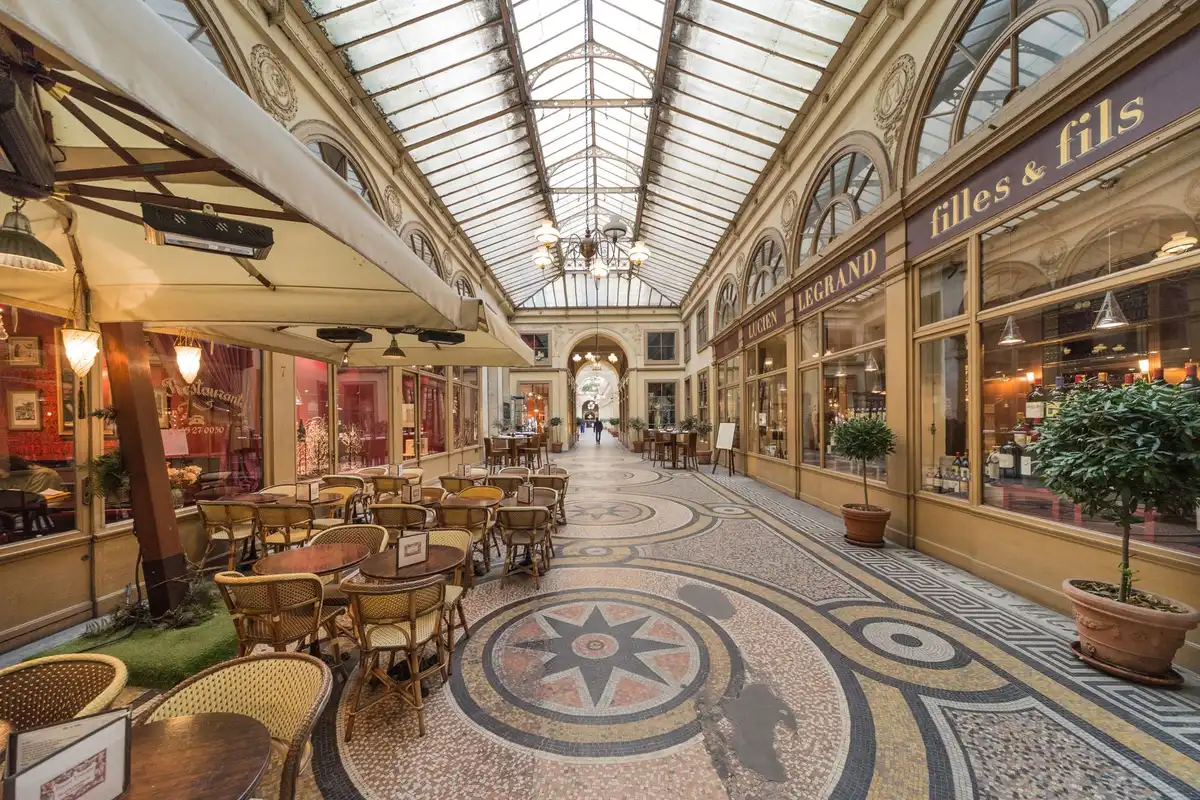
Explore the offshoots without rushing—Galerie des Variétés, Saint-Marc, and Feydeau—but keep the boulevard Montmartre as your reference point so you don’t backtrack too much. The passage gained its strength from its proximity to the Bourse and the Théâtre des Variétés; today, the contrast between the skylight, the collectors’ shop windows, and the restaurant tables is part of the appeal.
Across the boulevard, the Passage Jouffroy heads toward the rue de la Grange-Batelière. Inaugurated in 1847, it was the first built entirely of iron and glass, according to the City of Paris. The Musée Grévin is the most obvious attraction, but it doesn’t have to be a must-do: just walking through the structure already reveals the architectural leap from the galleries of the early century.
Continue to the Passage Verdeau to finish with a stretch that’s less commercial and often quieter. If you only have an hour, pick Vivienne and Panoramas; if you have three, add Jouffroy and Verdeau. To extend your day, the highlights of the Champs-Élysées in Paris are better saved for another time, since they require the metro and completely change the axis of your walk.
The historical details of the route are compiled by the City of Paris, a useful source for checking addresses and dates before your visit. For images and visual memory of the sites, the collection at the Musée Carnavalet helps you compare the Paris captured in engravings and photographs with the passage as it is today.
Practical tips for getting the pace right
The passages are thoroughfares for traffic and commerce, not museums with a single opening time. So walking through them is usually possible even outside shop hours, but the storefronts, restaurants, and bookshops that bring the route to life follow their own schedules. Check the specific establishments on the day itself, especially on Sundays and holidays.
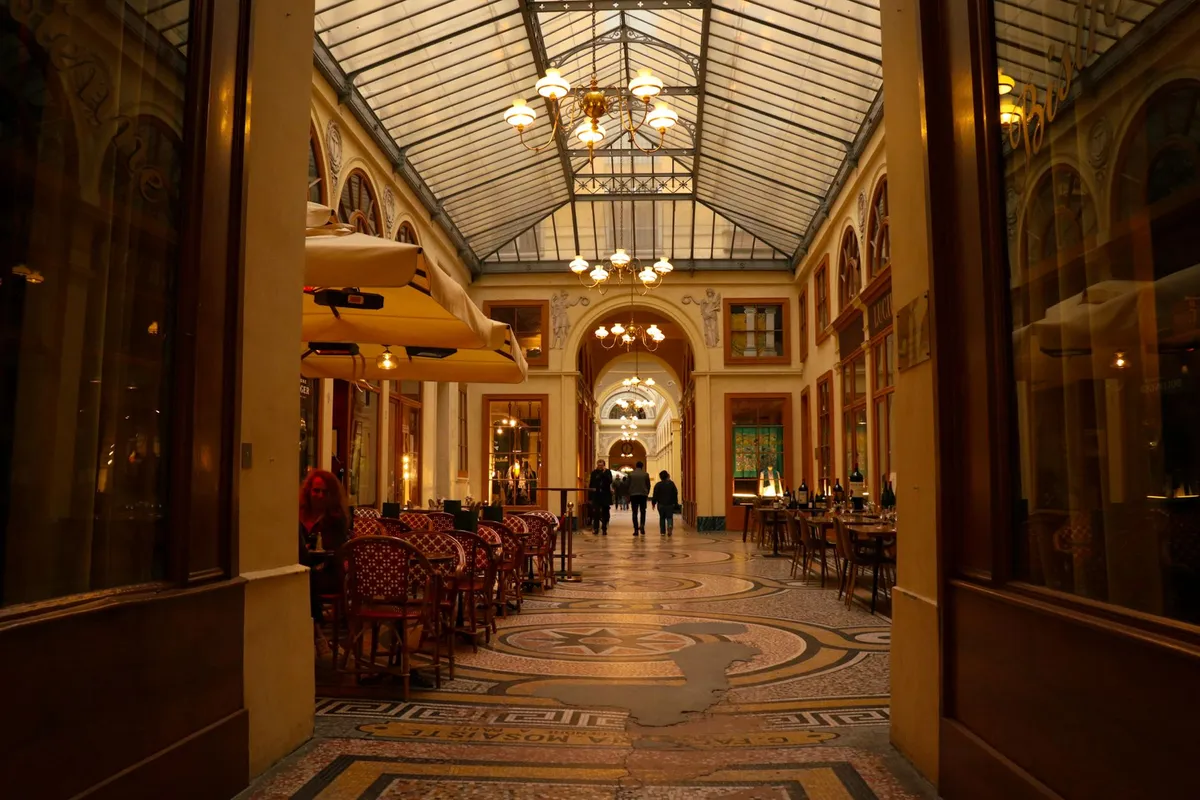
Wear comfortable shoes: the route is short, but the mosaic floors, sidewalks, and stops to browse shop windows make the time fly. This itinerary is especially handy on drizzly days, though it’s not a fully covered walk—you’ll cross streets and boulevards between galleries. Bring a light layer and keep the map offline.
The best way to use your morning is to reach the Galerie Vivienne before the lunch rush and save the Passage des Panoramas for when the cafés start filling up. In the evening, the lighting makes the whole stretch look great, but closed shops take away part of the experience. If you’re into photography, avoid blocking the entrances: these are passages used by locals and workers, not empty backdrops.
Before the FAQ, it’s worth exploring other experiences at the destination if you have extra days in Paris.
Frequently Asked Questions
What are the most beautiful covered passages in Paris?
The Galerie Vivienne usually draws people in with its mosaics and decor; the Passage des Panoramas carries the weight of history; and the Passage Jouffroy stands out for its iron-and-glass roof. For a seamless route, all three work great alongside the Passage Verdeau.
How long does the covered passages itinerary take?
The basic covered passages route in Paris takes about two to three hours, including stops for photos, window shopping, and a coffee. With just one hour, focus on the Galerie Vivienne and the Passage des Panoramas, which are the easiest stretches to connect.
Are the covered passages in Paris free?
The covered passages in Paris are public walkways, so strolling through them doesn’t require a ticket. You only pay for what you decide to eat, buy, or visit along the way, like cafés, shops, and specific attractions such as the Musée Grévin in the Passage Jouffroy.
Which metro should I take for the covered passages?
To start at the Galerie Vivienne, take Bourse or Palais Royal–Musée du Louvre. To begin at the end of the route, Grands Boulevards drops you near the Passages des Panoramas and Jouffroy. The stations make it easy to adjust the route based on the neighborhood where you’re staying.
Conclusion
Between one big sight and the next, this route gives you back a Paris on a smaller scale: wooden doors, signage, glass, and mosaics that ask for your attention. Save the sequence on your map, set aside two or three unhurried hours, and head back to the Eiffel Tower to piece together the rest of your day in the city.