Almost every Paris itinerary mentions a Seine River boat cruise, and almost every traveler asks the same question before buying a ticket: is this a touristy thing that’s actually worth it, or just another expensive line to see what you can already see from the bridges? The short answer is that it depends on what you expect from the experience — and you can figure that out in just a few minutes of reading.
The Seine cuts through Paris from east to west, passing by nearly every monument already on your list: the Eiffel Tower, the Louvre, Notre-Dame, the Musée d’Orsay. Seeing that entire sequence from the water, seated, without worrying about traffic or walking, has an appeal that no photo from the riverbank can replicate.
Dica: Aproveite também para fazer estes passeios em Paris
Tour pelo exterior da catedral de Notre Dame + Ingresso da cripta . Duração: 2 horas
Disneyland Paris Duração: 3 horas ou mais
Passeio de barco pelo Sena. Duração: 1h
Ingresso do 3º andar da Torre Eiffel. Duração: 2 a 3 horas
Ingresso do Palácio de Versalhes. Duração: 2 a 3 horas
Veja mais passeio em Paris aqui.
How a Seine River boat cruise works
Three companies dominate this market in Paris: Bateaux Mouches, Bateaux Parisiens, and Vedettes de Paris. All three offer basically the same product — a roughly one-hour cruise along the river’s central stretch — but they differ in boarding points, boat size, and small extras like audio guides in more languages or an open deck.
Beyond the classic cruise, you can also choose lunch or dinner cruises with a reserved table and a set menu. These are pricier and slower, as the boat covers a longer stretch of the river while meals are served. For those who just want to see Paris from the water without a culinary commitment, the simple one-hour cruise works perfectly.
How much it costs and how long it lasts
Prices for the classic cruise (without a meal) hover around 17 to 20 euros per adult, depending on the company — Bateaux Mouches tends to be the cheapest of the three, with Bateaux Parisiens and Vedettes de Paris slightly higher. Young children usually pay less than half the adult fare, and lap babies often ride for free. These numbers change with the season and promotions, so confirm the current price directly on each company’s website before deciding.
The simple cruise lasts close to an hour, possibly stretching past 1h10 depending on the company and the route. Meal cruises, on the other hand, run about 1h45 for lunch and over 2 hours for dinner, since they include table service time.
What you see during the cruise
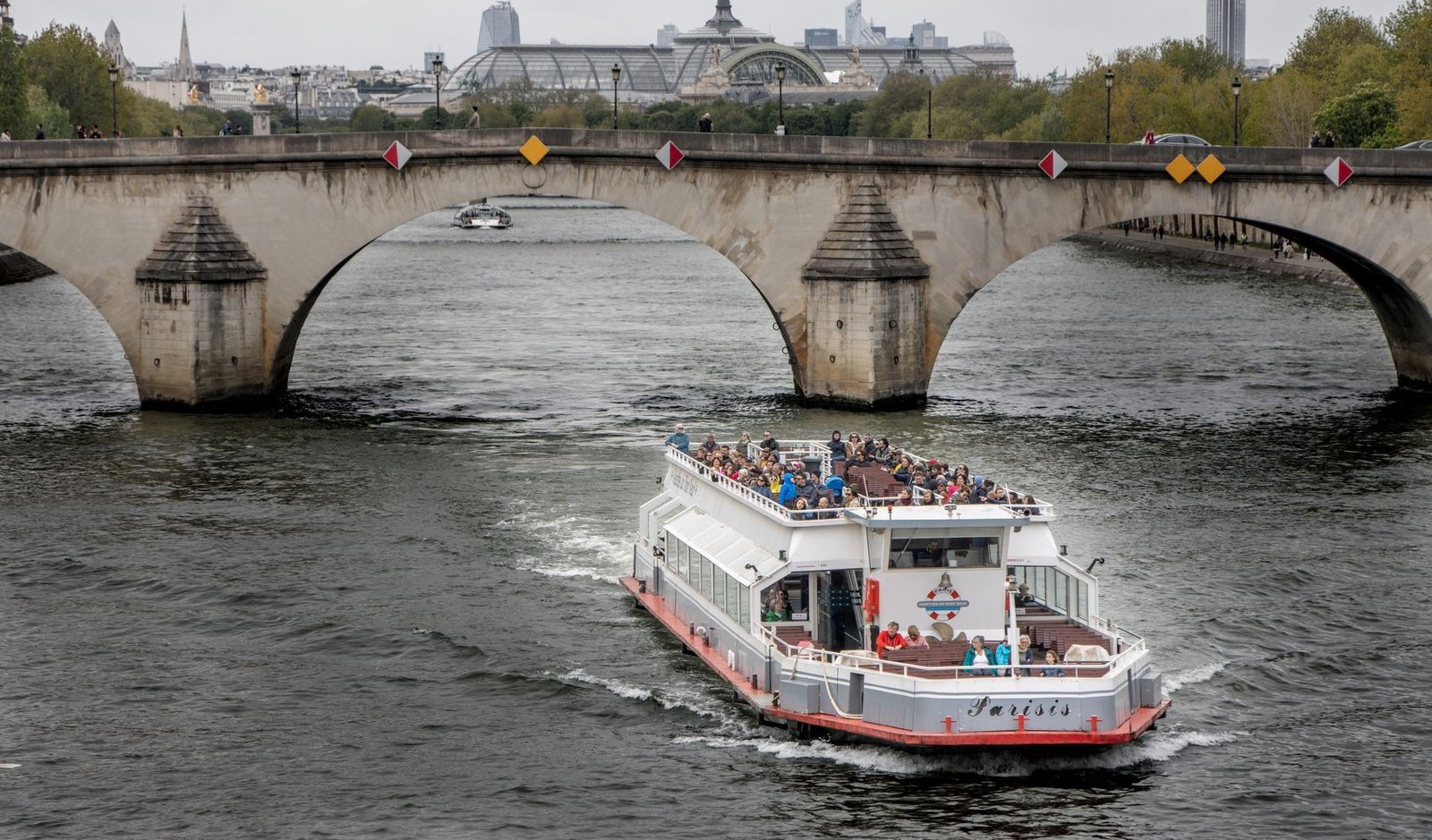
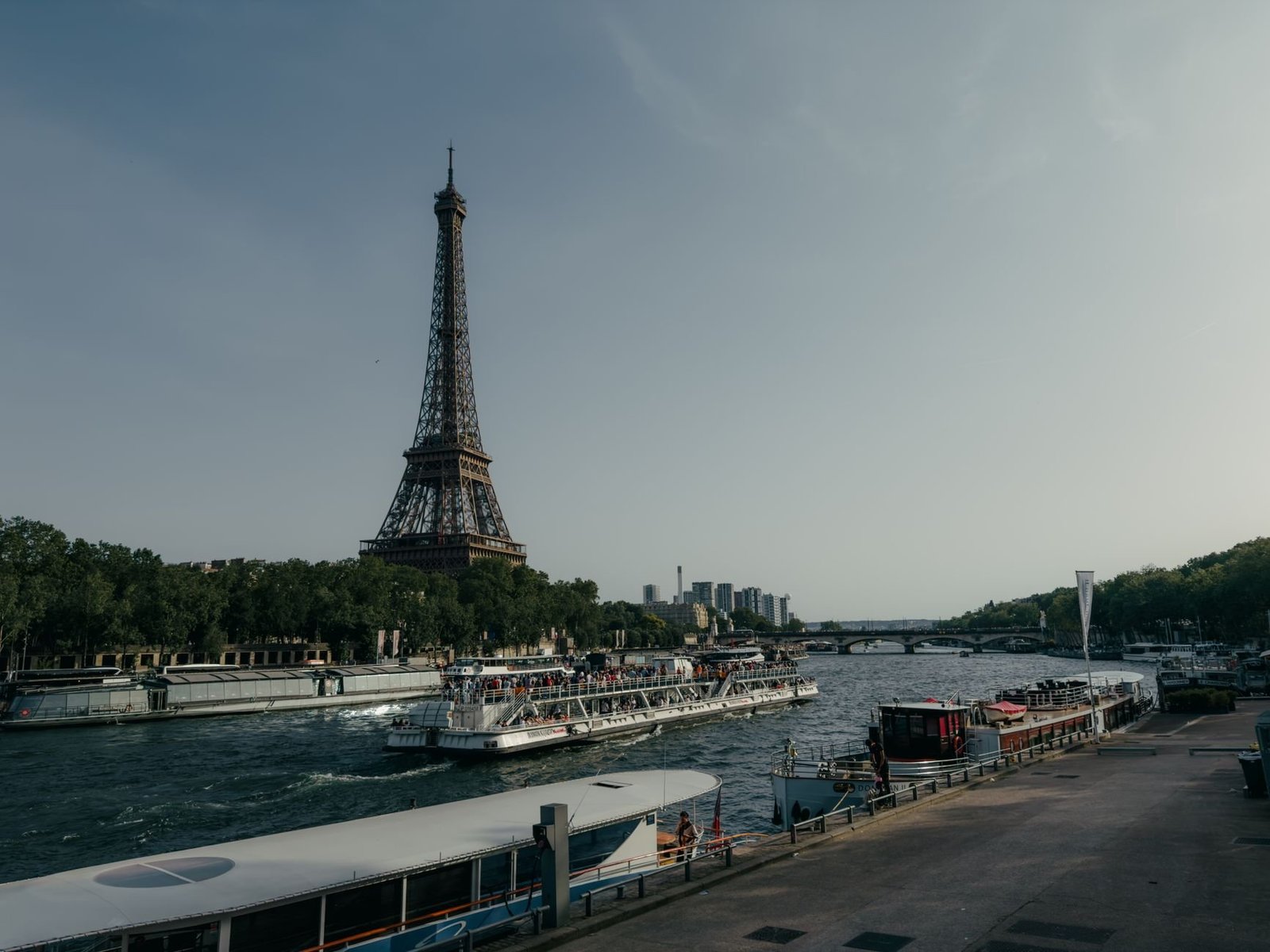
The typical route passes the Eiffel Tower, continues to Île Saint-Louis and Île de la Cité (where Notre-Dame sits), then loops back covering the stretch that goes by the Louvre, the Musée d’Orsay, and the Pont Alexandre III, one of Paris’s most ornate bridges. In just over an hour, you pass under a good number of the bridges you’d normally only see from above, walking along the bank.
Those who sit on the right side of the boat (it’s worth asking when boarding which side will have the better view on that specific route) can get photos without the crowds that gather at the most popular land-based viewpoints. It’s a genuinely different perspective of the city — you see the facades facing the river, which are usually less photographed than the ones facing the streets.
Is it worth it or is it a tourist trap?
It’s not a trap, but it’s also not essential. Compared to other paid activities in Paris, the classic cruise is inexpensive, short, and fits easily between two other activities of the day — before going up the Eiffel Tower, for example, since many boarding points are near it. The risk of disappointment exists if you expect something more immersive than what it actually is: in practice, it’s a recorded narration (sometimes repetitive) and a panoramic view, nothing more.
If you’re short on time in Paris and need to choose between a few activities, you can skip the boat cruise without guilt — much of the scenery is also visible by walking along the banks, for free. But if you have a few extra days, are traveling with kids, or simply like varying the pace of your trip, the boat offers a pleasant break, seated, with no tired legs after a day of walking.
Daytime, sunset, or night: which one to choose
During the day, the monuments appear sharper and photos come out cleaner, without dealing with low light. At sunset, the sky takes on orange tones that make any Paris photo prettier, but the exact time varies with the season and tends to be the most competitive time slot for reservations.
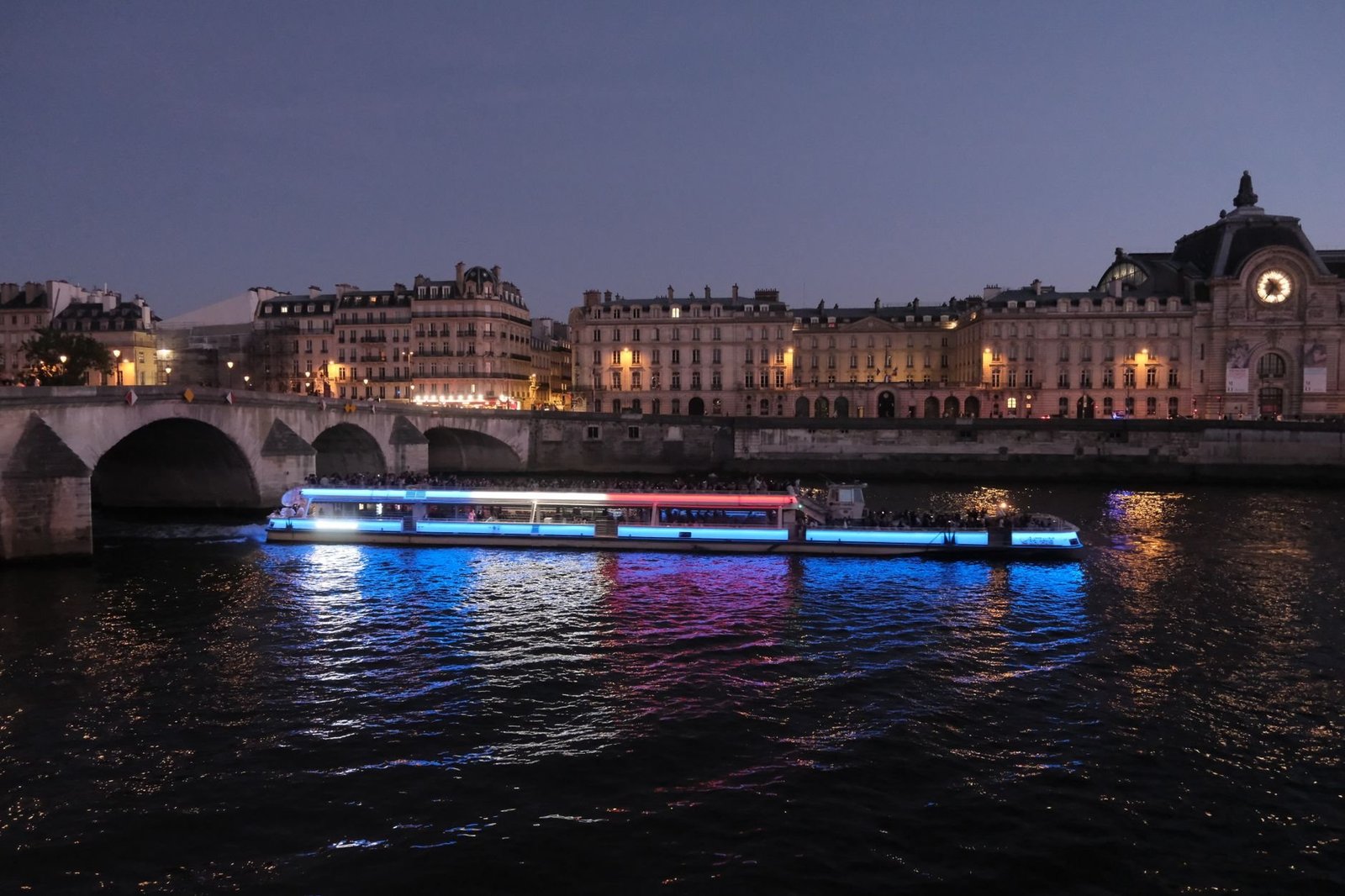
At night, it’s a completely different cruise: the Eiffel Tower lights up, the bridges glow, and the buildings along the river create an effect that simply doesn’t exist during the day. The practical downside is that the temperature drops significantly after dark, especially in fall and winter — bring a jacket even if the day started warm.
Practical tips before boarding
Each company has its own boarding point, so confirm the exact address at the time of purchase — you can’t use one company’s ticket on another company’s boat. Bateaux Mouches boards near the Pont de l’Alma; Bateaux Parisiens and Vedettes de Paris are in the Eiffel Tower area, at boarding points that are close but distinct from each other.
Buying your ticket online in advance avoids the ticket office line, especially during high-demand times like late afternoon in summer. Arrive 15 to 20 minutes before your scheduled time: boarding is usually organized by arrival order within your reserved time slot, and the best spots (near the railing, with an unobstructed view) go fast.
If you’re traveling in winter, dress in layers even on boats with covered areas — the wind coming off the water is colder than it seems from dry land. And if you suffer from any motion discomfort, know that the Seine is a calm river within the city: the rocking sensation is minimal, very different from a boat trip on the open sea.
Where the name “Bateaux Mouches” comes from
The name confuses a lot of people learning French: “mouche” means fly, and it has no obvious connection to boats. The explanation is simpler than it seems — the first boats of this type were built in a Lyon neighborhood called La Mouche, and the nickname “bateau mouche” stuck to describe this model of sightseeing vessel, even after the service expanded to Paris in the 1950s.
Today, “bateau mouche” has practically become a generic synonym for “Seine tourist boat” in colloquial French, even when someone is talking about a boat from another company. It’s similar to what happened with brands that became generic names for the product in Portuguese — except here the fun fact is that the name’s origin has nothing to do with Paris.
Batobus: the alternative for those who want to hop on and off the river
There’s a fourth option that works very differently from the other three: the Batobus, a boat service with fixed stops along the Seine, similar to a water bus. Instead of a closed one-hour cruise, you buy a one- or two-day pass and can get off and re-board as many times as you like at stops near landmarks like the Eiffel Tower, the Louvre, Notre-Dame, and the Musée d’Orsay.
It’s not the right choice for those who want the full narration about the monuments — Batobus focuses on transport, not guided sightseeing. But for those who’ve already decided to visit several of these spots on the same day and prefer to go by boat instead of the metro, it can be more cost-effective than buying the classic cruise from one company and still taking separate transport between monuments.
Does the boat cruise replace walking along the Seine’s banks?
No, they’re complementary experiences. The boat cruise shows the river and monuments from a unique angle, but walking along the banks — now closed to cars for much of the central stretch — lets you stop wherever you want, sit on the grass on sunny days, and see up close details that pass by too quickly when viewed from a moving boat.
Is there a discount for those who already have the Paris Museum Pass or Navigo?
Not directly — the Seine River boat cruise is typically sold separately from these passes and isn’t included in them. It’s always worth checking for combo deals (cruise + another ticket) directly on each company’s website, since they change frequently and don’t always show up on price comparison sites.
Frequently asked questions about the Seine River boat cruise
Do I need to book in advance?
It’s not required for the classic cruise, which has frequent departures throughout the day, but booking online usually locks in a better price and saves you from waiting in line at the physical ticket booth.
Does the cruise run on rainy days?
Yes, the boats have covered areas and operate normally on rainy days, just with reduced visibility and fewer people on the open deck. If the weather is clearly bad, it’s worth considering swapping it for another day on your itinerary, if your schedule allows.
Can young children join?
Yes, it’s one of the most relaxing activities to do with kids in Paris — no long standing in line or walking required, and most little ones are easily entertained watching the monuments glide by the window.
Which company is the best?
All three deliver a similar experience, with slight differences in price, boarding point, and audioguide languages. We put together a detailed comparison of the options in our guide on which Seine boat cruise company to choose.
Can I buy a ticket on the spot, without a reservation?
Generally yes, since departures are frequent, but during peak season (summer, holidays) the risk of long lines or sold-out time slots goes up. Booking a day in advance already cuts that risk down quite a bit.
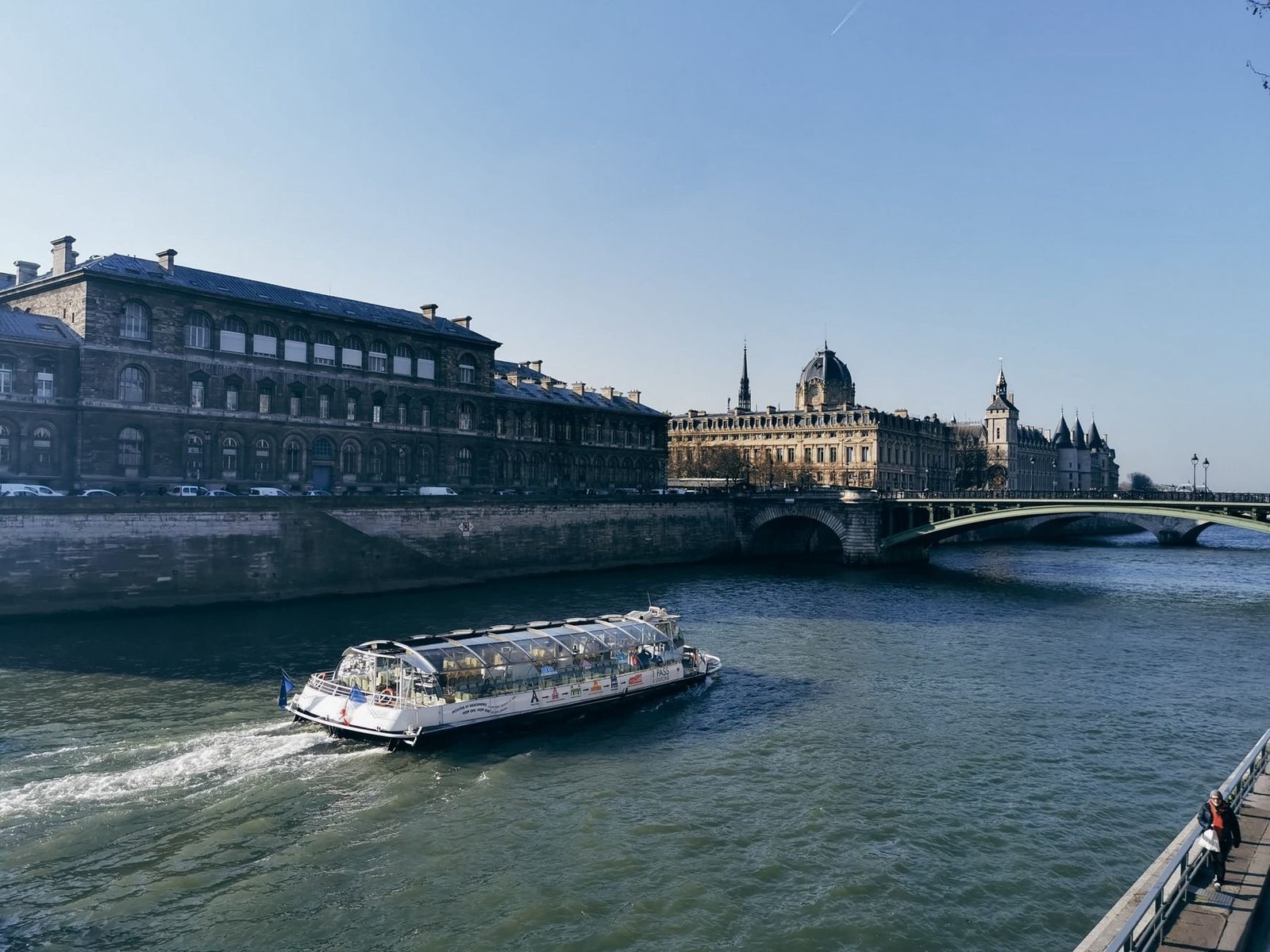
At the end of the day, the Seine River boat cruise isn’t the must-do highlight of a Paris trip, but it’s also not just a trap for rushed tourists. It’s a relaxing hour, at an affordable price, that shows you the city from an angle most visitors to Paris simply never see. If it fits your itinerary and your budget, it’s worth booking — preferably at a time that matches the kind of photos and vibe you want to take home.