Bastille, Place de la Concorde, and Conciergerie: three names that pop up in every history book when the French Revolution comes up. The thing is, if you show up in Paris today expecting to see the Bastille still standing or a square that looks like an execution stage, you’re in for a letdown. The geography of the Revolution survived—the events really did happen in these exact spots—but the landscape has changed almost completely.
This is a guide to the three places where the Revolution actually unfolded, and what you can still recognize there today.
Why things blew up in 1789
None of this came out of nowhere. Since the second half of the 18th century, France had been piling up a massive debt, inherited from expensive wars like the Seven Years’ War and French support for American independence. The weight of that bill fell on the Third Estate—peasants, merchants, urban workers—while the nobility and clergy remained exempt from most taxes.
Trying to fix the budget hole, Louis XVI called the Estates-General in 1789, an assembly that hadn’t met since 1614. Before the meeting, each of the three orders (clergy, nobility, and the Third Estate) drafted what were called “cahiers de doléances”—notebooks of grievances—listing the abuses they wanted corrected. The Third Estate, which had 580 out of 1,153 deputies, demanded a vote by head instead of a vote by order, which would unlock any real reform. The crown’s refusal to accept this was the spark that, within weeks, led straight to the Bastille.
The Bastille: a fortress that only exists in memory
The Bastille was first built in 1370, under King Charles V, as a defensive fortress at the eastern entrance to Paris. Over time, it lost its military function and became a state prison—the destination for anyone who annoyed the crown, often without a formal trial.
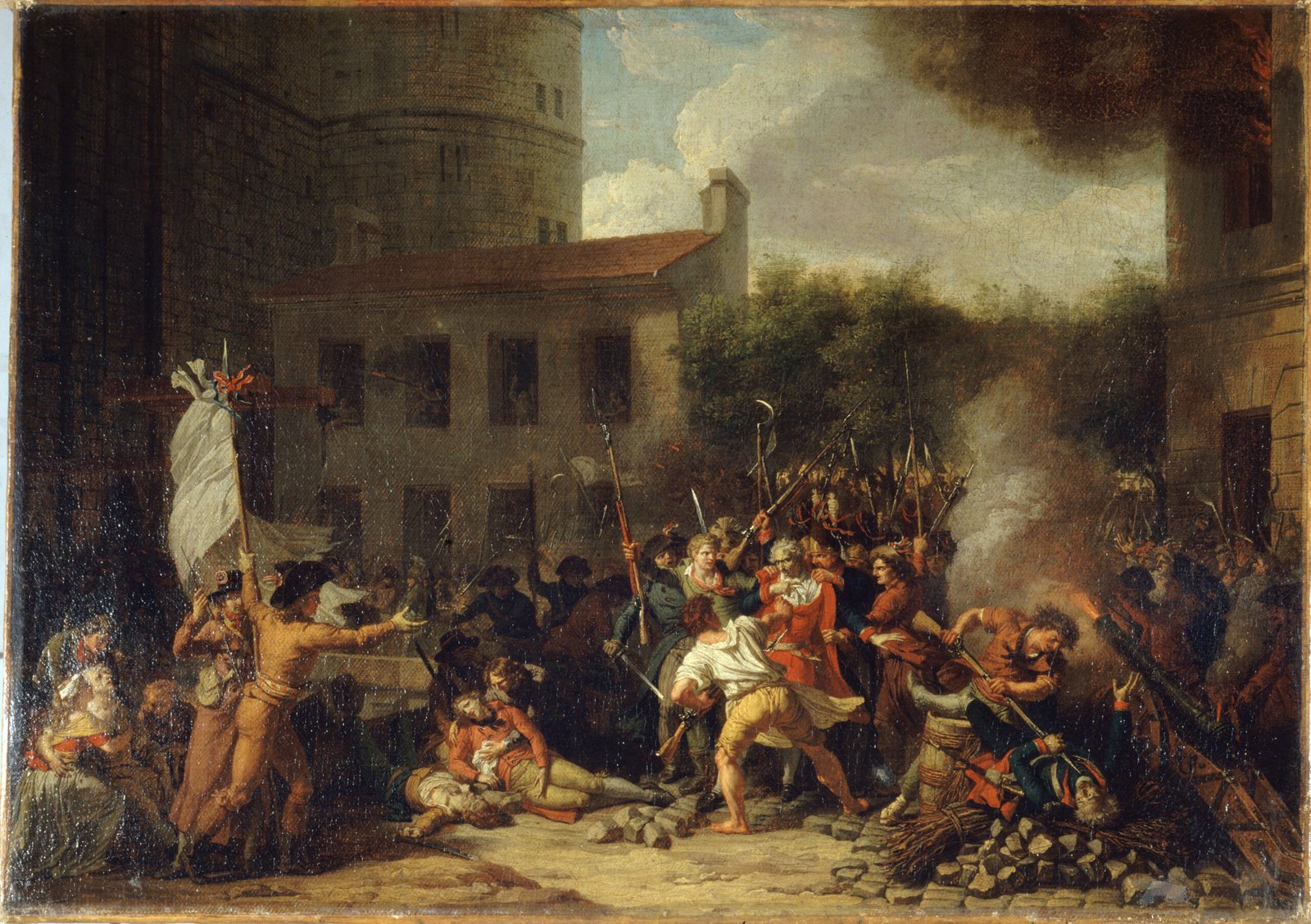
When a crowd stormed the Bastille on July 14, 1789—now France’s national holiday—the fortress held only seven prisoners. The small number didn’t lessen the symbolic weight of the act: taking the Bastille meant seizing the most visible symbol of the king’s absolute power over his subjects.
The Paris Committee didn’t waste time: they hired entrepreneur Pierre-François Palloy, who demolished the entire fortress in about five months. The larger stones were reused in the construction of the Pont de la Concorde over the Seine. The smaller ones were carved into miniatures of the Bastille itself and sold as souvenirs to high society—an almost ironic fate for the bricks of a prison.
Dica: Aproveite também para fazer estes passeios em Paris
Tour pelo exterior da catedral de Notre Dame + Ingresso da cripta . Duração: 2 horas
Disneyland Paris Duração: 3 horas ou mais
Passeio de barco pelo Sena. Duração: 1h
Ingresso do 3º andar da Torre Eiffel. Duração: 2 a 3 horas
Ingresso do Palácio de Versalhes. Duração: 2 a 3 horas
Veja mais passeio em Paris aqui.
Timeline: The Revolution in Paris
- July 14, 1789 — Storming of the Bastille.
- September 1792 — Proclamation of the First Republic.
- January 21, 1793 — Execution of Louis XVI at Place de la Révolution.
- October 16, 1793 — Execution of Marie Antoinette, same location.
- 1793-1794 — The Reign of Terror, under the Committee of Public Safety.
- July 27, 1794 — Fall and execution of Robespierre, end of the Terror.
Just over a month after the fall of the Bastille, on August 26, 1789, the National Assembly approved the Declaration of the Rights of Man and of the Citizen—the document that formalized principles like liberty, property, and equality before the law, and which still serves as a foundation for part of the French Constitution today. The distance between the symbolic act of storming a prison and drafting a legal text of this weight, in less than six weeks, gives you an idea of how fast everything was transforming that year.
Place de la Concorde: from royal square to guillotine stage
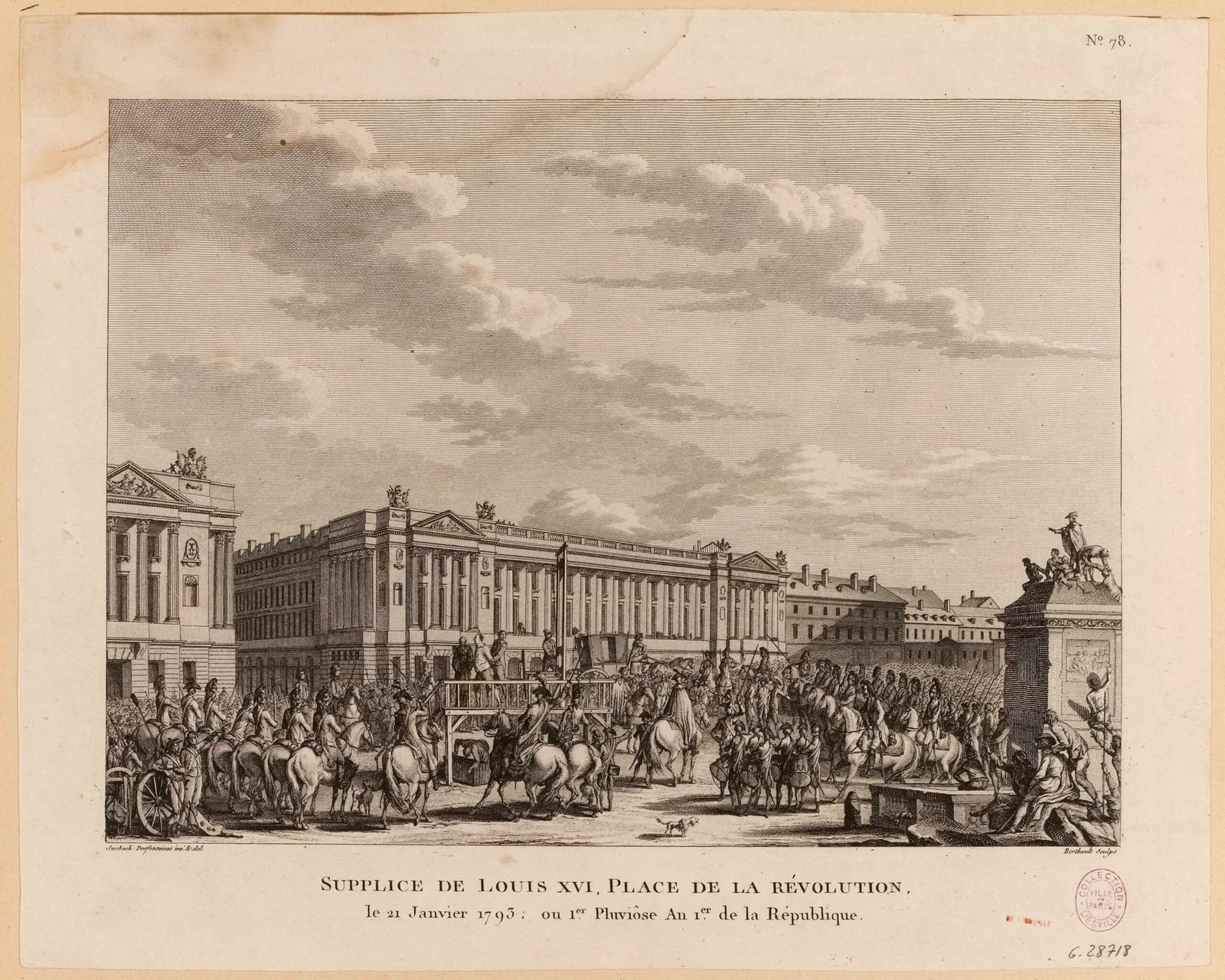
The square now called Place de la Concorde was born with a different name and purpose: Place Louis XV, designed by architect Ange-Jacques Gabriel to honor the king. In 1792, with the monarchy already overthrown, the square was renamed Place de la Révolution—and that’s where the guillotine went to work.
Louis XVI was executed there on January 21, 1793. Marie Antoinette followed the same path a few months later, on October 16, 1793. In total, it’s estimated that over 1,200 people were executed there between 1793 and 1795, including nobles, clergy, and—as the Terror escalated—revolutionaries who had fallen out of favor with their own colleagues.
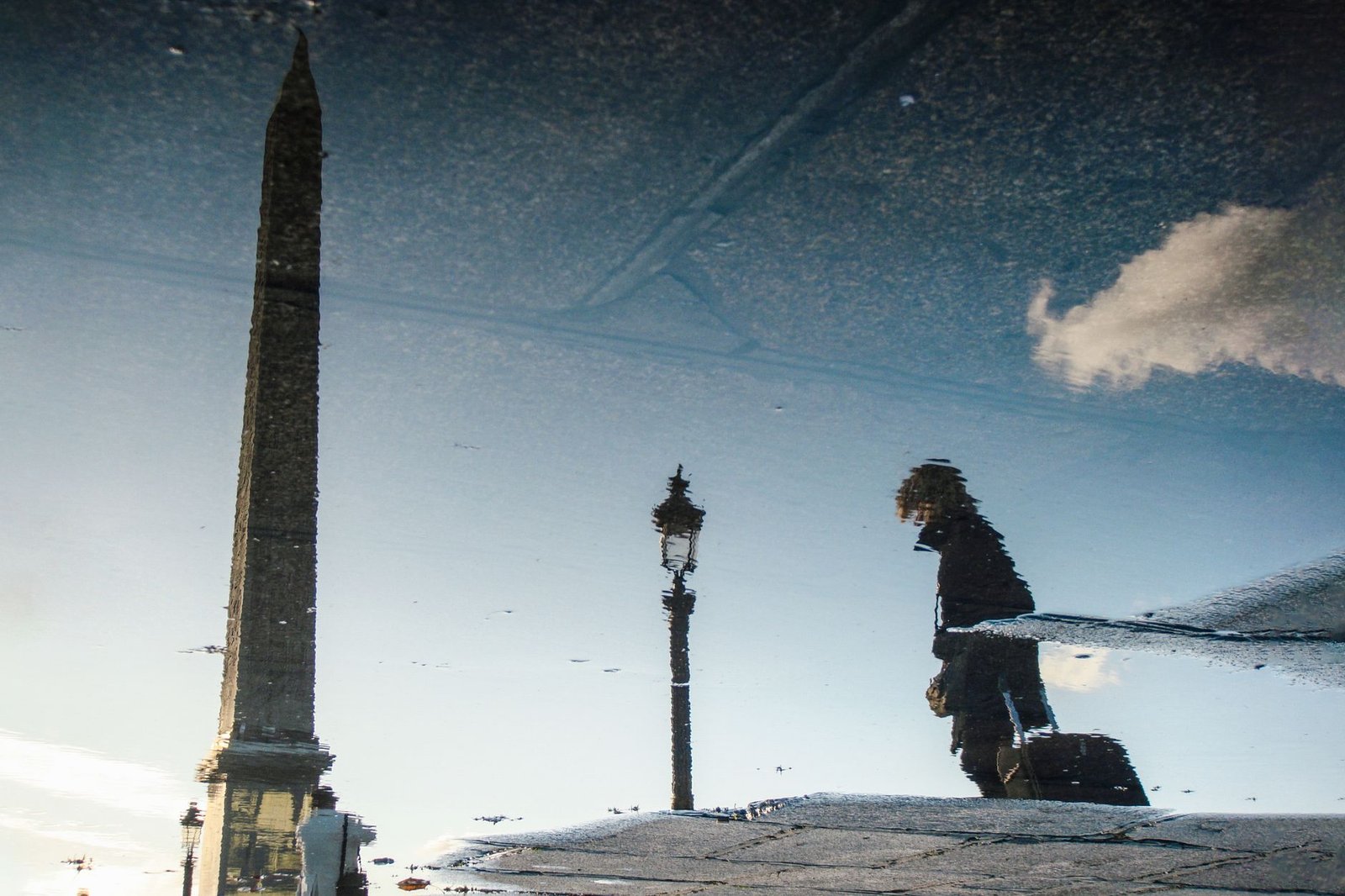
After the Revolution, the name changed again—to Place de la Concorde, in a symbolic attempt at national reconciliation. The Egyptian obelisk that now dominates the center of the square only arrived decades later, in 1836, as a gift from the Egyptian government: it has no direct connection to the Revolution, but it’s often mistaken for a landmark of that period simply because it sits right in the middle of the execution site.
Conciergerie: the antechamber of the guillotine
While the guillotine was running at Place de la Révolution, those waiting their turn were held at the Conciergerie, on the Île de la Cité. In March 1793, the Revolutionary Tribunal was set up inside, and the building earned the grim nickname “the antechamber of the guillotine.”
Over the ten most intense months of the Terror, the Conciergerie received about 2,700 prisoners—at times, between 600 and 1,200 people shared the space at once, waiting for trial and, in the vast majority of cases, a death sentence. Marie Antoinette spent her final weeks in a cell at the Conciergerie before being taken to the guillotine.
The process inside the Revolutionary Tribunal, set up right there in the Conciergerie, became increasingly summary. The Law of Suspects, passed on September 17, 1793, authorized the arrest of anyone considered an “enemy of the Revolution”—a deliberately vague category. In June 1794, the Law of 22 Prairial went further: it limited trials to three days, banned defense lawyers and witnesses, and left only two possible verdicts: acquittal or death. With rules like that, it’s not hard to see why the line for the guillotine kept growing.
The Terror and the fall of the man who led it
The period between 1793 and 1794, known as the Reign of Terror, was run by the Committee of Public Safety, with Robespierre as its most recognizable figure. Estimates suggest that across France, between 16,000 and 40,000 people were killed during this time—numbers that vary widely among historians but give you a sense of a phase where suspicion alone was enough for a sentence.
The climate of widespread suspicion became, literally, dangerous even for those who had helped build the system. Members of the Convention itself started accusing each other, in a spiral that became known as “the Revolution devouring its own children”—a brutal image, but one that captures the logic of the period: no one was fully safe, not even among the most radical Jacobins.
Robespierre himself didn’t escape the logic he helped create: he fell on 9 Thermidor of the revolutionary calendar (July 27, 1794) and was guillotined shortly after, in the same type of public execution he had sponsored against so many others. His fall marked the end of the Terror and paved the way for the Directory, which took power in 1795.
What the Revolution left in French life today
A good chunk of what seems “typically French” today was born right out of this turbulent period. The metric system—meter, liter, kilogram—was officially adopted by the National Convention on April 7, 1795, after years of work by a commission of scientists that included Lavoisier and Laplace, created precisely to end the mess of different weights and measures that each region of France used until then.
The tricolor flag, the anthem “La Marseillaise” (composed in 1792, but only becoming the official anthem much later, in 1879), and the motto “Liberty, Equality, Fraternity”—now stamped even on French public buildings—also come straight from this period. And the July 14 holiday, of course, is the annual reminder of the Storming of the Bastille, celebrated with a military parade on the Champs-Élysées to this day.
What you can still see today
- Place de la Bastille: not a single stone of the original fortress remains visible—just the square and the July Column, which commemorates 1830, not 1789.
- Place de la Concorde: the Egyptian obelisk, the fountains, and the overall layout of the square, now one of Paris’s main intersections, with no physical trace of the Terror period.
- Conciergerie: Marie Antoinette’s cell and part of the facilities used by the Revolutionary Tribunal can be visited, usually with a combined ticket with Sainte-Chapelle.
A practical tip: the three stops are relatively close and can be done in a single day, by metro or on foot, with the Conciergerie as the final stop—it’s the only one of the three that still has original physical structure to visit inside. If your trip falls near July 14, it’s worth setting aside a morning for the military parade on the Champs-Élysées, the most visible celebration of the holiday across all of France.
Walking through these three spots today—Place de la Bastille, Place de la Concorde, and the Conciergerie—is like following a route that the city has rebuilt over itself many times. Nothing you see standing there is exactly what existed in 1789 or 1793, but the ground is the same, and that carries a weight no reconstruction could ever erase.