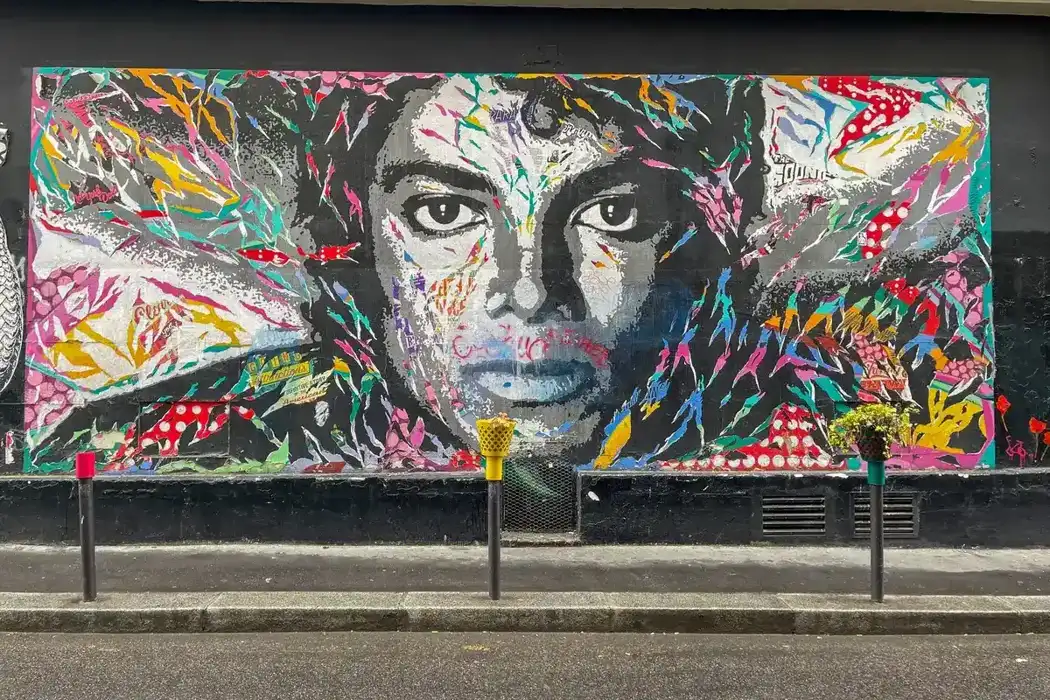
Belleville has more street art per square meter than any enclosed gallery in Paris, and most tourist itineraries miss it entirely. While the classic circuit sends you to the Louvre and the Musée d’Orsay, street art in Paris lives on facades, in alleyways, and across former industrial grounds in the city’s east and south—no ticket, no opening hours, and no lines.
The best places to see street art in Paris are Belleville (murals by Seth and Nemo), the 13th arrondissement around Butte-aux-Cailles (Miss Tic, Jef Aerosol, Levalet), and the open-air gallery of the Ménilmontant neighborhood—all free and just a few metro stops apart.
How to get to the street art neighborhoods in Paris
For Belleville, get off at Belleville station (lines 2 and 11) and head up Rue Dénoyez, an alleyway completely covered in murals since the early 2000s. For the Butte-aux-Cailles circuit in the 13th arrondissement, Corvisart station (line 6) drops you 5 minutes from Rue de la Butte-aux-Cailles, where works by Miss Tic and Jef Aerosol live. The two neighborhoods are about 25 minutes apart by metro.
Dica: Aproveite também para fazer estes passeios em Paris
Tour pelo exterior da catedral de Notre Dame + Ingresso da cripta . Duração: 2 horas
Disneyland Paris Duração: 3 horas ou mais
Passeio de barco pelo Sena. Duração: 1h
Ingresso do 3º andar da Torre Eiffel. Duração: 2 a 3 horas
Ingresso do Palácio de Versalhes. Duração: 2 a 3 horas
Veja mais passeio em Paris aqui.
Best time to go and how long to plan
The late-morning light, between 10 a.m. and 1 p.m., is the best window for photographing street art in Paris without excessive shadows from surrounding buildings. Set aside 3 to 4 hours to cover Belleville and Butte-aux-Cailles on the same day, including metro time between the two.
Murals change often—many pieces last only a few months before being covered by another intervention, which means the same walk can look completely different on each visit.
Photographers who follow the local scene recommend returning every six months to capture what’s changed—on streets like Dénoyez, it’s common to find a wall totally different from your last visit, since older murals rarely survive more than a year without a touch-up or replacement.
Some local collectives organize painting days at specific times of the year, usually in spring and early European summer, when the weather favors outdoor work and new pieces tend to appear in quick succession.
Where to see murals, galleries, and urban interventions
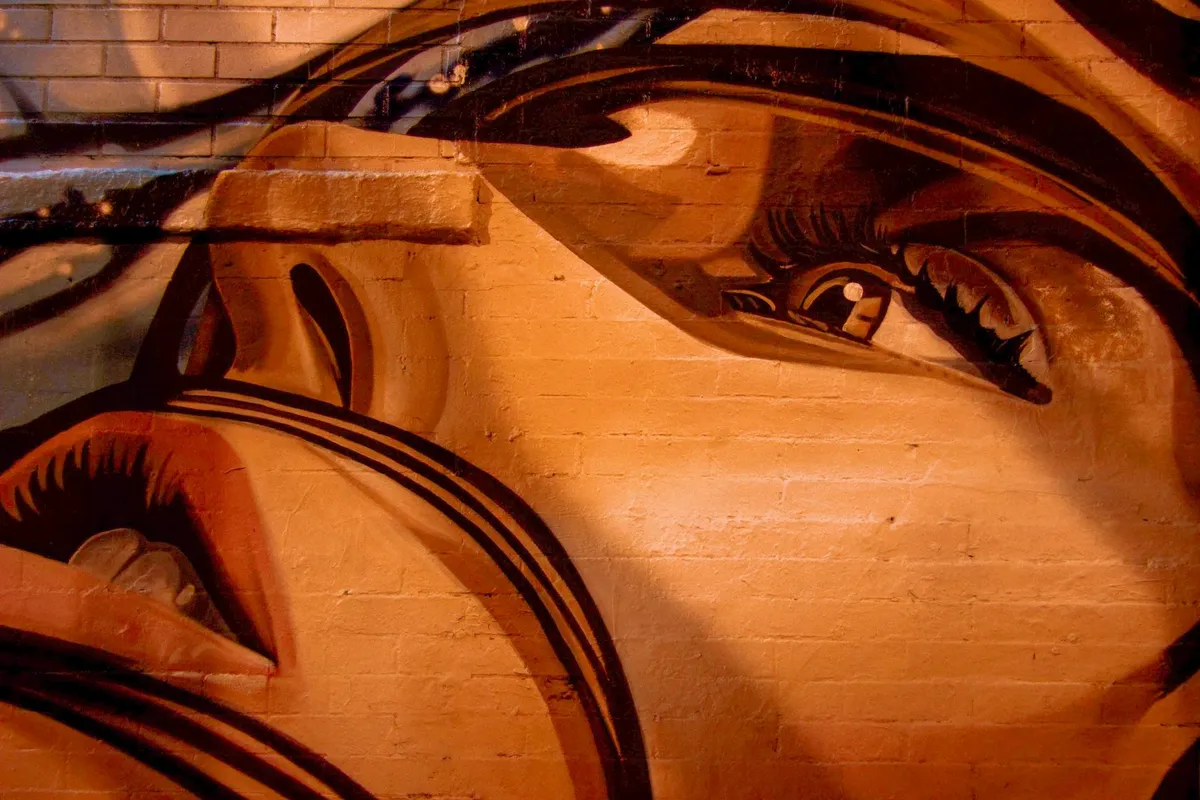
Each neighborhood has a different street art personality, from monumental murals to discreet sidewalk wheatpastes.
Belleville
This multicultural neighborhood in eastern Paris concentrates large-scale murals, including works by French artist Seth, known for colorful child figures on entire buildings, and Nemo, creator of a recurring detective pasted on doors and lampposts. Rue Dénoyez, almost entirely covered, works as a constantly renewed open-air gallery—worth returning on another trip, because the scene changes.
A few steps away, Rue de Belleville packs Vietnamese and Chinese shops alongside painted facades, a contrast that sums up the neighborhood’s multicultural identity—not always visible in other parts of Paris, which are more homogeneous from an architectural and commercial standpoint.
Butte-aux-Cailles (13th arrondissement)
The 13th arrondissement has surpassed Belleville in the number of international artists’ murals in recent years, with Boulevard Vincent Auriol serving as the axis for major sponsored works. In Butte-aux-Cailles specifically, cobblestone streets and narrow lanes hide stencils by Miss Tic and Jef Aerosol, plus figurative pieces by Levalet.
Ménilmontant
Next door to Belleville, this neighborhood gathers smaller, more hidden interventions—a great option for those who’ve already seen the famous murals and want alleys with no set route. The mix of old graffiti with recent pieces makes every corner a different surprise, with no fixed itinerary to follow.
Bois-le-Prêtre and the north of the city
Less well known, the area around Porte de Clichy also hosts large-format murals commissioned by local associations, part of a broader movement of institutionalized urban art that has gained strength in Paris over the last decade. It’s a detour for those who’ve exhausted Belleville and Butte-aux-Cailles and want to see how the genre has spread to the city’s outskirts.
These commissioned murals tend to last longer than spontaneous works in the center, since they’re part of municipal urban revitalization projects—which also means less surprise and more predictability for those planning their route in advance.
What to pair with your street art tour
The Belleville neighborhood adds a panoramic view of the city to the mural circuit, worth the climb up to Parc de Belleville right after roaming Rue Dénoyez. In Butte-aux-Cailles, you can fit in a walk through the entire village-like neighborhood, with its low houses and Art Deco pool.
The contrast between the two neighborhoods is also worth the detour: Belleville has an urban scale with monumental murals visible from afar, while Butte-aux-Cailles hides its works in narrow lanes, almost like a treasure hunt for those who love discovering pieces with no plaque or caption.
According to the City of Paris project, several of the large-format murals in the 13th arrondissement are part of an official urban art program launched in 2009, which explains the unusual concentration of works signed by international artists in a relatively small area.
If you want to stretch the day, head to the Canal Saint-Martin, another hub of local life just a few metro stops from Belleville, with independent cafés and bookshops along the water.
For those who prefer historical context alongside the street art, the free walking tour of Paris often passes near some of these neighborhoods on its route through the east of the city.
Where to eat near the murals
Belleville has one of the most diverse food scenes in Paris, with Vietnamese, Chinese, and North African restaurants concentrated on Rue de Belleville—full meals usually cost less than in the tourist center. In Butte-aux-Cailles, the bistros on the central square serve fixed-price lunch menus, ideal for a break between one alley and the next.
It’s worth setting aside time to sit at one of Ménilmontant’s corner cafés, where you can watch the neighborhood go by at your own pace — many of these spots charge residential neighborhood prices, a far cry from what you’ll pay around the Eiffel Tower or the Louvre.
Where to Stay to Explore Street Art in Paris
Basing yourself in the 20th arrondissement near Belleville, or in the 13th near Butte-aux-Cailles, skips the trek to the tourist center and puts you just minutes on foot from the murals first thing in the morning. According to the Paris Tourist Office, these eastern and southern neighborhoods historically have lower accommodation prices than the city center.
Beyond the price, staying in these areas gives you access to street markets and neighborhood bakeries that open early — a bonus if you want to be out shooting murals before 9 a.m., when the light is most even and the tall neighboring buildings haven’t yet cast heavy shadows over the main painted walls.
Practical Tips
Bring a fully charged phone camera — the density of murals is surprising, and it’s easy to snap over 100 photos in two hours. Avoid touching or leaning on the works: many are painted on residential and commercial facades, and respecting the space keeps the neighborhood welcoming new pieces.
Download a collaborative street art map before you head out — murals come and go within months, so fixed itineraries go stale fast.
Avoid walking alone late at night on poorly lit streets, especially between Belleville and Ménilmontant; during the day, the flow of residents and shops makes the stroll easygoing and safe.
If you’re after a souvenir, look for the small independent galleries and studios scattered around Belleville and Ménilmontant — many open only on weekends, selling prints and engravings by local artists who also paint murals on the surrounding streets.
Frequently Asked Questions
What’s the best neighborhood to see street art in Paris?
Belleville and the 13th arrondissement around Butte-aux-Cailles have the highest concentration of street art in Paris, with free murals by artists like Seth, Nemo, Miss Tic, and Jef Aerosol spread across streets and alleyways.
Is it safe to walk through the street art neighborhoods at night?
Belleville and Butte-aux-Cailles are lively residential areas during the day; at night, as in any urban area, it’s best to avoid empty streets and stick to routes with more foot traffic and open shops.
Do the street art murals in Paris change often?
Yes, many murals in Belleville and the 13th arrondissement are temporary and can be replaced by new pieces within months, which means Paris’s street art circuit looks different on every visit.
Are there guided street art tours in Paris?
Yes, there are specialized street art tours, usually led by local guides who know the story behind each mural; as a free alternative, the walking free tour of Paris passes near some of these neighborhoods on its route through the east of the city.
Conclusion
Seeing street art in Paris beyond the museum circuit is a way to find a city that changes month to month, literally on its walls. For more Parisian neighborhoods off the beaten path, keep exploring Torre Eiffel Brasil.