Every day, when night falls over Paris, the Eiffel Tower stops being just an iron monument and becomes something else entirely. For five minutes—the first five minutes of every hour—it sparkles and shines with thousands of golden lights. This isn’t the constant illumination you see all night long. It’s a brief light show that happens on a precise schedule and needs a good viewing spot to be truly worth it.
If you’re heading to Paris and don’t want to miss this spectacle—preferably without paying for a ticket—this guide covers everything: when the show happens, how many times a night, where to position yourself, and what to bring to make the most of it.
Dica: Aproveite também para fazer estes passeios em Paris
Tour pelo exterior da catedral de Notre Dame + Ingresso da cripta . Duração: 2 horas
Disneyland Paris Duração: 3 horas ou mais
Passeio de barco pelo Sena. Duração: 1h
Ingresso do 3º andar da Torre Eiffel. Duração: 2 a 3 horas
Ingresso do Palácio de Versalhes. Duração: 2 a 3 horas
Veja mais passeio em Paris aqui.
How the Eiffel Tower Light Show Works
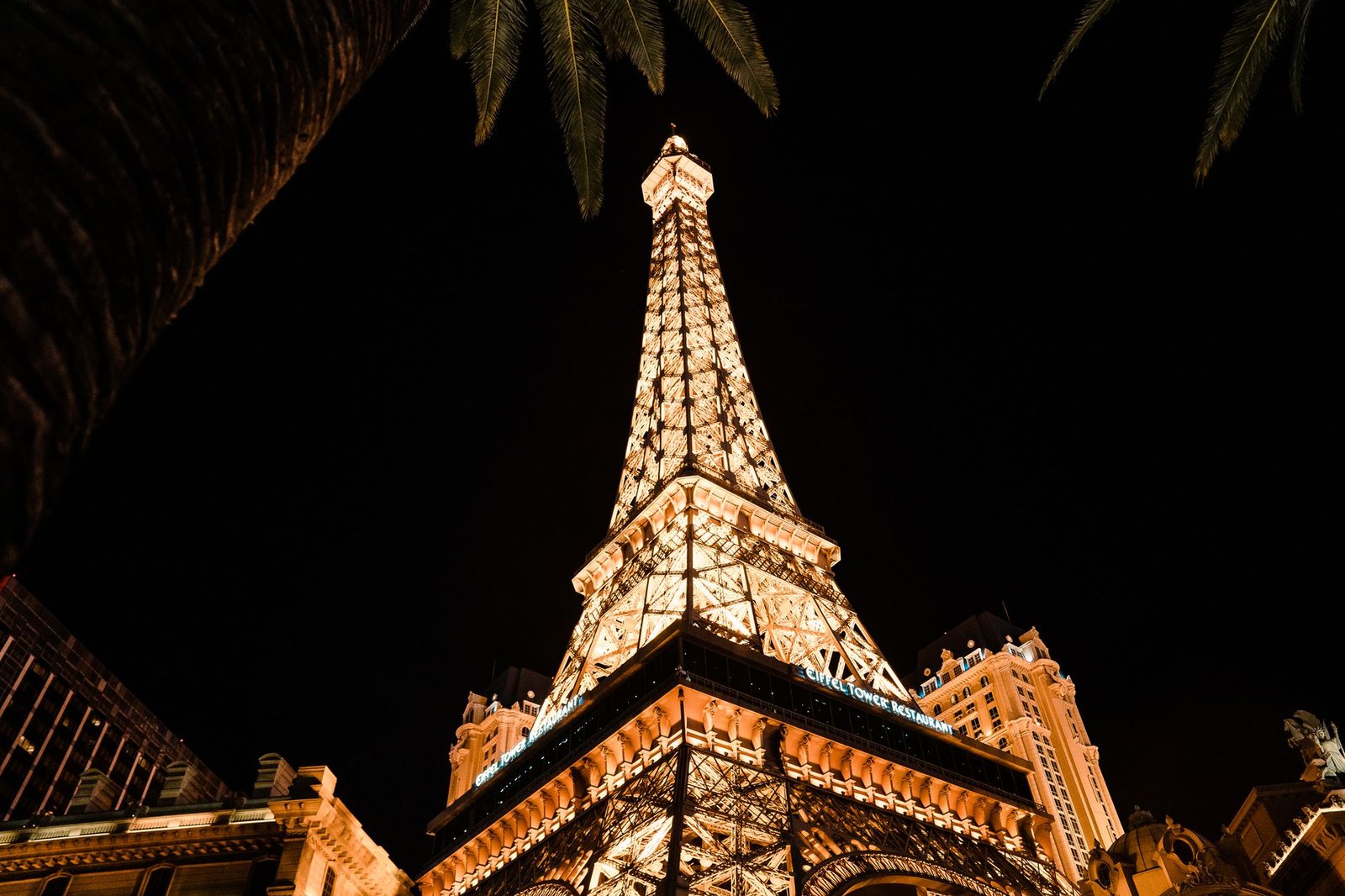
The Eiffel Tower is lit in gold from dusk until midnight (or until 1 a.m. during the summer months). This steady illumination is already beautiful and makes the nighttime stroll through the city worthwhile. But the light show is different: it’s the moment the structure starts to flash and twinkle, with 20,000 LED bulbs turning on and off in rapid sequence, creating an effect of champagne bubbling through the steel.
This show happens during the first 5 minutes of every hour on the hour, starting at dusk. In December and January, it can begin as early as 6 p.m. In summer (June to August), the sun sets later, so the show starts later too, usually at 9 p.m. or 10 p.m. The exact time varies with the seasons—check the official Eiffel Tower website (toureiffel.paris) for the sunset time on the day of your visit to plan accordingly.
How many times does the show happen per night? That depends on the time of year. In winter, with dusk around 5:30 p.m., you can catch it up to 6 or 7 times until midnight. In summer, when the tower only starts glowing after 10 p.m., there are just 2 or 3 displays before closing. The last show is always at 11 p.m. (or midnight during peak tourist months—always double-check on the official site).
The Best Places to See It for Free
You don’t need to buy a ticket to see the light show. Most of the best viewing spots are public and free. Here are the main ones, with the practical differences between each.
Champ de Mars
The garden stretching directly south of the Eiffel Tower is the classic spot. You’re right under the tower, lying on the grass, looking up during the show. The perspective is from below, which exaggerates the structure’s size and makes the lights seem more intense. It’s the most popular spot for tourists, meaning it gets crowded in high season—but the field is big enough for everyone to find a good position.
Tip: arrive at least 30 minutes before the show to snag a good spot on the grass. Bring a blanket or something to sit on—the ground gets damp at night, even in summer. The Champ de Mars is open to the public with no entry control.
Trocadéro
The Trocadéro is on the opposite side from the Champ de Mars, north of the tower. It’s the highest point and offers the most photogenic perspective: you see the entire tower, top to bottom, with the Seine River and the city in the background in tighter angles. The square is always bustling and is the preferred spot for photographers and tourists wanting that classic Paris shot.
The downside is that the Trocadéro often has street vendors persistently offering metal miniatures and bracelets. Firmly ignore them—they’re not aggressive, just persistent. Keep cameras and phones in your pocket when you’re not shooting.
Pont d’Iéna
The bridge connecting the Champ de Mars to the Trocadéro offers a different view: you’re in the middle of the Seine, with the tower perfectly centered ahead. It’s a more symmetrical angle and lets you see the reflection of the lights on the water. A good option if the Champ de Mars or Trocadéro are too crowded, and it’s right in between the two.
Berges de la Seine (Seine Riverbanks)
The banks of the Seine along Quai Branly and Quai de Grenelle offer side views of the illuminated tower, with the river in the foreground. They’re less crowded than the Trocadéro and have several bars and restaurants open at night—a great option if you want to combine the show with a beer or an outdoor dinner.
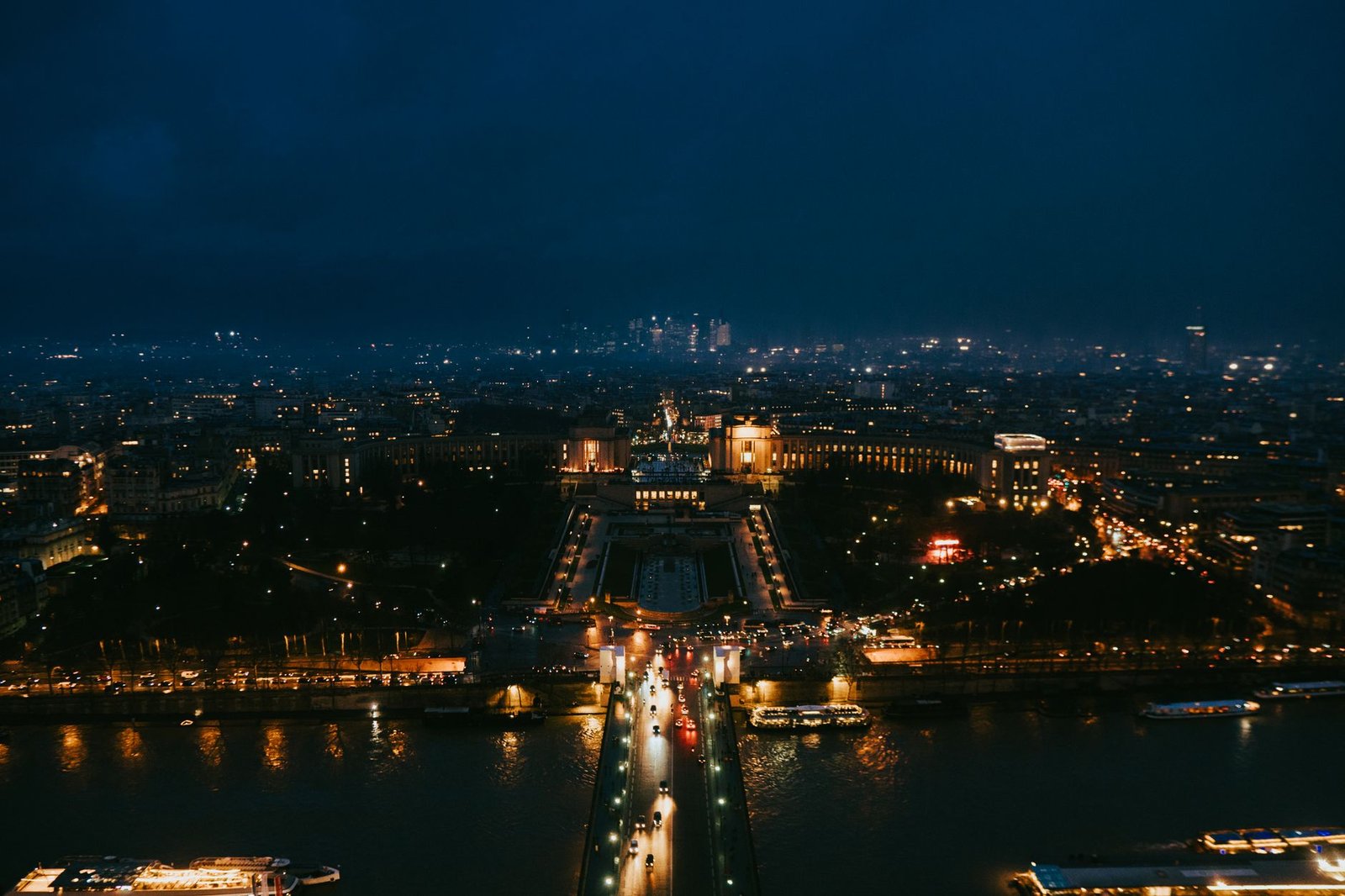
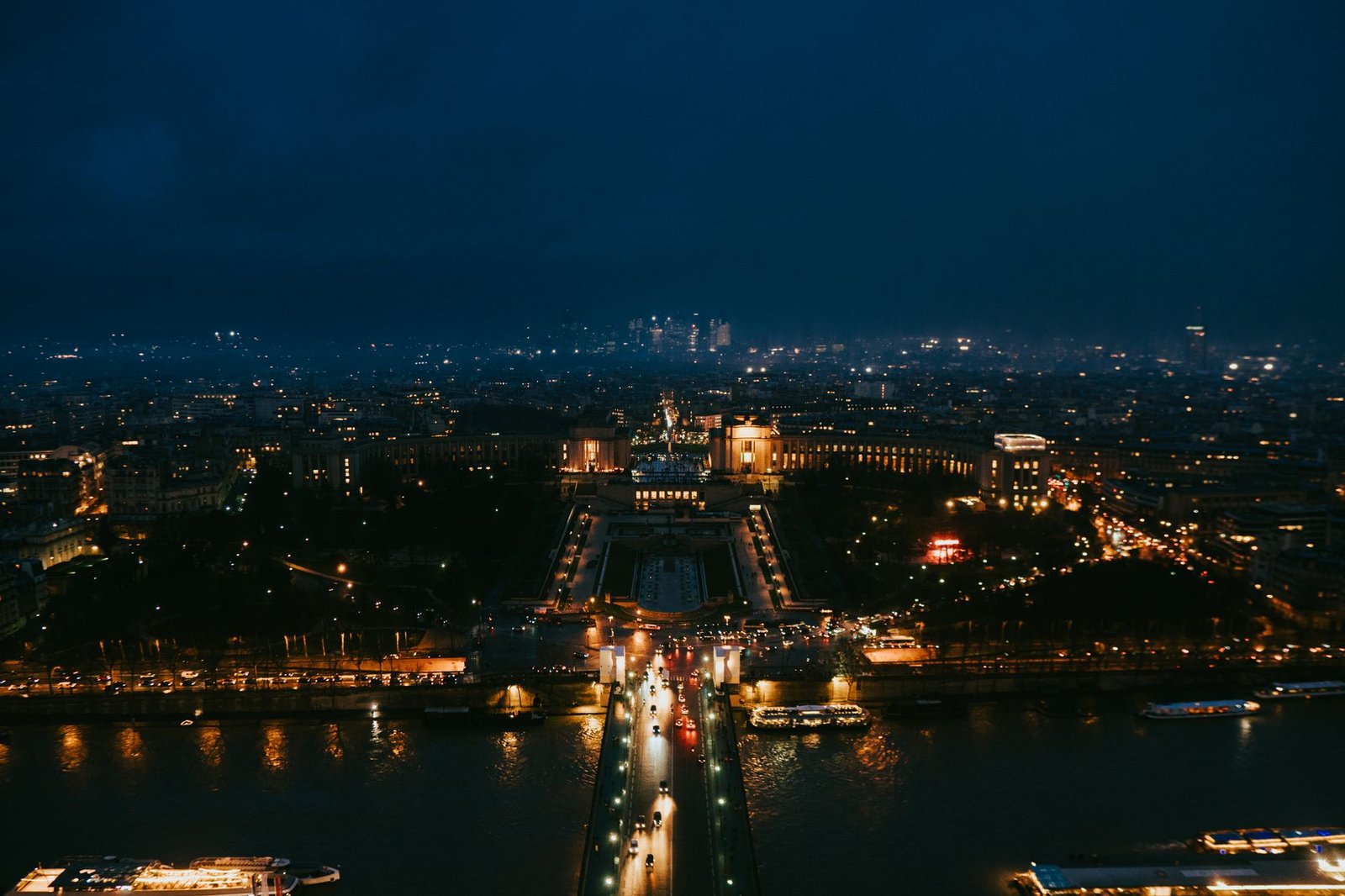
Is It Worth Going Up the Eiffel Tower at Night?
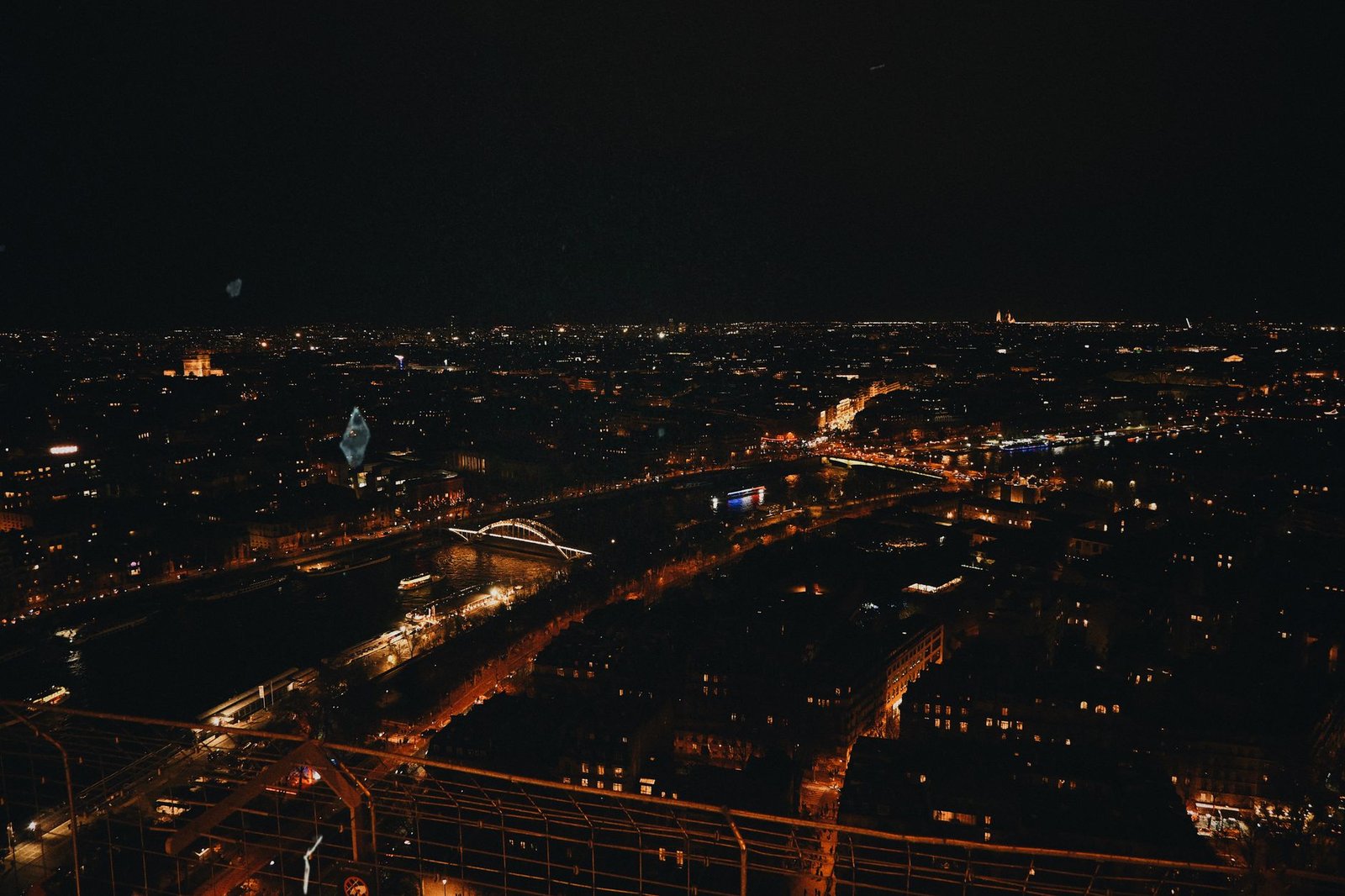
Going up the tower at night is a different experience from going up during the day—and many people think it’s better. The illuminated city has a beauty that daytime doesn’t deliver in the same way: the boulevards turn into golden ribbons, the Seine reflects the bridge lights, and you can distinguish neighborhoods by their light patterns.
The important detail: if you’re on the tower, you do NOT see the sparkling light show the same way. The bulbs are on the structure around you, so the visual effect is different—you feel the lights more than you see them as a spectacle. The light show was designed to be seen from the outside, at a distance. Those inside the tower during the show usually don’t perceive the full effect.
The recommendation: if the light show is your priority, stay on the ground. If the city view is your priority, go up. If time and budget allow, do both on different nights.
Tips for Photographing the Light Show
Photographing the light show at night with a phone often results in grainy, dull photos. Not because the phone is bad, but because automatic settings don’t handle low light and movement well at the same time. Here are some tips that make a difference:
Use manual mode or night mode: If your phone has a night mode, activate it before the show starts. For cameras without a tripod: use ISO 800-1600, a shutter speed of 1/60s or faster to freeze the moving lights, and the widest aperture available.
Stabilize your phone or use a tripod: Any shake during the light show will result in blur. Rest your elbow on a railing, a handrail, or a backpack on the ground—anything works. A mini phone tripod costs under $20 and fits in your bag.
Arrive before the show and set your framing: The show only lasts 5 minutes. If you’re still adjusting your angle when it starts, you’ll miss half of it. Set your framing 10 minutes in advance and wait still.
Color temperature: The tower’s bulbs are a warm gold. If your camera is on auto white balance, it might “correct” the gold to white and take the charm out of the scene. Manually set it to “incandescent” or “tungsten” to preserve the golden tone.
How Much Time to Set Aside for a Night Visit
To just see the light show from an external spot like the Champ de Mars or Trocadéro, set aside about 1.5 to 2 hours: travel time to the spot, time to choose a position, the show itself (5 minutes), and time to wander the area afterward.
If you want to combine it with a stroll along the Seine or an outdoor dinner, plan for 3 to 4 hours. Paris at night near the Eiffel Tower has bars, crepe stands, and ice cream carts open late—there’s plenty to do in between shows.
A route tip: arrive at the Champ de Mars at 8:30 p.m. (in summer) or 5 p.m. (in winter), enjoy the tower’s constant illumination before the show, watch the 9 p.m. or 10 p.m. show, and then walk to the Pont d’Iéna to catch a second show from the bridge.
Safety at Night Around the Eiffel Tower
The area around the Eiffel Tower at night is busy and relatively safe for tourists. Police presence is constant, especially at the Trocadéro and Champ de Mars. Still, some precautions make sense:
Leave documents at the hotel—only carry what you need. Avoid using headphones in both ears at the same time in very crowded areas. Keep bags in front of your body, not on your back. Be wary of people approaching with papers to sign or “gift” bracelets—these are common distraction tactics used by pickpockets.
The Trocadéro usually has the highest concentration of street vendors and also the highest concentration of tourists—which attracts opportunists. The Champ de Mars is a bit calmer in this regard, especially in the areas farther from the tower.
Frequently Asked Questions
Is the light show every day?
Yes, every day of the year, as long as the tower is open. It happens in the first 5 minutes of every hour after dusk.
What time does the light show start?
It depends on the time of year. The show starts at dusk, which varies from approximately 6 p.m. (December/January) to 10 p.m. (June/July). The last show is usually at 11 p.m. or midnight, depending on the season.
Do you need to pay to see the light show?
No. The best viewing spots—Champ de Mars, Trocadéro, Pont d’Iéna, and the Seine riverbanks—are public and free.
How long does the light show last?
Exactly 5 minutes, during the first 5 minutes of every hour on the hour.
Can you see the show from inside the tower?
Technically yes, but the visual effect isn’t the same. The show was designed to be seen from the outside, at a distance. Those inside the tower during the show can’t see the full spectacle.
What’s the best time of year to see the light show?
Fall and early winter (October to December) have the advantage of the show starting earlier—around 6 p.m. to 7 p.m.—allowing you to see several displays before midnight without having to stay up late. In summer, the show starts after 10 p.m., which might not be ideal for families with children.
Summer has another appeal: Paris stays lively later, and the 10 p.m. or 11 p.m. show with the warmth of the Parisian night has a different charm. It depends on what you want from your trip.