Dica: Aproveite também para fazer estes passeios em Paris
Tour pelo exterior da catedral de Notre Dame + Ingresso da cripta . Duração: 2 horas
Disneyland Paris Duração: 3 horas ou mais
Passeio de barco pelo Sena. Duração: 1h
Ingresso do 3º andar da Torre Eiffel. Duração: 2 a 3 horas
Ingresso do Palácio de Versalhes. Duração: 2 a 3 horas
Veja mais passeio em Paris aqui.
The Montparnasse Tower: Paris’s most controversial skyscraper
If the Eiffel Tower is the most recognizable symbol of Paris, the Montparnasse Tower is its opposite: the building Parisians love to criticize. At 209 meters (686 ft) tall, with its rectangular glass shape, it clashes completely with the classical architecture that defines the city. And that is precisely why it deserves a visit.
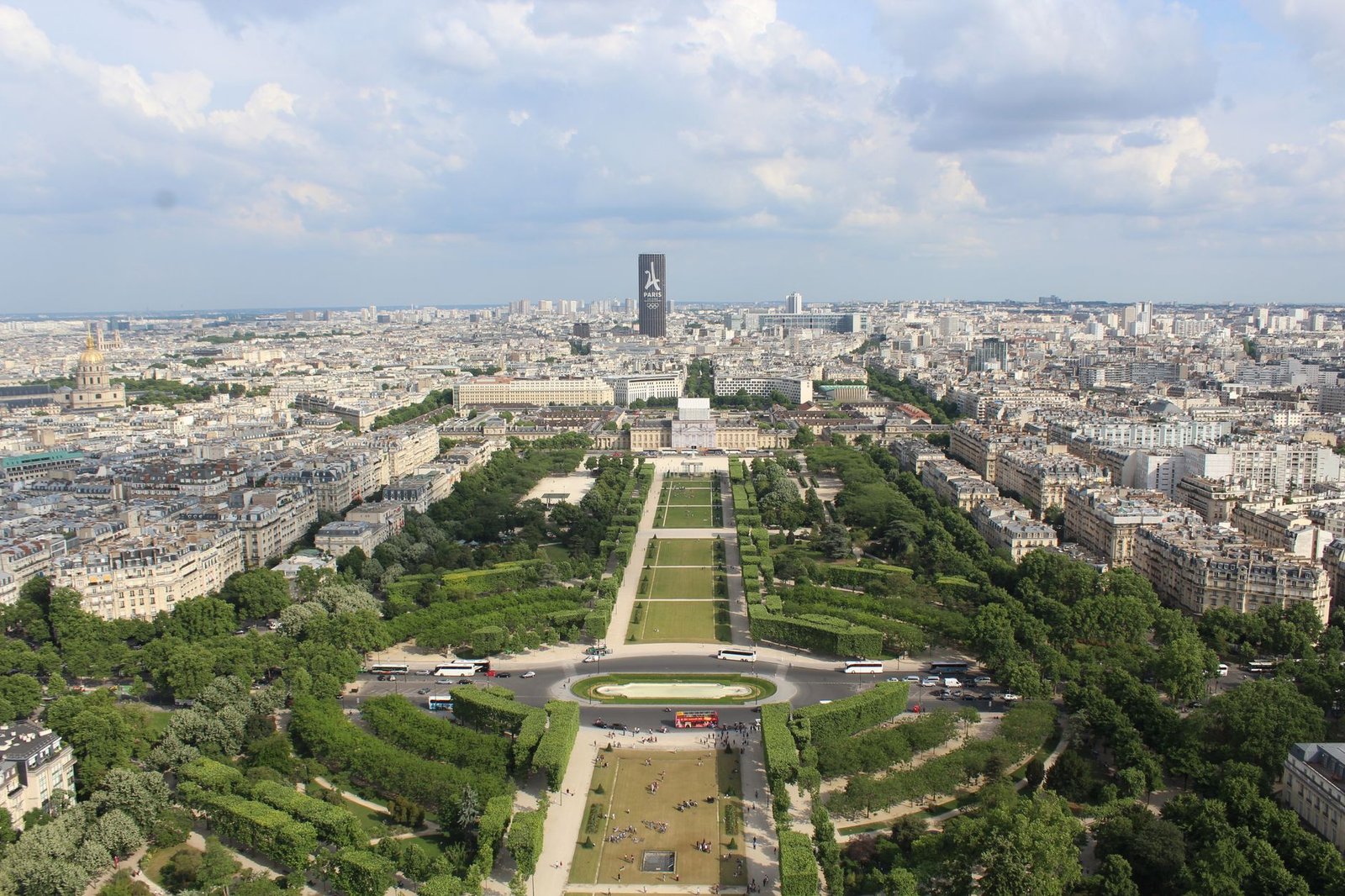
This guide explains the current status of the Montparnasse Tower (observation deck closed since March 31, 2026), how to get to the neighborhood, what the observation deck offered and which views of Paris are open instead. Spoiler: the view from here that includes the Eiffel Tower itself is something special.
A bit of history: why does Paris (still) tolerate this skyscraper?
Built between 1969 and 1973, the Montparnasse Tower was an ambitious project that stirred controversy from the start. Conservative Parisians argued that such a tall, modern building would destroy the city’s aesthetic harmony. And, honestly, they had a point: when you look at Paris from the sky, Montparnasse is clearly an alien in the middle of historic toits (rooftops) and mansards.
But here is the curiously French side of the story: instead of tearing the building down or hiding it, Paris incorporated it. Today, for many tourists, the Montparnasse Tower is exactly the anomaly that makes it fascinating. And, curiously, it became a symbol of the moment Paris embraced modernity in the 1970s.
The observation deck: what could you see from up there?
This section describes the view from the observation deck as it was before it closed, for those who want to know what they are missing or compare it with the alternatives.
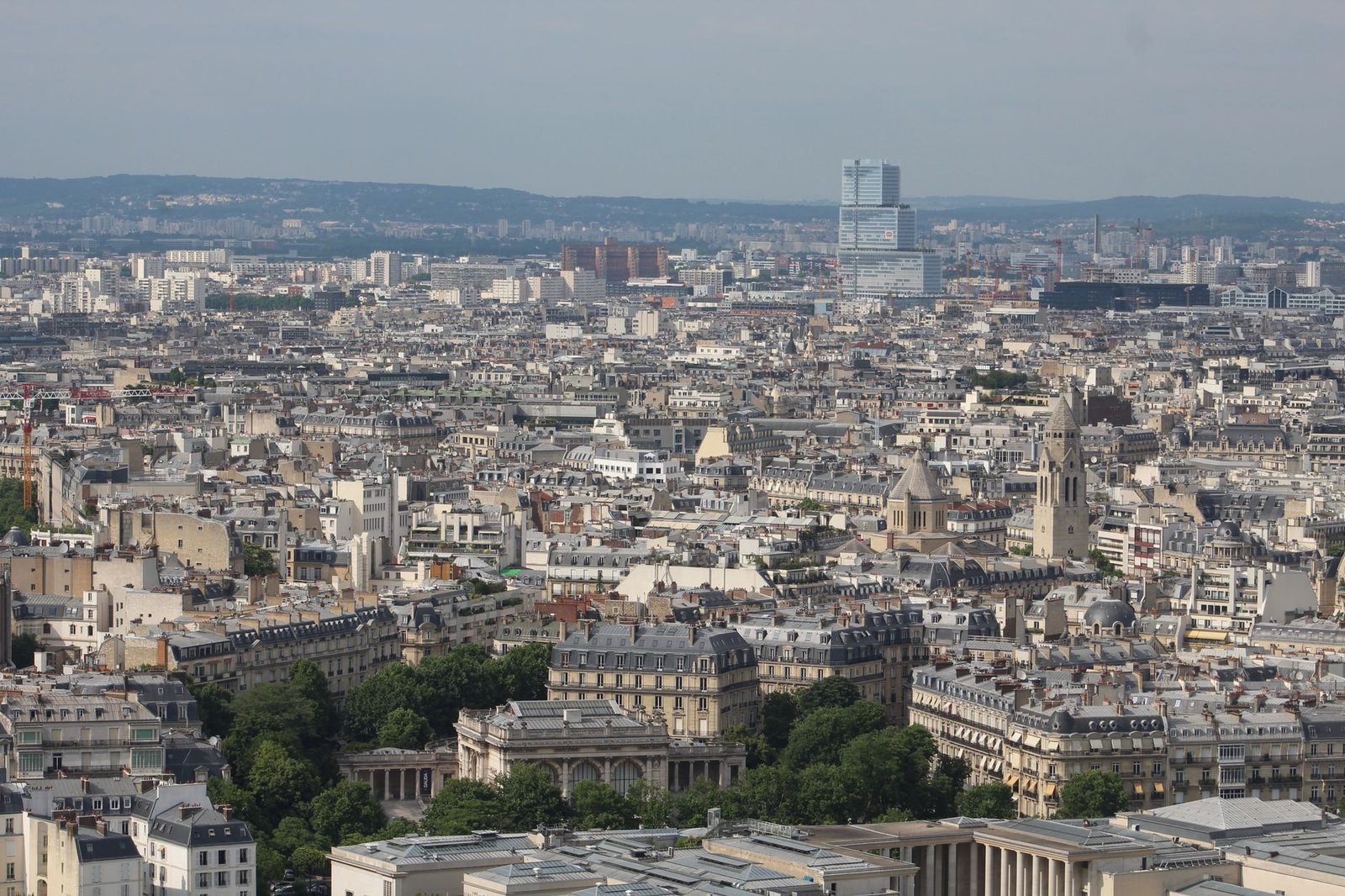
Public access was via the 56th floor (elevator ride of 38 seconds), and there was also an outdoor area at the top (59th floor), where you could stand in the open air with a 360-degree view. Unlike the Eiffel Tower, here you feel you are truly on top of a metropolis, surrounded by other buildings, streets and real urban life.
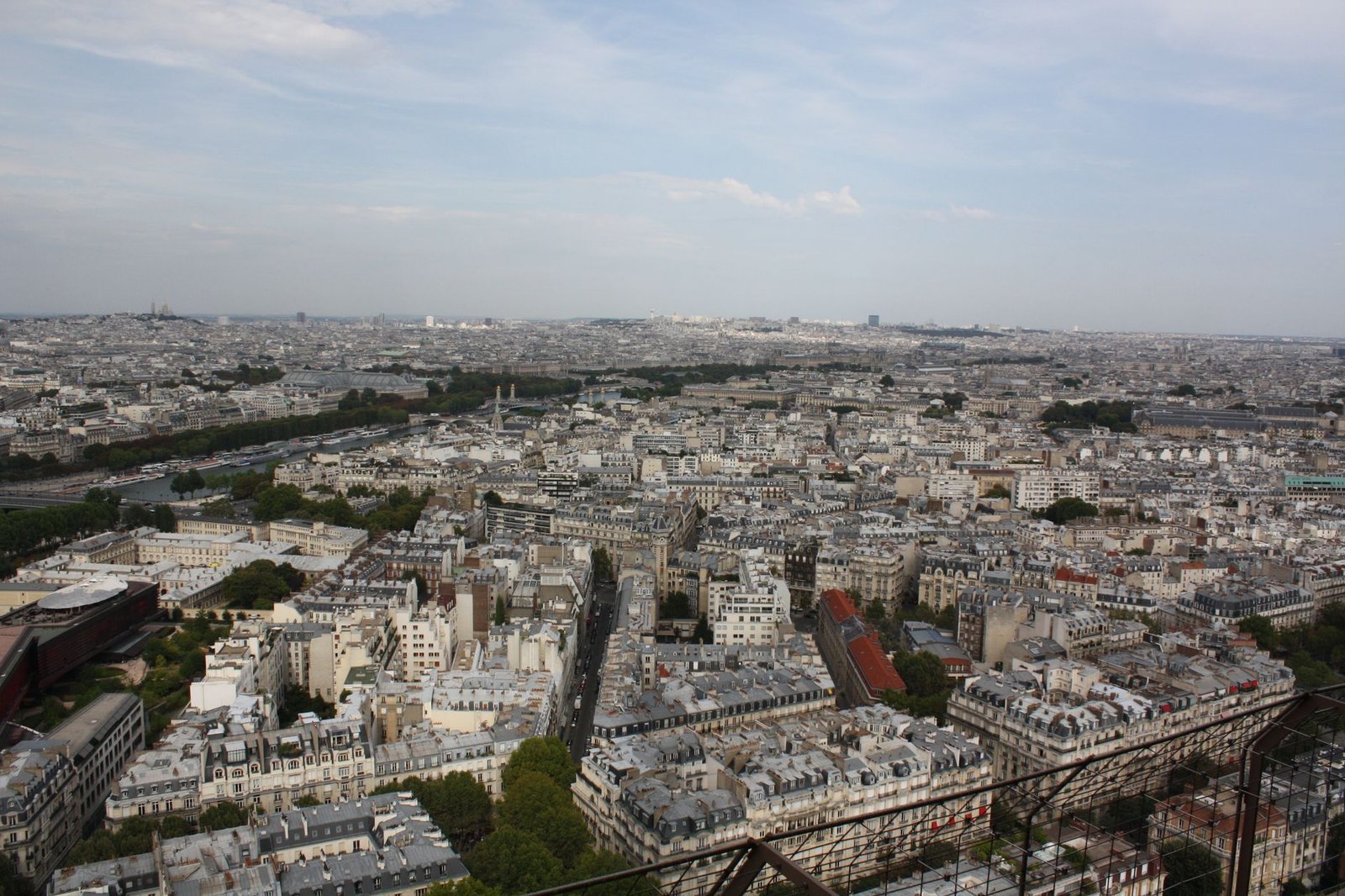
On clear days, you can see the Eiffel Tower perfectly from the Montparnasse deck. That perspective is the big differentiator: you are not looking at the Eiffel Tower up close (as at Trocadéro) but from afar, framed within the context of all of Paris. It is a completely different photograph from the classic one.
The deck offered information panels pointing to the city’s main landmarks: you could pick out Notre-Dame, Sacré-Cœur, the Louvre and the Arc de Triomphe. On clear nights, the city lights stretch to the horizon.
Tickets and opening hours: observation deck closed, no tickets on sale
Status (Nov 2026): the Observatory closed on March 31, 2026 and no longer sells tickets. There is no planned reopening date. The prices and hours that appear in older guides (about €18 to €20, open 9 a.m. to 11 p.m.) are no longer valid; do not buy a ticket from a reseller that still advertises the visit.
Location: 33 Avenue du Maine, 75015 Paris. Easy access by metro: lines 4, 6, 12, 13 (Montparnasse-Bienvenüe station). The station and the neighborhood operate normally; only the ride up the tower is suspended.
Viewpoints open today: the Arc de Triomphe terrace (view of the 12 avenues), the Galeries Lafayette Haussmann terrace (free), the Sacré-Cœur esplanade (free) and the levels of the Eiffel Tower, which has the advantage of offering a view of Paris with the Tower included on the horizon, the one only Montparnasse used to give.
Why visit: comparison with other Paris viewpoints
Montparnasse Tower vs. Eiffel Tower: The Eiffel Tower is iconic, of course. But it is always crowded, requires hours of waiting (even if you pay more to skip the line), and you are too close to the iron structure to get any perspective. Montparnasse offered a holistic view of the whole city, including the Eiffel Tower itself. If you have limited time, Montparnasse was the more efficient choice.
Montparnasse Tower vs. Trocadéro: Trocadéro is free and offers the best front-on view of the Eiffel Tower; it is where all the tourists take their photos. But it is an open, crowded area with no protection from wind or weather. Montparnasse is covered and climate-controlled, with restrooms and a café, and the view is different (less up close, more from above). They complement each other well.
Montparnasse Tower vs. Centre Pompidou (both closed): The Pompidou terrace offered a view with your museum ticket, but the building is also closed for renovation until 2030. Montparnasse was a dedicated and much larger observation space, with more detail and depth. Today, neither of the two is open.
Montparnasse Tower vs. Sacré-Cœur (Montmartre): Sacré-Cœur offers a view of historic Paris, especially romantic at dusk. But it sits physically higher in the city, so the angle is different. Both are worth it on longer trips.
Practical tips for your visit
Best time to see Paris from above (applies to the viewpoints that are open): late afternoon, between 5 p.m. and 7 p.m. You catch the golden light of sunset, it is not crowded, and then you watch the city lights come on; the visual effect is stunning.
Visit length (when the deck was open): 45 minutes to 1 hour was enough. You go up (5 min), enjoy the view (30-40 min), take photos and come back down. There is not much else to do up there.
Photography: Windows can cause reflections in your photos. If possible, go when the outside light is stronger than the inside light; late afternoon helps. Bring a charged phone or a camera, because the views are worth every shot.
Café and restrooms: there was a café on the deck with museum prices (coffee: €4-5, sandwich: €8-12). The restrooms are often clean. If you want to save money, eat before going up.
Accessibility: the elevators work well and the facility is wheelchair accessible. Perfect if you have reduced mobility and want to see a view of Paris.
A little about the neighborhood: Montparnasse beyond the tower
Montparnasse is more than the tower. The neighborhood is historic: it was a haven for artists in the 1920s and 30s (Hemingway, Picasso and Modigliani frequented the cafés here). There are still remnants of that era: the Café de la Rotonde and Café du Dôme are grand old buildings with stories to tell.
There is also the Cimetière du Montparnasse (Montparnasse Cemetery), smaller than Père Lachaise but just as atmospheric, with the graves of French intellectuals. If you are interested in history, it is worth a stroll around the neighborhood beyond the tower.
Streets like Rue Campagne-Première and Rue Grande-Chaumière are charming, with small shops, art galleries and restaurants. It is a genuinely “Parisian” neighborhood, less touristy than the areas near the Eiffel Tower or Notre-Dame.
How much it costs to see Paris from above today
With the Montparnasse deck closed, the budget changes: the Galeries Lafayette terrace and the Sacré-Cœur esplanade are free, and the Eiffel Tower runs from €14.80 (stairs to the 2nd floor) to €36.70 (elevator to the top) for adults, according to the official 2026 price list (Nov 2026). See the full prices in the Eiffel Tower ticket guide.
The observation deck as a sensory experience: more than a photograph
Visiting a viewpoint in Paris is more than taking a pretty photo (although that is great too). It is an exercise in perspective, both literally and philosophically. When you are 200 meters up looking at a city with 2,000 years of history, something happens: you perceive the scale of time and space in a different way.
The Montparnasse Tower offered that experience in a more “immersive” way than other tourist spots. Because it is not an isolated attraction like the Eiffel Tower; it is part of the urban landscape. You see the metro moving through the streets, cars passing, people in squares. Life in Paris keeps going while you are up there, and you do not get the feeling of being in a “tourist bubble.”
If you are a traveler who likes to understand cities (not just photograph them), Montparnasse deserves your time. Go up slowly, notice the details: how the buildings change in architecture as you look at different neighborhoods, how the green of the parks contrasts with the gray of the streets, how the golden light of late afternoon transforms everything.
Transportation tips and how to get there
By metro: Montparnasse-Bienvenüe station (lines 4, 6, 12, 13). The signposted exit leads straight to the base of the tower; impossible to get lost.
By RER: Montparnasse station (lines B, C, D, E), also very close, in the same area.
By bus: several lines stop on Avenue du Maine (in front of the tower). If you have a transit pass, you can get there at no extra cost.
On foot: if you are in nearby neighborhoods (Latin Quarter, Saint-Germain), it is walkable, 15-20 minutes at most. The neighborhood is quite safe and pleasant for walking.
FAQ: Frequently asked questions
Q: Is it worth going to Montparnasse if I am also visiting the Eiffel Tower?
A: Yes, especially if your trip is 3+ days. They are completely different perspectives. If you only have 1-2 days, prioritize the Eiffel Tower because it is more iconic. But if you have time, Montparnasse complements it very well.
Q: Which is the better view: Montparnasse or Trocadéro?
A: Different, not better or worse. Trocadéro is for seeing the Eiffel Tower up close and romantically. Montparnasse is for seeing ALL of Paris from a high point. If forced to choose: both, at different times of day.
Q: Can I go up the Montparnasse Tower if I am afraid of heights?
A: Yes, more easily than the Eiffel Tower. The deck’s glass is tall and thick, so it is not as “open” as the Eiffel Tower and is psychologically less frightening. Many people with a phobia manage to go up here.
Q: Is the Montparnasse Tower observation deck open?
A: No. It closed on March 31, 2026 and there is no reopening date. Open alternatives: the Arc de Triomphe, the Galeries Lafayette terrace (free), Sacré-Cœur and the Eiffel Tower.
Q: Were there long lines at Montparnasse?
A: Rarely. Even at peak tourist times, lines were minimal (15-20 minutes at most). It is one of the big draws: you go up quickly without stress.
Q: Can I bring a backpack/suitcase when I visit?
A: Yes, small backpacks are allowed. There may be restrictions on large suitcases. There is no cloakroom, so you cannot leave luggage there. If you have a large suitcase, it is better to visit after dropping it off at your hotel.
Q: Is it safe to visit Montparnasse alone?
A: Completely. It is a tourist attraction with security staff. The Montparnasse neighborhood is also safe by day and by night, and well policed.
Q: Does the view work at night? Is it worth going after dark?
A: Yes, the night view is spectacular; all of Paris lit up is a visual show. If you can go in the last 1-2 time slots before closing, bring your camera and enjoy the transition from dusk to night. It is extremely photogenic.
Q: Are there any special events at Montparnasse?
A: Not on a regular basis. Occasionally there are temporary exhibitions in the building (in the rest of the structure, beyond the observation deck) or events in the neighborhood. But the observation deck itself is always the same; there are no specific shows. The “special event” is the light changing throughout the day, more interesting than any cultural program.
Q: Is it possible to combine Montparnasse with other attractions on the same day?
A: Absolutely. Thanks to its central location, you can walk to several neighborhoods: Latin Quarter (10 min), Saint-Germain (15 min), Île de la Cité (20 min). After the deck, explore the Montparnasse neighborhood (historic cafés, the cemetery, small streets) and put together a complete itinerary for this whole area of Paris.
Conclusion: Montparnasse today
The Montparnasse Tower is underrated by many tourists, who seem to think an “ugly” skyscraper does not deserve attention in Paris. But the truth is that this incongruity is part of the charm. The view from here is genuinely impressive, the experience is far less chaotic than the Eiffel Tower, and you leave having learned not only about Paris but also about how cities evolve and embrace contradictions.
If your trip to Paris includes going up to viewpoints, Montparnasse will only return to the list when it reopens, with no date announced. Until then, the Arc de Triomphe, the Galeries Lafayette and the Eiffel Tower complete the picture of what Paris looks like from above.