Going up the Eiffel Tower isn’t just one experience—it’s three completely different ones, one on each floor. The first, second, and top levels each have their own distinct heights, perspectives, and attractions. Visitors who understand this before their trip make much better use of their time and ticket money.
This guide breaks down what you’ll find on each floor, how much time to set aside, which level is best for different types of visitors, and what you absolutely can’t miss at every stage.
Dica: Aproveite também para fazer estes passeios em Paris
Tour pelo exterior da catedral de Notre Dame + Ingresso da cripta . Duração: 2 horas
Disneyland Paris Duração: 3 horas ou mais
Passeio de barco pelo Sena. Duração: 1h
Ingresso do 3º andar da Torre Eiffel. Duração: 2 a 3 horas
Ingresso do Palácio de Versalhes. Duração: 2 a 3 horas
Veja mais passeio em Paris aqui.
Before You Go Up: What to Know About Access and Tickets
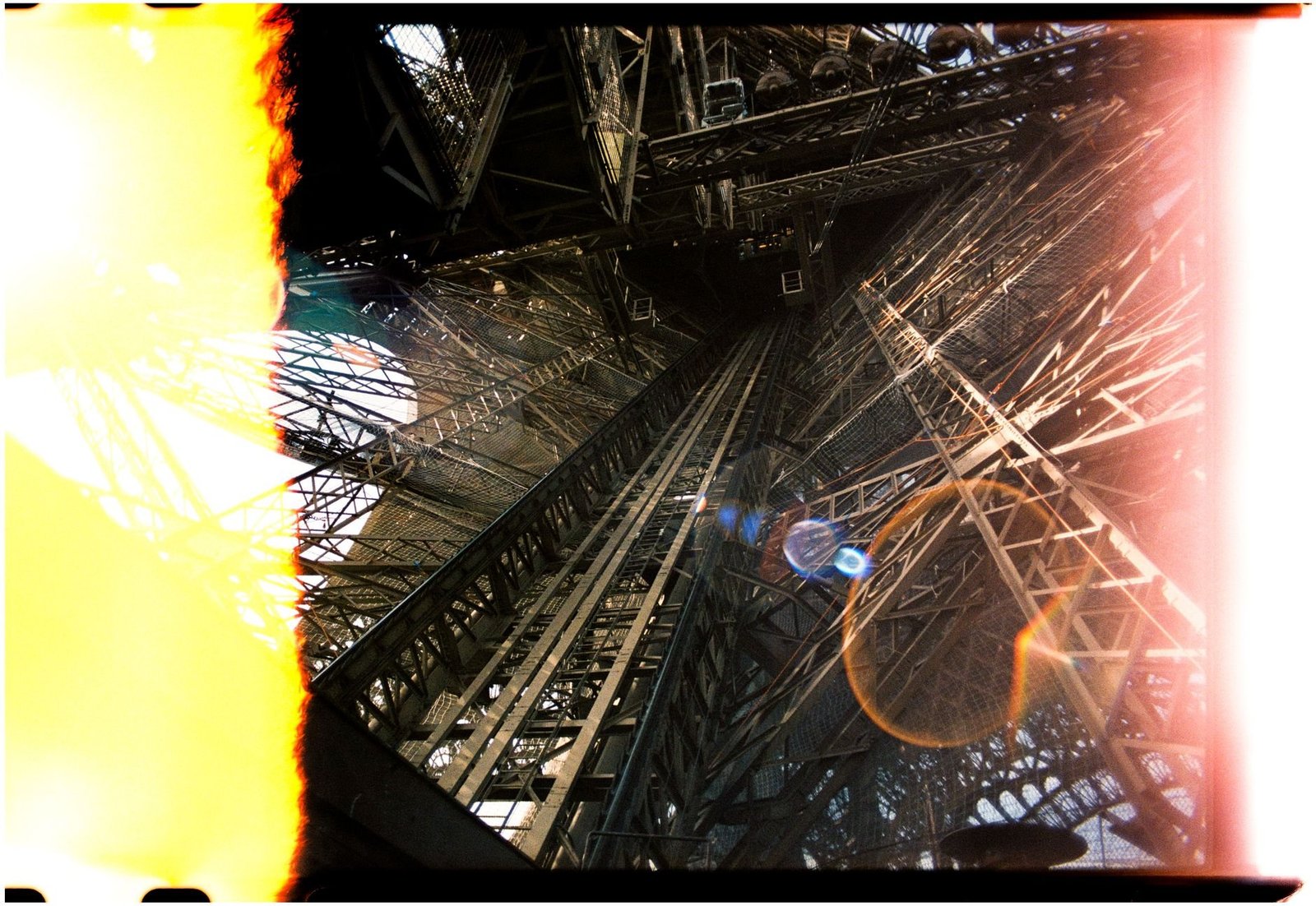
The tower has two ways up: elevator and stairs. The elevators reach all three floors. The stairs go up to the second floor (674 steps)—the third floor is only accessible by elevator. If you’ve got the energy for the climb, taking the stairs offers a perspective of the iron structure that the elevators just can’t show you: you see the trusses, the rivets, and the tower’s engineering from the inside, step by step.
Tickets for the second floor (by stairs or elevator) and tickets that include the top have different prices. In 2025, access to the second floor by elevator costs around €18.80 for adults; the full ticket including the top is €28.30. Kids and young adults get discounts. Always book in advance on the official website—lines without a reservation can stretch over 2 hours during peak season.
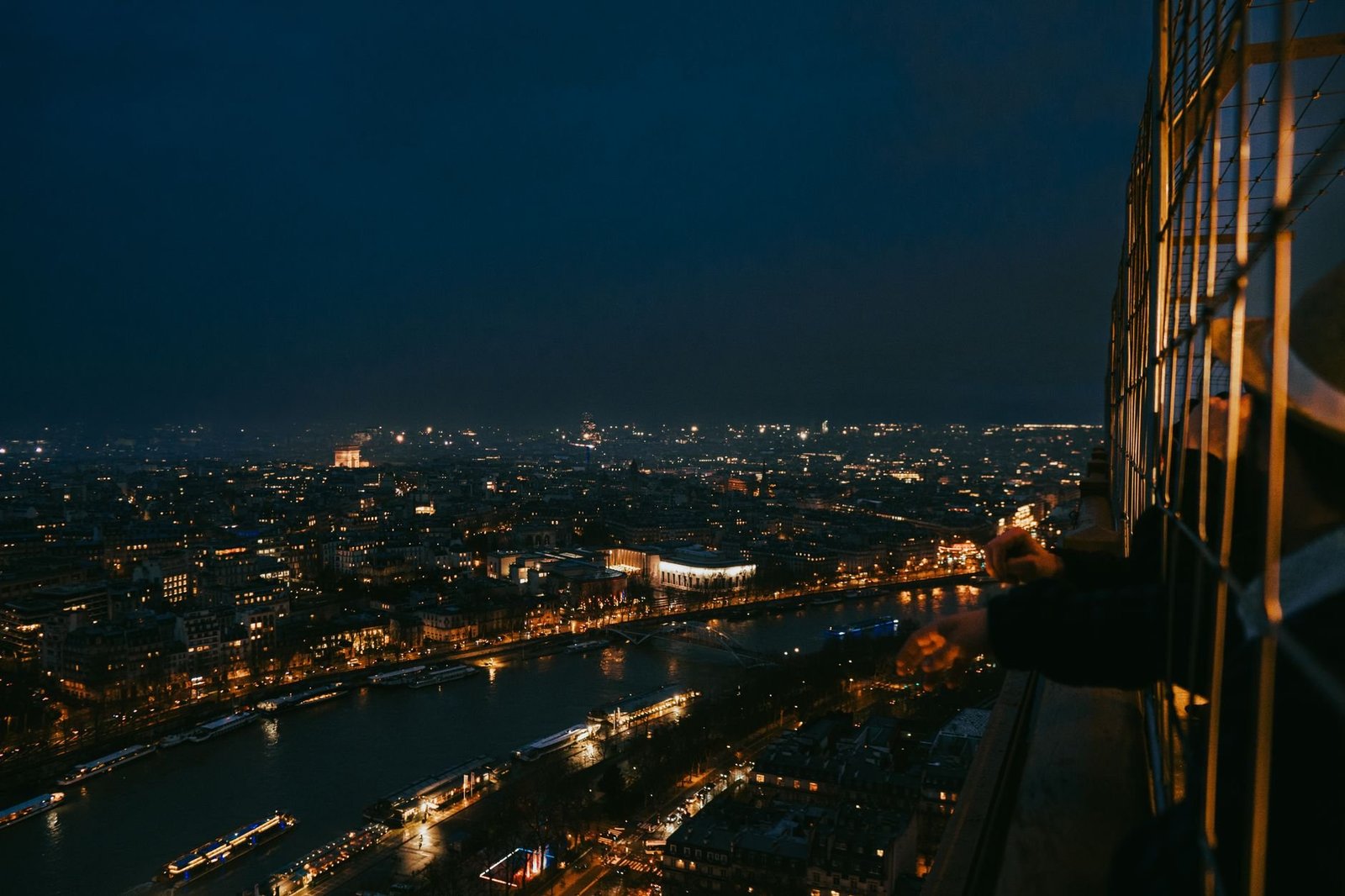
The elevators have limited capacity, and peak hours are from 10 am to 5 pm. If you go early in the morning (opens at 9:30 am) or late in the afternoon (around 6 pm), you’ll face shorter waits. At night, the tower closes later in the summer, and the visitor flow drops significantly after 8 pm.
First Floor: 57 Meters (187 Feet) — Way More Than Just a Pass-Through
At 57 meters (187 feet) high, the first floor is the most underrated part of the tower. Lots of people breeze right through it without stopping—and they miss out on a lot. After a renovation completed in 2014, the floor got sections of transparent glass flooring where you can look straight down and see the Champ de Mars 57 meters below your feet. If you have vertigo, it’s a challenge; if you don’t, it’s one of the most impressive photo ops on the itinerary.
The first floor also has a permanent exhibition on the tower’s construction history—period photographs, original drawings by Gustave Eiffel, and the story of how 300 workers assembled 18,000 iron pieces in just over two years. If you’ve just read up on the tower’s history before your visit, this is where it all comes to life.
There are two restaurants on the first floor. The 58 Tour Eiffel is the more affordable option—dishes between €20 and €45, with a view of the Champ de Mars. Access to the restaurant doesn’t require an advance tower ticket (you can enter separately), but it’s recommended to book a table ahead of time, especially for dinner.
How much time to set aside: 30 to 45 minutes to see everything at a relaxed pace, plus more if you want to eat at the restaurant or spend a good chunk of time at the historical exhibition.
Second Floor: 115 Meters (377 Feet) — The Best View of Paris
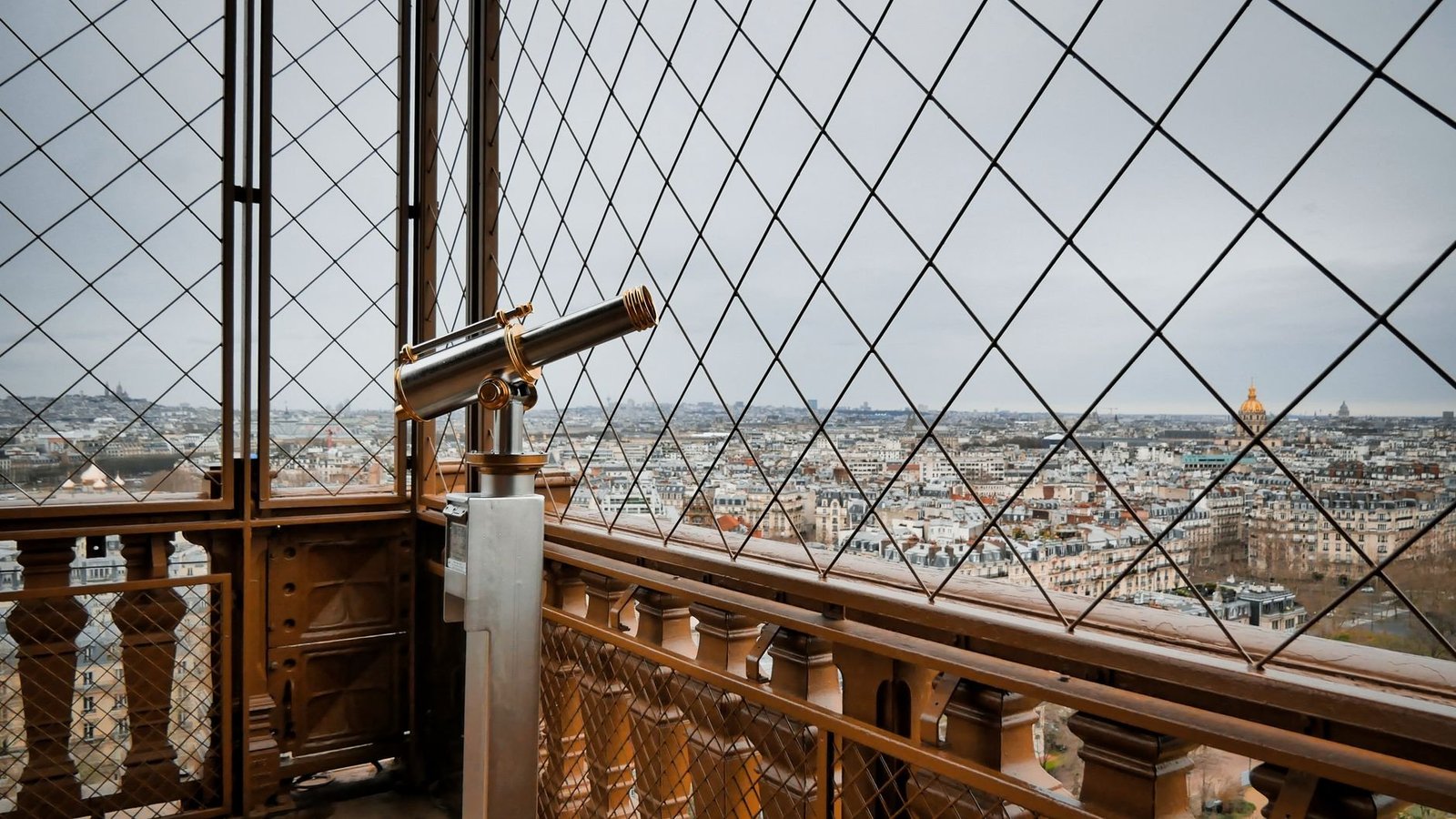
For many visitors, the second floor is the best part of the tower—not the top. At 115 meters (377 feet) high, the view of Paris is close enough to clearly recognize every monument: the Louvre to the north, Notre-Dame on the Île de la Cité, Montmartre and Sacré-Cœur in the distance, Les Invalides with its golden dome nearby, the Arc de Triomphe along the Champs-Élysées axis. Everything is identifiable, everything is detailed.
At the top, 276 meters (906 feet) up, the monuments become tiny, and the horizon expands so much that the scale changes—you see the Paris region, not the city itself. The second floor strikes a better balance between altitude and the legibility of the urban landscape.
This is also where the paid telescopes are located—cameras that let you zoom in on monuments and take photos of specific Parisian landmarks. And it’s from the second floor that the elevator to the top departs.
The second floor has a souvenir shop, a snack bar, and the access point for the top-floor elevator. The outdoor platform has a walkway that goes all the way around, offering a full 360-degree view—take your time to walk slowly and identify every point on the horizon.
How much time to set aside: 45 minutes to 1 hour. This is the floor where most people spend the most time.
Third Floor (The Top): 276 Meters (906 Feet) — Eiffel’s Apartment and the View of France
The third floor sits at 276 meters (906 feet) high—the glass dome that caps the top of the tower. The difference from the second floor is immediate: the space is much smaller (it holds about 400 people at a time, compared to thousands on the lower floors), the wind is stronger, and the view expands far beyond Paris. On clear days, you can see up to 70 kilometers (43 miles) away.
At the top, you’ll find a reconstruction of Gustave Eiffel’s private apartment—the engineer built a private room for his own use up here and refused to rent it out for years, even when generous offers came in. The apartment has period furniture, wax figures of Eiffel and Thomas Edison on a visit, and original documents. It’s small, but the historical context it carries is unique.
There’s a champagne bar at the top—a glass of bubbly 276 meters above Paris costs between €12 and €20, depending on your choice. It’s one of the most “Eiffel Tower” moments the visit offers. There are also interactive panels explaining how the radio antenna, which saved the tower from demolition in 1909, actually works.
The outdoor platform at the top is narrower and has higher glass walls than the lower floors—for safety reasons. Taking photos over the railing is more limited, but the view on a clear day makes up for any restrictions.
How much time to set aside: 20 to 30 minutes. The space is smaller, and the flow is faster than on the second floor.
How to Make the Most of Each Floor: Practical Tips
Best time to go up: Late afternoon—between 5 pm and 8 pm in the summer—gives you the best of both worlds: you see Paris in natural light from the second floor, wait for sunset, and then catch the light show at the first full hour of the night (9 pm in summer). If you go in the morning, the light is better for photos facing east (Notre-Dame, Louvre), but the western horizon will be in shadow.
For photography: On the first floor, the glass floor makes for great vertical shots of the Champ de Mars looking down. On the second, the outdoor platform allows photos in every direction—position yourself on opposite edges to capture different landmarks. At the top, the glass windows are higher and make it harder to avoid reflections; the solution is to use a polarizing lens or shoot at an oblique angle to the glass.
With kids: The railing height and structure vary between floors. Small children will have their view blocked on the outdoor platforms of the second floor and the top—carry them in your arms or use the indoor spaces with lower windows. The first floor has more space, and the glass floor is usually a big hit with kids (and a bit scary for the adults).
Souvenir shops: There’s one on every floor. The shops on the first and second floors have the biggest selection. The one at the top has specific items with the “Top of the Eiffel Tower” seal—more expensive, but with a symbolic appeal. If you’re buying souvenirs, compare prices on all three floors before you decide.
Taking the Stairs: Is It Worth It?
The stairs are an option, and plenty of people use them—especially those afraid of elevators, those who want to see the structure up close from the inside, or those who enjoy a physical challenge. It’s 674 steps to the second floor, spread over four flights with rest landings. If you’re in good shape, you can make it up in 20 to 30 minutes; if you take it slower, it’ll take 40 to 50 minutes.
The advantage of the stairs goes beyond the exercise: you see the tower’s geometry from the inside, watch the structure evolve as you climb, and pass by spots where the iron trusses are right next to you. It’s an experience the elevator just doesn’t offer. The downside is that the stair ticket is cheaper, but you’ll still need the elevator to get to the top—and you might have to wait in the elevator line on the second floor right alongside everyone else.
Is It Worth Going All the Way to the Top?
It depends on what you’re after. If you’re visiting once in a lifetime, then yes—going to the top and saying you stood 276 meters above Paris has a symbolic value the second floor just can’t match. If you already know the tower and want to appreciate Paris in more detail, the second floor delivers more for the price difference.
If you have small kids, the second floor is usually more practical: less waiting time for the elevator, more space, and the view is just as impressive for anyone seeing Paris from above for the first time. The top loses a bit of its impact when the scale is so vast that landmarks turn into tiny dots on the horizon.
Frequently Asked Questions About the Eiffel Tower Floors
Which floor has the best view of the Eiffel Tower?
To see Paris clearly and identify the monuments, the second floor (115 meters / 377 feet) is the most balanced. The top has a wider view, but the monuments become too small to recognize without a telescope.
Do the stairs go all the way to the top?
No. The stairs only go up to the second floor (674 steps). The third floor is only accessible by elevator, which departs from the second floor.
How long does a complete visit to the Eiffel Tower take?
Taking your time on all three floors: 2 to 2.5 hours. If you’re going to take the stairs to the second floor and then the elevator to the top, add another 30 minutes.
Is the tower open at night?
Yes. In the summer (June to September), the tower closes at 12:45 am. In the winter, it closes at 11:45 pm. The light show—20,000 lights sparkling for 5 minutes—happens every hour on the hour after nightfall.
Can I buy a ticket at the ticket office on the day?
Yes, but the lines can stretch over 2 hours during peak season. The recommendation is always to book in advance on the official Eiffel Tower website.