Doing the Amelie Poulain Montmartre route on your own usually means one stop: the Café des Deux Moulins, with a line of tourists taking the same photo at the same window. Little of the magic that made Amélie a cult classic survives on that curb. Most of the film’s locations are scattered along the almost-empty streets of Montmartre, just minutes from the neighborhood’s most photographed circuit.
The less obvious Amélie Poulain location route in Montmartre includes Rue Saint-Vincent (the opening scene), the Maison Collignon grocery store on Rue des Trois Frères, the Willette garden with its carousel, and the former video store in Pigalle — spots with no lines, within a 15-minute walk of each other, that most ready-made itineraries overlook.
How to get to the Amélie Poulain locations in Montmartre
The route starts and ends within the 18th arrondissement, the neighborhood that holds the film’s entire visual story.
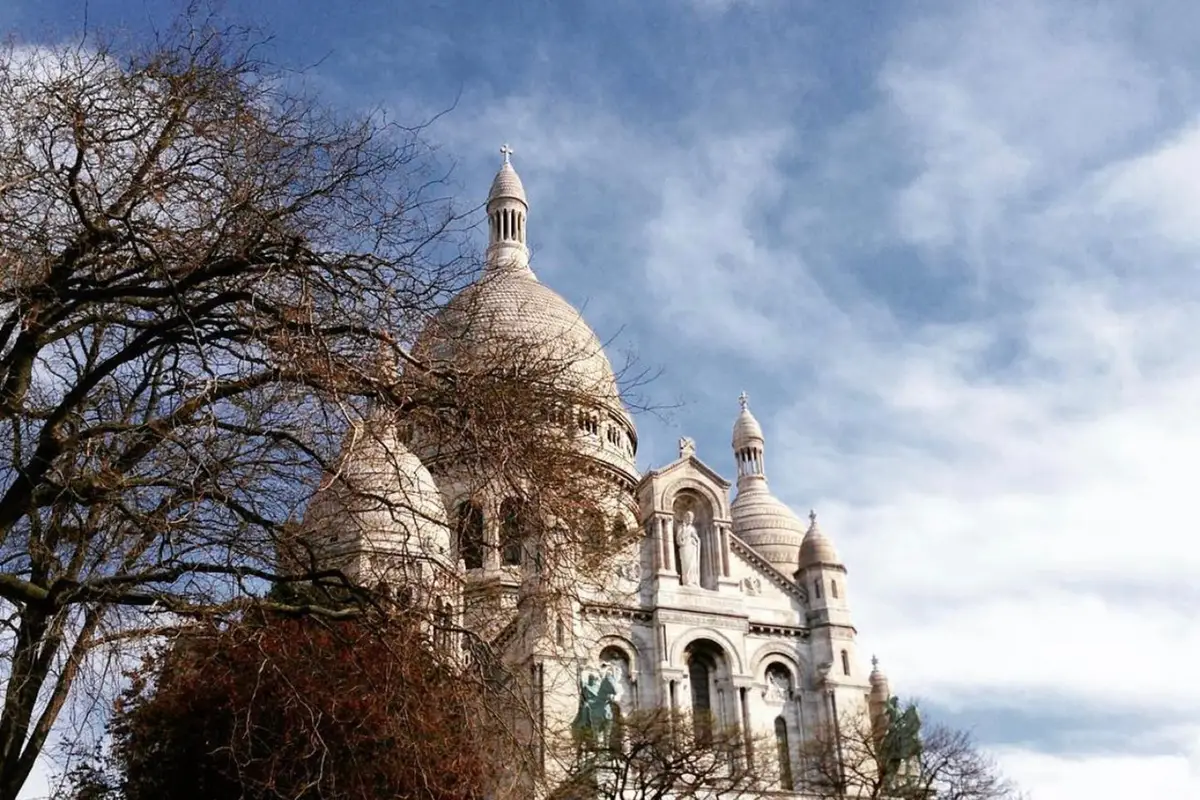
Dica: Aproveite também para fazer estes passeios em Paris
Tour pelo exterior da catedral de Notre Dame + Ingresso da cripta . Duração: 2 horas
Disneyland Paris Duração: 3 horas ou mais
Passeio de barco pelo Sena. Duração: 1h
Ingresso do 3º andar da Torre Eiffel. Duração: 2 a 3 horas
Ingresso do Palácio de Versalhes. Duração: 2 a 3 horas
Veja mais passeio em Paris aqui.
The Abbesses metro station (line 12) drops you a 5-minute walk from Rue des Trois Frères, where the Maison Collignon grocery store is located. If you’d rather start at the top of the neighborhood, get off at Anvers (line 2) and head up Rue de Steinkerque to the Sacré-Cœur funicular — from there, the Willette garden sits just below the basilica’s steps. The entire Amélie Poulain location route in Montmartre is done on foot, with no other transport needed beyond the initial metro ride, and the walk between stops rarely exceeds 10 minutes.
If you’re arriving via RATP (Paris’s official metro operator), avoid the Abbesses station exit during peak tourist hours, between 10 a.m. and noon, when the station’s Art Nouveau elevator forms a line just to go down.
Best time to go and how much time to set aside
The best window for the Amélie Poulain location route in Montmartre is a weekday morning, between 9 a.m. and 11 a.m., when the neighborhood still breathes like it does in the film: tourists packed at Place du Tertre, while residential streets like Saint-Vincent are practically empty. Set aside 2.5 to 3 hours to cover all six locations at a relaxed pace, including a coffee stop.
Avoid Saturday afternoons and long holiday weekends, when the whole neighborhood becomes a stop for tour buses and Place du Tertre disappears under caricature artists’ umbrellas. In winter (December to February), the streets are even emptier, but some smaller shops close earlier, around 6 p.m.
What to see: the locations beyond the obvious
These are the stops most Amélie Poulain itineraries skip, yet they carry key scenes from the film — most with no sign, no line, and no mention in traditional Montmartre guides.
Rue Saint-Vincent
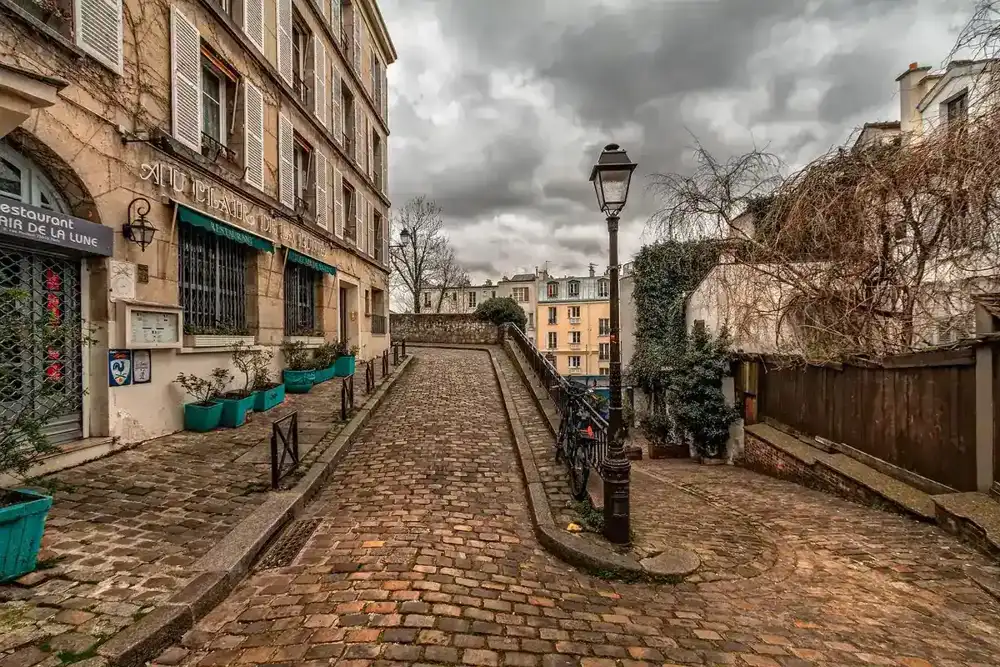
This is where the film opens and closes: the cobblestone street behind Sacré-Cœur, with almost no traffic, where the fly buzzes in the first seconds of the narration. It’s worth walking the 100 to 200 meters to the intersection with Rue des Saules, where the Clos Montmartre, Paris’s last urban vineyard, still stands.
Maison Collignon
The grocery store at 56 Rue des Trois Frères has adopted the film’s name and sells fruit, vegetables, and small Amélie Poulain souvenirs — without charging to photograph the facade, unlike more heavily touristed spots on the circuit, like the café itself.
Willette Garden and the carousel
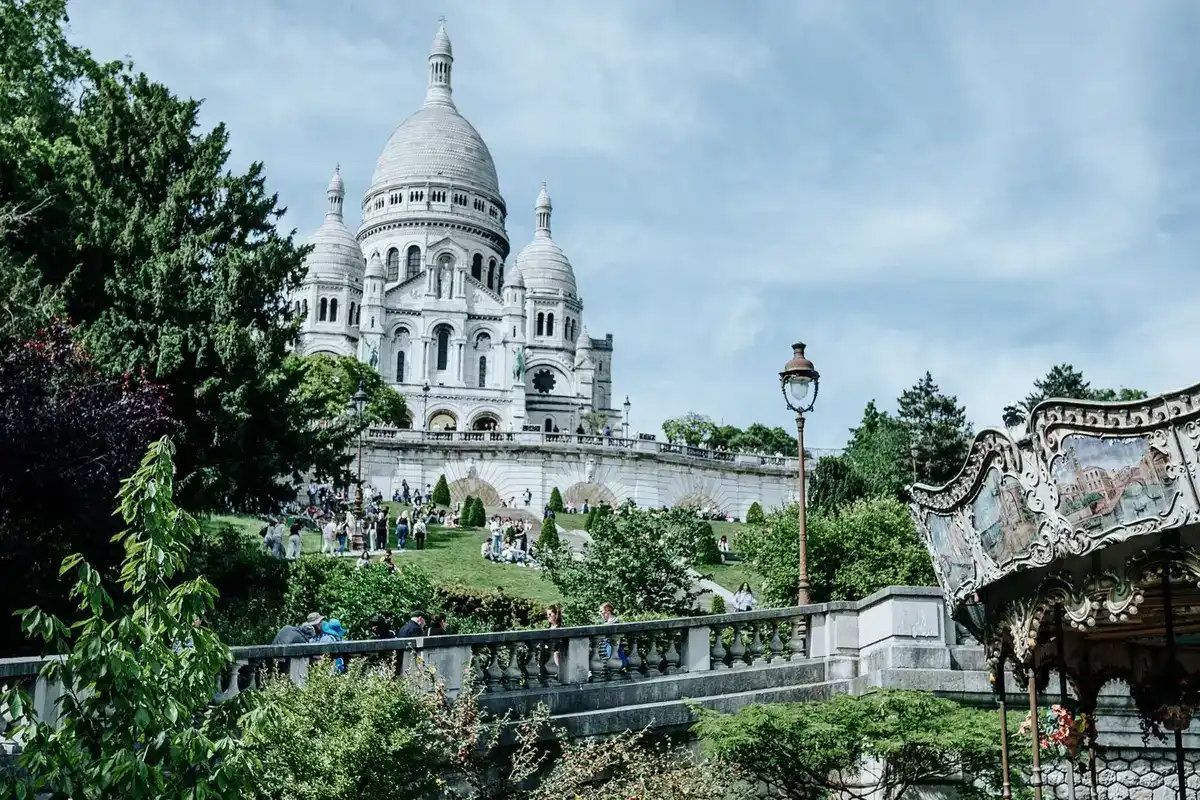
At the foot of Sacré-Cœur, the small Square Louise-Michel (popularly known as the Willette garden) holds the old carousel and the phone booth from the blue arrow scene. It’s a good place to sit for 10 minutes before tackling the basilica’s steps.
The former Palace Video store, in Pigalle
The shop where Nino worked, at 37 Boulevard de Clichy, is now a sex shop called Toys Palace — the facade has changed little since filming, and it’s the farthest point on the route, about a 12-minute walk from the Willette garden, right on the edge of Pigalle’s more adult neighborhood.
Canal Saint-Martin, outside Montmartre
If you have half a day to spare, the Canal Saint-Martin — where Amélie skips stones on the water in one of the film’s most quoted scenes — is a 20-minute metro ride away and rounds out the thematic circuit with a completely different neighborhood of iron bridges and tree-lined quays.
What to pair with the Amélie Poulain location route in Montmartre
After the locations, the Sacré-Cœur Basilica (check out the full Montmartre and Sacré-Cœur guide) and Place du Tertre are just steps away — it’s worth setting aside 30 minutes to climb the dome if the day is clear. If you want some historical context of the neighborhood before hunting down film facades, you can book a guided Montmartre tour, which usually includes several stops from this route along the way.
For those who prefer to explore on their own, booking the guided Montmartre tour in Portuguese is still a solid plan B for rainy days, when finding the smaller streets on your own gets trickier.
Where to eat in the film’s style
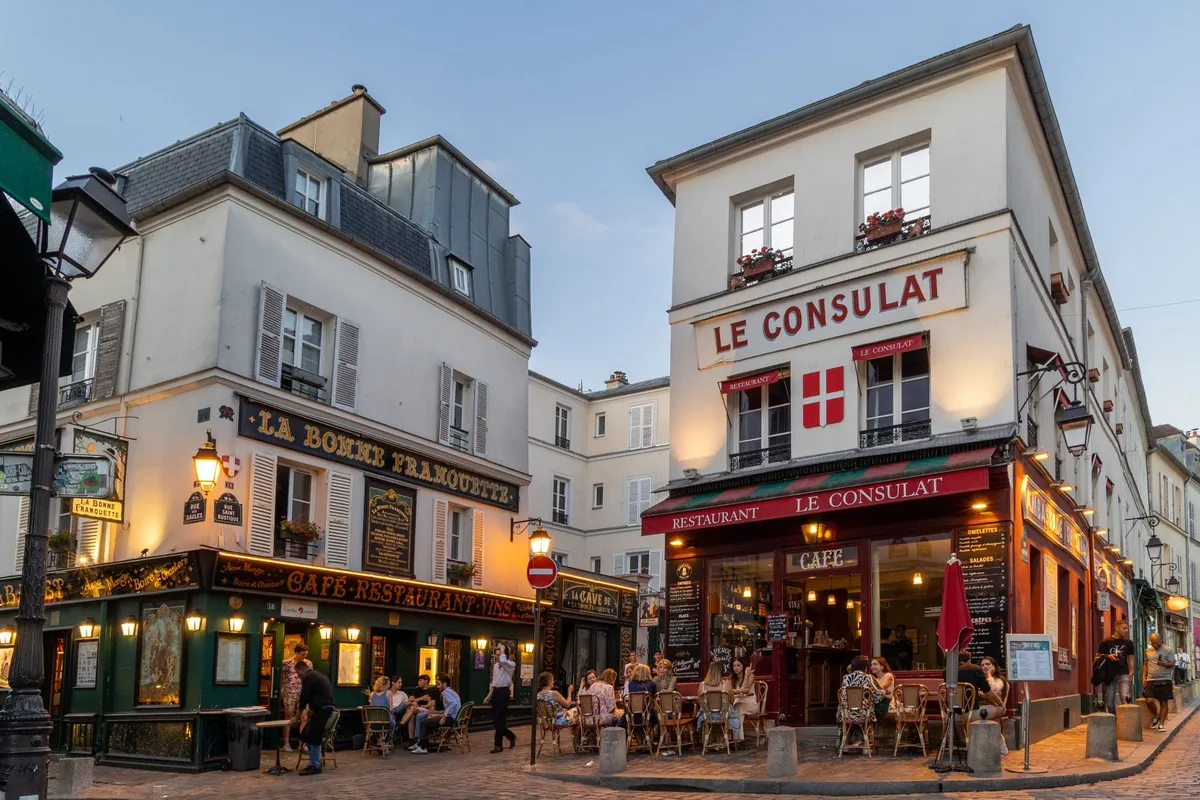
The Café des Deux Moulins (15 Rue Lepic) still serves simple bistro dishes and is worth a quick stop at the counter — just avoid peak lunch hours between 12:30 p.m. and 2 p.m., when the wait for a table tops 30 minutes. For a more relaxed meal, Rue des Trois Frères has smaller bakeries and cafés, no six-language menus, where you can sit with the same neighborhood vibe you see in the film.
It’s also worth booking a table off-peak around Rue Caulaincourt, where neighborhood bistros charge less than the tourist-focused spots at Place du Tertre. You’ll often find a daily special at better prices than the cafés at the base of the Sacré-Cœur steps, precisely because they’re a few minutes further from the main flow of visitors.
Where to stay in Montmartre
Staying right inside the 18th arrondissement cuts down on travel time and lets you walk the route before 9 a.m., when the streets are still empty. Hotels near Rue Lepic or Rue Caulaincourt put you within 5–10 minutes of every location mentioned in this guide, with no need for the metro to make your first stop of the day.
According to the Paris Tourist Office, the 18th arrondissement is home to some of the most affordable lodging in the capital outside the historic center, which makes up for being a bit farther from the Louvre and the Eiffel Tower.
If you love the neighborhood feel off the beaten path, you can check out other similar Parisian villages, like Butte-aux-Cailles, with the same village vibe and cobblestone streets, or the Belleville neighborhood, known for its views and street art.
Practical Tips
Wear closed-toe shoes — Montmartre is all hills and uneven cobblestones, which will wreck sandals after just a few hours of walking. The locations aren’t officially marked; keep the street names saved on your phone, because the neighborhood’s tourist signage only points to the most famous spots, like the Moulin Rouge and Place du Tertre. Avoid taking photos inside Maison Collignon without buying anything — it’s a working grocery store, not an attraction.
Download an offline map of the neighborhood before leaving your hotel: on several Montmartre streets, especially near Clos Montmartre, the data signal drops due to the uneven topography and old stone buildings.
Frequently Asked Questions
Is Café des Deux Moulins still open?
Yes, Café des Deux Moulins is still operating at 15 Rue Lepic in Montmartre, serving as a neighborhood bistro — it keeps some of the decor used during filming, but it functions as a regular café, with no admission fee or special reservation required.
How long does it take to visit all the Amélie Poulain locations?
The full route through the Amélie Poulain locations in Montmartre, including the Maison Collignon grocery store, the Willette garden, and Rue Saint-Vincent, takes about 2.5 to 3 hours on foot, at a relaxed pace with stops for photos.
Do you have to pay to visit the film locations?
No. All the locations mentioned — Rue Saint-Vincent, Maison Collignon, the Willette garden, and the former Palace Video — are public streets and spaces or open businesses, with no admission fee to see the facades or walk through the area.
Is a guided tour of the film worth it?
A guided tour of Montmartre helps you find the less-marked locations faster and adds historical context about the neighborhood, but the Amélie Poulain location route also works perfectly on your own with a map and the street names in hand.
What’s the best metro station to start the route?
The Abbesses station, on line 12, is the most central for the Amélie Poulain location route, putting you just a 5-minute walk from the Maison Collignon grocery store and the heart of the neighborhood’s less-touristy streets.
Conclusion
Following the Amélie Poulain locations off the main circuit is the simplest way to see Montmartre as the neighborhood that inspired the film, not the overcrowded postcard it’s become. For more off-the-beaten-path neighborhood itineraries in Paris, keep exploring Torre Eiffel Brasil.