Going up the Eiffel Tower isn’t a single experience — it’s three different ones, one on each floor. The first floor, the second floor and the top have completely different heights, perspectives and attractions. Visitors who understand this before they go make much better use of their time and of the money they spend on the ticket.
This guide describes what you’ll find on each floor, how much time to set aside, which one is worth the most for each type of visitor and what not to miss on each level.
Dica: Aproveite também para fazer estes passeios em Paris
Tour pelo exterior da catedral de Notre Dame + Ingresso da cripta . Duração: 2 horas
Disneyland Paris Duração: 3 horas ou mais
Passeio de barco pelo Sena. Duração: 1h
Ingresso do 3º andar da Torre Eiffel. Duração: 2 a 3 horas
Ingresso do Palácio de Versalhes. Duração: 2 a 3 horas
Veja mais passeio em Paris aqui.
Before you go up: what to know about access and tickets
The tower has two types of access: elevator and stairs. The elevators reach all three floors. The stairs go up to the second floor (674 steps) — the third floor can only be reached by elevator. If you have the energy for the steps, climbing the stairs gives you a view of the iron structure that the elevators don’t: you see the lattice, the rivets and the engineering of the tower from the inside, step by step.
Tickets to the second floor (by stairs or elevator) and tickets that include the top are priced differently. According to the official 2026 rates (Nov 2026), an adult pays €14.80 to take the stairs to the second floor, €23.50 to take the elevator to the second floor, €28.00 for the combined stairs + elevator to the top and €36.70 for the elevator straight to the top. Young people aged 12 to 24 pay about half (€7.40 for the stairs to the 2nd floor, €18.40 for the top) and children aged 4 to 11 about a quarter (€3.80 and €9.20); children under 4 get in free. The rates change on January 11, 2027. Always book ahead on the official site — lines without a reservation can top 2 hours in high season.
The elevators have limited capacity, and peak hours are from 10 a.m. to 5 p.m. If you go early in the morning (opening at 9:30 a.m.) or late in the afternoon (around 6 p.m.), you’ll find shorter waits. At night, the tower closes later in summer and the flow of visitors drops significantly after 8 p.m.
First floor: 57 meters — much more than a stopover
At 57 meters high, the first floor is the most underrated on the tower. Many people pass through quickly without stopping — and miss a lot. After a renovation completed in 2014, the floor gained sections of transparent glass flooring, where you look straight down and see the Champ de Mars 57 meters below your feet. For anyone with vertigo it’s a challenge; for everyone else, it’s one of the most impressive photos of the visit.
The first floor also has a permanent exhibition on the history of the tower’s construction — period photographs, original drawings by Gustave Eiffel, and the story of how 300 workers assembled 18,000 iron pieces in a little over two years. If you’ve just read about the tower’s history before visiting, this is where it all comes to life.
There are two restaurants on the first floor. 58 Tour Eiffel is the more affordable option — dishes between €20 and €45, with a view of the Champ de Mars. Access to the restaurant doesn’t require an advance tower ticket (you can enter separately), but it’s recommended to book a table ahead, especially for dinner.
How much time to set aside: 30 to 45 minutes to see it at a relaxed pace, longer if you want to eat at the restaurant or spend a lot of time in the history exhibition.
Second floor: 115 meters — the best view of Paris
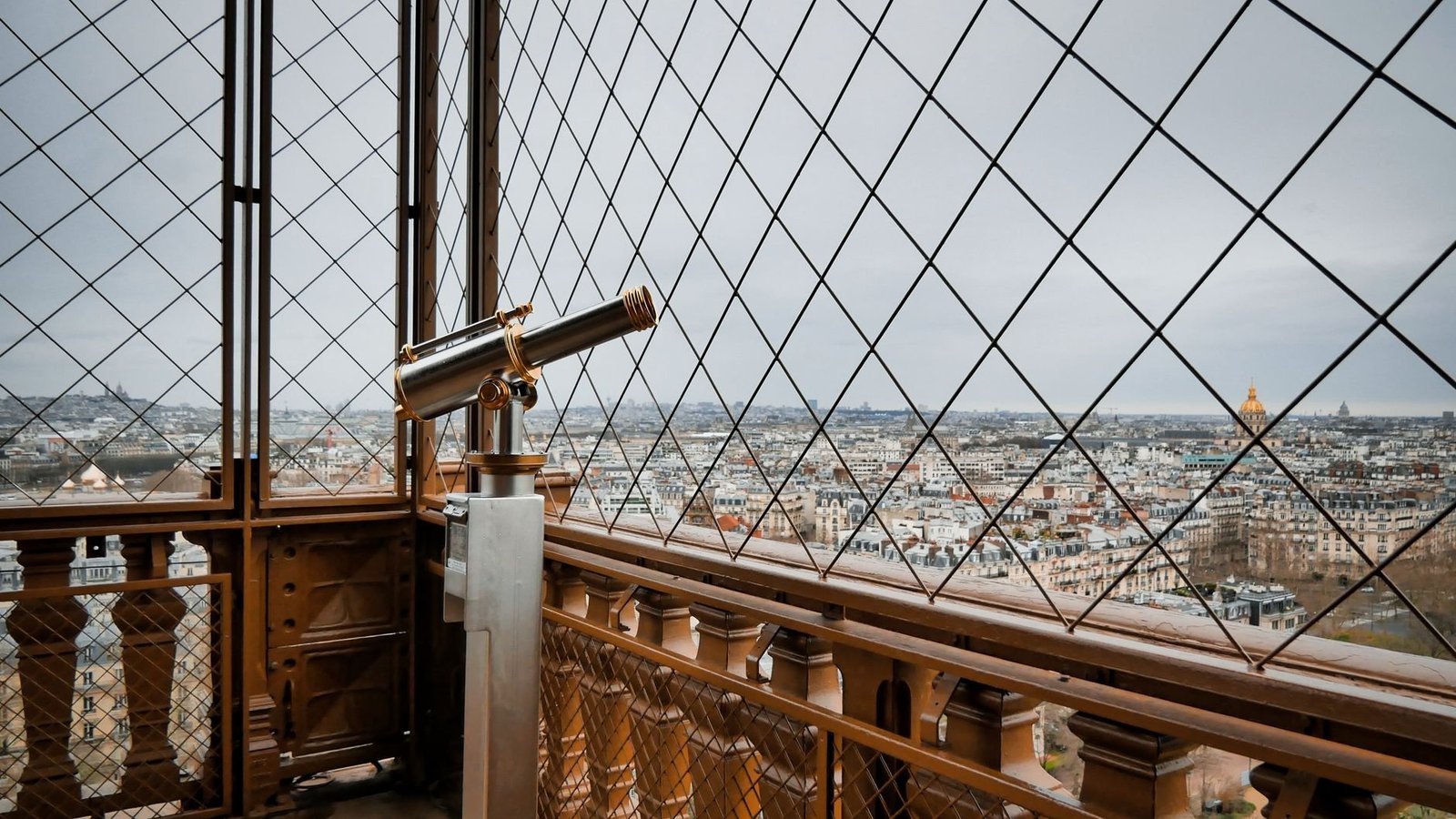
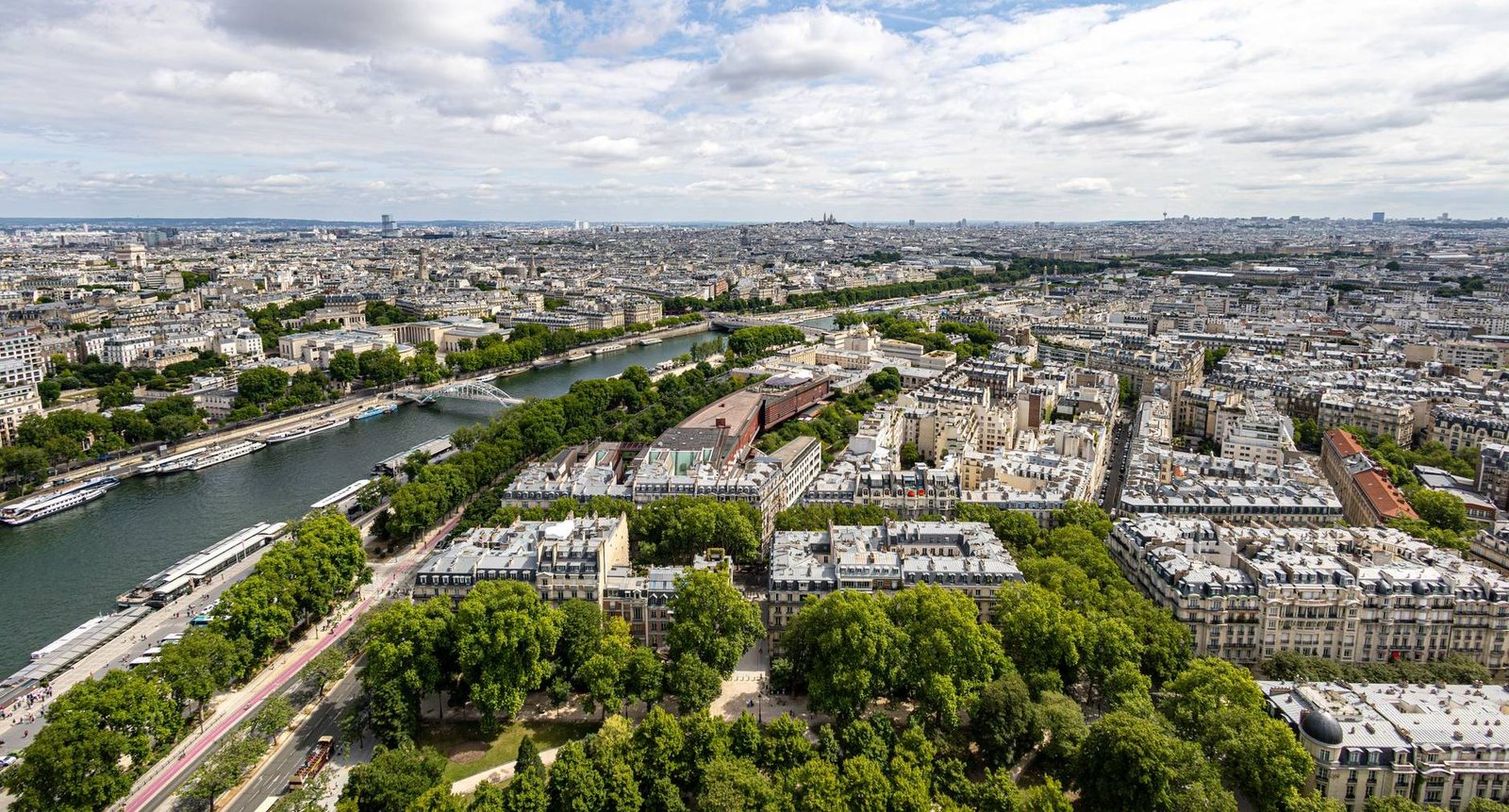
For many visitors, the second floor is the best on the tower — not the top. At 115 meters high, the view of Paris is close enough to recognize every landmark clearly: the Louvre to the north, Notre-Dame on the Île de la Cité, Montmartre and Sacré-Cœur in the background, Les Invalides with its golden dome alongside, the Arc de Triomphe on the axis of the Champs-Élysées. Everything identifiable, everything detailed.
At the top, at 276 meters, the landmarks shrink and the horizon expands so much that the scale changes — you see the Paris region, not the city itself. The second floor strikes a better balance between altitude and how readable the cityscape is.
This is also where the paid telescopes are — cameras that let you zoom in on landmarks and take zoomed photos of specific points in Paris. And it’s from the second floor that the elevator to the top departs.
The second floor has a souvenir shop, a snack bar and access to the elevator to the top. The outdoor platform has a walkway that goes all the way around, a full 360 degrees — set aside time to walk slowly and identify every point on the horizon.
How much time to set aside: 45 minutes to 1 hour. It’s the floor where most people spend the most time.
Third floor (top): 276 meters — Eiffel’s apartment and the view of France
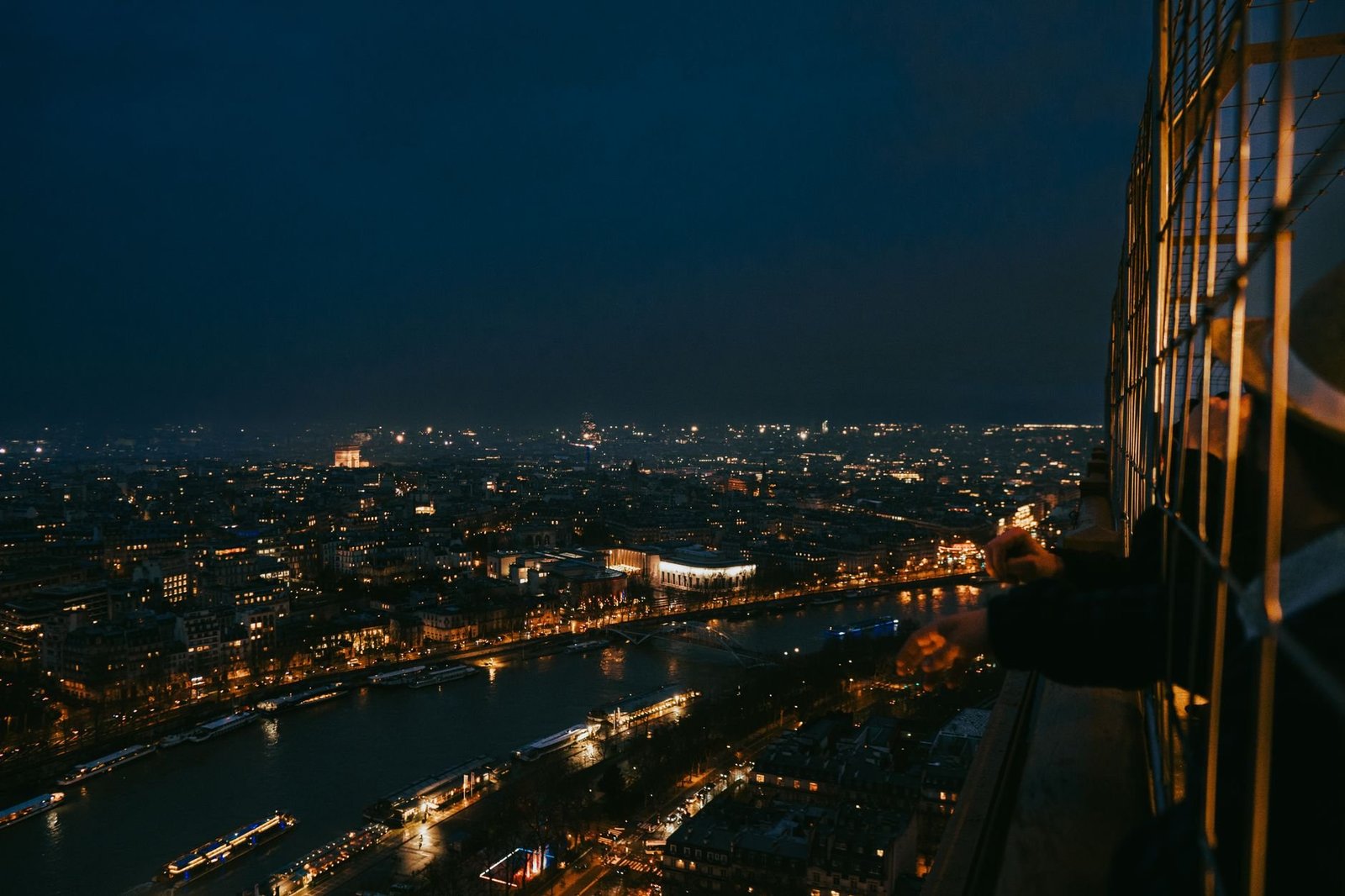
The third floor sits at 276 meters high — the glass-enclosed summit of the tower. The difference from the second floor is immediate: the space is much smaller (it holds about 400 people at a time, versus thousands on the lower floors), the wind is stronger, and the view extends beyond Paris. On clear days, you can see up to 70 km away.
At the top is the recreation of Gustave Eiffel’s apartment — the engineer built a private room for his own use here, and for years refused to rent it to anyone, even when generous offers came in. The apartment has period furniture, wax figures of Eiffel and Thomas Edison during a visit, and original documents. It’s small, but the historical context it carries is unique.
There’s a champagne bar at the top — a glass of sparkling wine 276 meters above Paris costs between €12 and €20, depending on your choice. It’s one of the most “Eiffel Tower” moments the visit offers. And there are interactive panels explaining how the radio antenna, which saved the tower from demolition in 1909, works.
The outdoor platform at the top is narrower and has taller glass walls than the lower floors — for safety reasons. Shooting over the railing is more limited, but the view on a clear day makes up for any restriction.
How much time to set aside: 20 to 30 minutes. The space is smaller and the flow is faster than on the second floor.
How to get the most out of each floor: practical tips
Best time to go up: the end of the day — between 5 p.m. and 8 p.m. in summer — combines both worlds well: you see Paris in natural light from the second floor, wait for dusk and still catch the light show on the first full hour of the night (9 p.m. in summer). If you go in the morning, the light is better for photos facing east (Notre-Dame, the Louvre), but the western horizon is in shadow.
For photography: on the first floor, the glass floor makes for vertical shots of the Champ de Mars looking down. On the second, the outdoor platform allows photos in every direction — position yourself at opposite edges to catch the different landmarks. At the top, the glass windows are taller and limit reflection-free photos; the solution is to use a polarizing filter or shoot at an oblique angle to the glass.
With children: the height of the railing and the structure of the grilles vary between floors. Small children have an obstructed view on the outdoor platforms of the second floor and the top — carry them or use the indoor areas with lower windows. The first floor has more space, and the glass floor usually delights kids (and scares the adults).
Souvenir shop: there’s one on every floor. The shops on the first and second floors have the largest selection. The one at the top has specific items with a “top of the Eiffel Tower” label — pricier, but with symbolic appeal. If you’re going to buy a souvenir, compare prices on all three floors before deciding.
Taking the stairs: is it worth it?
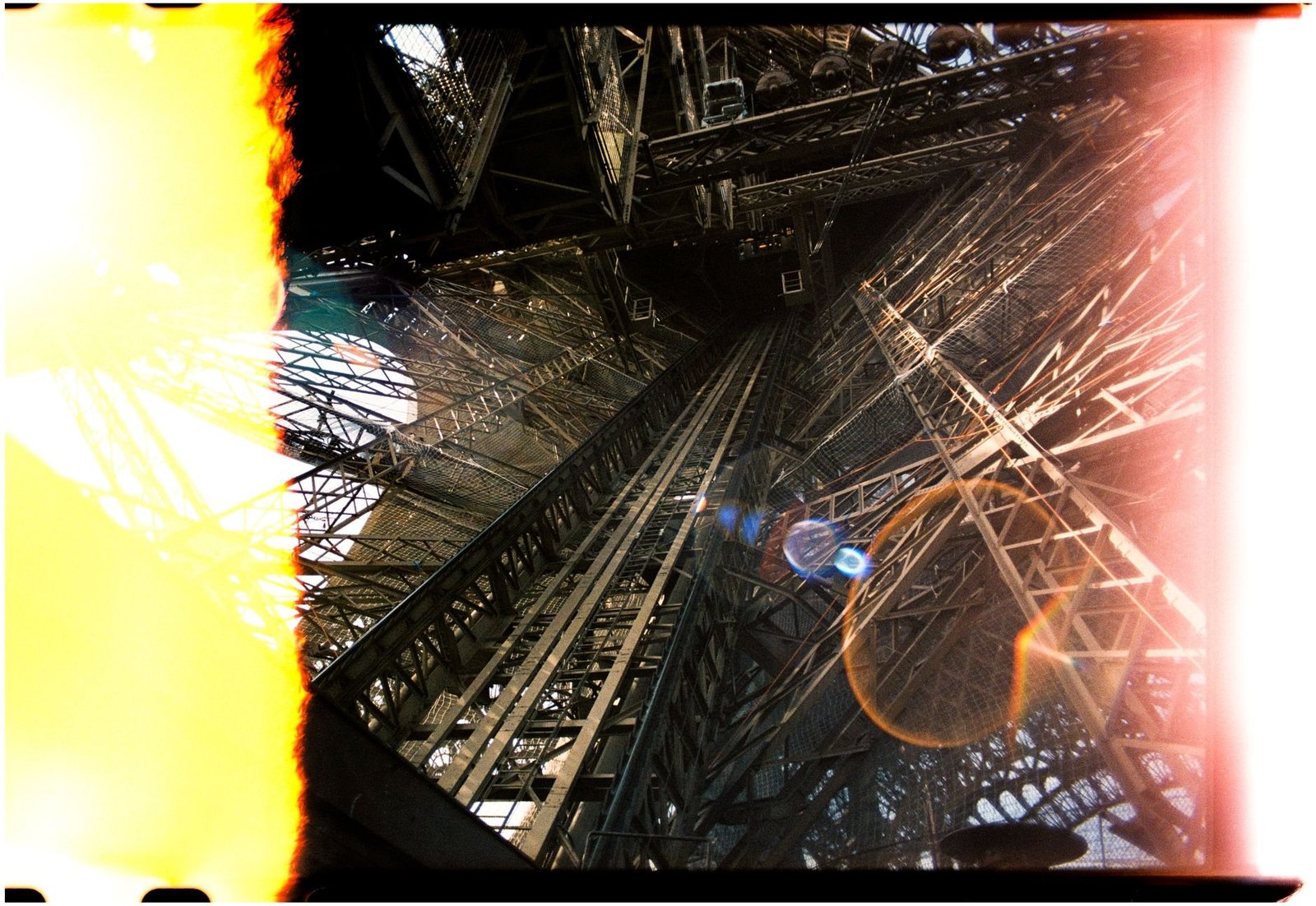
The stairs option exists and a lot of people use it — especially those who are afraid of elevators, who want to see the structure up close from the inside, or who enjoy the physical challenge. There are 674 steps to the second floor, divided into four flights with rest landings. Visitors in good shape climb in 20 to 30 minutes; those who take it slower need 40 to 50 minutes.
The advantage of the stairs goes beyond exercise: you see the tower’s geometry from the inside, follow how the structure changes as you climb, and pass points where the iron lattice comes very close. It’s an experience the elevator doesn’t offer. The downside is that the stairs ticket is cheaper, but you’ll still need the elevator to reach the top — and you may have to wait in the elevator line on the second floor along with all the other visitors.
Is it worth going all the way to the top?
It depends on what you want. For a once-in-a-lifetime visit, yes — going to the top and saying you stood 276 meters above Paris has a symbolic value the second floor can’t give. For those who already know the tower and want to appreciate Paris in more detail, the second floor delivers more for the price difference.
If you have small children, the second floor is usually more practical: less waiting time for the elevator, more space, and the view is just as impressive for anyone seeing Paris from above for the first time. The top loses some of its effect when the scale is so large that the landmarks become tiny dots on the horizon.
Frequently asked questions about the floors of the Eiffel Tower
Which floor has the best view from the Eiffel Tower?
To see Paris clearly and identify the landmarks, the second floor (115 meters) is the best balanced. The top has a wider view, but the landmarks become too small to recognize without a telescope.
Do the stairs go all the way to the top?
No. The stairs only go up to the second floor (674 steps). The third floor is reachable only by elevator, which departs from the second floor.
How long does a complete visit to the Eiffel Tower take?
Allowing for all three floors at a relaxed pace: 2 to 2.5 hours. If you take the stairs to the second floor and then the elevator to the top, add another 30 minutes.
Is the tower open at night?
Yes. In summer (June to September), the tower closes at 12:45 a.m. In winter, it closes at 11:45 p.m. The light show — 20,000 bulbs sparkling for 5 minutes — takes place every hour on the hour from dusk.
Can I buy a ticket at the ticket office on the day?
Yes, but lines can top 2 hours in high season. We always recommend booking ahead on the official Eiffel Tower website.