Paris has so much to see that it’s easy to forget the city is also the perfect launchpad for quick getaways. With the TGV, France’s high-speed train, you can leave a Parisian station in the morning, visit an 800-year-old Gothic cathedral, have lunch in a medieval square, and be back at your hotel before dinner.
Two cities fit this itinerary perfectly: Reims, where the kings of France were crowned, and Chartres, home to the country’s most admired stained glass. Neither requires a hotel reservation, and the train ride takes less time than most people imagine.

Dica: Aproveite também para fazer estes passeios em Paris
Tour pelo exterior da catedral de Notre Dame + Ingresso da cripta . Duração: 2 horas
Disneyland Paris Duração: 3 horas ou mais
Passeio de barco pelo Sena. Duração: 1h
Ingresso do 3º andar da Torre Eiffel. Duração: 2 a 3 horas
Ingresso do Palácio de Versalhes. Duração: 2 a 3 horas
Veja mais passeio em Paris aqui.
Why the TGV Changes the Game for Day Trips from Paris
A regular regional train would take hours to cover the same distance. The TGV, short for “Train à Grande Vitesse,” runs at over 186 mph (300 km/h) for much of the journey, cutting down trips that would otherwise eat up an entire morning just in travel time by car.
This completely changes the math on a day trip. Instead of choosing between “seeing Paris” or “leaving Paris,” you can do both on the same trip without sacrificing a night’s sleep in the capital. Reims is about 87 miles (140 km) away, Chartres around 56 miles (90 km)—distances that in many places would take two to four hours by road, but here are covered in under an hour and a half.
Another detail that catches people off guard: the two cities depart from different stations. Trains to Reims leave from Gare de l’Est, in eastern Paris. Trains to Chartres depart from Gare Montparnasse, on the opposite side of the city. It’s worth checking this in advance so you don’t risk showing up at the wrong station when it counts.
Reims: The Cathedral Where France Crowned Its Kings
Reims carries a historical weight that few places in France can match. It was here, at the Cathédrale Notre-Dame de Reims, that nearly every French king—from Clovis to Charles X—was crowned between the 9th and 19th centuries. The Gothic façade, with its towers over 260 feet (80 meters) tall and the row of angel statues above the central portal, is one of the most complete surviving examples of French Gothic architecture.
The cathedral is also a monument to reconstruction. World War I bombardments destroyed much of the roof and severely damaged the exterior sculptures. The restoration, partly funded by American donations (including the Rockefeller family), took decades, which is why much of the exterior stone has a lighter tone than the interior, still darkened by age.
Entry to the cathedral is free. Set aside at least 40 minutes to walk through the nave and observe the stained glass—some medieval, others by Marc Chagall in the central axis chapel, installed in the 1970s. This contrast between 13th-century glass and 20th-century glass within the same building is rare to see anywhere else.

What to Do in Reims Beyond the Cathedral
Reims is also the unofficial capital of the Champagne region, which means underground cellars holding millions of bottles aging in the dark. Houses like Taittinger, Pommery, and Veuve Clicquot offer guided tours of their crayères—galleries carved into the limestone, some dating back to Roman times—ending with a tasting. Tours usually require advance booking, especially on weekends and during the peak summer season.
If you prefer a relaxed walk, Reims’ historic center offers the Palace of Tau, the former residence of the archbishops, and the Basilica of Saint-Remi, less visited than the main cathedral but equally impressive inside. The city center is compact: you can see the main sights on foot in half a day, leaving time for a Champagne house visit in the afternoon.
Chartres: The Stained Glass That Survived Two World Wars
If Reims is about coronation and power, Chartres is about light. The Cathédrale Notre-Dame de Chartres holds the most complete and best-preserved collection of medieval stained glass in France—around 150 original windows, mostly dating from the 12th and 13th centuries. The deep blue used in these windows became known as “bleu de Chartres” and has never been fully replicated by later glassmakers.
The reason so much survived intact is almost an administrative miracle: during both world wars, the stained glass was dismantled piece by piece and stored far from the front lines, only returning to its place after the fighting ended. Other French cathedrals lost much of their original glass to neglect or bombing; Chartres did not.
The cathedral has been a UNESCO World Heritage site since 1979, and entry to the main nave is also free. If you want to climb the north tower for a view of the city and the surrounding wheat fields, there’s a separate ticket—worth it on a clear day, but check the opening hours on the official website beforehand, as they can vary by season.
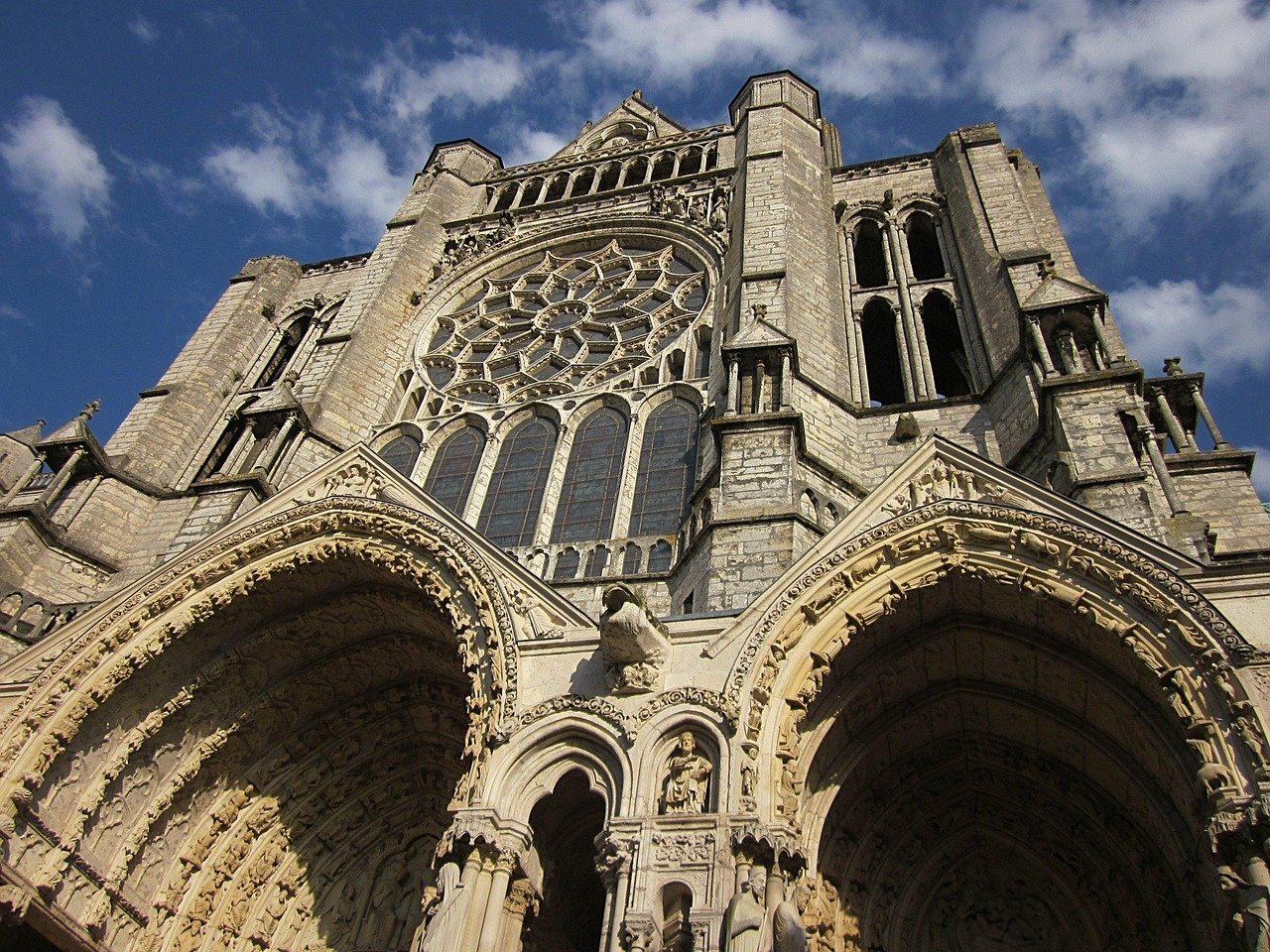
Chartres Beyond the Cathedral
The lower town, along the banks of the Eure River, has leaning timber-framed houses, small bridges, and old mills that are worth a 30-minute walk after your cathedral visit. Photography enthusiasts will prefer late afternoon, when the side light hits the façades on Rue de la Tannerie.
Reims and Chartres on the Same Day? Why That Doesn’t Work Well
It’s tempting to think about squeezing both cities into a single crazy morning, but the logistics don’t help. Reims is east of Paris, Chartres is southwest, and since they depart from different stations (Gare de l’Est and Gare Montparnasse), you’d waste a huge amount of time crossing the capital from one end to the other between the two trips.
The practical result of trying to do both: you’ll spend more time on trains and the Paris metro than actually visiting either cathedral. Separate the outings into two different days of your trip—even if they’re not consecutive—and enjoy each city at a relaxed pace, without constantly watching the clock.

Other Possible TGV Day Trips from Paris
Reims and Chartres are just the beginning. The high-speed rail network radiating from Paris reaches nearly every corner of the country in a few hours, opening up a wide range of day trips for anyone staying in the capital for a week or two.
Lille, in the north, is just over an hour from Gare du Nord and blends Flemish architecture with a strong food scene. Orléans, on the Loire River, serves as a gateway to the first châteaux of the Loire Valley. And if you prefer beaches and the Mediterranean, Marseille and Avignon offer longer options—about three hours—but are still doable if you leave early enough. Each of these cities deserves its own planning, but the principle is the same: France’s high-speed train turns distances that once seemed large into trips of just a few hours.
How to Buy TGV Tickets Without Overpaying
The price of a TGV ticket varies greatly depending on how far in advance you buy. Booking a month or more in advance usually gets you the lowest fares; buying the day before or on the day itself can cost double or triple the minimum price, especially during peak times like Friday mornings and Sunday evenings.
SNCF Connect is the official channel for buying tickets, but it’s worth comparing with OUIGO, SNCF’s own low-cost brand, which often has much lower fares for the same routes—the trade-off is less flexibility for changing times and more limited baggage. For routes like Paris-Chartres, with dozens of daily departures, there’s usually plenty of room to choose a time with a better price without compromising your outing.
Another practical tip: seats aren’t always mandatory on all trains, but on long-distance TGV services, seat reservations are typically included in the ticket price. Confirm the seat and car number printed on your ticket before boarding, because platforms at large stations like Gare de l’Est change frequently and are only displayed on the board close to departure time.
Frequently Asked Questions About TGV Day Trips from Paris
Do I need to buy my ticket well in advance?
It’s not mandatory, but it helps a lot with the price. For Chartres, with frequent trains throughout the day, you can even buy at the station without much risk of missing out. For Reims, especially on summer weekends, buying a few days in advance avoids paying more at the last minute.
Do the cathedrals charge an entry fee?
The main nave of both cathedrals—Reims and Chartres—is free. Extra access, like climbing the towers or guided tours of restricted areas, has a separate ticket with prices that vary by season. Check current prices and hours on each cathedral’s official website before your visit.
How much time should I set aside for each city?
Half a day (morning or afternoon) is enough to see the essentials of Chartres. Reims requires a bit more, especially if you include a visit to a Champagne house—in that case, it’s worth setting aside the whole day.
Is it better to go on a weekday or weekend?
Weekdays, outside of French holidays, tend to have cheaper trains and less crowded cities. Summer weekends concentrate both tourists and Parisians doing the same outing, making the cathedrals and historic centers noticeably busier.
Do I need any special documents for these routes?
No—these are domestic trains within French territory, with no border or immigration checks. Just bring your ticket (printed or on your phone) and, if applicable, an ID, since SNCF conducts random checks during the journey.
Reims and Chartres show two very different sides of France outside Paris: one city tied to monarchy and Champagne, the other dominated by the colored light of its stained glass. With the TGV, neither requires sacrificing a night’s stay in the capital—and that, in practice, is what makes this kind of day trip so easy to fit into any Paris itinerary.