Medieval Paris: How the City Was Born on the Île de la Cité
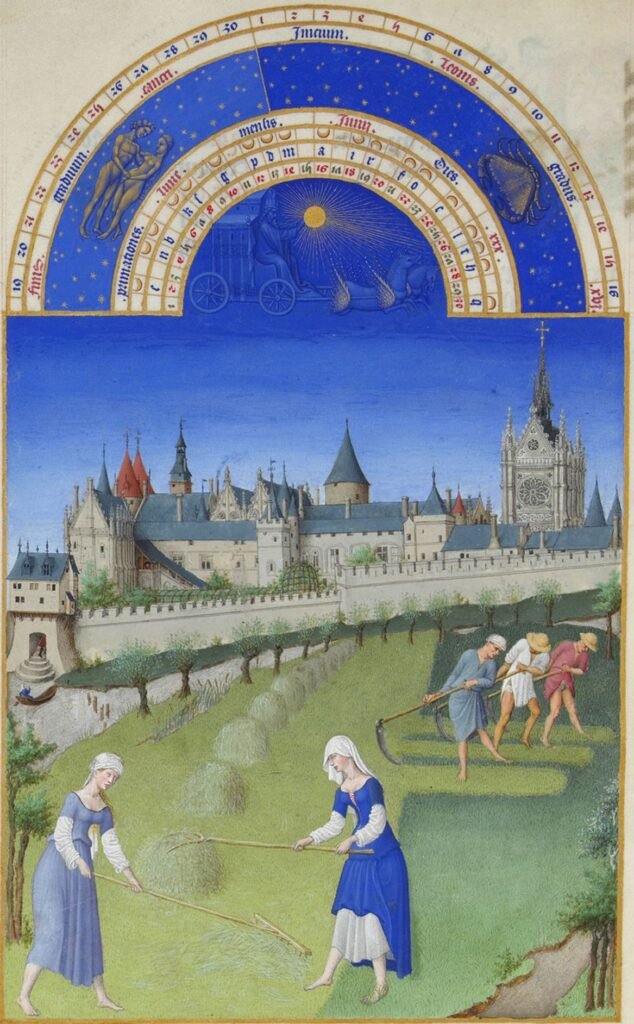
🇧🇷 POR | 🇫🇷 FR | 🇺🇸 EN | 🇪🇸 ES Every big city has a starting point, a place where it all began before turning into the metropolis we know today. In Paris, that spot is a narrow island in the middle of the Seine River, less than a kilometer long, where tourists now snap photos of Notre-Dame without realizing they’re standing on the very ground where the city was born, over two thousand years ago. Centuries after Lutetia, Paris would undergo another radical transformation—this one meticulously planned by Baron Haussmann. Check out how it changed the city’s face in our guide to Haussmann’s renovation. This island is called the Île de la Cité. Understanding its history helps explain why Paris has the shape it does, why certain buildings survived wars and revolutions, and why walking around here is, without exaggeration, walking through the city’s oldest skeleton. The Île de la Cité, seen from the Seine—the spot where Paris was born. | Photo by Marija Piliskic / Pexels From a Gallic Village to a Roman City Before it was Paris, the place was called Lutetia. Around the 3rd century BC, a Celtic people known as the Parisii settled in the region, drawn by the river. The Île de la Cité served as a natural, protected harbor—easy to defend, easy to supply, surrounded by water on both sides. When Julius Caesar conquered Gaul in 52 BC, Lutetia was incorporated into the Roman Empire. The Romans expanded the settlement to the left bank of the Seine, where the Latin Quarter now stands, building a forum, baths, and grid-organized streets—part of that layout still influences the design of some streets in the neighborhood. It was only later, as other peoples advanced into Gallic territory, that the name Lutetia was gradually replaced by “Paris,” a direct reference to the Parisii themselves. Why This Island, Exactly? The choice wasn’t random. An island in the middle of a river offers advantages any military strategist would recognize immediately: water on both sides acts as a natural moat, bridges can be destroyed in case of attack, and controlling the river crossing automatically means controlling the trade that passes through it. And that’s exactly what happened. The Île de la Cité concentrated political and religious power for centuries precisely because whoever controlled it controlled the crossing of the Seine—and, by extension, a large chunk of trade between northern and southern Gaul. Clovis and the Dawn of Medieval Paris In 496, the Frankish king Clovis I converted to Christianity and, shortly after, made Paris the capital of his kingdom. This is the milestone that usually divides the “Roman” phase from the “medieval” phase of the city. From then on, the Île de la Cité was no longer just a fortified trading post; it became the center of the religious and civil power that would shape the Paris we know today. Over the following centuries, the island accumulated three structures that, on their own, sum up a large part of the city’s medieval history: Notre-Dame Cathedral, the Sainte-Chapelle, and the complex we now call the Conciergerie. Illumination: Limbourg Brothers, “Très Riches Heures du Duc de Berry” (c. 1410), showing the Palais de la Cité and the Sainte-Chapelle—public domain, via Wikimedia Commons Notre-Dame: The Cathedral That Grew with the City Construction of Notre-Dame began in 1163, under Bishop Maurice de Sully, at a time when Paris was growing fast and needed a cathedral worthy of a kingdom’s expanding capital. The work took nearly two hundred years to complete—the main facade was only finished around 1225, and details continued to be added until the 14th century. Notre-Dame’s facade: nearly two hundred years of construction, from the 12th to the 14th century. | Photo by Leonardo Delsabio / Pexels This long construction time wasn’t unusual: Gothic cathedrals were projects that spanned generations of stonemasons, architects, and bishops. What makes Notre-Dame special within Paris’s history is that it has literally witnessed every major event in the city since then—coronations, the baptism of kings, the French Revolution (when it was ransacked and its statues beheaded), the 19th-century restoration led by Viollet-le-Duc, and, more recently, the 2019 fire and its reopening. Important note: if you want to know what the cathedral looks like after the reconstruction and what’s changed for visitors today, check out our full guide to the reopening of Notre-Dame—we dive into details on tickets, hours, and what was restored. Sainte-Chapelle: The Most Expensive Reliquary of the Middle Ages Much more discreet on the outside, the Sainte-Chapelle holds one of the most curious stories on the Île de la Cité. It was built between 1242 and 1248, by order of King Louis IX (later canonized as Saint Louis), with a single purpose: to house relics of Christ’s Passion that the king himself had purchased. Gothic stained glass: at the Sainte-Chapelle, they cover almost the entire upper section of the upper chapel. | Photo by Martijn Stoof / Pexels And here’s the detail few guides mention: Louis IX paid 135,000 livres for the Crown of Thorns and a fragment of the True Cross—nearly three times more than the cost of building the entire chapel, which came to around 45,000 livres. In practice, he spent more money buying the sacred objects than erecting the building that would house them. Today, what remains surprises anyone who walks in: the stained-glass windows cover practically the entire upper part of the upper chapel, creating a colored light effect that few places in Paris can match. Conciergerie: From Royal Palace to the Revolution’s Most Feared Prison Before becoming a prison, the Conciergerie was part of the Palais de Justice and was originally a royal residence. Its function changed over the centuries, and from the 14th century onward, it operated as a prison—a role it kept until the early 20th century. Old stone in Paris: the Conciergerie was a royal residence before becoming a prison. | Photo by Maria Orlova / Pexels The darkest chapter of the Conciergerie unfolded during the French Revolution. Between 1793 and
Napoleon in Paris: Ambition, Architecture, and Power
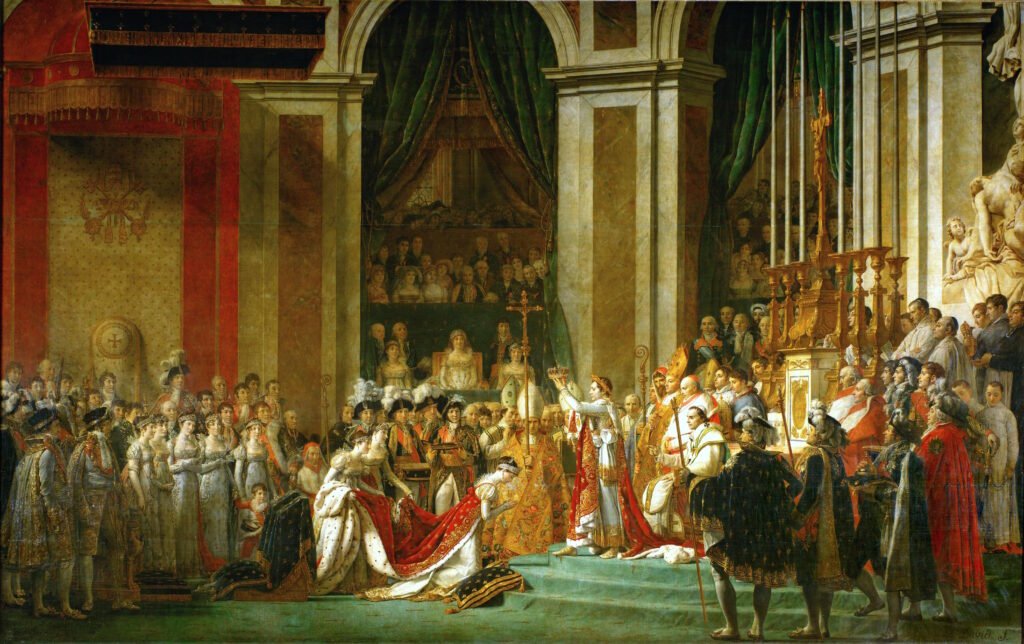
🇧🇷 POR | 🇫🇷 FR | 🇺🇸 EN | 🇪🇸 ES Just a short walk through Paris, and you’ll stumble upon Napoleon Bonaparte. He’s there in the bronze column at Place Vendôme, in the giant arch at the top of the Champs-Élysées, on the wide avenue cutting through the city’s heart near the Louvre, and even in the law that still governs marriages, inheritances, and contracts in France today. Napoleon ruled France for just over a decade as emperor, but he left a mark on Paris that no other French ruler—before or since—has managed to match in such a short time. Decades after Napoleon, another name would forever shape Paris for similar reasons: the ambition to remodel the city. See how Baron Haussmann did it in our guide to Haussmann’s renovation. This article is a tour through Napoleonic Paris: how a Corsican general became emperor, why he wanted to rebuild part of the city in the image of ancient Rome, and what remains of it all for visitors today. From General to Emperor: A Rise Too Fast to Be Normal Napoleon Bonaparte wasn’t born in Paris—he came from Corsica, an island that had only become French shortly before his birth in 1769. Still, it was in Paris that he built the military career that took him to the top: he distinguished himself in the wars of the French Revolution, led victorious campaigns in Italy and Egypt, and in 1799 staged a coup d’état known as the 18th of Brumaire, ending the revolutionary period and putting him in charge of the country as First Consul. Five years later, not content with being just the head of government, he decided to crown himself emperor. And he chose Paris—more specifically, Notre-Dame—to make this gesture as symbolic as possible. The Coronation That Broke with Tradition On December 2, 1804, Napoleon was consecrated emperor at Notre-Dame Cathedral, breaking a centuries-old custom: all French kings before him had been crowned at Reims Cathedral. By choosing Notre-Dame, in the heart of Paris, Napoleon reinforced that his power came from the capital and from himself—not from a religious tradition rooted in another city. The most remembered detail of the ceremony, captured in the famous painting by Jacques-Louis David, is the moment Napoleon took the crown himself, rather than accepting it from Pope Pius VII, who was present at the ceremony but reduced to a spectator. The gesture was clear: he owed his authority to no one, not even the Church. Painting: Jacques-Louis David, “Le Sacre de Napoléon” (1805-1807) — public domain, via Wikimedia Commons Austerlitz and the Birth of the Arc de Triomphe Less than a year after the coronation, on December 2, 1805, Napoleon won one of his most famous battles: Austerlitz, against Austrian and Russian forces. Before the fight, he reportedly promised his soldiers that if they won, they would “return home under triumphal arches”—a direct reference to Roman generals, whom Napoleon admired and tried to emulate symbolically. In 1806, he commissioned architect Jean-François-Thérèse Chalgrin to build a monumental arch inspired by the Arch of Titus in Rome, to stand at the top of the Champs-Élysées. The problem is that monuments of this scale aren’t built quickly: construction dragged on for thirty years, and Napoleon died without ever seeing the Arc de Triomphe finished. It was only officially inaugurated on July 29, 1836, under a different regime, with the names of 558 generals and 128 battles engraved on its inner walls. Photo: Gökberk Keskinkılıç / Pexels Important note: if you want to know how to go up to the top, buy tickets, and understand all the architectural and historical details of the monument, it’s worth reading our full guide to the Arc de Triomphe in Paris. The Vendôme Column: The Monument That Still Stands (Almost as It Always Was) Another direct symbol of the victory at Austerlitz is the Vendôme Column, erected in 1806 in the square of the same name, now one of the most elegant (and expensive) spots in Paris, surrounded by luxury jewelry stores. The column was modeled after Trajan’s Column in Rome, and its surface is covered in bronze reliefs—made, according to tradition, from the melted-down metal of cannons captured from enemy armies. The column was toppled once, during the Paris Commune in 1871, because it was seen as a symbol of imperial militarism, but it was rebuilt shortly after. Today it still stands, with a statue of Napoleon on top, still dominating the square it helped make famous. Photo: Kirandeep Singh Walia / Pexels Rue de Rivoli: The Avenue That Changed the Way You Walk Through Paris Before Haussmann reshaped much of Paris in the 19th century—a process that belongs to another chapter of the city’s history, under Napoleon III—it was Napoleon Bonaparte who took the first big step in that direction. He ordered the opening of the Rue de Rivoli, connecting the area near the Louvre to a wider, more organized axis, with covered arcades along the facades—a model, at the time, completely different from the narrow, winding medieval streets that still dominated much of the city. The Rivoli was the first street in Paris deliberately designed to be wide, straight, and aesthetically uniform, paving the conceptual way for what would decades later become the “Haussmannian” style of Parisian boulevard. Today, walking along the Rivoli is walking through one of the city’s first experiments in modern urban planning. Photo: Bingqian Li / Pexels Bridges Parisians Cross Every Day Without Knowing Their Origin Napoleon also left his mark on the Seine. He commissioned the Pont d’Iéna (near the Eiffel Tower, though the tower wouldn’t be built for decades), the Pont d’Austerlitz, and the Pont des Arts—the latter now one of the most photographed spots in the city, famous for its views and for having once been (for a problematic time) covered in “eternal love” padlocks that had to be removed due to the excess weight on the structure. Beyond the bridges, he installed dozens of public fountains across the city—part of a broader effort to improve
Haussmann and the Boulevards: Why Paris Looks the Way It Does
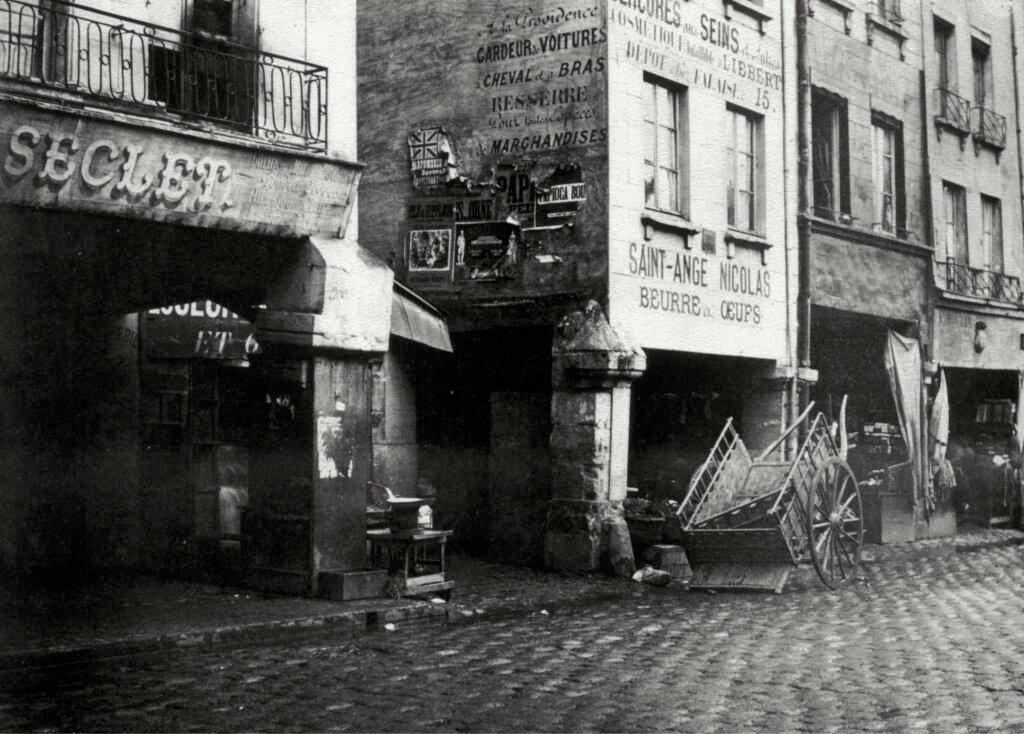
🇧🇷 POR | 🇫🇷 FR | 🇺🇸 EN | 🇪🇸 ES Anyone strolling through central Paris’s boulevards notices a detail without even realizing it: the buildings all look like cousins. Same height, same light stone, same wrought-iron balconies on the same floors. This isn’t a coincidence or a lack of architectural creativity—it’s the result of one of the most radical urban overhauls any European city has ever undergone, carried out in less than two decades during the 19th century. The name behind it all is Georges-Eugène Haussmann. And understanding what he did explains why Paris still feels so unmistakably “Paris” today—and why certain corners of the city, like Le Marais, seem to have slipped through his ruler. The Sick Paris Nobody Wanted Anymore In the mid-19th century, much of Paris still looked like a medieval city: narrow, winding streets, no decent sewage system, and cramped buildings that blocked out light and air. The density was brutal—small rooms often housed entire families, sometimes more than one. This environment was a breeding ground for two cholera epidemics, in 1832 and 1848, which killed thousands of Parisians. It wasn’t just an aesthetic issue bothering the elite—it was a city that made people sick and killed them because of its very physical structure. A concrete example of this medieval squeeze: the Les Halles markets, which had existed since the Middle Ages and were still operating in much the same ancient way in the 19th century—narrow alleys, little light, cramped commerce—only now they were supplying a city that had grown far beyond what that structure could handle. Napoleon III Picks the Right Man (or the Most Ruthless) In 1853, Emperor Napoleon III appointed Georges-Eugène Haussmann as Prefect of the Seine—effectively the administrator in charge of Paris. Haussmann wasn’t an architect or urban planner by training; he was a methodical, organized public administrator willing to make unpopular decisions without buckling under pressure. He became known, not surprisingly, as “the demolition artist.” Over nearly twenty years in office, he coordinated the overhaul of a huge chunk of the city: new wide avenues, squares, parks, sewage networks, aqueducts, and the annexation of neighboring suburbs into Paris proper. Timeline: Haussmann’s Renovation 1832 and 1848 — Cholera epidemics expose the sanitation crisis of medieval Paris. 1853 — Napoleon III appoints Haussmann Prefect of the Seine. 1853-1870 — Large-scale demolitions and constructions: boulevards, parks, sewers, aqueducts. 1870 — Haussmann is fired by Napoleon III himself, under political and financial pressure. 1962 — The Malraux Law officially protects historic districts like Le Marais, which had escaped the renovation. Portrait of Baron Georges-Eugène Haussmann — public domain, via Wikimedia Commons (BNF Gallica) 75% of Paris Under the Hammer The scale of the intervention is hard to overstate: it’s estimated that about 75% of Paris’s area was demolished and rebuilt under Haussmann’s administration. Entire streets disappeared, along with ancient churches, medieval markets, and neighborhoods that had existed since the Middle Ages. In their place rose the wide boulevards that are now the city’s postcard image—straight, tree-lined, designed for the rapid movement of people, carriages, and, according to the renovation’s own stated goals, military troops in case of popular uprising. Paris had just come off decades of barricades and uprisings in its narrow streets; wide, straight streets made that much harder to repeat. Did you know? Before demolishing the medieval streets, the Paris City Hall itself hired a photographer, Charles Marville, to document them. Thanks to him, photos exist today of streets that haven’t existed since the 19th century—an unintentional record that became one of the largest archives of “Paris before Paris.” Photo: Charles Marville, street near the old Les Halles markets (1855) — public domain, via Wikimedia Commons The invisible part of the renovation was perhaps the most decisive for public health. In 1852, Paris had only 142 kilometers of sewers—not much for a city of its size. Over the next twenty years, Haussmann and engineer Eugène Belgrand built a dual network of tunnels totaling about 600 kilometers, permanently separating drinking water from sewage. The number of homes with running water quadrupled. For the first time, Paris had sanitation infrastructure worthy of the city’s size—and not the other way around. The Green Lungs Paris Never Had Boulevards and uniform buildings are the most remembered part of the renovation, but Haussmann also solved a problem Paris simply had no answer for until then: the city had almost no public parks. He put engineer Adolphe Alphand in charge of an ambitious program with a clear goal—no Parisian should have to walk more than ten minutes to reach a green space. Alphand’s program gave birth to the Bois de Boulogne (1852-1858) west of the city, the Bois de Vincennes (1860-1865) to the east, the Parc des Buttes-Chaumont (1865-1867) to the north, and the Parc Montsouris (1865-1878) to the south—a large park for each cardinal point. The Parc Monceau, which already existed as a royal property, was redesigned and opened to the public in 1861. In total, the renovation created 24 new squares and added about 15 hectares of new green space to the city. Why the Buildings All Look the Same to This Day The uniform look that still dominates central Paris is no accident: it was the rule. Haussmann imposed a strict building code for new structures along the boulevards, and that code is exactly what we now call “Haussmannian architecture.” The rules included a maximum height of six stories, a façade of light, precisely cut limestone, alignment between neighboring buildings, and an almost theatrical distribution of floors: a more robust ground floor and mezzanine (usually for shops), decorative balconies on the second floor, more discreet intermediate floors, and a continuous balcony on the fifth floor, topped by a mansard roof at a 45-degree angle—where, at the time, the simplest and cheapest rooms in the building were located. This distribution wasn’t just aesthetic: it reflected the building’s social hierarchy, with the noblest (and most expensive) floors lower down, near the street, and the most modest at the top. Walking through the
The French Revolution in Paris: Where History Actually Happened
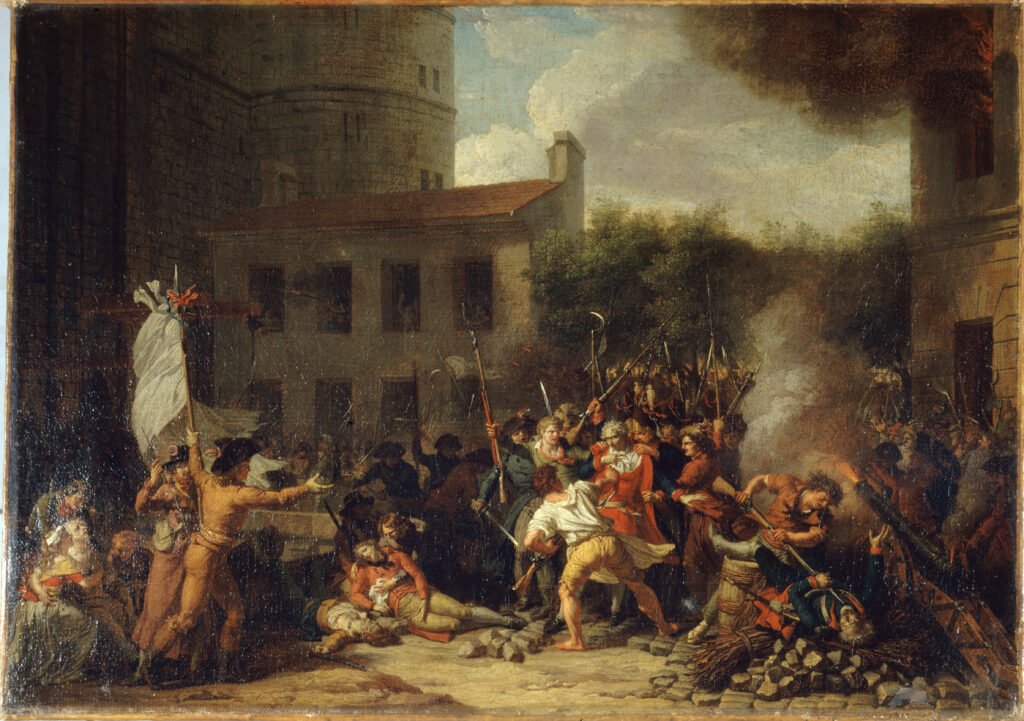
🇧🇷 POR | 🇫🇷 FR | 🇺🇸 EN | 🇪🇸 ES Bastille, Place de la Concorde, and Conciergerie: three names that pop up in every history book when the French Revolution comes up. The thing is, if you show up in Paris today expecting to see the Bastille still standing or a square that looks like an execution stage, you’re in for a letdown. The geography of the Revolution survived—the events really did happen in these exact spots—but the landscape has changed almost completely. This is a guide to the three places where the Revolution actually unfolded, and what you can still recognize there today. Why things blew up in 1789 None of this came out of nowhere. Since the second half of the 18th century, France had been piling up a massive debt, inherited from expensive wars like the Seven Years’ War and French support for American independence. The weight of that bill fell on the Third Estate—peasants, merchants, urban workers—while the nobility and clergy remained exempt from most taxes. Trying to fix the budget hole, Louis XVI called the Estates-General in 1789, an assembly that hadn’t met since 1614. Before the meeting, each of the three orders (clergy, nobility, and the Third Estate) drafted what were called “cahiers de doléances”—notebooks of grievances—listing the abuses they wanted corrected. The Third Estate, which had 580 out of 1,153 deputies, demanded a vote by head instead of a vote by order, which would unlock any real reform. The crown’s refusal to accept this was the spark that, within weeks, led straight to the Bastille. The Bastille: a fortress that only exists in memory The Bastille was first built in 1370, under King Charles V, as a defensive fortress at the eastern entrance to Paris. Over time, it lost its military function and became a state prison—the destination for anyone who annoyed the crown, often without a formal trial. When a crowd stormed the Bastille on July 14, 1789—now France’s national holiday—the fortress held only seven prisoners. The small number didn’t lessen the symbolic weight of the act: taking the Bastille meant seizing the most visible symbol of the king’s absolute power over his subjects. The Paris Committee didn’t waste time: they hired entrepreneur Pierre-François Palloy, who demolished the entire fortress in about five months. The larger stones were reused in the construction of the Pont de la Concorde over the Seine. The smaller ones were carved into miniatures of the Bastille itself and sold as souvenirs to high society—an almost ironic fate for the bricks of a prison. Painting: Charles Thévenin, “Prise de la Bastille” — Musée Carnavalet, public domain, via Wikimedia Commons Timeline: The Revolution in Paris July 14, 1789 — Storming of the Bastille. September 1792 — Proclamation of the First Republic. January 21, 1793 — Execution of Louis XVI at Place de la Révolution. October 16, 1793 — Execution of Marie Antoinette, same location. 1793-1794 — The Reign of Terror, under the Committee of Public Safety. July 27, 1794 — Fall and execution of Robespierre, end of the Terror. Did you know? The column that stands today at Place de la Bastille isn’t a monument to the 1789 Revolution—it celebrates another revolution, the one in 1830, and holds the bodies of revolutionaries from that later uprising. It’s a common mistake to confuse the two dates just because they happened in the same spot. Just over a month after the fall of the Bastille, on August 26, 1789, the National Assembly approved the Declaration of the Rights of Man and of the Citizen—the document that formalized principles like liberty, property, and equality before the law, and which still serves as a foundation for part of the French Constitution today. The distance between the symbolic act of storming a prison and drafting a legal text of this weight, in less than six weeks, gives you an idea of how fast everything was transforming that year. Place de la Concorde: from royal square to guillotine stage The square now called Place de la Concorde was born with a different name and purpose: Place Louis XV, designed by architect Ange-Jacques Gabriel to honor the king. In 1792, with the monarchy already overthrown, the square was renamed Place de la Révolution—and that’s where the guillotine went to work. Louis XVI was executed there on January 21, 1793. Marie Antoinette followed the same path a few months later, on October 16, 1793. In total, it’s estimated that over 1,200 people were executed there between 1793 and 1795, including nobles, clergy, and—as the Terror escalated—revolutionaries who had fallen out of favor with their own colleagues. After the Revolution, the name changed again—to Place de la Concorde, in a symbolic attempt at national reconciliation. The Egyptian obelisk that now dominates the center of the square only arrived decades later, in 1836, as a gift from the Egyptian government: it has no direct connection to the Revolution, but it’s often mistaken for a landmark of that period simply because it sits right in the middle of the execution site. Period engraving (1793) — CC0, via Wikimedia Commons Conciergerie: the antechamber of the guillotine While the guillotine was running at Place de la Révolution, those waiting their turn were held at the Conciergerie, on the Île de la Cité. In March 1793, the Revolutionary Tribunal was set up inside, and the building earned the grim nickname “the antechamber of the guillotine.” Over the ten most intense months of the Terror, the Conciergerie received about 2,700 prisoners—at times, between 600 and 1,200 people shared the space at once, waiting for trial and, in the vast majority of cases, a death sentence. Marie Antoinette spent her final weeks in a cell at the Conciergerie before being taken to the guillotine. Important note: the full story of the Conciergerie as a medieval palace before becoming a revolutionary prison is in our guide to medieval Paris and the Île de la Cité, including more details about Marie Antoinette’s cell. The process inside the Revolutionary Tribunal, set up