The Paris Catacombs: Is the Underground Cemetery Worth Visiting?
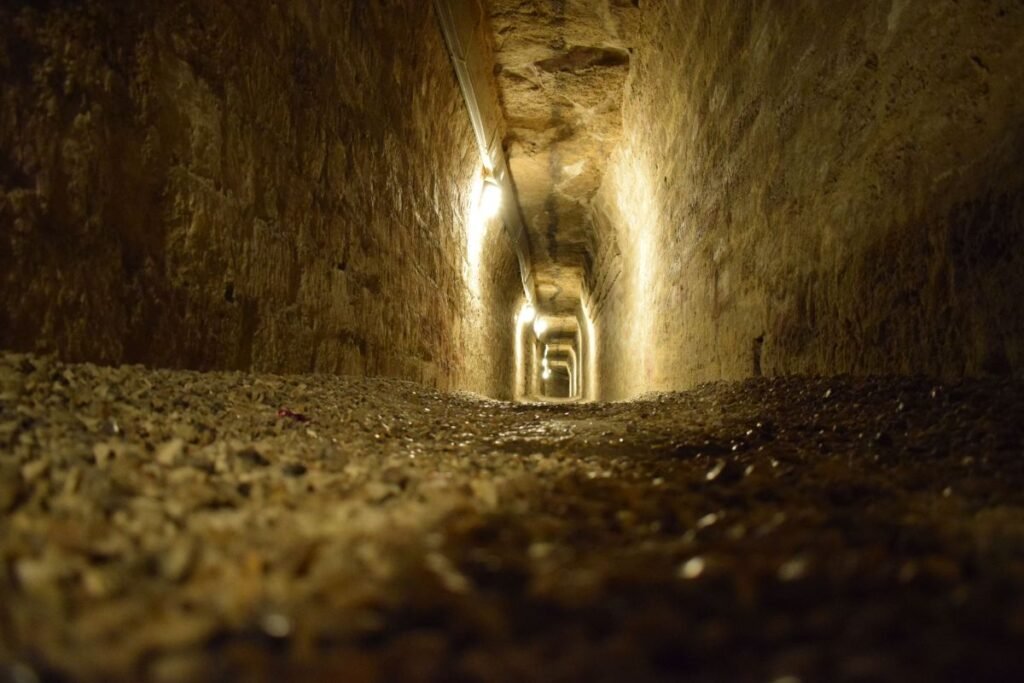
🇧🇷 POR | 🇫🇷 FR | 🇺🇸 EN | 🇪🇸 ES Some people wrinkle their nose just hearing about it, but the Paris Catacombs are among the most talked-about experiences for anyone returning from the French capital. And it’s no exaggeration: down there, about 65 feet underground, lie the remains of over six million people, arranged in narrow stone corridors. If you’re thinking about taking on this offbeat itinerary, it’s worth understanding what to expect, how much it costs, and whether it’s really worth the time (and the line). Photo by Fernanda W. Corso on Pexels. What Are the Paris Catacombs? The Catacombs occupy part of an ancient network of underground quarries, excavated since Roman times to extract the limestone used in building the city. Over time, these tunnels were forgotten — until, at the end of the 18th century, Paris faced a serious problem: the cemeteries in the city center were so full that the walls of mass graves collapsed, contaminating neighboring basements. The solution authorities found was to transfer the bones to these abandoned galleries. Between 1786 and 1788, in nightly processions with priests and carts, millions of bones from the Cemetery of the Innocents and other Parisian cemeteries were taken there. Later, someone had the idea of arranging everything decoratively — rows of femurs and skulls forming patterns, some even in the shape of hearts or crosses. The result is an ossuary that opened for public visits as early as the beginning of the 19th century, becoming one of the most peculiar (and oldest organized tourist attractions) in the city. How to Get There and Buy Tickets The official entrance is at Place Denfert-Rochereau, at the southern exit of the metro (lines 4 and 6), in the 14th arrondissement — much further south than the classic Eiffel Tower/Louvre circuit, so set aside travel time. Tickets need to be purchased well in advance on the official website (catacombes.paris.fr). The walk-up line without a reservation often stretches 1.5 to 2 hours, especially in high season, and on many days of the year, tickets sell out days ahead. There are options with an audioguide (recommended, since there are hardly any explanations on the signs) and slightly more expensive “skip the line” tickets, which are worth it if you couldn’t book ahead. Tip from someone who’s been through the experience: set your visit date as soon as you book your trip and buy the ticket right away — this is the kind of outing that can throw off your whole itinerary if left to the last minute. Photo by Fernanda W. Corso on Pexels. What You’ll Find Inside The visit starts with a spiral staircase of 131 steps that descends into the tunnels — you can already feel the temperature dropping, staying around 57°F (14°C) year-round, so a light jacket helps a lot even on hot days above ground. The route is about 0.9 miles of narrow, low-ceilinged corridors, passing through old quarries before reaching the ossuary itself. That’s where you’ll see the famous sign at the entrance: “Arrête! C’est ici l’empire de la Mort” (Stop! This is the empire of death) — a warning that already sets the tone for what’s to come. Inside the ossuary, entire walls are made of organized bones, with plaques indicating which cemetery (and from what era) those remains came from. It’s not a place for scares or haunted house effects — it’s silent, cold, and much more somber than many people imagine, more like visiting a memorial than a spooky attraction. At the end, you have to climb another staircase (112 steps) that exits at a very different spot from where you entered, just a few blocks from the original entrance. There’s a bag check system at the exit — back in the day, this was created to prevent visitors from “taking souvenirs” of the bones, and the rule remains to this day. Photo by Fernanda W. Corso on Pexels. Little-Known Facts About the Catacombs The tunnels that make up the Catacombs are just a small fraction of a much larger network of ancient underground quarries that spread beneath Paris — it’s estimated that this web of galleries stretches for hundreds of miles, though only about 0.9 miles is open to the public. For decades, these “unofficial” tunnels were the territory of a group known as cataphiles: people who enter through hidden gaps around the city to explore areas closed to the public, sometimes organizing parties, art exhibitions, or just nighttime strolls. The practice is illegal and risky (there have been cases of people getting lost for days), but it fuels much of the mysterious imagination surrounding the place. Another curiosity: during World War II, parts of this tunnel network were used by both the French Resistance and, in another section, by German troops, who even built an underground bunker nearby. And, of course, over the centuries, stories have multiplied (most unsubstantiated) about secret passages linking the Catacombs to important city buildings. Best Time and Season to Visit Since the circuit is underground, the experience doesn’t change much between summer and winter in terms of “scenery” — but visitor traffic does. During high season (June to August, and also the holiday season), demand for time slots is usually much higher, and tickets can sell out further in advance. If you can choose, go for the earliest time slots, right at opening. Besides facing shorter lines (even with a reserved ticket, there’s always a small wait at the entrance), you’ll finish the tour with the morning still free to continue your itinerary through the rest of the 14th arrondissement, which has cafes and quiet streets very different from the tourist center. Practical Tips to Keep Your Visit Smooth Book in advance: in high season (European summer, December/January), time slots can sell out 1 to 2 weeks ahead. Use the restroom before you go: there are no bathrooms along the route, and the visit lasts between 45 minutes and 1 hour. Bring a light jacket: the constant 57°F (14°C) catches many
Père Lachaise Cemetery: The Most Unexpected (and Fascinating) Itinerary in Paris
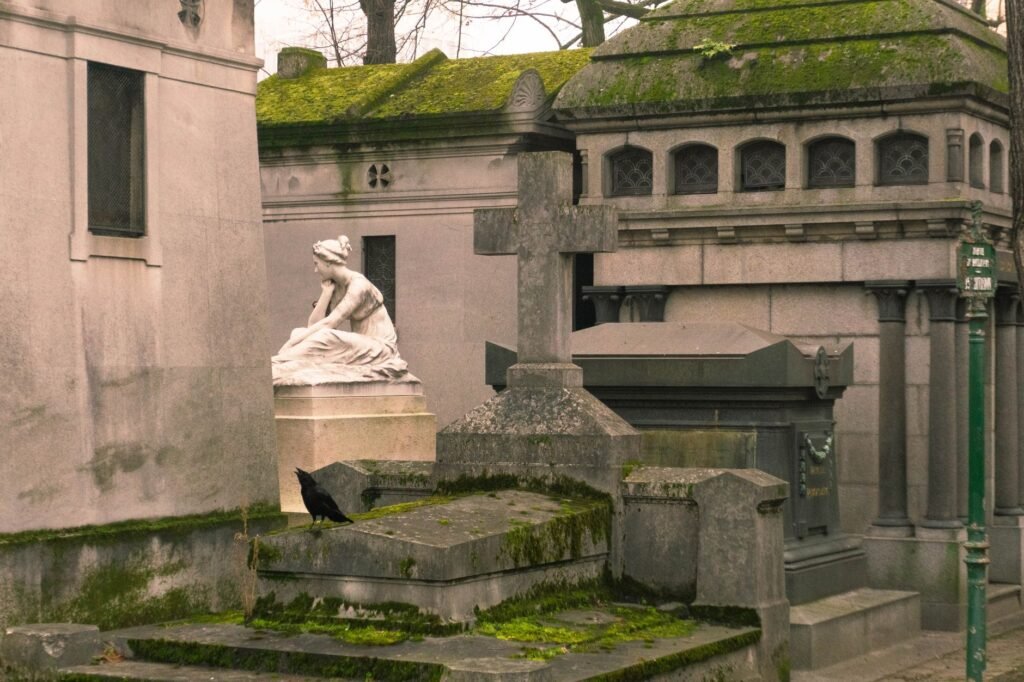
🇧🇷 POR | 🇫🇷 FR | 🇺🇸 EN | 🇪🇸 ES Why Père Lachaise Is So Much More Than Just a Cemetery When most tourists think of Paris, they picture the Eiffel Tower, the Louvre, or the banks of the Seine. But there’s a place that offers a completely different perspective on the city—one that surprises anyone daring enough to explore its tree-lined paths. We’re talking about the Cimetière du Père-Lachaise, or simply Père Lachaise, a space that functions simultaneously as a historic cemetery, an open-air museum, a cultural park, and a peaceful refuge amidst the Parisian urban chaos. Spanning over 44 hectares, Père Lachaise is one of the most visited cemeteries in the world—with more than 2 million visitors annually. But the reason isn’t morbid—quite the opposite. People come here to stroll among centuries-old trees, discover Paris’s history through tombstones and funerary monuments, and pay homage to the names that have left their mark on art, music, literature, and the history of humanity as a whole. The Fascinating History of Père Lachaise Cemetery The land where Père Lachaise stands today was, in the 17th century, the private property of Father François de la Chaise, confessor to King Louis XIV and an influential figure in the Society of Jesus. That’s where the name comes from—”Père” means “father” in French. After the priest’s death, the property passed to the Society of Jesus (the Jesuits), who built a small chapel and retreated to this quiet spot, far from the urban hustle of the time. In 1804, Paris faced a severe crisis of space in its traditional cemeteries. The population was growing rapidly, and conventional burial sites were literally overflowing. The city decided to create a new space for large-scale burials—and chose the former Jesuit property, which offered ample land and a suitable location. Architect Alexandre-Théodore Brongniart was tasked with transforming the grounds into a modern cemetery, with well-planned paths, strategically distributed green areas, organized urban structure, and clear administrative divisions. This was a revolutionary approach for the time—before this, European cemeteries were often disorganized, overcrowded, and unsanitary. The official inauguration took place in 1804, and since then, Père Lachaise has become the most sought-after place in Paris to be buried. And it’s no wonder—being laid to rest here was (and still is) considered a sign of prestige, cultural importance, and historical relevance. Over time, the cemetery gained international notoriety, attracting visitors from all corners of the globe eager to honor cultural heroes, musicians, writers, and thinkers who left their mark on history. The Most Famous and Visited Tombs at Père Lachaise What makes Père Lachaise truly special is the impressive concentration of historically significant figures. Here you’ll find legendary musicians, world-renowned writers, revolutionary painters, and characters who left indelible marks on the history of art and global culture. Let’s explore the highlights: Jim Morrison — The Eternal Rock Icon The lead singer of The Doors is perhaps the most visited and revered “resident” of Père Lachaise. Jim Morrison died in Paris in 1971 at age 27—the same age as Jimi Hendrix, Janis Joplin, and Kurt Cobain when they passed. Morrison’s tomb has practically become a pilgrimage site for rock fans from around the world. The plaque simply reads “James Douglas Morrison 1943-1971” and is constantly covered with fresh flowers, heartfelt messages, and tributes left by admirers from different generations. The spot became so popular that the cemetery administration had to install signs asking for respect, discretion, and preservation of the funerary monument. Édith Piaf — The Voice of Paris The “Little Sparrow,” as she was affectionately called, is another legendary figure buried here. Édith Piaf (1915-1963), born Thérèse Gassion, is widely regarded as the most emblematic voice of French chanson and the Parisian spirit itself. Her tomb is simple but always visited by admirers who leave roses—often red roses, the flower that made her famous. Visitors hum her most famous melodies at her final resting place, particularly “La Vie en Rose,” the song that immortalizes her. Oscar Wilde — The Provocative Writer Irish writer and playwright Oscar Wilde, famous for his sharp theatrical works and memorable epigrams, also rests at Père Lachaise. His tomb is one of the most visited and most unusual in the cemetery. For years, admirers covered it with love notes and lipstick kisses—the administration was eventually forced to encase the tomb in protective glass to preserve the original structure. The inscription on his tomb reads “Oscar Wilde, 1854-1900,” but the story of the site is far more colorful. Frédéric Chopin — Composer of Passionate Hearts The Polish composer, who lived much of his life in Paris and was deeply influenced by the city, is buried here. His tomb features a stunning sculpture of a grieving Greek Muse—one of the most artistically refined funerary sculptures in all of Père Lachaise. Many classical music admirers leave white roses as a tribute to the musical genius who revolutionized piano music. Balzac, Daumier, Delacroix, and Corot Beyond the names above, Père Lachaise is a “who’s who” of French culture. Honoré de Balzac, the writer who revolutionized the realist novel; Honoré Daumier, caricaturist and painter; Eugène Delacroix, Romantic painter; and Jean-Baptiste Corot, Impressionist landscape artist—all rest here. It’s like a museum of historical figures, but for eternal repose. Funerary Architecture and Sculptures — Art in Stone Beyond the famous names, Père Lachaise is an open-air museum of funerary sculpture. The tombs range from simple stone plaques to truly artistic monuments. You’ll find neoclassical sculptures, marble angels in moving poses, and architectural structures reflecting different periods and artistic styles, from neoclassicism to Art Nouveau. One of the best examples is the Monument to the Dead (Monument aux Morts), an imposing structure honoring those who fell during the Paris Commune uprising of 1871. There are also several private funerary chapels, built by wealthy 19th-century families, that look like miniature churches with stained glass, columns, and elaborate ornamentation. The trees are also a crucial part of the landscape. Centuries-old oaks, Italian cypresses, lindens, and other tree species create an environment that,
How Much Does a Trip to Paris Really Cost? A Complete Day-by-Day Budget
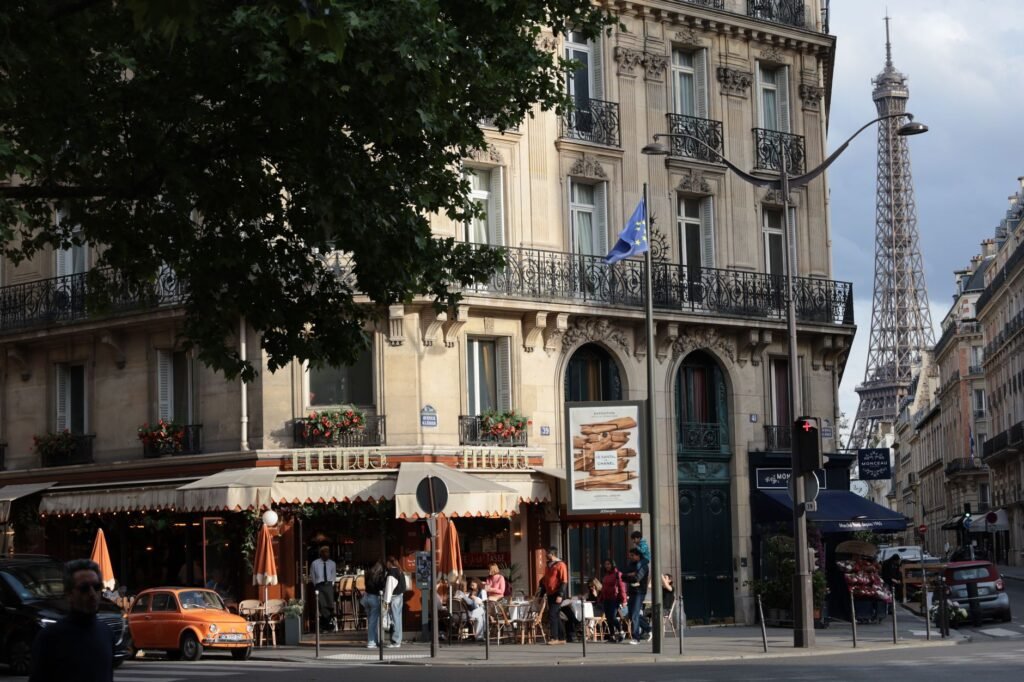
🇧🇷 POR | 🇫🇷 FR | 🇺🇸 EN | 🇪🇸 ES How Much Does a Trip to Paris Really Cost in 2026? Paris is often seen as the ultimate luxury destination, conjuring images of five-star hotels, Michelin-starred gourmet dinners, and extravagant shopping sprees on the Champs-Élysées. But the truth few tourists know is that the city offers viable options for every budget — from thrifty backpackers to premium travelers. The question isn’t really whether you can visit Paris on your budget, but how to strategically maximize your experience within your financial constraints. This detailed guide breaks down exactly what you’ll spend in Paris in 2026, analyzing costs by specific category. We’ll explore accommodation, food, transportation, attractions, and entertainment, with prices in euros. You’ll also find practical examples of complete budgets for different types of travelers. Important note: After planning your budget, get to know one of Paris’s main icons by reading our Complete Eiffel Tower Guide — with info on tickets, lines, and tips. Accommodation — Where to Stay and How Much to Spend Per Night Three-Star Hotels (Mid-Range) Most three-star hotels in Paris cost between €80 and €150 per night. These offer clean, basic but comfortable rooms, usually located in secondary neighborhoods that are excellently connected by metro. Examples include hotels in République, Oberkampf, Belleville, or around Gare du Nord. Private bathroom, TV, and WiFi are included, but don’t expect luxury. Two-Star Hotels (Budget) If your priority is maximum savings, two-star hotels cost €50 to €80 per night. Rooms are small and simple, without many extras or decoration, but clean and safe. Many are located in neighborhoods further from the tourist center, requiring a 15-25 minute metro commute to the main attractions. Suitable for those who spend little time in the room. Hostels (Shared Dormitories) Dormitories in well-rated hostels cost €25 to €40 per night. Great for solo travelers or groups who want to save significantly and enjoy making friends from other countries. Quality and atmosphere vary greatly between hostels — recommendations on Booking/Hostelworld are essential. Some hostels include breakfast; others charge extra. Airbnb and Full Apartments Full apartments in good neighborhoods (Marais, Latin Quarter, Montmartre) cost €70 to €180 per night, depending on size, exact location, and amenities. They offer more space and your own kitchen — great if your trip is 5+ days, as it saves significantly on meals. They also offer a more “local” experience than hotels. Typical daily accommodation budget: €50-150, averaging €90. Photo by Serhii Kovalov on Pexels. Food and Meals — From Cheap to Gourmet French Breakfast A classic French breakfast (coffee or hot chocolate, croissant, and orange juice) at a street café costs €5 to €8. In fancier neighborhood bistros, €12 to €15. Practical tip: supermarkets sell good quality frozen croissants for €1.50 each — if you’re staying in an Airbnb, you can save a lot on breakfast. Lunch — The Best Bang for Your Buck Budget lunch: A classic jambon-beurre sandwich (ham and butter) or fast food (Quick, McDo) costs €7 to €12. Quick and suitable for those wanting maximum efficiency. Mid-range lunch (Best value): Menu du jour (daily special) at a typical bistro, with main course + drink (water or house red wine) + simple dessert, costs €12 to €18. This is truly the best value in Paris — the same food quality as dinner at the same restaurant, but 50-60% cheaper. Premium lunch: A restaurant with a reputation or a Michelin star costs €40 to €200+. Dinner — When the Price Goes Up Budget: Traditional pizzeria or casual neighborhood restaurant costs €12 to €18. Mid-range: Traditional bistro or restaurant with a pleasant atmosphere costs €25 to €40. Premium: A well-known restaurant with an elegant setting, or a Michelin-starred one, costs €60 to €300+. Supermarket and Picnics If you cook your own food in an Airbnb or have picnics: fresh baguette (€1.20), Camembert cheese (€3-5), ham (€5), seasonal fruits (€3/kg), eggs (€3/dozen), yogurt — a homemade cold lunch/dinner for €8 to €12. Picnics in parks are a traditional and budget-friendly Parisian activity. Typical daily food budget: €20-60, averaging €35 for a typical traveler who has a menu du jour lunch and a moderate dinner. Photo by Margo White on Pexels. Urban Transportation — Metro, Bus, and Getting Around Metro and Bus (Integrated System) Single ticket: €2.15 per ride. 1-day Mobilis Pass: €8.50 — allows unlimited travel on metro, bus, and RER (up to zone 2) for 24 hours. 3-day Mobilis Pass: €23.50 — best cost per day if staying for 3 days. Navigo Découverte (1 week): €30.75 — unlimited travel Monday to Monday across the entire system. The metro is fast (rarely takes more than 5 minutes between stations), reliable, and runs until midnight (late-night on weekends with night buses). Taxis and Rideshare Services A taxi from Charles de Gaulle airport to central Paris costs €50-70, depending on traffic. Within the city, short distances (5-10 minutes): €8 to €15. Uber is slightly cheaper than a taxi on average, €8 to €12. Other Options Bicycle (Velib): The bike-sharing system costs €5/day or €70/week. Great for travelers who feel safe cycling in the city. Regional train (RER/SNCF): For day trips (Versailles, Mont Saint-Michel) costs €10-25 depending on the destination. Typical daily transportation budget: €8-12 if using a pass, or €23.50 for a 3-day pass. Photo by Vinícius Vieira on Pexels. If your trip includes a day in London, the most practical and economical transport is the Eurostar — the high-speed train that connects Paris to London in about 2h15, departing directly from Gare du Nord. With tickets starting from €39 booked in advance, it’s often cheaper and more convenient than flying when you consider total travel time. Tourist Attractions and Museums — Entry Prices Major Museums and Monuments Louvre Museum: €17 full entry. Evening entry (Wednesdays and Fridays): €10. Musée d’Orsay: €14. Centre Pompidou: €14 for the museum, separate viewpoint €5. Musée de l’Orangerie (Monet’s Water Lilies): €11. Eiffel Tower (second floor): €14. Third floor: €17. Access to the top: €21. Lines can be 1-2 hours, especially
Where to Stay in Paris: A Neighborhood Guide for Tourists
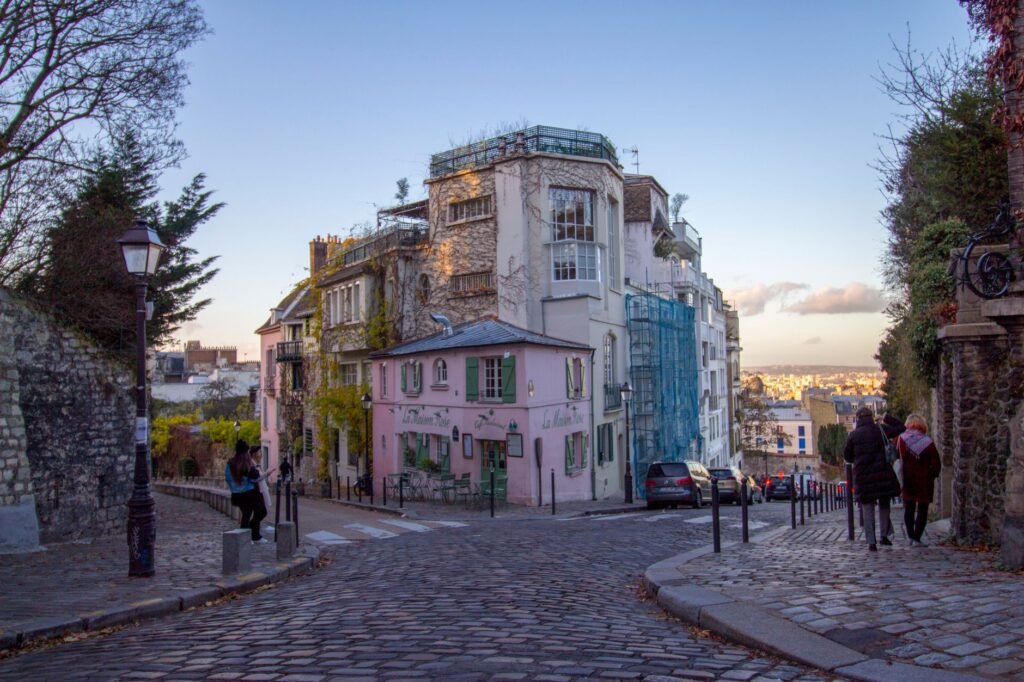
🇧🇷 POR | 🇫🇷 FR | 🇺🇸 EN | 🇪🇸 ES Why the Neighborhood You Choose Completely Changes Your Paris Trip Paris is divided into 20 arrondissements (neighborhoods numbered in a spiral from the center out), and each one has a very distinct personality. Choosing where to sleep isn’t just about price: it’s about the kind of morning you’ll have, how much you’ll spend on transportation, and even the vibe of the street when you head out for dinner. First-time visitors often just search for “highly-rated hotels near the Eiffel Tower” and end up in residential areas that are beautiful but isolated from the rest. On the other hand, staying too close to the biggest tourist attractions (like the Champs-Élysées) usually costs more and has less of a neighborhood feel. In this guide, I’ll walk you through the neighborhoods that are most worth it for tourists, with pros, cons, and who each one is best for. Le Marais (3rd & 4th Arrondissements): Charm, History, and Everything Within Walking Distance If I had to recommend one “safe bet” neighborhood for almost everyone, it would be the Marais. It’s one of the few areas of Paris that escaped the major urban renovations of the 19th century, so the streets are narrow, lined with old buildings, hidden courtyards, and a mix of boutiques, synagogues, art galleries, and falafel joints. The big advantage is the location: from here, you can walk to the Centre Pompidou, Place des Vosges, Île Saint-Louis, and even Notre-Dame Cathedral in about 15-20 minutes. The neighborhood stays lively at night, with bars and restaurants open late, especially around Rue des Rosiers and Rue Vieille du Temple. The downside is the price: because it’s so well-located, apartments and hotels in the Marais tend to be pricier than average, and it gets quite busy on weekends (some stretches turn into an open-air mall on Saturdays). Still, for anyone in town for just a few days who wants to make the most of every hour on foot, it’s hard to beat. We’ve put together a complete guide on what to do in the Marais if you want to dive deeper into the neighborhood. Latin Quarter (5th Arrondissement): The Paris of Books, the Sorbonne, and Sloping Streets On the other side of the Seine, the Latin Quarter got its name because, centuries ago, Sorbonne students would debate in Latin on the streets. Today it’s still a university neighborhood, home to famous bookstores (the most well-known is Shakespeare and Company, facing Notre-Dame), indie movie theaters, and an impressive number of crêperies and budget-friendly restaurants. The location is great for anyone who wants to be just minutes from the Panthéon, the Luxembourg Gardens, and Notre-Dame itself, plus it has easy access to the RER lines that go straight to the airports. It’s also a neighborhood with slightly friendlier prices than the Marais or Saint-Germain, especially on streets away from the main drag. One thing to note is that part of the neighborhood is uphill (literally—there are stone slopes that can be tiring after a day of walking), and some streets closer to the stations are busy late into the night. For anyone who enjoys a youthful, intellectual, “eternal student” vibe, it’s a perfect fit. Saint-Germain-des-Prés (6th Arrondissement): Historic Cafés and a Chic Address Saint-Germain is the neighborhood that combines literature, fashion, and gastronomy all in one place. This is where Sartre, Simone de Beauvoir, and Hemingway spent hours in cafés like Les Deux Magots and Café de Flore, and these spots are still open today (with prices to match their fame, it’s worth noting). Traditional café in Saint-Germain-des-Prés. Photo by Gökberk Keskinkılıç on Pexels. It’s an elegant neighborhood with tree-lined streets, art galleries, designer stores, and incredible proximity to the Luxembourg Gardens, the Musée d’Orsay, and the Left Bank of the Seine. For anyone who enjoys unhurried walks, a quiet morning coffee, and visiting museums in the afternoon, it’s one of the most pleasant addresses in the city. The trade-off, of course, is the price—Saint-Germain is among the most expensive neighborhoods in Paris to stay in, whether hotels or apartments. It’s worth it for those who prioritize this more sophisticated vibe and aren’t too worried about saving on this part of the budget. Montmartre (18th Arrondissement): The Picture-Perfect Paris, Just with Hills (and Stairs) Montmartre is probably the neighborhood that shows up most in movies and Instagram photos: cobblestone streets, staircases, the Sacré-Cœur Basilica at the top of the hill, and that village-within-a-big-city feel. It also has a reputation as a “bohemian” neighborhood, with artists painting portraits at Place du Tertre and cafés that inspired painters like Renoir and Toulouse-Lautrec. The big advantage is the unique atmosphere—few places in Paris have this village-like feeling, with a view of the entire city from up high. Accommodation prices also tend to be a bit more affordable than in the historic center, especially away from the more touristy area near the Moulin Rouge. On the flip side, it’s a neighborhood with a lot of stairs and hills (the funicular elevator isn’t always an option, as it has a line), it’s farther from the main downtown attractions, and at night, some streets near the metro stations require a bit more caution. If you don’t mind a lot of walking and want that “Parisian village” vibe, it’s well worth the experience—and you can complement it with our guide on Montmartre and Sacré-Cœur. Near the Eiffel Tower: 7th & 15th Arrondissements View of the Eiffel Tower from an apartment in Paris. Photo by Fiona Murray on Pexels. Some people dream of waking up and seeing the Eiffel Tower from their window—and that’s possible, especially in apartments in the 7th and 15th arrondissements. The 7th is more upscale, with elegant residential streets, embassies, and the Champ de Mars right on your doorstep. The 15th is simpler and more residential, with generally more affordable prices and a very quiet neighborhood life (markets, bakeries, local restaurants). The obvious advantage is the proximity to the Eiffel Tower and sights like Les
What to Eat in Paris: A French Food Guide for Travelers
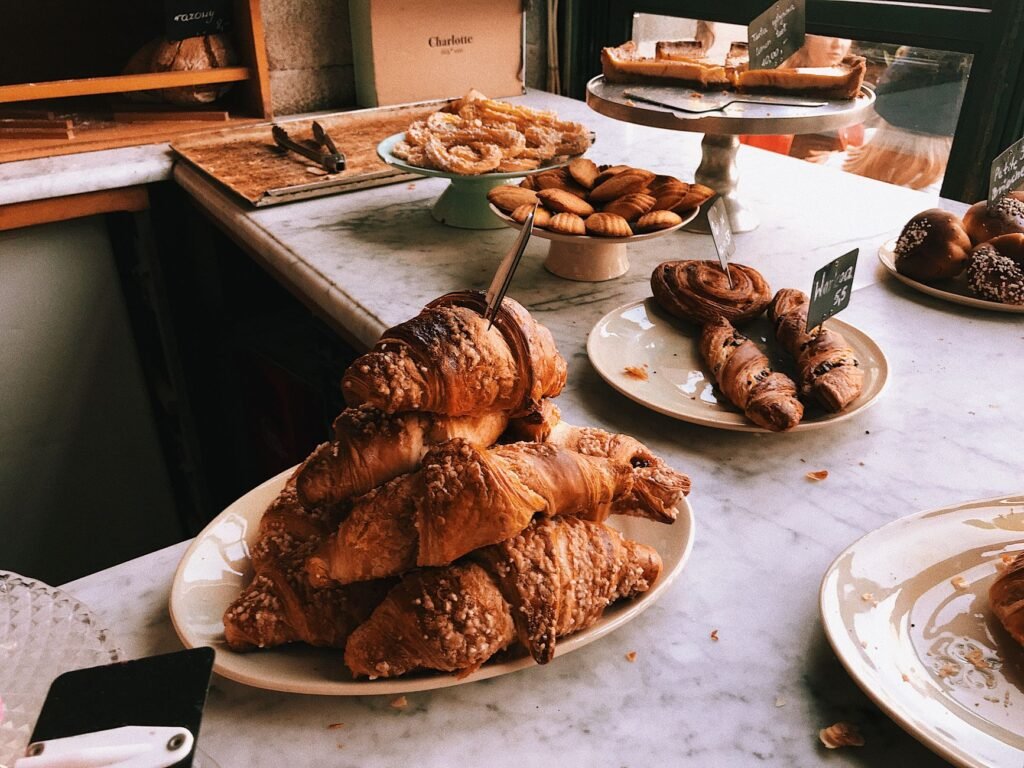
🇧🇷 POR | 🇫🇷 FR | 🇺🇸 EN | 🇪🇸 ES Parisian Cuisine Beyond the Clichés Paris boasts one of the richest food scenes in the world, but most tourists end up eating the same things—a croissant in the morning, a sandwich for lunch, and a crepe at night—missing out on dishes that have been part of Parisian daily life for centuries. This guide is a practical overview: what to eat, where to eat it, how much it costs, and how to avoid looking like a tourist (or overpaying) at French restaurants. The good news is you can eat incredibly well in Paris on any budget. The difference lies in knowing where to look and what to order—and that’s exactly what we’ll cover next. Breakfast: Croissants, Baguettes, and Pain au Chocolat Freshly baked croissants at a Parisian bakery. Photo by Dmitry Zvolskiy on Pexels. The French breakfast is simple and revolves around the “boulangerie” (bakery). The classics are a buttery croissant, a pain au chocolat (also called “chocolatine” in some regions), or a simple baguette with butter and jam, all paired with coffee or hot chocolate. A useful tip: “Ordinaire” croissants (made with margarine) cost less than “croissant au beurre” (butter), but the butter version is worth the splurge—it usually runs between €1.20 and €1.80 at good bakeries. Look for bakeries with a line of locals in the morning; it’s a nearly foolproof sign of quality. About the coffee: ordering “café” alone in Paris usually gets you a short espresso. If you prefer something closer to a Brazilian-style coffee, ask for a “café allongé” (espresso with more water) or a “café crème” (with milk). Unlike in Brazil, it’s rare to find large quantities of drip coffee—and drinking your coffee standing at the bakery counter, as many Parisians do before work, is usually cheaper than sitting at a table. Brasserie, Bistro, or Restaurant? Understanding the Differences Terrace of a traditional Parisian bistro. Photo by Shvets Anna on Pexels. These terms appear on every storefront in Paris and confuse plenty of tourists. In practice: Bistro: Casual atmosphere, short menu (often seasonal), home-style dishes like stews, omelets, and savory tarts. This is where Parisians eat on a daily basis. Brasserie: More spacious, usually open all day (sometimes even late into the night), with a larger menu—seafood, steak frites, croque-monsieur. A great option if you arrive outside traditional lunch/dinner hours. Restaurant: A more formal term, used for both simple places and Michelin-starred addresses—worth checking the menu and price range before walking in. A practical rule: if the menu is only in French, has no pictures, and there are people eating alone while reading a newspaper, it’s usually a good neighborhood bistro—and it’s often cheaper than the trendy spots near tourist attractions. Classic French Dishes to Try Some dishes (with variations) appear on most traditional menus, and it’s worth knowing them before you order: Boeuf bourguignon: Beef slowly braised in red wine with carrots, onions, and mushrooms. A hearty winter dish. Coq au vin: Chicken cooked in wine (usually red), a cousin to boeuf bourguignon, equally comforting. Steak frites: Grilled steak with french fries—ask for the doneness in French (bleu = very rare, saignant = rare, à point = medium, bien cuit = well done). Soupe à l’oignon gratinée: Caramelized onion soup, gratinéed with cheese and bread on top—a classic for cold days. Ratatouille: A vegetable stew (zucchini, eggplant, tomato, bell pepper), originally from the south of France, now found in any bistro. Magret de canard: Grilled duck breast, usually served with crispy skin—one of the most popular dishes among tourists. Escargots: Snails prepared with butter, garlic, and parsley—for those up for the experience, it’s more about the butter than the snail itself. Regional Dishes That Made It to Paris Paris brings together specialties from practically every region of France, so it’s common to find dishes that aren’t “Parisian” in origin but are part of the city’s daily life: Galettes and crepes (Brittany): Savory buckwheat galettes (with cheese, ham, egg) and sweet crepes (with Nutella, sugar, lemon) are sold at crêperies all over the city, usually paired with cider. Choucroute (Alsace): Fermented cabbage served with various sausages and cured meats—found in Alsatian-inspired brasseries, common in winter. Bouillabaisse (Marseille): A saffron-infused fish and seafood stew, traditionally served with toast and rouille (a garlic and chili paste). In Paris, it appears in seafood-specialty restaurants. Tartiflette (Alps): A gratin of potatoes, reblochon cheese, bacon, and onions—a heavy, comforting dish, common in winter. Socca (Nice): A thin pancake made from chickpea flour, found at some markets and food trucks as a snack. It’s worth paying attention to the menu: many bistros indicate the region of origin for a dish, and that can be a great way to “travel” through all of France without leaving Paris. Cheese and Wine: How to Order Without the Stress A selection of French cheeses and wines. Photo by Cup of Couple on Pexels. France has over 1,000 types of cheese, but some names pop up frequently: brie and camembert (creamy, with a white rind), comté (a hard, slightly sweet cheese), roquefort (blue, stronger), and chèvre (goat cheese, often in a log shape). In bistros, cheese is usually served as a starter or in place of dessert, with bread and sometimes fig jam or nuts. For wine, you don’t need to be an expert: most restaurants offer “vin au verre” (wine by the glass) and the “pichet” (a carafe of 25cl, 50cl, or 1 liter) of house wine, which is usually cheaper and perfectly acceptable. If you’re unsure, ask the waiter which wine pairs with your chosen dish—it’s a normal and welcome question. Desserts and Sweets: The Sugary Side of Paris After a meal (or during any afternoon break), it’s worth trying: crème brûlée (custard with a caramelized sugar crust), tarte tatin (an upside-down caramelized apple tart), mille-feuille (layers of puff pastry with cream), éclair (an elongated pastry filled with cream and topped with icing), and, of course, macarons—sold at famous patisseries, but also in simpler, cheaper versions at neighborhood
Centre Pompidou: The Modern Art Museum That Divides Opinions in Paris
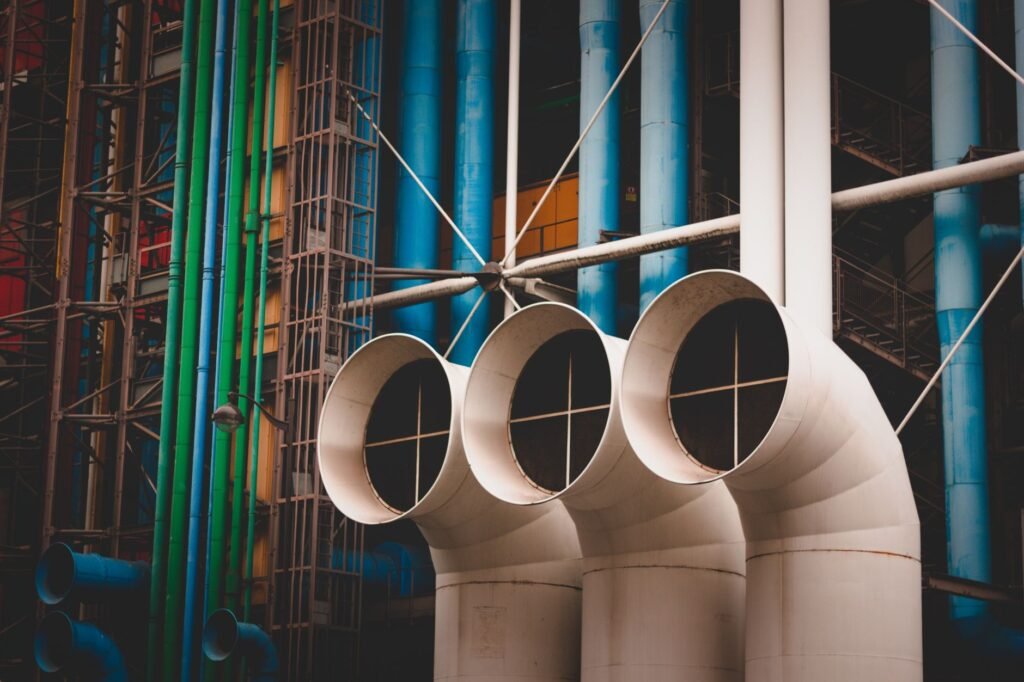
🇧🇷 POR | 🇫🇷 FR | 🇺🇸 EN | 🇪🇸 ES Photo by Flo Dnd on Pexels. When you first step in front of the Centre Pompidou, it’s impossible not to be taken aback. Not because it’s beautiful—that’s debatable. But because it’s absolutely unlike anything else around it in the Parisian landscape. Colorful pipes on the facade, exposed metal structure—it looks like someone dropped an industrial engineering blueprint right in the middle of historic Paris. Many Parisians hate it. Many tourists love the audacity. And after you get to know it, you understand why this building is one of the most important in the history of modern architecture. Let’s explore the Centre Pompidou, uncover its secrets, and find out if it’s really worth including on your trip. What Is the Centre Pompidou? The Story of a Revolutionary Architecture The Centre Pompidou (full name: Centre national d’art et de culture Georges-Pompidou) is a museum of modern and contemporary art that has been open since 1977 in Paris. But calling it “just a museum” is underselling its importance. This place is a massive cultural institution that changed the concept of what a public building should look like. The story begins in 1969, when French President Georges Pompidou launched an international competition to create an innovative cultural center. The goal? To create a space that wasn’t elitist or closed off, but open, democratic, and one that spoke to everyday people. They wanted to break the idea that museums are only for intellectuals and that art is something removed from daily life. Out of 370 proposals, the winners were architects Renzo Piano (Italian) and Richard Rogers (British). Their proposal was radical: put EVERYTHING on the outside of the building. The ventilation pipes, the steel structure, the escalators—none of the smooth, discreet walls. The interior would be completely free, with no support pillars. It’s as if they said, “Let’s flip the logic of construction. Here, the technical functions are the decoration. Engineering is art.” Photo by Killian Eon on Pexels. The pipes are color-coded: blue for air, red for water, green for cooling water, and yellow for electrical current. It’s like seeing the building’s DNA exposed. When the structure was completed in 1977, there was a massive scandal. Traditional Parisians called it a “refinery” or “factory.” Architecture critics questioned whether this was really art. Fifty years later, it’s a UNESCO World Heritage site, an international icon of industrial design, and one of the most visited buildings in Paris. The Collection: World-Class Modern and Contemporary Art Inside this futuristic shell lies one of the world’s largest collections of modern art. The Museum of Modern Art (Musée d’Art Moderne et d’Art Contemporain) inside the Centre Pompidou covers everything from the period of 1905 to contemporary works created just a few months ago. That’s over 60,000 pieces. You’ll see masterpieces by Picasso (“Les Demoiselles d’Avignon”), Matisse (“The King’s Sadness”), Kandinsky (“Composition VIII”), Dalí, Warhol, Basquiat, and Brazilian and Latin American artists too. The curation is impressive—it’s not just about “collecting” famous paintings, but telling the story of modern art through them, connecting movements, and explaining how one artist influenced another. The galleries are organized thematically: Cubism, Surrealism, Abstractionism, Pop Art, Contemporary Art, and so on. You can see how Picasso evolved over decades. How Matisse cut paper at the end of his life (his “découpes”)—a simple yet deeply sophisticated technique. The temporary exhibitions are regularly refreshed every 3-4 months, so even if you come back, there’s always something new to discover. Beyond the visual art museum, the Centre Pompidou houses: the Public Library (BPI)—completely free, with access to computers, WiFi, and educational resources; IRCAM (Institute for Research and Coordination in Acoustics/Music)—an experimental lab for electronic and contemporary music; Cinemas and theaters—showing alternative films, documentaries, and experimental works; a specialized bookstore—books on art, design, architecture, and photography; and a cafeteria—with a partial view of the city and reasonable prices for Paris. The space is so vast that you can spend hours here without getting bored. Some people come to the Library and spend the whole day. The structure is organized over 6 main floors, each with a different focus. The Viewpoint: The Best View of Paris That Few People Know About One of Paris’s best-kept secrets is on the 6th floor of the Centre Pompidou. The “viewpoint” (actually, the open outdoor area) offers a 360-degree view of Paris that is absolutely breathtaking. Unlike the Eiffel Tower (packed all the time) or Sacré-Coeur (also crowded), this view is less known, therefore less crowded—you can actually breathe, walk around, sit down, and take it all in. Photo by Darya Sannikova on Pexels. You can see all the major landmarks: the Eiffel Tower in the distance (to the left), Notre-Dame straight ahead, Sacré-Coeur in Montmartre (at the top right), the Panthéon, the Luxembourg Gardens, and the Seine River snaking through the city. All from a unique perspective you can’t get from any other spot in Paris. And the best part? It’s completely free if you have a museum ticket—you take the elevator up, step out onto the 6th-floor plaza, and there it is. The best time for this experience is at dusk (golden hour), when Paris’s golden light hits the building facades and everything takes on a magical glow. Arrive around 5 PM in the summer (or 3 PM in the winter), stay for at least an hour until sunset, then head down to the cafeteria or grab a drink (yes, there’s a small bar) and keep sipping with that stunning view as your backdrop. It’s an experience that costs only the price of a museum ticket and is worth every penny. Tip: bring a decent camera or a phone with a good camera. The photos from here turn out incredible, especially if you can snap them in the late afternoon. Paris sunsets from this spot are legendary among photographers. How to Visit: Hours, Prices, and Tickets Explained Opening Hours: Tuesday to Sunday: 11 AM to 9 PM (Thursday open until 11 PM); Monday: CLOSED (very important—don’t
The Latin Quarter of Paris: History, the Sorbonne, and the City’s Most Bohemian Side
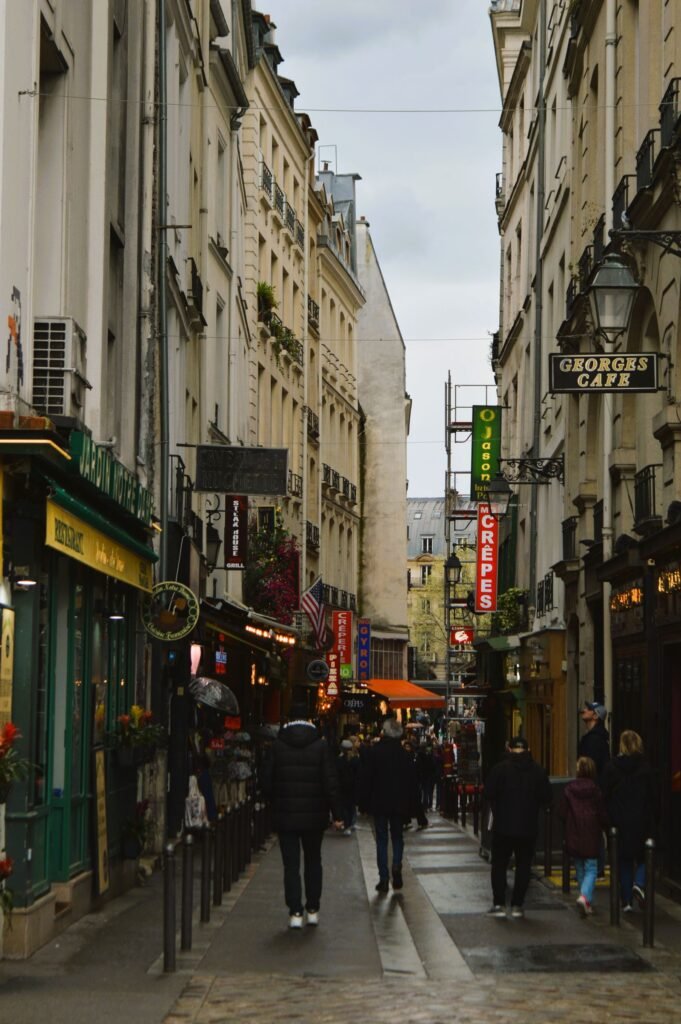
🇧🇷 POR | 🇫🇷 FR | 🇺🇸 EN | 🇪🇸 ES Photo by Cheikh rouhou Omar on Pexels. If there’s a corner of Paris where the city feels more “student,” more bohemian, and at the same time, more ancient, that place is the Latin Quarter. Squeezed between the Seine and the Panthéon on the Left Bank, the Quartier Latin is where Paris holds centuries of university history, century-old bookshops, medieval streets that escaped Baron Haussmann’s straight lines, and a nightlife that blends jazz, arthouse cinema, and bars packed with students. For anyone visiting the French capital, it’s one of the richest neighborhoods for a leisurely stroll—and this guide shows why it deserves a prime spot on your itinerary. Where is the Latin Quarter and how to get there The Latin Quarter mainly occupies Paris’s 5th arrondissement, with a small extension into the 6th, on the Left Bank (Rive Gauche) of the Seine River, right across from the Île de la Cité, where Notre-Dame Cathedral stands. This makes it extremely central: you can walk from Notre-Dame, crossing the Pont au Double or the Petit Pont, in just a few minutes. By metro, the most useful stations are Saint-Michel Notre-Dame (RER lines B and C, plus metro line 4), Cluny–La Sorbonne (line 10), and Maubert-Mutualité (line 10). Practically the entire area can be explored on foot from any of these stations, making the neighborhood a great hub to start or end a day of sightseeing on the Île de la Cité, at the Luxembourg Gardens, or the Panthéon. Where does the name “Latin Quarter” come from? The name “Quartier Latin” has a direct and curious origin: during the Middle Ages, this was the area where Paris’s universities were concentrated, and Latin was the official language of teaching and academic life. Professors, students, and clergy communicated in Latin on the streets, in classrooms, and in churches—hence the nickname the neighborhood still carries today, even though Latin hasn’t been spoken on its streets for centuries. This academic vocation has never truly disappeared. Since the 12th century, when the University of Paris began to organize itself in this region, the neighborhood has never stopped housing schools, colleges, and libraries. It’s precisely this continuity—nearly 900 years of student life in the same patch of the city—that gives the Latin Quarter a unique atmosphere, unlike any other area in Paris. The Sorbonne: the intellectual heart of Paris In the middle of the neighborhood, the Sorbonne is the most obvious symbol of this tradition. Founded in 1257 by theologian Robert de Sorbon as a college for poor theology students, it grew to become synonymous with the University of Paris itself. The current building, with its imposing domed chapel and inner courtyard framed by arcades, mainly dates from the 17th century, with major renovations in the late 19th century. Today, the Sorbonne is no longer a single university but a complex housing several higher education institutions. Access inside is restricted to those affiliated with the university, but that doesn’t diminish the charm of walking through the Place de la Sorbonne, a small tree-lined square in front of the building, filled with cafés, bookshops, and students sitting on the steps—a scene that has repeated itself for generations. Around the Sorbonne, it’s also worth noticing the Collège de France, a free research and teaching institution founded in the 16th century, and the Rue des Écoles, which gives a good idea of the concentration of academic institutions in the area. Photo by Guillaume Hankenne on Pexels. Shakespeare and Company and other historic bookshops No itinerary through the Latin Quarter is complete without a stop at Shakespeare and Company, one of the most famous bookstores in the world. Located right across from Notre-Dame on Rue de la Bûcherie, the current bookstore was opened in 1951 by George Whitman and became a historic meeting point for American and British writers living in Paris—from Ernest Hemingway to Allen Ginsberg passed through its doors (the first bookstore with this name, from the 1920s, was run by Sylvia Beach and even published the first edition of James Joyce’s “Ulysses”). Today, Shakespeare and Company is at once a bookstore, an informal library, and almost a small museum: narrow corridors, creaky stairs, books piled to the ceiling, and upstairs, reading nooks with views of the Seine and the cathedral’s façade. There’s also an attached café, perfect for a break. But Shakespeare and Company isn’t the only bookstore worth visiting. The streets around the Sorbonne and Place Saint-Michel are packed with dozens of smaller bookshops, antiquarian booksellers, and bouquinistes (used book sellers who also set up stalls along the Seine), reinforcing the neighborhood’s literary vocation. Narrow streets with medieval charm: Rue de la Huchette and Rue Mouffetard One of the Latin Quarter’s greatest treasures is its layout of narrow, winding streets, which escaped the major urban reforms of the 19th century and preserved the city’s medieval scale. Rue de la Huchette, near Saint-Michel, is perhaps the best-known example: a short, bustling street full of Greek, Lebanese, and crêperie restaurants, with colorful neon signs and a lively atmosphere that stretches late into the night. It’s also home to the Théâtre de la Huchette, which has been staging Ionesco’s plays continuously since the 1950s. Rue Mouffetard, a bit further south near the Jardin des Plantes, is one of Paris’s oldest streets—its layout dates back to a Roman road. Today, it hosts a lively street market with stalls of cheese, bread, fruit, and flowers, along with bistros and bars frequented by both locals and tourists. Walking down Mouffetard in the morning, when the market is in full swing, is one of the most authentic experiences Paris can offer. It’s also worth exploring smaller streets like Rue du Chat-qui-Pêche—considered one of the narrowest streets in Paris—and the area around Place Maubert, which preserves the same medieval village vibe within the capital. Photo by Mathias Reding on Pexels. The Panthéon of Paris At the highest point of the neighborhood, the Montagne Sainte-Geneviève, stands the Panthéon of Paris, its imposing dome
Documents for Traveling to France: Visa, Passport, and Insurance
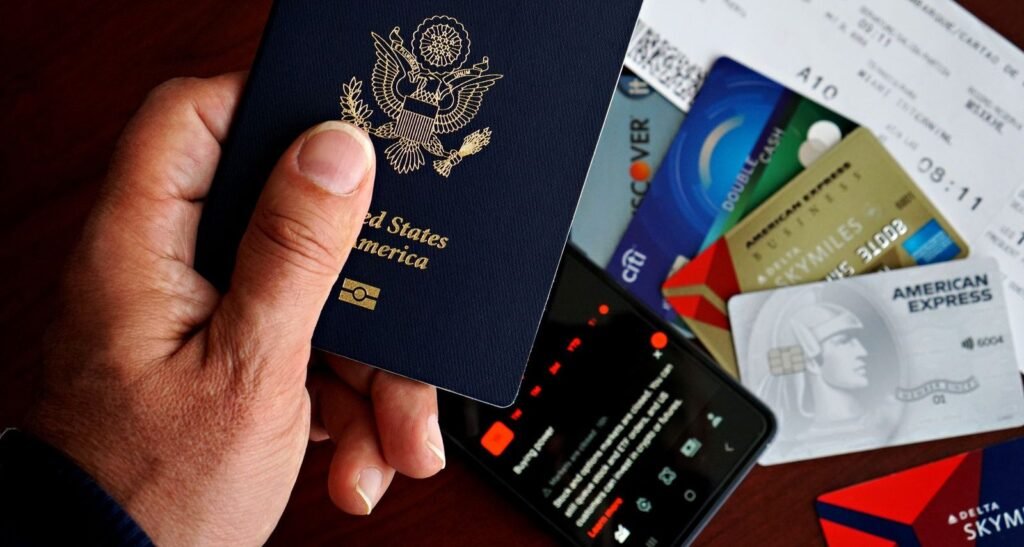
🇧🇷 POR | 🇫🇷 FR | 🇺🇸 EN | 🇪🇸 ES Before you start dreaming of croissants, the Eiffel Tower, or the best coffee in the Marais, there’s a planning step most people leave for the last minute—and it can turn into a major headache if put off too long: the paperwork. Documents for traveling to France are, in most cases, simpler than they seem, but some details change from time to time and can make a big difference at check-in or immigration. In this guide, we’ve gathered everything Brazilians need to know before boarding: passport, visa (or the lack thereof), the new ETIAS authorization, travel insurance, extra documents for those traveling with kids, and practical tips to avoid any airport stress. Photo by DΛVΞ GΛRCIΛ on Pexels. Passport: The One Document You Absolutely Need It sounds obvious, but it’s the first thing that can derail a trip: your Brazilian passport must be valid for at least 3 months beyond your planned departure date from the Schengen Area (which includes France). In practice, the general recommendation among frequent travelers is to have at least 6 months of validity from your return date to Brazil—this way, you avoid any issues at the airline check-in counter, which is often stricter than immigration itself. If your passport is close to expiring or has already expired, you can apply for a new one or renew it through the Federal Police, with online scheduling on the official website. Delivery times vary by location and time of year—during peak demand periods (like before mid-year and December holidays), it can take a few weeks, so it’s best to take care of this well in advance, never less than a month before your trip. A simple tip that works for any international trip: take clear photos of all pages with passport information (and visa, if applicable) and save them in an email or the cloud. If the document is lost or stolen, this will speed up the process at the Brazilian consulate in Paris considerably. Schengen Visa: Do Brazilians Need to Get One? Good news: for tourist stays of up to 90 days within a 180-day period, travelers with a Brazilian passport do not need a visa to enter France or any other Schengen Area country (which includes most of the European Union, plus countries like Switzerland and Norway). This visa waiver agreement is reciprocal and has been in place for many years—it’s the same reason European citizens don’t need a visa to come to Brazil for short trips. This applies whether you’re just passing through Paris or planning to visit several French cities and even cross into other European countries within the same 90-day limit. The entry stamp (or electronic registration, at airports with automated controls) marks the start of that countdown. Important: this waiver applies to tourism, business, or visiting family/friends—not for paid work, long-term study, or residency, which have their own visa rules and require a very different planning process. Photo by Borys Zaitsev on Pexels. ETIAS: The New Authorization That Will Change How You Enter Europe Here’s the part that usually raises the most questions these days: ETIAS (European Travel Information and Authorization System), an electronic travel authorization the European Union is implementing for travelers from visa-waiver countries—including Brazil. In practice, ETIAS works similarly to Canada’s eTA or the US ESTA: before boarding, travelers fill out a simple online form, pay a low fee, and receive an authorization linked to their passport, valid for a few years (or until the passport expires, whichever comes first). It’s not a traditional visa—no consulate visit or interview required—but it becomes a prerequisite for boarding. The ETIAS implementation timeline has been postponed more than once in recent years, so the safest advice is: before buying your ticket or a few weeks before your departure, check the official website to confirm if the requirement is already in effect on your travel date. If it is, complete the registration in advance—the process is usually quick, but it’s better not to leave it until the last minute. Important note: since we’re talking about bureaucracy and extra costs, it’s worth checking out our guide on how much a trip to Paris costs—it helps you fit fees like ETIAS and travel insurance into your overall travel budget without any last-minute surprises. Travel Insurance: Is It Mandatory or Just Recommended? Contrary to what many people think, for those entering France as tourists using the visa waiver (which applies to most Brazilians), travel insurance is not required at the border as a mandatory entry document—this formal requirement mainly applies to those who need to apply for a Schengen visa (for example, longer trips or other visa types). Even so, traveling to Europe without insurance is a risk that simply isn’t worth it. The French healthcare system is excellent, but it’s also expensive for those without coverage—an emergency consultation, an X-ray, or a night in the hospital can cost hundreds or thousands of euros out of pocket. When choosing travel insurance for France, keep an eye on three things: Minimum medical coverage of 30,000 euros—this is the reference amount used by European consulates for visas, and it’s a good baseline even if you don’t need to present the insurance. 24-hour assistance in Portuguese—makes a huge difference in an emergency in a foreign language. Repatriation coverage—includes transport back to Brazil in case of a serious health issue. It’s worth comparing options on insurance comparison sites before buying—prices vary a lot between insurers for the same coverage, and many people end up paying more than they need to by buying in a rush at the airport counter. Photo by Mikhail Nilov on Pexels. Other Documents That May Be Requested at Immigration Even without a visa, French immigration (or the airline at check-in) may ask you to prove the “purpose” and “conditions” of your trip. It’s rare for organized travelers, but it’s worth having these handy, preferably in digital form too: Proof of accommodation—hotel reservation, Airbnb, or an invitation letter from your host, with
Paris in Winter: Weather, What to Wear, and Special Attractions
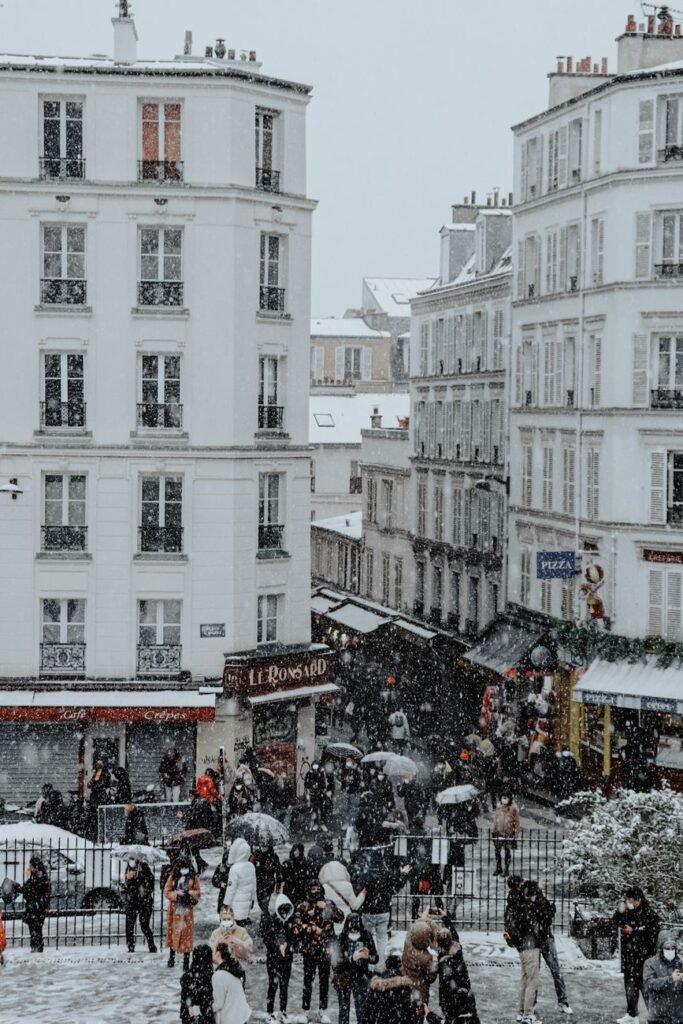
🇧🇷 POR | 🇫🇷 FR | 🇺🇸 EN | 🇪🇸 ES Paris in winter is magical, but it requires preparation. Temperatures drop to 41-50°F (5-10°C), days are short, and the sky is often overcast. But there are unique beauties: fireworks reflecting off frozen water, Christmas markets, smaller crowds at museums, and genuine Parisian life without a tourist eating a crepe on the street. Photo of Paris in winter. Weather and Temperature Winter in Paris (December-February) is cold. Lows of 37-41°F (3-5°C), highs of 46-50°F (8-10°C). Snow is possible but not guaranteed. Days are very short: the sun rises at 8-9 AM and sets at 5-6 PM. High humidity makes the cold feel more biting. What to Pack: Essential Clothing Heavy coat (parka, wool overcoat) Scarf, beanie, wool gloves Jeans or thermal leggings Thick thermal socks Boots with good traction (it can be wet/icy) Hand warmers Special Winter Attractions Christmas Markets Spread across the city from November. The Champs-Élysées has the largest. Stalls with hot chocolate, crêpes, mulled wine, and handmade gifts. Extravagant decorations. Ice Skating Ice skating rinks pop up in several squares. Trocadéro, Notre-Dame, and Versailles have special rinks. Skate rentals available on-site. Department Store Windows Chanel, Dior, Galeries Lafayette decorate their windows with Christmas themes. A walking tour (even in the cold) is worth it to see the displays. New Year’s Eve If you visit on December 31st, Paris has celebrations in several neighborhoods. The Champs-Élysées is the classic spot (huge crowds). Museums Are Better in Winter No lines! The Louvre, Musée d’Orsay, and Centre Pompidou are empty in January/February. You can enjoy the artworks without the crowds. Ideal for art lovers. Financial Advantages Accommodation costs 20-40% less than in summer. Flights are cheaper. Some restaurants have winter promotions. Museum tickets are the same price, but without the crowds = better value. Disadvantages Short days (little daylight). Many cafes/attractions have reduced hours. Intense cold can be uncomfortable if you’re not prepared. Some gardens/parks are emptier (less greenery). Best Way to Enjoy Winter in Paris Combination: spend the day strolling streets with markets/window displays, the afternoon in a heated museum, and the evening in a café with hot chocolate. Reserve outdoor attractions for the hours of maximum light (10 AM-4 PM). Don’t plan for beaches/gardens—focus on architecture, museums, and urban life. Photo of Paris at night. 3-Day Winter Paris Itinerary Day 1 (arrival): Rest, wander the streets of your neighborhood (Marais, Latin Quarter), window shop, have dinner at a cozy café. Day 2: Louvre (afternoon, heated museum), illuminated evening walk (Eiffel Tower, Pont des Arts), dinner at a bistro. Day 3: Sacré-Coeur/Montmartre (morning with good light), Musée d’Orsay (afternoon), Champs-Élysées (late afternoon with illuminated windows). Safety and Health Tips Avoid staying wet—staying dry is key. Be careful on stairs and wet streets (risk of falling). Drink hot beverages frequently (hot chocolate, coffee, tea). Use moisturizer (the dry European climate is harsh on skin). Vitamin C can help ward off colds. Is It Worth Visiting Paris in Winter? Yes, if you love museums, architecture, urban life, and don’t like crowds. No, if you want beaches, want to see flowers in gardens, or are afraid of the cold. Important note: To plan your trip to Paris for another season, read our New Year’s Eve in Paris 2026: Complete Guide to the Turn of the Year — with specific tips for celebrating New Year’s in the City of Light. FAQ Q: Does it snow in Paris in winter?A: Possible but not guaranteed. Some winters have snow, others don’t. Q: Do buses/metros run normally?A: Yes, fully operational. Q: Is it expensive to travel in winter?A: Cheaper than summer.
3-Day Paris Itinerary: The City of Light Essentials
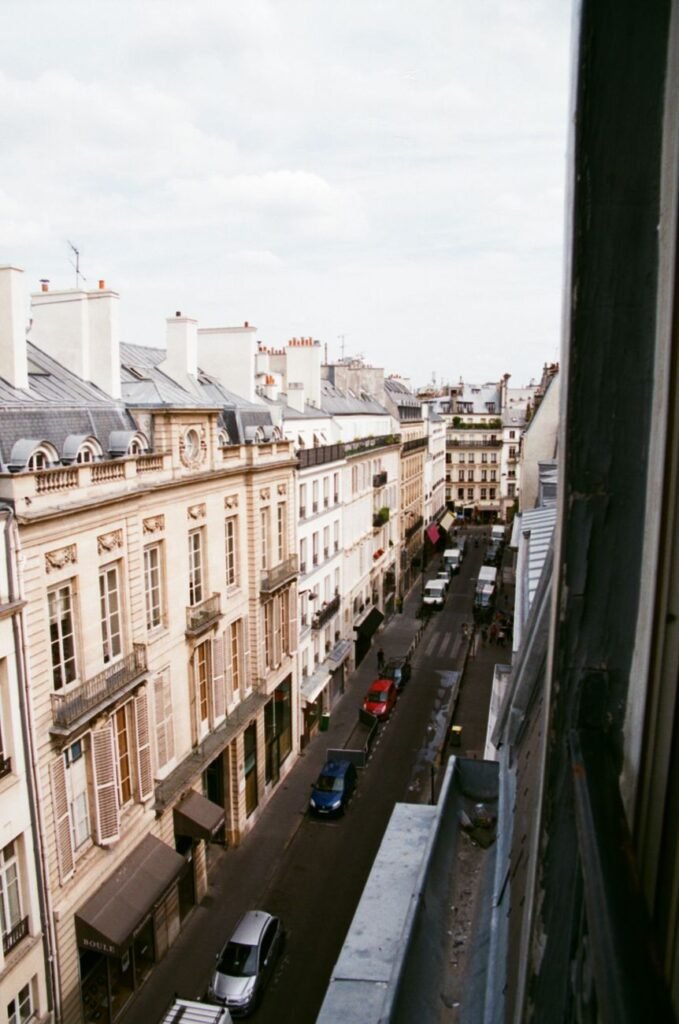
🇧🇷 POR | 🇫🇷 FR | 🇺🇸 EN | 🇪🇸 ES Three days in Paris is short, but it’s enough to see the essentials and have a genuine experience of the City of Light. The secret is to prioritize, not overwhelm yourself, and leave room to wander the streets—Paris is made for walking. Photo of a Paris street. Day 1: Classics and Arrival Morning (8am-12pm): Arrive early, drop your bags at the hotel (check-in is usually 3pm, but ask to store luggage). Head out for breakfast at a Parisian café. Tip: a genuine croissant is different from what you know—real butter, flaky layers. Afternoon (12pm-5pm): Walk to the Eiffel Tower (20-30 min from the center). No need to go up—photograph it from outside. Trocadéro is the best angle. Lunch at a cheap bistro nearby. Evening (5pm+): Seine at sunset. Turn your back to the Tower, watch Pont des Arts, the river shimmering. Dinner at a bistro. Sleep early—jet lag. Day 2: Museums and Culture Morning: The Louvre. Arrive at 9am (opens at 9am) to avoid the huge line. Focus on the main works (Mona Lisa, Winged Victory—2-3 hours). Don’t try to do the whole museum—you’ll go crazy. Afternoon: Leave the Louvre, walk to Île de la Cité. Visit Notre-Dame Cathedral (exterior construction if restoration continues). Place Dauphine is beautiful. Evening: Latin Quarter. Narrow streets, bookshops, cafés. Dinner at a small bistro. Watch genuine nightlife (not Pigalle). Day 3: Neighborhoods and Experiences Morning: Montmartre. Sacré-Cœur Basilica. Place du Tertre (artists). Walk random streets—it’s overly cliché romantic but it’s real. Afternoon: Musée d’Orsay (1-2 hours if you like Impressionism). Or Musée Rodin (smaller, quieter). Or Le Marais (old, charming neighborhood). Evening: Champs-Élysées at dusk (lit-up shop windows). Final dinner at a memorable restaurant. Savor the city one last time. Transportation Buy a Paris Visite 3-day pass (€40-60). Metro + bus everything. Don’t rent a car—driving in Paris is a circus. Food Coffee: €2-3 standing, €5-8 seated. Bistro lunch: €12-20 fixed menu (plat du jour). Dinner restaurant: €30-60. Croissant/bread: €1-2. Ice cream: €3-5. General Tips Looking like a tourist is OK. Speak English slowly—Parisians appreciate the effort. Don’t try bad French—they’ll laugh. Wear sensible shoes—Paris is for walking. Smartphone with Google Maps saved offline—internet is expensive. Reserve restaurants for dinner (lunch walk-in is normal). Visit museums on weekdays if possible (weekends are crowded). Important extra: To better plan your days in Paris, read our guide Eiffel Tower: Complete Guide to Visiting Paris’s Icon in 2025—with info on tickets, lines, and the best time to go. Alternative Itineraries For museums: Louvre day 1, d’Orsay day 2, Rodin/Pompidou day 3. For architecture: Notre-Dame, Sainte-Chapelle, Arc de Triomphe, Versailles day trip. For romance: Focus on cafés, Seine walks, Montmartre at dawn, Latin Quarter bookshops. For photos: Trocadéro, Pont des Arts, Montmartre, Le Marais, Champs-Élysées at night. Extension to 4-5 Days Day 4: Versailles (train day trip, full day). Day 5: Museums you missed or neighborhoods (Canal Saint-Martin, Belleville). FAQ Q: Is the metro safe?A: Yes during the day, at night it’s OK if you’re not sleeping alone in an empty car. Q: Should I go up the Eiffel Tower?A: Optional. The view from Trocadéro is free and good. Go up if you like lines and inflated prices. Q: How much will I spend in 3 days?A: €200-300 on food/transport/museums per person (without accommodation). Q: Best time to go?A: May-September best weather. December-January fewer tourists.