7-Day Paris Itinerary: A Complete Day-by-Day Guide
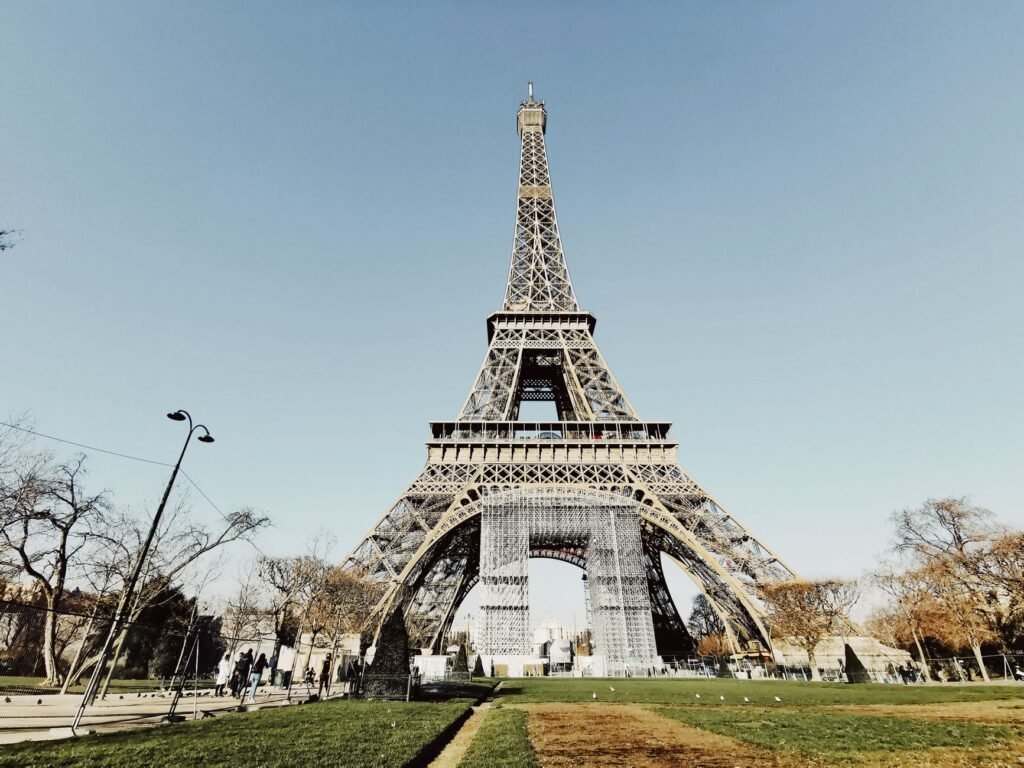
🇧🇷 POR | 🇫🇷 FR | 🇺🇸 EN | 🇪🇸 ES Photo by Mehmet Turgut Kirkgoz on Pexels. Day 1: Eiffel Tower, Trocadéro, and Champ de Mars Start your week in Paris like so many do—with the Eiffel Tower. It’s not cliché, it’s reality: the tower deserves a spot on your first day to help you soak in the city’s energy. Arrive early at the Trocadéro Gardens (free entry) to beat the crowds and enjoy the classic view of the tower with the gardens in the foreground—this is where you’ll snap that dream photo every Brazilian traveler hopes for. If you want to go up the Eiffel Tower, you can take the elevator (faster but pricier—around €15-18) or the stairs (€5-9, but you’ll need stamina for the 674 steps). The elevator ride offers stops at the first and second floors before the top. The summit gives you a 360-degree view of Paris, where on clear days you can see up to 70 kilometers. The best time to go up is late afternoon, around 4 PM, when the light turns warm and romantic. At night, the Champ de Mars (the big lawn in front of the Tower) fills with tourists and locals. Sit on the grass, grab a glass of wine from a nearby bar (or bring your own bottle—it’s allowed in many parks), and enjoy the tower’s light show that starts blinking at night (every hour on the hour, the tower puts on a 5-minute light display with 20,000 bulbs). Day 2: Louvre Museum, Notre-Dame, and Seine River Cruise Day 2 is all about museums and the historic heart of Paris. Start at the Louvre Museum, the most visited museum in the world. Arrive early (doors open at 9 AM) to dodge the massive lines. Pro tip: if you only want to see the Mona Lisa, Winged Victory of Samothrace, and Venus de Milo, you’ll need just 2-3 hours. If you want to really explore, set aside 4-5 hours. Inside the Louvre, grab a free map at the entrance or use the museum’s app. The Richelieu Wing (French painting), Sully Wing (Egyptian and Islamic art), and Denon Wing (Italian painting and the Mona Lisa) are the main highlights. Avoid Tuesdays (quieter but also more chaotic)—Thursdays and Fridays are solid choices. Afterward, walk over to Notre-Dame Cathedral. If the cathedral is still under restoration when you read this (it was being rebuilt after the 2019 fire), visit the Sainte-Chapelle church nearby—its stained glass windows are just as stunning as Notre-Dame’s, but with way shorter lines. In the late afternoon, take a boat cruise along the Seine River. Boats depart from various spots (Pont de l’Alma is a central one). A 1-hour cruise costs around €16-18, and you’ll see bridges, historic buildings, and pick up fun facts about the city. If you can, choose a late-afternoon cruise when the light turns golden—your photos will come out incredible. Day 3: Montmartre, Sacré-Cœur, and Moulin Rouge Montmartre is Paris’s bohemian neighborhood. Take the metro (Line 2, Abbesses station) and start by wandering the narrow, cobblestone streets. The area has that old-Paris charm you see in so many photos—tiny cafés, artist shops, and artistic graffiti. The Sacré-Cœur Basilica sits at the top of the hill. You can climb the steps (364 steps, totally doable) or take the funicular (€2, departs from the opposite side of the stairs). Entry to the basilica is free, but the view from the top is worth every step—it’s the highest point in Paris, and you’ll see the entire city sprawled out below. Photo by Denisa Lesniaková on Pexels. Head down and explore Place du Tertre, where artists sell paintings and draw live portraits. Grab a Nutella crêpe right there (€6-8). In the late afternoon, make your way to the Moulin Rouge, the world’s most famous cabaret. If you want to catch a show, book in advance (prices start at €90 per person). If you’d rather not spend the cash, just snap a photo of the red windmill at night—it’s gorgeous. Day 4: Musée d’Orsay, Saint-Germain, and Luxembourg Gardens The Musée d’Orsay is smaller than the Louvre, but its Impressionist collection is unmatched anywhere in the world. Monet, Renoir, Van Gogh—they’re all here. The museum is housed in a beautiful converted train station. Set aside 2-3 hours. It’s closed on Tuesdays; on Wednesdays, entry is free after 6 PM if you’re under 26 (take advantage if that’s you). Afterward, head to Saint-Germain-des-Prés, the literary neighborhood where Hemingway, Sartre, and Simone de Beauvoir used to hang out in cafés. Visit Café de Flore and Les Deux Magots—they’re not cheap (a coffee costs €5-7), but the history is palpable. You don’t need to eat; just sit and soak in the atmosphere. In the late afternoon, hit the Luxembourg Gardens, a massive park with red chairs scattered on the grass, kids on a vintage carousel, and a very French vibe of relaxation. Many Parisians come here to unwind after work. Sit in a chair, watch people go by, and understand why the French value otium—leisure time. Day 5: Palace of Versailles (Day Trip) A full day for Versailles is essential. Leave early (6:30 AM) from central Paris. Take the RER (Line C, Versailles Rive Gauche station)—it costs €4 and takes 40 minutes. Check online and buy your Palace ticket in advance (to skip the line). Versailles is enormous. The palace itself—with that famous Hall of Mirrors, the king’s apartments, and the ceiling paintings—will take 2-3 hours. Then, the gardens (which are BIGGER than the palace) will take another 1-2 hours. If you have time, hop on the tourist train that leaves from the palace and takes you to the Trianon estate (smaller palaces in the back of the gardens, much quieter and beautiful). Practical tip: wear comfortable shoes. Versailles is a marathon. Bring water. If you go on a weekend, brace for huge crowds—weekdays are less packed. Day 6: Latin Quarter, Panthéon, and Shakespeare and Company The Latin Quarter is where students live in Paris. Narrow streets, old bookshops,
Charles de Gaulle Airport: How to Get to Central Paris
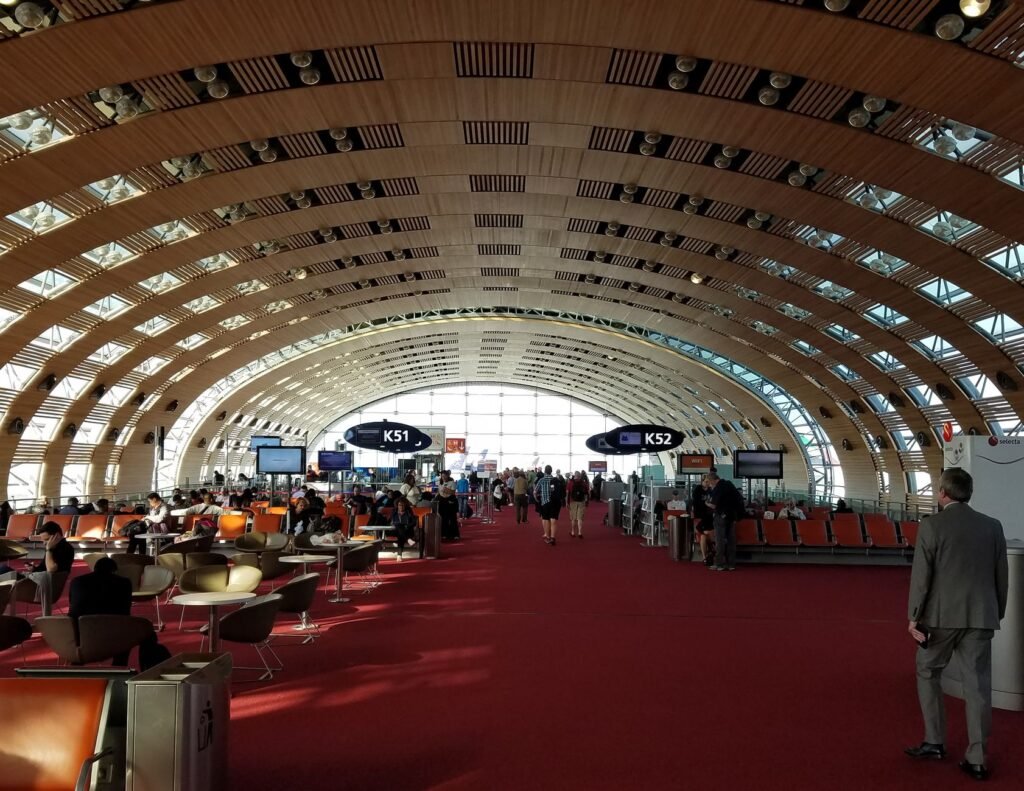
🇧🇷 POR | 🇫🇷 FR | 🇺🇸 EN | 🇪🇸 ES Photo by John Bailer on Pexels. Understanding Charles de Gaulle Airport Charles de Gaulle (CDG) is Paris’s largest airport and one of the biggest in Europe. Located 15 miles north of Paris, it’s where most international flights arrive. If you’re flying into the French capital, chances are you’ll be passing through here. The airport is massive—serving over 72 million passengers a year. It has three main terminals: Terminal 1 (the oldest), Terminal 2 (the largest, with multiple “halls”), and Terminal 3 (smaller, mainly for domestic and European flights). Each terminal has its own transport stations and baggage areas. When you get off the plane and go through immigration (passport control), you’ll get your passport stamped. Then you grab your bags from the carousel, clear customs (usually quick if you have nothing to declare), and head out to the arrivals area where your transport options into Paris begin. RER B: The Fastest and Cheapest Train The most practical option for most travelers is the RER B, a train that connects the airport directly to central Paris. The journey from CDG to the city center (around Île de la Cité, Notre-Dame, etc.) takes about 35-45 minutes, depending on where you get off. To catch the RER B, leave your arrivals hall and look for “SNCF” or “RER” signs. You’ll follow the signage down to the airport’s underground platforms. No reservation needed—just show up and hop on the next departing train. The ticket costs €12 if you buy it from a machine or counter (not recommended—lines can be long). A better tip is to buy a carnet of 10 single tickets (called a “carnet t+”) for €17—each ticket works for both the RER B from the airport and any metro ride in Paris for a full week. If you’d rather avoid the machines, buy directly from the SNCF counter (a bit pricier at €13-14, but no lines). Photo by Connor Danylenko on Pexels. The train runs every 10-15 minutes during the day (less frequent at night). Look for lines heading to “Centre-Ville” (city center). The route is direct, passing through several major Paris stations (Gare du Nord, Châtelet, Île de France), and you get off wherever your hotel is. Pros: cheap, fast, no planning needed. Cons: can get crowded during peak hours (7-9 AM, 5-7 PM), especially if you have a lot of luggage (stairs to the platform can be a pain with big suitcases). Bus: Roissybus and the Cheapest Option If you’d rather skip the train, there’s the Roissybus, a bus that goes directly from the airport to the Opéra Garnier in central Paris (takes 50-90 minutes depending on traffic). The ticket also costs €12, and you buy it at the same SNCF counter or from machines. The Roissybus is great if you want to avoid the RER station stairs, but it’s too slow for most people arriving tired. It goes through congested streets and can take nearly twice as long as the train during rush hour. Another bus option is the night bus (N141/N142), which runs at night when the RER is less frequent. It costs €8 and takes about 1-2 hours depending on your destination. If you’re arriving in the early hours, this might be your best bet. Traditional Taxi White taxis are waiting right outside the arrivals area. The ride to central Paris costs around €50-65 depending on where you’re going (fixed price for most Paris zones). The journey takes 30 minutes if traffic is good, but can easily stretch to an hour during morning rush hour. The upside is comfort—you sit down, toss your luggage in the trunk, and get dropped off right at your hotel. The downside: it’s expensive, especially if you’re traveling solo or as a couple. If there are four of you, the cost per person becomes more reasonable. Tip: don’t let a chatty driver upsell you. Some try to “negotiate a price” claiming the fare is higher (not true—taxis have meters). Stick to the meter or the fixed rate. Uber and Ride-Sharing (Bolt, Kapten) Uber works in Paris. Open the app on your phone, set your pickup location (CDG) and destination (your hotel), and call a car. The cost depends on demand—during normal hours it’s around €35-50, but during morning or evening peaks it can spike to €80-100 or more (surge pricing). Other popular ride-sharing apps in Paris are Bolt (best price) and Kapten (more regulated). They all have similar prices. The process is the same: open the app, confirm your location, and wait for the car to arrive (usually 5-10 minutes). Photo by Mingyang LIU on Pexels. The advantage is flexibility and comfort. The downside: prices can vary wildly. If you want to save, use it late at night (paradoxically, Uber gets cheaper at night because fewer people are calling cars). Car Rental CDG has car rental agencies (Hertz, Avis, Europcar, Budget, etc.). If you’re planning to leave Paris to explore the countryside (Versailles, Giverny, Loire Valley), a car might make sense. It costs around €50-80 per day depending on the car, plus gas. But here’s the warning: driving in Paris is chaotic. The streets are old, French drivers are ruthless, and parking is impossible (and expensive—€30-50 per day in a garage). Most tourists who rent a car in Paris end up regretting it. If you’re going to rent a car, it’s better to take the RER into Paris, spend a few days in the city, and then rent the car once you’re outside Paris to explore the countryside. That way you avoid the urban chaos and use the car where it actually makes sense. Private Transfer (Pre-Booked) Several companies offer private transfers directly from the airport to your hotel. You book online before your trip, the company picks you up at baggage claim with a sign bearing your name, and you’re driven comfortably to your hotel. It costs around €60-100 for a car that fits 1-3 people, and the price is fixed (no surge pricing like
Orly Airport: How to Get to Paris
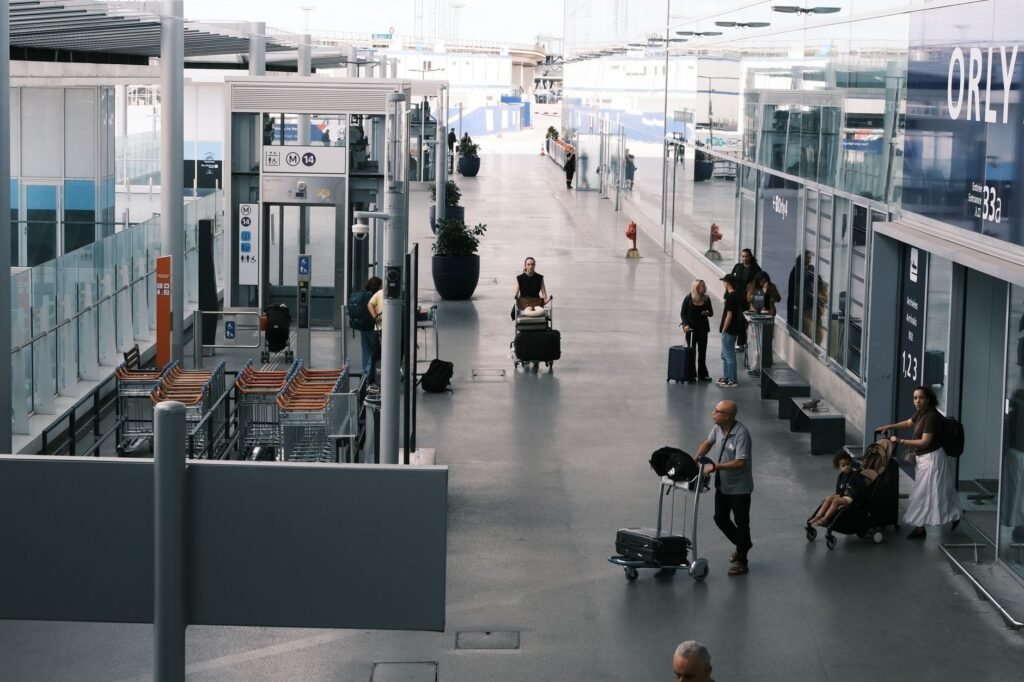
🇧🇷 POR | 🇫🇷 FR | 🇺🇸 EN | 🇪🇸 ES Orly Airport: Paris’s Southern Gateway If you’re a frequent traveler to Paris, you’ve probably heard of Orly Airport (ORY). Located just 14 kilometers south of the French capital’s center, Orly is the city’s second-largest airport, welcoming millions of passengers every year. Unlike the more internationally renowned Charles de Gaulle, Orly is often the point of entry for those flying in from smaller European cities or on domestic French flights. In this complete guide, we’ll explore the best ways to leave the airport and reach the heart of Paris. Orly is divided into two terminals: Orly Ouest (West) and Orly Sud (South). Both offer the same services and transportation options, so don’t worry—your experience will be practically identical no matter which terminal you land in. The key is knowing how to get out safely, affordably, and comfortably. Photo by Mingyang LIU on Pexels. The Three Main Transport Options from Orly to Paris Just like at Charles de Gaulle, Orly offers several alternatives for getting to the city center. The good news is that all options are accessible, fast, and well-signposted. You can choose between the Orlyval (an automated train), buses, taxis, or ride-sharing apps like Uber and Bolt. Each has its pros and cons, so we’ll break it all down so you can make the best decision for your travel style. Orlyval: The Fastest Transport The Orlyval is an automated train that connects the airport to Denfert-Rochereau station in just 14 minutes. It’s the quickest way out of Orly if you’re in a hurry. The train runs from about 6:00 AM to midnight. The fare is €12.45 per person (2026 price), and the ride is comfortable and driverless—the train is fully automated. Once at Denfert-Rochereau, you can hop on the RER B metro line or regular metro lines to reach your accommodation. If you’re staying in the Marais, Latin Quarter, or near the Louvre, this is an excellent choice. The total journey from leaving the airport to reaching the center takes between 20 to 30 minutes, depending on your final destination. The Orlyval is operated by RATP (Régie Autonome des Transports Parisiens) and is a smart investment by the French capital in modern infrastructure. The train is very reliable—delays are extremely rare. Stations have elevators, so even with large suitcases, you can board without any trouble. Trains run every 4-6 minutes during the day and every 10-15 minutes at night. Photo by Jiri Ikonomidis on Pexels. Important note: If you’ve arrived at Orly and want to better understand how to get around Paris after leaving the airport, check out our complete guide on how to get around Paris using the metro, RER, and tickets—you’ll find all public transport options and tips on saving money with special passes. Orlybus: The Classic and Budget-Friendly Option If you’re looking to save a few euros, the Orlybus is your best bet. This bus connects Orly directly to Denfert-Rochereau, with a travel time similar to the Orlyval (about 30 minutes, depending on traffic). The price is much more wallet-friendly: €8.70 per person. The bus departs every 15-20 minutes during the day and is comfortable for small to medium-sized suitcases. The downside is that it’s subject to Paris traffic, so during peak hours (8:00-10:00 AM, 5:00-8:00 PM), the trip can take up to 45 minutes. But if you’re not in a rush and want to save money, it’s definitely worth it. The Orlybus was one of Europe’s first dedicated airport bus lines and remains reliable and well-maintained. The buses are modern, air-conditioned (a lifesaver in the Parisian summer), and equipped with luggage space. You can buy your ticket directly on the bus or at the automatic machines in the airport. Taxis, Uber, and Bolt: Comfort vs. Cost If you’re traveling with heavy luggage, in a group (splitting costs), or simply prefer a direct taxi from the airport to your hotel, this is the most comfortable option—but also the priciest. An official taxi (white or black) from Orly to central Paris costs between €40 and €60, depending on your destination neighborhood. Uber and Bolt (alternative ride-sharing apps) offer slightly lower prices during normal hours, but can surge significantly during peak times or on weekend nights. A typical ride runs €35 to €50. Travel time is 20 to 45 minutes, again depending on traffic. An important tip: if you choose a taxi, use the official taxis from the airport’s waiting line. They have fixed prices and are regulated. Don’t accept offers from informal drivers who approach you outside the official area—they sometimes try to charge double. Photo by Candelario Benítez on Pexels. Differences Between Orly and Charles de Gaulle: Which to Choose? Many travelers wonder, “Why land at Orly instead of Charles de Gaulle?” The simple answer is—you usually don’t get to choose. The airline decides which airport your flight goes to. But if you’re planning a future trip and do have a choice, here are the differences: Charles de Gaulle (CDG): It’s the largest and most international. Located 25 km from the center. Offers more flight options (especially long-haul international). The RER B is fast (25 minutes) but pricier (€12.15). The city has flights from major foreign airlines. The terminal is more complex with more corridors. Orly: More compact and less crowded. Located 14 km from the center (closer!). Best for domestic French flights and regional European routes. The Orlyval is just as fast as the RER B, and the Orlybus is cheaper. Generally less chaos and shorter lines. Much easier to navigate. In short: Orly is usually the better arrival experience—less stress, closer, and with efficient transport. If you have the option, choose Orly! Many experienced travelers prefer Orly for exactly these reasons. Practical Tips for Your Arrival at Orly Currency Exchange, Roaming, and First Things First Right after leaving the baggage claim area, you’ll find currency exchange counters and ATMs. The exchange rate at the airport isn’t the best, but it’s convenient if you arrived without euros. If possible, withdraw
eSIM vs. Local SIM Card for Paris: Which One to Choose

🇧🇷 POR | 🇫🇷 FR | 🇺🇸 EN | 🇪🇸 ES eSIM vs. Local SIM Card for Paris: What’s the Best Option? Traveling to Paris is exciting, but one of the first concerns for tourists is staying connected. How will you take photos, use maps, share your experience on social media, and get in touch with family back home? The answer comes down to three options: eSIM, a local French SIM card, or roaming from your Brazilian carrier. Each has its pros and cons, and in this guide, we’ll break it all down so you can make the best decision before you board your flight. Technology has come a long way in recent years. If you traveled to Europe five years ago, you probably bought a local SIM card or paid an arm and a leg for international roaming. Nowadays, with eSIM (virtual SIM cards) gaining ground, things have gotten much simpler. But there’s still confusion about which option to use. Let’s clear it all up. Photo of connectivity and mobile technology. What is eSIM? Understanding the Technology eSIM stands for “embedded SIM” or built-in SIM card. Unlike traditional physical chips (that small piece of plastic you insert into your phone), an eSIM is a virtual chip stored inside the device. It takes up zero physical space and can be activated remotely, over the internet, even before you land in France. The big advantage of eSIM is convenience. You don’t have to get off the plane and hunt for a carrier store or an ATM. You activate everything through an app, right from your seat, and by the time you arrive in Paris, you’ll already have 4G/5G working. It’s literally plug-and-play (or better yet, tap-and-go). But not all phones support eSIM. iPhones from 2020 onward (iPhone XS, 11, 12, 13, 14, 15+) and many modern Androids (Samsung Galaxy S20+, Google Pixel 3a+, etc.) have support. If your phone is from 2017 or earlier, you probably can’t use eSIM and will have to choose between the other two options. Option 1: eSIM — Convenience and Flexibility How it works: you buy an eSIM plan (usually online, from a carrier like Orange, SFR, Bouygues, or international providers like Airalo, Holafly, etc.), receive a QR code or activation data by email, scan the QR on your iPhone/Android, and that’s it — the plan is activated. Advantages of eSIM: – Activation before your trip (on the plane, at home, or at the airport) – No need to leave the airport to buy a chip – Instant data — step off the plane and you’ve got 4G/5G – Ability to keep two numbers active simultaneously (your Brazilian number + a French number) – No plastic to keep track of or lose – Supports multiple plans (you can have eSIMs from several carriers, just deactivate/activate them on your phone) Disadvantages of eSIM: – Your phone needs to support the technology (iPhones XS+, modern Androids) – Prices are sometimes higher than a local chip bought in France – If you need to switch plans, you need an active internet connection on your phone to do it – Customer support can be slower (you’re in another country, possibly in a different time zone) – Some international providers may have slow activation (from a few hours up to 24h) Approximate eSIM prices for Paris: – Airalo (Vietnamese carrier with coverage in France): €5-10 for 1GB-3GB/month – Orange (direct from Brazil, French plan): €10-20 for 5GB-20GB/month – Holafly (Spanish provider): €10-30 for unlimited data plans – Local French carriers (Orange/SFR/Bouygues online): €15-40 for 10GB-50GB/month Recommendation: if you have a modern phone (iPhone 11+ or Samsung Galaxy S20+), eSIM is the best option. The convenience and flexibility are worth every extra cent you might be paying. Photo of modern mobile technology. Option 2: Local French SIM Card — The Classic How it works: you land in Paris, find a carrier store (Orange, SFR, Bouygues, Free) — there are several inside the airport — buy a prepaid SIM card, put it in your phone, and pay for activation according to the plan (data, minutes, SMS). Advantages of a local SIM card: – Works on ANY phone (even an iPhone 4 works) – Generally cheaper if you buy it directly at the airport store (€15-30 per week for data) – Better customer support — if something goes wrong, you walk into a physical store and get it sorted quickly – Peace of mind knowing the chip is working (you see the carrier on your phone: “Orange”, “SFR”, etc.) – A French phone number — your Brazilian friends will think you’re calling from Paris itself – No need for prior internet or a QR code Disadvantages of a local SIM card: – You have to get off the plane and find a store (can take 20-30 minutes if you arrive during peak hours) – The store might be closed (late at night) – Worse price if you buy the chip days in advance (Brazilians tend to pay more for convenience) – You can’t keep your Brazilian number active at the same time (you have to choose one or the other) – You lose your message history when you swap SIM cards Approximate local SIM card prices in Paris: – Orange/SFR/Bouygues (physical airport store): €15-30 per week with 5GB-10GB – Same plan bought 1-2 days later at a downtown store: €20-25 (cheaper) – Monthly plan if your trip is 1 month+: €30-50 with 20GB-100GB Practical tip: if you’re staying for more than 2 weeks, look for a monthly local SIM plan (it’s usually cheaper than buying weekly plans for several weeks). Many carriers offer tourist plans with unlimited data and minutes, which is great if you’re planning to explore a lot. Option 3: Roaming from Your Brazilian Carrier — The Most Expensive How it works: you do nothing. You arrive in Paris, your phone automatically connects to your Brazilian carrier’s partner network (Vivo, Claro, Oi, Tim), and you can use data, make calls, and send SMS as if you were
Scams and Safety in Paris: Neighborhoods and Tips for Traveling Safe
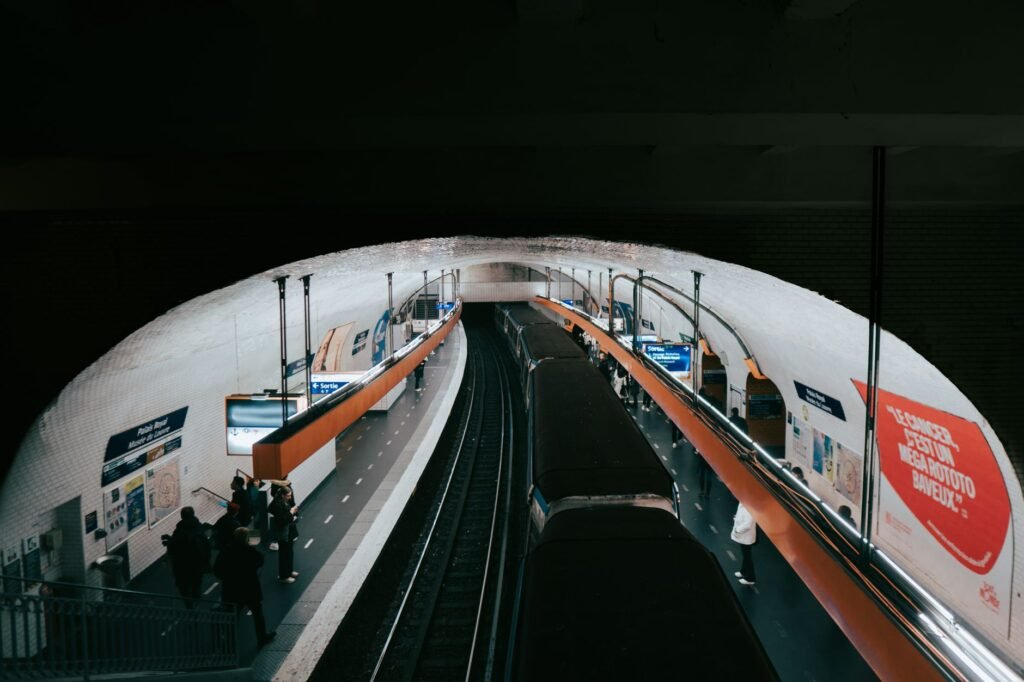
🇧🇷 POR | 🇫🇷 FR | 🇺🇸 EN | 🇪🇸 ES Photo by Artūras Kokorevas on Pexels. Introduction: Paris Is Safe, But You Need to Stay Sharp Paris is one of the most visited cities in the world—and for good reason. But like any bustling metropolis, it has its safety challenges that every traveler should know about. The good news? Most issues are easily avoidable with a few basic precautions and awareness of what to look for. This guide steers clear of generic travel advice. Here, you’ll find realistic info on the specific scams targeting tourists in Paris, the neighborhoods that demand a little extra caution, and practical tips tested by people who actually live or travel there. The goal is to make you feel prepared—not scared. Important bonus: if you’re already planning your visit to the Eiffel Tower, also check out our complete guide on specific scams at the Eiffel Tower and how to avoid them—info that could save your trip! The Most Common Scams on the Paris Metro The metro (RATP) is the heart of Parisian transport, moving millions of people daily. It’s also where most petty thefts targeting tourists happen. Knowing the patterns helps you avoid becoming a victim. The “group distraction” scam. You step into a crowded car, usually near a touristy station like Saint-Michel or Châtelet. Suddenly, someone next to you “accidentally” bumps into you hard, another offers help with your bag, and a third is already reaching into your backpack. It all happens in seconds. The target? Your phone in your back pocket, wallet in a side pocket, necklace—anything accessible without much effort. The fake police officer scam. Less common, but real: someone approaches you “asking for documents” or “checking your ticket,” using a makeshift uniform or just an authoritative tone. While they’re talking, an accomplice steals your bag or demands money as a “fine.” The empty car strategy. You step into a car that looks empty or nearly empty. It’s not a coincidence—it’s intentional. You have freedom of movement, which makes theft easier without witnesses. If something feels off (an empty car during rush hour, people getting out as you get in), be suspicious and switch cars. Photo by Christine Blanchet on Pexels. Theft at Tourist Attractions: The Crime Hotspots Certain places draw thousands of tourists a day—and they also draw opportunists. It’s not paranoia, it’s statistics. Around the Eiffel Tower and Trocadéro. The surrounding areas are especially targeted. People selling “Paris silver rings” or getting you to sign fake petitions—while their accomplices clean out your bag. If someone approaches you with an offer or a “spontaneous” petition, it’s almost always a scam. Politely refuse and walk away. Busy stations (Gare du Nord, Gare de l’Est, Châtelet). Luggage, confused tourists, first hours of arrival—the perfect environment for thieves. Keep your bag in sight and close to your body. Don’t leave anything in an easily accessible pocket. Museum lines (Louvre, Orsay). Long periods of standing still in a group. People around you are stressed and distracted. That’s when wallets disappear most easily. Use a front-facing bag or wear your backpack on your chest in these situations. Open tourist transport (Seine river boats, hop-on-hop-off buses). Constant movement, easy to get on and off, lots of hands around. Keep valuables in closed, secure bags attached to your body, never in luggage you might leave unattended. Neighborhoods That Need More Caution at Night Paris has beautiful, safe neighborhoods. It also has areas that get uncomfortable after dark, especially if you’re alone. Barbes-Rochechouart (north of Montmartre). Visible drug dealing, prostitution, frequent verbal harassment, especially late at night. During the day, it’s okay. At night, tourists—especially solo women—shouldn’t be there without a specific reason. If you need to pass through, stick to the main, well-lit streets. Parts of the 18th and 19th arrondissements. Residential areas where tourists rarely go. There’s drug dealing in certain spots, and strangers approaching people offering “opportunities.” Avoid this kind of approach. Areas under the RER viaducts (especially in the 13th). Poorly lit places, with a concentration of homeless people and drug users. It’s not dangerous most of the time, but it’s uncomfortable. Avoid passing through alone after dark. Parks after nightfall. Luxembourg Gardens, Parc Monceau, Bois de Vincennes—beautiful during the day, deserted and less safe at night. Leave these spaces before it gets dark. That said: Paris is much safer than many Latin American cities. You can walk through “worse” neighborhoods during the day without major issues. The key is being aware of the context. Photo by Daria Agafonova on Pexels. Practical Safety Tips to Avoid Becoming a Victim Your bag is your biggest target. Don’t wear a backpack on your back in crowded places. If you have to use one, wear it on your chest. Crossbody leather bags (not too flashy) are ideal for cities. Shoes, a backup credit card, and a locked phone. No wallet stuffed in your back pocket—it’s the first place they look. Traveling in pairs is safer. Not because there’s “imminent danger,” but because thieves prefer distracted, solo people. If you’re traveling alone, always stay alert, especially in metros and stations. Use copies of documents, not originals. Your original passport never leaves the hotel—unless legally required (which isn’t the case in France for Brazilians). Carry an authenticated copy. A Brazilian tourist ID is rare enough to draw attention; a copy is more logical and safer. Credit cards > cash. International cards in big cities have fraud protection. Cash disappears and is unrecoverable. Have some small change in euros, but don’t carry a wad of bills in your bag. Use apps, not paper maps in open areas. Consulting a printed map in a busy spot screams “I’m a tourist and I don’t know the area.” Use Google Maps on your phone—discreetly, while leaning against a wall, not in the middle of the street. Watch out for these times: 10 PM–6 AM and metro rush hours. Nighttime is obvious. But certain peak hours (after work between 5 PM–7 PM, bar closing time around midnight) concentrate opportunists.
Montparnasse Tower: The View of Paris Without the Eiffel Tower Crowds
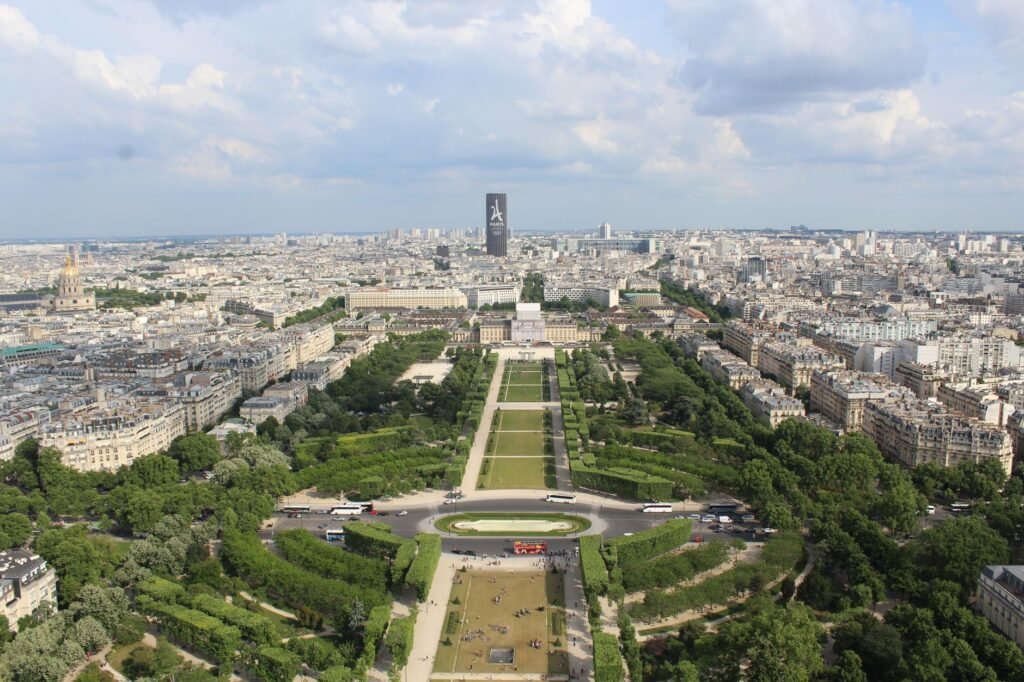
🇧🇷 POR | 🇫🇷 FR | 🇺🇸 EN | 🇪🇸 ES Photo by EUGENIO BARBOZA on Pexels. The Montparnasse Tower: Paris’s Most Controversial Skyscraper If the Eiffel Tower is Paris’s most recognizable symbol, the Montparnasse Tower is its opposite—the building Parisians love to hate. At 209 meters tall with its rectangular glass form, it completely clashes with the classical architecture that defines the city. And that’s precisely why it’s worth a visit. This guide covers everything you need to know about the Montparnasse Tower: how to get there, tickets, what to expect from the observation deck, and why it’s a smart (and far less crowded) alternative to the Eiffel Tower. Spoiler: the view from here, which includes the Eiffel Tower itself, is something special. Important tip: the Montparnasse Tower pairs perfectly with a visit to the Centre Pompidou, the modern art museum not far from here—two radically different perspectives of Paris in a single day. A Bit of History: Why Paris (Still) Tolerates This Skyscraper Built between 1969 and 1973, the Montparnasse Tower was an ambitious project that sparked controversy from the start. Conservative Parisians argued that such a tall, modern building would ruin the city’s aesthetic harmony. And honestly, they had a point—when you look at Paris from above, Montparnasse clearly stands out like an alien among historic toits (rooftops) and mansard roofs. But here’s the curiously French twist: instead of tearing down or hiding the building, Paris embraced it. Now, for many travelers, the Montparnasse Tower is exactly the anomaly that makes it fascinating. And oddly enough, it’s become a symbol of when Paris embraced modernity in the 70s. The Observation Deck: What You’ll See Up There Public access is on the 56th floor (elevator ride in 38 seconds), and there’s also an outdoor area at the top (59th floor) where you can enjoy 360-degree views in the open air. Unlike the Eiffel Tower, here you feel like you’re truly on top of a metropolis—surrounded by other buildings, streets, real urban life. On clear days, you’ll see the Eiffel Tower perfectly from the Montparnasse observation deck. This perspective is the big draw: you’re not looking at the Eiffel Tower up close (like at Trocadéro), but from a distance, framed within the context of all Paris. It’s a completely different photo from the classic shot. The observation deck features informational panels pointing out the city’s main landmarks—you can spot Notre-Dame, Sacré-Cœur, the Louvre, and the Arc de Triomphe. On clear nights, the city lights stretch all the way to the horizon. Photo by EUGENIO BARBOZA on Pexels. Tickets and Hours: How to Visit Price (2026): roughly 18-20 euros for adults, 12-14 euros for children (ages 6-11), kids under 6 are free. Group discounts are available, and some tourist passes include entry (check your Paris Museum Pass). Hours: generally 9:00 AM to 11:00 PM (extended hours in summer, may close earlier in winter). Last entry is typically 30-45 minutes before closing. Location: 33 Avenue du Maine, 75015 Paris. Easy metro access: lines 4, 6, 12, 13 (Montparnasse-Bienvenüe station). Avoiding lines: unlike the Eiffel Tower, Montparnasse rarely has long queues—a clear advantage. Even during peak hours (12 PM-4 PM), the experience is far less chaotic. Going in the late afternoon (5 PM-8 PM) is ideal: you’ll catch the transition from day to night, watching the city gradually light up. Why Visit: Comparing Paris’s Viewpoints Montparnasse Tower vs. Eiffel Tower: The Eiffel Tower is iconic, no doubt. But it’s always packed, requires hours of waiting (even if you pay more to skip the line), and you’re too close to the iron structure to get perspective. Montparnasse offers a holistic view of the entire city, including the Eiffel Tower itself. If you’re short on time, Montparnasse is more efficient. Montparnasse Tower vs. Trocadéro: Trocadéro is free and offers the best front-on view of the Eiffel Tower—it’s where every tourist snaps their photo. But it’s an open, crowded area with no shelter from wind or weather. Montparnasse is covered, climate-controlled, with restrooms and a café, and the view is different (less close-up, more from above). They complement each other well. Montparnasse Tower vs. Centre Pompidou: The Pompidou’s rooftop offers a free view (as long as you visit the museum), but it’s a small area on top of a shorter building. Montparnasse is a dedicated, much larger observation space with more detail and depth. If you want to spend 30+ minutes soaking in the view, Montparnasse wins. Montparnasse Tower vs. Sacré-Cœur (Montmartre): Sacré-Cœur offers a view of historic Paris, especially romantic at dusk. But it’s physically located at a higher point in the city, so the angle is different. Both are worth it on longer trips. Practical Tips for Your Visit Best time to go: late afternoon, between 5 PM and 7 PM. You’ll catch the golden sunset light, it won’t be crowded, and then you’ll see the city lights flicker on—the visual effect is stunning. Visit duration: 45 minutes to 1 hour is plenty. You go up (5 min), enjoy the view (30-40 min), take photos, and head down. There’s not much else to do up there. Photography: The windows can cause reflections in photos. If possible, go when the outdoor light is stronger than the indoor light—late afternoon helps. Bring a charged phone or camera—the views are worth every shot. Café and restrooms: there’s a café on the observation deck with museum-style prices (coffee: 4-5 euros, sandwich: 8-12 euros). The restrooms are usually clean. If you want to save money, eat before you go up. Accessibility: elevators work well, and the structure is wheelchair accessible. Perfect if you have limited mobility and want to see a view of Paris. Photo by Feyruz Aslanov on Pexels. A Bit About the Neighborhood: Montparnasse Beyond the Tower Montparnasse is more than just the tower. The neighborhood is historic—it was a haven for artists in the 1920s and 30s (Hemingway, Picasso, and Modigliani used to hang out in cafés around here). Remnants of that era still remain: the Café de la Rotonde
Place des Vosges: The Most Charming and Historic Square in Paris
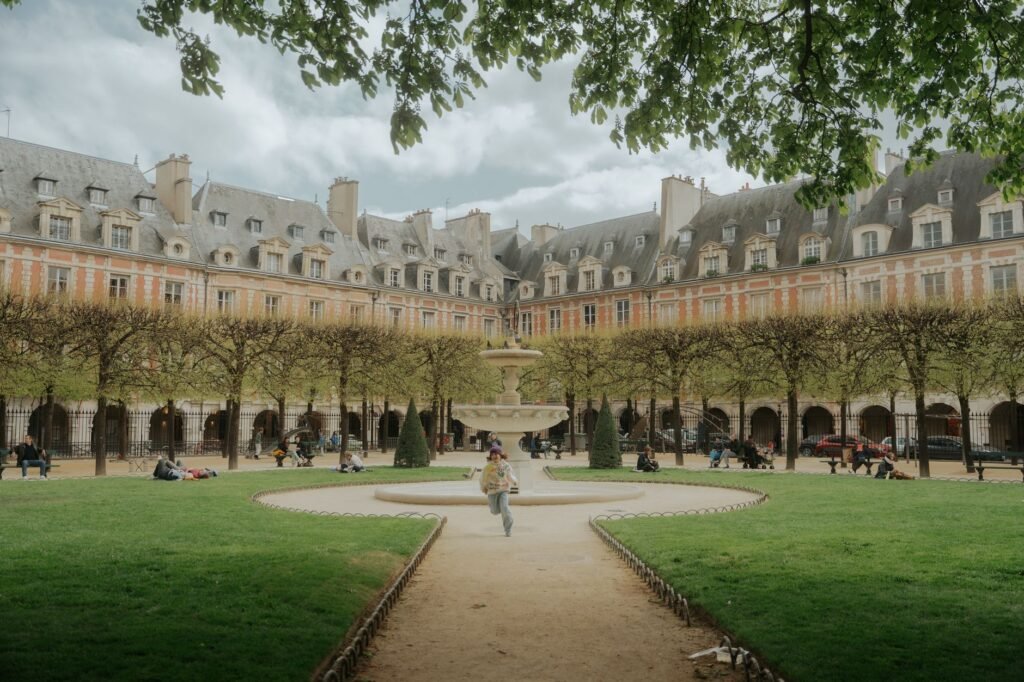
🇧🇷 POR | 🇫🇷 FR | 🇺🇸 EN | 🇪🇸 ES Introduction Place des Vosges is so much more than just a square in Paris—it’s a peaceful retreat in the heart of the bustling Marais district. With 140 years of history (founded in 1612), this square is the oldest planned square in all of France and remains virtually unchanged since its creation, a rarity in cities that are constantly reinventing themselves. If you’re planning a trip to Paris, it’s essential to understand why Place des Vosges attracts over 2 million visitors annually. Its charm lies not only in the unique Renaissance architecture with its 36 identical mansions but also in the intimate atmosphere that invites you to leave the city’s rush behind. The square offers an authentic experience: from picnics on the lush green grass, to coffee with a view of the historic arcades, to bookshops and art galleries that transport you back centuries. Photo by Trang | Pexels In this complete guide, you’ll discover everything you need to know about Place des Vosges: its history, architecture, what to do, where to eat, the best time to visit, and whether it’s truly worth dedicating an entire afternoon to this Parisian icon. The Fascinating History of Place des Vosges Place des Vosges is the result of an ambitious 17th-century urban transformation. In 1605, King Henry IV decided to turn a plot of land that once housed a horse market into an elegant square that reflected power and beauty. Its original name was “Place Royale,” but it was renamed in 1800 to honor the Vosges department, which was the first to pay its taxes during the French Revolution. This name change represents an interesting turning point in French history, marking the transition from a monarchical symbol to a democratic name. The square was conceived as a symbol of order, symmetry, and progress. Its design was so successful that it served as a model for other squares across Europe. Each of the 36 buildings was constructed with the same height and architecture, creating a visual harmony that persists to this day—making Place des Vosges a rare example of urban cohesion in a city that has changed dramatically over the centuries. For centuries, the square attracted intellectuals, artists, and notable figures. Victor Hugo passed away in his apartment here. Paris Hilton is said to have visited the square during her youth spent in Paris. This blend of tradition and modernity makes the square a unique symbol of Parisian heritage. For more information on tourism in Paris, visit the Paris Tourism official site. Architecture and Unique Features The architecture of Place des Vosges is a masterclass in Renaissance proportion and elegance. The 36 buildings surrounding the square follow a strictly identical pattern: each has four stories, symmetrically arranged windows, and facades of red brick and stone in a checkerboard pattern. What makes Place des Vosges visually distinctive is its series of arcades—400 arches spanning the entire square that offer shelter from rain and sun while creating shaded spaces perfect for strolling. Under the arcades, you’ll find small shops, restaurants, and art galleries that make the most of this historic space for their businesses. At the center of the square lies a quadrangular garden spanning approximately 1.4 hectares, filled with centuries-old trees, benches, and lawn. Unlike many Parisian gardens, you’re actually invited to lie down on the grass—something unusual in Paris, where gardens often charge admission or have strict rules. The proportions are mathematical: 140 meters per side, creating a perfect square shape. This geometric harmony is exactly what makes your digital camera and your eye capture such perfect images. It’s no coincidence that Place des Vosges is one of the most photographed spots in Paris among amateur and professional photographers alike. What to See at Place des Vosges: Top Attractions Victor Hugo’s House The most famous attraction at Place des Vosges is Victor Hugo’s House (Maison de Victor Hugo), located at building number 6. The writer lived there with his family from 1832 to 1848, and it’s here that he worked on many of his most famous works, including parts of “Les Misérables.” Today, the house is a museum that preserves his personal furniture, original manuscripts, and drawings made by Victor Hugo (he was also a talented visual artist). Admission costs around 7 euros, and you can climb the original wooden stairs that creak beneath your feet—an experience that literally connects you to the past. Art Galleries The first floor of the arcades is practically a continuous art gallery. You’ll find everything from contemporary artist studios to galleries selling high-value works. Many are open to the public during the day, and several feature works by emerging artists. The Galerie Lavignes-Bastille is especially known for showcasing modern art and photography. The Galerie des Trois Mondes offers works by international artists. Shops and Boutiques Place des Vosges attracts an exclusive selection of boutiques, from fashion stores to specialized bookshops. Merci is a Belgian concept store that functions as a bookstore, design shop, and café all at once—perfect for anyone looking to dive into culture while picking up sophisticated gifts. The Central Green Space The central garden is truly the heart of Place des Vosges. You can: Have a picnic: Bring baguettes, cheeses, and wine from the nearby Rue des Rosiers (the Jewish street of the Marais) and sit on the grass alongside equally enchanted Parisians and tourists Read or work: Many people bring laptops and take advantage of public Wi-Fi (or from nearby cafés) to work in one of the most inspiring settings in Paris People-watch: The Parisian practice of “flânerie” (aimless strolling) is naturally enhanced here. Sit on a bench and observe unique social patterns Take photos: The square offers photogenic angles in virtually every direction Where to Eat and Drink Around the Square Restaurants and Cafés Under the Arcades L’As du Fallafel: Legendary spot on Rue des Rosiers (right next to Place des Vosges) serving the best falafel in Paris. Expect a line, but it’s worth every minute. Approximate price:
Saint-Germain-des-Prés: A Literary Walking Tour of Paris
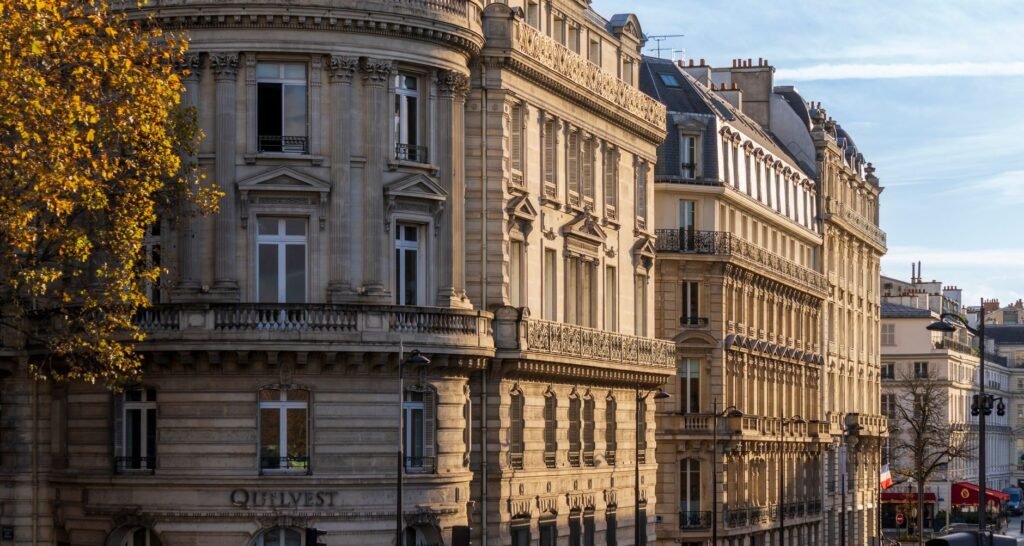
🇧🇷 POR | 🇫🇷 FR | 🇺🇸 EN | 🇪🇸 ES There are neighborhoods in Paris you visit, and then there are neighborhoods you feel. Saint-Germain-des-Prés is the second kind. While the touristy side of the city pushes you toward the Eiffel Tower and the Louvre, this corner of the Left Bank invites you to sit down, order a coffee, and watch the world go by. And not just any world—the same one that Simone de Beauvoir, Jean-Paul Sartre, Ernest Hemingway, and Albert Camus frequented decades ago. The neighborhood was once the intellectual epicenter of Europe. Today, it’s a mix of luxury boutiques, cafés steeped in history, and a bohemian atmosphere that has survived the test of time. Whether you’re in Paris for the first time or the tenth, setting aside an afternoon (or an entire morning) for Saint-Germain is always a good call. Photo by Abhishek Navlakha on Pexels. A Neighborhood with a Story to Tell Saint-Germain-des-Prés is located in the 6th arrondissement of Paris, on the Left Bank (Rive Gauche) of the Seine. Its name comes from the Abbey of Saint-Germain-des-Prés, founded in the 6th century, making this one of the oldest continuously inhabited areas in Paris. During the Middle Ages, the abbey was practically a city within a city—it had its own courts, markets, and walls. Over time, the neighborhood became secularized, and by the 20th century, it had become the territory of the existentialists. After World War II, the local cafés turned into informal headquarters for philosophical debates, literary launches, and late-night jazz sessions. If Paris has an intellectual soul, it lives here. Today, gentrification has changed the neighborhood’s socioeconomic profile—the independent bookstores of yesteryear have given way to luxury brands like Dior and Chanel. But the atmosphere remains, and the historic cafés continue to operate with pride. Few places in the world manage to maintain this balance between a glorious past and a sophisticated present without losing their authenticity. The Cafés That Defined a Generation Talking about Saint-Germain without mentioning the cafés is like talking about Rome without the Trevi Fountain. There are two, in particular, that carry the weight of history on their wicker chairs. Café de Flore Founded in 1887, Café de Flore (at 172 Boulevard Saint-Germain) is arguably the most famous café in Paris—and maybe the world. It was here that Sartre wrote much of Being and Nothingness and where Simone de Beauvoir spent hours drafting her manuscripts, warmed by the salon’s heat during the Parisian winter. The interior is charming but simple: mirrors, red leather banquettes, and that constant murmur of conversations that never quite reach your ears. A café au lait costs around 5 to 7 euros—pricey for a coffee, but you’re paying for the experience of sitting where history happened. The tip is to arrive early, before 10 a.m., to snag a good table. From 11 a.m. onward, especially on weekends, there can be a line. Flore is open daily from 7:30 a.m. to midnight, making it a great option for breakfast before the crowds roll in. Les Deux Magots Just a few steps from Flore is Les Deux Magots, at 6 Place Saint-Germain-des-Prés. The café has been around since 1812, when it was a fabric shop—the name comes from two porcelain figurines of Chinese merchants (magots) perched above the bar. Ernest Hemingway was a regular. Simone de Beauvoir and Picasso also frequented the tables. Since 1933, the café has hosted its own annual literary prize, the Prix des Deux Magots, an alternative to the Goncourt Prize that often spotlights less conventional talents. The menu features croissants, scrambled eggs, and a double espresso that will keep you wired for the next four hours. Prices are similar to Flore. Between the two, Les Deux Magots has a slightly better view of the Place and the church façade—especially from the outdoor tables. Photo by Matteus Silva on Pexels. Shakespeare and Company: A Bookstore Out of Time Technically, Shakespeare and Company is on the other side of the Seine, in the 5th arrondissement (37 Rue de la Bûcherie), but it’s a ten-minute walk from Saint-Germain and an inseparable part of the neighborhood’s literary circuit. The original bookstore was founded by American Sylvia Beach in 1919 and was the literary home of James Joyce, Ezra Pound, and Scott Fitzgerald—Beach even published Joyce’s Ulysses when no American publisher would touch it. The current version—opened in 1951 by George Whitman and now run by his daughter Sylvia—inherited the spirit, the name, and much of the cozy chaos of the original. It’s two floors packed with English-language books stacked in seemingly random piles that make perfect sense once you start exploring. The smell of old paper is almost tangible. There’s a famous house policy: traveling writers can sleep among the shelves in exchange for a few hours of work in the bookstore and reading one book a day—these so-called “tumbleweeds” have numbered over 30,000 over the decades. The café next door—Shakespeare and Company Café—serves some of the best coffee in the neighborhood, with a direct view of Notre-Dame. It’s worth a stop to catch your breath after exploring the collection. Bookstore hours: open daily from 10 a.m. to 10 p.m. Free entry, of course—it’s a bookstore. The Church of Saint-Germain-des-Prés The abbey that gave the neighborhood its name is still standing, and the Church of Saint-Germain-des-Prés is the oldest church in Paris still in use. The main tower dates from the 11th century, though parts of the building are from the 9th century—making it about two centuries older than Notre-Dame. The façade is sober, almost stark compared to the splendor of Notre-Dame or Sainte-Chapelle. But the interior features colorful 19th-century mosaics, green marble columns repurposed from Roman buildings, and an atmosphere of tranquility that contrasts with the bustle of the Place outside. Visiting is free. You can walk in, sit down, and be silent for a moment—that’s exactly what Parisians do here too. The remains of philosopher René Descartes and Polish King John II Casimir are buried here. Hours: generally open
Saint-Ouen Flea Market: The World’s Largest Antique Market in Paris
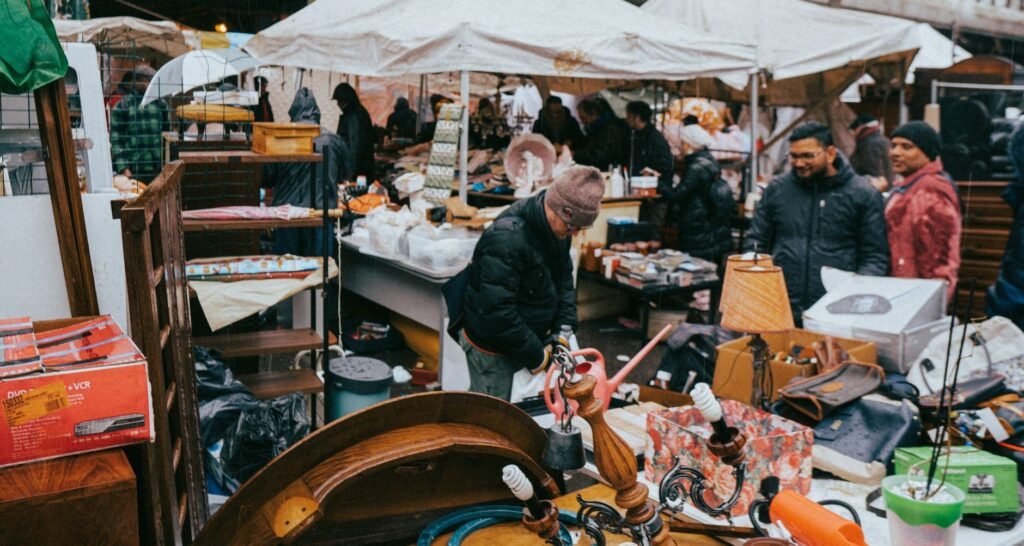
🇧🇷 POR | 🇫🇷 FR | 🇺🇸 EN | 🇪🇸 ES If you think of shopping in Paris, the first image that comes to mind is likely the glittering windows of the Champs-Élysées or the chic boutiques of the Marais. But the most authentic—and often most rewarding—experience happens in a neighborhood just beyond the grand boulevards: Saint-Ouen, home to the world’s largest antiques market. The Marché aux Puces de Saint-Ouen (or simply “Les Puces,” as Parisians call it) has been around since the late 19th century and today brings together over 2,000 dealers spread across roughly 17 acres of warehouses, covered streets, and labyrinthine corridors. 18th-century furniture shares space with Art Deco jewelry, analog cameras, oil paintings, crystal chandeliers, and vintage clothing that looks like it stepped right out of a 1950s film. This isn’t a junk market—though you can find just about anything. It’s a true treasure-hunting destination, where collectors, interior designers, and rarity seekers from around the world arrive with lists in hand and patience to spare. For the Brazilian traveler, it’s an afternoon you won’t soon forget. Photo by Artūras Kokorevas on Pexels. The World’s Largest Antiques Market The Marché aux Puces de Saint-Ouen sprang up in the late 19th century when street vendors expelled from central Paris began setting up shop on the city’s outskirts. The word “puces” (fleas) in the name comes from the old furniture and clothes sold there—the idea being that these secondhand items carried fleas. Over time, what started as a makeshift fair of used goods evolved into something far more sophisticated. The first organized covered markets appeared in the early 20th century—the Marché Vernaison, the oldest still operating, dates back to 1920. Today, the Puces de Saint-Ouen is classified as a historic and cultural landmark of France. The market is made up of a series of sub-markets, each with its own distinct personality: the Marché Paul Bert is the most eclectic and photogenic; the Marché Biron is the most refined and expensive; Vernaison is the most labyrinthine and full of surprises; Dauphine features art, jewelry, and rare items; Malik is known for vintage clothing and fashion. There are over 15 different sub-markets in total, making the exploration genuinely endless—one afternoon isn’t enough to see it all, but it’s plenty of time to find something special. What You’ll Find at the Saint-Ouen Market Variety is the main draw of the Puces. Every aisle, every stall, every shop has its specialty—and the beauty of the hunt lies precisely in the unpredictability of what you’ll uncover. But there are a few recurring categories worth paying special attention to. Furniture & Decor The heart of the market. Here you’ll find everything from 17th-century Norman armoires to leather chairs from the 1950s modernist era. Prices vary wildly: a 19th-century piece might cost a few thousand euros, while a set of 1970s café chairs could go for a few dozen. Gilded mirrors, crystal chandeliers, Louis XV commodes—these are the kinds of things you just don’t find in regular stores. For those who can’t fit furniture in their suitcase (most of us, unfortunately), the Puces offers international shipping services through the vendors themselves. It’s worth asking. Vintage Fashion & Jewelry The Marché Malik and the outdoor stalls are a vintage paradise: 1960s dresses, worn-in leather jackets, bags from old brands without today’s exorbitant price tags. There are also dealers specializing in Art Deco and Art Nouveau jewelry, 1940s costume jewelry, and unmarked silver pieces that require a trained eye to spot their true value. The tip here is to arrive without rushing and be willing to open boxes, dig through racks, and discover things. The best finds are rarely right at the front of the stall. Art, Paintings & Collectibles The Marché Dauphine and Biron are the go-to spots for those seeking more elaborate art pieces: anonymous 19th-century oil paintings (some with appreciation potential), old engravings, framed historical maps, bronze and ceramic sculptures. There are also dealers specializing in collectibles—analog cameras, vintage watches, retro movie posters, porcelain dolls, miniature lead soldiers. If you have any expertise in a collecting area, you’ll likely find something relevant here. The vendors’ level of knowledge is usually high—many are antiquarians with decades of experience. Photo by Serena Koi on Pexels. Opening Hours & How the Market is Organized The Marché aux Puces de Saint-Ouen is mainly open on weekends: Saturday, Sunday, and Monday, from 9 AM to 6 PM (with some variations by sub-market—some open at 10 AM, others close at 5:30 PM). During the week, foot traffic is much lighter and many stalls are closed, so plan your visit for the weekend. The market doesn’t have a single entrance—you can access it from several points along Rue des Rosiers, the complex’s main artery. When you arrive at the Porte de Clignancourt metro station, you’ll pass through an area of informal street vendors before reaching the market’s organized core. It’s all part of the experience, but prices and quality go up significantly once you step inside the covered markets. To help you navigate, market maps are available at the entrance of some sub-markets and on the official website (marcheauxpuces-saintouen.com). But part of the fun is getting lost—some of the best finds happen when you turn a corner with no idea what’s waiting on the other side. How to Negotiate Prices Haggling is expected and welcome at the Puces—it’s part of the culture. But there’s an unwritten etiquette worth respecting to make the experience good for both sides. First: never ask the price of something you don’t genuinely intend to buy. Vendors can spot browsers versus serious buyers, and credibility goes a long way when bargaining. Second: don’t be aggressive in your negotiation. Asking for a 10% to 20% discount is reasonable; trying to pay half the asking price is offensive to most dealers. Third: asking about more than one item at a time opens the door for a bundle discount—”how much for both?” is a question vendors welcome. In French, the magic phrase is “C’est votre meilleur
Moulin Rouge: Is the Cabaret Show Worth It?
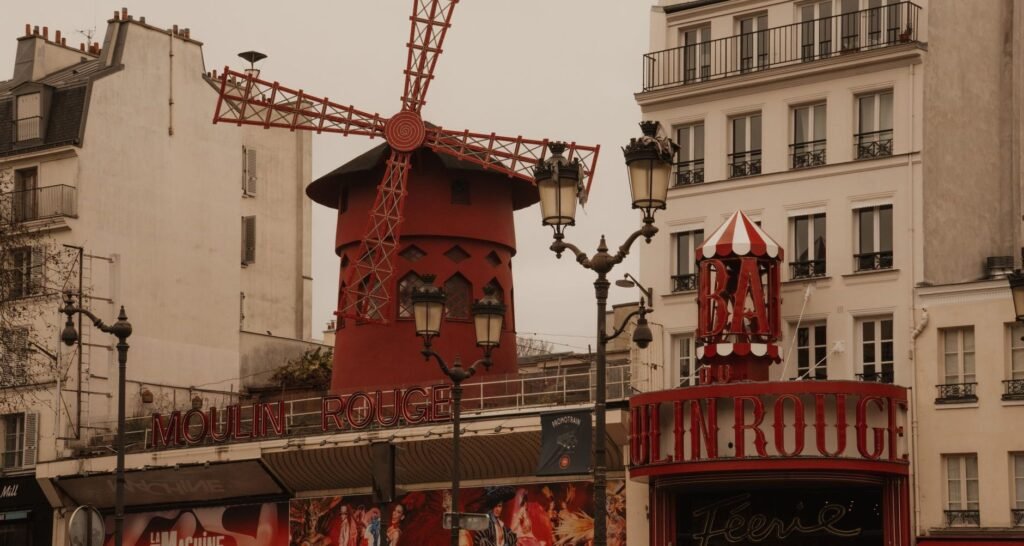
🇧🇷 POR | 🇫🇷 FR | 🇺🇸 EN | 🇪🇸 ES Few things in Paris carry as much glamour and history as the Moulin Rouge. The cabaret with its iconic red windmill on top has been around since 1889 and remains one of the world’s most talked-about shows. But is it worth the investment? The hefty price tag can be intimidating, the show lasts nearly two hours, and deciding whether or not to include dinner can make a big difference to your wallet. In this guide, you’ll find everything you need to know to decide — and, if you go, how to make the most of it. Photo by Liisbet Luup on Pexels. The History of the Moulin Rouge: From Scandal to Icon The Moulin Rouge opened its doors on October 6, 1889 — the same year the Eiffel Tower was inaugurated for the Paris Universal Exposition. Its founders, Joseph Oller and Charles Zidler, wanted to create a popular entertainment venue in the bohemian neighborhood of Montmartre, which at the time was outside the official city limits and attracted artists, writers, and all sorts of characters from Parisian nightlife. In its early years, the cabaret became famous for the can-can — a dance of raised skirts and high kicks that scandalized the Parisian elite and enchanted the bohemians. It was there that painter Henri de Toulouse-Lautrec immortalized the atmosphere in posters and paintings that are now classic post-impressionist works of art. Names like Jane Avril and La Goulue became the first celebrities of European entertainment in that haze of smoke, laughter, and live music. Over time, the Moulin Rouge went through fires, renovations, and changes in management, but it never lost the essence of spectacle. Today, instead of being an interactive dance club, it functions as a variety theater with a professional, well-produced show — very different from its origins, but equally captivating in its own way. The Current Show: What is Féerie? The show currently playing at the Moulin Rouge is called Féerie (the French word for “magic” or “enchanted world”). Created in 1999 and periodically updated, it brings together distinct acts: dance, magic, acrobatics, singing, and, of course, the famous can-can performed by the Doriss Girls — the dancers who are the house’s calling card. The show lasts about 1 hour and 50 minutes with no intermission and presents sequences that range from glamour to fantasy. There’s an act with real snakes, an aquarium with professional swimmers, and circus performances that feel like a Parisian version of Cirque du Soleil. The set design is meticulous: costumes made of feathers, crystals, and fabrics that cost small fortunes to produce. Photo by MEHMET KAYNAR on Pexels. The show starts at 9 PM (main session) or 11 PM (late-night session). The 11 PM session is exclusive to those who buy just a ticket — no dinner or champagne. The 9 PM session is the most popular and the only one available with the full dinner package. There’s also a dinner time starting at 7 PM, followed by the 9 PM show. Those who choose this package dine in the main hall while watching the preparations on stage — and the show begins shortly after. Age Rating and Show Content The Moulin Rouge is geared towards adults. The minimum recommended age is 6 years old, but the show features topless dancers for a good portion of the performance. The organizers are transparent about this — the nudity is artistic and not pornographic in nature, but it’s worth considering if it’s appropriate for your group. For adult groups — couples, birthdays, bachelor/bachelorette parties, groups of friends — the atmosphere is festive, the audience is diverse, and the experience is usually very well received. Don’t expect a night of wild dancing, but rather a professional show with an atmosphere you’ll hardly find anywhere else. Important note: If you’re heading to Montmartre to see the Moulin Rouge, make the most of the surrounding neighborhood — read our complete guide to Montmartre and Sacré-Coeur — with tips on where to eat, the most picturesque streets, and how to enjoy the view from the top of the hill before the show starts. Moulin Rouge Prices: How Much Does It Cost? Moulin Rouge tickets aren’t cheap. Here are the main options (2025-2026 prices in euros, subject to change): Show + half bottle of champagne (9 PM or 11 PM): from €117 per person Show + full dinner (7 PM dinner + 9 PM show): from €230 to €360 per person, depending on the menu VIP with dinner and private box: from €360 per person Converting to US dollars at an approximate exchange rate of $1.10 per euro, the basic ticket comes out to around $129 per person, while the dinner package starts at $253. It’s not a cheap outing — which is why deciding on the package in advance is even more important. Photo by Riccardo Bertolo on Pexels. There’s also a transfer package — limousine or Mercedes from your hotel to the Moulin Rouge — for even higher prices. It’s a luxury, but it can make sense for groups wanting a complete celebration night without worrying about public transport after an extra glass of champagne. Is the Dinner Worth It? This is the question that pops up most often in travel forums about the Moulin Rouge. The honest answer: it depends on your priorities. The dinner at the Moulin Rouge isn’t a Michelin-starred gastronomic experience — it’s a functional, well-executed meal with a polished presentation, but it competes with the ambiance (background music, waitstaff movement, stage preparations). If your priority is a memorable culinary experience in Paris, you’ll find better and cheaper restaurants in any neighborhood of the city. On the other hand, the experience of arriving early, dining in that historic hall, and watching the space “wake up” before the show has a unique charm that many travelers really appreciate. If budget isn’t an issue and you like the idea of spending 3 to 4 hours in that atmosphere, dinner complements